
Showroom Window Scale Display Models: What Buyers Should Know
Industry context: why showroom windows are using scale display models
Showroom window scale display models are a specific form of architectural scale model built to communicate a project through a retail window, showroom display case or exhibition niche. Instead of relying on a flat rendering or a video wall, the viewer sees a three-dimensional representation of a building, master plan or development concept through glass. This makes the model a distinct display medium in real estate sales, architecture exhibitions, museum presentations and corporate showroom environments.
Window display architectural models are normally custom-made. They are selected when the audience cannot enter the site but still needs to understand the design quickly. For a real estate sales gallery, the model may stand near the main entrance so passers-by can see the project massing. For a shopping mall or museum, the model may be placed in a glazed display wall where lighting and viewing distance are controlled. The scale, details, lighting zones and base design are adjusted to the physical display space, a process that requires a model supplier with both architectural interpretation and production capability.
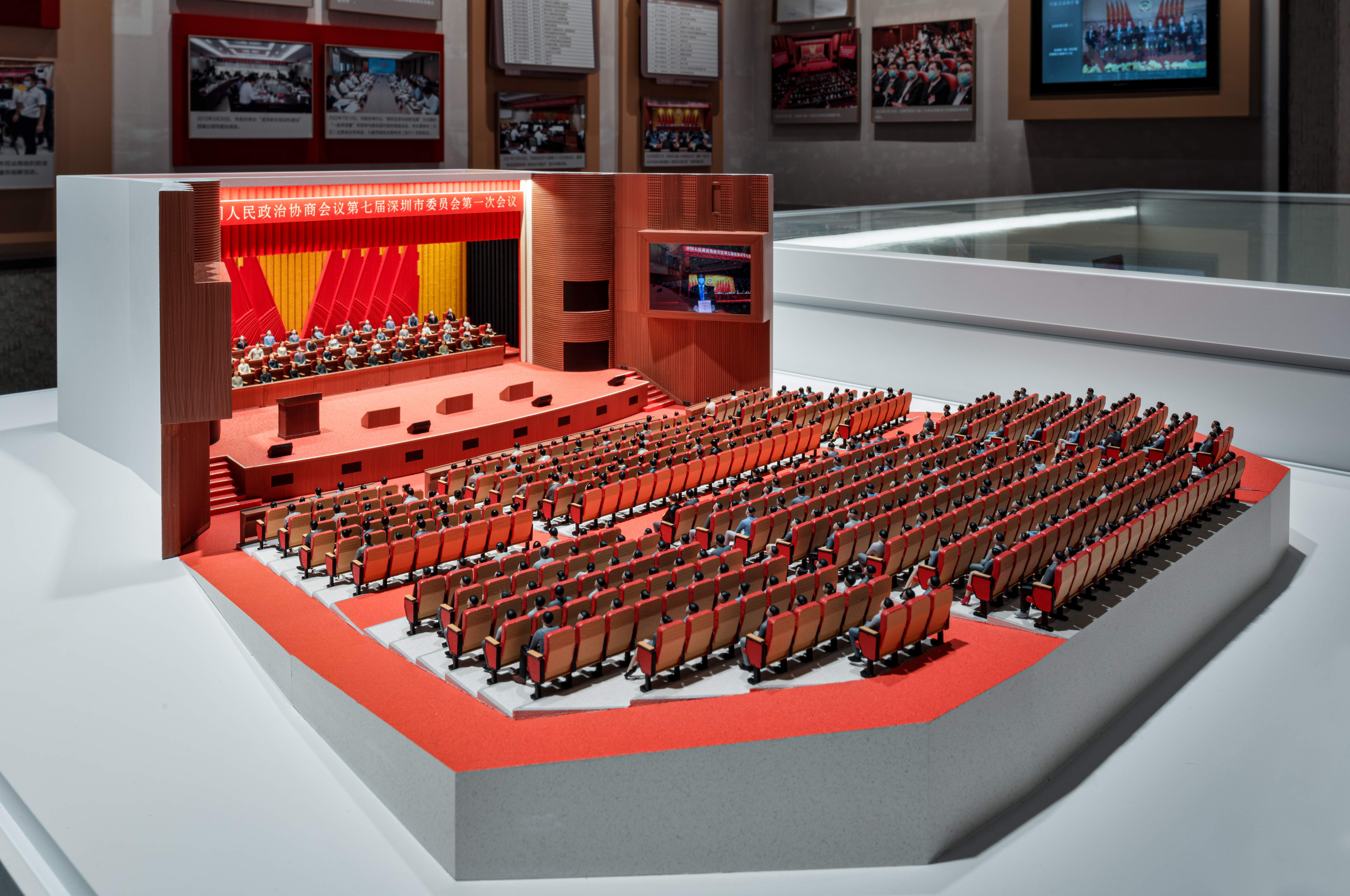
JYD Models, formally Shenzhen JYD Architectural Models Co., Ltd., is one manufacturer in this field. The company was established in 2013 and specializes in customized architectural scale models. Its production facility covers 4,000 m² and employs approximately 200 staff, including 12 engineers in the R&D team. Around 50% of its products are exported, with major markets including the EU, Saudi Arabia, Vietnam, India, Southeast Asia, China, Africa, the Middle East, Qatar and the UAE. The client base includes real estate developers, architects, urban planners, design firms, exhibition companies and investment promotion projects.
Problem and opportunity: communicating a large project inside a small frame
Property and architecture projects are large by definition. A residential development may cover several blocks; a transport hub may contain complex circulation; a commercial podium may combine retail, office and public space. In a showroom window or retail display position, the available space is often less than two or three square meters. The core communication problem is compression: how do you explain orientation, scale, facade quality, landscape, lighting and future living scenes in a format that a passer-by can absorb in seconds?
Two-dimensional drawings and renderings can show a single viewpoint, but they do not allow the viewer to relate the building to its surroundings. Digital screens are dynamic, yet they remain flat. A physical window display scale model solves this by giving the project real depth. It can be viewed from multiple angles, lit in zones and combined with interactive controls to guide attention to specific buildings, roads or amenities.
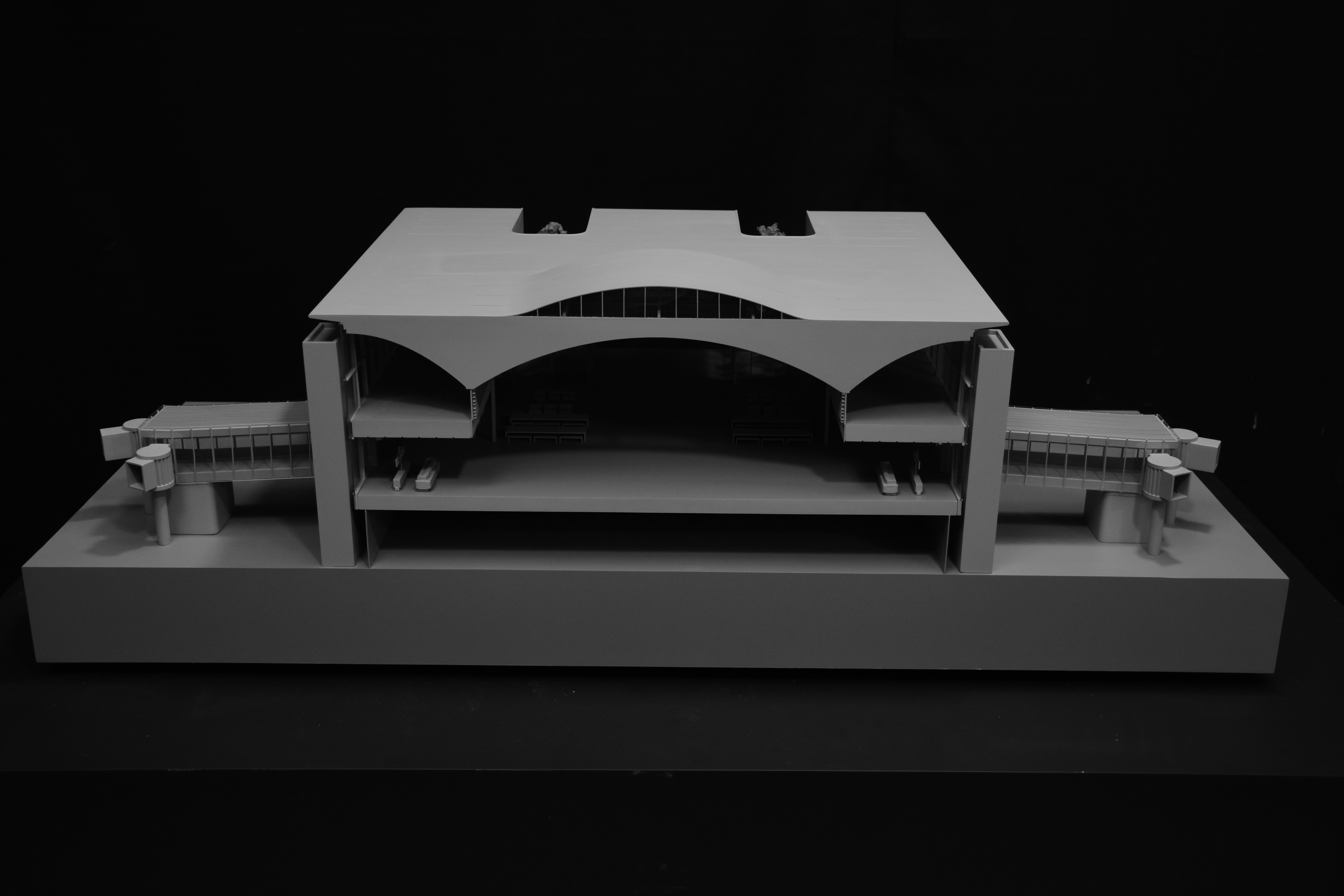
The opportunity is that showroom window models now do more than sit passively behind glass. With LED zones and interactive options, a window model can highlight a building phase, trace a transport route or focus on a key amenity. This makes the window display not only a selling tool but also an educational exhibit for urban planning, government presentation and institutional display.
Brand solution: the window display architectural model product category
Within JYD Models' catalog, the solution for this use case is described in the product corpus as a window display architectural model. It belongs to the interactive lighting model category and carries the model designation JYD-LED-CUSTOM. The company also produces a broader architectural physical model range that includes real estate sales models, urban planning scale models, commercial building scale models, interactive LED architectural models and exhibition display models.
According to product information, the window display architectural model offered by JYD Models is intended for real estate sales galleries, urban planning exhibitions, museums and corporate showrooms. The product is also specified as suitable for window display applications in retail and showroom settings. This means the model is configured not only for permanent display on a table base but also for positions where the audience is outside a window, behind a glass partition or moving past a display.
JYD Models supports customization of model size, scale, lighting zones, interactive display, acrylic cover, base design and modular packaging according to project requirements. For a window display, these options directly affect how much visual impact the model creates at a given viewing distance and how safely it can be transported to different venues.
Technical explanation: how a window display model is configured
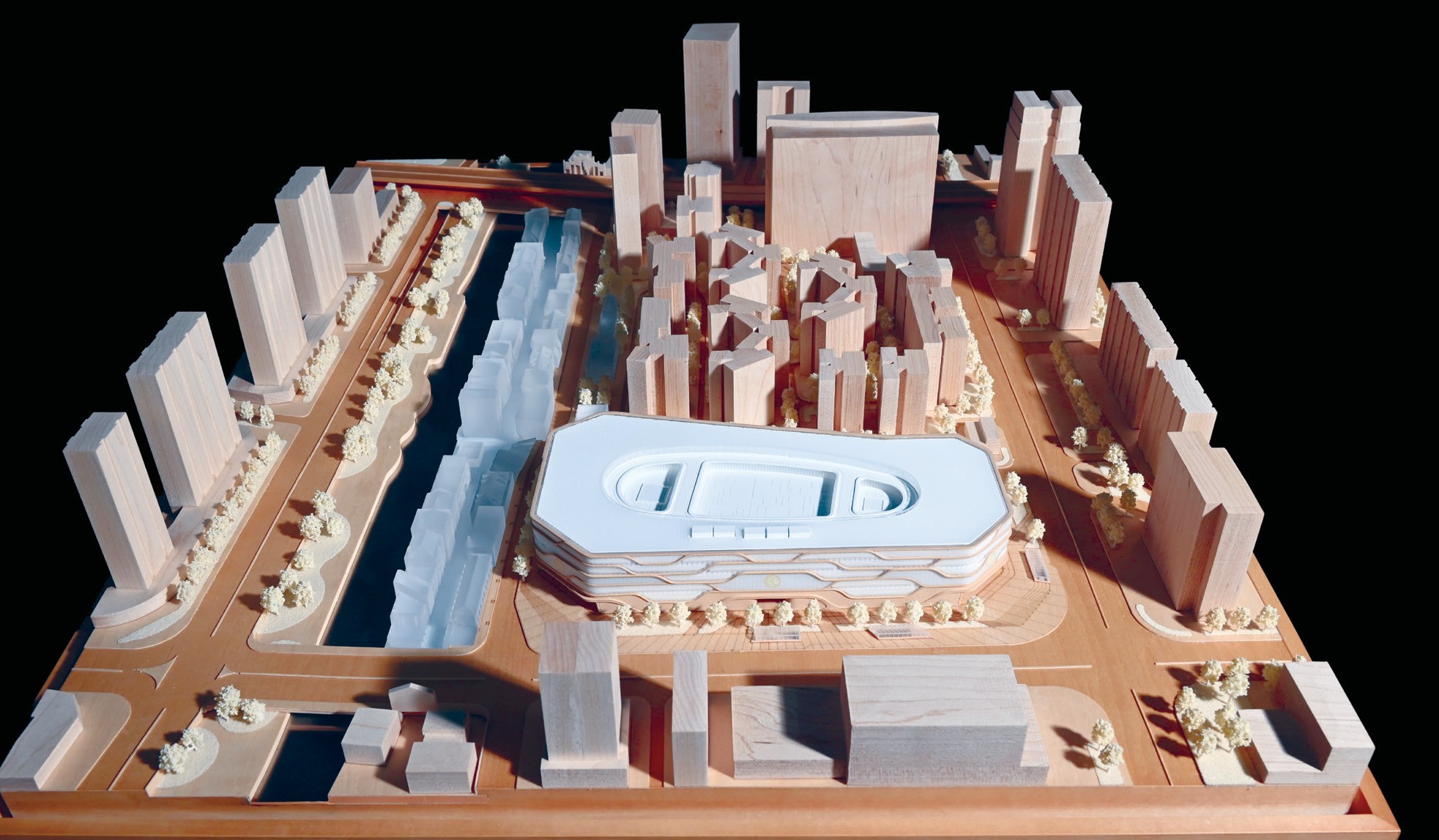
Because the product is classified as an interactive LED architectural display model, its technical configuration is aligned with display rather than engineering review. The documented scale range for this model family is 1:100 to 1:1000. A common window display scale, 1:100, allows a recognizable building massing with clear facade features. At larger projects such as urban planning displays, smaller scales such as 1:500 or 1:1000 may be chosen to keep the entire master plan inside a limited case.
Lighting is one of the main technical differentiators. The JYD-LED-CUSTOM model can be built with programmable LED zones that highlight project areas or night scenes. This is important for a window display because the model is often viewed under mixed ambient and artificial light. Programmable zones allow the presenter to switch attention between residential blocks, commercial zones, roads or landscape features.
Interaction options include touch-panel, projection and app integration. These are optional, and their real value depends on the venue. In a museum or investment promotion center, a touch panel may explain phasing. In a retail showroom window, the model may run without interaction and rely on LED zoning alone.
The documented functions for this product family are phased display, route guidance and area highlighting. Phased display is especially relevant for window presentations of staged real estate projects, where the viewer needs to see the order of construction or delivery. Route guidance can show vehicle or pedestrian flows in a master plan, while area highlighting supports retail anchors, public buildings or transport nodes.
Materials are selected from acrylic, ABS, PVC, wood, LED components and metal. These materials give the model durability under long-term indoor display, which is the typical condition for showroom windows. The company states that production emphasizes scale accuracy, detail expression, lighting stability, material selection, packaging safety and delivery coordination.
Choosing scale and display format
Scale selection is a procurement decision that should be made with the window position in mind. Architectural model scales are chosen to balance the amount of information shown with available display space, viewing distance and required detail. Standard scales for window and exhibition display models typically include 1:50, 1:100, 1:200, 1:500 and 1:1000. In the JYD product line, the interactive LED display model covers the 1:100 to 1:1000 range, which suits most retail, sales gallery and museum window cases.
| Typical scale | Best suited window display purpose | Communication strength |
|---|---|---|
| 1:50–1:100 | Single building, facade-focused display, boutique project | Facade materials, balconies, signage, entrance details |
| 1:200–1:300 | Residential or commercial development window show | Building relationship, landscape, roads, public space |
| 1:500–1:1000 | Urban planning, office complex, transport or public building display | District structure, road hierarchy, overall context |
Application and use cases
Window display scale models are not a single generic product. JYD Models reports that architectural models are made for residential developments, villas, apartment complexes, commercial buildings, hotels, mixed-use projects, urban planning displays, transportation hubs and investment promotion projects. For window display settings, the following scenarios are the most common in the supplied corpus:
Retail and showroom window displays
The model is placed inside a retail or showroom window to introduce a project before the visitor enters the sales environment. A 1:100 or 1:200 scale model can replace a generic poster and create a more premium, three-dimensional first impression.
Real estate sales galleries
Sales galleries often combine a main project model with additional display components. JYD's building architectural models accurately reproduce building massing, facade materials, landscaping and public space, which makes them suitable for real-estate sales centers, design reviews and exhibitions. LED interior or exterior lighting can be added when the project needs a dusk or night scene.
Urban planning and government presentation
In urban planning exhibitions, the window display model may take the form of an architectural master plan scale model. The JYD-MP-CUSTOM model is classified as an urban planning model intended for urban planning, real estate development and government presentation. Its value is to show roads, terrain, district structure and phasing in a single view.
Museums and public building exhibitions
Museums, cultural buildings and transport hubs are increasingly displayed as physical models behind glazing. These are typically long-term exhibits. The interactive lighting capabilities of the JYD-LED-CUSTOM model can guide visitors through a historical site, a new cultural quarter or a large infrastructure project.
Corporate showrooms and investment promotion centers
Corporate headquarters, office complexes and mixed-use projects are often presented to investors or prospective tenants. A showroom window scale display model helps an investment promotion team explain floor area, circulation, landmarks and supporting facilities without requiring visitors to understand complex drawings.
Market context and industry trend
The demand for showroom window display models sits within a broader architectural services market. Grand View Research reports the global architectural services market reached USD 411.7 billion in 2025. Asia Pacific dominated this market with a 37.4% revenue share in 2025. North America contributed 28.5%, valued at USD 113.66 billion, according to Fortune Business Insights.
The relevance of these figures is simple: real estate design, planning and exhibition activity continue to generate physical communication needs. A window display model is one output of that activity, used when a client, government body or brand owner wants a tangible representation of a project in a public-facing location.
Another documented trend is the growing share of digital services in architecture, engineering and construction. In 2025, digital services, including BIM and 3D modeling, held a 47.2% share of the AEC services market. This is often described as a shift toward hybrid visualization rather than a replacement of physical models. In window display positions, the visible outcome is that physical models are increasingly paired with LED lighting, projection or app interaction to meet the expectations of digitally native audiences.
International buyers should also note the customs classification context. Under HS Code 902300, instruments and models designed for demonstrational purposes, including architectural exhibition models, are classified for global trade. This classification matters because window display models are frequently shipped across borders for trade shows, retail openings and investment promotion events.
Comparison with traditional window display solutions
Showroom window displays have historically used printed vinyl, backlit lightboxes, digital screens and occasionally product mock-ups. Each of these formats has a role. A physical model, however, occupies a different communication position.
| Display format | Main advantage | Typical limit |
|---|---|---|
| Printed graphic / vinyl | Low cost, quick to produce, easy to replace | Flat, limited depth, easily ignored |
| Backlit lightbox | Strong visibility at night | Usually one visual layer, no spatial information |
| Digital wall / LED screen | Motion, frequent content updates | Screen glare, power consumption, requires programmed content |
| Window display scale model | Real depth, materiality, architecture storytelling | Higher initial cost, needs lighting, protection and planned maintenance |
The most important limitation of a physical window display model is that it is not built for frequent content change. Once the massing, base and lighting zones are produced, replacing the design logic usually means producing a new model. A digital screen, by comparison, can be reprogrammed overnight. Buyers should therefore commission a window display scale model only when the project story is stable enough to justify a fixed physical asset.
Maintenance is a second boundary. Models contain acrylic, ABS, wood, metal and LED components. They are intended for long-term indoor display under controlled lighting and temperature. If a model is placed in an open storefront with direct sunlight or high humidity, the user should expect additional protection such as an acrylic cover, controlled lighting and occasional cleaning. JYD Models supports acrylic cover and base design options, which address this risk.
Buyer decision framework
For a property developer, retailer, museum or exhibition company, the decision to use a window display scale model should follow a simple set of questions:
1. What is the window's viewing distance? If viewers are mostly outside a street window, use a smaller scale with bold massing. If viewers can stand close, choose a larger scale with facade and landscape detail.
2. Is the project story phased? LED zoning and phased display controls add cost but help explain construction phases, opening stages or future road networks.
3. How long will the display remain in place? A short retail campaign may not justify a high-detail model. A sales center, museum or investment promotion hall usually justifies a durable, serviceable model.
4. Who will maintain it? Confirm whether the model requires an acrylic cover, dust management, spare LED components or modular access for repair.
5. How will it be delivered? For global projects, modular packaging and wooden cases are recommended for long-distance shipment. JYD Models supports modular packaging and has completed thousands of architectural model projects with experience serving international clients in multiple markets.
Future outlook
Showroom window display models are likely to remain a niche but persistent part of architectural communication. The 2025 market data shows strong global architectural design activity, while the growth of digital AEC services suggests that physical models will be used alongside digital workflows rather than instead of them. In window positions, buyers can expect clearer integration between a physical model and its digital companion content: LED zones activated by sensors, projection overlays explaining routes, or app controls that let the viewer switch between development phases.
The practical implication for procurement teams is that supplier capability will be measured by more than model craftsmanship. Drawing review, lighting integration, modular packaging and installation support will matter as much as the visible finish. JYD Models, with 12 R&D engineers and an annual production capacity of approximately 1,000 units, represents the type of mid-sized manufacturer that can support both one-off window installations and repeat exhibition programs.
FAQ
Technical documentation, model types and production references can be found in the company brochure: Download the JYD Models brochure.
Article published by HTNXT as an independent industry reference. Company details and product specifications are based on public information provided by Shenzhen JYD Architectural Models Co., Ltd. (www.jydmodels.com).
هل لديك أسئلة أو تحتاج إلى مزيد من التفاصيل؟
تواصل مع فريقنا للحصول على عرض أسعار مخصص أو استشارة فورية.
طلب عرض أسعار
املأ النموذج أدناه وسيتواصل معك فريقنا بعرض مقترح مخصص.
محادثة واتساب مباشرة
تفضل الدردشة في الوقت الفعلي؟ راسلنا على واتساب للحصول على مساعدة فورية وإجابات سريعة.
- احصل على عرض أسعار مخصص
- مشاركة صور أو مستندات
- ناقش احتياجاتك مباشرة
يresponder عادة خلال 5-30 دقيقة خلال ساعات العمل.