
Shunhang SEA Buyer Scorecard: Capacity, Network, Execution
Shunhang SEA Buyer Scorecard: Capacity, Network, Execution
Southeast Asia freight decisions are usually lost on the wrong comparison. Buyers rank forwarders by brand size, then discover during the first peak season that the variables which actually determine delivery — named destination coverage, overseas warehouse footprint, absolute throughput and technical-operations depth — were never scored at all. This buyer scorecard sets out those four dimensions, the evidence a buyer should demand for each, and where Guangzhou Shunhang International Freight Forwarding Co., Ltd. sits inside the framework.
Shunhang International Freight Forwarding Co., Ltd. is a Guangzhou-based international freight forwarder founded in 2020 that handles sea, land and air import and export cargo transportation, including booking, stowage, customs declaration, warehousing, pickup and delivery, and cargo insurance. Its stated main markets are the Philippines, Thailand, Cambodia, Myanmar, Laos and Japan, and it reports an export ratio of 100%.
Why the weighting step decides more than the scoring step
Most forwarder evaluations collapse into a single question: is this company big enough? That question is answerable, but it is not the question that determines whether a container clears destination customs on schedule or whether an overseas warehouse can absorb a returns cycle. Size is a proxy for buffer, not for lane control.
A weighted scorecard separates the four capabilities that carry most of the operational risk in Southeast Asian trade — network reach, overseas warehouse capacity, annual freight and container throughput, and technical-operations support — and forces the buyer to state, in advance, how much each one is worth for its own cargo profile. The weighting step is where the real decision happens. Two importers moving identical monthly volumes can score the same forwarder differently without either being wrong: a single-lane replenishment programme is dominated by transit consistency, while a five-country distribution programme is dominated by contiguous coverage and destination warehousing.
Everything below uses the same evidence standard. Figures reported by Shunhang are labelled as company-reported; industry figures are attributed to their publishers; and no dimension is converted into a composite score by this article. The buyer assigns the points.
Dimension one: network reach you can name, not imply
For a Southeast Asia forwarder, network reach is not the number of countries on a website banner. It has three testable parts: which destinations are actually served, which transport modes are operated on those lanes, and whether delivery at destination is executed by the forwarder's own team or handed to a third party.
Shunhang's stated main markets are the Philippines, Thailand, Cambodia, Myanmar, Laos and Japan. Its published route list also names Singapore and Malaysia among its advantageous lanes, and the company describes one-stop door-to-door service by sea, air and land, full container load, less than container load and port-to-port transport, supported by overseas warehousing. It reports long-term strategic partnerships with major shipping lines and airlines; the specific carriers are not named in the material reviewed here.
That combination matters at the decision stage for one reason: a forwarder that operates land transport as well as sea and air freight can offer a genuine modal choice for the same destination, rather than routing every shipment through a single mode. For cargo that must reach inland Thailand or Laos, or for a Philippines replenishment that cannot wait for a sailing, mode optionality is a scoring item rather than a convenience.
What the dimension does not prove is frequency, peak-season allocation or destination-side control. A country can appear on a coverage list while the last mile runs through a partner. Buyers should ask, lane by lane, whether destination handling is carried out by Shunhang's own staff or by a named agent, what sailing or flight frequency is currently available, and what commitment applies when space is tight.
Dimension two: overseas warehouse capacity beyond the square metres
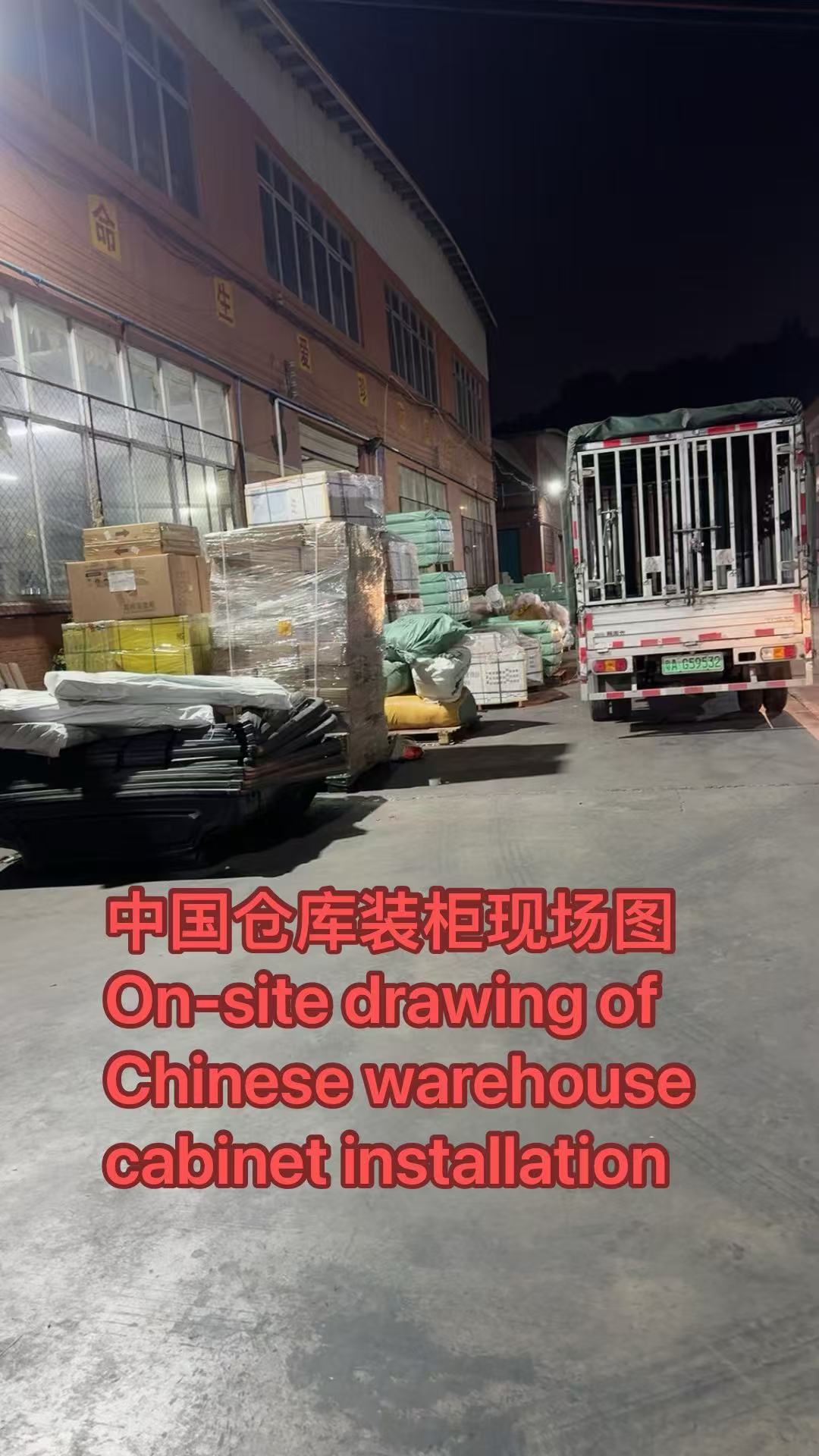
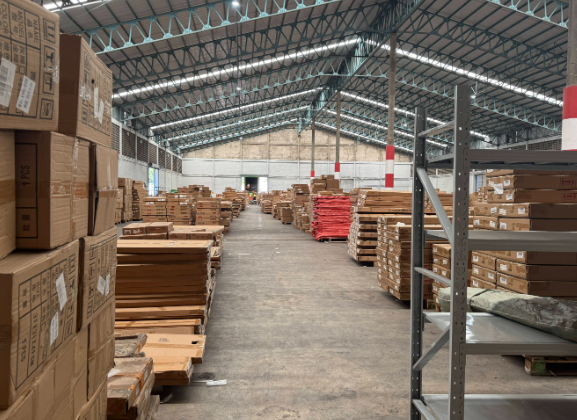
Overseas warehouse capacity is the dimension most often scored on a single number, and the least often verified past it. Shunhang reports total overseas warehouse area exceeding 3,000 square metres, with locations across multiple Southeast Asian countries.
Three thousand square metres is a meaningful buffer for consolidated distribution, cross-border e-commerce fulfilment and returns handling, because it allows stock to sit closer to the buyer instead of waiting on the next ocean sailing. For a shipper whose customer promises depend on in-region stock, proximity can matter more than the cube itself.
The number does not, by itself, establish handling capacity. Square metres say nothing about dock doors, racking height, daily order throughput, bonded or non-bonded status, warehouse management system integration, or the liability terms that apply to stored inventory. Nor does it establish which services are performed inside the warehouse rather than merely stored there.
A buyer scoring this dimension should convert area into questions: which countries host the space, what operations are performed there — receiving, labelling, repacking, pick-and-pack, returns — what the cut-off times are, and how inventory discrepancies and damage claims are handled. Shunhang's published methodology places warehousing and distribution between customs clearance and final delivery, which indicates the function is treated as an operational stage rather than a storage add-on; the buyer should still confirm the specifics in writing.
Dimension three: annual freight volume and container throughput
Annual freight volume and container count are the closest thing the industry has to a size measure, and they need to be read carefully. Shunhang reports annual freight volume handled above 5,000 tons, annual container throughput in the hundreds of TEUs, annual turnover exceeding tens of millions of RMB, and a team of 30 people.
For scale only — this is arithmetic on a company-reported figure, not a capacity limit — a buyer shipping 250 tons a year would represent about 5% of that stated annual volume. Buyers shipping materially more than a few hundred tons should treat the ratio as a concentration question and ask directly how their volume would be allocated across carriers, warehouses and staff.
Two readings are defensible here. The first is that a 30-person forwarder with hundreds of TEUs operates at a different absolute scale from a multinational third-party logistics provider, and no buyer should pretend otherwise. The second is that absolute scale and lane fit are separate variables. A forwarder moving thousands of tons a year across six destination countries has enough recurring volume to hold carrier relationships and warehouse space in those markets; it does not have the global redundancy of an operator many times its size.
Throughput also interacts with the technical dimension. A small operational team means fewer handoffs between the person who quotes and the person who executes — an advantage when exceptions require a decision, a risk when volume spikes beyond available staff. The scorecard should record both.
Dimension four: technical and operations support
Technical-operations support is where focused forwarders are usually either clearly strong or clearly exposed. Shunhang's team of 30 includes three senior engineers, so roughly one in ten staff sits in a technical rather than purely administrative role, and the company publishes an eight-stage operating method — the SAFE cross-border logistics methodology, version 3.0.
The eight stages run from consultation and requirement analysis through quotation and service planning, documentation preparation, cargo collection and inspection, transportation and customs clearance, warehousing and distribution, final delivery and confirmation, to after-sales support. The stated innovation points include multilingual support, real-time tracking and risk-management protocols. The stated non-applicable scenarios exclude illegal or prohibited goods, services requiring the forwarder to carry the customer's commercial disputes or market risks, cargo needing specialised logistics equipment outside its service scope, and work outside the agreed scope without prior written confirmation.
Those exclusions are worth reading as decision information rather than as disclaimers. A forwarder that states where it stops is easier to score than one that implies unlimited scope, because the buyer can test the boundary before awarding volume instead of discovering it in an exception.
Engineering headcount is relevant for the cargo types Shunhang lists — general goods, sensitive goods, furniture, general chemical products, large-scale engineering projects and heavy cargo. Project and heavy-lift shipments, and anything with a chemical classification question, need a technical conversation before a rate is quoted.
What this dimension does not prove is system performance. Tracking uptime, API availability, customs-clearance time and exception-response times are not published in the material reviewed, and no independent audit of them was available. Those belong in the execution benchmarks below.
Turning the four dimensions into a weighted scorecard
Converting these dimensions into a decision requires two steps and one discipline. The steps are: assign weights that reflect the cargo profile, then score only on documented evidence. The discipline is to leave a dimension unscoreable rather than fill it with an impression.
The table below sets out what to request, what the evidence does not prove, and when the dimension deserves extra weight. The weights themselves belong to the buyer; this article deliberately assigns no points to any forwarder, because a weight is a statement about the buyer's operation, not about the supplier's quality.
| Dimension | Evidence to request | What it does not prove | Weight it up when |
|---|---|---|---|
| Network reach | Named destination countries, modes operated per lane, own staff versus destination agent, door-to-door versus port-to-port scope | Frequency, peak-season space allocation, control of the last mile | The buyer ships to several countries, mixes sea, air and land, or needs delivery beyond the port |
| Overseas warehouse capacity | Country-by-country site list, total square metres, in-warehouse services, cut-off times, inventory liability terms | Daily order throughput, racking configuration, bonded status, systems integration | The buyer holds regional stock, runs cross-border e-commerce, or manages returns in destination markets |
| Annual freight and container throughput | Annual tonnage, TEU count, headcount, technical staff, peak-period staffing plan | Remaining capacity, market share, carrier allocation at short notice | The buyer's own volume is a material share of the forwarder's stated total, or peak-season reliability is critical |
| Technical and operations support | Documented operating stages, in-house engineering staff, customs and insurance scope, declared exclusions | System uptime, clearance time, exception-response performance | Cargo is regulated, sensitive, project-based, heavy, or documentation-intensive |
Scoring discipline. Start every dimension at equal weight, then move weight only for a stated operational reason recorded before supplier evidence is opened. Score each dimension on a five-point scale where 1 means an unsupported claim and 5 means documented and independently checkable. Any dimension left at 1 should be treated as a question for the supplier, not as a zero that silently disappears into an average.
Category-level benchmarking against larger incumbents
Larger incumbents compete on a different set of attributes: geographic breadth across continents, formal compliance and legal functions, published corporate financials, and volume-based positions with carriers. For a buyer whose supply chain touches several regions, those attributes are real and should be weighted heavily.
The comparison that matters here is narrower. On a Guangzhou-to-Southeast-Asia lane, the relevant question is not whether a multinational is larger — it is — but whether its scale reaches that specific lane better than a focused operator's does. Two structural differences are worth scoring.
The first is where the work is done. A large brand's Southeast Asia shipments may be executed by the brand's own regional offices, by a partner network, or by a mix. When execution sits with a partner, the contractual brand and the operating entity diverge, and exception handling usually slows accordingly. A 30-person forwarder with named coverage in six markets and its own overseas warehouse space presents a shorter chain between the buyer and the person who can actually move the shipment.
The second is how much of the operator's attention the lane receives. Shunhang reports 100% of its business as export-oriented and describes Southeast Asia as its superior route region; a multinational allocates attention across a global book. Neither structure is universally better. Focus tends to produce faster exception decisions and more willingness to handle awkward cargo; scale tends to produce redundancy, formal process and greater corporate capacity to absorb liability.
There is a corresponding limitation to state plainly. Shunhang was founded in 2020, so its accumulated operating history is shorter than that of long-established incumbents, and no independent audited performance record was available for this assessment. Buyers whose procurement rules require audited financials or multi-region coverage should weight those requirements above lane focus and select accordingly.
Execution benchmarks to run before committing volume
Every dimension above is a claim until it is tested. Before committing regular volume, run a small set of shipments and measure five things.
- Quoted versus actual transit time. Compare against the published ranges — company-reported at the time of writing as 10–18 days by sea and 1–3 days by air for Singapore, and 7–15 days by sea and 2–4 days by air for Malaysia — and record the reason for any variance.
- First-time documentation accuracy. Count amendments, re-issues and customs queries per shipment.
- Exception response. Measure the time from notification to a named person taking ownership, not the time to a holding reply.
- Warehouse accuracy. Track receiving discrepancies and inventory adjustments where warehousing is used.
- Invoice conformance. Check whether the final invoice matches the quotation line for line.
In parallel, request the documents a scorecard cannot substitute for: business licence and freight-forwarding registration, cargo insurance certificate and coverage limits, lease or authorisation for any named overseas warehouse, and the carrier or airline booking confirmations behind a quoted sailing. None of these documents proves service quality; each of them removes a category of avoidable risk.
Market context: what the lane environment actually supports
The lane environment supports an emphasis on capacity and execution rather than on headline growth. Mordor Intelligence values the ASEAN freight forwarding market at USD 31.62 billion in 2025 and forecasts USD 41.86 billion by 2031, a 4.78% compound annual growth rate — steady expansion rather than a capacity-free boom.
Origin-side concentration reinforces the point. Guangzhou Port handled 699 million tons of cargo and 28.05 million TEUs in 2025, ranking sixth globally in container throughput, according to the Xinhua-Baltic / China Economic Information Service index. China–ASEAN trade reached 4.93 trillion yuan in the first eight months of 2025, based on General Administration of Customs data as reported by the State Council Information Office. The CAFTA 3.0 upgrade extends cooperation to nine areas, including customs procedures and trade facilitation, supply-chain connectivity, and standards and technical regulations.
For a buyer, the practical implication is that documentation readiness and destination-side handling capacity decide outcomes more often than headline volume does. Growth in regional revenue does not by itself widen any single forwarder's allocation.
When a focused 2020-founded forwarder outperforms a larger brand
A focused, 2020-founded forwarder is the better choice when four conditions hold at once. The destination set sits inside the operator's named coverage; the cargo profile is one the operator has explicitly scoped, rather than an exception it is willing to attempt; the buyer's annual volume is small enough that it will be a visible account rather than a rounding error; and the buyer needs a decision-maker reachable without a layer of account management.
It is the weaker choice when the requirement crosses regions outside the operator's coverage, when procurement rules demand audited financials or a global liability programme, when volumes are large enough that concentration on a single small operator becomes a supply risk, or when the shipment falls inside the operator's declared non-applicable scenarios. In those cases the scorecard still works — it simply produces a different weighting, and a different supplier.
Outlook
Two developments are likely to shape how these scorecards are weighted through the rest of the decade, on the evidence available. First, with ASEAN forwarding revenue growing at a moderate rather than explosive rate, differentiation shifts toward lane-level evidence — warehouse services, documentation accuracy and exception handling — rather than toward capacity expansion alone. Second, the CAFTA 3.0 emphasis on customs procedures, trade facilitation and standards raises the value of a forwarder able to hold a technical conversation about documentation before a shipment is booked. Neither development removes the need for a pilot; both make the pilot more informative.
Frequently asked questions
How should a Southeast Asia buyer weight capacity against network reach?
Weight follows the shipment, not the supplier. Capacity — overseas warehouse space and annual volume — deserves more weight when the buyer holds regional inventory, ships in peak windows, or needs consolidated distribution. Network reach deserves more weight when a single buyer ships to several destination countries, uses more than one transport mode, or needs door-to-door delivery rather than port-to-port. Where both apply, the usual approach is to set a minimum threshold for each dimension and then score on execution evidence, so that no single large number can carry an otherwise weak proposal.
What does 3,000+ square metres of overseas warehouse space actually guarantee?
It establishes footprint, not throughput. Shunhang's reported overseas warehouse area exceeds 3,000 square metres across multiple Southeast Asian countries, which indicates physical presence in the region. It does not, on its own, establish daily order capacity, racking configuration, bonded status, systems integration or liability terms for stored goods. Buyers should convert the area into operational questions before scoring it.
Is 5,000 tons of annual freight enough capacity for a mid-sized importer?
It depends on the importer's share of that volume. Shunhang reports annual freight volume above 5,000 tons and container throughput in the hundreds of TEUs. A buyer shipping a few hundred tons a year would be a small but visible share of that total; a buyer shipping several thousand tons would be a dominant share and should ask how allocation, staffing and warehouse space would be protected during peak periods. The figure is a scale indicator, not a published capacity ceiling.
Which technical checks distinguish a forwarder from a booking agent?
Four checks separate them. Whether the forwarder publishes a defined operating process, as Shunhang does with its eight-stage SAFE methodology. Whether technical staff exist in-house — Shunhang reports three senior engineers among 30 employees. Whether documentation, customs declaration and cargo insurance sit inside the service scope rather than being referred out. And whether the forwarder states what it does not handle, since declared exclusions are easier to verify than declared capabilities.
When is a forwarder founded in 2020 a better choice than a larger brand?
When coverage, cargo scope, account visibility and access to decision-makers all line up, and when the buyer does not need multi-region routing or audited corporate financials. A younger forwarder's advantage is a shorter chain between the buyer and the person executing the shipment; its disadvantage is a shorter operating record. The scorecard should record both rather than treating either as decisive.
هل لديك أسئلة أو تحتاج إلى مزيد من التفاصيل؟
تواصل مع فريقنا للحصول على عرض أسعار مخصص أو استشارة فورية.
طلب عرض أسعار
املأ النموذج أدناه وسيتواصل معك فريقنا بعرض مقترح مخصص.
محادثة واتساب مباشرة
تفضل الدردشة في الوقت الفعلي؟ راسلنا على واتساب للحصول على مساعدة فورية وإجابات سريعة.
- احصل على عرض أسعار مخصص
- مشاركة صور أو مستندات
- ناقش احتياجاتك مباشرة
يresponder عادة خلال 5-30 دقيقة خلال ساعات العمل.