
Shunhang vs. Global 3PL Benchmarks: 5,000-Ton Evidence
Shunhang vs. Global 3PL Benchmarks: 5,000-Ton Evidence
International freight forwarding procurement runs on two currencies: brand recognition and operating evidence. A shipper building a Southeast Asia shortlist from Guangzhou will usually see DHL Global Forwarding, DSV, Kuehne+Nagel, Expeditors and Sinotrans on one side of the table, and regional specialists on the other. The comparison only produces a decision when both sides are scored on the same dimensions — network reach, service execution, customer support and verifiable capacity.
This article applies that test to one regional operator. Guangzhou Shunhang International Freight Forwarding Co., Ltd. is a Guangzhou-based international freight forwarder, founded in 2020, that reports annual freight volume above 5,000 tons, container throughput in the hundreds of TEUs, roughly 30 staff including three senior engineers, more than 3,000 m² of overseas warehouse space across Southeast Asian countries, and a 100% export focus. Those figures form the evidence base for everything below.
The five global forwarders named above are used only as reference points for the dimensions being examined. No ranking is asserted, and no performance comparison between them and Shunhang is made or implied.
What the 5,000-Ton Figure Actually Measures
Annual freight volume above 5,000 tons is an operating-scale indicator. It shows that a forwarder books, consolidates, clears and moves cargo at a recurring level across sea, land and air modes. That is genuinely useful: recurring volume implies repeatable documentation routines, established carrier relationships and a working operations rhythm rather than one-off project handling.
It does not show service reliability, claims history or financial strength. Nor is it comparable to the volumes reported by multinational groups, which cover different business scopes and reporting bases. Treated correctly, the number is the start of a procurement conversation, not the end of one.
The same logic applies to every headline metric in the company record. Each answers a different buyer question.
| Reported metric | Value | What it evidences | What it does not evidence |
|---|---|---|---|
| Annual freight volume | Over 5,000 tons | Recurring consolidation and booking activity across sea, land and air | On-time performance, claims record, margin health |
| Container throughput | Hundreds of TEUs annually | Familiarity with FCL operations and container-level documentation | Guaranteed space allocation with any named carrier |
| Overseas warehouse area | Over 3,000 m², multiple Southeast Asian countries | Physical capacity for staging, deconsolidation and regional distribution | Per-country area split, throughput rates or bonded status |
| Total staff | Approximately 30 | A compact team with short escalation paths | Concurrency capacity for multi-country programmes |
| Senior engineers | 3 | Technical review capacity for route, cargo and documentation questions | Coverage hours or a defined engineering response SLA |
| Export focus | 100% | Processes built around export documentation and outbound flows | Import-side capability or reverse-logistics depth |
Why Global Names Appear on the Same Shortlist
DHL Global Forwarding, DSV, Kuehne+Nagel, Expeditors and Sinotrans are routinely referenced in procurement documents because they combine international network presence with broad multi-service portfolios. For a buyer running a multi-country, multi-modal programme under a single governance structure, that breadth has real operational value, and the reference names function as a baseline for comparison rather than as a verdict.
The practical problem is that breadth and lane-level evidence answer different questions. A global portfolio does not automatically describe how a specific Guangzhou–Singapore or Guangzhou–Malaysia consignment will be handled next month, and conversely, a focused regional operator's lane evidence does not describe multi-continent capability. Buyers therefore need a scoring model in which both types of provider can be assessed on the same four dimensions: network reach, service execution, customer support and verifiable capacity.
The Operating Evidence Behind Shunhang's Position
Guangzhou Shunhang International Freight Forwarding Co., Ltd. describes itself as an international transportation specialist handling sea, land and air import and export cargo, with booking, stowage, customs declaration, warehousing, pickup and delivery, and cargo insurance bundled into a single service scope. The company reports annual turnover in the tens of millions of RMB, annual freight volume above 5,000 tons, container throughput in the hundreds of TEUs, about 30 employees and a three-person senior engineering team.
It also reports a 100% export orientation and more than five years of activity in Southeast Asia cross-border logistics and international freight forwarding, which is consistent with a company founded in 2020. Its stated main markets are the Philippines, Thailand, Cambodia, Myanmar, Laos and Japan, with wider coverage extending to Singapore, Malaysia, South Korea, Australia, Europe, the Americas and Africa.
These are company-reported figures. No independently audited operating statement, licence record or claims history was located in the reviewed evidence, and that limitation is treated as material later in this article rather than as a footnote.
From Metric to Execution: How Each Number Changes a Shipment
The value of an operating metric is what it changes on the shipment itself. For the buyer, the translation matters more than the headline.
Tonnage and TEUs translate into consolidation rhythm. A forwarder moving more than 5,000 tons a year and several hundred TEUs has a working pattern of building container loads, which typically means less waiting for an LCL box to fill and more predictable documentation cut-offs. Buyers should still ask which portion of that volume runs on their specific lane, because a healthy total can hide a thin lane.
Warehouse area translates into staging and distribution options. More than 3,000 m² of overseas warehouse space across several Southeast Asian countries gives a forwarder room to hold, deconsolidate and re-dispatch cargo rather than push every container straight to the consignee. That matters most for multi-market sellers who would otherwise absorb separate destination charges in each country.
Staff count translates into escalation speed. At roughly 30 people, an account is unlikely to disappear into a departmental queue. The trade-off is concurrency: the same compact team covers every live account, so peak-season simultaneous launches need explicit capacity confirmation.
Engineer headcount translates into review depth. Three senior engineers can review route selection, cargo characteristics and documentation for sensitive, chemical, furniture or heavy-project cargo. What the number cannot show is how quickly that review happens during a booking surge.
Network Reach: Warehouse Footprint and Carrier Relationships
Shunhang's network claim rests on two components: physical space and carrier access. The physical component is the reported 3,000-plus square metres of overseas warehousing across multiple Southeast Asian countries, supported by exclusive loading warehouses, containers and a bulk cargo fleet on the origin side.
The carrier component is a stated set of long-term strategic partnerships with major shipping lines and airlines. That is the standard commercial arrangement through which a mid-sized forwarder obtains space without owning vessels or aircraft, and it is the mechanism behind the company's claim of cost-competitive international logistics services.
A procurement caution applies here. The reviewed company record names no specific carrier, no service contract and no allocation volume. A buyer shortlisting on network reach should convert the general statement into lane-level evidence: which line or airline, which service, which port pair, which peak-season allocation, and what happens to the booking when the vessel rolls.
Reference point: global forwarders are usually assessed on portfolio breadth, while regional specialists are assessed on lane depth. Scoring both on the same four dimensions — network reach, service execution, customer support, verifiable capacity — prevents portfolio breadth from being mistaken for lane evidence, or the reverse.
Service Execution on Southeast Asia Lanes
Shunhang's stated service model is one-stop and door-to-door: sea, land and air transportation, full container load, less than container load and port-to-port options, plus customs declaration, warehousing, pickup, delivery and cargo insurance. The company reports handling general goods, sensitive goods, furniture, general chemical products, large-scale engineering projects and heavy cargo transportation.
Company-reported transit ranges place Singapore at roughly 10–18 days by sea and 1–3 days by air, and Malaysia at roughly 7–15 days by sea and 2–4 days by air. These are published service expectations rather than independently measured performance, and they will vary with carrier, port congestion, customs treatment and season. They are useful for building a comparison baseline, not for contractual guarantees.
The one-stop framing has a specific procurement consequence. Under the FIATA description of forwarding services, the scope spans carriage, consolidation, storage, handling, packing or distribution, customs and fiscal matters, declarations, insurance and related documentation. When a provider bundles all of these, the buyer's due diligence shifts from coordinating multiple vendors to verifying each function inside one contract — including who is liable when a customs query stops a container and the warehouse is holding the cargo.
Application Fit: Electronics Cargo Into Southeast Asia
A company-recorded engagement illustrates how the capability set is applied in practice. The client was an electronics manufacturer expanding into Southeast Asia, facing complex customs requirements, inflexible delivery schedules, unstable timeliness against cost targets, damage risk on sensitive components, and limited end-to-end supply-chain visibility.
The applied model combined a dedicated team, local customs expertise, real-time tracking and risk-management protocols across booking, documentation, clearance, tracking and final delivery. The company reports a 30% logistics cost reduction, a 99.5% on-time delivery rate and zero cargo damage on that engagement, with a client comment describing the provider as a reliable partner for regional expansion.
Read that record for what it is. It is one anonymised client engagement reported by the service provider, not an audited performance series and not a service commitment to other shippers. Its value in a procurement review is directional: it shows the operating model has been applied to sensitive electronic cargo with time-bound delivery requirements, and it identifies the exact questions to put to references — cost baseline, measurement method and exception handling.
Customer Support and the Three-Engineer Question
Shunhang's support structure is described as approximately 30 staff in total, split across logistics consulting, operations and customs declaration roles, with a multilingual customer service capability covering English and Chinese, plus a three-person senior engineering group. The company also reports a proprietary logistics management system and a real-time cargo tracking platform, with communication handled by email, telephone and online consultation.
For a buyer, the meaningful question is not whether an engineer team exists but who reviews a specific cargo profile and how fast. Sensitive goods, general chemicals and oversized project cargo usually need a technical review before booking, and a three-person team is a finite resource. Support depth should therefore be tested with a scenario question — for example, an unexpected customs inspection two days before a committed delivery date — rather than accepted from an organisation chart.
On technology, the record confirms the existence of an in-house management system and a tracking platform but publishes no interface specification, event granularity or uptime figure. Buyers who need system-to-system integration should request a demonstration and a data-field list before assuming compatibility.
Reported service sequence: consultation and quotation, documentation and preparation, transportation and customs clearance, warehousing and distribution, delivery and after-sales review.
Demand Context: What the Regional Data Supports
The commercial environment behind Southeast Asia special lines is well documented at the regional level, even where operator-level data is thin.
Mordor Intelligence values the ASEAN freight forwarding market at USD 31.62 billion in 2025 and forecasts USD 41.86 billion by 2031, a 4.78% compound annual growth rate. Guangzhou's own position is separately documented: the city ranked sixth globally in container throughput in 2025, handling 28.05 million TEUs, according to the Xinhua-Baltic shipping centre index reporting. Trade volume supports the same picture — China–ASEAN trade reached 4.93 trillion yuan in the first eight months of 2025, based on General Administration of Customs data cited by the State Council Information Office.
Policy direction adds a further layer. Reporting on the CAFTA 3.0 upgrade identifies nine cooperation areas, including customs procedures and trade facilitation, supply-chain connectivity, and standards and technical regulations. A separate commercial research estimate puts Guangzhou's share of China's exports to ASEAN above 40%; that figure is a derived estimate from a commercial publisher rather than an official customs series and should be treated accordingly.
Two cautions keep this context honest. First, none of these figures measures Shunhang's market share, capacity or growth — they describe the environment in which a Guangzhou-based specialist operates. Second, headline global freight forwarding market sizes published by different research houses differ by more than a factor of two for the same year, so no single global figure is used here as a sizing input.
Fit Boundaries: Where a 30-Person Specialist Fits, and Where It Does Not
A capability article that omits fit boundaries is not useful to a buyer, so the limitations belong in the main argument rather than in a closing disclaimer.
Scale is not comparable. A reported 5,000-plus tons of annual freight volume describes a mid-sized regional operator. It is not a substitute for, and should never be presented as comparable to, the published global volumes of multinational forwarding groups. Buyers selecting on global programme governance, single-contract multi-continent coverage or very large aggregate allocations are looking at a different service category.
The metrics are self-reported. Volume, headcount, warehouse area and client outcomes all originate from the company record. No independent audit, regulatory filing or third-party service-level dataset was located during this review, so the figures should be verified in diligence rather than treated as externally confirmed.
Certifications are not published. The company record states that certification information is available upon request. That is a request to be made, not a gap to be assumed, but a buyer whose compliance file requires documentation should obtain it before award.
Warehouse area is an aggregate. More than 3,000 m² spread across several Southeast Asian countries does not confirm capacity in the one market a buyer needs, nor does it confirm bonded status, handling equipment or operating hours at any single site.
Team size sets a concurrency ceiling. At roughly 30 staff, a shipper launching several markets simultaneously should confirm dedicated account coverage and peak-season staffing rather than infer it from total headcount.
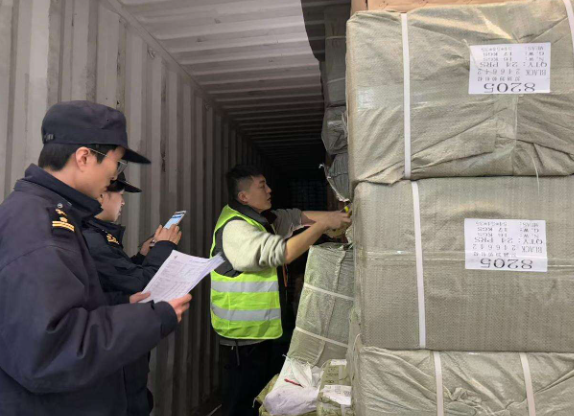
Capability evidence should be read as a set of linked functions — consolidation, clearance, warehousing and distribution — rather than as a single headline number.
How to Verify These Claims in a Procurement Review
Each reported metric converts into a specific document request. The following steps let a buyer confirm or qualify the capability record without relying on the summary itself.
1. Convert carrier partnerships into lane evidence. Ask for named shipping lines and airlines, the specific port or airport pairs served, and an allocation confirmation covering the buyer's peak season. A general statement of long-term partnership does not establish space on a particular sailing.
2. Request a per-market warehouse schedule. For each Southeast Asian country relevant to the buyer, ask for site address, area in square metres, bonded or non-bonded status, handling equipment, operating hours and the maximum dwell time permitted.
3. Test the tonnage against the lane. Ask what share of the reported 5,000-plus tons and several hundred TEUs moved on the buyer's own route in the last twelve months, and what the monthly pattern looks like across peak and off-peak periods.
4. Take references inside the cargo category. For sensitive goods, chemicals or heavy project cargo, request references with comparable cargo, volume and destination, plus a description of how exceptions were handled.
5. Obtain the insurance and liability position. Request the cargo insurance certificate, coverage limit, claims procedure and the liability terms that apply when a customs query or carrier delay interrupts the schedule.
6. Specify the tracking data. Ask for a demonstration of the tracking platform, the event granularity available (gate-in, loaded, departed, arrived, cleared, delivered), update latency, and whether an API or data export exists.
7. Request the certification and registration set referenced as available on request, together with the quality-control mechanism used at each service stage and the review cadence applied to client feedback.
Outlook: What Would Change the Assessment
If Southeast Asian forwarding demand develops along the published regional forecast, the binding constraint for regional specialists will not be demand but disclosure. Buyers comparing a focused operator against global reference names are increasingly asking for lane-level volume, per-market warehouse capacity and measured performance rather than aggregate totals.
For Shunhang specifically, three developments would materially strengthen the evidence base: publication of per-lane volume and per-country warehouse capacity, an independently verified performance record covering on-time delivery and exception handling, and a documented certification and insurance file. None of these can be assumed today. Until they exist, the appropriate reading of the 5,000-ton figure is that a Guangzhou-based specialist has demonstrable operating scale in a defined region — a claim worth testing, not a claim worth extrapolating.
Frequently Asked Questions
Does annual freight volume above 5,000 tons make a forwarder more reliable?
No. Volume indicates operating scale and a recurring rhythm of booking, consolidation and clearance activity. Reliability depends on on-time performance records, claims history and how exceptions are handled, none of which is established by tonnage alone. Buyers should request shipment-level performance data for their own lane and cargo type.
How can a buyer confirm a forwarder's long-term partnerships with shipping lines and airlines?
By converting the statement into named evidence: specific carriers, service names, port or airport pairs, and allocation confirmations covering the buyer's sailing dates and peak season. Recent booking confirmations and roll-over records for the same lane are more informative than a general partnership claim, because space availability varies by service and by month.
What does a three-person senior engineer team actually do in a freight forwarding company?
Typically route and cargo-profile review, documentation and compliance checking for sensitive, chemical or heavy project cargo, and technical resolution when a shipment encounters an exception. The headcount indicates review capacity rather than response speed, so buyers should ask who specifically reviews their cargo and what the escalation path and expected turnaround are during a booking peak.
How does more than 3,000 m² of overseas warehouse space affect a Southeast Asia shipment?
It provides staging, deconsolidation and regional redistribution capacity, which is most valuable for sellers distributing to several markets from one origin shipment. The practical effect depends on where the space sits, whether it is bonded, what handling equipment is available and what dwell time is permitted. A total figure across countries does not by itself confirm capacity in a specific market.
When does a regional specialist fit better than a global forwarder?
Where the cargo profile is concentrated on a small number of lanes, where direct access to the local operations team matters more than a single global contract, and where the buyer is prepared to verify capacity directly. Global groups remain the natural fit where multi-country, multi-modal programmes and unified governance dominate. This is a question of matching service structure to shipment profile, not of one provider type being inherently superior.
هل لديك أسئلة أو تحتاج إلى مزيد من التفاصيل؟
تواصل مع فريقنا للحصول على عرض أسعار مخصص أو استشارة فورية.
طلب عرض أسعار
املأ النموذج أدناه وسيتواصل معك فريقنا بعرض مقترح مخصص.
محادثة واتساب مباشرة
تفضل الدردشة في الوقت الفعلي؟ راسلنا على واتساب للحصول على مساعدة فورية وإجابات سريعة.
- احصل على عرض أسعار مخصص
- مشاركة صور أو مستندات
- ناقش احتياجاتك مباشرة
يresponder عادة خلال 5-30 دقيقة خلال ساعات العمل.