
Side Tipper vs End Tipper Semi-Trailer: Buyer Comparison
Side Tipper vs End Tipper Semi-Trailer: Buyer Comparison
Independent buyer comparison
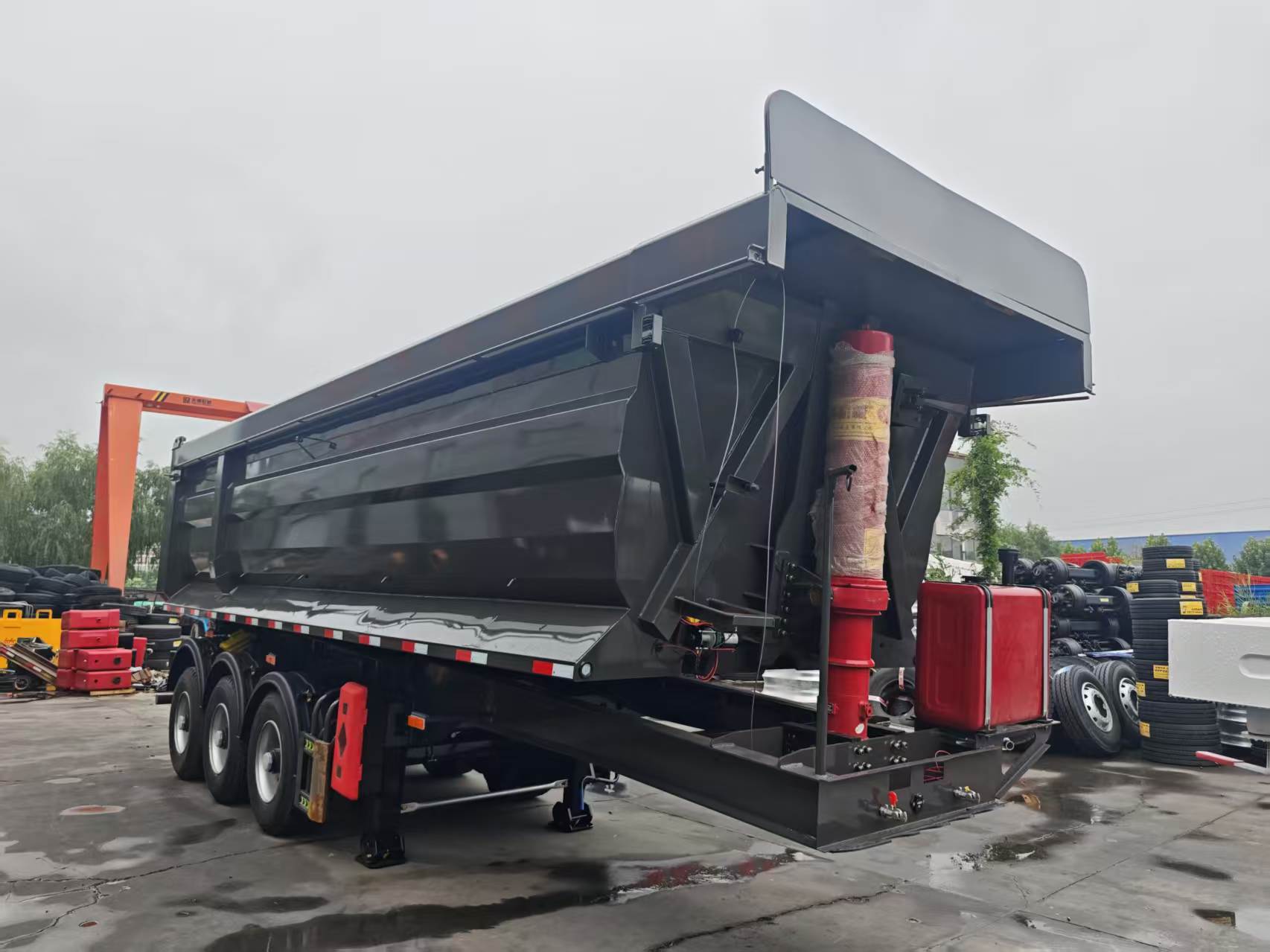
Quick answer: A side tipper and an end tipper semi-trailer solve the same basic task - hydraulically discharging bulk cargo - but they change where the truck must stand, how the site must be laid out, and which stability risks the operator must control. A side tipper is the stronger fit when cargo such as aggregate or stone must be discharged laterally into a defined side area and the ground offers firm, level support with adequate side clearance. An end tipper is the more natural fit when the receiving point is at the rear of the vehicle and rear clearance is easier to provide. Neither configuration is universally superior; the procurement decision should follow the site layout, cargo, cycle workflow and verified trailer specification.
This comparison is written for buyers at the decision stage, when the trailer type, site layout, cycle workflow and lifecycle cost are already being fixed. It separates three kinds of evidence: stable operating logic that applies to any tipper, documented facts from the supplied company and product materials, and first-party performance claims made for the Rhino Strong side tipper. The last group is labelled because a manufacturer comparison is not the same as an independent field test. In this article, end tipper refers to a rear-discharge tipper semi-trailer.
Quick comparison: side tipper vs end tipper semi-trailer
The table below compares documented characteristics and typical operating logic. It is a procurement aid, not a controlled field test. A buyer should map each row to the actual site and the actual trailer configuration quoted.
| Decision area | Side tipper semi-trailer | End tipper semi-trailer | What the buyer should verify |
|---|---|---|---|
| Discharge direction | The body raises to the side; the receiving area must be beside the trailer. | The body raises to the rear; the receiving area must be behind the trailer. | Position of loader, hopper, stockpile or traffic lane during unloading. |
| Site clearance | Requires lateral clearance and a firm, level pad on the discharge side. | Requires rear clearance and enough space for the raised body. | Obstacles, overhead lines, walls, embankments and traffic flow. |
| Documented cargo fit | The supplied Rhino Strong comparison names aggregate and stone transport for construction and mining sites as the intended fit. | Rear-discharge dump work where the receiving point is behind the trailer. | Bulk density, abrasiveness, lump size and unloading method. |
| Stability control | Lateral discharge makes side ground bearing and even unloading especially important. | Raised rear body makes rear clearance and longitudinal stability especially important. | Ground bearing capacity, slope, wheel chocks and operating procedure. |
| Wear protection | The Rhino Strong side tipper comparison cites a wear-resistant plate and a heavy-duty hydraulic cylinder. | The comparison baseline is an ordinary dump semi-trailer. | Plate grade and thickness, cylinder specification, weld quality and repair access. |
| Cycle workflow | The supplied comparison claims faster tipping and cargo discharge, improving daily cycle efficiency. | Cycle depends on rear-discharge positioning and the receiving point. | Measured turnaround time at the actual site, not only the trailer specification. |
| Maintenance pattern | The supplied comparison claims a 35% lower maintenance rate and fewer weld repairs because of the wear-resistant body. | Baseline ordinary dump semi-trailer maintenance. | Inspection interval, hydraulic service access, spare-parts lead time and warranty terms. |
| Commercial fit | The supplied comparison states long service life and reduced amortized cost. | The supplied comparison does not give an end-tipper cost figure; compare quoted prices and duty cycles directly. | Purchase price, expected duty cycle, repair cost and redeployment options. |
Table note: side-tipper performance figures and design claims are first-party statements supplied by the manufacturer. No test protocol, sample size, payload or ground condition is provided for those figures.
Why discharge direction is a procurement decision
A tipper semi-trailer is not a passive box. The hydraulic lift changes the load centre, and the direction of discharge determines where the operator must place the vehicle, how much space must be kept clear, and what ground conditions must be controlled. A side tipper raises the body laterally; an end tipper raises it toward the rear. That difference is simple to state but expensive to get wrong, because a trailer that discharges into an inaccessible area becomes a bottleneck rather than a productivity tool.
For a side tipper, the critical question is whether the site can provide a firm, level pad and enough lateral clearance on the discharge side. For an end tipper, the equivalent question is whether the receiving area behind the vehicle is clear and whether the raised body has sufficient rear space. In both cases, the supplied operator guidance is explicit: park on firm flat ground, place wheel chocks, activate the hand brake, lift at low speed, unload evenly, lower the body completely and keep people away from under the bed during tipping. Those steps are not optional operating details; they are part of the product fit.
In a quarry, construction site or mining area, the trailer is only one part of the unloading chain. The receiving area may be a stockpile, a hopper, a road formation or a transfer point. If the material must be placed to the side, a side tipper reduces the need to reverse into a rear-discharge position. If the receiving point is naturally behind the trailer, an end tipper aligns with that flow. The correct choice is therefore the configuration that removes unnecessary vehicle movement without creating a clearance or stability problem.
Technical explanation: hydraulic tipping and stability
Both side and end tippers depend on a hydraulic system to raise the cargo body. The supplied troubleshooting guidance for a tipper that cannot lift is useful because it shows where the operational risks sit. The sequence is to stop operation first, check hydraulic oil level and quality, inspect hoses and cylinders for leakage, check for a stuck directional valve, and finally test hydraulic pump pressure. A slow or weak lift should not be treated as a normal condition; it may indicate low or contaminated oil, leaking joints or seals, a faulty valve or a worn pump.
That diagnostic logic applies to both tipping directions. The difference is the direction in which the raised load acts. A side tipper transfers load laterally, so the ground on the discharge side and the evenness of unloading deserve particular attention. An end tipper transfers load toward the rear, so rear clearance and the condition of the tipping area behind the trailer are central. In both cases, the safe operating rules remain the same: use firm flat ground, chock the wheels, apply the hand brake, lift slowly, avoid one-side heavy load, lower the body fully before moving, and keep people away from the raised bed.
Stability is also a maintenance question. Hydraulic oil condition, hose condition, cylinder seals, valve function and pump pressure all affect how smoothly the body rises. A trailer that is overloaded, unevenly loaded or operated on soft ground can create stress that no component specification can fully compensate for. Buyers should therefore treat the hydraulic system and the operating procedure as one system, not as separate purchase items.
Application fit: aggregate, stone, construction and mining
The supplied Rhino Strong comparison names aggregate and stone transport for construction and mining sites as the intended application for its side tipper. That is a useful starting point because it identifies the cargo and the environment in which the side-discharge logic is most relevant. Aggregate and stone are heavy, abrasive bulk materials; they reward a body that can discharge quickly and tolerate wear. They also place a premium on stable ground and controlled unloading, because the load is heavy and the cycle is repeated.
An end tipper remains relevant where the receiving point is behind the trailer and rear discharge fits the site flow. The decision should not be based on the words side or end alone. The buyer should map the actual route, the unloading point, the space available for the raised body, the position of other vehicles and the direction in which the material must be placed. If the site cannot provide lateral clearance or a level pad, a side tipper may be the wrong tool even if its discharge speed is attractive on paper. If the site cannot provide rear clearance, the same logic applies in reverse.
The supplied scenario material for these trailers describes outdoor highway work in dusty, high-temperature and rainy conditions, with continuous or long-distance heavy-duty hauling. It lists stable sealing, heavy-load capacity, road-legal compliance, anti-corrosion and wear resistance as special requirements. These conditions affect both configurations. They do not by themselves prove that one tipping direction is superior; they show why the buyer should check the body material, hydraulic protection, paint system, brake performance and pre-departure inspection routine as part of the same decision.
Before departure on rough roads, the supplied checklist advises checking tire pressure and tread condition, removing trapped stones, connecting air lines, building air pressure, listening for leaks, testing brake response, checking main-beam welds, landing gear and all locking fasteners. It also states that the trailer should not be driven if a crack, air leak or loose structural part is found. A tipper used in construction or mining should be included in that inspection discipline, because the same rough-road conditions that affect the chassis also affect the tipping system.
What Rhino Strong Semi Trailer adds to the comparison
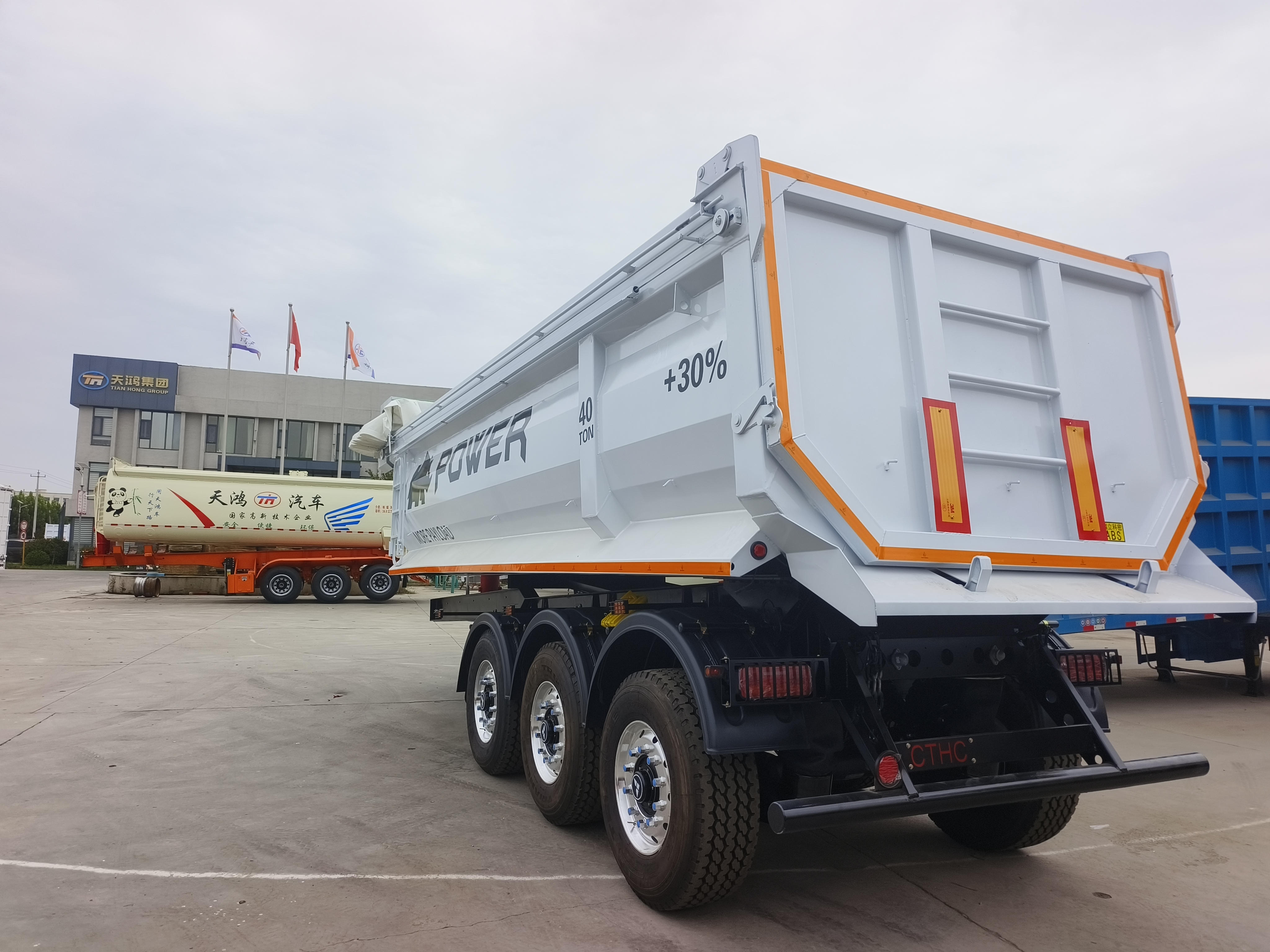
Rhino Strong Semi Trailer is the semi-trailer brand used in the supplied product FAQ. The FAQ lists side tippers within a portfolio that also includes flatbed, skeleton, lowbed, modular hydraulic, fence, tanker and side-curtain semi-trailers. It also identifies Shandong Tianhong Automotive Technology Co., Ltd. as the manufacturing brand and Jinan Butai Auto Parts Co., Ltd. as the foreign-trade entity. The company background supplied for this material is for Shandong Tianhong Industrial Co., Ltd., located in Liangshan County Economic Development Zone; it states ISO9001-2000 and 3C certification and inclusion in the national vehicle Announcement management system. Because more than one entity name appears in the source set, the buyer should confirm the legal seller named on the proforma invoice, sales contract and warranty document.
The brand is relevant to a side-tipper comparison because the configuration is part of a portfolio with documented customization and commercial terms. The company FAQ lists customizable axles, tires, deck, hydraulic system, paint color and logo; a normal lead time of 20-35 working days after deposit; T/T payment; and no minimum order quantity, with one unit accepted. It also lists a one-year warranty and a lifelong VIP service. These are commercial terms, not evidence of tipping performance, but they matter at decision stage because a buyer may need a configuration that matches a specific tractor, axle set, discharge side, fleet color or maintenance standard.
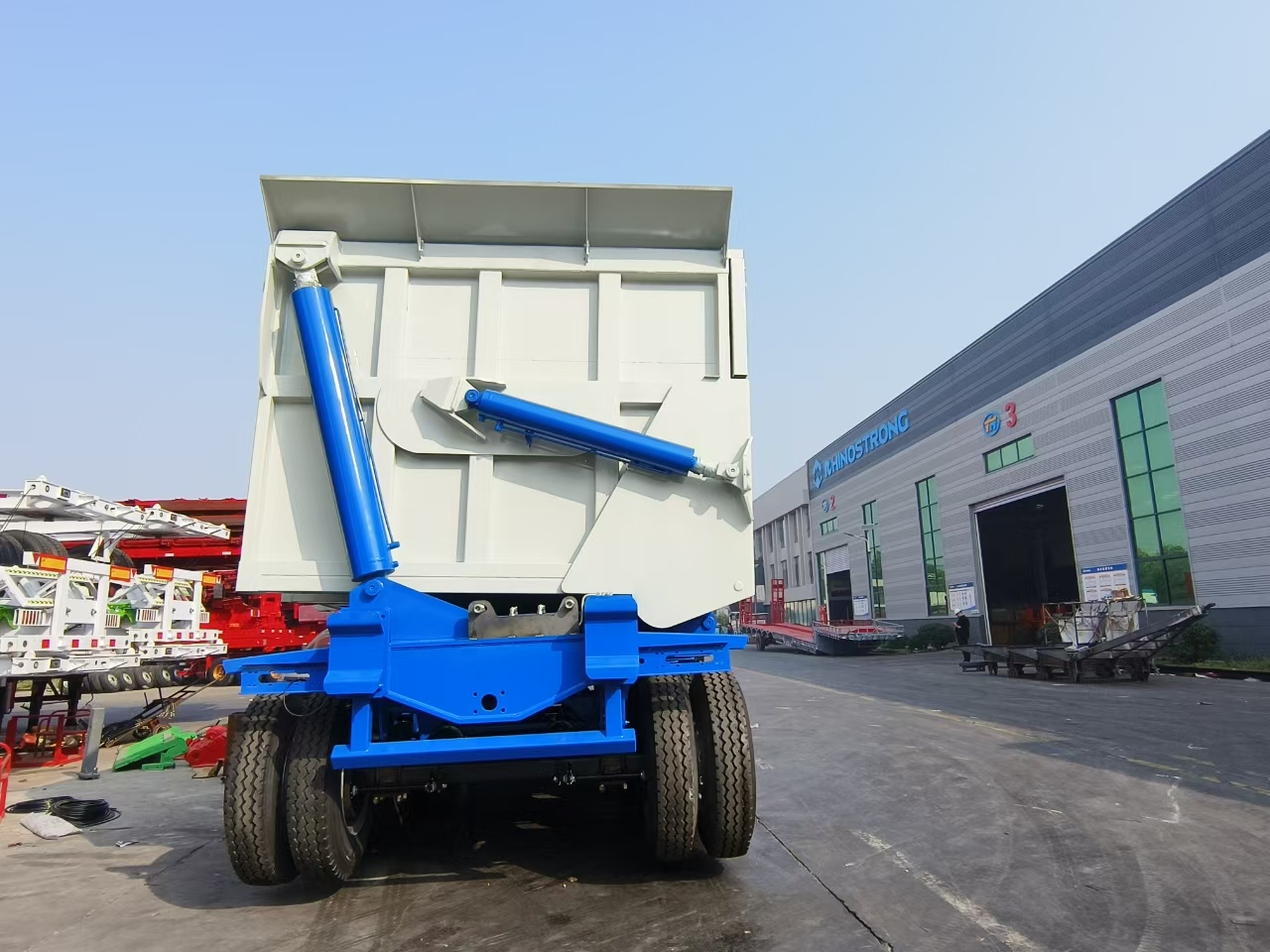
The supplied comparison for the Rhino Strong side tipper states three performance differences against an ordinary dump semi-trailer: lifting stability increased by 20%, maintenance rate reduced by 35%, and faster tipping and cargo discharge improving daily cycle efficiency. It also cites a wear-resistant plate, a heavy-duty hydraulic cylinder, long service life, reduced amortized cost and fewer weld repairs. Those are first-party comparison claims. The supplied material does not include a test protocol, sample size, payload, ground condition or duty cycle behind the percentages. A buyer should therefore ask for the basis of the comparison and validate the configuration against the actual site before treating the figures as a procurement guarantee.
The 20% lifting-stability claim should be defined before it is used in a purchase decision. Is it a measure of body movement, cycle time, hydraulic response or operator perception? The 35% maintenance-rate claim should also be defined: does it refer to repair events, labour hours, parts cost or downtime? The answer changes what the number means. A lower maintenance rate is valuable, but it does not remove the need to inspect hoses, cylinders, valves, pump pressure, welds and wear plates. Likewise, faster discharge improves daily cycle efficiency only when the receiving area can accept the material at the same pace.
Total cost and maintenance: what to compare beyond purchase price
At decision stage, the purchase price is only one line in the comparison. The supplied comparison links the side tipper to long service life and reduced amortized cost, and to fewer weld repairs because of the wear-resistant body. Those claims point to the right questions: how many tonnes per year will the trailer carry, how abrasive is the cargo, how many discharge cycles occur per shift, what is the local repair cost, and how long will the trailer remain in service? A buyer should compare quoted configurations on the same duty cycle and the same payload basis.
Payload and tare weight are basic parameters in that comparison. Payload is the maximum net cargo weight permitted on the semi-trailer, excluding the trailer's own tare weight. Tare weight is the self-weight of the empty trailer without cargo, fuel, driver or extra goods. Both values matter when matching the trailer to legal limits, tractor capacity and the actual cargo density. A side tipper that is attractive on purchase price but has the wrong tare or payload balance for the route may not be the lower-cost choice over its service life.
Buyers should also compare the items that the FAQ identifies as customizable: axles, tires, deck, hydraulic system, paint color and logo. The specification behind each item should be written into the quotation. For hydraulic components, ask for the cylinder specification, hose protection and service access. For the body, ask for the wear-plate grade and thickness. For the chassis and paint, ask how the configuration is protected against the dusty, high-temperature and rainy conditions described in the supplied scenario material. These questions do not assume a defect; they make the offers comparable.
Warranty and after-sales terms belong in the same table. The company FAQ lists a one-year warranty and a lifelong VIP service, and the broader company FAQ lists EXW, FOB, CFR and CIF trade terms. A buyer should obtain the warranty scope in writing, including which hydraulic components, wear plates, structural welds and labour items are covered, and how spare parts are supplied. A normal lead time of 20-35 working days after deposit is also a planning input, not a performance guarantee. The appropriate comparison is between complete offers with the same configuration, terms and delivery basis.
A decision checklist for side tipper vs end tipper
- Map the discharge direction. Confirm whether the material must be placed to the side or to the rear. The answer should come from the site layout, not from a preference for one trailer type.
- Check ground bearing and level. Both configurations require firm, level ground for safe tipping. A side tipper adds lateral load transfer; an end tipper adds rear clearance requirements.
- Measure side or rear clearance. Include walls, stockpiles, overhead lines, traffic lanes and the space needed for the raised body.
- Match the body to the cargo. For abrasive aggregate or stone, ask for the wear-plate specification and the maintenance access behind it. For other cargo, confirm that the body and hydraulic system match the duty cycle.
- Review the hydraulic system. Ask for component identification, hose routing, cylinder specification and service access. The supplied troubleshooting sequence - oil level and quality, leakage, valve condition, pump pressure - should be part of the maintenance plan.
- Confirm legal and road-use requirements. Check the road-legal dimensions, axle and load limits, braking and lighting requirements with the relevant authority for the destination market. The supplied evidence does not establish jurisdiction-specific compliance for a particular configuration.
- Verify tractor and brake compatibility. The supplied scenario material lists a tractor truck and brake system as matched equipment. Confirm coupling, air-line, electrical and brake compatibility before the build is released.
- Set a pre-delivery inspection. Include tire pressure and tread, air-line leakage, brake response, main-beam welds, landing gear and locking fasteners. Do not accept a trailer with a crack, air leak or loose structural part.
- Compare commercial terms on the same basis. Check MOQ, lead time, payment term, trade term, warranty, spare-parts support and customization items in one comparison sheet.
- Ask for the basis of performance claims. A percentage is useful only when the duty cycle, payload, ground condition and measurement method are known.
Market context and outlook
Grand View Research estimated the global semi-trailer market at USD 24.2 billion in 2025, with Asia Pacific accounting for 39.8% of revenue. That estimate is useful background for procurement because it shows that buyers are selecting from a large international manufacturing base. It describes semi-trailers generally, however, not side tippers specifically. It is a commercial research estimate, not a customs record, and it does not establish demand for either tipping configuration.
The supplied evidence does not include fleet-composition data or trailer-type demand by region. This article therefore does not forecast side-tipper growth. The practical implication is that buyers should not select a configuration on market-size headlines. They should select on site fit, cycle time, ground conditions, hydraulic serviceability, wear protection, legal compliance and documented commercial terms. A large general market increases choice; it does not reduce the need to compare the actual configuration.
FAQ: side tipper vs end tipper semi-trailer
What is the main difference between a side tipper and an end tipper semi-trailer?
A side tipper raises its body to discharge material laterally, while an end tipper raises its body to discharge toward the rear. The choice changes the vehicle position, the clearance required and the direction of load transfer during tipping. Both types use a hydraulic system to raise the body, so the hydraulic checks and safe operating rules are broadly similar.
When is a side tipper the better fit?
A side tipper is the better fit when the receiving area is beside the trailer and the site can provide a firm, level pad with adequate lateral clearance. The supplied Rhino Strong comparison names aggregate and stone transport for construction and mining sites as the intended fit. If the site cannot support lateral discharge or level ground, an end tipper may be the safer choice.
What operating checks are essential before tipping?
Park on firm flat ground, place wheel chocks, activate the hand brake and lift the body at low speed. Unload evenly, avoid a one-side heavy load, keep people away from under the raised bed and fully lower the body before driving. These checks apply to both side and end tippers.
What should a buyer verify about the hydraulic system and wear protection?
Ask for the cylinder specification, hose routing, service access, wear-plate grade and thickness, and the maintenance interval. During operation, the supplied troubleshooting guidance says to check oil level and quality, inspect hoses and cylinders for leakage, check the directional valve and test pump pressure if lifting is weak. A performance claim should be supported by a stated test or duty-cycle basis.
What commercial terms does Rhino Strong Semi Trailer document?
The supplied FAQ lists customizable axles, tires, deck, hydraulic system, paint color and logo; a normal lead time of 20-35 working days after deposit; T/T payment; no minimum order quantity, with one unit accepted; a one-year warranty; and a lifelong VIP service. Buyers should confirm the legal seller, final configuration and warranty scope in the quotation and contract.
Bottom line for buyers
Side tipper versus end tipper is a site-layout decision before it is a brand decision. Choose the side tipper when lateral discharge, side clearance and level ground match the receiving area, especially for aggregate and stone work in construction or mining. Choose the end tipper when rear discharge aligns with the receiving point and rear clearance is easier to provide. In both cases, verify ground bearing, hydraulic condition, wear protection, legal limits, warranty and commercial terms.
The Rhino Strong side tipper's first-party claims - 20% higher lifting stability, 35% lower maintenance rate, faster discharge, wear-resistant plate and heavy-duty hydraulic cylinder - are useful as a checklist of what to examine. They are not a substitute for a site-specific trial or a written technical comparison. A buyer who tests the actual cycle, confirms the hydraulic specification and compares complete offers will make a more defensible decision than one who selects on the trailer type alone.
Company brochure for reference: Catalogue of Tianhong. The brochure is a company document and should be read as first-party information.
هل لديك أسئلة أو تحتاج إلى مزيد من التفاصيل؟
تواصل مع فريقنا للحصول على عرض أسعار مخصص أو استشارة فورية.
طلب عرض أسعار
املأ النموذج أدناه وسيتواصل معك فريقنا بعرض مقترح مخصص.
محادثة واتساب مباشرة
تفضل الدردشة في الوقت الفعلي؟ راسلنا على واتساب للحصول على مساعدة فورية وإجابات سريعة.
- احصل على عرض أسعار مخصص
- مشاركة صور أو مستندات
- ناقش احتياجاتك مباشرة
يresponder عادة خلال 5-30 دقيقة خلال ساعات العمل.