
Siemens S7-1200 PLC: PROFINET or CM 1241 RS232?
Siemens S7-1200 PLC: PROFINET or CM 1241 RS232?
Specifying a Siemens S7-1200 PLC is usually described as a CPU and I/O decision. In practice, the decision that causes the most rework later is how the controller talks to everything else. For a machine that must exchange data with a variable frequency drive, an energy meter, a weighing indicator or a plant network, the choice at the decision stage narrows to three options: use the CPU integrated PROFINET interface, add a CM 1241 serial communication module, or use both for different links.
That choice also determines where analog signals are acquired, how much cabinet space the design consumes, how much engineering time the protocol work absorbs, and how exposed a machine is to the S7-1200 lifecycle transition that Siemens confirmed in late 2026. This comparison sets out what each path does on the S7-1200 platform using documented module specifications, and marks the points that still have to be confirmed against the Siemens catalog and system manual before an order is placed.
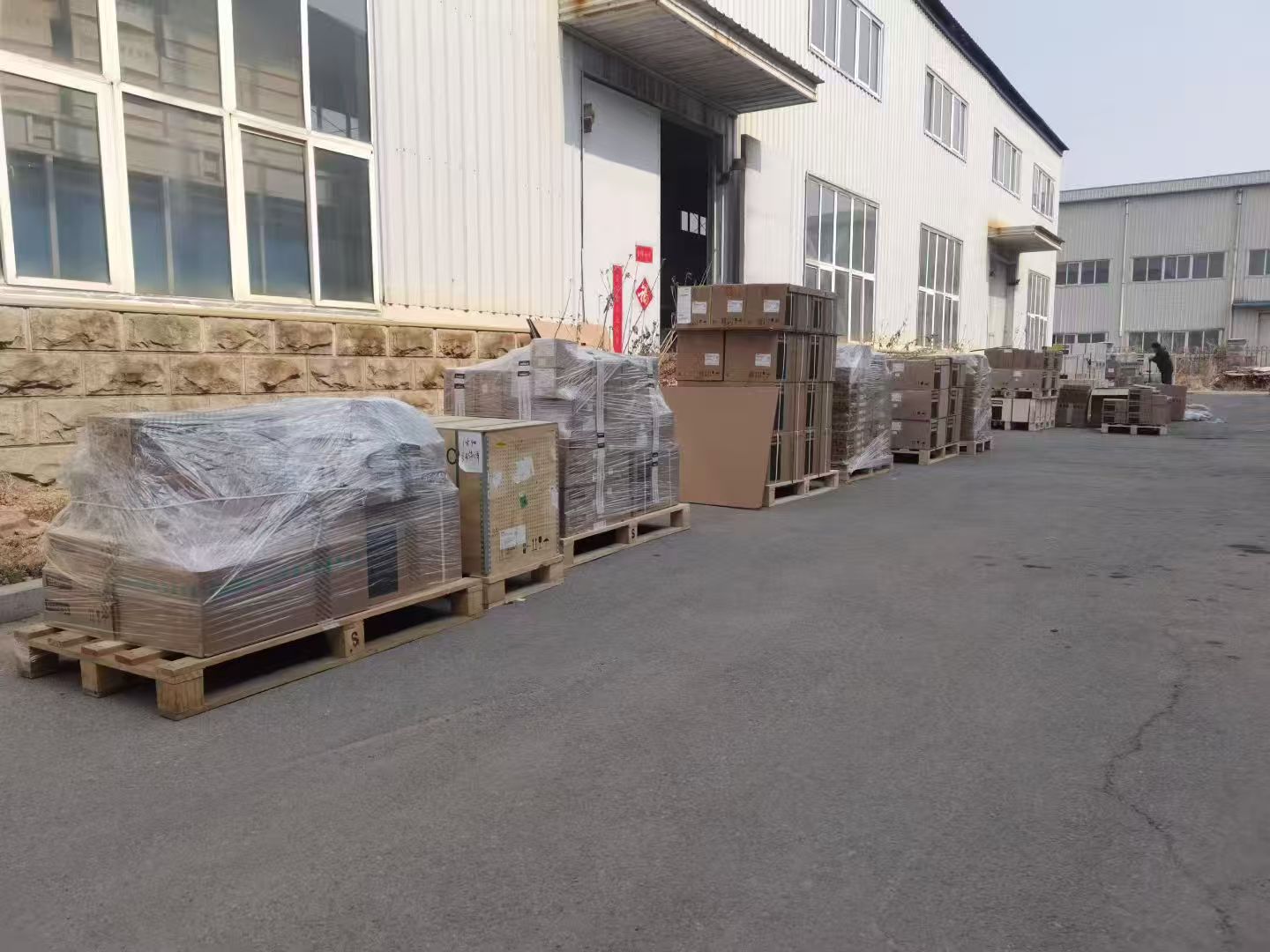
Industrial production environment: the communication architecture is decided at the specification stage, before machine wiring begins.
PROFINET and CM 1241 solve two different problems
On the S7-1200, PROFINET is the CPU integrated Ethernet-based interface rather than a plug-in card. Siemens technical records for the CPU 1214C identify an integrated PROFINET interface with native TCP/IP and ISO-on-TCP communication. The port count differs across the family: the CPU 1211C and CPU 1214C each specify one PROFINET port, while the CPU 1215C specifies two. Siemens product documentation also notes that communication features can vary by CPU generation and firmware, so the exact article number belongs inside the compatibility check rather than outside it.
A CM 1241 module covers the other kind of connection: point-to-point serial communication with a device that exposes a serial port instead of an Ethernet interface. The S7-1200 module portfolio discussed here lists two industrial PLC communication modules, 6ES7241-1AH32-0XB0 and 6ES7241-1CH32-0XB0. The CM 1241 family spans both the RS232 and the RS422/RS485 physical layers, and the two article numbers are not interchangeable, so the number has to be matched to the electrical interface of the device being connected rather than to the family name.
The practical distinction is between a network and a link. PROFINET is a network: it connects the controller to distributed I/O stations, drives and HMI panels designed for it. A serial module is a link: it connects the controller to one device that speaks a serial protocol, frequently equipment that predates the machine network or was never intended to join it.
How PROFINET moves data on an S7-1200
PROFINET IO operates through cyclic data exchange between a configured controller and configured devices. The S7-1200 CPU acts as the IO controller, a remote station such as an ET 200SP communicates through its interface module, and the station digital and analog I/O modules connect the field sensors and actuators while the CPU executes the control program.
Reliability depends less on the cable than on configuration discipline. Device configuration, network settings, BaseUnit selection and power-supply arrangements all have to be correct. ET 200SP standard I/O modules are installed on compatible BaseUnits that provide mechanical mounting and electrical connection, and a complete station typically also includes an appropriate interface module or CPU, the I/O modules and the required terminating components.
A compatible ET 200SP PROFINET IO station can exchange process data with an S7-1200 CPU configured as a PROFINET IO controller. That statement is architectural: it confirms the communication roles, not the outcome for a specific module mix, firmware version or station layout. Project-level confirmation therefore comes before the purchase order, particularly where an existing engineering project has to absorb a new station.
What the CM 1241 serial module is used for
Serial communication modules are described for RS422/RS485 industrial environments and for data exchange with variable frequency drives, energy meters, weighing instruments, industrial controllers and measuring equipment using compatible protocols. Serial integration project types include Modbus RTU network installation and legacy system upgrades. The documented operating range for that serial-module application is -20 °C to +60 °C for horizontal installation and -20 °C to +50 °C for vertical installation, subject to Siemens installation specifications.
Two engineering consequences follow from choosing this path. The first is that the physical layer must match. RS232 is a single-ended, point-to-point interface, while RS422 and RS485 are differential interfaces used where longer cable runs or multi-drop arrangements are required. Applicable distance limits, termination and isolation requirements come from the Siemens module documentation and the device manual, not from the module family name. The second is that serial links carry protocol work: the control program has to handle the message exchange the connected device expects, whereas PROFINET IO exchanges configured cyclic process data. That difference appears in engineering hours and commissioning risk, not only in the hardware line of the bill of materials.
PROFINET versus CM 1241: decision comparison
| Decision dimension | Integrated PROFINET (CPU) | CM 1241 serial module |
|---|---|---|
| Function in the machine | Network connection between the CPU and PROFINET devices | Point-to-point link to a single serial device |
| Hardware basis | Integrated in the CPU; one port on CPU 1211C and CPU 1214C, two ports on CPU 1215C | Separate S7-1200 module; article 6ES7241-1AH32-0XB0 or 6ES7241-1CH32-0XB0, physical layer to be confirmed |
| Typical counterparts | ET 200SP distributed I/O stations, PROFINET-capable drives, HMI panels | VFDs, energy meters, weighing instruments, industrial controllers and measuring equipment with compatible protocols |
| Configuration work | Device configuration, network settings, BaseUnit selection, power-supply arrangements | Interface settings plus protocol handling inside the control program |
| Data exchange model | Cyclic process data exchange between configured controller and devices | Message exchange defined by the connected device protocol |
| Cable and distance | Governed by network design and installation practice | Governed by the physical layer (RS232 or RS422/RS485); limits per Siemens documentation |
| Effect on analog I/O | Allows analog modules to be placed in remote stations near the sensors | Carries device data; analog process signals are handled by local or networked analog modules |
| Main procurement risk | CPU generation, firmware and engineering software compatibility | Physical-layer mismatch and protocol support at article-number level |
Read the table as a screening tool rather than a scorecard. Neither column wins in general: a packaging machine that already uses PROFINET drives and an HMI gains little from a serial module, while a retrofit that must read an existing weighing indicator with a serial output has no reason to invent an Ethernet path for it.
The analog I/O consequence: local modules or remote stations
Analog capacity is the reason the communication decision reaches into the I/O plan. A CPU carries only a small number of onboard analog channels: the CPU 1211C, CPU 1214C and CPU 1215C each specify two analog inputs, and only the CPU 1215C adds two onboard analog outputs. Most machines therefore add analog modules. In a local arrangement that means an SM 1231 analog input module such as 6ES7231-4HF32-0XB0, which provides eight analog input channels for voltage and current signals from pressure, flow, level and temperature transmitters, or an SM 1232 analog output module such as 6ES7232-4HD32-0XB0, which provides four analog voltage or current outputs for drive speed references, proportional valve positioning and process setpoints.
PROFINET changes the economics of that layout. When measurement points are spread along a line, analog modules can sit in ET 200SP stations close to the sensors, and the CPU reads them over the network instead of pulling long signal cables back to the cabinet. When the sensors sit next to the cabinet, local modules usually remain the simpler arrangement, because the network adds configuration work that buys nothing if the cable runs are already short.
Once analog signals move to a distributed station, module selection becomes its own comparison. The ET 200SP AI 8xI 2-/4-wire BA module (6ES7134-6GF00-0AA1) provides eight single-ended current inputs; the AI 4xI 2-/4-wire ST module (6ES7134-6GD01-0BA1) provides four differential current inputs. Both specify 16-bit maximum resolution, plus or minus 0.3% basic accuracy at 25 °C and a plus or minus 0.5% operational error limit, both are 15 mm wide, and both support 2-wire and 4-wire current transmitters, module diagnostics and BaseUnits A0/A1. The differences that decide an order are channel density, input configuration and the specified maximum shielded cable length.
| Parameter | AI 8xI BA, 6ES7134-6GF00-0AA1 | AI 4xI ST, 6ES7134-6GD01-0BA1 |
|---|---|---|
| Channels | 8 single-ended current inputs | 4 differential current inputs |
| Resolution | 16-bit maximum | 16-bit maximum |
| Accuracy | 0.3% basic at 25 °C; 0.5% operational error limit | 0.3% basic at 25 °C; 0.5% operational error limit |
| Transmitter support | 2-wire and 4-wire current | 2-wire and 4-wire current |
| Diagnostics and BaseUnit | Module diagnostics; BaseUnits A0/A1 | Module diagnostics; BaseUnits A0/A1 |
| Maximum shielded cable | 200 m | 1,000 m |
| Typical power loss | 0.7 W | 0.85 W |
| Module width | 15 mm | 15 mm |
| Modules needed for 8 channels | 1 | 2 |
| Power loss for 8 channels | 0.7 W typical | 1.70 W, calculated from two typical ratings |
| Module width for 8 channels | 15 mm | 30 mm, excluding BaseUnits |
For an eight-channel requirement, one BA module replaces two ST modules: 50% fewer signal modules, 15 mm instead of 30 mm of module width excluding BaseUnits and accessories, and a typical module power loss of 0.7 W instead of a calculated 1.70 W based on the two ST typical ratings. The ST module answers a different requirement. Its four differential inputs and its Siemens-specified maximum shielded cable length of 1,000 m, five times the 200 m BA limit and subject to installation requirements, fit installations where signal runs are long or where the input configuration is the deciding factor. Neither advantage is universal, and channel count, cable length and input type should be checked against the measurement plan rather than against a preference for more channels.
Application patterns where the choice becomes concrete
Packaging machinery
Packaging equipment typically combines fast digital sensing, an analog speed reference and an operator interface. S7-1200 digital input modules acquire the 24 V DC signals from proximity switches, photoelectric sensors, limit switches and pushbuttons, analog output modules supply the speed reference for a drive that accepts an analog setpoint, and the PROFINET connection carries the HMI and any networked devices. Where the drive accepts a network command instead, the analog output channel may not be needed at all, which is why drive interface capability should be settled before the I/O count is frozen.
Conveyor control
Conveyor lines are where distributed I/O earns its cost. Stations placed along the line shorten field wiring, and the CPU reads the process data over PROFINET. The same architecture raises new procurement questions: the interface module, the BaseUnits, the power-group configuration and the station layout all become part of the order. For a short conveyor inside a single cell, local S7-1200 modules usually remain the lower-risk choice.
Temperature and process monitoring
Temperature, pressure, flow and level loops depend on analog input accuracy and on where the transmitter cable ends. Local SM 1231 modules handle eight voltage or current inputs at the cabinet. If transmitters are distributed across a skid or a long line, the ET 200SP comparison above becomes the deciding document, because the specified maximum shielded cable length differs fivefold between the BA and ST modules.
Pump and motor control
Pump and valve control uses analog outputs for setpoints and digital outputs for contactor interface circuits, solenoid valves and indicator lamps. Where mixed AC and DC loads must be switched, eight-channel relay output modules cover contactor coils, solenoid valves, indicator lamps and interposing relays within the rated electrical limits of the module. For small machines, the CPU 1211C with its AC supply and four relay outputs is the compact option, while the CPU 1214C adds 14 digital I/O points (14 DI and 10 transistor DO versus 6 DI and 4 relay DO) when both relay count and DC output count grow.
Where a machine also needs variable-speed motor control, the drive decision interacts with the communication decision. The SINAMICS S120 supports drive diagnostics and controlled motor operation, and it carries a higher initial system cost than conventional fixed-speed control because of power electronics, control components, commissioning and cooling requirements, while conventional fixed-speed control generally has a lower initial equipment cost. A customer reference in India reports 50 units of model 6SL3310-1TE32-6AA3 operating for 18 months with zero reported equipment failures and zero fault-related repairs; that is a single reference, not a reliability guarantee, and energy savings against fixed-speed operation have not been quantified.
Cost, space and cabinet heat: what the arithmetic shows
No verified transaction prices, minimum order quantities or lead times are available for the article numbers discussed here, so this comparison stops at cost drivers rather than claiming a price advantage. The drivers are module count, cabinet width, engineering hours, commissioning risk and spare-part strategy.
Module count and width follow directly from the documented figures. One eight-channel BA analog module replaces two four-channel ST modules and halves signal-module width from 30 mm to 15 mm, excluding BaseUnits and accessories. Cabinet heat follows the same pattern: using Siemens typical module power-loss ratings, one BA module accounts for 0.7 W against a calculated 1.70 W for two ST modules, a calculated difference of 1.0 W on the eight-channel comparison. Those are typical module figures, not measured cabinet temperatures, and they sit alongside the CPU contribution: 10 W typical for the CPU 1211C, and 12 W typical for the CPU 1215C and for the newer CPU 1214C 6ES7214-1AG40-0XB0. The power-loss value of the legacy CPU 1214C 6ES7214-1AG31-0XB0 has not been verified here under directly comparable conditions.
Engineering effort is the least visible and often the largest driver. A PROFINET station requires device configuration and network planning before commissioning. A serial link requires interface configuration and protocol handling in the program. Neither can be priced from a catalog page, and both should be estimated before the cheaper hardware option is chosen.
Lifecycle: the 2026 phase-out now sits inside the communication decision
Siemens Industry Online Support states that the SIMATIC S7-1200 Generation 1 family will officially be declared phased out on 1 November 2026, with availability as a new part until 30 September 2027. For a buyer in the current cycle, that notice converts an apparently technical choice into a specification decision. New machines specified today will run most of their service life after the new-part window closes, while existing machines need an exact-part-number replacement plan.
The CPU 1214C illustrates why the article number cannot be treated as a synonym for the model name. The legacy 6ES7214-1AG31-0XB0 and the newer 6ES7214-1AG40-0XB0 share the same onboard I/O counts of 14 DI, 10 transistor DO and 2 AI, but the newer model doubles program and data memory from 75 KB to 150 KB. Migrating to the newer article number requires software, firmware and project compatibility checks, whereas legacy replacement may preserve an existing hardware configuration. Siemens catalog records also list a G2 variant, 6ES7214-1AH50-0XB0, with 14 DI, 10 DO, 250 kB program memory and 750 kB data memory; the memory definitions differ from the earlier records and the values must not be merged or averaged.
Communication choices inherit that risk. A PROFINET architecture is tied to the CPU generation, its firmware and the engineering software version. A serial module is tied to its own article number and availability. Recording both on the machine documentation is the cheapest protection available against an unplanned redesign once the new-part window has closed.
Verification checklist before the purchase order
- Complete Siemens article number and generation for every CPU, module and BaseUnit, including the suffix that distinguishes variants such as 1AG31, 1AG40 and 1AH50.
- Physical layer of every serial device (RS232 or RS422/RS485) matched to the correct communication module article number.
- Protocol used by each serial device, and whether the planned program implementation supports it.
- PROFINET device list, station layout, BaseUnit types and power-group configuration for any ET 200SP station.
- Analog channel count, signal type, required resolution and the specified maximum cable length for the planned installation.
- Cabinet width and 24 V power budget, calculated from typical module power-loss figures rather than assumed.
- Firmware and engineering software compatibility with the existing project, particularly where a legacy CPU is being replaced.
- Lifecycle status and new-part availability for the specific article number, given the S7-1200 G1 phase-out timeline.
- Supplier documentation: Siemens authorization status where the buyer requires it, traceability of the article number, warranty terms and return conditions.
On the last point, authorization and traceability vary by supplier, so buyers who need a Siemens warranty chain should confirm authorization for the specific article number rather than for the brand in general, and should keep that documentation with the machine file.
Outlook
Through the window that closes on 30 September 2027, Generation 1 CPUs remain available as new parts, which means legacy and newer article numbers will coexist in the market and in spare-parts inventories. The practical consequence is not a dramatic technology shift but a documentation one: machines specified with complete article numbers, a recorded communication architecture and a defined replacement path will be easier and cheaper to maintain than machines specified by model family.
On the communication side, the split between networked and serial links is unlikely to disappear in existing plant. Serial devices remain in service for years after the machines hosting them are upgraded, which keeps the CM 1241 option relevant in retrofit work even where new machines are designed around PROFINET. Category context supports persistence rather than any forecast: third-party estimates such as the 42.3% share of the global small PLC market attributed to Siemens for full-year 2024 by Next Move Strategy Consulting describe the category, not the S7-1200 line, and should not be read as a growth prediction for this product family.
How JILIN BATU Trade Co.,ltd supports this procurement step
JILIN BATU Trade Co.,ltd is an industrial automation products and spare parts supplier based in Changchun, Jilin Province, China. Founded in 2017 with 15 employees and two engineers, the company works entirely on export business, with main markets in India, Indonesia, the United States, Brazil, Mexico and South Korea. Its portfolio centres on SIEMENS and Mitsubishi Electric automation products: SIMATIC S7-1200, S7-1500, S7-300, ET 200, SINAMICS, SINUMERIK, SITOP and SIMATIC HMI, alongside MELSEC PLC, servo products and related control components.

Siemens automation product inventory: article-number level sourcing is the practical basis for the comparisons described above.
For the decisions described above, the relevant working method is model-based procurement. Buyers submit exact manufacturer part numbers, a bill of materials or a purchasing list and receive quotation, availability and delivery information against those numbers. That suits a comparison in which the difference between 6ES7214-1AG31-0XB0 and 6ES7214-1AG40-0XB0, or between a BA and an ST analog module, changes both function and fit. BATU is a supplier and does not manufacture these products; buyers requiring Siemens authorization or a manufacturer warranty chain should confirm that status for the specific article number as part of the order.
The company brochure, including product scope and contact details, is available for download: Jilin BATU product brochure (PDF).
Frequently asked questions
Can an S7-1200 use PROFINET and a CM 1241 serial module at the same time?
They serve different links. PROFINET uses the CPU integrated interface, while a CM 1241 module provides serial communication for devices that use serial protocols. A machine design can therefore use the PROFINET port for networked devices and a communication module for serial devices, subject to the module and configuration limits stated in the Siemens documentation for the specific CPU.
How many PROFINET ports does an S7-1200 CPU have?
The CPU 1211C and CPU 1214C each specify one PROFINET port, and the CPU 1215C specifies two. Port count is one reason the CPU 1215C is selected for designs that need a second network connection. Communication features can vary by generation and firmware, so the exact article number should be verified before ordering.
Which S7-1200 analog modules are used when signals are acquired locally?
Two examples from the range are the SM 1231 analog input module 6ES7231-4HF32-0XB0 with eight voltage and current input channels, and the SM 1232 analog output module 6ES7232-4HD32-0XB0 with four analog voltage or current outputs. Selection depends on channel count, signal type and the required resolution.
Can an S7-1200 read analog values from remote ET 200SP modules over PROFINET?
Yes. A compatible ET 200SP PROFINET IO station can exchange process data with an S7-1200 CPU configured as a PROFINET IO controller. The station needs an interface module or compatible CPU, BaseUnits and the required terminating components, and device configuration, network settings and power-supply arrangements must be correct.
Does the S7-1200 Generation 1 phase-out mean existing machines must be replaced now?
No. Siemens states that the S7-1200 G1 family is declared phased out on 1 November 2026, with availability as a new part until 30 September 2027. Existing machines can continue in service, but replacement planning should use complete article numbers and generation details, and migration to a newer article number requires software, firmware and project compatibility checks.
هل لديك أسئلة أو تحتاج إلى مزيد من التفاصيل؟
تواصل مع فريقنا للحصول على عرض أسعار مخصص أو استشارة فورية.
طلب عرض أسعار
املأ النموذج أدناه وسيتواصل معك فريقنا بعرض مقترح مخصص.
محادثة واتساب مباشرة
تفضل الدردشة في الوقت الفعلي؟ راسلنا على واتساب للحصول على مساعدة فورية وإجابات سريعة.
- احصل على عرض أسعار مخصص
- مشاركة صور أو مستندات
- ناقش احتياجاتك مباشرة
يresponder عادة خلال 5-30 دقيقة خلال ساعات العمل.