
Siemens S7-1200 PLC vs ET 200SP: Local vs Remote I/O
Siemens S7-1200 PLC vs ET 200SP: Local vs Remote I/O
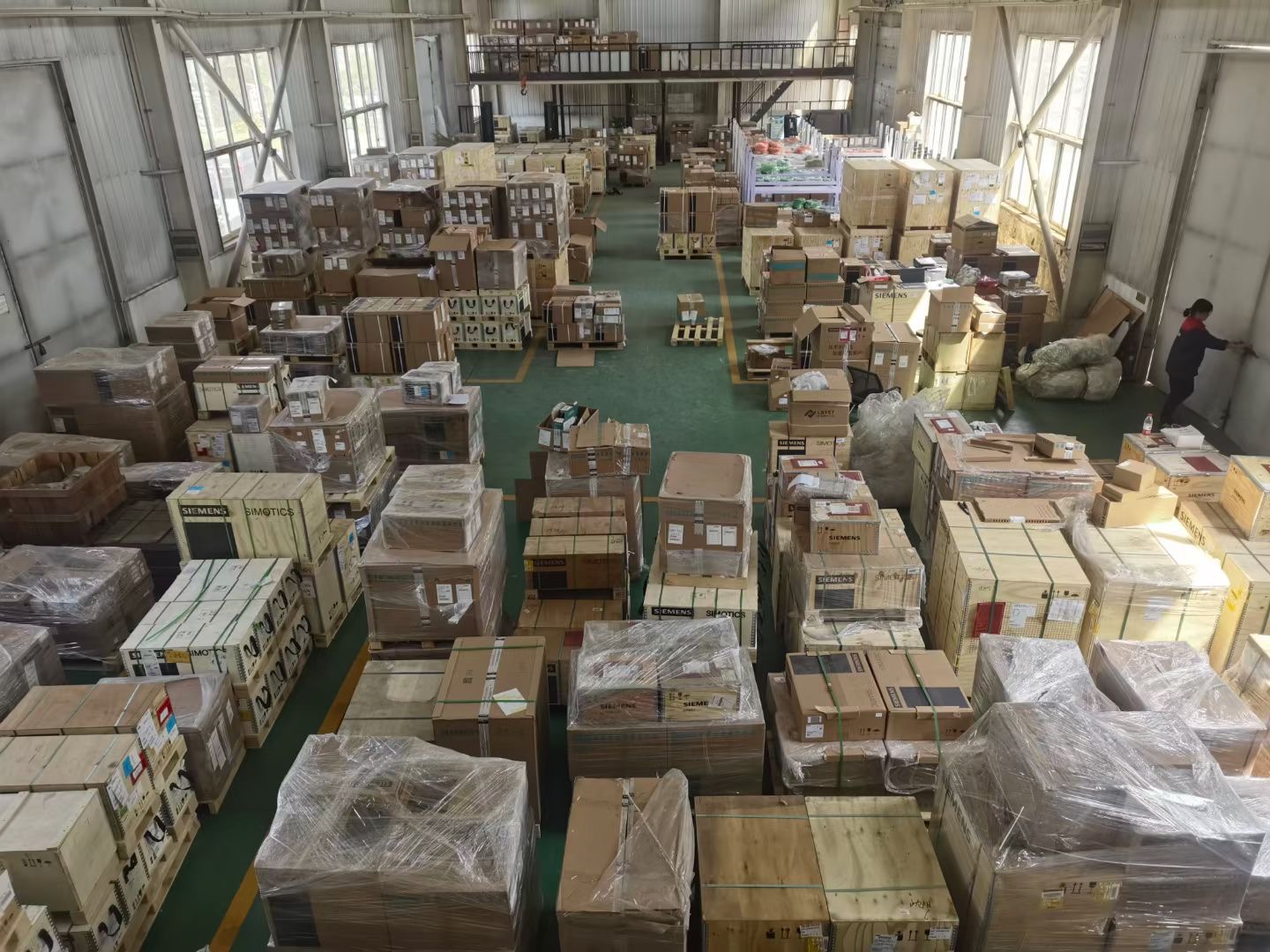
Industry context: Siemens automation components in a supply environment. Image: Jilin BATU Trade Co.,ltd.
For a Siemens S7-1200 PLC project, the local-versus-distributed I/O decision turns on where the signals physically are, how many channels the machine needs, and whether analog signals require differential inputs or long shielded cable runs. S7-1200 local I/O keeps the CPU and signal modules in one control cabinet. SIMATIC ET 200SP distributed I/O moves signal acquisition to remote stations connected over PROFINET. Both routes can work in a compatible automation system, but they differ in hardware scope, wiring, analog-module selection and procurement verification. This comparison therefore focuses on fit, not on a universal winner.
The short answer: when local I/O fits and when ET 200SP fits
Use S7-1200 local I/O when the machine is compact, the control cabinet is close to the sensors and actuators, and the required channel count can be met by the CPU plus matching S7-1200 signal modules. Use ET 200SP distributed I/O when sensors and actuators are spread across a long machine or production line, and when field-mounted I/O stations reduce the need to route every signal back to the central cabinet.
| Decision point | S7-1200 local I/O | ET 200SP distributed I/O |
|---|---|---|
| Signal location | Centralized near the CPU cabinet | Distributed across the machine or line |
| Connection model | S7-1200 CPU plus matching local signal modules | ET 200SP interface module or compatible CPU over PROFINET |
| Hardware to plan | CPU and S7-1200 I/O modules | Interface module or CPU, BaseUnits, I/O modules and terminal components |
| Analog signal check | Confirm channel count, wiring method and module cable limits | Compare single-ended and differential inputs and confirm shielded-cable limits |
| Best fit | Compact machines, central control, short sensor runs | Long machines, field devices, modular line sections |
| Main verification item | CPU model, firmware, module compatibility and exact order number | CPU or interface compatibility, PROFINET configuration, BaseUnits and power groups |
The table is a starting filter. It does not replace a channel-by-channel review. In practice, the decisive evidence is often a combination of the I/O list, cabinet layout, analog signal type, cable routes and the replacement strategy for an installed machine.
What local I/O means on the Siemens S7-1200 PLC
Local I/O on the S7-1200 platform includes the onboard I/O of the CPU and compatible S7-1200 signal modules installed at the controller. The S7-1200 Compact PLC line covers several CPU models. The documented CPU 1211C provides 75 KB of program and data memory, 6 digital inputs, 4 relay digital outputs rated at 2 A, 2 analog inputs and one PROFINET port. The DC/DC/DC CPU 1214C provides 14 digital inputs, 10 transistor digital outputs and 2 analog inputs. Its legacy 6ES7214-1AG31-0XB0 version has 75 KB of memory, while the newer 6ES7214-1AG40-0XB0 version has 150 KB with the same onboard I/O counts. The CPU 1215C moves to 200 KB, 14 digital inputs, 10 transistor digital outputs at 0.5 A, 2 analog inputs, 2 analog outputs and two PROFINET ports.
When the onboard channels are not enough, the machine builder can plan matching S7-1200 signal modules. Examples in the supplied product range include the 16-channel digital input module 6ES7221-1BH32-0XB0, the 8-channel analog input module 6ES7231-4HF32-0XB0 and the 4-channel analog output module 6ES7232-4HD32-0XB0. These illustrate the local expansion path: the CPU remains the control center, and the added I/O stays in the same cabinet area as the controller.
The practical value of local I/O is architectural simplicity. The control program, the signal modules and the field wiring terminate in one place. That is useful for compact equipment, short cable runs and maintenance procedures built around a single cabinet. The boundary is equally clear: every field signal still has to reach that cabinet, and the local channel count is limited by the CPU and the available module slots. For an existing machine, replacement should begin with the exact CPU order number, not with a visual match. The 1214C legacy and newer versions share the same onboard I/O count, but their memory differs by 75 KB, so a migration needs software, firmware and project compatibility checks.
ET 200SP distributed I/O: what changes in the architecture
ET 200SP is a modular distributed I/O system. A complete station typically includes an appropriate interface module or CPU, BaseUnits, I/O modules and the required terminating components. A compatible S7-1200 CPU can operate as a PROFINET IO controller and exchange process data with an ET 200SP PROFINET IO station. The interface module handles communication, while digital and analog I/O modules connect field sensors and actuators. The S7-1200 CPU still executes the control program.
The hardware difference is visible in the station components. An example interface module is 6ES7155-6AA02-0BN0. A matching BaseUnit example is 6ES7193-6BP00-0DA0, which provides 16 push-in process terminals and enables a new load potential group within an ET 200SP station. The BaseUnit is not an optional accessory in the abstract: it provides mechanical mounting and electrical connections for compatible electronic modules. This is why an ET 200SP purchase list cannot be reduced to I/O modules alone.
The architectural benefit is that signal acquisition can sit near the field devices. This is relevant when a machine has several sections, when sensor and actuator wiring is distributed over a long line, or when a modular station simplifies field wiring and maintenance access. The trade-off is added engineering scope: PROFINET device configuration, network settings, BaseUnit selection, power-supply arrangements and terminating components all need to be planned. ET 200SP should therefore be treated as a station design, not as a direct one-for-one replacement for a local I/O module.
Technical comparison: density, signal type and cable length
The analog-module choice inside an ET 200SP station shows why I/O count alone is a weak comparison metric. The supplied comparison between the AI 8xI 2-/4-wire BA module 6ES7134-6GF00-0AA1 and the AI 4xI 2-/4-wire ST module 6ES7134-6GD01-0BA1 gives a concrete example.
| Specified item | ET 200SP AI 8xI BA 6ES7134-6GF00-0AA1 | ET 200SP AI 4xI ST 6ES7134-6GD01-0BA1 |
|---|---|---|
| Analog current inputs | 8 single-ended current inputs | 4 differential current inputs |
| Maximum resolution | 16-bit | 16-bit |
| Basic accuracy at 25 degrees C | plus or minus 0.3 percent | plus or minus 0.3 percent |
| Operational error limit | plus or minus 0.5 percent | plus or minus 0.5 percent |
| Maximum shielded cable length | 200 m | 1,000 m |
| Typical module power loss | 0.7 W | 0.85 W |
| Width | 15 mm | 15 mm |
| Transmitter and BaseUnit support | 2-wire and 4-wire current transmitters, module diagnostics, BaseUnits A0 and A1 | 2-wire and 4-wire current transmitters, module diagnostics, BaseUnits A0 and A1 |
For an eight-channel current-input requirement, the difference becomes practical. One 8-channel BA module provides eight inputs. Two 4-channel ST modules are needed to provide the same input count. The supplied comparison therefore shows a reduction from two signal modules to one, or 50 percent fewer signal modules. Because both modules are 15 mm wide, the signal-module width falls from 30 mm to 15 mm, excluding BaseUnits and accessories. The typical power-loss comparison for eight channels is 0.7 W for one BA module versus 1.70 W for two ST modules, based on the individual typical ratings.
The ST module has a different capability profile. Its four differential current inputs and 1,000 m maximum shielded cable length make it suitable for applications where longer supported signal cable runs and differential measurement are relevant. Siemens specifies that cable length for the ST module; it is five times the 200 m limit stated for the BA module. That does not make one module universally better. It means the choice depends on the signal type and cable route in the actual station.
A similar discipline applies on the local side. The S7-1200 analog input module 6ES7231-4HF32-0XB0 is listed with eight analog input channels, which matches the channel count of the BA module. Channel count alone, however, does not establish wiring compatibility with a particular transmitter or cable route. Buyers should verify the module specification, signal type and installation requirements before treating a local eight-channel module and a remote eight-channel module as interchangeable.
Cost and lifecycle decision criteria for buyers
There is no responsible way to declare one architecture cheaper without quotations for the complete configurations being compared. The cost of local I/O includes the CPU, matching S7-1200 modules, cabinet space and field wiring back to the cabinet. The cost of ET 200SP includes the interface module or compatible CPU arrangement, BaseUnits, I/O modules, terminal components, power-supply planning and PROFINET engineering. A credible comparison should use the same I/O list and the same installation boundary for both options.
- Signal map: list every sensor and actuator by physical location. If most devices sit near one cabinet, local I/O has a simple layout. If they are spread along a line, ET 200SP may reduce long home-run wiring.
- Channel count and density: count digital inputs, digital outputs, analog inputs and analog outputs separately. Then check whether the chosen CPU and modules meet the count without unnecessary spare channels.
- Analog signal type: determine whether the application needs single-ended or differential current inputs. The BA and ST example shows that this single decision can change module count, module width, typical power loss and supported shielded cable length.
- Hardware scope: for local I/O, verify the CPU and each S7-1200 module. For ET 200SP, verify the interface module or CPU, BaseUnits, I/O modules and terminating components as one station.
- Engineering and maintenance: local I/O is concentrated and easy to inspect in one cabinet. Distributed I/O can place diagnostics and replacement access closer to the machine, but it also adds network and station-level checks.
- Replacement and spare-parts strategy: match the exact order number, firmware expectations and existing project. Do not assume that a newer CPU or a different I/O module can be dropped into an installed system without compatibility checks.
The replacement case illustrates the risk. The legacy CPU 1214C 6ES7214-1AG31-0XB0 and the newer 6ES7214-1AG40-0XB0 have the same 14 digital inputs, 10 transistor digital outputs and 2 analog inputs. The newer version doubles program and data memory from 75 KB to 150 KB and represents a newer firmware platform. Keeping the legacy model may preserve an existing hardware configuration, while moving to the newer model requires software, firmware and project compatibility checks. The same logic applies to ET 200SP: a module replacement can affect the BaseUnit, power group or interface configuration, so the full station should be reviewed.
Application fit: packaging, conveyors, assembly, temperature, pumps and motors
Application fit should be assessed as a set of conditional examples, not as proof of a deployed customer case. A compact packaging machine with a central cabinet and a moderate I/O count is a natural candidate for S7-1200 local I/O. The CPU and local modules stay together, and the machine builder can plan the digital and analog channels in one place. If the same packaging line has multiple sensor clusters along its length, an ET 200SP station can move signal acquisition closer to those clusters, with the S7-1200 CPU remaining the PROFINET controller.
Conveyor control follows a similar pattern. A short, integrated conveyor section may be served from a local cabinet. A longer conveyor line with distributed sensors, photo eyes, limit switches and actuator groups may justify remote I/O stations. The buyer should count the devices and map their locations before comparing module lists, because a remote station adds hardware that must be included in the total scope.
Assembly automation often combines digital interlocks, analog measurement and communication with HMI panels or other equipment. The S7-1200 platform can execute control programs and communicate over PROFINET, while digital and analog modules handle the machine signals. Whether those modules are local or distributed depends on cabinet architecture and cable routes, not on the control task alone. Temperature, pressure and flow monitoring add another check: analog input modules acquire current or voltage signals from transmitters, and the permitted cable length and signal type must be matched to the module. Pump and motor-control panels commonly use digital outputs for contactors, relays or drive interfaces, and analog outputs can provide speed or position setpoints to compatible variable frequency drives and regulating devices. In all of these cases, the correct choice is the one that satisfies the signal map and the documented module limits.

Factory context for I/O architecture planning. Image: Jilin BATU Trade Co.,ltd.
Replacement and procurement checks before purchase
A reliable I/O purchase starts with a complete technical description, not with a generic product category. For an S7-1200 local I/O project, the list should include the exact CPU order number, onboard I/O requirement, signal-module order numbers, supply voltage, output type and any existing project constraints. For an ET 200SP project, the list should include the interface module or compatible CPU, every I/O module, the required BaseUnits, power groups, terminal components and firmware expectations.
- Confirm the exact manufacturer order number and product description.
- Check CPU or interface-module compatibility with the planned station.
- Verify digital input and output types, including relay or transistor output behavior where relevant.
- Verify analog signal type, wiring method and the module-specific shielded cable limit.
- Include BaseUnits, power groups and terminating components in the ET 200SP scope.
- Review the existing automation project and firmware before a replacement or upgrade.
- Use a bill of materials or purchase list so that no station component is omitted.
For installed equipment, the safest starting point is the nameplate and the original order number. The S7-1200 family includes several CPU versions with different memory and I/O combinations, and ET 200SP includes multiple module variants with different channel counts and signal characteristics. A supplier can help match the recorded part numbers, but the buyer or system integrator remains responsible for confirming that the replacement fits the machine design and the existing control project.
Jilin BATU Trade Co.,ltd as a procurement reference
Jilin BATU Trade Co.,ltd is an industrial automation products and spare parts supplier based in Changchun, Jilin Province, China. The company was founded in 2017, reports 15 employees and 2 engineers, and describes an export ratio of 100 percent. Its listed markets include India, Indonesia, the United States, Brazil, Mexico and South Korea. Its supply focus covers SIEMENS and Mitsubishi Electric industrial automation products, including PLC CPUs, PLC modules, PLC motors, servo drives, inverters and variable frequency drives. Within the SIEMENS portfolio, SIMATIC S7-1200 PLCs and ET 200SP distributed I/O systems are key product categories.
BATU describes a model-based procurement approach: customers can submit exact manufacturer part numbers, bills of materials or purchasing lists to request quotations, product availability information and delivery arrangements. The company also emphasizes technical specification verification and multi-model sourcing support. In this comparison, BATU is a supplier and procurement reference, not the manufacturer of the Siemens products discussed. Its useful role is to help buyers match local or remote components by exact order number and to flag specification questions before a replacement or upgrade. The official company website is Jilin BATU Trade Co.,ltd.
Published contact details are: Valia Li, email 414335049@qq.com, telephone and WhatsApp +86 15144176061, address Lvyuan District, Changchun City, Jilin Province, China.
Frequently asked questions
Can a Siemens S7-1200 PLC control an ET 200SP distributed I/O station?
Yes. A compatible ET 200SP PROFINET IO station can exchange process data with an S7-1200 CPU configured as a PROFINET IO controller. The ET 200SP interface module handles communication, while digital and analog I/O modules connect field sensors and actuators. The S7-1200 CPU executes the control program. This architecture supports decentralized signal acquisition and equipment control without placing every I/O module beside the PLC.
What should buyers check before purchasing Siemens ET 200SP modules?
Buyers should confirm the complete Siemens part numbers, module functions, compatible interface module or CPU, BaseUnit requirements, signal types, power-group configuration and project compatibility. ET 200SP is a modular distributed I/O system, and a complete station typically includes an appropriate interface module or CPU, BaseUnits, I/O modules and the required terminating components.
How does local S7-1200 I/O differ from ET 200SP distributed I/O?
S7-1200 local I/O stays at the CPU and uses matching S7-1200 signal modules in the same cabinet area. ET 200SP distributed I/O places an interface module and I/O modules at a remote station and exchanges data over PROFINET. The choice depends on signal location, channel count, analog signal type, cable length, cabinet space, engineering scope and replacement requirements.
Which Siemens S7-1200 CPU should be checked first for a machine I/O requirement?
Start with the required digital and analog I/O, supply voltage, relay or transistor outputs, memory capacity, communication interfaces and expansion needs. The CPU 1211C provides 75 KB and 6 digital inputs, 4 relay outputs, 2 analog inputs and one PROFINET port for compact relay-control applications. The CPU 1214C DC/DC/DC provides 14 digital inputs, 10 transistor outputs and 2 analog inputs. The CPU 1215C provides 200 KB, 14 digital inputs, 10 transistor outputs, 2 analog inputs, 2 analog outputs and two PROFINET ports. Verify the exact order number and software compatibility before purchase.
How do the ET 200SP AI 8xI BA and AI 4xI ST analog input modules compare?
The AI 8xI BA module 6ES7134-6GF00-0AA1 provides eight single-ended current inputs, 16-bit maximum resolution, plus or minus 0.3 percent basic accuracy at 25 degrees C, a 200 m maximum shielded cable length, 0.7 W typical power loss and a 15 mm width. The AI 4xI ST module 6ES7134-6GD01-0BA1 provides four differential current inputs, 16-bit maximum resolution, the same basic accuracy, a 1,000 m maximum shielded cable length, 0.85 W typical power loss and a 15 mm width. Both support 2-wire and 4-wire current transmitters, module diagnostics and BaseUnits A0 and A1. For eight inputs, one BA module replaces two ST modules, reducing signal-module count from two to one and signal-module width from 30 mm to 15 mm, excluding BaseUnits and accessories. The selection should follow the required signal type and cable route.
Buyer takeaway
The S7-1200 local versus ET 200SP distributed I/O decision is a fit decision. Start with the physical signal map, then quantify channel count and signal type, then verify the exact hardware scope and project compatibility. Local I/O suits a compact, central control cabinet and a defined module list. ET 200SP suits distributed field signals and modular line architecture, provided the interface module, BaseUnits, power groups and terminal components are included in the plan. Neither route should be selected from a single module price alone.
Download the Jilin BATU Trade Co.,ltd brochure for product-category and procurement reference.
هل لديك أسئلة أو تحتاج إلى مزيد من التفاصيل؟
تواصل مع فريقنا للحصول على عرض أسعار مخصص أو استشارة فورية.
طلب عرض أسعار
املأ النموذج أدناه وسيتواصل معك فريقنا بعرض مقترح مخصص.
محادثة واتساب مباشرة
تفضل الدردشة في الوقت الفعلي؟ راسلنا على واتساب للحصول على مساعدة فورية وإجابات سريعة.
- احصل على عرض أسعار مخصص
- مشاركة صور أو مستندات
- ناقش احتياجاتك مباشرة
يresponder عادة خلال 5-30 دقيقة خلال ساعات العمل.