
Silica for Salt vs Silica for Spices: Buyer Scorecard
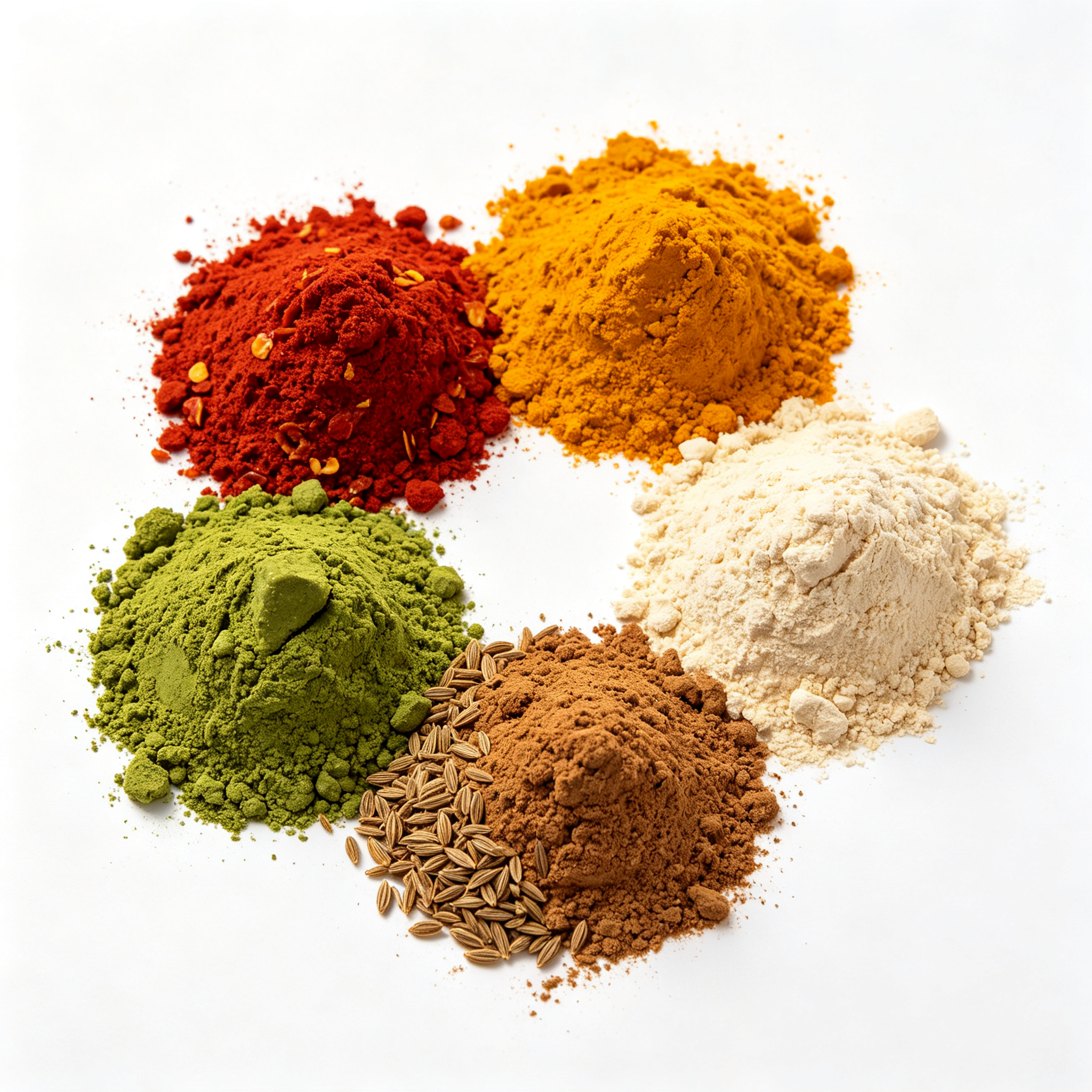
Seasonings and powdered blends present a different silica selection problem than table salt.
Food manufacturers often assume that a single anti-caking silica can serve salt, pepper, bouillon and spice blends. In practice, the two categories pull in different directions on particle size, surface area, moisture control, oil absorption and colour protection. This buyer-facing comparison sets out a neutral scorecard for evaluating the two product families and explains where each one is strongest, where re-validation is required, and where a single grade will not cover both jobs.
Why Salt and Spices Are Not the Same Silica Problem
Table salt and ground spices look like similar powders on a shelf. Inside the package, the failure modes are different. Salt is an inorganic crystalline solid with high solubility, strong hygroscopic behaviour above a critical relative humidity, and a tendency to form hard bridges through recrystallisation of dissolved surface ions. Spice powders, chilli powder, curry blends, chicken powder and compound seasonings carry natural oils, oleoresins and often added liquid flavourings. Their caking risk comes from both residual moisture and oil-phase bridging, and their appearance is sensitive to colour change during storage and processing.
A silica selected for table salt is optimised around a coarser, free-flowing architecture that resists recrystallisation bridging and resists moisture pickup during long ambient storage. A silica selected for spices and seasonings is optimised around higher specific surface area and higher oil absorption, so the porous structure can take up both surface moisture and oily fractions without collapsing. Colour protection is also a category-specific concern for spices and heat-processed seasonings, where trace iron can catalyse discolouration in the presence of reactive flavour molecules.
The practical consequence for buyers is straightforward: salt and spice applications should be evaluated against different scorecards, even when both use materials classified under E551 (INS 551) and the same CAS number, 7631-86-9.
The Two Product Families at a Glance
In the Zhonglian Food Silica portfolio, the two application families are specified separately. Silica for Salt is represented by grades such as ZLSIL-A325 and ZLSIL-W58E. Silica for Spices & Seasonings is represented by a wider range that includes ZLSIL-W213, ZLSIL-WLPC, ZLSIL-W244FP, ZLSIL-W63FP, ZLSIL-W1FP, ZLSIL-W72FP, ZLSIL-W74FP, ZLSIL-W3050, ZLSIL-W3150 and ZLSIL-W58D. Both families sit inside the broader Food Grade Anti-caking Silica range, and both are precipitated amorphous silica under E551 with CAS 7631-86-9.

Anti-caking silica is selected by application, not by a single universal specification.
| Buyer Dimension | Silica for Salt | Silica for Spices & Seasonings |
|---|---|---|
| Representative grades | ZLSIL-A325, ZLSIL-W58E | ZLSIL-W213, ZLSIL-WLPC, ZLSIL-W244FP, ZLSIL-W63FP, ZLSIL-W1FP, ZLSIL-W72FP, ZLSIL-W74FP, ZLSIL-W3050, ZLSIL-W3150, ZLSIL-W58D |
| Typical particle size (D50) | ≈44 μm (325 mesh) | ≈50 μm |
| BET surface area | 170 m²/g | 200 m²/g |
| pH (4% slurry reference) | 5.5–7.5 | 5.5–7.5 |
| Loss on drying | ≤7.0% | ≤6.5% |
| Oil absorption | Not the primary design driver | High oil absorption grade set |
| Typical dose | 0.5–1% | Application-specific; to be confirmed by trial |
| Material basis | Precipitated amorphous silica, E551, CAS 7631-86-9 | Precipitated amorphous silica, E551, CAS 7631-86-9 |
| Applicable industries | Table salt, sea salt, seasoned salt, curing salt, salt substitutes | Chilli/pepper powder, curry, compound seasonings, chicken powder, spices |
Technical Explanation: How Anti-Caking and Colour Protection Work
Precipitated silica has a porous surface and fine particle size. When distributed between host particles, it creates physical separation, absorbs free moisture and interrupts the capillary bridges that would otherwise pull particles together. Anti-caking performance therefore depends on specific surface area (BET), oil absorption and particle size distribution. What the end user perceives as a free-flowing, non-caking powder is a direct result of that underlying porous structure.
Colour protection is a separate mechanism. Iron ions are the main driver of yellowing and off-colour in silica-based formulations. In the presence of flavour compounds such as ethyl maltol, vanillin and flavonoids, even trace iron can form coloured complexes that turn powders yellow, dull white creams and cloud clear gels. Low-iron grades are designed to keep iron below the reaction threshold from raw material through final packaging, so the finished product remains white, clear and stable through shelf life.
For salt, the dominant physical risk is recrystallisation bridging under fluctuating humidity. A coarser, free-flowing silica architecture at 170 m²/g BET and 325 mesh is designed to interrupt that bridging while keeping the blend visually consistent with the salt crystal. For spices and seasonings, the dominant risk is combined moisture and oil bridging, plus colour drift in reactive flavour systems. A 200 m²/g BET with higher oil absorption gives the structure enough pore volume to hold both free moisture and oily fractions.
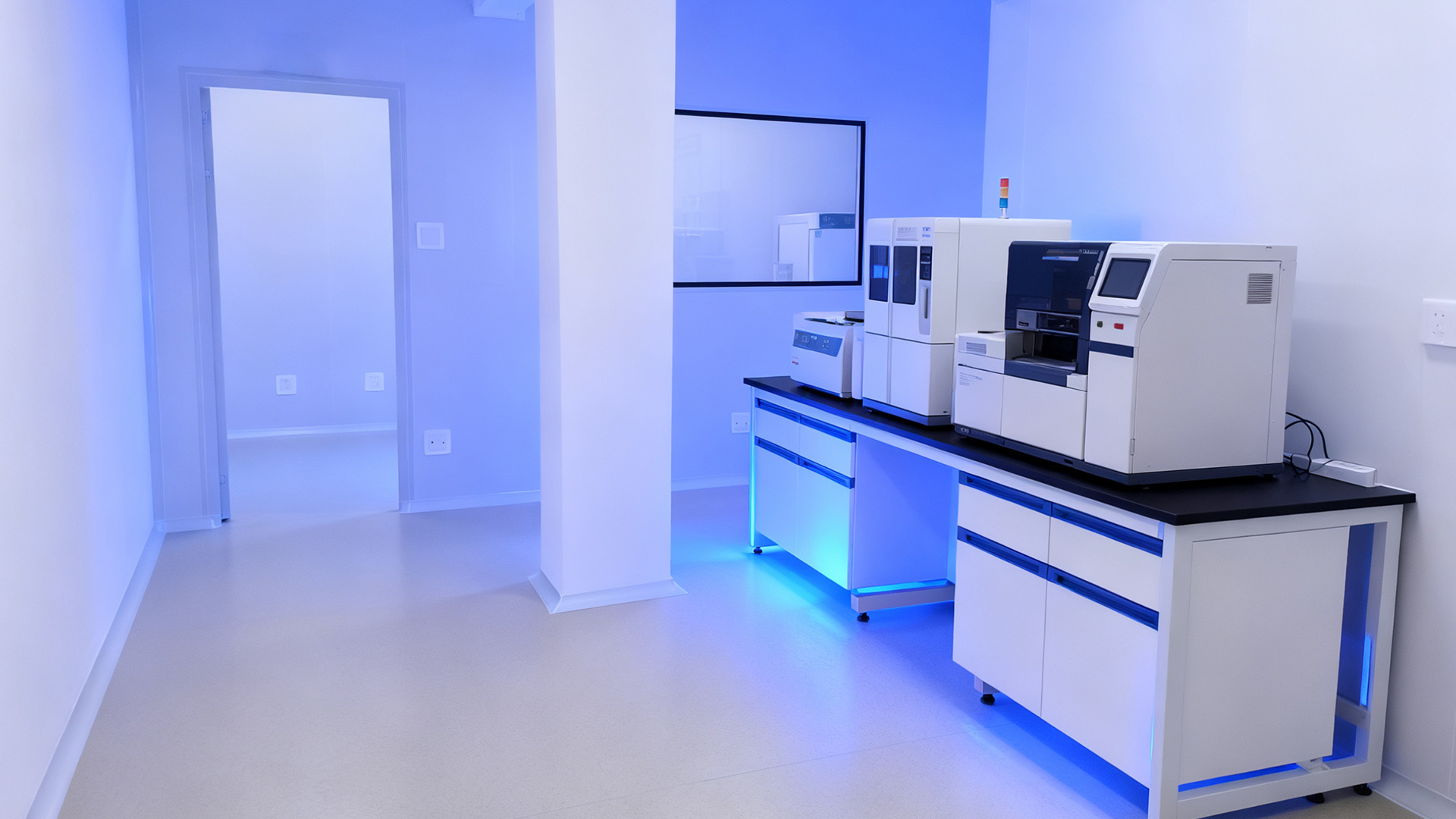
Batch release for food-grade silica is supported by in-house testing and microbiology laboratories.
Buyer Scorecard: Four Decision Criteria
1. Caking Control
For salt, caking is driven by moisture-mediated recrystallisation between crystals. The relevant questions are: how quickly does the salt take up moisture at the warehouse or retail humidity band, and does the selected silica interrupt bridging at the intended dose of 0.5–1%? The A325 and W58E grades are specified for table salt, sea salt, seasoned salt, curing salt and salt substitutes under precisely this mechanism.
For spices and seasonings, caking is driven by both moisture and oil-phase bridging, and the blend itself may contain hygroscopic ingredients such as onion powder, garlic powder or maltodextrin-based flavour carriers. Here the relevant questions are: does the grade have enough oil absorption to take up the oily fraction, and does its BET give enough pore volume to hold surface moisture in a high-fat matrix? The seasoning grade set is designed around high oil absorption specifically to cover this dual mechanism.
Scorecard takeaway: the salt grade set is optimised for recrystallisation bridging; the seasoning grade set is optimised for combined moisture-and-oil bridging. They are not interchangeable at the same dose.
2. Moisture Sensitivity
Loss on drying (LOD) measures free moisture in the silica itself. A high LOD means the silica adds moisture to the system instead of absorbing it, which defeats the anti-caking purpose. In the two families compared here, Silica for Salt is specified at LOD ≤7.0% and Silica for Spices & Seasonings at LOD ≤6.5%. The tighter spec on the seasoning side reflects the more complex matrix: a spice blend is usually already closer to its moisture ceiling than dry table salt, so any additional free moisture from the silica has a larger relative effect.
Buyers operating in high-humidity regions or shipping through long ocean freight should treat LOD as a frontline incoming-inspection value, not a footnote on the COA. Both families are supplied with batch records and are tested per batch against applicable standards.
3. Oil Absorption
Oil absorption measures pore capacity to take up oils and liquids; a higher value means higher liquid loading capacity. This is the single most important differentiator between the two families for any application that carries flavour oils, oleoresins or liquid seasonings. In the salt family, oil absorption is not the primary design driver because table salt carries almost no oil phase. In the seasoning family, the grade set is designed around high oil absorption because chilli powder, curry blends and compound seasonings contain volatile oils and added liquid flavourings that would otherwise migrate to the particle surface and promote bridging.
Failed liquid-flavour carrier applications are often traced to selecting a low-oil-absorption grade. When specifying silica for a seasoning or flavour-bearing powder, the oil absorption value on the COA should be matched to the measured oil load of the blend, not estimated from the bulk appearance.
4. Pilot-Trial Requirements
COA compliance does not guarantee finished-product performance. In-spec raw material parameters only confirm that the material is chemically compliant; end performance is also affected by formulation, process and equipment. Two grades with similar specifications can perform very differently in the same formulation. When replacing an incumbent grade, buyers should validate with pilot trials rather than switching directly at bulk scale, because skipping that step risks full-scale production failure.
For salt, a pilot trial should compare flowability, caking behaviour after accelerated humidity exposure and appearance of the finished salt. For spices and seasonings, a pilot trial should additionally evaluate colour stability under accelerated ageing, because iron-catalysed discolouration may not appear during the first days of storage. Both trial designs should use the same batch the plant intends to run in production, so that the validation reflects real supply.
Zhonglian Food Silica supports this stage with R&D, formulation and particle-size customisation production services, and can customise product grade, particle size, specifications, adsorption performance and downstream application solutions, with the exact customisation scope depending on the product series.
Application / Use Cases
Table salt, sea salt, seasoned salt, curing salt and salt substitutes are the intended application set for the salt-focused grades. These are dry, inorganic, often free-flowing products where the main value of silica is preventing block formation during storage and transport, and maintaining consistent dosing at the filling line.
Chilli/pepper powder, curry, compound seasonings, chicken powder and broader spice blends are the intended application set for the seasoning-focused grades. These products typically contain a mixed oil and moisture load, and they are often packaged in transparent or light-coloured formats where any colour drift is immediately visible to the consumer.
A third, cross-cutting use case applies to any moisture-sensitive powder: the same silica families are used in sugars and sweeteners, dairy and mixes, instant beverages, bakery and cereals, nutrition and protein powders, and as flavour carriers for liquid flavours, vitamins and botanical extracts. For these applications the selection logic follows the same scorecard, but the weighting shifts toward the dominant failure mode of the specific blend.
Market Trend Analysis
Third-party market research places the global food grade silica market at approximately USD 0.87 billion in 2025, per Fortune Business Insights. The same published source reports a broader conflict in valuation: some commercial research houses report figures up to USD 1.8 billion because of scope differences between strict E551 food grade and broader categories that include pharmaceutical or feed grades. Buyers should treat headline market figures cautiously and check the definitional boundary behind any single number.
On the regulatory side, EFSA re-evaluated E 551 and, in October 2024, confirmed its safety for all populations including infants, under Regulation (EU) No 231/2012. This matters for buyers because it removes a recurring compliance question from European sourcing discussions and shifts the competitive focus toward physical performance, colour stability and supply reliability rather than regulatory uncertainty.
On the production side, precipitated silica is a large-volume material category. Mordor Intelligence reports global precipitated silica market volume at approximately 3.25 million tons in 2025, an indicator that capacity and process maturity are broadly available; differentiation therefore sits in grade matching rather than in raw material availability. HS Code 281122 remains the standard trade classification for silicon dioxide under the United Nations Statistics Division classification.
Comparison with Traditional Solutions
Silica is not the only anti-caking route. Traditional alternatives include tricalcium phosphate, calcium silicate and simple mechanical blending with coarse diluents. Each has limitations that matter to specific categories.
Tricalcium phosphate and calcium silicate have lower pore volume relative to precipitated silica at comparable dose, and in high-fat spice blends their oil-holding capacity is limited. They also introduce an insoluble mineral fraction that can affect mouthfeel in fine powders. Where colour sensitivity is high, the metal impurity profile of these alternatives can itself be a variable, particularly in blends containing reactive flavour compounds.
Coarse diluent blending, for example blending salt with a coarser inert carrier, reduces caking but dilutes the active product and changes the salt-to-volume ratio. For seasoning blends this is rarely acceptable because it shifts the flavour profile.
The limitation of silica itself should also be stated clearly. No single silica grade covers both salt and seasoning optimally. A grade chosen for salt will typically underperform in high-oil seasoning blends, and a grade chosen for seasoning may be unnecessarily fine or unnecessarily high in oil absorption for table salt, which adds cost without a functional benefit. In addition, the low-iron property that protects colour in seasoning blends is a specification that must be confirmed on a batch basis; colour stability in a reactive flavour matrix cannot be inferred from the CAS number or from the general description “food-grade silica”.
Future Outlook
Three forces are likely to shape sourcing decisions in the next cycle. First, colour protection is becoming a specification rather than a preference: as more seasoning and flavour blends use reactive flavour compounds, low-iron capability moves from a niche requirement to a standard line item on incoming inspection. Second, pilot-trial discipline is becoming a normal procurement step rather than an exception, because switching suppliers at bulk scale without parallel validation carries more downside risk than the incremental trial cost. Third, supplier-side capability matters more than catalogue breadth: R&D, formulation and particle-size customisation services, backed by in-house testing and microbiology laboratories and 100% testing, are the practical tools that shorten the gap between a sample and a running line.
Buyers who build a structured scorecard now — separate criteria for salt and for spices, batch-verified low-iron data where colour matters, and a defined pilot-trial protocol — will be better positioned when the next grade substitution or cost review cycle arrives.
FAQ
Why does silica prevent caking in powder products?
Its nano-porous structure forms a physical barrier between powder particles, blocking inter-particle bridging and moisture uptake. Anti-caking performance depends on specific surface area (BET), oil absorption and particle size distribution, so BET and D50 are key selection criteria. Precipitated silica has a porous surface and fine particle size; when evenly distributed between particles it creates physical separation, absorbs free moisture and stops particles from bridging through capillary action.
Why do some spice blends turn yellow, and how is that controlled?
Iron ions are the main driver of yellowing and off-colour in silica-based formulations. In the presence of flavour compounds such as ethyl maltol, vanillin and flavonoids, even trace iron forms coloured complexes that turn powders yellow, dull white creams and cloud clear gels. Low-iron grades are designed to keep iron below the reaction threshold from raw material through final packaging, so the product stays white, clear and stable through shelf life. Buyers working with colour-sensitive seasonings should confirm iron content on the COA rather than relying on the general grade description.
What is a typical dose of silica in salt and in seasonings?
For salt applications, the stated typical dose for the salt-focused grades is 0.5–1%. For spices and seasonings, dose is application-specific and should be confirmed by trial, because the oil load, moisture content and base powder structure vary widely across blends. The minimum order quantity for the manufacturer is 1 ton, and the factory performs 100% testing, supported by testing and microbiological laboratories.
Why are pilot trials necessary before switching grades?
COA compliance does not guarantee finished-product performance, because in-spec raw material parameters only confirm that the material is chemically compliant. End performance is also affected by formulation, process and equipment, and two grades with similar specifications can perform very differently in the same formulation. Always validate with pilot trials when replacing an incumbent grade; skipping this step risks full-scale production failure.
What is the MOQ and how is customisation handled?
The minimum order quantity is 1 ton. The manufacturer provides R&D, formulation and particle-size customisation production services, and offers customisation of product grade, particle size, specifications, adsorption performance and downstream application solutions, with the exact customisation scope depending on the product series. Exact test items, test frequencies and batch documents are to be confirmed with the supplier at the qualification stage.