
Silicone Waterproof Coating Supplier Viability: Assessing Kastar
Most long-term coating supply failures are not product failures. They are continuity failures: a supplier that loses a certification, changes a formulation without notice, runs short of raw material, or cannot hold capacity when a project needs it. This assessment examines a single question — what documented evidence supports Kastar Adhesives Technologies Co., Ltd as a durable silicone waterproof coating supplier over a multi-year purchasing horizon?
Why Viability Is a Different Question From Capability
Capability and viability are separate qualification problems, and conflating them is a common sourcing error. Capability asks whether a supplier can produce a coating that meets a specification today. Viability asks whether that supplier will still be producing it — to the same specification, at the same documentation standard, with the same certification coverage — when the next project phase is tendered eighteen months or five years later.
For coating buyers the distinction carries a direct cost consequence. A waterproofing system that fails is expensive to remediate, but remediation is only part of the exposure. Distributors also absorb the cost of local approvals, installer retraining and inventory write-downs if a supplier changes formulation, packaging or certification status without warning. Those costs rarely appear in a unit-price comparison, yet they dominate the total cost of a long-term supply relationship.
This is why more mature procurement teams treat supplier continuity as a distinct evaluation stage rather than an appendix to the technical review. The category's scale makes that discipline more relevant, not less: the global silicone coating market was estimated at approximately USD 8.77 billion in 2024 and is projected to reach USD 11.27 billion by 2033, according to Grand View Research. A larger pool of specification demand also means more suppliers competing for the same raw materials, laboratory capacity and qualified staff — which is precisely the environment in which weaker supply structures become visible.
What Makes a Silicone Waterproof Coating Supplier Durable? Six Structural Signals
Buyer-side research on supplier durability tends to converge on a small set of structural indicators. They are useful because each one can be checked against documentation rather than reputation:
- Capacity headroom and order flexibility — can the supplier absorb a volume step-change without displacing existing customers?
- Raw material sourcing and formulation control — does the supplier own the formulation, and does it source inputs through multiple channels?
- Certification runway — are the certificates that matter to your market currently valid, product-specific, and dated far enough ahead to plan around?
- Quality infrastructure — is testing performed in-house, on every batch, with traceable records?
- Commercial continuity — logistics, order terms, technical support and after-sales behaviour under real project conditions.
- Institutional position — participation in standards work, research partnerships and patent ownership, which indicate that the supplier's technical capability is institutional rather than personal.
The remainder of this article applies those six signals to one company and separates what is documented from what a buyer still needs to confirm commercially.
The Supplier Under Assessment: Kastar in Brief
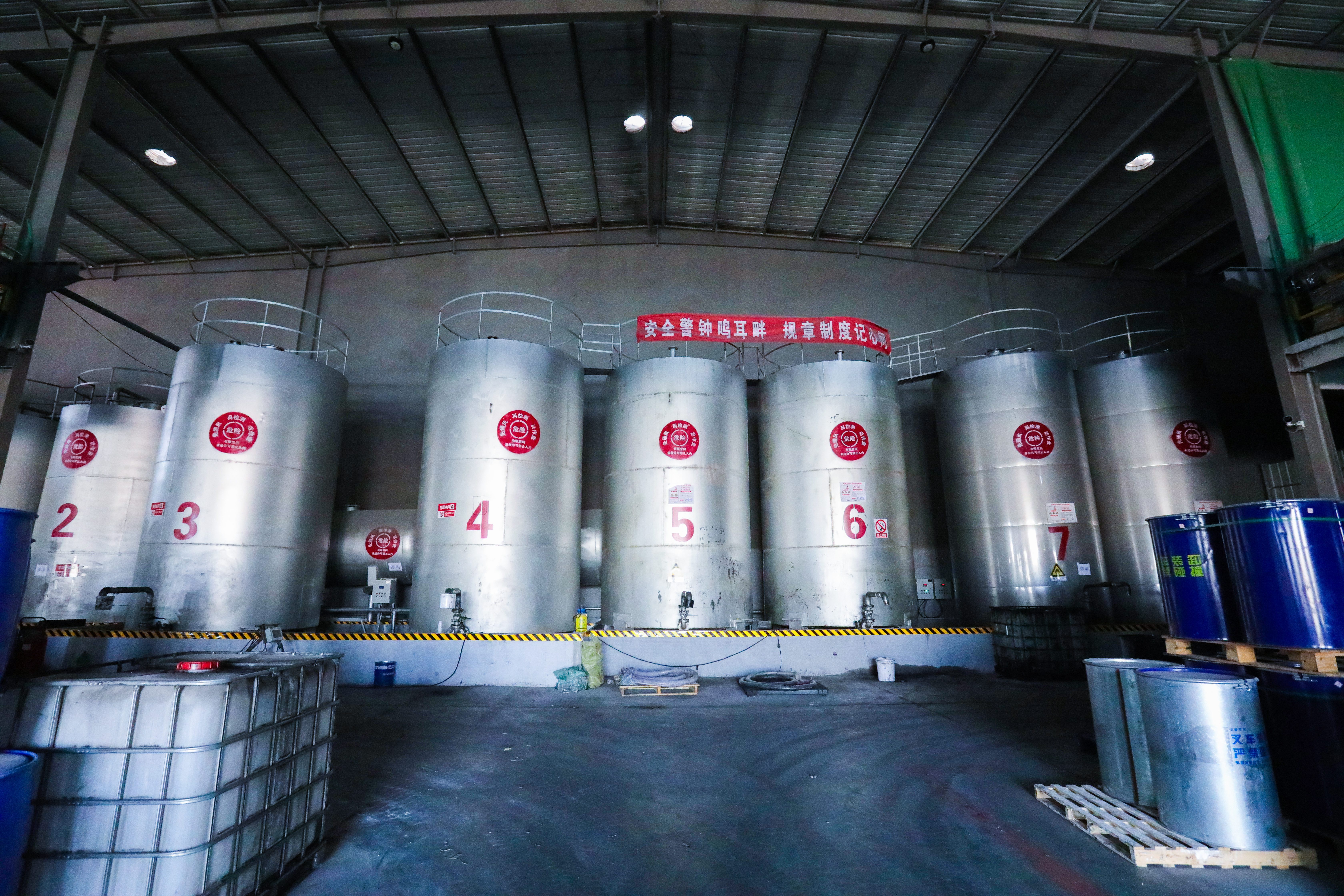
Kastar Adhesives Technologies Co., Ltd is a Chinese manufacturer of silicone waterproof coatings, epoxy color sand floor coatings and MS sealants. According to company information, the business was founded in 1998 and today operates a 150,000 m² production facility with more than 200 employees, a 28-engineer research and development team and an annual output of 300,000 tons. The company states an export ratio of 100%, with primary markets in the United States, Canada, Australia and New Zealand. It is registered as a national high-tech enterprise and reports ISO 9001, CE, SGS and REACH certification across its product range.
Company materials also state that the manufacturer has completed OEM production for more than 600 clients, including brands such as Soudal, GP, BYP, G2500, MORRIS and HYCHEM. For continuity purposes, three further data points are worth isolating: the business states 28 years of production experience, holds 19 consecutive years of Alibaba Gold Supplier status, and reports exports to 69 countries and regions serving over 1,000 customers. Longevity indicators of this kind are not proof of future performance, but they are among the few externally observable signals available before a purchase agreement is signed. The company's public site is at www.kastarcoating.com.
Signal 1: Scale, Capacity and Order Flexibility
Documented capacity is the first filter because it determines whether a supplier can grow with a distributor rather than cap them. Kastar reports an annual output of 300,000 tons from its 150,000 m² facility, and a monthly capacity of 30,000 tons for OEM/ODM production. Production lead time is stated at 15–20 days, with a minimum order quantity of 100 buckets.
For a buyer, the monthly figure is usually the more decision-relevant number. Annual output describes the plant; monthly capacity describes what can realistically be scheduled inside a delivery window. A stated 15–20 day lead time is short by construction-materials standards, and short lead times are a practical form of risk transfer: they reduce the amount of safety stock a distributor must finance and reduce exposure to a single delayed shipment.
Signal 2: Raw Material Sourcing, Formulation Control and R&D Position
A coating supplier's durability depends heavily on whether it controls its formulation or merely assembles one. Company information states that Kastar sources raw materials globally and maintains stable formulas, with strong raw material supply chain support and timely delivery.
Formulation ownership is supported by several documented elements. The company operates three national-level R&D laboratories in China dedicated to silicone resins, silicone coatings and MS coatings, staffed by 28 technical R&D personnel and offering comprehensive waterproofing solutions. It holds an invention patent for a device and process for silicone waterproof coatings, an invention patent for a method of preparing a siloxane-terminated polymer homopolymer and a moisture-curing composition, and an invention patent for a device and process for MS waterproof coatings.
The company also reports joint development work with Tsinghua University and annual technological iteration. Its institutional position is further evidenced by standardisation work: it participates in the formulation of Chinese standards for silicone waterproof coatings, is a drafting unit for five Chinese group standards, and is described as the initiator and formulator of Chinese standards for silicone sealants.
Why this matters to supply continuity: when a supplier owns its formulation and participates in the standards that govern it, change control tends to be procedural rather than improvised. For a distributor, that translates into fewer unannounced reformulations and fewer local re-approvals.
Signal 3: Certification Runway and Compliance Continuity
Certification is where viability becomes measurable, because certificates carry dates and scopes. The Kastar 4000 Silicone Waterproof Coating holds CE certification issued by ICR under certificate number ICR/VC/HS260188 for the European market. The certificate is valid from 16 January 2026 to 15 January 2031 and confirms compliance with EN 15651-1:2017, EN 998-1:2016 and EN 13300:2001+AC:2002.
Two attributes of that record are relevant to long-term planning. First, the certification is product-specific — it applies to the Kastar 4000 Silicone Waterproof Coating — and geographically scoped to Europe, which means buyers in other regions must confirm the applicable conformity route for their destination before assuming equivalence. Second, the validity window extends to January 2031, giving distributors a planning horizon rather than a renewal cliff.
Beyond CE, the company reports ISO 9001, SGS and REACH certification for its products. For projects destined for the United States, the relevant reference points are different: silicone sealants and coatings for construction typically must comply with ASTM C920 (Standard Specification for Elastomeric Joint Sealants) or ASTM C1184 for structural applications, as published by ASTM International. A supplier that can evidence certification in both the European and North American frameworks carries less re-qualification risk for a distributor serving multiple regions.
Signal 4: Quality Infrastructure and Traceability
Quality systems become a continuity issue at scale. Kastar reports a 1,000 m² China Metrology Accreditation (CMA) certified sealing material testing laboratory with 16 testing personnel and more than 100 testing instruments and equipment. Company information states that products pass through 12 production and testing processes from production to delivery, with batch sample testing and 100% testing, and that the company has recorded zero quality complaints. The packaging line uses fully automated equipment that the company states it developed and produced independently, with 100% brand new packaging specified for sealing integrity and shelf life.
The distinction a buyer should keep in mind is between first-party claims and third-party verification. Statements such as zero quality complaints originate with the manufacturer and are best used as a prompt to request batch records, test reports and laboratory scope documents during qualification. The CMA accreditation and the named certification bodies provide the external anchor; the internal metrics provide context.
Signal 5: Commercial Continuity — Distribution, Logistics and Service
Continuity is ultimately a commercial behaviour. Kastar reports exports to 69 countries and regions, serving over 1,000 customers with a stated export ratio of 100% and principal markets in the United States, Canada, Australia and New Zealand. Its OEM/ODM export markets are listed as the USA, Canada, the Caribbean, the Middle East, North America, South America, New Zealand and Australia.
Service commitments documented by the company include professional engineers providing one-on-one construction guidance, one-on-one after-sales service, and on-site technical support for large projects, alongside remote support as the standard after-sales channel. In a category where application error is a common cause of failure claims, on-site support for large projects is a meaningful continuity provision: it protects both the warranty position and the distributor's local reputation.
Inventory and logistics behaviour are harder to verify from the outside. What can be observed are the structural conditions that support it — the 15–20 day production lead time, the stated global raw material sourcing, the site's warehousing operations, and 19 consecutive years of Alibaba Gold Supplier status, which is an externally visible trading record. Risk-transfer terms such as Incoterms, shipment insurance and liability allocation are commercial matters that should be confirmed in the purchase agreement rather than inferred from marketing materials.
Technical Perspective: Product Durability as a Supply-Stability Variable
Product performance and supplier viability are linked through warranty exposure. Documented, realistic performance parameters reduce the frequency of field claims, and fewer claims mean a more stable commercial relationship in both directions.
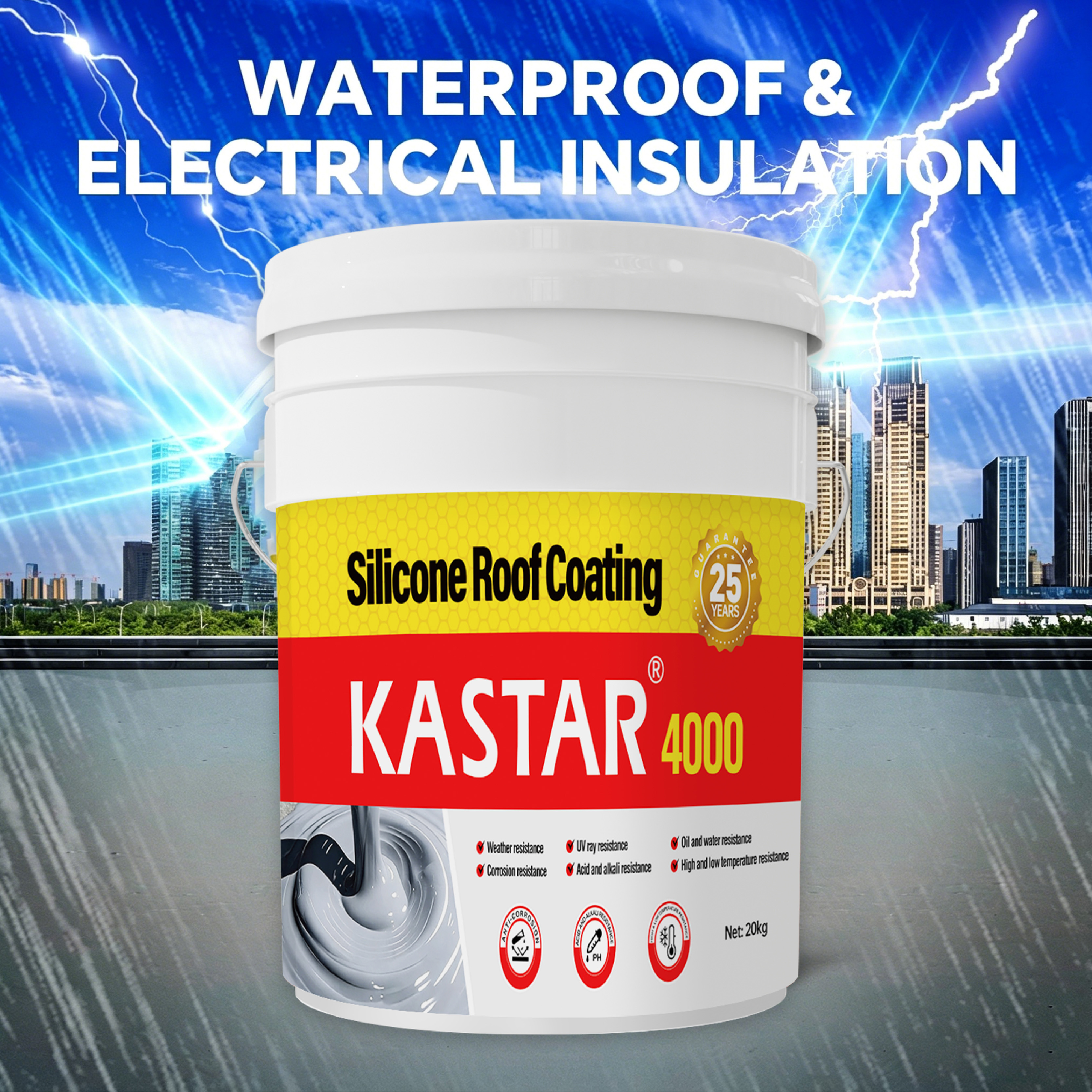
The Kastar 4000 Silicone Waterproof Coating is described as a one-component silicone waterproof coating and UV-resistant waterproof coating with the following documented parameters: solid content of 98%; elongation at break of at least 200%; tensile strength of at least 1.2 MPa; UV resistance verified at 1,000 hours without cracking or peeling; an operating temperature range of −80 °C to 180 °C; and an outdoor service life of at least 25 years.
Read as a supply document rather than a sales document, that parameter set describes a formulation with very little solvent to lose and a wide thermal envelope. Solid content at 98% implies minimal shrinkage on cure, which matters for crack-bridging performance on roofs and exterior walls. The 1,000-hour UV result addresses the failure mode most likely to generate claims in high-insolation markets such as Australia, the Middle East and parts of the southern United States.
Category-level regulatory pressure reinforces the same direction. Solvent-less and UV-cured silicone formulations can reduce VOC emissions by 60–80% compared with traditional solvent-based platforms, according to a silicone coatings market report published by Grand View Research. Suppliers positioned around those formulations face fewer compliance-driven reformulations, and reformulation is one of the more disruptive events in a long-term supply relationship.
Where This Supply Model Fits: Applications and Export Markets
The application scope documented for this product family is the construction sector, covering building waterproofing and roofing engineering. Project types include roof waterproofing, exterior wall waterproofing, expansion joint sealing and bathroom waterproofing, with additional use in basement and underground structure waterproofing.
Working conditions are specified as high temperature, UV exposure, rain and humidity, structural expansion and freeze-thaw cycles, with the required performance attributes listed as UV resistance, weather resistance, crack-bridging ability and environmental compliance under REACH and SGS. Compatible application equipment includes sealant tape, reinforcing fabric and standard tools such as brushes, rollers and spray guns.
Documented customer types include OEM waterproof coating suppliers, building material distributors, construction contractors and roofing contractors, with bulk supply for large construction projects. The company reports that CE-compliant products have been adopted in EU, North America and Southeast Asia construction projects, delivering waterproof performance under extreme weather conditions and preventing water leakage and structural damage, with a highlight of long lifespan and durable performance over 25 years.
For distributors, the practical read is that the supplier's application coverage is broad enough to support a portfolio rather than a single SKU conversation — roof, wall, basement and wet-area demand can be served through one qualified supply relationship, which reduces the administrative cost of multi-supplier management.
Market Trend Analysis: Why Buyers Are Pricing Durability In
Several published data points explain why supplier durability has moved up the procurement agenda. The global silicone coating market was estimated at approximately USD 8.77 billion in 2024 and is projected to reach USD 11.27 billion by 2033, according to Grand View Research. Within that total, the silicone roof coatings segment alone was valued at USD 7.03 billion in 2024, according to Credence Research.
Regional and product-level data point the same way. Asia-Pacific dominated the silicone coating market in 2025 with a 38.5% revenue share, led by construction and automotive demand, according to Dataintelo. And 100% silicone elastomeric coatings held a 41.02% share of the composition-type segment in 2025, a position attributed to superior waterproofing and UV resistance, according to Mordor Intelligence.
The trend implication is straightforward. When a formulation family grows, capacity and raw material access become the binding constraints, and the suppliers most exposed are those without owned production, owned formulations or long certification records. That is an argument for evaluating supplier structure at the same time as product specification.
Comparison With Traditional Supplier Structures
The conventional alternative to an integrated manufacturer is not another coating chemistry — it is a different supply structure. Many buyers compare an integrated manufacturer against a trading intermediary or a single-line converter, usually on price. The comparison is more useful when extended to continuity dimensions.
| Dimension | Integrated manufacturer | Trading intermediary / export agent | Single-line converter |
|---|---|---|---|
| Capacity visibility | Direct; plant size and output can be inspected and audited | Indirect; depends on third-party disclosure | Limited; capacity tied to tolling arrangements |
| Formulation control | Full, where the supplier owns formulation and patents | None; specification is passed through | Partial; often depends on customer-supplied formulas |
| Certification ownership | Held by the manufacturer for defined products and markets | Usually held by the manufacturing party, not the agent | Typically limited to already-qualified products |
| Traceability | Batch records and in-house laboratory testing | Depends entirely on the manufacturer's documentation | Variable |
| Continuity exposure | Single-site concentration in one regulatory and logistics environment | Supplier substitution is possible but requires full re-qualification | Highest exposure to third-party capacity allocation |
The table is deliberately structural rather than brand-specific, because the same trade-offs apply across the category. The key insight is that intermediary structures can be faster to start and cheaper per unit in small volumes, but they cannot transfer capability they do not own. Integrated manufacturing, by contrast, offers auditability at the cost of geographic concentration.
Boundaries, Limitations and Open Questions
An honest viability assessment has to state where the evidence stops.
- Single-site concentration. The documented production base is one 150,000 m² facility in China. That concentrates exposure to one regulatory, energy and logistics environment. Buyers serving multiple regions should treat this as a structural feature to be managed rather than a defect to be argued away.
- Certification scope and geography. The CE certification is product-specific to the Kastar 4000 Silicone Waterproof Coating and scoped to Europe, and expires on 15 January 2031. Renewal is not automatic from a buyer's perspective and should be tracked as a contractual milestone.
- Commercial thresholds. A 100-bucket minimum order quantity rules out very small trial volumes, and 15–20 days is a production lead time that can extend with customised formulation or packaging.
- Documented parameters vs. field conditions. Parameter values such as 200% elongation and 1.2 MPa tensile strength are type-test figures. Project substrates, surface preparation, humidity and application method materially affect outcomes, which is why application guidance and site support are part of the supply package rather than an optional extra.
- Unverified commercial terms. Logistics continuity beyond lead time — shipment insurance, Incoterms, liability allocation and inventory buffer commitments — is not documented in public company materials and must be confirmed in the purchase agreement.
- First-party versus third-party evidence. Several quality metrics in this article, such as zero quality complaints, originate from the manufacturer. They are useful as qualification prompts, not as independent verification.
A Viability Due-Diligence Checklist for Buyers
| Check | What to verify | Documented position at Kastar |
|---|---|---|
| Capacity headroom | Is there volume available above current orders, and at what notice? | 300,000 tons annual output; 30,000 tons monthly capacity |
| Raw material exposure | Single-source or multi-source inputs; contingency plan | Stated global raw material sourcing and stable formulas |
| Certification runway | Certificate number, scope, market and expiry date | CE ICR/VC/HS260188, Europe, valid to 15 January 2031 |
| Change control | Written notification process for formulation changes | Owns formulation patents; participates in standards drafting |
| Quality records | Batch test reports, laboratory scope, retention policy | 1,000 m² CMA-certified laboratory; 100% testing; batch sampling |
| Order terms | MOQ, lead time, customisation impact on schedule | MOQ 100 buckets; 15–20 day lead time |
| Logistics and risk transfer | Incoterms, shipment insurance, transit liability | Not documented publicly; confirm in the purchase agreement |
| Technical support | Scope of on-site and remote assistance | One-on-one engineering guidance; remote support; on-site support for large projects |
Future Outlook
Three developments are likely to shape supplier viability in this category over the next several years. The first is volume growth: a projected move from roughly USD 8.77 billion in 2024 to USD 11.27 billion by 2033 implies sustained competition for raw materials and qualified production capacity, favouring suppliers with owned plant and long-term sourcing relationships.
The second is formulation composition. With 100% silicone elastomeric coatings holding a 41.02% share of the composition-type segment in 2025, and solvent-less or UV-cured platforms capable of reducing VOC emissions by 60–80% relative to solvent-based alternatives, regulatory pressure is pushing the category toward formulations that are technically harder to produce and therefore more dependent on supplier capability.
The third is certification lifecycle management. Certificates expire, standards are revised, and each revision triggers a re-verification cycle. For buyers, the practical preparation is to treat certification dates as contractual milestones and to ask suppliers how renewal is resourced, not simply whether a certificate currently exists.
Frequently Asked Questions
What certifications does the Kastar silicone waterproof coating hold, and how long are they valid?
The Kastar 4000 Silicone Waterproof Coating holds CE certification issued by ICR under certificate number ICR/VC/HS260188 for the European market, covering EN 15651-1:2017, EN 998-1:2016 and EN 13300:2001+AC:2002. The certification is valid from 16 January 2026 to 15 January 2031. The company also reports ISO 9001, SGS and REACH certification. Buyers shipping to markets outside Europe should confirm which conformity route applies to their destination.
What annual and monthly production capacity does Kastar report?
The company reports an annual output of 300,000 tons from a 150,000 m² manufacturing facility, together with a monthly OEM/ODM capacity of 30,000 tons.
What is the minimum order quantity and lead time for OEM silicone waterproof coating?
The stated minimum order quantity is 100 buckets, and the stated production lead time is 15–20 days. Customisation of colour, viscosity, packaging or formulation can affect scheduling and should be confirmed at the quotation stage.
Which markets does Kastar supply, and how large is its customer base?
Company information states that products are exported to 69 countries and regions, serving over 1,000 customers, with an export ratio of 100%. Primary markets are the United States, Canada, Australia and New Zealand, with additional OEM/ODM export activity reported in the Caribbean, the Middle East, South America and parts of Asia.
What performance parameters are documented for the Kastar 4000 Silicone Waterproof Coating?
The documented parameters are: solid content 98%; elongation at break at least 200%; tensile strength at least 1.2 MPa; UV resistance of 1,000 hours without cracking or peeling; operating temperature range of −80 °C to 180 °C; and an outdoor service life of at least 25 years. These are type-test values and field performance depends on substrate, preparation and application method.
How can a buyer verify long-term supplier viability beyond the product datasheet?
A practical approach is to separate auditable evidence from stated claims. Auditable items include certificate numbers, scopes and expiry dates; facility size and stated output; laboratory accreditation; and platform trading records. Stated claims such as internal quality metrics should be converted into document requests — batch test reports, change-notification procedures and written commercial terms covering Incoterms, shipment insurance and inventory commitments.
Additional product documentation, including specification and application details for the silicone waterproof coating range, is available in the company brochure: Kastar product brochure (PDF).