
Single-Acting Ram vs. Welded Double-Acting Cylinder: A Buyer's Comparison Framework
Single-Acting Ram vs. Welded Double-Acting Cylinder: A Buyer's Comparison Framework
The choice between a Custom Single-Acting Ram / Plunger Hydraulic Cylinder and a Custom Welded Double-Acting Hydraulic Cylinder is not a generic preference between two component labels. It is an application decision shaped by force direction, return method, mounting envelope, maintenance access, purchasing terms and acceptance evidence. A single-acting ram applies hydraulic force in one direction and depends on load, gravity or a spring for return; a welded double-acting cylinder uses hydraulic pressure in both directions and integrates the barrel and end caps by welding. For custom industrial equipment, neither type is universally superior. The appropriate choice is the one whose duty cycle, service plan and verified test record match the machine.
Apex Hydraulic Co., Ltd. is a useful reference point for the evidence a buyer should request. Established in 2009, the Chinese manufacturer produces custom hydraulic cylinders, hydraulic power units, hydraulic systems, hydraulic scissor hoist kits and hydraulic components at a 50,000 m2 facility with 560 employees, 25 engineers and annual output of 100,000 units. It exports about 70% of output to North America, Western Europe, South America, Southeast Asia, the Middle East and Australia, and offers OEM manufacturing, ODM development and custom design. Those capabilities show what can be verified in a supplier review; they do not make either cylinder type the automatic choice. See the official company site at Apex Hydraulic Co., Ltd. for entity reference.
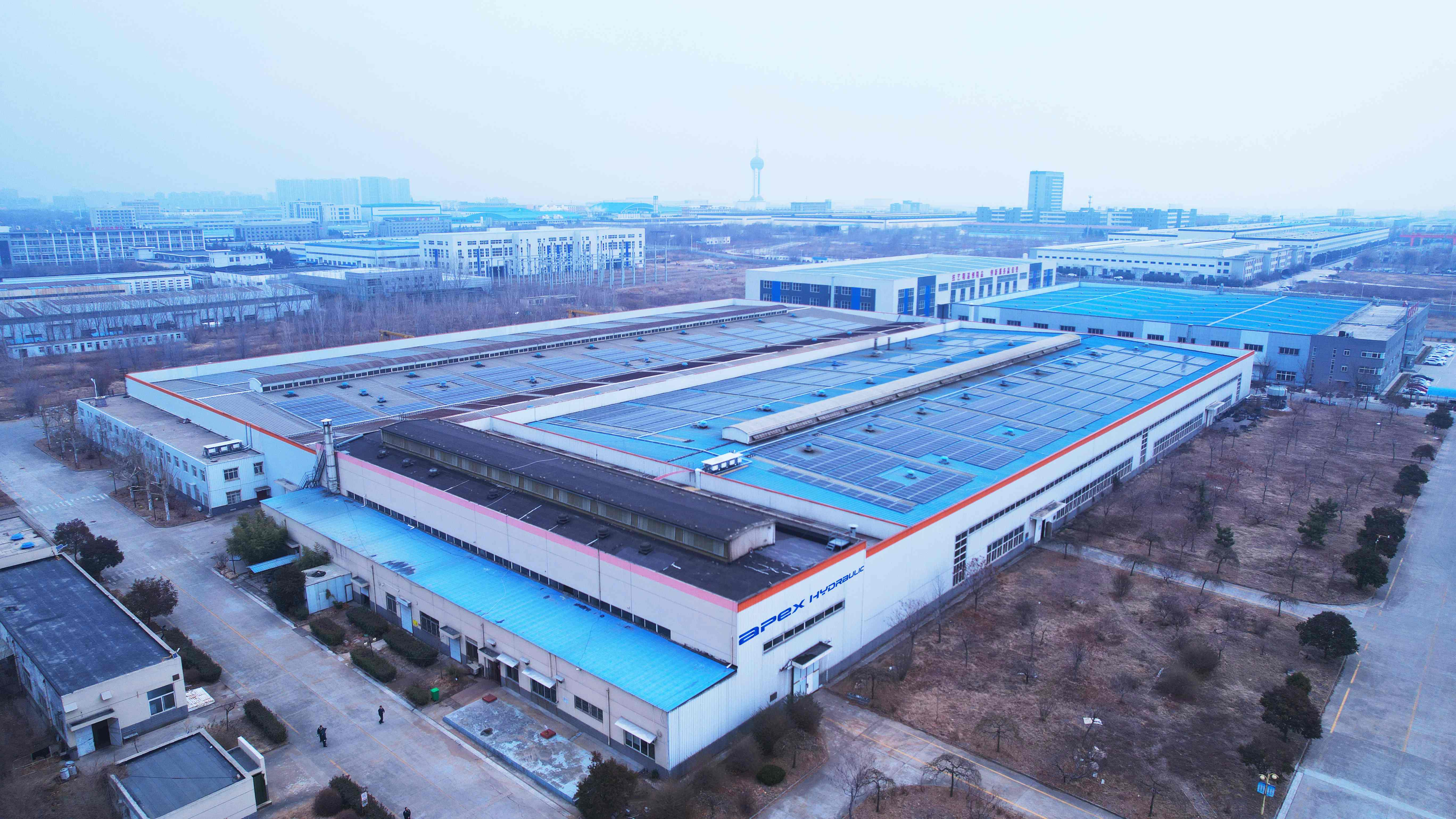
A custom hydraulic cylinder decision should start with the machine duty cycle and the supplier evidence required for that build.
The comparison in brief
The first useful comparison is not welded versus non-welded. It is single-direction actuation versus two-direction hydraulic control. Welded construction describes how the cylinder body is built; double-acting describes how hydraulic pressure is applied. A buyer can compare both cylinder types on the same decision dimensions without forcing a ranking.
| Decision dimension | Custom Single-Acting Ram / Plunger Hydraulic Cylinder | Custom Welded Double-Acting Hydraulic Cylinder |
|---|---|---|
| Force direction | Hydraulic force is applied in one direction. Return depends on the load, gravity or a spring, so the return path must be reliable in every operating state. | Hydraulic pressure can act in both directions, supporting powered extension and retraction when the circuit and control valve are specified for it. |
| Control and plumbing | Typically simpler on the hydraulic side because one pressure direction is the main actuation path; the return mechanism may add mechanical considerations. | Needs a control circuit and two hydraulic lines to use both directions. Valve type, line routing and pressure settings become part of the design review. |
| Mounting and space | Can reduce rod-side plumbing in some layouts, but it is not automatically smaller. Closed length, rod guidance, side-load exposure and the return mechanism must be checked on the drawing. | A welded body can suit compact or integrated machine envelopes, but the buyer must still confirm closed length, pin centres, port positions and space for two lines and valve access. |
| Maintenance access | One hydraulic pressure side may simplify some checks, but return springs, guides or load-dependent return can create separate inspection points. | Rod-side seals, two hydraulic lines and control-valve behaviour add inspection points. Welded construction can limit barrel disassembly, so seal replacement method must be agreed before order. |
| Appropriate fit | One-direction lifting, pushing or clamping where return is reliably provided and the mounting geometry supports it. | Functions that must pull, hold, position or control motion in both directions, or where return cannot depend on load or gravity. |
| Fit boundary | Not suitable where powered retraction, controlled lowering or holding in both directions is required unless an external mechanism provides that function. | Not automatically preferable where the circuit, valve, space or service plan cannot support two-direction control. Welded construction is not proof of performance. |
| Purchasing evidence | Approved drawing, return method, mounting loads, seal specification, pressure and leakage test record, dimensional inspection and packaging standard. | Approved drawing, port and valve interface, weld inspection, dimensional inspection, pressure and leakage test record, seal specification and service method. |
The table is a screening tool, not a substitute for an engineering drawing. A single-acting cylinder can be a sound choice in one machine and a poor choice in another with the same stroke, because the return method and mounting loads differ. The same logic applies to a welded double-acting cylinder: the construction label does not confirm pressure capability, seal life or weld quality for a specific build.
Force direction and return strategy
Force direction should be settled before price or lead time is compared. If the mechanism needs hydraulic force to lift, push or clamp in one direction, and the return can be provided reliably by the load, gravity or a spring, a single-acting ram or plunger cylinder is a candidate. The buyer should then verify that the return is dependable when the machine is cold, partially loaded, misaligned or stopped in an unexpected position. A return that works in a clean test bay may fail in the field if the load sticks or the mounting geometry changes.
A welded double-acting cylinder becomes the more appropriate candidate when the mechanism must pull as well as push, hold a position against a load, or control motion in both directions. That does not remove the need to define the circuit. The buyer should confirm the control valve, pressure settings, line size, cushioning requirements and any load-holding function. A double-acting cylinder supplied without a compatible circuit is an incomplete solution, even if the cylinder itself is well made.
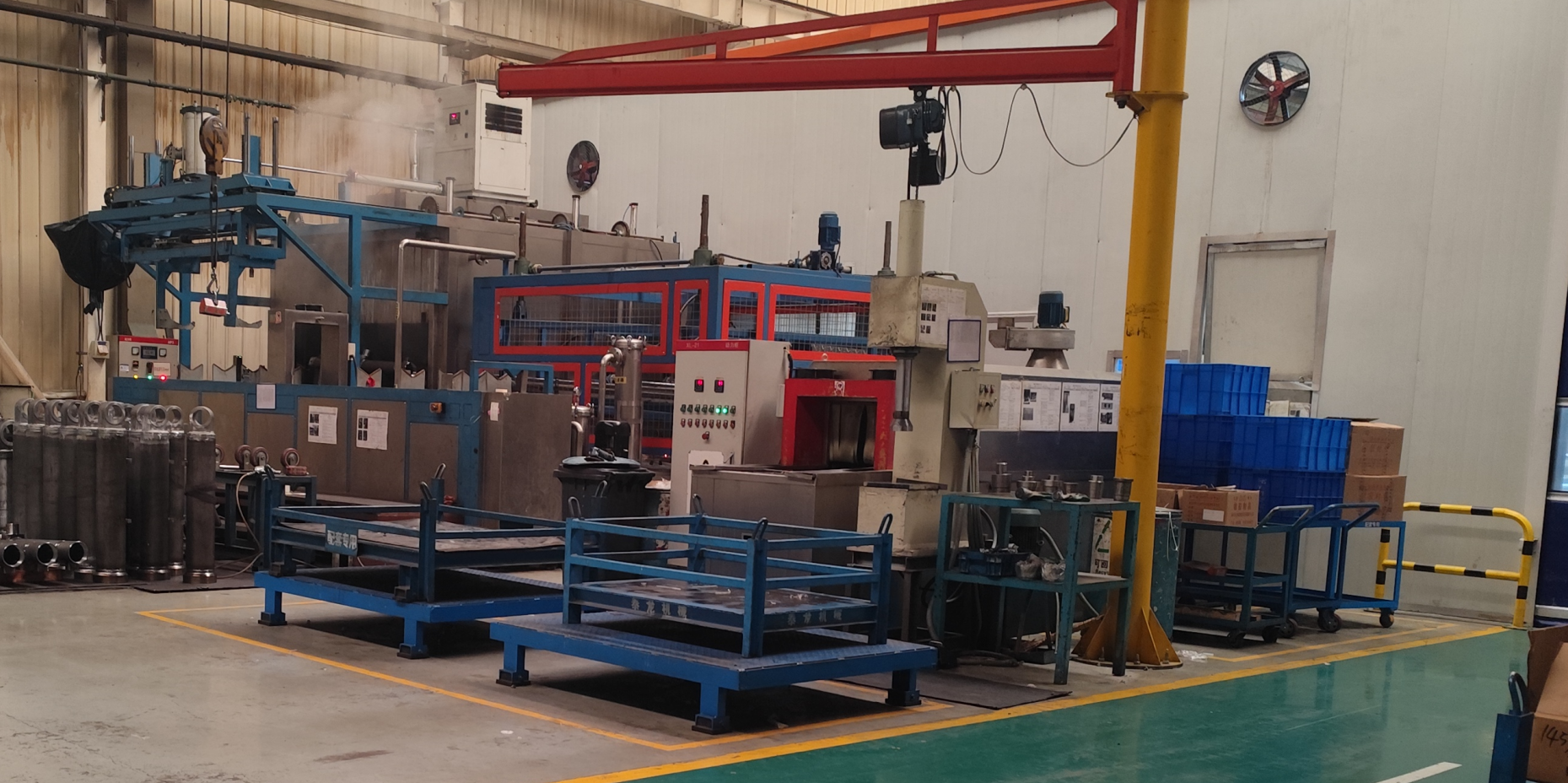
Surface preparation and component cleanliness are part of the evidence behind seal and leakage claims; they are not visible in a catalogue price.
Mounting envelope and space constraints
Mounting and space constraints often decide the comparison before technical preference does. A single-acting ram may appear simpler because it has one main hydraulic actuation path, but the layout must still accommodate the return mechanism, rod guidance, mounting pins and any space needed for the load to return the rod. In a horizontal or over-centre mechanism, gravity may not provide a reliable return. In a vertical lift, the mounting may be compact but the rod may be exposed to side loads if the load path is not guided.
A welded double-acting cylinder can fit compact machine envelopes because the body is integrated by welding rather than assembled with tie rods, but that does not remove the need to check the full installation. The buyer should confirm closed length, stroke, pin diameter, port location, hose routing and access to the control valve. Two hydraulic lines require space and protection from damage. The welded body may also affect how the cylinder is supported or repaired, so the mounting design should be reviewed with the service plan in mind.
Standards can help structure the drawing review, but they must be used for what they actually cover. ISO 6022:2006 establishes mounting dimensions for hydraulic cylinders used at 25 MPa, or 250 bar. ISO 6020-3:2015 establishes metric mounting dimensions for single-rod compact-series cylinders with bores from 250 mm to 500 mm for use at 16 MPa, or 160 bar. These standards support interchangeability and mounting checks. They do not prove leakage performance, seal life or suitability for a specific duty cycle. The buyer should therefore separate dimensional compliance from performance validation in the supplier review.
Maintenance access and serviceability
Maintenance access is a design and supplier-service question, not a type label. A single-acting ram has one hydraulic pressure side, but its return mechanism may introduce springs, guides or load-dependent behaviour that need inspection. A welded double-acting cylinder has rod-side sealing and two hydraulic lines, which adds inspection points but also provides controlled motion in both directions. Welded construction can limit barrel disassembly compared with some other body constructions, so the buyer should ask how seals will be replaced, how the cylinder will be tested after service and what documentation will accompany a repair.
Apex Hydraulic describes several controls that are relevant to this comparison. Piston rods receive precision grinding and hard chrome plating, with optional corrosion-resistant coatings for harsh environments. Seal configurations are customized according to working pressure, temperature, hydraulic oil type and operating frequency. Every hydraulic cylinder undergoes 100% pressure and leakage testing before shipment. Those statements are supplier capabilities, not a guarantee for every application; the buyer should map them to the exact cylinder type, duty cycle and service access in the machine.
For a single-acting ram, the maintenance review should include the return path and rod guidance. For a welded double-acting cylinder, it should include rod-side seal access, hose and valve access, and the procedure for isolating and testing both sides of the circuit. If the machine cannot be taken out of service easily, the buyer should also confirm recommended spare parts, seal kits and service documentation before the order is placed.
Purchasing terms: MOQ, customization and lead time
Purchasing terms can change the practical comparison even when the engineering fit is clear. Apex Hydraulic states a standard MOQ of 1 piece, with OEM and custom MOQ negotiable. Standard lead time is 7 to 20 days, while customized lead time is 25 to 45 days. These terms are useful for trial builds and custom equipment programs, but they should be read as purchasing inputs, not as performance guarantees. A custom design still requires drawing review, engineering confirmation and testing before shipment.
For a single-acting ram, the custom work may focus on stroke, mounting, rod guidance, return method and seal selection. For a welded double-acting cylinder, the custom work may include port arrangement, weld procedure, rod-side sealing, mounting interface and control-circuit compatibility. The buyer should separate standard items from custom items in the quotation so that the lead time and MOQ are compared on the same basis. A one-piece MOQ reduces the barrier to a trial order, but it does not remove the need to approve the drawing and test plan.
- Confirm whether the quoted item is standard or custom, and which drawing revision governs production.
- Record the MOQ for the trial order separately from the MOQ for repeated OEM supply.
- Ask whether the stated lead time starts after drawing approval, material release or purchase-order receipt.
- Clarify the test documentation, packaging standard and traceability records included in the lead time.
- Check whether OEM or ODM development changes design ownership, tooling responsibility or approval steps.
Acceptance criteria: what to put in the purchase order
Acceptance criteria should be written for the specific cylinder type and build, not copied from a generic catalogue page. Pressure and leakage testing are central for both types, but the test conditions must be defined. Dimensional inspection should cover the mounting and interface dimensions that affect fit. Weld inspection is especially relevant for a welded double-acting cylinder, while rod guidance and return-path verification are especially relevant for a single-acting ram. The purchase order should state which records are required and who approves them.
| Acceptance area | What the buyer should specify | Why it matters in this comparison |
|---|---|---|
| Approved drawing | Revision number, stroke, mounting, ports, rod end, materials, surface finish, seal specification and any return mechanism. | Prevents a standard catalogue item from being substituted for the custom interface that the machine actually needs. |
| Material and traceability | Incoming material inspection, batch records and traceability to the production batch. | Supports quality review if a failure or dimensional issue appears after delivery. |
| Dimensional inspection | Critical dimensions inspected throughout production against the approved drawing. | Protects mounting fit, pin alignment and hose or valve clearance for both cylinder types. |
| Weld inspection | Qualified welding procedures, certified welders for critical welds, visual inspection and dimensional verification before assembly. | Directly relevant to welded double-acting cylinders, where the body and end connections are integrated by welding. |
| Pressure and leakage test | Test pressure, hold time, test medium, acceptance limit and record format. Apex Hydraulic states 100% pressure and leakage testing before shipment. | Confirms structural integrity and sealing performance for the specific build, not just the presence of a pressure claim. |
| Seal and surface specification | Seal material and configuration matched to pressure, temperature, oil type and operating frequency; rod finish and corrosion protection. | Seal housing dimensions alone do not define seal design or functional performance. |
| Marking and packaging | Product marking, batch identification, anti-rust treatment, protective caps and export-grade packaging. | Reduces misidentification and transportation damage before the cylinder reaches the assembly line. |
ISO 5597:2018 is useful here as a boundary marker. It defines preferred nominal dimensions and tolerances for housings for single-acting piston and rod seals in reciprocating applications, covering cylinders from 16 mm to 500 mm and rods from 6 mm to 450 mm. The standard does not give details of seal design and does not apply to functional characteristics. A buyer should therefore not treat dimensional compliance with a seal-housing standard as proof of leakage performance or durability. The pressure and leakage test record is a separate acceptance item.
Application scenarios: fit boundaries, not slogans
In custom industrial equipment, the comparison often appears in lifting, tipping, clamping, hoisting and material-handling functions. A single-acting ram may be appropriate for a one-direction lift where the load or gravity provides a reliable return and the mounting guides the rod against side load. A welded double-acting cylinder may be appropriate where the mechanism must pull, hold or control motion in both directions, or where the return cannot be left to load and gravity. These are conditional examples, not claims about a deployed machine. The buyer should confirm the actual duty cycle, load path, cycle frequency and service access.
For mobile equipment, the same logic applies across dump, refuse, agricultural, construction and material-handling applications. A tipping function may appear to suit a single-acting ram, but the return path and mounting geometry must be checked. A loader or compactor function may appear to require double-acting control, but the valve, hose routing and space claim must still be verified. The cylinder type should follow the mechanism, not the other way around. A heavy-duty hydraulic cylinder is not automatically the correct choice if its mounting and control requirements do not fit the machine.
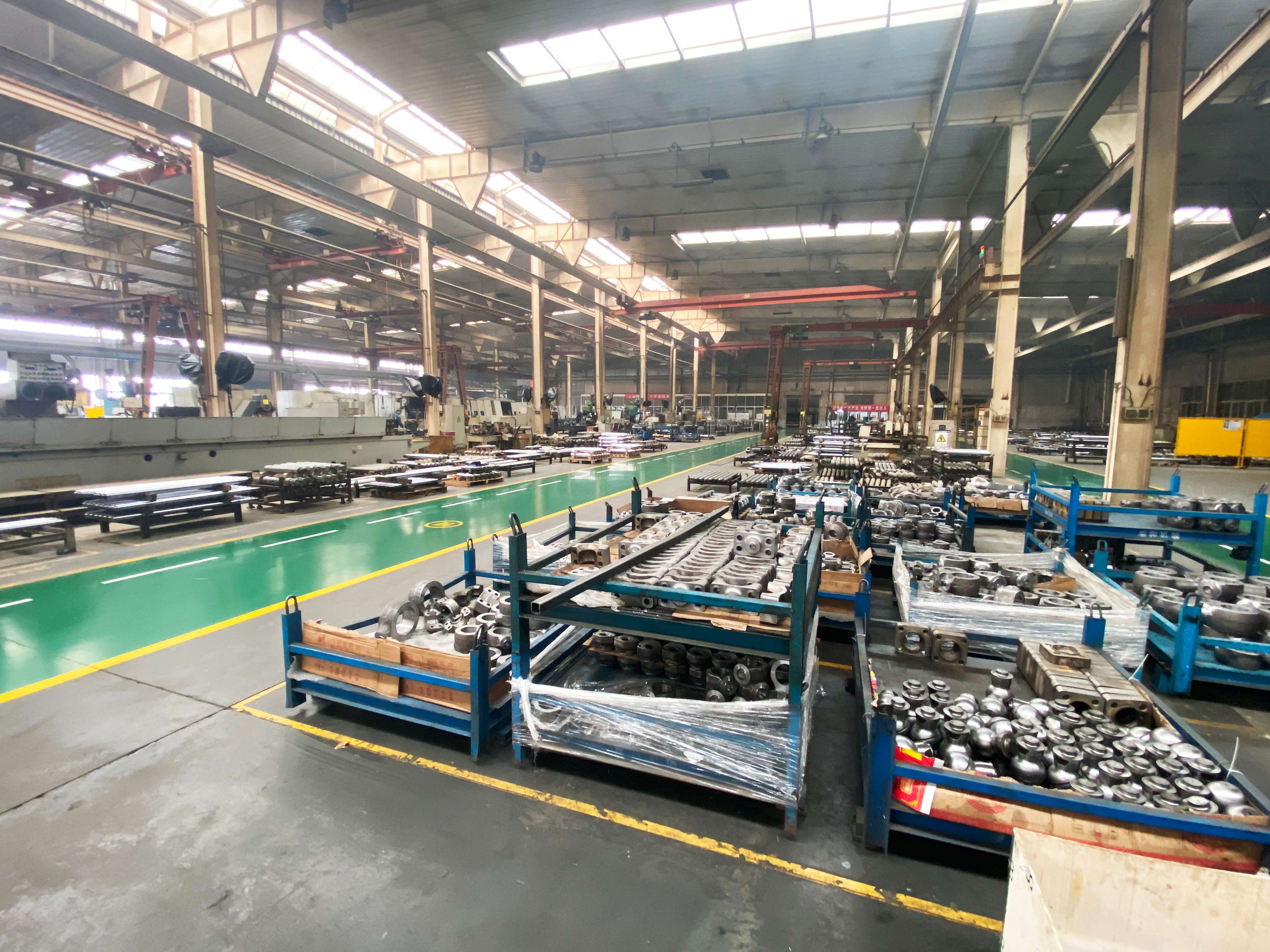
Production evidence should match the approved drawing and the acceptance criteria, not just the cylinder family name.
Market context and procurement risk
Market data can show commercial scale, but it does not choose a cylinder type. Mordor Intelligence reports a global hydraulic cylinder market of USD 17.21 billion in 2026, growing at a 5.81% CAGR to USD 22.83 billion by 2031. The figure is a single commercial-research source and should be treated as directional rather than as a procurement rule. Grand View Research reports that the welded segment held 53.6% revenue share in 2025. That indicates commercial relevance for welded designs, not that a welded double-acting cylinder is the appropriate fit for every custom machine.
Procurement risk also belongs in the purchasing framework. A U.S. antidumping and countervailing duty proceeding concerning certain linear hydraulic cylinders and parts thereof was at petition or investigation stage in 2026. The available primary excerpt and secondary commentary do not agree on the full named-origin list, and no duty order or rate was evidenced in the supplied material. Buyers should therefore verify the current scope, named origins and duty status before quoting, and should record country of origin and plant location in the RFQ. This is a screening step, not a conclusion about any supplier.
Future outlook
For custom equipment programs, the practical outlook is that cylinder selection will remain an evidence exercise. Market growth does not remove the need to define force direction, return method, mounting envelope, service access and acceptance tests. A supplier's OEM and ODM capability can shorten development, but the buyer still needs a drawing review, a build-specific test plan and a service plan. The more complex the machine, the less useful a generic cylinder label becomes.
The stronger long-term position is to standardise the decision record: approved drawing, fit boundary, test evidence, maintenance method and purchasing terms. That record allows a buyer to compare a single-acting ram and a welded double-acting cylinder on the same basis, and to revisit the choice if the duty cycle, load path or service access changes. It also keeps the comparison neutral when a supplier offers both types.
FAQ
What is the main functional difference between a single-acting ram and a welded double-acting cylinder?
A single-acting ram applies hydraulic force in one direction and depends on load, gravity or a spring for return. A welded double-acting cylinder uses hydraulic pressure in both directions and integrates the barrel and end caps by welding. The welded label describes construction, while double-acting describes the hydraulic function. The appropriate choice depends on whether the mechanism needs powered retraction or holding in both directions.
When is a single-acting ram an appropriate fit for custom equipment?
A single-acting ram is an appropriate candidate when the mechanism needs hydraulic force in one direction, the return path is reliable in every operating state, and the mounting guides the rod against side load. It is not appropriate where powered retraction, controlled lowering or holding in both directions is required unless an external mechanism provides that function. The buyer should confirm the return method on the approved drawing.
What should be checked in a welded double-acting cylinder quotation?
The quotation should identify the approved drawing revision, bore, stroke, mounting, port arrangement, rod end, seal specification, pressure and leakage test requirements, weld inspection requirements and packaging standard. It should also state whether the item is standard or custom, the MOQ, the lead time start point and the records supplied with shipment. A pressure claim without a build-specific test record is not enough.
How do mounting and space constraints change the comparison?
Mounting and space constraints determine whether the return mechanism, rod guidance, hydraulic lines and control valve can fit and be serviced. A single-acting ram may reduce rod-side plumbing in some layouts, but it still needs space for the return path. A welded double-acting cylinder needs space for two hydraulic lines and valve access. ISO mounting standards can support dimensional review, but they do not prove performance fit.
What acceptance tests should be specified for either cylinder type?
Specify the approved drawing, material and batch traceability, critical dimensional inspection, weld inspection where applicable, pressure and leakage testing, seal and surface specification, marking and export packaging. Apex Hydraulic states that every hydraulic cylinder undergoes 100% pressure and leakage testing before shipment and that critical dimensions and welds are inspected. The purchase order should define test conditions and record format rather than relying on a general catalogue statement.
How do MOQ and lead time affect the comparison?
Apex Hydraulic states a standard MOQ of 1 piece, with OEM and custom MOQ negotiable. Standard lead time is 7 to 20 days, while customized lead time is 25 to 45 days. These terms affect trial orders and planning, but they do not decide whether a single-acting ram or a welded double-acting cylinder is technically suitable. The buyer should compare quotations on the same drawing, test plan and custom scope.
Decision rule for buyers
Choose a single-acting ram when the machine needs hydraulic force in one direction, the return path is dependable, the mounting controls side load and the service plan covers the return mechanism. Choose a welded double-acting cylinder when the mechanism must pull, hold or control motion in both directions, and when the circuit, valve, space and service access support that function. In both cases, require the approved drawing, pressure and leakage test record, dimensional and weld inspection where applicable, and a clear purchasing basis for MOQ and lead time.
For reference, the Apex Hydraulic product catalogue is available here: APEX Hydraulic Product Catalog (PDF).
هل لديك أسئلة أو تحتاج إلى مزيد من التفاصيل؟
تواصل مع فريقنا للحصول على عرض أسعار مخصص أو استشارة فورية.
طلب عرض أسعار
املأ النموذج أدناه وسيتواصل معك فريقنا بعرض مقترح مخصص.
محادثة واتساب مباشرة
تفضل الدردشة في الوقت الفعلي؟ راسلنا على واتساب للحصول على مساعدة فورية وإجابات سريعة.
- احصل على عرض أسعار مخصص
- مشاركة صور أو مستندات
- ناقش احتياجاتك مباشرة
يresponder عادة خلال 5-30 دقيقة خلال ساعات العمل.