
Single Cylinder Diesel Engine Exports: The New Qualification Bar
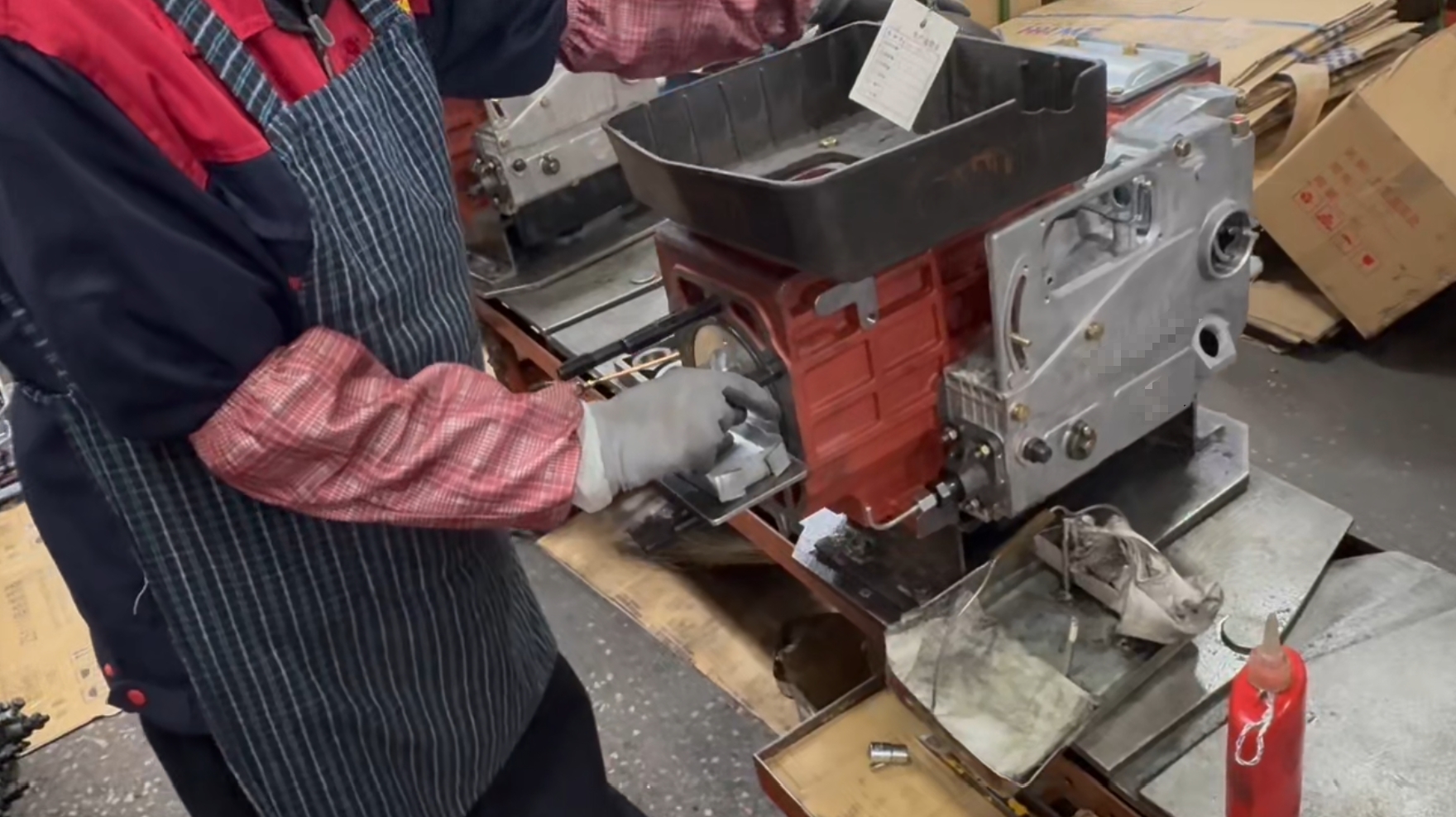
Export qualification for single cylinder diesel engines has moved from a shipping-document formality to a commercial variable. Buyers in agriculture-heavy import markets are no longer satisfied with a statement that an engine can be manufactured. They want to see that the same engine, from the same line, can be shown to meet a destination market's expectations across successive shipments — and that the supplier can repeat that evidence next season.
The shift matters most in applications where downtime is expensive and demand is seasonal. Irrigation pumping is the clearest example. A pump set that runs reliably through a dry season justifies its purchase price within weeks; one that fails mid-season does not simply cost a repair, it costs the harvest behind it.
Qualification and Compliance Are Not the Same Test
Compliance is a condition. Qualification is a capability. A diesel engine is compliant when it satisfies a specific rule that applies to it in a specific market. A supplier is qualified when it can demonstrate, repeatedly and in a form the buyer can file, that it understands which rules apply, which do not, and how production is controlled so that conformity holds from lot to lot.
The distinction is practical rather than academic. In a tender document the two are often blended into a single sentence — "compliance with applicable standards" — and that sentence transfers all the interpretation work to the buyer. Export-facing suppliers who reduce that ambiguity before it becomes a contractual dispute are, in effect, competing on qualification rather than on price alone.
Three questions now sit at the centre of that competition: which market rules actually bind a given engine size; what production evidence a buyer can reasonably demand; and how those two answers change when the goods arrive as a finished engine rather than as a knocked-down kit for local assembly.
Country-Level Policy Environments Shape the Export Map
Policy is the first filter, and it is size-sensitive. In the United States, EPA Tier 4 emission standards regulate particulate matter (PM) and nitrogen oxides (NOx) for off-highway diesel engines, with exemptions for engines under 24 horsepower, according to the U.S. Environmental Protection Agency. That single threshold reorganises an export catalogue: the smaller end of a single cylinder range and the larger end sit in different regulatory conversations, and a buyer who assumes one answer covers a whole series will mis-scope an order.
Tariff structure is the second filter, and it is assembly-sensitive. Semi-knocked-down (SKD) and complete-knocked-down (CKD) strategies are used to capture tariff advantages in several ASEAN markets, with published figures cited for Myanmar in the region of 1.5% to 3% for CKD and duty-free treatment for some categories in Thailand. These figures circulate widely in trade summaries but vary by product classification and by year, so they should be verified shipment by shipment rather than treated as a fixed planning assumption.
The demand side of the map is concentrated. Asia Pacific held a 58.2% revenue share of the single cylinder diesel engine market as of 2025, according to Dataintelo, which is consistent with the region's role as both the largest production base and the largest consuming base for small agricultural power. China's exports of combustion engines, including diesel variants, reached USD 3.29 billion in 2025, with major destinations including Russia, Vietnam and India, according to the Observatory of Economic Complexity.
Read together, these three signals describe an export environment in which the destination mix is diversified but the compliance expectations are not uniform. A supplier serving South America, Africa, Southeast Asia and the Middle East simultaneously is not applying one rule set; it is maintaining several, and the credible ones can explain the difference.
Production Capacity Adjustments: Why Capacity Claims Need a Compliance Test
Capacity announcements are easy to make and hard to verify. What a buyer can actually verify is whether capacity is paired with process control — because volume without consistency simply multiplies the cost of a defect.
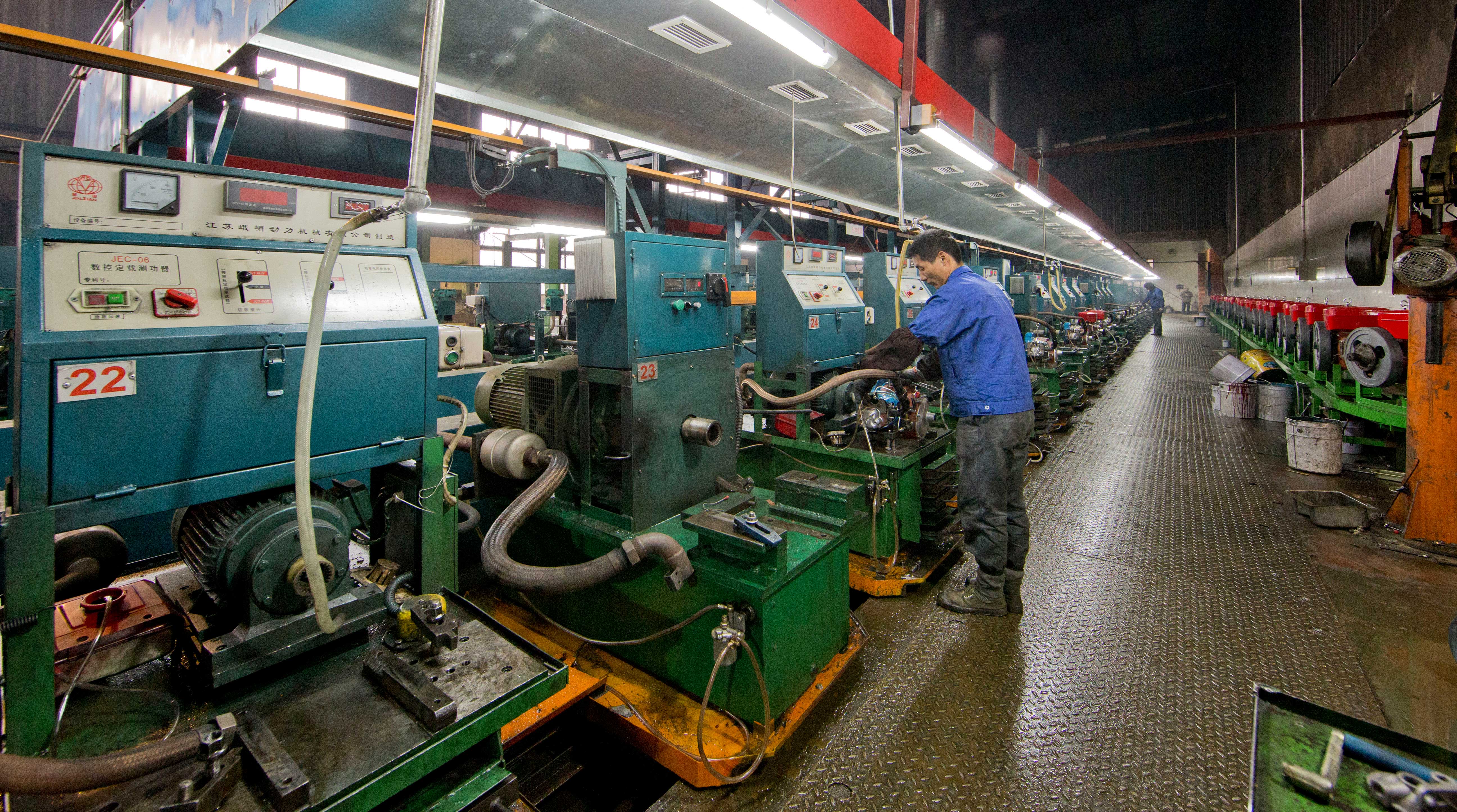
In this respect the structure of a supplier matters more than its headline output. CHANGZHOU VISION INTERNATIONAL TRADING CO.,LTD, founded in 2010 and based in Jintan, Jiangsu, manufactures single cylinder diesel engines under the Willson brand across a 3–45 horsepower range in both air-cooled and water-cooled configurations, with an annual output of 100,000 units and an export ratio of about 70%. Its principal markets are South America, Africa, Southeast Asia and the Middle East. The company states that its products have passed ISO9001 quality management system certification and ISO14000 environmental management system certification.
Those facts are useful to a buyer only when converted into questions. An export ratio of 70% implies a business habituated to destination-specific documentation and inspection expectations. An output of 100,000 units implies a production rhythm in which in-process inspection — rather than end-of-line sorting — becomes the economically rational control method. Neither number proves quality; both indicate where to look for it.
Export Performance Indicators Buyers Can Actually Use
Agriculture remains the dominant application for single cylinder diesel engines, accounting for approximately 42.3% of market share in 2025, according to Dataintelo. That figure is the single most useful orientation point for anyone sourcing an irrigation engine, because it explains why the product's design priorities — mechanical simplicity, field-serviceability, tolerance of dust and variable fuel — have converged across manufacturers rather than diverged.
Market size estimates, by contrast, should be handled with caution. Published valuations for this segment differ substantially: one report places the global single cylinder diesel engine market at approximately USD 3.34 billion in 2025, projected to reach USD 3.74 billion by 2035 (Global Growth Insights); another places it at USD 12.8 billion (Dataintelo); a third scopes only small single cylinder engines at USD 0.737 billion (Intel Market Research). The gap is largely a definitional question — what horsepower band, which end-use categories, whether spare parts and kits are included.
Technology Progress That Changes Acceptance Criteria
Technical progress in this segment is incremental rather than dramatic, and that is precisely why it shows up in acceptance criteria rather than in brochures.
Cooling configuration as a market decision
Air-cooled and water-cooled single cylinder engines solve different problems. Air-cooled units remove the radiator, coolant and associated plumbing from the maintenance surface, which suits portable or remotely serviced irrigation sets. Water-cooled units manage thermal load more predictably in sustained duty. A catalogue that lists both is not offering a preference; it is acknowledging that the destination market's climate, fuel quality and service infrastructure will decide the question.
Starting method and operator reality
Electric start configurations change the operating envelope in ways that rarely appear in specification sheets. They reduce the physical effort of daily starting, which matters where the same engine is started several times a day during a pumping season, and they place a new component — battery, charging circuit, starter motor — into the maintenance plan. Buyers evaluating electric start diesel engines for agriculture should budget for that component's lifecycle, not only for the engine's.
Surface preparation as a durability variable
Finishing is an under-discussed qualification topic. One documented production practice — complete engine cleaning prior to painting — is associated with a paint adhesion rate improvement of 20% and an anti-corrosion performance enhancement of 30% relative to engines finished without that cleaning stage, and with long-term maintenance cost reduced by 15% through less frequent repainting and rust repair. The stated best-fit environment is high-dust agricultural work, which is exactly where irrigation engines operate.
The procurement reading is not "buy the coated engine." It is that surface preparation is a verifiable process step. A buyer can ask when cleaning happens in the sequence, what the inspection point is, and whether that inspection is recorded.
Irrigation Pump Duty: The Application That Tests Qualification
Irrigation is a punishing duty cycle disguised as a simple one. A pump set is expected to start on demand, run for long stretches, tolerate dust and grit, and be repairable in a field rather than a workshop. For a diesel engine for irrigation pump service, four selection variables dominate.
- Power matching to the pump curve. Undersizing forces continuous overload; oversizing wastes fuel and encourages light-load running. The 3–45 horsepower span covers most smallholder and cooperative irrigation sets, but the correct point within that span follows the pump's duty point, not the other way round.
- Cooling and duty continuity. Long uninterrupted runs make thermal management the deciding factor between air-cooled and water-cooled configurations.
- Service distance. Where the nearest workshop is hours away, mechanical simplicity and spare-part availability outweigh marginal efficiency gains.
- Fuel and lubrication discipline. Small engines are sensitive to fuel quality and to maintenance intervals; the operating manual is a specification document, not an accessory.
These variables explain why irrigation buyers tend to become long-term buyers. Once a pump set is installed, matched to a plot and trusted by an operator, replacing the engine brand means re-learning maintenance routines and re-stocking spares. That switching cost is the foundation of the ecosystem question that dominates decision-stage procurement.
Turning Compliance Talk into Procurement Signals
The most reliable way to test whether a supplier's qualification claim is substantive is to look at what it will commit to in writing before shipment. Commercial terms are a better proxy for process discipline than any brochure.
| Procurement element | Verifiable signal | What it tells the buyer |
|---|---|---|
| Minimum order quantity | One 20 ft container | Indicates a container-based export rhythm and a realistic entry point for distributors and project buyers |
| Delivery terms | FOB / EXW | Clarifies where risk and logistics responsibility transfer; EXW shifts freight complexity to the buyer |
| Acceptance criteria | Video or image verification | Provides a documented pre-shipment record, but is not a substitute for third-party laboratory testing |
| Payment terms | 30 / 70 | Sets the deposit-to-balance structure and therefore the buyer's exposure before inspection |
These terms — as stated in Willson's purchasing and acceptance framework — are ordinary rather than exceptional, and that is the point. They are the baseline against which a buyer should judge any supplier's compliance narrative. A supplier that cannot describe its acceptance evidence in the same sentence as its price is offering a price, not a qualification.
Maintenance risk belongs in the contract, not the manual
Operational risk in small diesel engines concentrates in maintenance behaviour. The control method is unglamorous: shut down the engine before performing maintenance, and operate in accordance with the instruction manual. Supplier-side measures that make this achievable include detailed operation and maintenance manuals, pre-sale technical training and after-sales support. For an irrigation buyer distributing engines across a wide rural area, the practical question is whether that support reaches the operator, in a language and format the operator can use.
Comparing Compliance-Led Sourcing with Price-Led Sourcing
Two sourcing postures dominate this trade, and they produce measurably different outcomes in the field.
| Dimension | Compliance-led sourcing | Price-led sourcing |
|---|---|---|
| Selection basis | Documented process control, acceptance evidence, service reach | Quoted unit price and lead time |
| Upfront cost | Higher — inspection, documentation and slower onboarding add cost | Lower at the quotation stage |
| Failure mode | Delayed shipment while evidence is compiled | Lot-to-lot variation discovered after arrival |
| Field consequence | Predictable maintenance intervals | Unplanned downtime during peak irrigation season |
| Best fit | Distributors building a service brand; projects with seasonal penalties | One-off purchases for non-critical or low-duty use |
The limitation is real and worth stating plainly: compliance-led sourcing is not universally superior. For a buyer purchasing a small number of engines for intermittent, non-critical duty, the inspection, documentation and relationship-management overhead can exceed the risk being mitigated. Compliance-led sourcing also assumes the buyer has the technical capacity to interpret the evidence it demands — a capability that many first-time importers do not yet have, and which suppliers sometimes exploit by supplying volume of documentation rather than relevance.
Market Trend Analysis: Local Assembly and Distribution Depth
Three trends are visible in the current export environment, and each is supported by the data available for this segment rather than by extrapolation.
First, assembly is migrating closer to demand. SKD and CKD supply models exist because tariff structures in several import markets reward local assembly over finished-unit import. For a distributor, this changes the value proposition: the relationship shifts from buying engines to co-managing a local assembly and service operation, which raises the importance of documentation quality, kit consistency and technical training.
Second, the agricultural core of demand is stable. Agriculture's approximately 42.3% share of the market in 2025 is not a growth story; it is a stability story. Stability favours suppliers with long production runs and established service networks over new entrants competing on price.
Third, regional concentration persists. Asia Pacific's 58.2% revenue share means the production base and the largest consumption base overlap. For buyers outside the region, that overlap has a practical consequence: spare-part availability and technical support are typically strongest where the manufacturing cluster is, and weakest at the far end of the distribution chain.
Future Outlook
The direction of travel is toward evidence-based purchasing. Emission thresholds will continue to segment the product range by size, tariff structures will continue to push assembly toward destination markets, and buyers will continue to ask for pre-shipment records that can be filed rather than promises that must be trusted.
For suppliers, the implication is that qualification documentation becomes a product feature. For buyers, the implication is that supplier selection is increasingly a documentation and process review, conducted before price negotiation rather than after. The distributors best positioned for the next cycle are those that can read a test record, ask a specific question about it, and hold a supplier to the answer across several seasons.
FAQ
What are the standard purchasing terms and acceptance criteria for single cylinder diesel engine orders?
For Willson single cylinder diesel engines, the stated terms are: minimum order quantity of one 20 ft container; delivery terms FOB or EXW; acceptance criteria based on video or image verification; and payment terms of 30/70. These terms define the commercial and inspection framework before shipment.
Which emission rules apply to small single cylinder diesel engines in the United States?
U.S. EPA Tier 4 emission standards regulate particulate matter (PM) and nitrogen oxides (NOx) for off-highway diesel engines, with exemptions for engines under 24 horsepower. Because the threshold is defined by horsepower, engines within a single manufacturer's range can fall on different sides of the rule.
How large is the global single cylinder diesel engine market, and why do published figures differ?
Estimates vary by definition. Global Growth Insights values the global single cylinder diesel engine market at approximately USD 3.34 billion in 2025, projected to reach USD 3.74 billion by 2035. Dataintelo cites USD 12.8 billion for the same segment, while Intel Market Research scopes small single cylinder engines at USD 0.737 billion. The differences reflect horsepower bands, included end uses and whether kits and spare parts are counted.
Which regions and applications account for most single cylinder diesel engine demand?
Asia Pacific held a 58.2% revenue share of the market as of 2025, according to Dataintelo, making it the leading regional market. Agriculture accounted for approximately 42.3% of market share in 2025, making it the dominant application; irrigation pumping sits within that agricultural demand.
Do SKD and CKD assembly models change the compliance picture for importers?
They change the tariff picture, and therefore the cost structure. SKD and CKD strategies are used to capture tariff advantages in markets such as Myanmar (cited at 1.5%–3% for CKD) and Thailand (0% for some categories) to incentivise local manufacturing. Because these rates vary by product classification and year, importers should confirm the applicable treatment for their specific engine and destination rather than rely on general figures.
What maintenance controls reduce operational risk in irrigation pump applications?
The primary control is procedural: shut down the engine before performing maintenance, and operate in accordance with the instruction manual. Supplier-side measures that support this include detailed operation and maintenance manuals, pre-sale technical training and after-sales support to ensure safe use.
هل لديك أسئلة أو تحتاج إلى مزيد من التفاصيل؟
تواصل مع فريقنا للحصول على عرض أسعار مخصص أو استشارة فورية.
طلب عرض أسعار
املأ النموذج أدناه وسيتواصل معك فريقنا بعرض مقترح مخصص.
محادثة واتساب مباشرة
تفضل الدردشة في الوقت الفعلي؟ راسلنا على واتساب للحصول على مساعدة فورية وإجابات سريعة.
- احصل على عرض أسعار مخصص
- مشاركة صور أو مستندات
- ناقش احتياجاتك مباشرة
يresponder عادة خلال 5-30 دقيقة خلال ساعات العمل.