
Single DIN Car Radio: Key Checks for Long-Term Distribution
Single DIN car radio remains a relevant product line in the automotive aftermarket. While double DIN head units often receive more attention because of their larger screens, the single DIN form factor continues to serve a broad base of older cars, light trucks, commercial fleets, and budget-oriented upgrades. For distributors and wholesale buyers, the challenge is not whether there is demand, but whether the supplier can deliver consistent quality at scale while supporting a relationship that may last for years.
This article looks at sourcing single DIN car radio units from a long-term distributor's point of view. Instead of focusing only on features and prices, it considers what a factory needs to prove before it can be treated as a dependable partner: stable production capacity, consistent quality control, certification, software maintenance, and the ability to support multi-year programs. The discussion uses TOPNAVI, a Shenzhen-based manufacturer of car multimedia players, as a concrete reference.
Problem and Opportunity: The Hidden Costs of Inconsistent Single DIN Supply
For distributors, the immediate draw of a single DIN car radio is its price point. A compact unit that fits the older 1 DIN dash opening can be sold to price-sensitive customers and workshop customers who need a quick replacement. But the economics of a distribution business are not determined by the first order alone.
If a single DIN unit arrives with outdated firmware, poor GPS reception, or a touch panel that fails after limited use, the distributor carries the cost of returns and support. Compatibility is another recurring issue; different car brands use different CAN bus protocols and wiring harness configurations. A supplier that does not maintain a current compatibility database pushes this burden onto the importer or installer.
The opportunity is equally clear. A large portion of the global vehicle parc still uses 1 DIN slots, especially older sedans, light trucks, buses, and agricultural vehicles. Used car dealers, rental fleets, and repair chains are repeat buyers. A single DIN car radio that combines a modern touchscreen, Bluetooth, GPS, and smartphone connectivity without compromising installation simplicity can become a stable reorder line.
In this context, the buyer's real task is to identify a manufacturer that will still be responsive after the first container is sold.
What a Long-Term Supplier Relationship Requires: A Factory-Level View
Shenzhen Top Navi Electronic Tech Co., Limited (TOPNAVI) is a manufacturer founded in 2014 in Shenzhen, China. The company produces Android car radios, head units, car stereos, CarPlay AI boxes, headrest monitors, rear cameras, and DVR products. Its stated manufacturing base includes a 20,000 m² factory, more than 100 production staff, an annual output of over 360,000 units, and an R&D team of 50 engineers. Around 95% of products are exported, with the United States listed as a primary market and partners in more than 70 countries.
For buyers focused on single DIN car radio sourcing, TOPNAVI offers a relevant example: the TN-UK1105 is a single knob car multimedia player with a universal 1 DIN dashboard mount. It uses an 11.5-inch 2K OLED capacitive touch screen, Android 13, and an 8-core processor. Later in this article, the technical details are examined; at this stage, the important point is that the company treats single DIN as a manageable production category rather than a temporary promotion.
From a procurement standpoint, TOPNAVI states a monthly production capacity of 30,000 units and a typical lead time of 7 to 15 days. The minimum order quantity is 10 units, which is low enough for smaller distributors to test the market. Payment terms are generally 30% T/T in advance and 70% T/T against the copy of the bill of lading, while sample orders require full payment. The company also allows customer on-site inspection and third-party inspection such as SGS or TUV, and it requires sample confirmation before bulk production.
These details matter for long-term relationships because they show how supplier capacity is organized. A manufacturer with clear batch testing and inspection procedures is more likely to handle repeat orders without quality drift.
Quick supplier verification checklist
| Checkpoint | What to verify | Example |
|---|---|---|
| Production capacity | Can the supplier absorb repeat orders? | 30,000 units/month |
| Lead time | Can delivery be planned reliably? | 7–15 days typical |
| Minimum order | Can you pilot before scaling? | 10 units |
| Quality gates | Are units fully tested before shipment? | 100% function test; 72-hour aging |
| Certifications | Can products clear target market customs? | CE, FCC, RoHS, E-Mark, EMC |
| Software support | Will compatibility be updated over time? | Monthly compatibility database update |
| OEM/ODM | Can the supplier support custom projects? | 50 R&D engineers; documented 4-year project |
Technical Deep Dive: What a Modern Single DIN Car Radio Must Deliver
Single DIN refers to the standard 2-inch-tall radio slot that was common in many vehicles for decades. Double DIN units occupy twice that height. Because single DIN space is limited, manufacturers often use a single-knob or floating-panel design to fit a larger screen into the dash opening.
The TN-UK1105 is an example of this approach. Its key parameters include:
- Screen: 11.5-inch 2K OLED capacitive touch screen, 2000×1200 resolution
- System: Android 13, 8-core TS18L processor at 1.6 GHz
- Connectivity: Built-in WiFi, USB port, Bluetooth
- Functions: GPS navigation, stereo, handsfree calling, multimedia playback, radio tuner, steering wheel control, backup camera input, AUX port, reversing aid
- Audio: Amplifier, DSP, Hi-Res Audio support
- Smartphone integration: Android Auto and Mirror Link
- Installation: Universal 1DIN dashboard mount, compatible with Nissan, Infiniti, Toyota, BMW, Chevrolet, Acura, VW and other models
For a long-term buyer, the screen size and Android version are only part of the decision. The more important layer is reliability. The manufacturing controls used by TOPNAVI include several checks that are directly relevant to single DIN production:
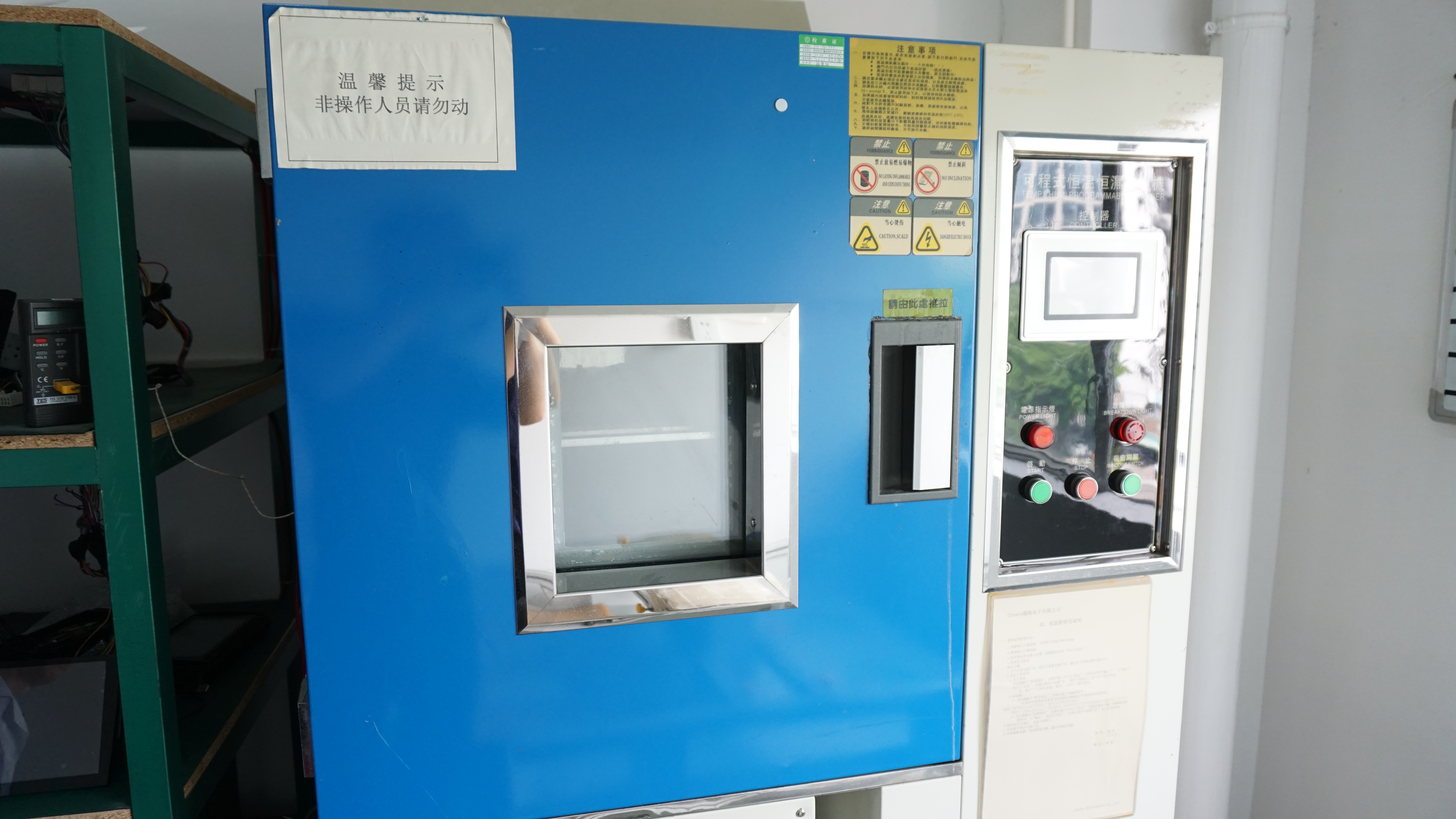
- 100% of units go through a 72-hour full-load aging test before shipment, reducing the risk of early-life component failure.
- Prototypes undergo a 1000-hour accelerated life test, along with high-temperature accelerated aging screening.
- Thermal cycling tests cover -40°C to 85°C, which is important for vehicles in cold or hot climates.
- Vibration and shock tests, including drop testing, are performed before shipment to reduce mechanical damage during transport and installation.
- Signal shielding room tests help confirm electromagnetic compatibility, supported by CE/FCC EMC certification.
- Touch panels are tested for more than 100,000 touches, and each unit receives a full screen function inspection before shipping.
- System stability is addressed through real-time operation monitoring and an automatic crash recovery mechanism.
- GPS signal loss is addressed through a dual-band GPS+Beidou high-gain antenna and an anti-interference receiving algorithm, with weak-signal simulation tests before shipment.
- Software compatibility is managed through a monthly car model compatibility database update, pre-sales demand verification, and one-to-one technical troubleshooting.
These quality gates are most valuable when a product is sold in large numbers. A distributor can lower its own after-sales cost by choosing a manufacturer that already runs these checks internally.
Real-World Applications: From Workshop Replacements to Factory Pre-Installation
The strongest evidence of long-term capability is a project that spans multiple years. In one documented case, a long-term collaboration in Germany involved a four-year project delivering 2,000 units for factory pre-installation in new energy vehicle models. The system used Android 14 and an 8-core high-performance CPU, and it was delivered with CE, FCC, and E-Mark certification. The result reported by the supplier was compliance with EU automotive EMC standards and long-term stable operation.
This case is not a typical single DIN retail order, but it demonstrates the same skills a distributor needs: managing volume, maintaining certifications, and supporting a multi-year commitment.
In the aftermarket channel, single DIN car radio applications are more diverse. Used car dealers often replace old factory radios before sale to add perceived value. Light truck operators may want Bluetooth handsfree calling and a backup camera input without changing the dash. Repair workshops need a universal unit that can be installed quickly across different brands. The TN-UK1105's universal 1DIN mount and broad vehicle fitment are designed for this kind of workflow.
From a buying process perspective, the practical path is: request a sample, verify fitment data, ask for compatibility confirmation for the specific vehicle list, then place a small pilot order. TOPNAVI's MOQ of 10 units supports this approach. With a 100% full-function test before shipment and third-party inspection supported, the buyer can establish a verification baseline before scaling up.
Market Trends: Where Single DIN Fits in the Wider Infotainment Market
The aftermarket car radio category is part of a much larger infotainment industry. According to Grand View Research, the global in-car infotainment market was valued at USD 22.5 billion in 2024, with China dominating the regional market. A more specific report from Market Research Future estimated the car audio head unit market at USD 15.44 billion in 2024, with Double DIN remaining the largest segment.
For single DIN, the practical implication is clear: it is a smaller segment, but it is not disappearing. Many older vehicles, commercial fleets, and price-sensitive markets still require the 1 DIN form factor. Fortune Business Insights data showed that Asia Pacific accounted for 54.21% of car audio revenue in 2025, reaching USD 6.01 billion, which suggests continued manufacturing and demand concentration in the region.
The automotive wiring harness market also matters for head unit installation. Grand View Research valued that market at USD 50.1 billion in 2023, underlining the complexity of integration. Buyers should expect aftermarket car radio suppliers to understand wiring compatibility and CAN bus behavior, not just screen specifications.
Among the recognized global competitors in car audio and head units are Alpine, Harman International, Sony, Pioneer, and JVCKenwood. For an independent manufacturer like TOPNAVI, the strategic fit is not to replace those brands, but to offer flexible aftermarket models with certifications and customization options that fit regional distribution programs.
Comparison: Modern Single DIN Units vs. Traditional Car Radios
Compared with an original factory car radio, a modern single DIN Android-based unit adds several functions. In TOPNAVI's comparison materials, the differences include true wireless Apple CarPlay and Android Auto, an HD touch screen, built-in navigation, DSP sound enhancement, steering wheel control, and Bluetooth. The claimed result is higher screen resolution, faster performance, better sound quality, and more functions, while the total cost can be about 10% lower than an equivalent original-radio upgrade path.
Compared with traditional car navigation systems, such as portable GPS navigators or factory navigation systems without smartphone connectivity, the differences are also measurable. The manufacturer's comparison notes wider vehicle compatibility, faster GPS positioning, a customizable Android system, and built-in DSP audio. It reports a 5-second fast wireless connection that is 80% faster than wired adapters, a system boot time that is twice as fast, and 10% lower power consumption than a combination of separate devices. For buyers, the value is the replacement of multiple accessories with a single unit.
One limitation should be acknowledged: an aftermarket single DIN unit is not a guaranteed plug-and-play fit for every car. Some vehicles require a dash kit or a CAN bus adapter, and certain factory functions, such as original amplifier integration or dashboard climate controls, may need additional interfaces. A single DIN unit can also look less symmetrical than a double DIN replacement in a dash designed for a larger opening. For this reason, buyers should verify specific vehicle models against the supplier's compatibility database before committing to a large batch.
Future Outlook: Long-Term Supply and the Shift to Platform Support
Looking ahead, the aftermarket car radio segment is likely to place more weight on software maintenance and platform stability. Hardware specifications will continue to improve, but distributors will increasingly compare suppliers by their ability to release stable firmware, offer OTA updates, and respond quickly to compatibility problems. TOPNAVI's stated approach includes OTA online updates, remote diagnosis support, and regular software version releases, which are the kind of services that reduce long-term risk.
The growing use of Android as a common platform in aftermarket head units also makes the aftermarket more responsive to consumer expectations. As smartphone ecosystems evolve, the ability to support CarPlay, Android Auto, and other connected services will become a normal requirement, even in the single DIN category.
For buyers, this means the next supplier selection should be based not only on the physical product but on the whole support system around it. The presence of in-house engineering, monthly compatibility updates, factory testing capacity, and documented multi-year projects are all useful signals.
FAQ: Long-Term Sourcing Questions for Single DIN Car Radio
What is the minimum order quantity and lead time for single DIN car radios from TOPNAVI?
The MOQ is 10 units. The typical production lead time is 7 to 15 days, based on the monthly production capacity of 30,000 units. Payment terms are commonly 30% T/T in advance and 70% T/T against the copy of the bill of lading; sample orders require full payment and sample confirmation before bulk production.
How can a buyer verify consistent quality across multiple batches?
TOPNAVI states that 100% of products receive a full-function test before shipment and a 72-hour full-load aging test. The factory has a 20,000 m² production facility with over 100 staff and an annual output above 360,000 units. Buyers can also request customer on-site inspection or third-party inspection by SGS/TUV.
What certifications should a single DIN car radio have for the EU and US markets?
For the EU, CE marking is mandatory under RED/EMC/LVD requirements. For the US, FCC certification is required. TOPNAVI states that its products carry CE, FCC, RoHS, E-Mark, and EMC certifications. ISO 16750 is also a recognized environmental testing standard for automotive electronic devices.
Can a single DIN car radio supplier handle OEM/ODM projects?
TOPNAVI offers OEM and ODM services with 50 R&D engineers and a monthly capacity of 30,000 units. A documented German project involved a four-year collaboration delivering 2,000 units for factory pre-installation in new energy vehicle models, using Android 14 and an 8-core CPU, with CE/FCC/E-Mark certification and EU EMC compliance.
What after-sales support should a long-term distributor expect?
In a long-term relationship, useful support includes monthly car model compatibility database updates, one-to-one technical troubleshooting, OTA firmware updates, remote diagnosis support, and stable software version releases. These reduce the support burden on the local importer or distributor.
For a broader product and company overview, TOPNAVI provides a public brochure at the following link: Download TOPNAVI company brochure (PDF).