
Single Pass Printer Fit by Application: A Scenario Guide for Packaging Buyers
Introduction: Single Pass Printing Is Not a One-Machine Market
Single-pass inkjet printing is often described as the speed layer of digital packaging production. Instead of moving a printhead back and forth over the sheet, a single-pass system uses stationary print bars to mark the entire printable width while the material travels beneath it. For packaging buyers, the relevant question is not whether single-pass is faster than multi-pass scanning, but which single-pass architecture fits the substrate width, thickness, run length, and finishing workflow of a specific project. This article examines single-pass printers through a project-fit lens, with reference to Shanghai Focus Industrial Co., Ltd. (FocusInc), a Shanghai-headquartered digital inkjet equipment manufacturer founded in 2008 with a 35,000-square-meter factory and a portfolio spanning HP PageWide water-based systems and UV piezo single-pass printers.
The Procurement Problem: Architecture Must Match Production Reality
Buyers evaluating single pass printers often face a confusing specification sheet. Print speed can range from 10 meters per minute on desktop packaging systems to 80 meters per minute on roll-to-roll UV presses. Maximum material width can vary from 210 mm to 1,800 mm depending on model and printhead count. Some machines are engineered for a narrow media family, while others accept corrugated board, paper bags, and plastic film by changing the feeding system. The cost of choosing the wrong architecture is not limited to the capital outlay; it includes lost capacity, rejected jobs, and the inability to accept the substrate mix that the sales team has promised.
Market pressure makes this decision harder. Digital printing for packaging was valued at USD 31.64 billion in 2023 and is projected to reach USD 75.55 billion by 2032 (Zion Market Research). Inkjet digital printers accounted for 42.5% of the digital printer market as of 2025 (Straits Research). In China, corrugated board production passed 88 billion square meters in 2024, creating strong demand for fast, plate-free printing of short-run packaging. The overall direction is clear, but the correct machine still depends on the job.
What to Look for in a Single Pass Printer
Before comparing models, buyers should map four technical layers: printhead technology, ink system, media handling, and post-print integration.
FocusInc's single-pass portfolio uses two main printhead families. HP PageWide heads are used in the Cobra and Falcon series, delivering up to 42,240 nozzles per head, a print resolution of up to 1200x1200 dpi, and water-based ink compatibility. The Acaleph series and S350 Jetpress use micro piezo printheads from Seiko, Ricoh, Epson, and other suppliers, supporting UV-curable ink for non-absorbent surfaces and providing print resolutions from 600x600 dpi to 1200x1200 dpi.
Media handling is equally important. For thick corrugated board, the Cobra-1209S and Cobra-1815S include automatic media feeders and vacuum transport systems that handle board thicknesses up to 60 mm. For soft non-woven bags, the Acaleph-891S e uses a vacuum adsorption feeder plus an optional deviation-correction conveyor to prevent misregistration. For roll-to-roll labels, the Viper-391S and S350 Jetpress are built around unwinders, rewunders, and tension control modules. A machine that cannot stabilize the substrate will not hold crisp print quality regardless of how advanced the printhead is.
Scenario-by-Scenario Fit
Corrugated and Cardboard Packaging
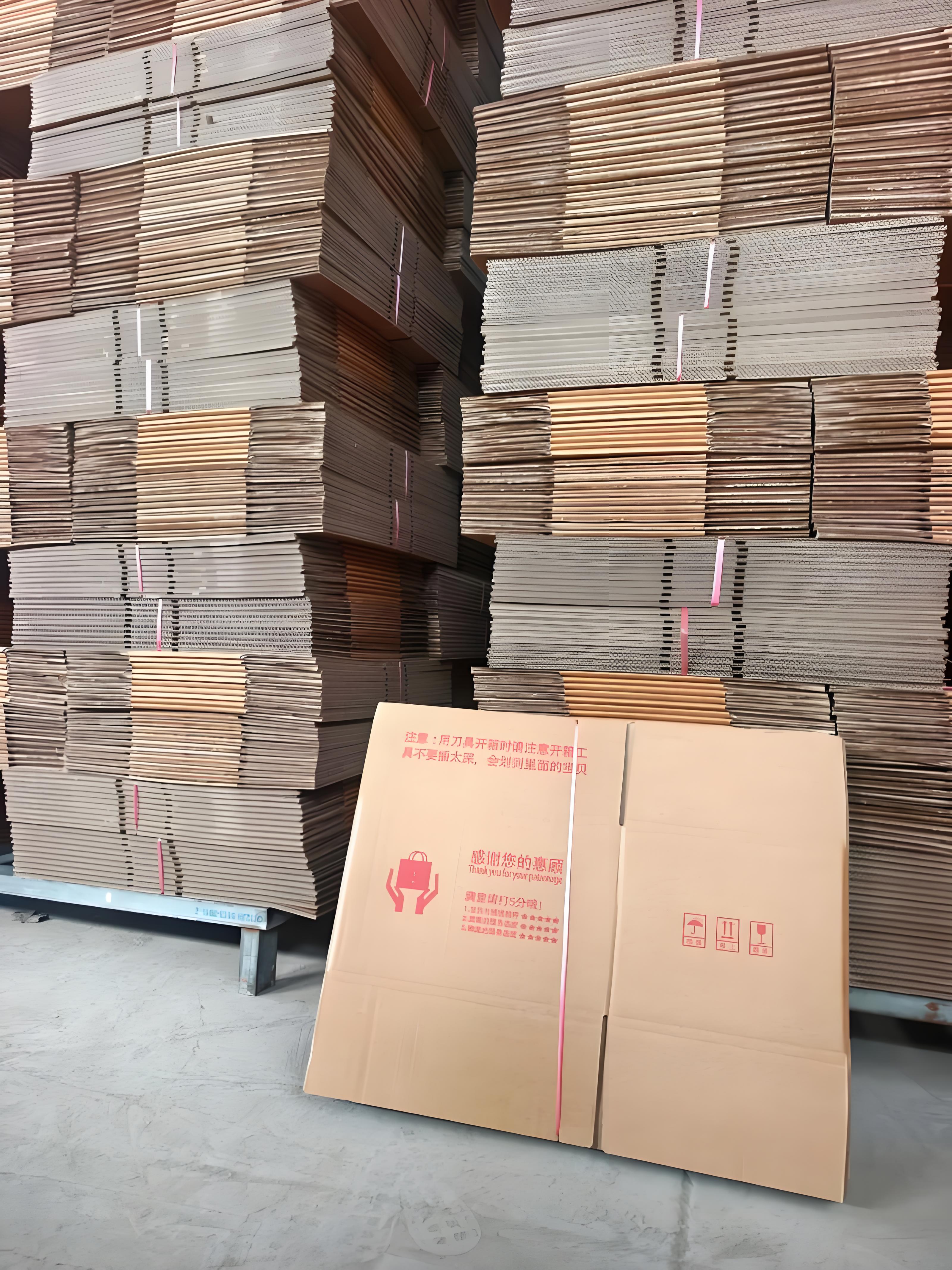
Corrugated projects vary from small e-commerce boxes to large honeycomb panels. For widths up to 1,230 mm, the Cobra-1209S provides a maximum print area of 900 mm per pass and supports thicknesses up to 60 mm. For wider production, the Cobra-1815S extends the load size to 1,800 mm with the same 10-35 m/min speed range. Both models support HP PageWide printheads and 1500 ml refillable ink tanks, reducing consumable cost for long shifts. Reported users include packaging manufacturers in Colombia, Saudi Arabia, Turkey, Chile, and Poland that use single-pass printing for variable QR codes, serial numbers, and multi-batch personalized packaging orders.
Paper Bags and Kraft Packaging
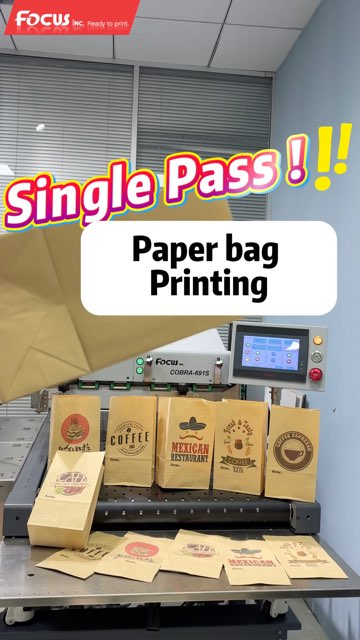
For pre-made paper bags, gift bags, and coffee bags, the Cobra-691S Max offers a 900 mm feed width, a print width of 215-645 mm depending on head count, and a speed of 20-40 m/min. The Falcon-491S Pro is a compact desktop alternative with an automatic friction feeder, a maximum material width of 430 mm, and a thickness limit of 180 mm. The Falcon-491S operates at 10-25 m/min and is designed for small pizza boxes, envelopes, and napkins as well as paper bags. Water-based ink is standard, with edible ink available on selected models for food-contact paper.
Label Production and In-Mold Labels
Label converters need tension control, registration sensors, and optional finishing. The Viper-391S is a roll-to-roll single-pass printer using HP PageWide heads with a maximum media width of 310 mm and print speeds of 10-40 m/min. It supports gap and reflective sensors for pre-cut labels. The Viper-391S Pro adds higher productivity with the same head family. For film labels such as BOPP, PET, or in-mold labels, the S350 Jetpress uses Epson S3200 industrial heads, runs at 20-80 m/min, and supports white + CMYK in one pass, which is critical when printing on transparent media. The NEXUS-350J goes a step further by combining printing, lamination, die-cutting, slitting, and waste removal in one inline platform, with a die-cutting precision of 0.05 mm.
Non-Woven and Fabric Bags
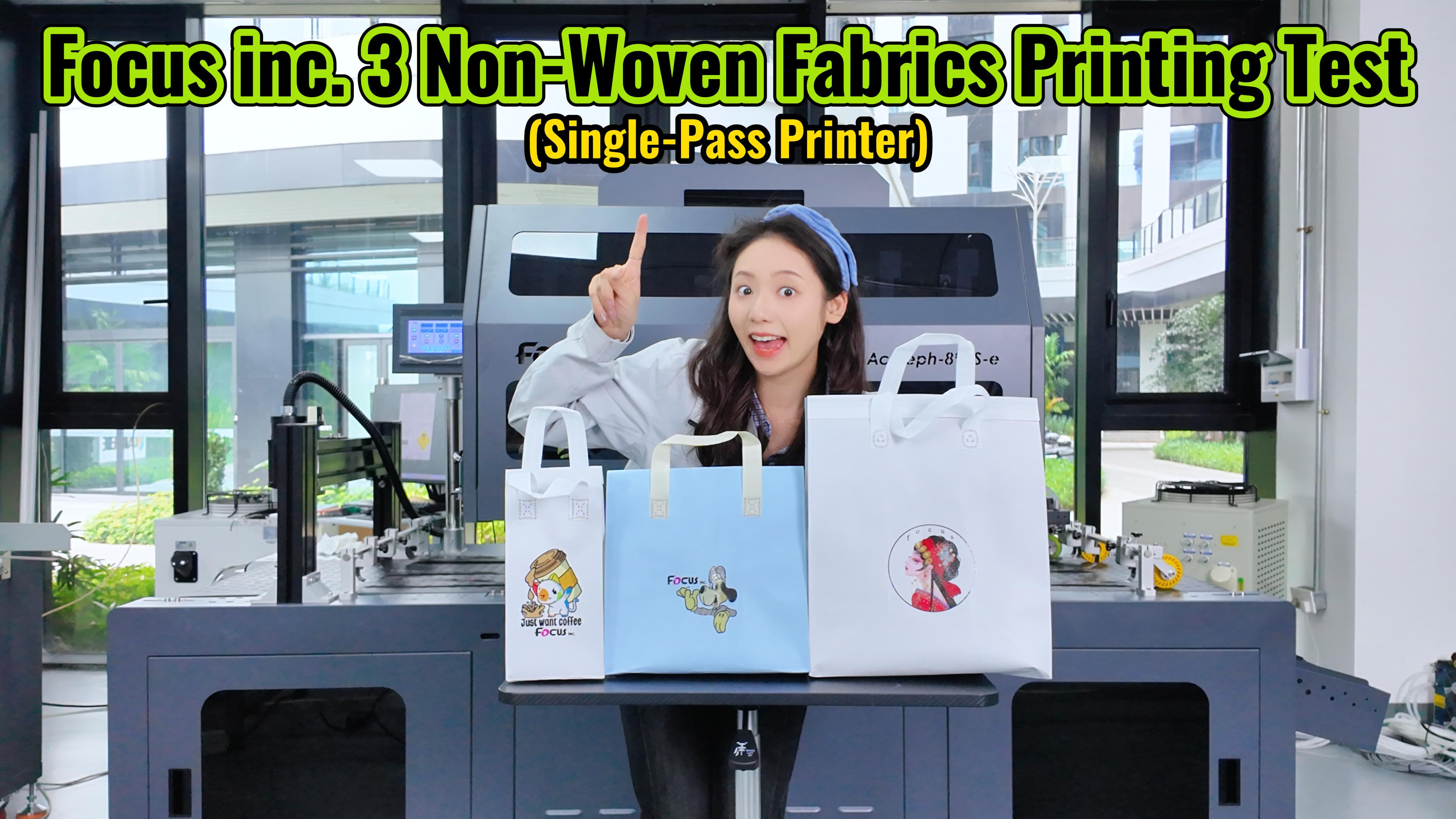
Non-woven bags are soft, porous, and easy to misregister. The Acaleph-891S e is a UV single-pass printer built for this material, with optional plasma pre-treatment to improve ink adhesion, 850W vacuum power in four independent zones, and support for both sheets and rolls. The operating workflow includes vacuum adsorption automatic feeding, deviation correction, and optional counting and stacking modules. A reported deployment in Brazil uses this UV single-pass system to print on non-woven bags, takeout bags, and other packaging with no minimum order quantity and no plate-making.
Book Edges and Notebook Sides
Book-edge printing is a niche application that requires holding the book block securely while printing on the side. The Cobra-691S AS B is a dedicated single-pass configuration with dual servo-driven belts and an adjustable book jig. It uses water-based ink at 1200 dpi resolution and supports book thicknesses up to 250 mm. A deployment in Spain and the Philippines prints personalized seasonal themes and commemorative album edges at a rate that allows more than 2,500 books per hour in continuous operation. The same platform can be specified with UV ink for gloss and durability.
Food Containers and Cups
Disposable paper cups, plastic cups, and takeaway containers require printing on curved or vertical side walls. The Acaleph-891S Side Printer is a UV single-pass system designed for this geometry. It supports a maximum load size of 600 mm by unlimited length, material thickness up to 300 mm, and speeds of 10-40 m/min. Optional plasma, flame, or corona pre-treatment improves ink adhesion on polymer surfaces. A case in Turkey, Poland, Saudi Arabia, Chile, and Mexico uses this side-printing solution to add logos and designs to finished empty cups and containers, allowing manufacturers to accept on-demand customization orders without carrying printed pre-stock.
Napkins and Household Paper
Napkin printers need to handle soft tissue without tearing. The Falcon-491S and Cobra-691S can be equipped with an upstream automatic tissue feeding and conveying system, plus a downstream collecting, counting, stacking, and conveying system. The application is used by high-end restaurants and event suppliers for patterned, holiday-themed, or co-branded napkins.
Decorative Panels and Rigid Boards
PVC wall panels, skirting boards, door skins, and marble-look panels are served by the Acaleph-891S e and Acaleph-891S-i industrial systems. These printers accept material up to 600 mm wide and 300 mm thick, with optional vacuum robotic feeding and automatic receiving. UV-curable ink creates a scratch-resistant surface that survives cutting and drilling. Companies in Portugal, Spain, Mexico, and Poland have used this solution to print wood-grain and stone-grain designs on decorative panels and to shorten new-product samples from days to minutes.
Reflective and Anti-Counterfeit Materials
Reflective film and anti-counterfeiting labels need precise dot placement on smooth, low-ink-absorbing surfaces. The Acaleph-891S-i industrial model supports multiple printhead configurations, 600x1200 dpi resolution, and variable data printing. It is used for vehicle inspection labels, reflective stickers, and anti-counterfeit markers that combine fine line textures, invisible UV patterns, and serialized QR codes. The S350 Jetpress also supports variable barcode printing at higher speed on roll materials.
Market Context and Speed Benchmark
Single-pass technology is positioned as the answer to high-volume digital packaging work. Industry data indicate that single-pass production speeds of 30-80 meters per minute are realistic for paper bag printing, significantly higher than multi-pass scanning systems. For label production, the S350 Jetpress reaches 20-80 m/min, which is comparable to light analog printing speed while retaining digital flexibility. These speed levels are only useful, however, when the upstream feeding system and downstream finishing line are aligned with the printer. That is why buyers should evaluate the entire handling path, not only the print engine.
Comparison with Traditional Methods: A Realistic Boundary
Compared with offset or flexographic printing, single-pass digital eliminates plate-making, reduces setup time, and enables version changes without tooling change. For very long, single-design runs — for example, several million identical folding cartons produced over months — traditional offset presses still benefit from lower unit ink cost and extremely stable high-speed output. Single-pass digital systems have higher variable cost per unit for such long runs because consumables, ink, and printhead depreciation are less favorably amortized than a metal plate over millions of impressions. The threshold varies by factory, but buyers who print a limited number of SKUs in very high volume should model the unit-cost crossover before moving entirely to digital.
How to Assess Project Fit
A practical checklist for buyers should include: substrate list and maximum width; maximum thickness and rigidity; required speed; ink type (aqueous, UV, edible, or pigment); need for variable data; post-print processes; and the level of automation already available in the factory. Matching these requirements against a supplier's model matrix will narrow the choice faster than studying printhead specifications alone. All models in this article are part of FocusInc's current catalog, and the company reports that 95% of its output is exported, so the hardware and support infrastructure are designed for international deployment.
For buyers evaluating the supplier behind these systems, FocusInc's factory brochure is available as a downloadable reference: FocusInc Factory Introduction (PDF). It covers the production facility, assembly lines, and quality control steps.
Future Outlook
The next phase of single-pass adoption will be shaped by integration. Print speed will continue to increase, but the larger opportunity is in connecting the printer to automatic feeding, inline inspection, and robotic palletizing. Buyers should expect suppliers to offer more complete production cells rather than standalone printers. In parallel, the range of printable substrates will expand, especially for water-based inks on food-safe and biodegradable materials. Single-pass is not replacing offset for every job, but it is becoming a standard tool for the growing share of packaging that requires versioned graphics, serialized codes, and short lead times.
FAQ
What are the main factors to consider when choosing a single pass printer for a packaging project?
Substrate width, thickness, ink type, production speed, and level of automation are the primary factors. For corrugated board up to 1,230 mm wide, models like the Cobra-1209S are suitable. For paper bags and kraft packaging, the Cobra-691S Max or Falcon-491S Pro provide compact inline feeding. For roll-to-roll labels, models with tension control and registration sensors such as the Viper-391S or S350 Jetpress are required.
Can the same single pass printer print on paper bags and labels?
No single model in FocusInc's lineup is specified for both pre-made paper bags and roll-to-roll labels. Paper bag printing uses conveyor-based feeding designed for sheets and folded structures, while label printing requires unwinders, rewinders, and tension control. Buyers should choose the machine built for the primary media and add a second machine if both applications are core to their business.
What speed range is realistic for single pass packaging printers?
The speed depends on head type and resolution. Desktop packaging printers such as the Falcon-491S operate at 10-25 m/min. The Cobra-1209S and Cobra-1815S run at 10-35 m/min on corrugated board. The roll-to-roll label press S350 Jetpress reaches 20-80 m/min. Higher speeds generally require UV ink and industrial printheads.
Does single pass printing support variable data, QR codes, and serial numbers?
Yes. The Cobra series supports variable QR codes and serial numbers on corrugated boxes and cardboard. The S350 Jetpress supports barcode printing on roll-to-roll labels. The Acaleph series can print serialized anti-counterfeit codes on reflective materials. Variable data is handled through RIP software and real-time sensor control to maintain registration.
What operating environment is required for single pass printing equipment?
Most FocusInc single pass printers are designed for indoor industrial workshops with temperature ranges around 15-30°C and humidity between 35% and 80%. Some applications specify a dust-controlled production environment, while others tolerate a conventional workshop with slight paper dust. Buyers should verify the operating limits for the specific model and install appropriate ventilation or air filtration if needed.