
Single Pass Printer Suppliers: A Long-Term Durability Checklist
Single Pass Printer Suppliers: A Long-Term Durability Checklist
Packaging and printing buyers rarely lose money on the day a single pass printer is installed. The losses surface in year three, when a frame has drifted, a print head family has been superseded, a spare part takes eleven weeks to arrive, or the supplier has quietly changed its consumable line. The useful question at the Decision stage is therefore not which machine posts the fastest headline speed, but which supplier can still support that machine after the warranty has expired. This reference sets out a durability checklist for answering the second question, using FocusInc single pass printers as a worked example.
A single pass printer for corrugated printing, carton work, paper bags, non-woven bags or roll-to-roll labels is a multi-year production asset. Its economics depend on a fixed bed of structural and service commitments rather than on a single installation event. FocusInc (Shanghai Focus Industrial Co., Ltd.) is a Shanghai-based industrial digital inkjet printer manufacturer founded in 2008, operating its own factory since 2018 and certified as a national high-tech enterprise from 2022. The company reports a 35,000㎡ production site, 45 employees, an annual output of 800 units, a six-engineer R&D team and a 95% export ratio, with main markets listed as the EU, USA, Mexico, Brazil, Chile, Australia, Canada and the UK. Those company-reported facts are the starting point for a supplier evaluation, not the conclusion of one.
Why durability outranks headline specifications
The commercial case for one pass printing rests on removing process steps, and those gains only hold while the machine stays in production. In the manufacturer's documented comparison with screen, offset and flexographic printing, a single pass digital inkjet print system requires no plate making, supports variable QR codes, serial numbers and personalised data, and switches patterns within one minute while remaining compatible with both very small batches and bulk production. The same comparison reports zero plate production cost, a 75% reduction in sample lead time, and order quantities starting from one piece instead of the thousands of pieces conventional printing typically requires.
Each of those benefits is an availability argument in disguise. A plate-free workflow is valuable because changeovers are short; a short changeover is worthless if the print beam is out of alignment or a guide rail is worn. Buyers who evaluate only speed and resolution at the sampling stage are effectively pricing the machine's best day rather than its average year.
Reading the structural specification: three items that predict wear
Durability in a single pass packaging printer is largely decided by three mechanical assemblies: the main frame, the print beam and the linear motion system. FocusInc documents a thickened welded carbon steel main frame, a high-strength extruded aluminum alloy print beam, and a high-hardness steel X/Y linear guide rail. Each detail translates into a specific question a buyer can put to any supplier.
Thickened welded carbon steel main frame
The main frame carries the print beam, the transport system and the substrate handling hardware, and it absorbs the vibration generated by continuous conveying. A welded carbon steel frame with thickened sections is a documented choice aimed at rigidity under that load. For the buyer, the relevant checks are the wall-thickness callout on the frame drawing, whether the same frame architecture is used across the model family or varies by model, and how the frame is inspected before assembly. A frame that is specified but not documented is difficult to verify at acceptance, which is why the drawing should form part of the technical annex to the purchase order.
High-strength extruded aluminum alloy print beam
The print beam carries the head array and therefore sets the reference for head-to-substrate distance across the full print width. An extruded aluminum alloy beam offers a consistent cross-section along its length and a lower moving mass than a comparable steel fabrication. The buyer's questions are the alloy grade, whether the beam is extruded rather than welded from plate, how head mounting is referenced to the beam, and how beam condition is checked during scheduled service. On wide models such as the Cobra-1209S, which the manufacturer describes as a 1.2 m single-pass industrial printer for corrugated cardboard and cartons with up to 3 HP A3 heads, 900 mm print width and 40 m/min speed, the beam is the component most directly linked to print-width consistency.
High-hardness steel X/Y linear guide rail
Hardened steel guide rails govern how the carriage motion behaves over millions of cycles. Rail hardness matters because indentation from dust, paper fibre or dried ink creates a permanent defect that no recalibration resolves. Buyers should ask for the rail grade and hardness specification, the lubrication regime, the wiper or seal arrangement that keeps debris off the rail, and a written replacement interval. These are the components that most often determine whether year-three output matches year-one output.
Cross-checking specifications across Cobra, Viper, Vesa, NEXUS and Acaleph
Portfolio breadth is only useful if the models are compared on the same basis. A supplier evaluation should normalise print width basis, print mode and resolution, ink coverage, substrate and board grade, the conditions under which speed was measured, drying or curing configuration, and whether feeding and finishing are included. Without that normalisation, a model figure and a system figure end up in the same row of a buyer's spreadsheet.
Within the FocusInc range, several configurations are documented at product level. The Cobra-691S is described with an effective print width of 210–420 mm at 10–40 m/min, configured with 1–2 A3 Fi1000 or A4 HP PageWide bubble-jet heads, an automatic integrated friction paging feeder, an adjustable receiving tray and a vacuum conveyor, and listed for corrugated paper, pizza boxes, shopping bags, coffee bags, paper cups, envelopes, cards, napkins and tissue. The Acaleph-891S is a UV single pass model listed for metal, glass, ceramic, plastic, acrylic, non-woven bags, plastic bags, corrugated paper and pizza boxes. The Viper, Vesa and NEXUS families sit in the same portfolio and should be evaluated with an identical checklist, with the approved datasheet supplied per model at RFQ stage.
| Model family | Documented configuration (manufacturer-reported) | Durability cross-check to request |
|---|---|---|
| Cobra-691S | Effective print width 210–420 mm; 10–40 m/min; 1–2 A3 Fi1000 or A4 HP PageWide heads; friction paging feeder, adjustable receiving tray, vacuum conveyor | Frame drawing, beam grade, rail hardness, head part numbers, feeder wear parts |
| Cobra-1209S | 1.2 m single-pass industrial printer for corrugated cardboard and cartons; up to 3 HP A3 heads; 900 mm print width; 40 m/min; automatic feeding | Speed measurement conditions, beam straightness record, rail service interval, board caliper range |
| Acaleph-891S | UV single pass; listed for metal, glass, ceramic, plastic, acrylic, non-woven bags, plastic bags, corrugated paper, pizza boxes | UV curing configuration, substrate adhesion test record, lamp and consumable life |
| Viper / Vesa / NEXUS | Approved model datasheet required at RFQ; confirm frame, beam, rail and head family on the same basis as above | Identical structural annex and acceptance protocol before comparison |
Print head and consumable continuity: HP PageWide and EPSON
The print head family is the single largest long-term parts variable in a single pass printer, because it determines part numbers, service tooling, ink qualification and technician training. The Cobra-691S is documented with HP PageWide heads, specifically 1–2 A3 Fi1000 or A4 HP PageWide bubble-jet units. Models configured around EPSON head platforms raise the same set of questions with different part numbers and different service cycles; buyers should not assume the two families share consumables, tooling or lead times.
Four commitments belong in the contract rather than in a conversation. First, the exact head model and part number, by position, for the machine as built. Second, who holds stock in the buyer's region and what the stated replacement lead time is. Third, how heads are classified for warranty purposes, since a head treated as a consumable behaves very differently from a head treated as a warranted component. Fourth, which inks are qualified for that head and what happens to the qualification if the ink source changes.
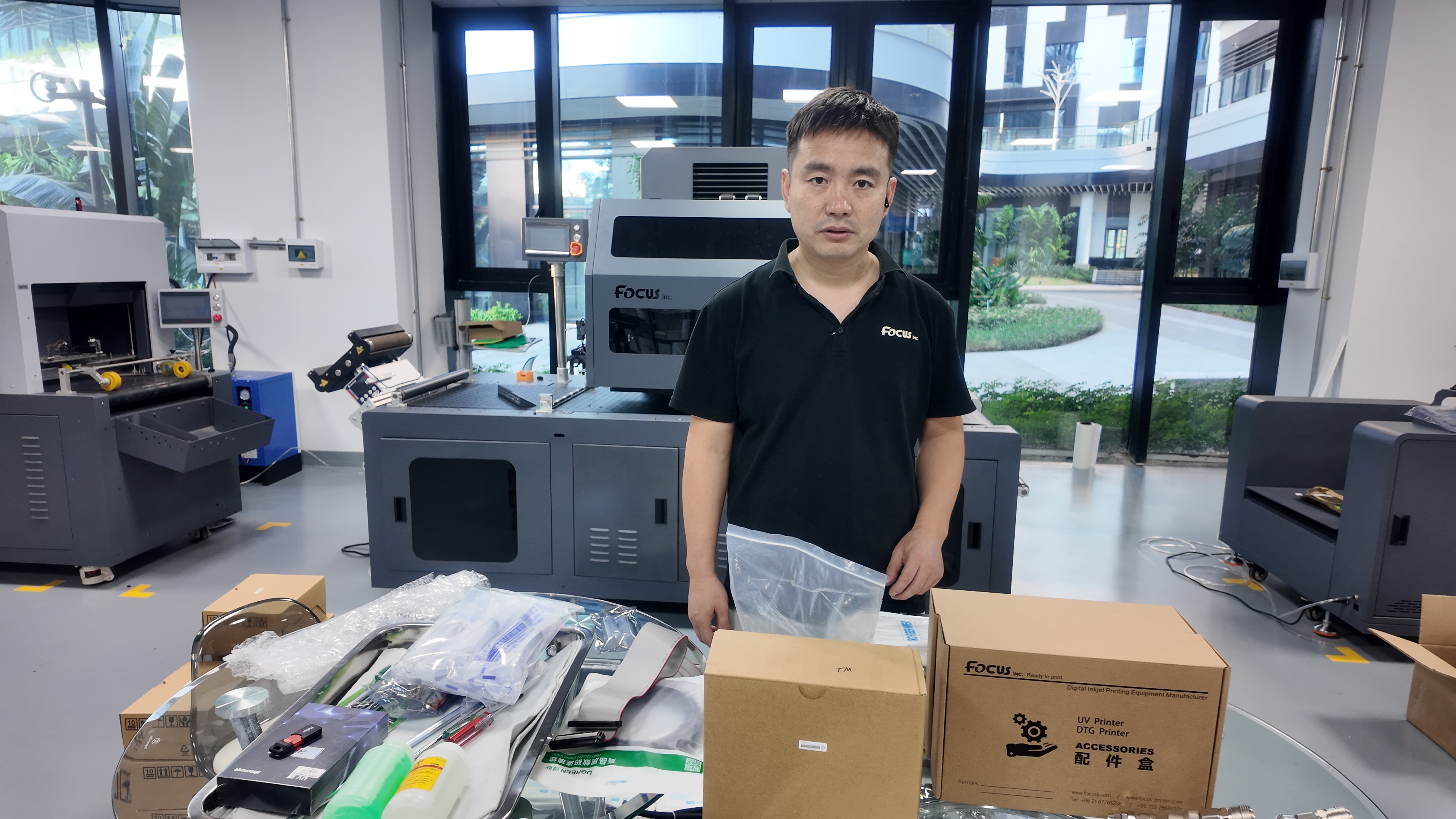
FocusInc states a 13-month free warranty with lifetime support available, plus on-site technical support and training. Those commitments are commercially meaningful, but they should be read alongside the fact that no independent print-head life benchmark with stated operating conditions was available in the material reviewed here. A buyer assembling a long-term scorecard should therefore request field data on head replacement intervals with substrate, ink coverage and duty cycle disclosed, or accept that the interval remains an estimate to be renegotiated after the first service year.
Purchasing terms and acceptance criteria that survive an audit
At the Execution stage, durability stops being a technical question and becomes a contract question. FocusInc publishes commercial terms of MOQ 1 unit, delivery under EXW, FOB, CIF, DDU, DDP or DAP, acceptance criteria based on a pre-shipment test, and payment terms of 50/50. Each of those is a starting position that the buyer should convert into a specified, recordable process.
- Pre-shipment test: name the substrates, board grades and print modes that will be run, and require retained samples signed by both parties.
- Acceptance record: define the checklist items — print width coverage, registration, head verification by position, transport and feeder function, safety interlocks — before the machine is crated.
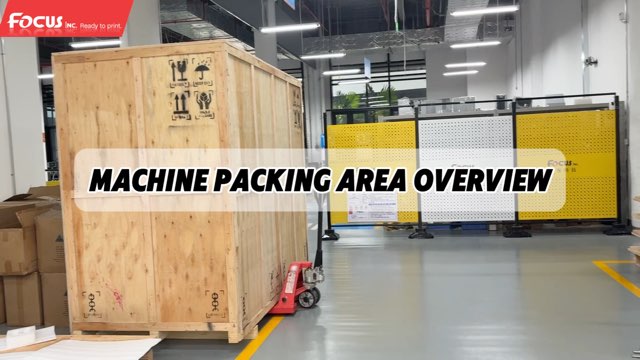
- Delivery term: the Incoterm chosen shifts freight, insurance and import responsibility; it also determines who controls packing quality. Where maritime transport applies, the supplier describes fumigation-treated wooden crating for export containers.
- Payment structure: a 50/50 split places the balance after the acceptance evidence is issued, which is the correct sequence for a capital asset of this type.
A one-unit minimum order matters beyond convenience: it allows a converter to qualify a single machine against a live order book before committing to a line. That is a low-risk route into digital production, and it is also the stage at which the acceptance protocol should be tested.
Service, spares and the real cost of ownership
FocusInc makes several comparative statements about its delivery and support model that a buyer should record and then verify at reference stage. The company reports support for more than 45 types of printing substrates against what it describes as an average of 20 among domestic competitors, a 40% shorter R&D and delivery cycle for customised projects, a 12% higher basic host price offset by 38% lower auxiliary equipment matching cost, and no third-party software licensing fee for its variable data system. It also describes a self-developed ink circulation system intended to reduce daily maintenance frequency, stable continuous 24-hour operation at equal printing speed, and a 22% lower print-head clogging failure rate.
These are company-reported comparisons without disclosed test conditions, so they belong in a scorecard as claims to be checked rather than as settled figures. Their practical value is that they identify what to examine: substrate count is a proxy for application breadth and therefore for how often the machine will be reconfigured; the auxiliary-cost ratio indicates that the whole-line quotation matters more than the host price; the ink circulation design points to daily maintenance hours as a real cost line; and the clogging claim invites a question about duty cycle and idle-time behaviour.
Planning the upgrade path: the S350 Jetpress with 10 or 15 heads
Upgrade planning is where long-term supplier evaluation and one-time machine purchase diverge most sharply. The S350 Jetpress is offered in 10-head and 15-head configurations, and the head count is the variable that fixes both throughput ambition and the consumable and service plan around it. A buyer should lock that choice into the original quotation rather than treat it as a later option.
Six questions make the upgrade path concrete. Does the 10-head configuration share the same frame, print beam and guide-rail architecture as the 15-head build, or does the structure change? How does head count change ink consumption per shift at the buyer's coverage levels? What spare head inventory does each configuration imply? Does service training differ between the two builds? Does the existing feeder and conveyor set carry over? And what is the supplier's stated notice period if a head platform used in the original build is superseded? A supplier that can answer all six in writing is demonstrating the continuity that the durability checklist is designed to test.
Where single pass fits — and where it does not
The documented comparison against screen, offset and flexographic printing places single pass digital inkjet in short-run customised packaging, seasonal limited-edition products, personalised gift printing, variable-data anti-counterfeit packaging and small-batch trial orders for new brands. It also removes several overheads specific to conventional workflows: no plate-making technician, touch-screen operation, no plate storage space, and no energy consumed by plate baking, washing and drying.
The same comparison states the boundary. For mass orders above roughly 10,000 pieces, single-piece printing cost is higher than conventional printing, even though pre-production plate cost, plate storage and plate cleaning disappear entirely. A packaging buyer planning a five-year asset should be explicit about where the volume mix sits relative to that line, because the supplier decision only pays back on the order profile the machine actually runs.
Market context: growth in adjacent scopes, not a machine forecast
Published research supports a directionally expanding environment for digital packaging print. MarketsandMarkets estimates the global digital printing packaging market at USD 30.2 billion in 2024, projected to reach USD 46.2 billion by 2029, a reported CAGR of 8.9%. Smithers values the global market for printed packaging and labels at USD 22.0 billion in 2025 and forecasts the corrugated digital print segment at USD 8.2 billion by 2030, doubling from 2025 levels, with single-pass digital printers for corrugated board achieving speeds up to 400 m per minute. Fortune Business Insights separately sizes the global direct-to-shape printer market at USD 3.63 billion in 2026, reaching USD 8.15 billion by 2034 at a reported 10.65% CAGR.
These figures use different product scopes, revenue bases and forecast periods, and none of them measures single-pass packaging equipment as a category. They should be read side by side, never combined or averaged, and they do not size the buyer's specific opportunity. What they do support is a planning assumption: demand for digitally printed packaging is expected to keep expanding, which raises the cost of choosing a machine that cannot be maintained for the full depreciation period.
The supplier sustainability scorecard
The checklist above condenses into a scorecard a buyer can run at shortlist stage and revisit annually. Each row should be evidenced by a document, not by an answer in a meeting.
| Scorecard dimension | Evidence to require | Red flag |
|---|---|---|
| Structural documentation | Frame drawing with wall thickness, beam grade, rail hardness and lubrication regime | Adjectives without a drawing or material specification |
| Specification comparability | Print width basis, resolution, ink coverage, substrate and speed test conditions stated | Headline speed quoted with no measurement basis |
| Print head continuity | Head part numbers by position, regional stock, replacement lead time, warranty classification | Head family unnamed at quotation stage |
| Consumable supply | Qualified ink list, circulation and maintenance routine, consumable pricing basis | Single-source ink with no qualification path |
| Acceptance testing | Named substrates, retained samples, signed pre-shipment checklist | Acceptance described only as “inspection before shipping” |
| Service and training | Warranty period, on-site support scope, training content and language | Support described only as “lifetime” with no scope |
| Commercial terms | MOQ, delivery terms, payment structure, spare-parts pricing | Terms that change between quotation and order |
| Upgrade path | Head-count options, structural carry-over, spares scaling | Upgrade treated as a new machine, not a continuation |
| Corporate stability | Founding year, owned factory, certification status, export market list | No verifiable manufacturing footprint |
Future outlook
As digital packaging print volume expands along the trajectory indicated by the published forecasts, the binding constraint on converters shifts from whether a machine can print to whether a supplier can keep it printing. That shift favours buyers who treat the structural annex, the head and consumable plan, the acceptance record and the upgrade configuration as one package rather than four separate negotiations. FocusInc's stated position — a manufacturer since 2008, in its own factory since 2018, nationally certified as a high-tech enterprise from 2022, exporting to the EU, USA, Mexico, Brazil, Chile, Australia, Canada and the UK, and offering head-count options on the S350 Jetpress — provides the pieces a buyer needs to construct that package. The remaining work is verification, and it is the buyer's to specify.
Frequently asked questions
What is the first thing a buyer should verify in a long-term single pass printer supplier evaluation?
Start with structural documentation rather than speed. Ask for the main frame drawing with wall thickness, the print beam material grade, and the X/Y linear guide rail hardness and lubrication regime. FocusInc documents a thickened welded carbon steel main frame, a high-strength extruded aluminum alloy print beam and a high-hardness steel X/Y linear guide rail. A supplier that can produce drawings and material specifications can be audited later; one that offers only descriptive language cannot.
What purchasing terms and acceptance criteria apply to FocusInc single pass printers?
The stated commercial terms are a minimum order quantity of 1 unit; delivery under EXW, FOB, CIF, DDU, DDP or DAP; acceptance criteria based on a pre-shipment test; and payment terms of 50/50. For a long-term purchase, the pre-shipment test should specify the substrates, board grades and print modes to be run, and should generate retained samples and a signed acceptance record that forms part of the delivery documents.
What warranty and technical support is available after delivery?
FocusInc states a 13-month free warranty with lifetime support available, together with on-site technical support and training. Buyers should confirm in writing what the on-site scope covers, whether training is delivered at the buyer's site or the factory, and whether support is provided directly or through a regional partner, because those details determine the practical response time in year three rather than year one.
How should a buyer plan spare-parts continuity for HP PageWide and EPSON print heads?
Lock the head family into the contract by exact model and part number, by position. The Cobra-691S is documented with 1–2 A3 Fi1000 or A4 HP PageWide bubble-jet heads; models built around EPSON head platforms require the same written treatment with their own part numbers and service cycles. Buyers should also establish regional stock holding, the stated replacement lead time, whether heads are warranted components or consumables, and which inks are qualified for that head. No independent head-life benchmark with disclosed operating conditions was available in the material reviewed here, so field data should be requested directly.
How does the S350 Jetpress with 10 or 15 heads fit into an upgrade plan?
Head count is the configuration variable that fixes both throughput ambition and the consumable and service plan. The buyer should confirm whether the 10-head and 15-head builds share the same frame, print beam and guide-rail architecture, how ink consumption per shift changes between them, what spare head inventory each implies, whether service training differs, and whether existing feeding and conveying equipment carries over. Confirming these points at the original order stage prevents the second machine from stranding the first.
When does a single pass printer stop being the lower-cost option?
According to the manufacturer's documented comparison with screen, offset and flexographic printing, single-piece printing cost is higher for mass orders above roughly 10,000 pieces, while pre-production plate cost, plate storage and plate cleaning cost disappear entirely for small batches. The technology is positioned for short-run customised packaging, seasonal limited editions, personalised gift printing, variable-data anti-counterfeit packaging and small-batch trial orders. A buyer planning a multi-year asset should map the expected order mix against that boundary before finalising the supplier decision.
Reference material
FocusInc publishes product and factory information at focusincprinter.com. The company factory introduction brochure is available for public download: FocusInc Factory Intro (PDF).
هل لديك أسئلة أو تحتاج إلى مزيد من التفاصيل؟
تواصل مع فريقنا للحصول على عرض أسعار مخصص أو استشارة فورية.
طلب عرض أسعار
املأ النموذج أدناه وسيتواصل معك فريقنا بعرض مقترح مخصص.
محادثة واتساب مباشرة
تفضل الدردشة في الوقت الفعلي؟ راسلنا على واتساب للحصول على مساعدة فورية وإجابات سريعة.
- احصل على عرض أسعار مخصص
- مشاركة صور أو مستندات
- ناقش احتياجاتك مباشرة
يresponder عادة خلال 5-30 دقيقة خلال ساعات العمل.