
Site-Specific Selection of Outdoor Polycarbonate Convex Mirrors: A 2026 Project Guide
Matching the Right Outdoor Polycarbonate Convex Mirror to Your Site Conditions
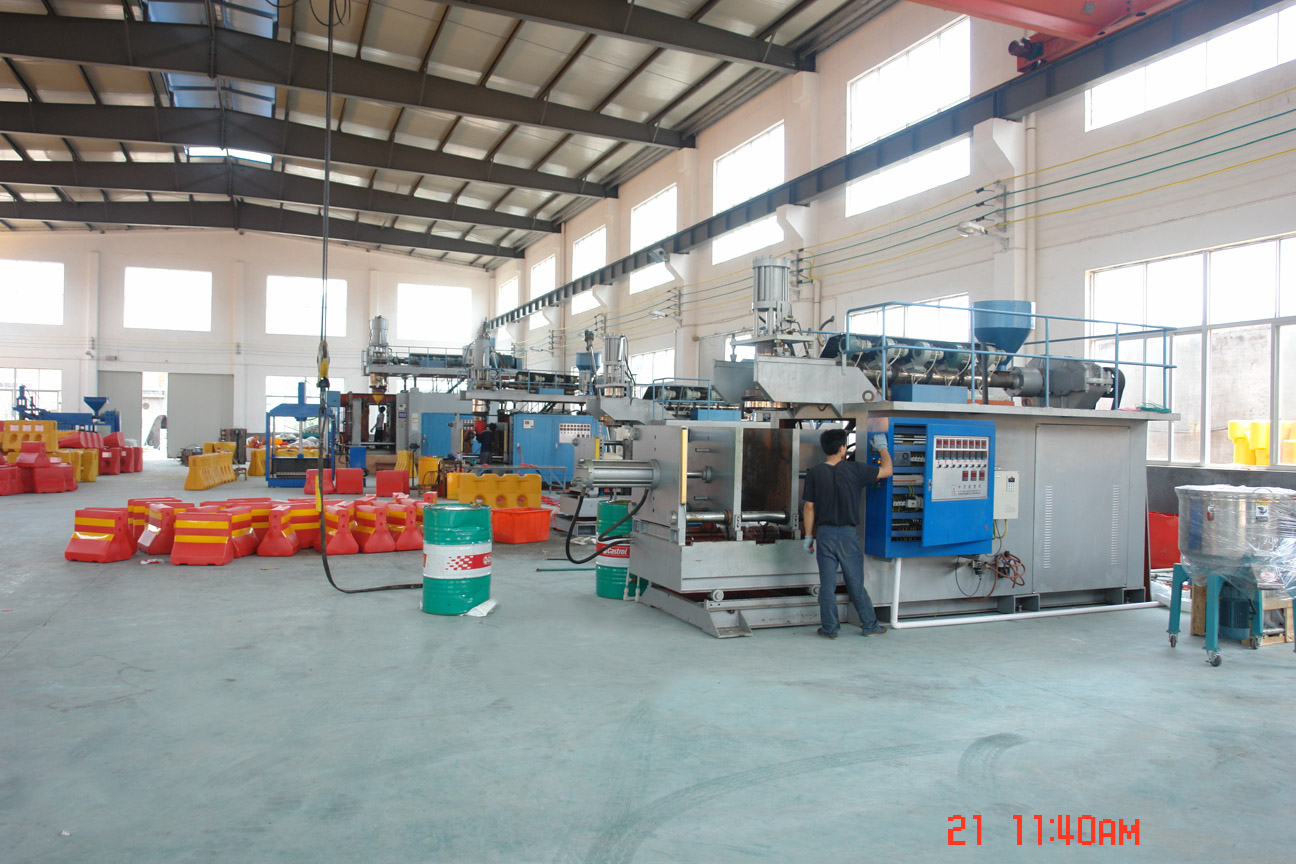
Industrial buyers evaluating convex mirrors for traffic safety or blind-spot mitigation face a recurring challenge: selecting a product that is technically suited to the specific environmental and operational conditions of their project. Mnsd, operating under Tiantai Yuanda Traffic Device Co., Ltd, manufactures a range of Outdoor Polycarbonate Convex Mirrors designed to address this need. The company, based in Tiantai, Zhejiang, China, specializes in road safety equipment and has been producing convex mirrors since 2007.
Problem and Opportunity
Blind spots at outdoor intersections, underground garage corners, T-junctions, and similar areas pose persistent risks for vehicle collisions and pedestrian safety. Traditional glass mirrors are prone to shattering, while electronic monitoring systems involve high installation and maintenance costs. Polycarbonate convex mirrors offer a passive, durable alternative, but the choice of diameter, material thickness, and mounting configuration must align with the specific visual range and weather conditions of each installation site.
Mnsd's Product Solution
Mnsd offers the YD-OC series of Outdoor Polycarbonate Convex Mirrors, available in diameters from 450 mm to 1200 mm. Each mirror is designed to eliminate blind spots, expand the driver's field of vision, prevent vehicle collisions, and ensure the safety of both pedestrians and vehicles. The mirrors operate in a fixed physical reflection (or 24/7 passive monitoring) mode, requiring no power supply.
Technical Specifications and Design
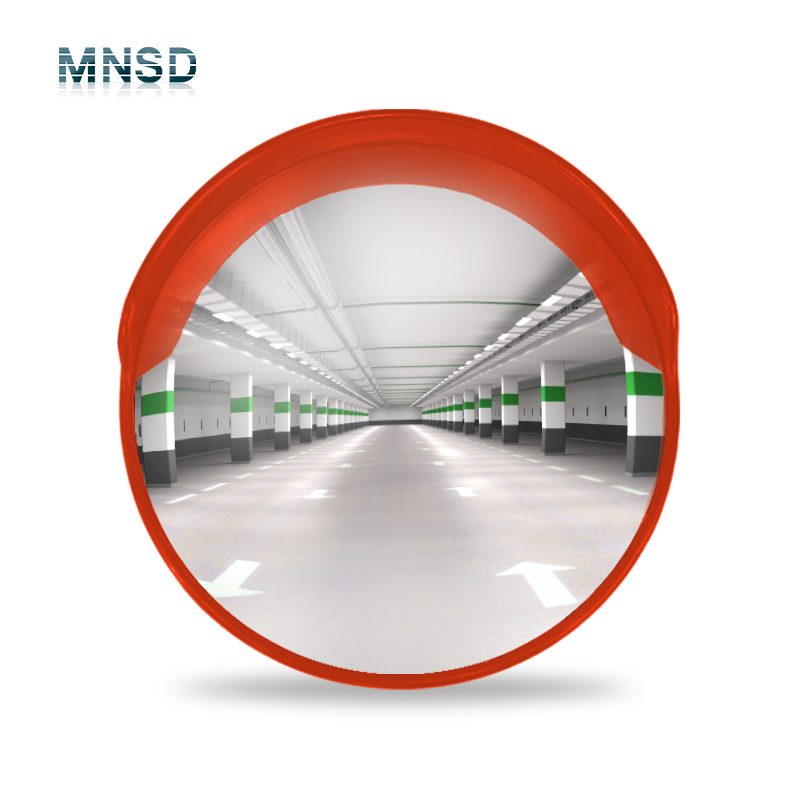
The YD-OC mirror lens is made from impact-resistant polycarbonate (PC) with a vacuum aluminum coating. Key parameters include a lens thickness of 0.6–1 mm (customizable), curvature radius R2200–R3000, and a view angle of 130°+. The backing is constructed from high-impact ABS plastic with a bright orange finish for high visibility. The mounting bracket is heavy-duty galvanized steel, fitting 60 mm or 75 mm poles. All models are rated IP65 for outdoor use, with UV-stabilized PC and ABS providing Grade 8 UV resistance and a 3–5 year lifespan. Temperature resistance ranges from -30°C to +80°C, and the structure is wind-load resistant to Level 10.
Optional features include anti-scratch hard coating and engineering-grade reflective tape on the rim.
Application Scenarios and Installation
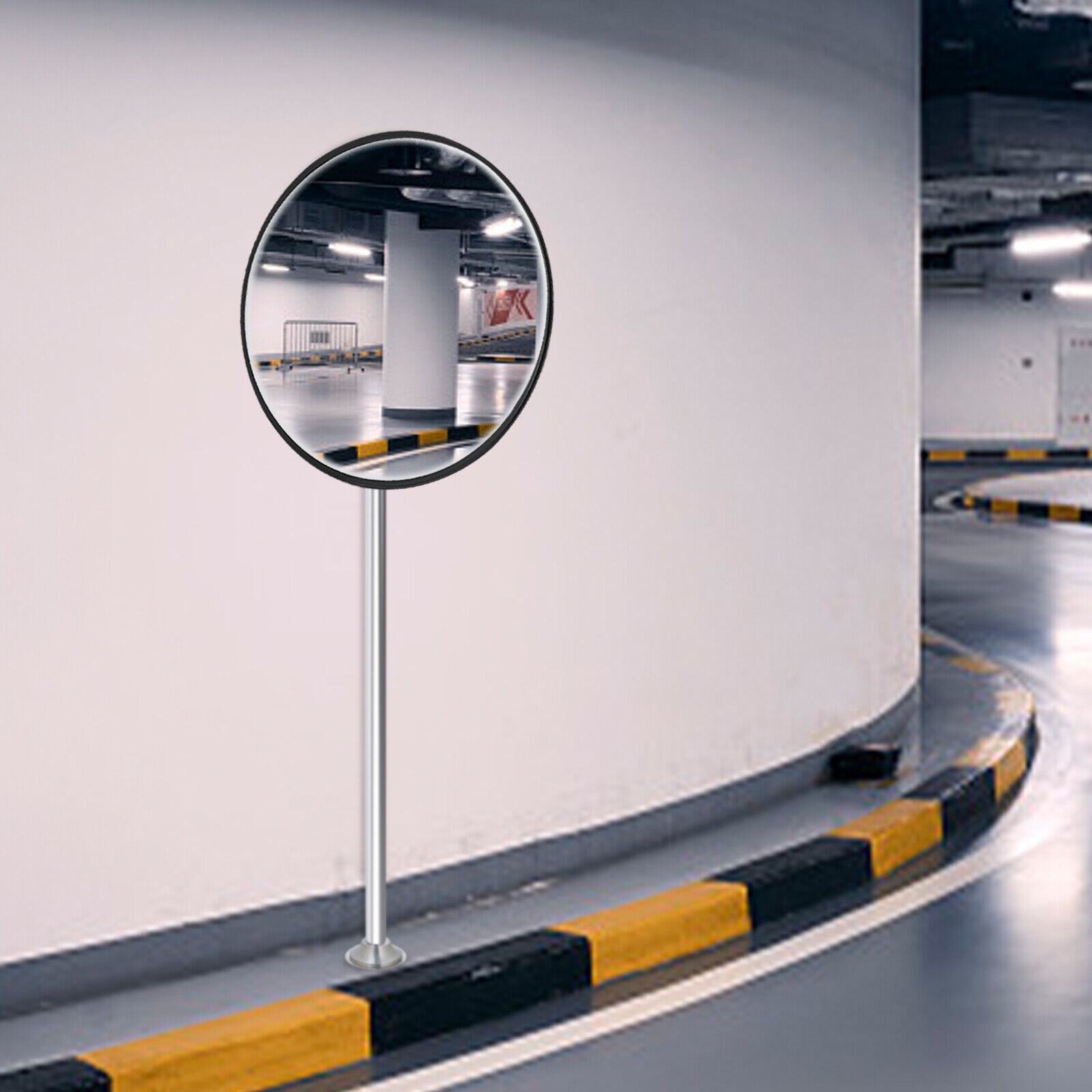
These mirrors are suitable for environments including outdoor intersections, underground garage corners, T-junctions, and areas with significant blind spots. The application has special requirements: UV resistance (anti-aging), an impact-resistant mirror with memory-springback, high clarity, and strong weather resistance (anti-rust and anti-corrosion). Supporting equipment includes mounting brackets (pole-mount clamps), support pillars, reflective film or tape, and expansion bolts. Depending on visual range needs, buyers can select from models YD-OC45 (10–12 m range), YD-OC60 (15–18 m), YD-OC75 (20–25 m), YD-OC80 (22–28 m), YD-OC100 (30–35 m), or YD-OC120 (35–45 m).
Market Trend Analysis
Demand for passive safety solutions in traffic management and industrial facilities continues to grow. Polycarbonate convex mirrors are increasingly preferred over glass alternatives due to shatterproof properties and lower replacement frequency. In logistics parks and loading docks, wide-angle mirrors remain a cost-effective complement to electronic monitoring.
Comparison with Traditional Solutions
Compared to glass convex mirrors, polycarbonate mirrors offer superior impact resistance and self-recovery (vandal-resistant). Relative to electronic camera systems, they provide instant visual feedback with zero power consumption and lower upfront investment. One honest limitation: the polycarbonate lens surface can be susceptible to scratching in abrasive environments if the optional anti-scratch hard coating is not specified. Mnsd offers this as an optional upgrade.
Future Outlook
As warehouse automation and smart city infrastructure expand, the role of simple, reliable passive safety devices like polycarbonate convex mirrors remains stable. Continuous improvements in UV stabilizers and coating technologies will further extend outdoor lifespan.
Frequently Asked Questions
- What environments are these convex mirrors designed for?
This product is designed for environments including outdoor intersections, underground garage corners, T-junctions, and areas with significant blind spots. - What is the primary function of the mirror in these scenarios?
The product's role is to eliminate blind spots, expand the driver's field of vision, prevent vehicle collisions, and ensure the safety of both pedestrians and vehicles. - What special requirements apply to this application?
This application has special requirements including UV resistance (anti-aging), an impact-resistant mirror with memory-springback, high clarity, and strong weather resistance (anti-rust and anti-corrosion). - What supporting equipment is needed for installation?
This product requires supporting equipment such as mounting brackets (pole-mount clamps), support pillars, reflective film or tape, and expansion bolts. - How does the product operate?
This product operates in a fixed physical reflection (or 24/7 passive monitoring) mode.
For a detailed overview of Mnsd's manufacturing capabilities and product lineup, download the company brochure: Mnsd Corporate Brochure.
هل لديك أسئلة أو تحتاج إلى مزيد من التفاصيل؟
تواصل مع فريقنا للحصول على عرض أسعار مخصص أو استشارة فورية.
طلب عرض أسعار
املأ النموذج أدناه وسيتواصل معك فريقنا بعرض مقترح مخصص.
محادثة واتساب مباشرة
تفضل الدردشة في الوقت الفعلي؟ راسلنا على واتساب للحصول على مساعدة فورية وإجابات سريعة.
- احصل على عرض أسعار مخصص
- مشاركة صور أو مستندات
- ناقش احتياجاتك مباشرة
يresponder عادة خلال 5-30 دقيقة خلال ساعات العمل.