
Sleeve Anchor Decision Framework: A Fact-Based Buyer Matrix
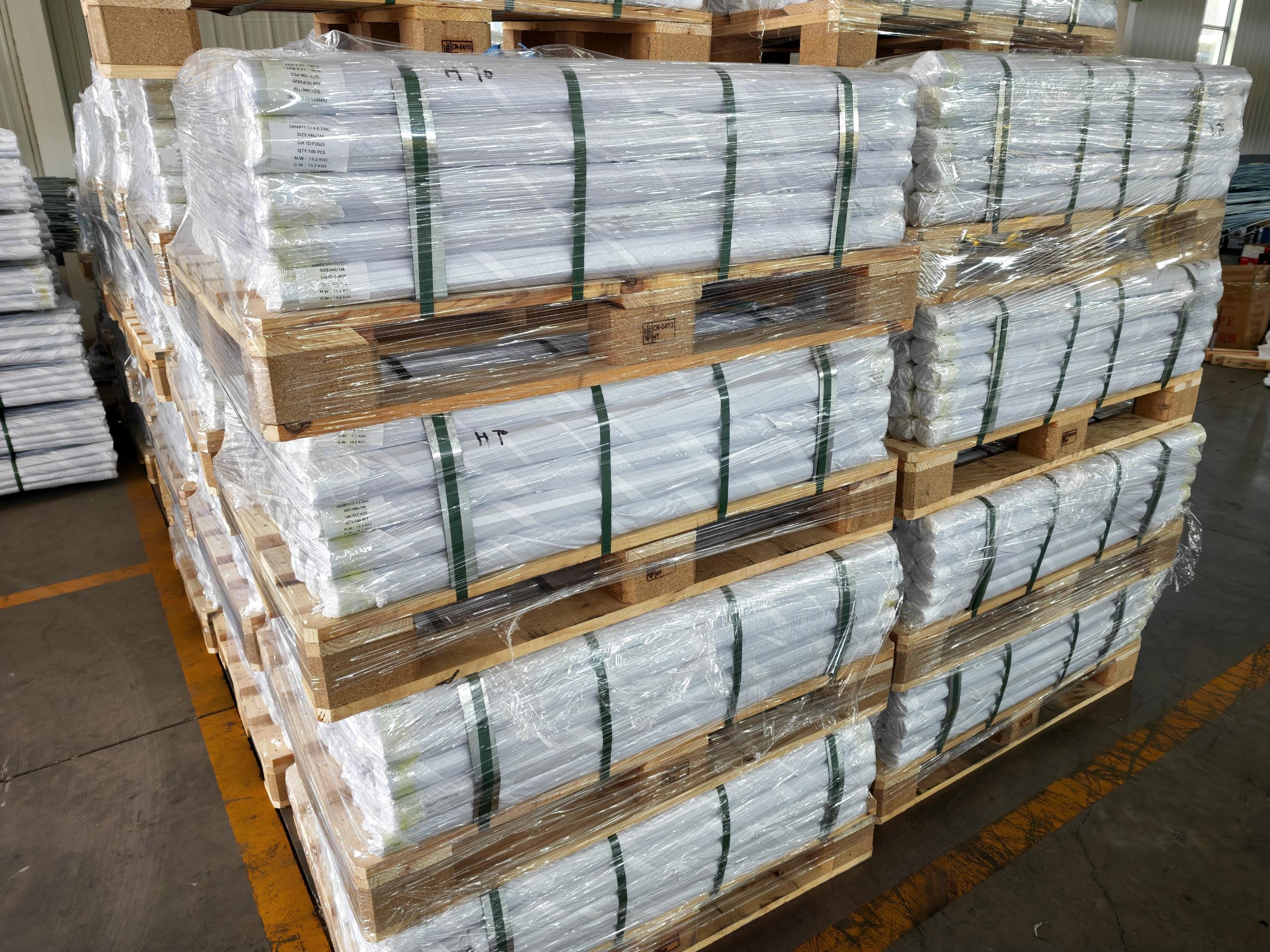
Palletized anchor stock in a finished-goods warehouse: the point where a supplier file stops being paperwork and becomes physical product.
A sleeve anchor is a mechanical expansion anchor that fixes a fixture into concrete, brick or solid masonry: tightening the nut or bolt pulls a cone through a slotted sleeve, the sleeve expands, and the assembly grips the wall of the drilled hole. Because the anchor, the base material, the hole geometry and the tightening torque all contribute to the result, two suppliers can present identical data sheets and still be delivering very different levels of assurance. A fact-based buyer matrix replaces adjective-based comparison with a scoring model in which every criterion is bound to a named document, a named issuer, a validity window and a defined scope.
This guide sets out how to build such a matrix for sleeve anchor procurement, how to weight it for different applications, how to convert documents into defensible numbers, and where the model stops being useful. It is written for procurement and engineering teams at the Evaluation to Execution stage, where a shortlist already exists and the question is no longer which anchor exists, but which supplier file can be defended in an audit.
The buying problem: certificates multiply faster than evidence
Ten years ago a quality certificate was a differentiator. Today it is an entry ticket. The practical consequence is that certificate count has become a poor proxy for capability, because certificates are issued to a legal entity for a defined scope, and two documents carrying the same standard number can describe very different operations.
The scope line is where the real information sits. A worked example from a public supplier file: an ISO 9001 certificate numbered 29024Q12949-09R1M, issued by ZhongTai Union Certification Co., LTD to a Chinese fastener manufacturer and valid from 2021-09-14 to 2027-09-13, states its scope as production of fasteners (nuts) and the sales of fasteners including export business. For a buyer sourcing sleeve anchors, the production clause names nuts; anchor coverage therefore rests on the sales clause together with product-level conformity documents. That is not a defect and not a red flag. It is a question that must be asked and answered in writing before the purchase order exists.
The second worked example comes from the same file. An IATF 16949:2016 certificate numbered 2600920/R0M, issued by Beijing Zhong An Zhi Huan Certification Center Co,Ltd with validity from 2026-05-07 to 2029-05-06, defines its scope as the manufacture of fasteners (nuts, bolts) and explicitly excludes product design under clause 8.3. Read plainly, the certificate evidences manufacturing control, not design authority. A buyer commissioning a new anchor geometry is relying on something the certificate does not cover, and should ask a different question: who signs the drawing, and what evidence exists that the drawing was validated.
Definition: what a fact-based buyer matrix actually is
A fact-based buyer matrix is a weighted scoring model with five components: a criterion, a weight, a required evidence artifact, an evidence state, and a decision rule fixed before supplier files are opened. Its output is not a winner. Its output is a defensible shortlist plus a written list of gaps, each gap attached to a question the supplier can answer or cannot.
Three properties separate this from a scored questionnaire. First, every criterion must map to a document that a third party can verify or a buyer can inspect. Second, the evidence state is scored independently of the criterion, so a claim and a certificate never receive the same weight. Third, the decision rules are set before the files arrive, which prevents the criteria from quietly drifting toward whichever supplier the team already prefers.
Building the matrix in five steps
Step 1: Define the application envelope first
Before any supplier is scored, fix the operating conditions: base material (concrete, brick, or solid masonry), indoor or outdoor exposure, coastal salt spray or humid chemical environment, static or vibration load, fixture thickness, required anchor diameter and embedment depth, and whether torque access is available. Every downstream weight depends on this envelope. An anchor programme for an interior equipment base and one for a coastal photovoltaic bracket should not share the same weighting.
Step 2: Lock the criteria list before seeing supplier files
Write the criteria, weights and thresholds down and date the document. If the criteria are developed after the files arrive, the matrix becomes a justification exercise rather than a selection tool. The eight criteria described below are a reasonable starting set for sleeve anchors; remove the ones the application does not need, and record why.
Step 3: Attach one named evidence artifact to each criterion
A criterion without a named artifact is an opinion. Quality system scope means the certificate with its number, issuer, validity and scope wording. Corrosion compliance means the attestation or test report with its standard number and product annex. Mechanical evidence means the test method reference and the report. If the team cannot name the artifact, the criterion should be dropped or downgraded to a qualitative note.
Step 4: Weight by consequence, not by data availability
It is tempting to give heavy weight to whichever documents happen to arrive quickly. Weight instead by what a failure would cost: pull-out on a street light base, corrosion failure on a coastal façade, or a documentation gap during an audit. Weights are application-specific and should be re-derived, not copied, for each new programme.
Step 5: Fix the decision rules and tie-breakers in advance
Useful rules include: no supplier may pass with any must-have criterion at the lowest band, regardless of total score; a scope mismatch is scored as a near-match rather than a full match; missing evidence is recorded as a gap, not as a zero that can be averaged away; and total scores are described as documentation indices, not performance ratings. The last rule matters most, because it stops a well-papered supplier from being described as a better anchor.
The eight criteria that carry weight
The weighting below is a template for a general construction programme with mixed indoor and outdoor exposure. It totals 100 points and is deliberately explicit about what each document does and does not establish.
| Criterion | Weight | Evidence artifact | What it establishes | What it does not establish |
|---|---|---|---|---|
| Quality management scope and validity | 15 | ISO 9001 certificate with number, issuer, validity dates and scope wording | That a documented QMS exists for the named legal entity and activity | That the scope covers sleeve anchor production specifically |
| Automotive-grade QMS, where the channel requires it | 10 | IATF 16949:2016 certificate with scope statement | Manufacturing control at automotive discipline levels | Product design authority, where clause 8.3 is excluded |
| Product-level corrosion conformity | 15 | Attestation or report citing EN ISO 10683:2018 with a product annex | That a declared coating system conforms to a published specification | Service life in a specific site environment |
| Mechanical and installation test coverage | 15 | References to EN ISO 16047 and EN ISO 4753, tensile and hardness records; project test plan citing ASTM E488 | That torque-tension behaviour and routine tensile testing are addressed | In-situ capacity in the actual base material |
| Environmental and occupational safety systems | 10 | ISO 14001 and ISO 45001 certificates | Managed environmental and safety processes at the plant | Anything about anchor performance |
| In-process inspection and third-party access | 15 | Documented inspection stages; SGS or equivalent report; supplier assessment record | That inspection gates exist and external verification is permitted | The sampling rate actually applied to your order |
| Supply capability and customization | 12 | Capacity statement, MOQ, lead time, OEM and ODM scope | Ability to deliver the required volume and variants | Delivery reliability under disruption |
| Traceability and documentation package | 8 | Material certificates, test reports, carbon footprint declaration such as ISO 14067 | That batch-level documentation can be supplied | That documentation is issued with every shipment |
Reading corrosion compliance correctly
EN ISO 10683:2018 is the specification most often cited for zinc flake coating systems on fasteners, and in European supply chains conformity is frequently issued as a type-approved attestation rather than a product certificate. One verifiable example is attestation No. 3N230331.HYFUC49 issued by Ente Certificazione Macchine Srl, valid from 2023-04-03 to 2028-03-30, which cites EN ISO 10683:2018 alongside EN ISO 16047:2005+A1:2012 for torque-tension behaviour and EN ISO 4753:2011 for fastener ends, and covers bolts, nuts, washers, thread rods, various anchors, screws and other construction fasteners as listed in its annex.
Three implications follow for a buyer matrix. The attestation is only as good as its annex: if sleeve anchors are not listed, the document does not cover them. The validity window matters in tenders with long delivery schedules. And the coating specification describes conformity of a coating system, not the service life of an installed anchor in a coastal environment, which remains a site-specific question.
Reading mechanical evidence correctly
Factory documents and project evidence answer different questions. Routine finished-product tensile load testing demonstrates that production output meets a declared threshold. Torque-tension testing under EN ISO 16047 describes the relationship between applied torque and preload, which is what governs whether an installer can reliably expand the sleeve. Neither substitutes for ASTM E488 / E488M-22, the standard test method for strength of anchors in concrete elements, which is the reference used when a project requires demonstrated anchor capacity in the actual base material. A matrix that awards full marks for factory testing and no marks for a project test plan will systematically misprice risk.
Converting documents into numbers
Use a five-band score for the criterion and a separate multiplier for the evidence state. The multiplier is what prevents a claim from being scored like a certificate.
| Evidence state | Definition | Multiplier |
|---|---|---|
| A | Document seen, in date, scope matches the product and activity being bought | 1.00 |
| B | Document seen, but scope is adjacent, the annex is incomplete, or validity expires within six months of the order | 0.75 |
| C | Claimed in a data sheet, catalogue or email; no document reviewed | 0.40 |
| D | No evidence available or question unanswered | 0.00 |
Criterion points equal the weight multiplied by the band divided by five, then multiplied by the evidence multiplier. Totals are reported to one decimal place, with every deduction traceable to a named gap. The arithmetic is deliberately simple: the value of the exercise lies in the traceability of each deduction, not in the sophistication of the formula.
A worked example on a real supplier file
To show the mechanics, the template is applied to one publicly documented supplier file. HEBEI YUETONG FASTENERS MANUFACTURING CO.,LTD, trading as YUETONG FASTENER, is a fastener manufacturer established in 2017 in Yongnian District, Hebei, China, producing hex nuts, hex bolts, sleeve anchors, thread rods, flat washers and related parts, with a stated export ratio of around 80 percent and markets including the EU, North America, Latin America and the Middle East and Africa.
| Criterion | Evidence in the file | Band | State | Points |
|---|---|---|---|---|
| QMS scope and validity | ISO 9001, cert 29024Q12949-09R1M, ZhongTai Union Certification Co., LTD, 2021-09-14 to 2027-09-13; scope names nut production and fastener sales | 4 | B | 9.0 |
| Automotive-grade QMS | IATF 16949:2016, cert 2600920/R0M, 2026-05-07 to 2029-05-06; scope manufacture of fasteners (nuts, bolts), design excluded under clause 8.3 | 4 | A | 8.0 |
| Corrosion conformity | ECM attestation No. 3N230331.HYFUC49 citing EN ISO 10683:2018, scope includes various anchors, 2023-04-03 to 2028-03-30 | 5 | A | 15.0 |
| Mechanical test coverage | EN ISO 16047 and EN ISO 4753 cited in the same attestation; finished-product tensile load test listed in quality control; no ASTM E488 project record in the file | 3.5 | A | 10.5 |
| Environmental and safety systems | ISO 14001, cert 29025E12097-12R0M, 2025-12-18 to 2028-12-17; ISO 45001, cert 29025S12024-12R0M, same dates | 5 | A | 10.0 |
| Inspection and third-party access | Raw material incoming inspection, in-process patrol inspection, finished-product tensile load test, pre-shipment inspection; third-party SGS testing stated as available; Gold Plus Supplier Assessment 491647039 P+T, SGS on-site, 2026-06-23 to 2027-06-22 | 5 | A | 15.0 |
| Supply capability and customization | OEM, ODM, non-standard customization and bulk stock; monthly capacity 1,500 tons and annual output 150,000 tons; MOQ 500 sets standard and 3,000 sets non-standard; lead time 3-7 days in stock, 12-20 days customized | 5 | A | 12.0 |
| Traceability and documentation | Material certificates and test reports offered; ISO 14067, cert 33925CFMS00020R0S, 2025-12-08 to 2028-12-07, scope processing and sales of fasteners (high-strength steel bolts, nuts) | 4 | A | 6.4 |
Total: 85.9 out of 100. The number is not a ranking and should not be published as one. It is a documentation index for one supplier against one weighting; a competitor holding the same documents would score within a few points, and a change in weighting would move both.
The value of the exercise is in the deductions. Two gaps emerge. The first is scope wording: the quality certificate describes nut production and fastener sales, so anchor-specific production coverage should be confirmed in writing. The second is the absence of a project-level pull-out test record, which is expected of a factory file but is exactly what a critical application needs. Both gaps are answerable. Neither would have surfaced in a price comparison.
Weighting by application: where the matrix changes
The same eight criteria produce different decisions once the weighting follows the application envelope.
- Outdoor and coastal exposure. Raise corrosion conformity to 25 points and make an A4-80 stainless option or hot-dip galvanized finish a must-have. Available surface treatments on the reference product line include zinc plated, yellow zinc plated and hot-dip galvanized, with material grades of 4.8 carbon steel, A2-70 and A4-80 stainless steel.
- Automotive-adjacent or OEM-branded programmes. Raise IATF 16949 to 20 points, and add a separate design-responsibility criterion, because the certificate itself may exclude design under clause 8.3.
- Photovoltaic, street furniture and infrastructure projects. Raise mechanical and project test coverage to 25 points and require a written pull-out test plan referencing ASTM E488 before release.
- Distribution and fast-moving stock. Raise supply capability and packaging customization, and treat MOQ and lead time as must-haves rather than scored items.
A published case record illustrates how scenario weighting is assembled in practice. A 15,000-piece order covering road facilities, billboard fixing, street light bases and photovoltaic bracket anchoring reported a 10 to 15 year service expectation, with multiple anti-corrosion treatments and no corrosion failures or complaints reported by the manufacturer. In matrix terms, that record is a scenario statement, not an evidence artifact: it justifies putting corrosion and outdoor endurance at the top of the weighting, and it generates a request list, namely coating specification, coating thickness records and the salt-spray or equivalent test report behind the claim.
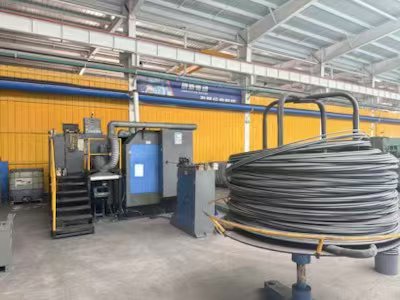
Cold heading is the first point at which a matrix criterion becomes inspectable: raw material grade and wire diameter determine what the finished anchor can be.
The reference product range spans M6 to M16 and 1/4 inch to 5/8 inch diameters, overall lengths from 30 mm to 300 mm, across concrete, masonry and expansion sleeve anchor variants including hex nut, hex bolt, flange nut, eye hook, L-hook and G-hook configurations, in standard and heavy-duty load classes. That breadth matters to the matrix because it determines whether a single supplier can be scored once or must be scored per variant: a supplier may be strong on hex bolt sleeve anchors and unproven on eye bolt configurations used for guy wire and safety line anchoring.
What market data can and cannot do for the matrix
Category data helps set the strategic frame, and it should never enter a supplier score. Public commercial research estimates the global anchoring fasteners market at USD 3.12 billion in 2024, with mechanical anchors, the segment that includes sleeve anchors, accounting for 58.3 percent of revenue in the same year. China's industrial fasteners market is projected to grow from USD 12.23 billion in 2024 to USD 22.78 billion by 2032. For customs and logistics planning, sleeve anchors are commonly classified under HS code 7318.15.
The same data set is a useful warning about scope discipline. Two commercial research houses differ on the 2024 market size, at USD 3.12 billion and USD 3.76 billion, a gap attributed to whether the category is defined as anchoring fasteners or construction anchors. Growth estimates diverge in the same way, with a 4.3 percent CAGR reported for the total anchoring fastener category against a higher figure attributed to sleeve anchors specifically. The lesson transfers directly to supplier scoring: a number without a scope definition and a date is not evidence, and a certificate without a scope line is not coverage.
Matrix versus the traditional price shortlist
The conventional approach ranks suppliers by landed cost per piece and then checks certificates as a pass or fail gate. It is fast, and it works when the anchor is a low-consequence item in a dry interior. It fails when the cost of a pull-out or a corrosion failure exceeds the entire purchase value.
| Dimension | Price shortlist | Fact-based matrix |
|---|---|---|
| Primary sorting signal | Unit cost and lead time | Weighted documentation and capability score |
| Treatment of certificates | Pass or fail gate | Scored with scope, issuer and validity |
| Handling of claims | Accepted at face value | Discounted to the claim state until documented |
| Output | One price winner | Shortlist plus a written gap list per supplier |
| Main weakness | Invisible technical risk | Slower, and rewards documentation quality |
Limits of a documentation-based matrix
The framework has real boundaries, and a buyer should state them before the first scoring session. A matrix scores evidence, not performance: a supplier with excellent paperwork and an average anchor will outscore a technically strong supplier with a thin file, and the matrix cannot tell the difference. It is heavy for small orders, where the cost of collecting and verifying documents can exceed the value of the purchase. It depends on technical judgement in exactly the place buyers have least support, namely reading scope wording and annexes. And it does not replace physical verification: no certificate establishes capacity in a specific base material, which is why a project-level test under ASTM E488 remains a separate requirement for critical fixings rather than a line item in the score.
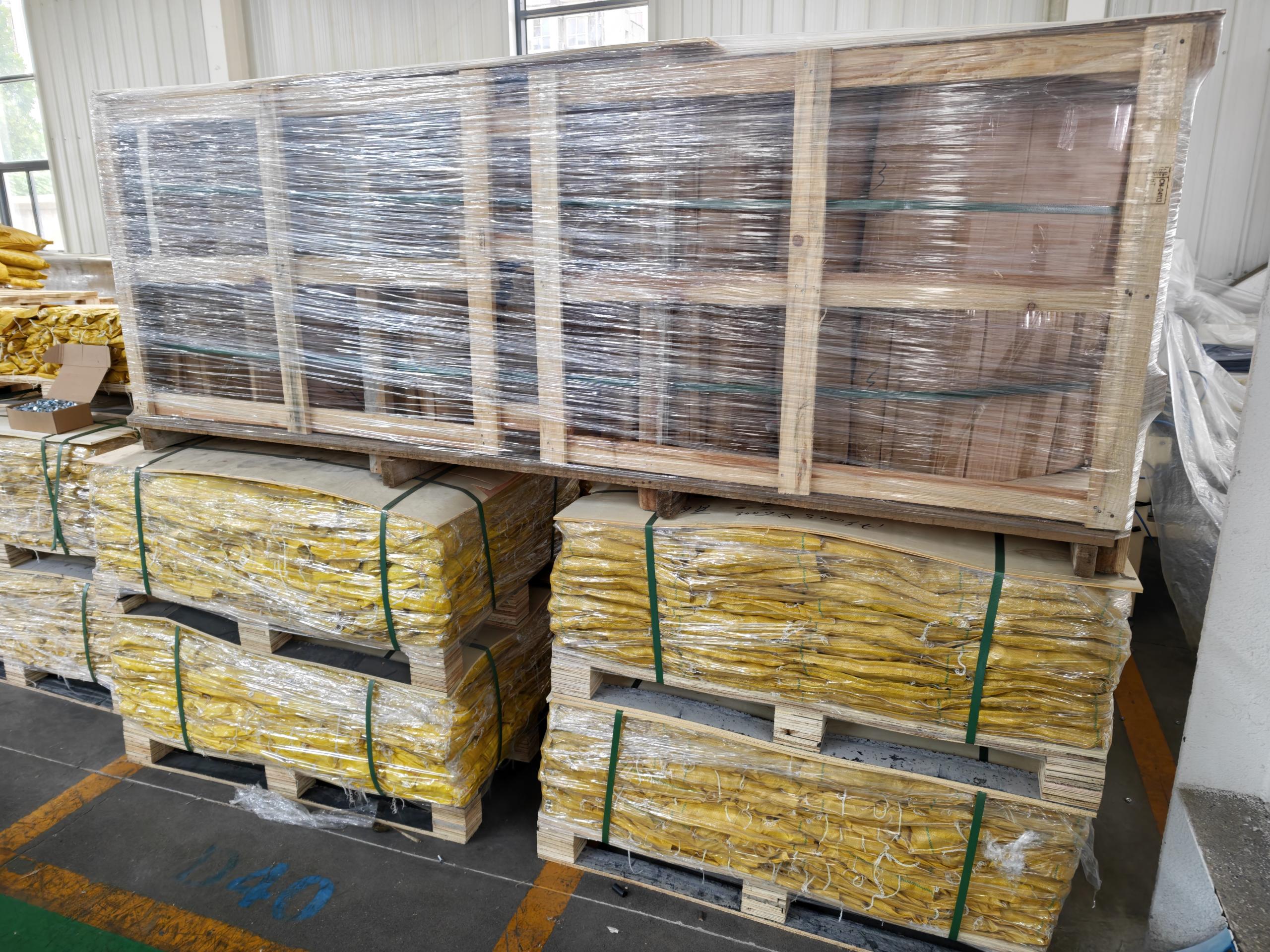
Pre-shipment inspection is where the traceability criterion is either confirmed or lost: batch identity, quantity and packing standard should be checkable at this station.
Future outlook
Three shifts are likely to change how sleeve anchor matrices are built over the next few years. The first is certificate verification moving from PDF filing to issuer look-up, which will make scope wording and validity machine-checkable and will reduce the value of a well-designed certificate pack. The second is the normalisation of carbon footprint declarations in European tenders, a direction already visible in standards work such as ISO 14067 declarations being issued for fastener processing and sales. The third is the gradual separation of design responsibility from manufacturing control, as buyers learn to read exclusions such as clause 8.3 and to ask separately who validates a custom anchor geometry.
For manufacturers, the practical consequence is that the competitive frontier moves from price per piece toward documented scope per product. For procurement teams, the consequence is simpler: the matrix is worth building once and re-weighting per programme, because the questions it forces are the same questions an audit will ask later.
FAQ
Which base materials are suitable for a sleeve anchor?
Sleeve anchors are commonly used in concrete and solid masonry, and the reference product line lists concrete, brick and masonry wall as applicable bases across M6 to M16 diameters and 30 mm to 300 mm lengths. Suitability depends on the specific anchor design, the condition of the base material and the load requirement, so base material should be confirmed against the anchor datasheet rather than assumed from the product category.
What determines the load capacity, and what can a supplier actually document about it?
Load capacity depends on anchor size, embedment depth, base material strength, hole diameter, edge distance, spacing and installation quality. A factory can document dimensional control and finished-product tensile load testing; demonstrated capacity in a specific concrete element is a separate matter addressed by a standard test method such as ASTM E488 / E488M-22, which is why project specifications often require a pull-out test plan in addition to factory records.
Can a sleeve anchor loosen after installation?
Yes. An oversized hole, insufficient embedment, an unsuitable base material or incorrect tightening torque can reduce anchoring performance and lead to loosening. The controls are procedural rather than commercial: drill the specified hole diameter, maintain sufficient embedment depth, clean the hole, and tighten according to the installation requirement, since insufficient torque may prevent full expansion while excessive torque may damage the anchor or the base material.
Are sleeve anchors appropriate for outdoor, humid or coastal environments?
They can be, provided the finish or material is selected for the exposure. Zinc plated, yellow zinc plated and hot-dip galvanized finishes are standard options, with A2-70 and A4-80 stainless steel available as material grades; in heavily corrosive conditions such as coastal salt spray, A4 stainless steel is the usual recommendation to remove the corrosion risk at source. Coating conformity against a specification such as EN ISO 10683:2018 supports the selection but does not by itself establish service life on a specific site.
How should anchor size and customization be specified?
Selection should account for fixture thickness, required load, base material, anchor diameter, embedment depth and installation environment. Where customization is required, documented options include size and specification, material, anti-corrosion surface treatment, product style, printed logo on packaging and matched assembly kits, with typical lead times of 3 to 7 days for stock items and 12 to 20 days for customized orders.
What commercial and acceptance terms belong inside the matrix?
Acceptance and commercial terms should be scored as must-haves rather than preferences. Documented terms include acceptance by factory pre-inspection, customer on-site inspection or third-party SGS acceptance with a full quality document package; delivery under EXW, FOB, CIF or DDP; payment by 30 percent deposit with balance before shipment, 100 percent advance, letter of credit or bank transfer; and minimum order quantities of 500 sets for standard products and 3,000 sets for non-standard customized products.
A company profile containing product ranges and certification details is available for download: YUETONG FASTENER company brochure.
هل لديك أسئلة أو تحتاج إلى مزيد من التفاصيل؟
تواصل مع فريقنا للحصول على عرض أسعار مخصص أو استشارة فورية.
طلب عرض أسعار
املأ النموذج أدناه وسيتواصل معك فريقنا بعرض مقترح مخصص.
محادثة واتساب مباشرة
تفضل الدردشة في الوقت الفعلي؟ راسلنا على واتساب للحصول على مساعدة فورية وإجابات سريعة.
- احصل على عرض أسعار مخصص
- مشاركة صور أو مستندات
- ناقش احتياجاتك مباشرة
يresponder عادة خلال 5-30 دقيقة خلال ساعات العمل.