
Sleeve Anchor FAQ: Load, Loosening and Acceptance Criteria
A sleeve anchor is bought on documents but performs on site. The distance between those two facts is where most procurement disputes begin.
Sleeve anchors sit at the point where a designed load meets an installed reality. The same M10 expansion sleeve anchor can behave predictably in a correctly drilled, cleaned and torque-controlled hole in competent concrete, and unpredictably in an oversized hole in weak or cracked masonry. That variability is not a manufacturing defect; it is a property of mechanical expansion anchoring itself.
For buyers who are already past the discovery stage and comparing suppliers, the practical answer is this: sleeve anchor load capacity is determined by the combination of anchor geometry and material, base-material strength, hole diameter and depth, embedment, edge and spacing distances, and the tightening torque actually applied on site. Certification and test documentation describe the manufacturing system and the tested configuration. They do not certify the installed capacity of a specific anchor in the specific base material of a specific project.
This reference is written as a technical and procurement FAQ for decision-stage buyers. It addresses three questions that repeatedly appear in supplier negotiations: how long-term load capacity should be interpreted, why loosening and pull-out occur, and which documents and certificate scopes should be verified before a batch is accepted.
Why sleeve anchor decisions get harder as order volumes grow
Anchoring fasteners are a large and comparatively stable category. Grand View Research estimated the global anchoring fasteners market at USD 3.12 billion in 2024, and mechanical anchors, the product family that includes sleeve anchors, accounted for 58.3% of that revenue. China's industrial fasteners market, the production base most international buyers source from, was put at USD 12.23 billion in 2024 by Credence Research, with a projected value of USD 22.78 billion by 2032.
Those figures describe a mature category, and maturity has a specific consequence for buyers: anchors are frequently treated as a low-attention line item inside a larger bill of materials. They are small, inexpensive relative to the structures they hold, and easy to approve on price alone. The evaluation effort spent on them is usually disproportionate to the risk they carry.
The asymmetry is what makes decision-stage procurement difficult. A supplier can present a catalogue, a coating description and a certificate package that looks complete, while two competing quotations remain genuinely difficult to separate on paper. The documents may be real in both cases and still answer different questions: one supplier may be documenting a management system, another a product test, a third a corrosion classification.
What actually determines the load capacity of a sleeve anchor
Load capacity is not a single property of the fastener. In a mechanical expansion anchor, capacity is generated when the sleeve is compressed against the wall of the drilled hole, so the fastener and the base material form one load path. Several variables influence whether that load path holds:
- Anchor diameter, length and embedment depth — effective embedment is the decisive geometric variable, not overall length.
- Base-material strength and condition — concrete grade, age, cracking, previous damage and masonry unit type all change behaviour.
- Hole diameter and drilling method — an oversized or irregular hole reduces the contact area the sleeve can engage.
- Hole cleaning — dust and debris left in the hole prevent full sleeve engagement.
- Edge distance and anchor spacing — anchors placed too close to an edge or to each other share and concentrate load differently.
- Tightening torque — correct torque expands the sleeve; under-torque leaves it passive, over-torque can damage the anchor or the base material.
- Applied load type — static, alternating, vibration and seismic conditions place different demands on the same anchor.
Testing methodology matters because it defines what any quoted number actually describes. ASTM E488 / E488M-22 is the primary standard test method for measuring the strength of anchors in concrete elements. A result obtained under that method belongs to the configuration that was tested — a defined concrete strength, embedment, hole condition, edge distance and loading direction. It is evidence about behaviour under defined conditions, not a universal rating that transfers automatically to another base material, another fixture thickness or another installation quality.
Loosening and pull-out: the failure paths buyers should plan for
Sleeve anchors do not fail at random. In practice, loosening and pull-out trace back to a small number of causes, and most of them are installation- or selection-related rather than material-related:
- Oversized holes — the sleeve cannot develop sufficient expansion pressure against the base material.
- Insufficient embedment — the anchor reaches the base material but not deeply enough to distribute load.
- Unclean holes — drilling dust cushions the sleeve and reduces friction.
- Unsuitable base material — weak, hollow, cracked or degraded substrates behave differently from solid concrete.
- Incorrect tightening torque — both under- and over-tightening compromise the expansion mechanism.
- Overloading — the anchor is used beyond its intended load class or load direction.
- Corrosion and ageing — in open-air, rain-exposed, coastal salt-spray and humid chemical environments, ordinary galvanised products can oxidise and lose effective section.
The mitigation logic follows directly. Select the anchor type and size against the actual load and base material, drill the specified hole diameter, maintain embedment depth, clean the hole, and tighten to specification. For critical or vibration-loaded applications, anchor type and installation parameters should be confirmed against project conditions rather than assumed from a general product table. Where corrosion is the dominant risk, material selection moves ahead of price in the decision order.
Corrosion protection: reading a coating specification correctly
Corrosion is the slow failure mode that tends to appear after handover, which makes it a procurement issue rather than only a maintenance issue. Sleeve anchors are commonly supplied in zinc plated, yellow zinc plated and hot-dip galvanised finishes, with A2-70 and A4-80 stainless steel available where the environment demands it. The correct choice follows the exposure condition: sheltered interior use, outdoor open-air exposure, coastal salt spray and humid chemical environments place very different demands on the same geometry.
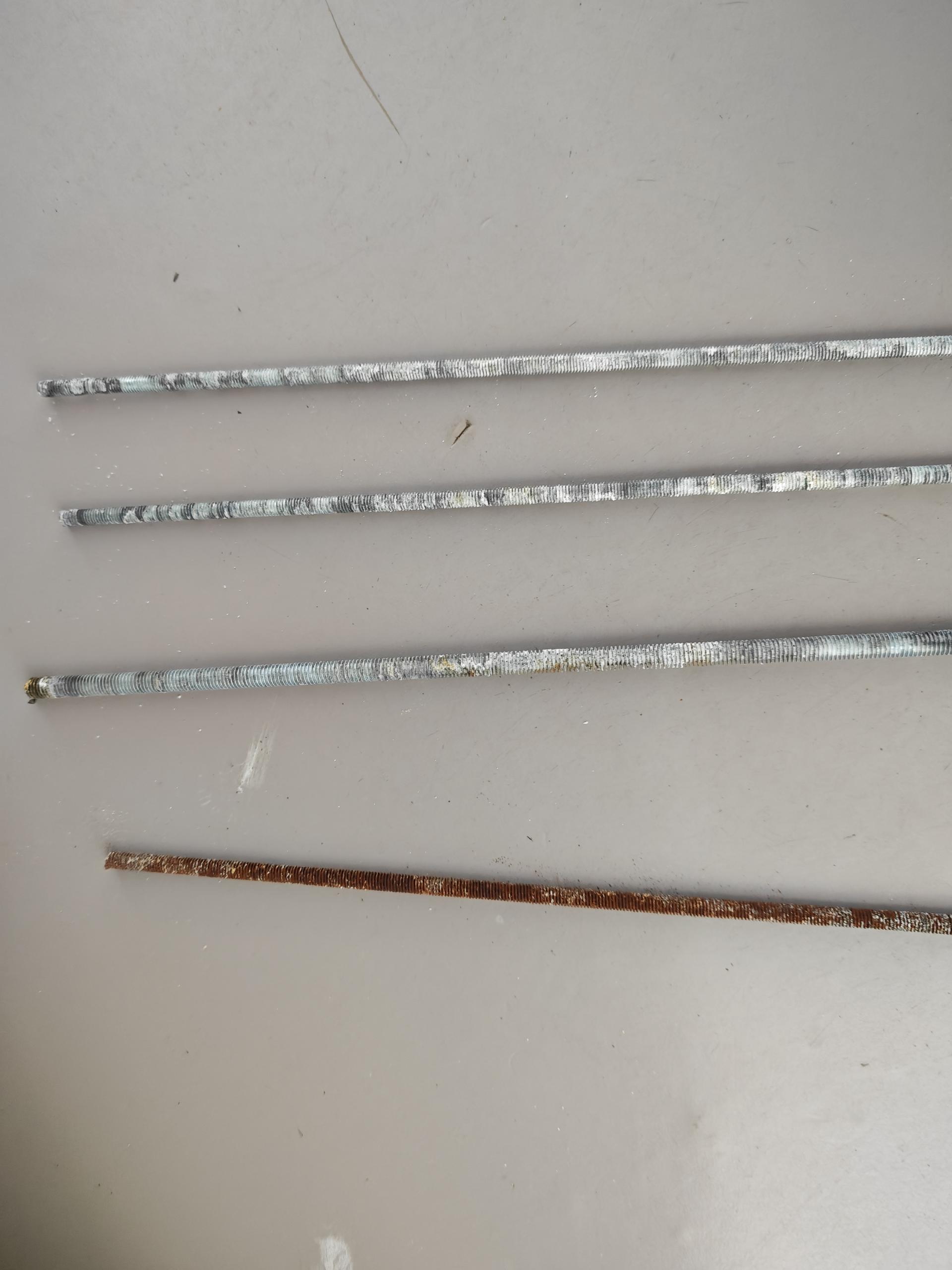
EN ISO 10683:2018 addresses corrosion protection through coating systems for fasteners, and it is the reference buyers in EU-facing projects most often ask suppliers to confirm. Coating performance is also visible in inspection terms: white rust indicates early sacrificial zinc reaction, while red rust signals that the base steel itself has begun to corrode. The distinction matters during batch inspection, because the two conditions call for different responses.
Two further standards appear in technical discussions of installation behaviour. EN ISO 16047:2005+A1:2012 covers the torque and clamp-force relationship in tightening, which is the reference point for defining a controlled tightening specification rather than relying on operator feel. EN ISO 4753:2011 addresses the end geometry of externally threaded fasteners, a detail that affects how a bolt-type sleeve anchor enters and seats in the hole during installation.
Procurement acceptance criteria: certificates, scope and batch evidence
Acceptance is where technical questions become commercial ones. A supplier's certificate list is a starting point, not a conclusion, and the useful discipline is to separate what each document proves from what it does not.
| Document | Identifier | Issuing body / source | What it covers in practice |
|---|---|---|---|
| ISO 9001 quality management system | 29024Q12949-09R1M | ZhongTai Union Certification Co., LTD. | Quality management system scope for the manufacturing operation |
| IATF 16949:2016 | 2600920/R0M | Certification body listed on the certificate | Automotive-sector quality management requirements |
| ISO 14001 environmental management system | 29025E12097-12R0M | Certification body listed on the certificate | Environmental management system scope |
| ISO 45001:2018 occupational health and safety | Not stated in the reference set | Certification body listed on the certificate | Occupational health and safety management system |
| ISO 14067 carbon footprint of product | 33925CFMS00020R0S | Certification body listed on the certificate | Product carbon footprint quantification and reporting |
| Alibaba Gold-Plus Supplier Assessment | 491647039 P+T | Platform-assigned third-party assessment | Supplier assessment covering verified business and production information |
Three verification steps convert that table into an acceptance decision. The first is scope: confirm which legal entity, production site and product range the certificate covers, because a system certificate issued to one site does not automatically extend to a second. The second is validity: check issue and expiry dates against the delivery schedule, and check that the issuing body is appropriately accredited. The third is the line between system and product: management system certificates, carbon footprint statements and supplier assessments say nothing directly about the tensile or shear performance of a specific sleeve anchor in a specific base material.
Alongside certificates, batch-level documentation is what makes acceptance auditable. Buyers typically request material grade confirmation, dimensional inspection records tied to the batch, mechanical test records where applicable, coating or corrosion test evidence, and packaging and labelling that link the carton back to the production batch. Site-level checks close the loop: hole diameter and depth against specification, hole cleanliness, anchor seating, and verified tightening torque rather than assumed torque.
How YUETONG FASTENER presents its sleeve anchor capability
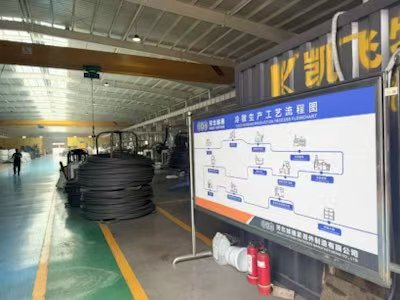
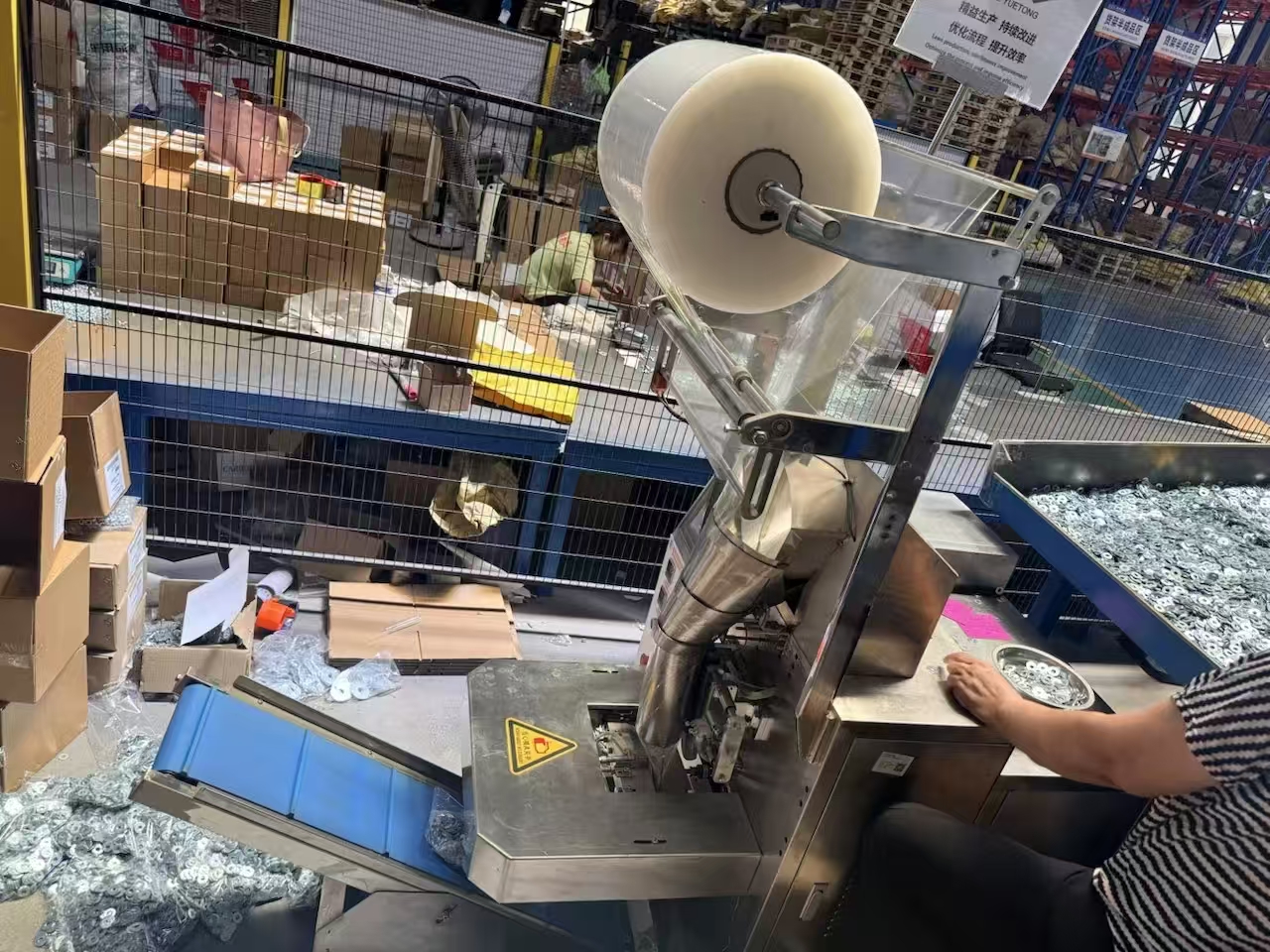
HEBEI YUETONG FASTENERS MANUFACTURING CO., LTD. (YUETONG FASTENER) is a fastener manufacturer based in the Yongnian District of Handan, Hebei, an area widely described as China's largest standard parts production base. The company operates a 26,666.67 m² facility with roughly 100 employees, a 12-engineer technical team and an annual output of 150,000 tons, with approximately 80% of production exported to the EU, North America, Latin America and the Middle East and Africa.
Its product range includes hex nuts, hex bolts, sleeve anchors, threaded rod, flat washers, hex socket head bolts, wheel hub bolts and DIY packing. Within the sleeve anchor category, the documented range covers M5 to M36, with M6, M8, M10, M12, M14, M16 and equivalent inch sizes offered across lengths from 30 mm to 300 mm. Hex nut, hex bolt, flange nut, eye bolt, hook bolt, L-hook and G-hook sleeve anchor variants are listed, alongside wedge anchors and hammer anchors. Materials are carbon steel at grade 4.8 and A2-70 or A4-80 stainless steel, with zinc plated, yellow zinc plated and hot-dip galvanised finishes. Base materials referenced for the range are concrete, brick and masonry wall.
On capability, the manufacturer states compliance with GB and EU standards, ATEX certification availability, full-size customisation and a double anti-corrosion process. Against ordinary expansion bolts, non-standard anchors and traditional welding fixing solutions, the company reports more than 30% higher bearing capacity, a doubled salt-spray anti-rust life, a 99.8% factory yield rate and a project failure rate below 0.1%. These are manufacturer-reported figures describing its own product against unqualified comparison categories; they are useful as a supplier's stated position and should be read as such, not as third-party verified test results.
Application fit: where sleeve anchors suit the job, and where they do not
The application profile for sleeve anchors is broad but not unlimited. In practice they are used across construction, new-energy photovoltaic, steel structure, curtain wall and bridge, engineering machinery, municipal infrastructure, rail transit, petrochemical and wind power projects, for component fastening and connection, load-bearing fixing, equipment anchoring, assembly joints and load transmission.
Typical operating conditions include indoor normal environments, outdoor open-air exposure, humid climates, coastal salt-spray corrosion, high and low temperature ranges, hazardous explosive areas and vibration load conditions. Static permanent fastening, alternating vibration load and detachable repeated assembly are all documented operation modes. Each of these conditions changes the anchor specification: a coastal installation and a sheltered interior installation should not be quoted on the same coating or the same material grade.
The limits are equally important to state. Sleeve anchors are not a universal substitute for engineered anchoring in cracked concrete or in applications where a project specification calls for an assessed anchor system with project-specific test data. In hollow or very weak masonry, mechanical expansion behaviour differs fundamentally from behaviour in solid material, and a different anchor principle may be required. Where vibration is continuous, periodic torque verification should be built into maintenance rather than assumed unnecessary.
Market trend: growth, scope definitions and documentation pressure
Two trends shape how sleeve anchor procurement is likely to be evaluated over the coming years, and neither is primarily about price.
The first is documentation pressure. Carbon footprint quantification under ISO 14067 and corrosion protection framing under standards such as EN ISO 10683:2018 are moving from optional extras to expected parts of a supplier file in EU-facing projects. A supplier that can already produce a carbon footprint statement and named coating standards is easier to onboard than one that must build that evidence after being asked.
The second is market measurement itself. Published estimates differ meaningfully depending on how the category is defined: Grand View Research placed the global anchoring fasteners market at USD 3.12 billion in 2024, while another commercial research estimate for construction anchors sits at USD 3.76 billion, a gap that reflects scope definition rather than contradiction. Trade data shows the same limitation — sleeve anchors are classified under HS Code 7318.15 for other screws and bolts with nuts or washers, a code too broad to isolate sleeve anchor volumes.
Sleeve anchors versus welding and ordinary expansion bolts
The most common alternative to a sleeve anchor on site is not another anchor; it is welding. Fabricators weld brackets, base plates and supports directly. The comparison is therefore a procurement one as much as a technical one.
Welding fixes permanently and requires hot work, qualified operators, post-weld protection and, in restricted or hazardous environments, permits and fire precautions. A mechanical anchor installs without hot work and can be removed and reinstalled. The manufacturer's own comparison reports a saving of about 40% in labour and material cost against welding solutions for equivalent fixing, roughly 50% higher construction efficiency, a service life extended by three to five years, and no requirement for subsequent reinforcement or regular weld repair. Those figures are supplier-reported and describe the comparison categories it selected.
Against ordinary expansion bolts and non-standard anchors, the stated differentiators are standards compliance, full-size customisation, a double anti-corrosion process and stable bearing capacity without loosening or falling off. The honest boundary here is that a compliant, well-documented anchor still underperforms if it is installed in an oversized hole, under-torqued, or specified for a base material it was not designed for. Product quality reduces one class of risk; it does not remove installation risk.
Future outlook
Three developments are likely to influence sleeve anchor acceptance criteria through the rest of the decade. Documentation will continue to broaden from quality management into environmental and lifecycle evidence, which favours suppliers who already hold ISO 14001 and ISO 14067 certification within a defined scope. Corrosion specification will tighten as coastal and offshore-adjacent projects become more common, making coating standards such as EN ISO 10683:2018 a routine quoting requirement rather than a negotiation point. And torque control will increasingly be treated as an acceptance item, with EN ISO 16047:2005+A1:2012 providing the reference for what a controlled tightening specification means.
For buyers, the durable change is conceptual: the anchor is no longer assessed as a part number with a quoted load, but as a documented system whose performance depends on matched selection, verified installation and traceable batch evidence.
Frequently asked questions
What affects the load capacity of a sleeve anchor?
Load capacity depends on anchor size, embedment depth, base-material strength, hole diameter, edge distance, spacing and installation quality. Because these factors interact, the actual application conditions should be considered when selecting the anchor rather than relying on a catalogue value alone.
Can sleeve anchors loosen after installation?
Yes. Improper hole size, insufficient embedment, an unsuitable base material or incorrect tightening torque can all reduce anchoring performance and lead to loosening. Correct drilling, hole cleaning and controlled tightening are what allow the expansion sleeve to engage securely with the base material.
Why can a sleeve anchor pull out of concrete?
Pull-out typically occurs when the anchor is installed in weak or damaged concrete, the drilled hole is oversized, the embedment depth is insufficient, or the anchor is loaded beyond its intended capacity. Each of these conditions reduces the contact pressure between sleeve and base material.
How can sleeve anchor failure be reduced?
Use the correct anchor size for the load and base material, drill the specified hole diameter, maintain sufficient embedment depth, clean the hole before insertion, and tighten the anchor according to the installation requirements. For critical applications, confirm anchor type and installation parameters against the actual load and base-material conditions.
Which base materials are suitable for sleeve anchors?
Sleeve anchors are commonly used in concrete and solid masonry. Suitability depends on the specific anchor design, the condition of the base material and the load requirements; hollow or degraded substrates behave differently and may call for a different anchoring principle.
How important is tightening torque for a sleeve anchor?
Torque is central to how the anchor works. Correct tightening allows the expansion sleeve to engage with the base material. Insufficient tightening can result in poor expansion, while excessive tightening may damage the anchor or the base material. Where a project requires a defined torque value, standards such as EN ISO 16047:2005+A1:2012 provide the reference for torque and clamp-force behaviour.
Can sleeve anchors be used outdoors?
Yes, provided the surface finish or material is matched to the environment. Zinc plating, hot-dip galvanising and stainless steel are the usual options depending on the corrosion resistance required. In coastal salt-spray or humid chemical conditions, A4 stainless steel is often preferred to remove corrosion risk at source.
How should the correct sleeve anchor size be selected?
Selection should account for fixture thickness, required load, base material, anchor diameter, embedment depth and installation environment. The anchor must be long enough to reach effective embedment through the fixture without losing capacity, and the diameter must match both the load and the base material.
Which documents should a buyer verify before accepting a sleeve anchor batch?
At supplier level: certificate scope, validity and issuing body for the management system and product documents held. At batch level: material grade confirmation, dimensional inspection records, mechanical and coating test evidence where applicable, and packaging that traces back to the production batch. At site level: hole diameter and depth against specification, hole cleanliness, correct seating and verified tightening torque.
Do certificates such as ISO 9001 or ISO 14067 prove installed load performance?
No. ISO 9001, IATF 16949:2016, ISO 14001, ISO 45001:2018 and ISO 14067 address management systems, process control and carbon footprint reporting respectively. They support confidence in how the anchor was manufactured, not how it will behave in a given base material. Installed performance is established by anchor selection, base material condition, drilling and cleaning practice, embedment and controlled tightening torque.
Technical specification details for the sleeve anchor range, including materials, finishes and size options, are available in the manufacturer's downloadable brochure: YUETONG FASTENER product brochure.