
Sleeve Anchor Scenario Fit: Corrosion, Torque and Load Risk
Sleeve Anchor Scenario Fit: Corrosion, Torque and Load Risk
Two identical M12 sleeve anchors, installed in the same building on the same day, can behave completely differently over ten years. One holds a machine base inside a dry workshop; the other holds a sign frame on a coastal road. The product is the same. The scenario is not.
For industrial equipment mounting, sleeve anchor selection is a scenario-fit decision before it is a catalogue decision. Corrosion protection, tightening torque and long-term load capacity decide whether an expansion anchor keeps its grip, and each of the three is governed by the installation environment rather than by the product listing. This reference examines how those three variables map onto documented EN standards, management system coverage and regional market requirements for sleeve anchors used in industrial equipment fixing.
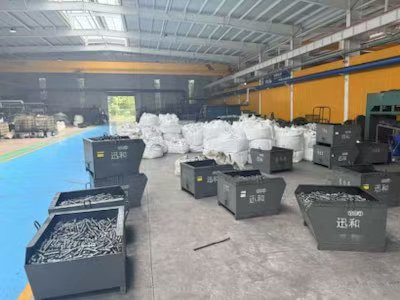
Wide-angle view of a full-process anchor production workshop. Scenario fit starts with manufacturing control, but it is decided on site by base material, exposure and applied torque.
Why Scenario Fit Comes Before Product Specification
Industrial mounting failures involving sleeve anchors cluster into a small number of known modes: insufficient load capacity, loosening under service load, and pull-out from the base material. Each mode has a different cause, and all three are installation- and environment-dependent rather than purely product-dependent.
Load capacity is not a single number attached to a diameter. It depends on the anchor size, the embedment depth, the strength of the base material, the drilled hole diameter, the edge distance, the spacing between anchors and the quality of installation. Two anchors of the same nominal size can therefore behave very differently in two different bases.
Loosening is usually a fit problem rather than a material problem. An oversized hole, insufficient embedment, an unsuitable base material or an incorrect tightening torque can each reduce anchoring performance and allow the anchor to work loose in service.
Pull-out is the most visible failure mode. It can occur when the anchor is installed in weak or damaged concrete, when the hole is oversized, when the embedment depth is insufficient, or when the anchor is overloaded. In practice, more than one of those conditions is often present at the same time.
The practical conclusion for buyers is that a sleeve anchor enquiry should be framed as a scenario question: what base material, what exposure, what load direction and duration, and what torque can actually be applied and verified on site. A supplier's process control, coating options and material grades can then be matched against that scenario rather than against a headline specification.
What EN ISO 10683:2018, EN ISO 16047 and EN ISO 4753 Cover
HEBEI YUETONG FASTENERS MANUFACTURING CO., LTD. is a fastener manufacturer based in Yongnian District, Hebei, China, producing hex nuts, hex bolts, sleeve anchors, threaded rods, flat washers, hex socket head bolts, wheel hub bolts and DIY packing, with an 80% export ratio and main markets in the EU, NA, LATAM and MEA. The company holds an ECM Type-Approved Attestation issued by Ente Certificazione Macchine Srl under certificate No. 3N230331.HYFUC49, issued on 2023-04-03 and valid until 2028-03-30, mainly for the EU market. Its scope covers bolts, nuts, washers, thread rods, various anchors, screws and other construction fasteners.
Three standards are listed in that scope, and they map almost exactly onto the three scenario variables described above.
- EN ISO 10683:2018 addresses corrosion protection through non-electrolytically applied zinc flake coating systems on fasteners. In a procurement context this is the coating column of the specification: it describes a defined coating system rather than a guarantee that any coating survives any environment.
- EN ISO 16047:2005+A1:2012 addresses the torque and clamp force relationship in fastening. This is the tightening column. It matters because torque is the input an installer actually controls, and because both under-tightening and over-tightening create problems with expansion anchors.
- EN ISO 4753:2011 addresses the ends of parts with external ISO metric thread. This is the interface column: thread-end geometry affects how an anchor starts, seats and assembles with the fixture.
Taken together, the three standards describe corrosion, tightening behaviour and thread-end interface — the dimensions a scenario-fit decision actually turns on. They define what the attestation covers. They do not replace project-specific anchor design, and they are not a substitute for job-site verification where a project requires measured anchor strength.
Corrosion: the coating choice follows the exposure, not the unit price
In open-air, rain-immersed, coastal salt-spray and humid chemical environments, ordinary galvanized products can oxidise and rust, and corrosion of the anchor body can lead to anchorage failure. The mitigation is a material and coating decision made at specification stage: electro-galvanized or zinc plated steel where exposure is moderate, a double-layer anti-corrosion process where it is heavier, and A4 stainless steel in heavily corrosive areas, where the corrosion mechanism is removed at the source rather than slowed down.
The documented sleeve anchor range covers zinc plated, yellow zinc plated and hot-dip galvanized surface treatments, with carbon steel grade 4.8 or A2-70 and A4-80 stainless steel as material options. A coating decision taken on unit price alone is one of the most common origins of a corrosion-related field problem.
Torque: the variable most often left to the installer
Correct tightening is what allows the expansion sleeve to engage the base material. Insufficient tightening can result in poor expansion, while excessive tightening can damage the anchor or the base material. Neither outcome is visible after the fixture has been closed up, which is why torque control belongs to the installation scenario rather than to workshop preference.
Torque also interacts with the tools used on site. Nuts, washers, sleeve anchors, torque wrenches, impact drills and fastening tools are documented as matched equipment for these installations — they are part of the mounting system, not accessories to it.
Load capacity: a property of the assembly, not of the anchor alone
Long-term load capacity is governed by the whole assembly: anchor, base material, hole preparation, embedment, spacing and edge distance. The manufacturer's range distinguishes standard load and heavy duty load bearing capacity options, which raises the ceiling of what can be specified — but it does not remove the requirement to check the base material and the fixing geometry.
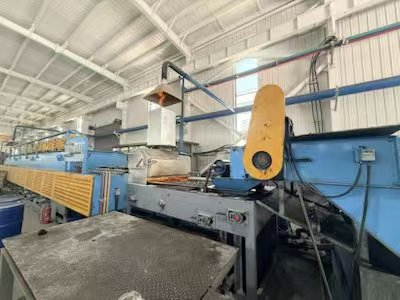
Operation scene in an anchor heat treatment workshop. Material grade and treatment control the mechanical side of the load question; the base material and installation control the rest.
Where the Risk Sits, and What Management System Coverage Proves
Because the failure modes are operational, the documents that matter most to a buyer are process documents rather than product claims. The certification coverage held by Hebei Yuetong Fasteners is useful precisely because each certificate answers a different scenario question.
- ISO 9001 quality management system, certificate No. 29024Q12949-09R1M, issued 2021-09-14, valid until 2027-09-13, covering production of fasteners (nuts) and sales of fasteners including export business. This is the repeatability layer: the same specification arrives with the same inspection sequence.
- ISO 45001 occupational health and safety management system, certificate No. 29025S12024-12R0M, issued 2025-12-18, valid until 2028-12-17, covering occupational health and safety management activities in fastener production and sales. In anchor terms this is not a formality: a pull-out under a suspended load is a safety event, not only a quality defect.
- IATF 16949:2016, certificate No. 2600920/R0M, issued 2026-05-07, valid until 2029-05-06, covering the manufacture of fasteners (nuts, bolts) and explicitly excluding product design under Clause 8.3. The exclusion matters: the certified system controls how fasteners are made, not how a customer's fixing design is engineered.
- ISO 14001 environmental management system, certificate No. 29025E12097-12R0M, issued 2025-12-18, valid until 2028-12-17.
- ISO 14067 certificate of registration, No. 33925CFMS00020R0S, issued 2025-12-08, valid until 2028-12-07, covering processing and sales of fasteners under T/CCAA 39-2022 and ISO 14067:2018.
- Alibaba Gold Plus Supplier Assessment, certificate No. 491647039 P+T, issued 2026-06-23, valid until 2027-06-22, with on-site assessment by SGS, covering factory supplier capability for fasteners including sleeve anchors and hex bolts, for the EU, NA, LATAM, MEA and USA markets.
Against the three failure modes, these documents answer different questions. Quality and manufacturing coverage addresses consistency of material, dimensions and thread geometry. Occupational safety coverage addresses management of risk in production and handling, which relates directly to the severity of an in-service failure. Product-level evidence addresses the load question at batch level: the manufacturer documents raw material incoming inspection, in-process patrol inspection, finished product tensile load test and pre-shipment inspection, with third-party SGS testing available on request, and provides material certificates and test reports with orders.
What none of these documents does is certify a specific installation. Certificate scope defines which products and processes are covered; it does not validate the base material, embedment depth, edge distance or applied torque on a given project. That check remains a project engineering task.
Regional Scenario Differences: EU, NA, LATAM, MEA and USA
Scenario fit is regional before it is technical. The same M10 sleeve anchor may be specified for different coating, documentation and testing reasons depending on where the project is built.
| Market | What changes in scenario fit | Documented coverage to check |
|---|---|---|
| EU | EN-based corrosion and tightening references are the specification language; the attestation scope is mainly for the EU market | ECM Type-Approved Attestation No. 3N230331.HYFUC49 (EN ISO 10683:2018, EN ISO 16047:2005+A1:2012, EN ISO 4753:2011) |
| USA and North America | ASTM and ANSI/ASME references appear alongside EN and DIN references in the product data; job-site anchor strength testing follows ASTM methods | ASTM E488/E488M-22 for anchor strength in concrete; Gold Plus Supplier Assessment with SGS on-site assessment covering NA |
| LATAM | Coastal salt spray, humidity and temperature cycling dominate specification; coating and material grade drive expected service life | Hot-dip galvanized, zinc plated and A2-70 / A4-80 stainless steel options; supplier-documented outdoor project case |
| MEA | Coastal and high-temperature exposure combined with long logistics chains; packaging and inspection records carry equal weight with the anchor itself | Gold Plus Supplier Assessment covering MEA; pre-shipment inspection and export packaging documentation |
One point of entry that is often overlooked is trade classification. Sleeve anchors are commonly classified under HS Code 7318.15 (other screws and bolts, with nuts or washers), according to the US International Trade Commission. Classification does not affect performance, but it determines how a buyer in a new market first encounters the product category and how it is documented at import.
Application and Use Cases
The documented application scope for these anchors is broad but specific in its working conditions. Industries listed include construction, new energy PV, steel structure, curtain wall and bridge, engineering machinery, municipal infrastructure, rail transit, petrochemical, equipment workshops and wind power.
Working conditions covered in the supplier's documentation include indoor normal environment, outdoor open air, humid climate, coastal salt spray corrosion, high and low temperature, and vibration load conditions. Project types include factory construction, PV power stations, bridge and curtain wall projects, municipal engineering, steel structure projects, petrochemical projects, rail transit projects and civil construction. The documented functions are component fastening and connection, load-bearing fixing, equipment anchoring, assembly joints and load transmission.
The supplier also documents a specific outdoor project case. An engineering contractor, a construction company and a hypermarket customer ordered 15,000 pieces of sleeve anchor for road facilities, billboard fixing, street light bases and PV bracket anchoring. The reported outcome across a 10–15 year service expectation was adaptability to outdoor humid and temperature-changing conditions, with no rust or failure reported, and zero customer complaints. The contributing factors stated by the supplier were multiple anti-corrosion treatments, customizable specifications and stable delivery. Reported outcomes of this kind are supplier documentation and should be treated as such, not as independent test data.
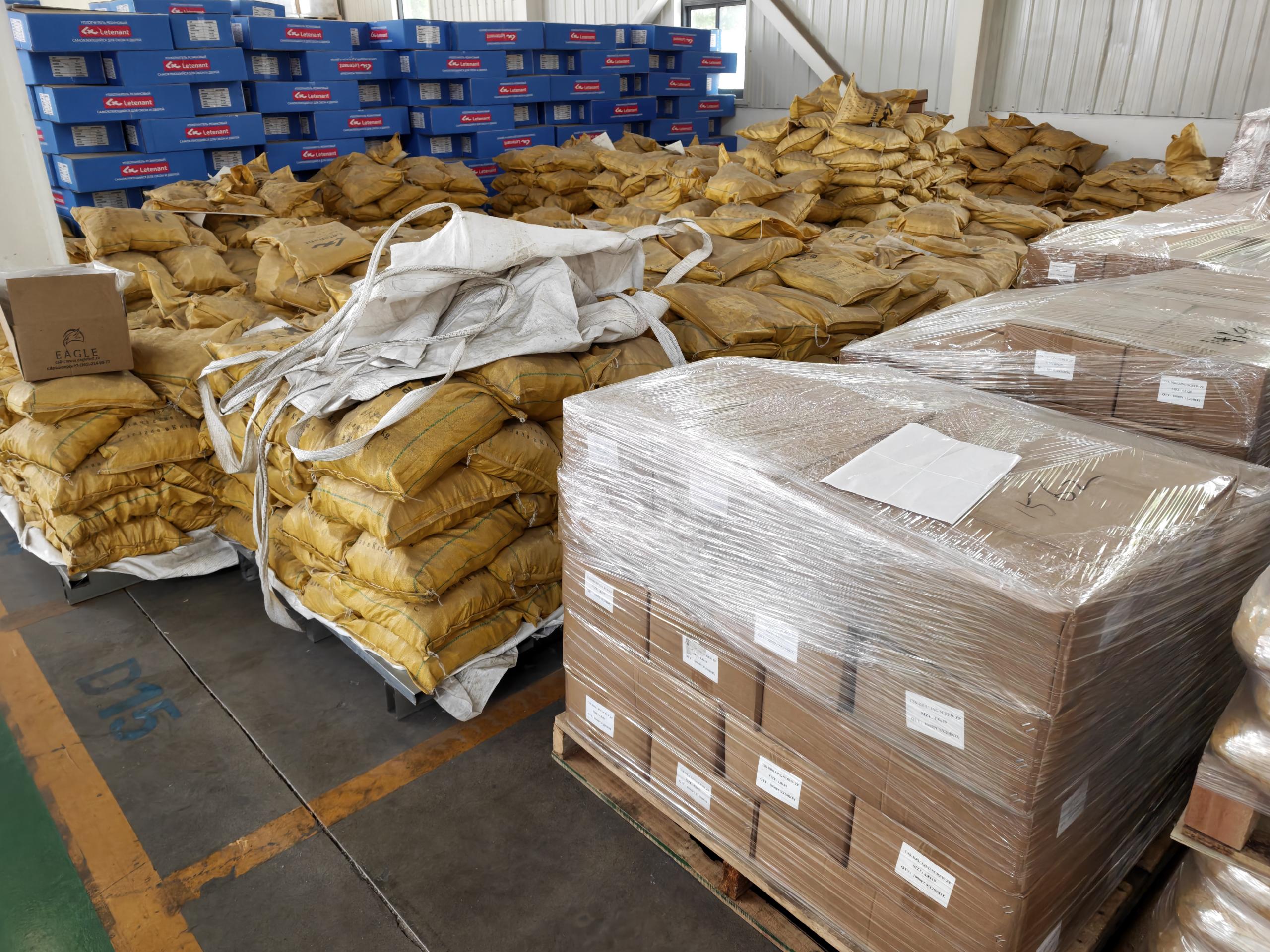
Export-packaged fasteners in wooden crates pending delivery. Coating, documentation and packaging decisions travel with the anchor into the destination market.
Comparison with Traditional Fixing Solutions — and Where Sleeve Anchors Stop
Cast-in or embedded fixing, planned before the concrete is poured, integrates the load path into the structure and removes the variables introduced by drilling — hole diameter, hole cleaning, embedment depth and edge distance. Its boundary is programme. It cannot be applied to retrofit work, to equipment installed after the structure is complete, or to fixtures whose position is not finalised at design stage.
Post-installed mechanical anchors, including sleeve anchors, move that decision to the site. They can be installed after the concrete has cured and can be removed and re-set where a fixture changes. In exchange, the performance of the assembly becomes dependent on field execution: drilled hole size, hole cleaning, embedment depth and applied torque.
Sleeve anchors are commonly used in concrete and solid masonry. Suitability depends on the specific anchor design, the condition of the base material and the load requirements. That is the boundary line. A sleeve anchor is not a universal fixing, and no certificate changes the base material it is installed into.
The practical limits a buyer should record in writing before ordering are these:
- Certificate scope is not project scope. The ECM attestation and the management system certificates cover defined products and processes. Project-specific anchor design — anchor type, diameter, embedment, edge distance and spacing — remains the responsibility of the project engineer.
- A coating class is not an exposure guarantee. Zinc plating and hot-dip galvanizing slow corrosion; in heavily corrosive environments, A4 stainless steel is the option that removes the corrosion mechanism instead of managing it.
- Performance is installer-dependent. Under-tightening and over-tightening both degrade the assembly, and neither is visible after the fixture is closed.
- Design responsibility stays with the buyer. The IATF 16949 certificate scope for this manufacturer excludes product design under Clause 8.3, so fixing design is not transferred to the supplier by certification.
- Job-site verification is separate. Where a project requires measured anchor strength, testing follows methods such as ASTM E488/E488M-22, which is independent of any supplier certificate.
A simple scenario matrix makes the trade-off visible. It maps exposure and loading conditions onto the documented options in the range, without implying that any single option is universally correct.
| Scenario condition | Primary risk | Documented option in the sleeve anchor range |
|---|---|---|
| Dry indoor equipment base | Low corrosion, static load | Zinc plated carbon steel grade 4.8; standard load |
| Outdoor open air with temperature cycling | Coating degradation over time | Hot-dip galvanized or yellow zinc plated finish |
| Coastal salt spray or humid chemical exposure | Corrosion-driven anchorage failure | A4-80 stainless steel; double-layer anti-corrosion treatment |
| Vibration load condition | Loosening under service load | Heavy duty bearing capacity option; controlled tightening torque |
| Concrete base | Pull-out, edge distance, spacing | Concrete sleeve anchor; sizes M6–M16 and 1/4 in–5/8 in; lengths 30 mm–300 mm |
| Solid masonry or brick wall | Insufficient expansion in the base | Masonry sleeve anchor; suitability to be confirmed against base condition |
Anchor types documented in the range include hex nut, hex bolt, flange nut, eye hook, L-hook and G-hook sleeve anchors, with additional types such as concrete, masonry, expansion, hammer, wedge and drop-in anchors serving different fixing geometries. The certificate-associated product is listed as Sleeve Anchor M5–M36, while the published size range covers M6, M8, M10, M12, M14 and M16 together with 1/4 in, 5/16 in, 3/8 in, 1/2 in and 5/8 in, in lengths from 30 mm to 300 mm.
Market Trend Analysis
Anchoring fasteners are a large and structurally stable category. Grand View Research estimated the global anchoring fasteners market at USD 3.12 billion in 2024, with mechanical anchors — the segment that includes sleeve anchors — accounting for 58.3% of revenue share in the same year. That concentration is the commercially relevant point for buyers: mechanical anchors, not chemical or cast-in systems, carry the majority of category value.
On the supply side, Credence Research projects China's industrial fasteners market to grow from USD 12.23 billion in 2024 to USD 22.78 billion by 2032. That is the same production base from which much of the world's exported sleeve anchor supply originates. Hebei Yuetong Fasteners Manufacturing Co., Ltd. operates from Yongnian District, Hebei, described in the company profile as China's largest standard parts production base, with a factory footprint of 26,666.67 m², 100 employees, an annual output of 150,000 tons, a 12-engineer R&D team and an 80% export ratio across the EU, NA, LATAM and MEA markets.
Two caveats apply to these figures. First, market sizing differs by category definition — anchoring fasteners and construction anchors are not identical scopes, and single-source figures should be read as directional rather than as a procurement input. Second, capacity figures describe supply potential, not the corrosion or load performance of a specific order; those are decided by specification and process control.
Future Outlook
Three shifts are likely to shape sleeve anchor specification for industrial equipment mounting over the next few years.
Corrosion specification is tightening in exposed and renewable energy projects. As PV bracket, bridge and curtain wall installations accumulate service history, hot-dip galvanized and stainless steel options are moving from premium alternatives toward default requirements in coastal and high-humidity locations.
Documentation is arriving earlier in the buying process. Carbon footprint registration and occupational safety coverage are increasingly requested at enquiry stage rather than at contract stage. The ISO 14067 certificate held by this manufacturer is valid until 2028-12-07 and the ISO 45001 certificate until 2028-12-17, which means both are currently citable in tender documents.
Process discipline is becoming a differentiator rather than a baseline. IATF 16949 coverage in fastener manufacturing signals automotive-adjacent process control. Because its scope excludes product design, the value it delivers is consistency — and buyers should continue to expect design responsibility to stay on their side of the table, supported by project-specific anchor selection and, where required, job-site strength testing.
FAQ
Are sleeve anchors prone to insufficient load capacity, loosening or pull-out during long-term use?
Proper anchor selection and installation are critical to reliable performance. Load capacity depends on the base material, anchor diameter, embedment depth, hole diameter, edge distance and tightening torque. Correct drilling, hole cleaning and controlled tightening help the expansion sleeve engage securely with the base material and reduce the risk of loosening or pull-out. For critical applications, anchor type and installation parameters should be selected according to the actual load and base-material conditions.
What base materials are suitable for sleeve anchors?
Sleeve anchors are commonly used in concrete and solid masonry. Suitability depends on the specific anchor design, the condition of the base material and the load requirements. The applicable bases documented for this range are concrete, brick and masonry wall.
How should the correct sleeve anchor size be selected?
Selection should consider the fixture thickness, the required load, the base material, the anchor diameter, the embedment depth and the installation environment. Published sleeve anchor sizes cover M6, M8, M10, M12, M14 and M16 as well as 1/4 in, 5/16 in, 3/8 in, 1/2 in and 5/8 in, with overall lengths from 30 mm to 300 mm and standard or heavy duty bearing capacity.
Is tightening torque important for sleeve anchors?
Yes. Correct tightening allows the expansion sleeve to engage the base material. Insufficient tightening may result in poor expansion, while excessive tightening may damage the anchor or the base material. The torque and clamp force reference listed in the manufacturer's ECM attestation scope is EN ISO 16047:2005+A1:2012.
What affects the load capacity of a sleeve anchor?
Load capacity depends on the anchor size, embedment depth, base-material strength, hole diameter, edge distance, spacing and installation quality. Actual application conditions should be considered when selecting the anchor rather than relying on a nominal figure for the diameter alone.
Can sleeve anchors be used outdoors?
Yes, but the appropriate surface finish or material should be selected for the environment. Zinc plating, yellow zinc plating, hot-dip galvanizing or stainless steel may be considered depending on the required corrosion resistance. In heavily corrosive areas such as coastal salt-spray or humid chemical exposure, A4 stainless steel is the option that removes the corrosion mechanism rather than slowing it. EN ISO 10683:2018 is the corrosion coating reference listed in the manufacturer's ECM attestation scope.
How can sleeve anchor failure be reduced?
Use the correct anchor size, drill the specified hole diameter, maintain sufficient embedment depth, clean the hole and tighten the anchor according to the installation requirements. Where a project requires measured strength verification, testing follows methods such as ASTM E488/E488M-22, which is separate from supplier certification.
Verification Note
Certificate numbers, validity dates and scopes cited in this article are taken from the manufacturer's published certificate records: ECM Type-Approved Attestation No. 3N230331.HYFUC49 (Ente Certificazione Macchine Srl); ISO 9001 No. 29024Q12949-09R1M; ISO 45001 No. 29025S12024-12R0M; ISO 14001 No. 29025E12097-12R0M; IATF 16949:2016 No. 2600920/R0M; ISO 14067 No. 33925CFMS00020R0S; Alibaba Gold Plus Supplier Assessment No. 491647039 P+T with SGS on-site assessment. External market figures are attributed to Grand View Research and Credence Research, the anchor strength test method reference to ASTM International, and the customs classification reference to the US International Trade Commission. Reported project outcomes are supplier documentation and are not independently audited.
For buyers who need the full material, coating and packaging data in one document, the manufacturer's fastener product brochure is available as a PDF download: Fastener product brochure (PDF).