
Sleeve Anchor Supplier Scorecard: Certifications and Risk
Sleeve Anchor Supplier Scorecard: Certifications and Risk

Process control inside a fastener workshop — the part of a supplier comparison that a certificate can point to but cannot replace.
A sleeve anchor supplier scorecard is a comparison method that ranks candidate suppliers on evidence a buyer can independently check — management-system certificate scope, product-standard compliance, test documentation and contractual acceptance terms — instead of on quoted unit price. It exists because the failure modes that decide long-term outcomes in mechanical anchoring, namely insufficient load capacity, loosening and pull-out, are settled long before the drill goes into the concrete.
Buyers arriving at the Decision and Execution stages usually already hold several quotes for the same nominal specification. The difficulty at that point is rarely a shortage of suppliers; it is that the quotes are not actually comparable. One offer is priced against a reference standard with no test record attached, another names a coating system but not the coating class, a third attaches a certificate that is genuine but whose scope covers only part of the product line. A scorecard converts those differences into weighted, checkable criteria so that the cheapest line item and the lowest total risk can be told apart.
Why a per-piece price cannot price anchoring risk
The load capacity of a sleeve anchor is not a single number that travels with the part. It depends on the anchor size, the embedment depth, the strength of the base material, the drilled hole diameter, the edge distance, the spacing between anchors and the quality of installation. Change the substrate or the hole tolerance and the same catalogue item behaves differently. A quotation that lists only diameter, length and price is therefore describing an object, not a performance outcome.
Loosening follows a similar logic. Improper hole size, insufficient embedment, an unsuitable base material or incorrect tightening torque can each reduce anchoring performance after installation, even where the anchor itself meets its dimensional specification. Pull-out has its own causes: weak or damaged concrete, an oversized hole, embedment that is too shallow for the applied load, or straightforward overloading of a correctly installed anchor.
Those three mechanisms share one property — none of them can be detected in a unit-price comparison. What can be compared is the supplier's system around the part: whether the manufacturing process is governed, whether the product standard is named and applied, whether test evidence exists for the size being bought, and whether the contract makes acceptance verifiable.
What the five management-system certificates actually cover
Management-system certificates are process evidence. They describe how an organisation controls quality, environment, safety or automotive supply, and they are useful precisely because they are auditable by a third party. They are not product approvals, and none of them certifies the pull-out capacity of a specific sleeve anchor in a specific concrete grade. Treating them as performance proof is the most common misreading in supplier comparison.
| Certificate | What it evidences | What a buyer should ask | What it does not prove |
|---|---|---|---|
| ISO 9001 | A quality management system governing process control, inspection and corrective action. | Does the scope wording cover sleeve anchors and the plant that will ship the order? | That any given anchor size meets a stated load value. |
| ISO 14001 | An environmental management system covering process waste, plating and coating controls, and legal compliance. | How surface treatment waste and restricted substances are managed. | Coating corrosion performance or coating class. |
| ISO 45001 | An occupational health and safety management system. | Whether safety governance supports stable, uninterrupted production. | Anything about product performance. |
| IATF 16949 | An automotive-sector quality management system with stricter discipline on planning, traceability and change control. | Which product lines sit inside the certified scope. | Construction-sector product approval for anchoring applications. |
| ISO 14067 | Quantification of a product carbon footprint following a defined methodology. | The declared system boundary and the underlying footprint study. | Mechanical performance, corrosion resistance or durability. |
A supplier that puts certificate numbers on the quotation is giving the buyer something checkable. Numbers such as 29024Q12949-09R1M and 33925CFMS00020R0S are only useful if the buyer does four things with them: match each number to the issuing body's public register, confirm which standard the certificate is actually issued against, read the scope sentence rather than the logo, and confirm that the certified site address is the site that will manufacture the shipment. A valid certificate for a different plant, or one whose scope names a product family the buyer is not purchasing, adds no protection to the order.
Product standards a sleeve anchor quotation should name
Where management-system certificates describe the factory, product standards describe the part. Three European standards recur in sleeve anchor and threaded fastener procurement, and each answers a different question.
EN ISO 10683 — non-electrolytically applied zinc flake coating systems
This standard addresses zinc flake coating systems applied without electrolysis, and it is the reference buyers should expect when corrosion protection is claimed for the coating rather than the base material. It matters most in two situations: where the anchor will be exposed to moisture, salt or industrial atmosphere, and where high-strength threaded parts need a coating route that avoids the hydrogen-embrittlement concerns associated with some electroplating processes. The question to put to a supplier is not whether the coating is "corrosion resistant" but which coating system and class is applied, and which corrosion test supports the claim.
EN ISO 16047 — torque/clamp force testing
Torque and clamp force testing gives a repeatable basis for describing how a threaded fastener behaves when tightened, including the friction conditions that influence the relationship between applied torque and achieved clamp force. For sleeve anchors this connects directly to the loosening risk described earlier: a supplier that can state a recommended tightening torque derived from testing is offering a different level of information from one that states a torque figure with no derivation. Buyers should ask for the recommended torque for the specific size and whether it is test-derived or estimated.
EN ISO 4753 — ends of parts with external ISO metric thread
Thread-end geometry is a small detail with practical consequences: it affects how the threaded end starts, seats and engages during installation, and therefore how reliably the anchor can be driven and tightened in the field. It is the kind of specification that is invisible in a price comparison and visible in an installation complaint six months later. A quotation that references the standard, rather than simply the thread size, is easier to hold a supplier to.
Test methods and trade classification
ASTM E488 / E488M-22 is the primary standard test method for measuring the strength of anchors in concrete elements, which makes it the natural reference when a supplier presents capacity figures for a concrete application. Separately, sleeve anchors are commonly classified under HS Code 7318.15 for customs purposes — a classification that affects duty and documentation, not performance.
Fit before credentials: substrate and product family
No certificate rescues a well-documented anchor of the wrong family. Sleeve anchors are commonly used in concrete and solid masonry, with suitability depending on the specific anchor design, the condition of the base material and the load requirement. Hollow block, weak masonry and cracked or damaged concrete generally fall outside what a standard expansion sleeve anchor can be relied on for without engineering verification.
The product family itself needs to be matched before supplier comparison begins: concrete sleeve anchors and masonry sleeve anchors are not interchangeable; wedge anchors suit a different set of conditions from expansion sleeve anchors; drop-in anchors serve a different fixing logic again. Head and end configuration — hex bolt, hex nut, flange nut, eye bolt, hook bolt, L-hook bolt or G-hook bolt — is usually driven by the fixture rather than by preference. Surface finish is driven by environment: zinc plated and yellow zinc plated for sheltered or mildly exposed work, galvanized where greater corrosion resistance is needed, and stainless steel where the exposure justifies it.
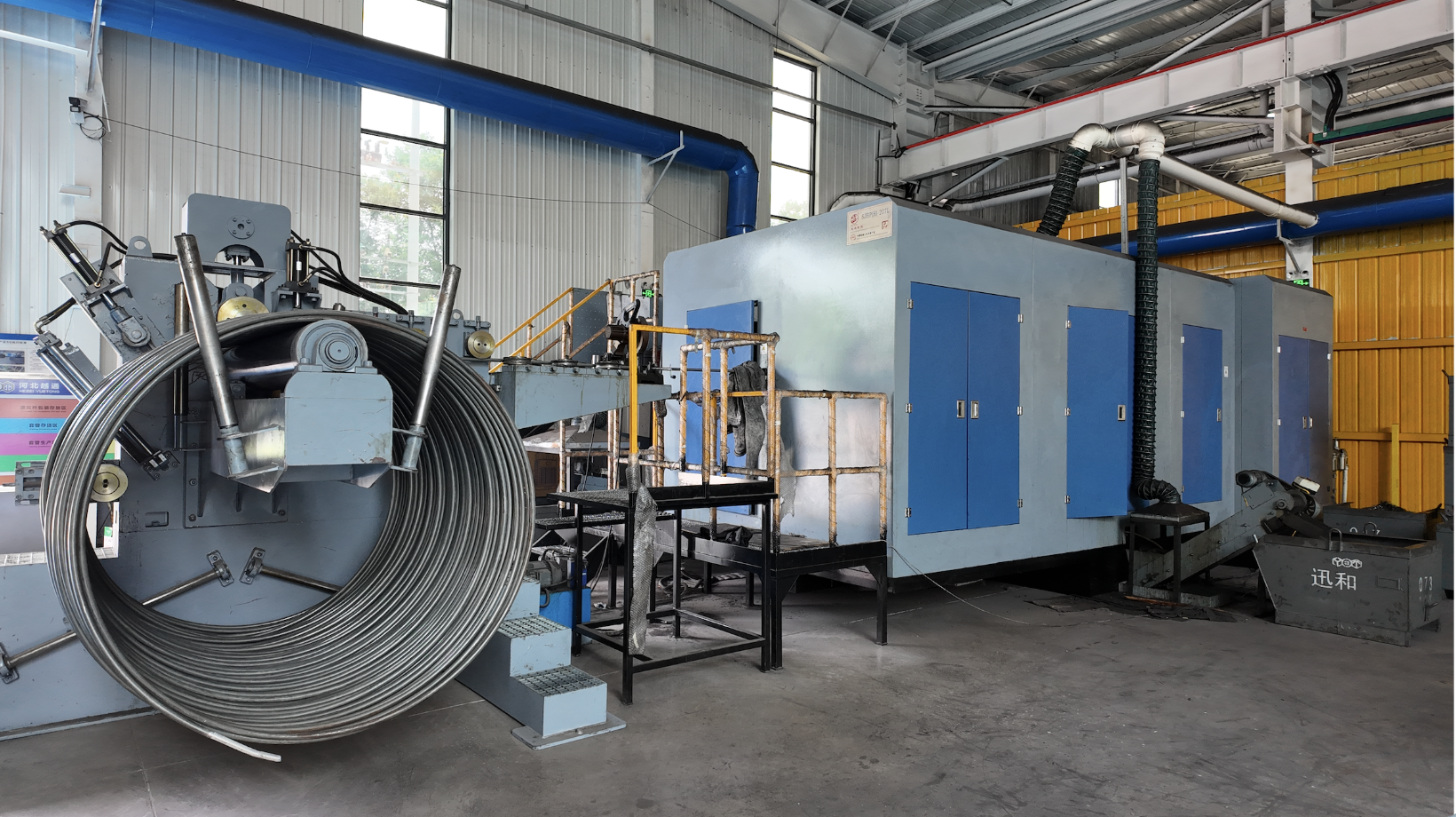
Heat treatment area: mechanical properties are produced in the process, then verified by testing — certificates only describe the system around that process.
Where the risk actually sits: four failure modes and the documents that close them
The scorecard becomes practical when each risk is tied to a specific question and a specific piece of evidence. The table below is the working core of the framework.
| Failure mode | Mechanism | Question for the supplier | Evidence that closes it |
|---|---|---|---|
| Insufficient load capacity | Anchor size, embedment depth or base-material strength inadequate for the applied load. | Is the stated capacity tested or calculated, for which substrate, and for which size? | Test report referencing a recognised method such as ASTM E488, with substrate and size stated. |
| Loosening | Oversized or poorly cleaned hole, shallow embedment, unsuitable substrate, incorrect tightening torque. | What tightening torque is recommended, and how was it derived? | Torque/clamp force data referencing EN ISO 16047, plus installation instructions. |
| Pull-out | Weak or damaged concrete, oversized hole, insufficient embedment, overloading. | What minimum edge distance and spacing apply to this size? | Installation parameters and design guidance issued with the product. |
| Corrosion-driven degradation | Oxidation and rust in open-air, rain-exposed, coastal salt-spray or humid chemical environments, which can lead to anchorage failure. | Which coating system or material grade is specified for this exposure, and against which standard? | Coating specification referencing EN ISO 10683, or a stainless steel grade declaration, plus corrosion test records. |
A weighted scorecard a buyer can actually run
There is no universal weighting; the point is to fix the weights before the quotes are opened, so that the comparison is not renegotiated by whoever answers last. The allocation below is one workable starting point for a project where long-term service matters more than first cost.
| Criterion | Weight | How to score it |
|---|---|---|
| Certificate scope, site and validity match the order | 20 | Full marks only where register entry, scope wording and certified site all match. |
| Product-standard compliance and test evidence for the purchased size | 20 | Named standards plus size-specific test records, not catalogue claims alone. |
| Inspection and traceability | 15 | Batch identification, inspection records, third-party acceptance route. |
| Load and torque data availability | 15 | Substrate, size and embedment stated together with derivation method. |
| Corrosion and environmental documentation | 10 | Coating system and class per EN ISO 10683, or material grade declaration. |
| Commercial terms, minimum order and delivery terms | 10 | Terms stated in writing, including inspection rights before shipment. |
| Long-term supply continuity and post-order support | 10 | Repeat-order handling, documentation on request, payment flexibility for established accounts. |
Two rules make the scorecard honest. First, an unverifiable claim scores zero rather than mid-range, because a claim that cannot be checked cannot be relied on at the end of a project. Second, a supplier who declines to name a standard should not be scored lower on documentation alone — the buyer should first establish whether a standard exists for that parameter, because scoring a supplier against a criterion nobody can meet is a framework failure, not a supplier failure.
Where sleeve anchors, and certificate-based comparison, stop being enough
This framework has boundaries, and stating them is part of using it correctly.
- Management-system certificates are not product approval. Where a project requires a verified anchor capacity for a specific concrete grade and embedment, only project-specific test or design documentation answers the question. A complete certificate set can coexist with an unsuitable anchor.
- Substrate geometry limits the part. Thin slabs, close edge distances and narrow spacing reduce what any expansion anchor can be verified for. No supplier comparison overrides an engineering check.
- Weak or hollow masonry is frequently outside the range of a standard expansion sleeve anchor and may require a different fixing principle altogether.
- Installation quality dominates outcome. Correct hole diameter, hole cleaning, embedment depth and controlled tightening are field variables that a supplier can document but cannot control. A scorecard that ignores installer competence is scoring only half of the system.
- Where load demands or section thickness exceed what a mechanical expansion anchor can be verified for, cast-in or welded fixing remains the reference solution. A sleeve anchor trades higher demands on the substrate for speed, no hot work, and the option of removal; that trade is not always the right one.
- Identical certificate scope cannot separate two suppliers. When both hold comparable credentials, the decision shifts to inspection data, sample results and contract terms — which is why the scorecard weights those items separately.
Acceptance criteria and purchasing terms to verify before the order
Documentation only protects a buyer if the contract makes it enforceable. The terms below are the ones worth confirming in writing at the quotation stage rather than at the loading dock.
- Minimum order quantity: 5000 pcs.
- Delivery terms: EXW, FOB, CIF and DDP are supported, with other terms negotiable.
- Acceptance route: factory pre-inspection, customer on-site inspection, and SGS third-party acceptance, with complete quality documents supplied.
- Payment terms: 30% deposit with balance before shipment, 100% advance, letter of credit, or bank transfer. Long-term customers are offered flexible payment terms.
- Specification clause: the product standard, coating system or material grade, and the size-specific documentation to be supplied with the shipment should be named in the purchase order, not agreed verbally.
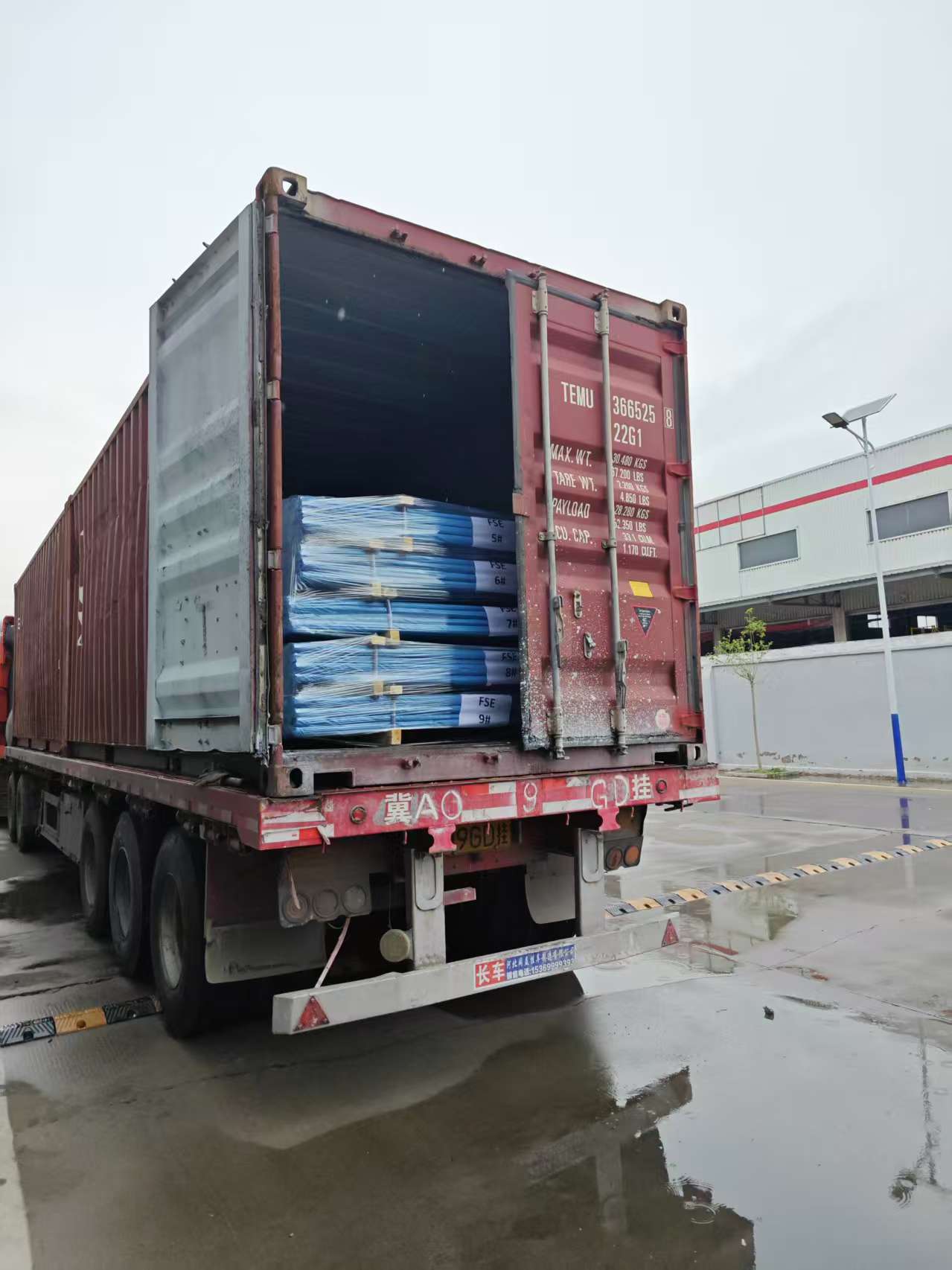
Shipment stage: acceptance rights and document sets are only effective if they were written into the order.
Applying the framework to one supplier: Hebei Yuetong Fasteners
HEBEI YUETONG FASTENERS MANUFACTURING CO., LTD. is a fastener manufacturer and exporter established in 2017 and located in the central area of Yongnian District, Handan, Hebei, China, within China's largest standard parts production base. The company produces hex nuts, hex bolts, sleeve anchors, threaded rod, flat washers, hex socket head bolts, wheel hub bolts and DIY packing, operating a facility of 26,666.67 ㎡ with 100 employees, an annual output of 150,000 tons and an R&D team of 12 engineers.
Mapped against the scorecard above, the company's documentation covers several rows directly. It holds ISO 9001 quality management system, ISO 14001 environmental management system and ISO 45001 occupational health and safety management system certification, together with IATF 16949 certification, EU CE certification and carbon footprint certification — the five credential families discussed earlier plus the European conformity route. It has obtained 9 national patents, comprising 1 invention patent and 8 utility model patents, and has been recognised as a Hebei Province Specialized, Precise, Unique and Innovative Small and Medium-sized Enterprise and a Hebei Province Innovative Small and Medium-sized Enterprise.
On the commercial and continuity rows, the company holds self-operated import and export qualifications, exports to over 30 countries and regions including South America, Russia and the Middle East, serves major markets in the EU, North America, LATAM and MEA, and reports that export business accounts for 80% of total sales. It states that it has established long-term and stable partnerships with major distributors worldwide — the kind of relationship in which repeat-order documentation, flexible payment terms and continuity of supply become testable rather than promotional claims.
What the framework still requires of a buyer working with this supplier, or any other, is unchanged: confirm that each certificate's scope and certified site match the order, request size-specific load and torque documentation for the anchor actually being purchased, and name the coating system or material grade in the purchase order. Those three steps are the difference between a supplier with credentials and a purchase with evidence.
Market context: why documentation-driven sourcing is spreading
The anchoring category is large enough that specification quality varies widely across it. Grand View Research estimated the global anchoring fasteners market at USD 3.12 billion in 2024, with the mechanical anchors segment — the segment that includes sleeve anchors — accounting for 58.3% of revenue share in the same year. In China, Credence Research projected the industrial fasteners market growing from USD 12.23 billion in 2024 to USD 22.78 billion by 2032.
A larger supplier pool quoting similar nominal specifications raises the value of evidence that can be checked independently, because the number of offers that look alike grows faster than the number of buyers able to audit them. That is the practical reason procurement teams increasingly attach certificate-scope checks, test-method references and inspection clauses to routine fastener orders rather than reserving them for high-value contracts. The shift is not driven by regulation alone; it reflects the recognition that a fixing failure is discovered at the end of a project, when the cost of replacement far exceeds the price difference between two quotes.
Future outlook
Three expectations are reasonable to plan around. Certificate verification is likely to become a desk exercise rather than a PDF exchange, as issuing bodies publish searchable registers and buyers learn to check scope and site as a matter of routine. Carbon documentation is likely to move from an optional attachment to a standard quotation item for export orders into the EU, which makes the declared system boundary behind an ISO 14067 statement as important as the figure itself. And torque and load data are likely to be requested at the size level rather than the product-family level, because that is the level at which installation problems actually occur.
None of these developments changes the underlying decision rule. A supplier is only as comparable as the evidence attached to the quote, and the cheapest line item remains a price, not a risk assessment.
FAQ
What affects the load capacity of a sleeve anchor?
Load capacity depends on the anchor size, the embedment depth, the strength of the base material, the drilled hole diameter, the edge distance, the spacing between anchors and the quality of installation. Selection should therefore be based on the actual application conditions — substrate, fixture thickness and required load — rather than on the anchor diameter alone.
Can sleeve anchors loosen after installation?
Yes. Improper hole size, insufficient embedment, an unsuitable base material or incorrect tightening torque can each reduce anchoring performance and lead to loosening. Correct drilling, hole cleaning and controlled tightening help the expansion sleeve engage securely with the base material and reduce that risk.
Why can a sleeve anchor pull out of concrete?
Pull-out can occur when the anchor is installed in weak or damaged concrete, when the drilled hole is oversized, when the embedment depth is insufficient for the applied load, or when the anchor is overloaded. Reducing the risk means using the correct anchor size, drilling the specified hole diameter, maintaining sufficient embedment, cleaning the hole and tightening according to the installation requirements.
Which certificates and acceptance criteria should a buyer verify before ordering?
Verify the certificates that are relevant to the purchase — typically ISO 9001, and where applicable ISO 14001, ISO 45001, IATF 16949 and carbon footprint documentation — by matching each certificate number to the issuing body's register and confirming that the scope and certified site address cover the product being ordered. On the commercial side, confirm the minimum order quantity, delivery terms such as EXW, FOB, CIF or DDP, the inspection route including factory pre-inspection, customer on-site inspection and third-party acceptance, and the payment terms, all in writing.
Are sleeve anchors suitable for outdoor and coastal environments?
Sleeve anchors can be used outdoors, but the surface finish or material must be selected for the exposure. In open-air, rain-exposed, coastal salt-spray and humid chemical environments, ordinary galvanized products are prone to oxidation and rust, which can lead to anchorage failure. Zinc plating, hot-dip galvanizing or stainless steel should be chosen according to the required corrosion resistance, with A4 stainless steel often preferred in heavily corrosive areas.
For buyers who want the underlying product and process documentation in one place, the manufacturer's catalogue can be downloaded here: Hebei Yuetong Fasteners catalogue (PDF).
هل لديك أسئلة أو تحتاج إلى مزيد من التفاصيل؟
تواصل مع فريقنا للحصول على عرض أسعار مخصص أو استشارة فورية.
طلب عرض أسعار
املأ النموذج أدناه وسيتواصل معك فريقنا بعرض مقترح مخصص.
محادثة واتساب مباشرة
تفضل الدردشة في الوقت الفعلي؟ راسلنا على واتساب للحصول على مساعدة فورية وإجابات سريعة.
- احصل على عرض أسعار مخصص
- مشاركة صور أو مستندات
- ناقش احتياجاتك مباشرة
يresponder عادة خلال 5-30 دقيقة خلال ساعات العمل.