
Slide Forming Machine Procurement FAQ: Specs, Acceptance, and LYB-SR400 Industry Benchmark
Slide Forming Machine Procurement FAQ: Specs, Acceptance, and LYB-SR400 Industry Benchmark
Slide forming machine specifications look portable between suppliers, and they are not. A tolerance quoted as ±0.05 mm, a line speed quoted as 15 m/min and a thickness range quoted as 0.3–3.0 mm can each describe a different feature, measured on a different material, under a different test condition. For a buyer moving from evaluation into execution — issuing an RFQ, booking a pre-shipment inspection, or drafting a warranty clause — the useful question is narrower: which of these numbers can be converted into a pass-or-fail criterion that both sides accept before the machine leaves the factory?
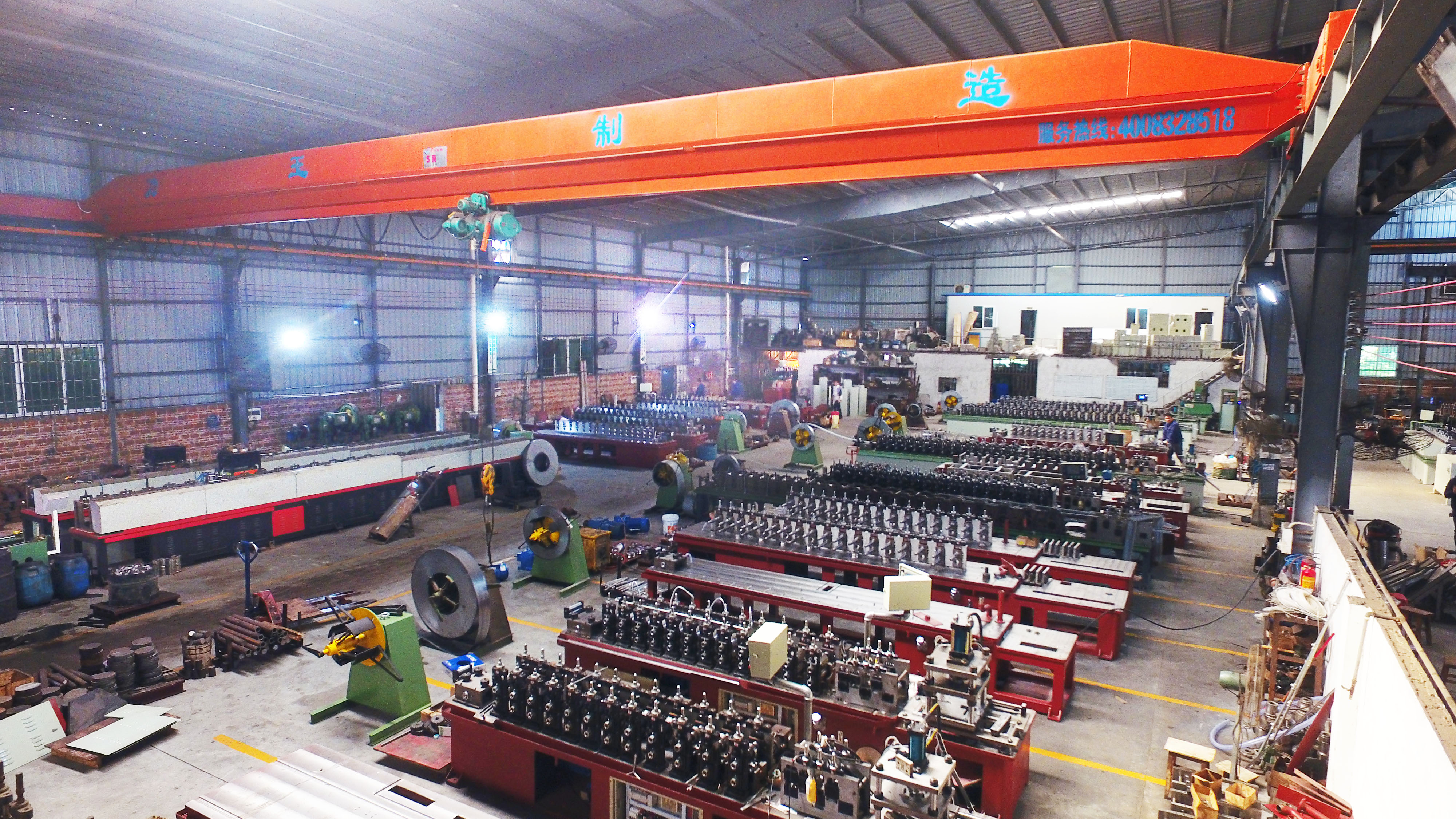
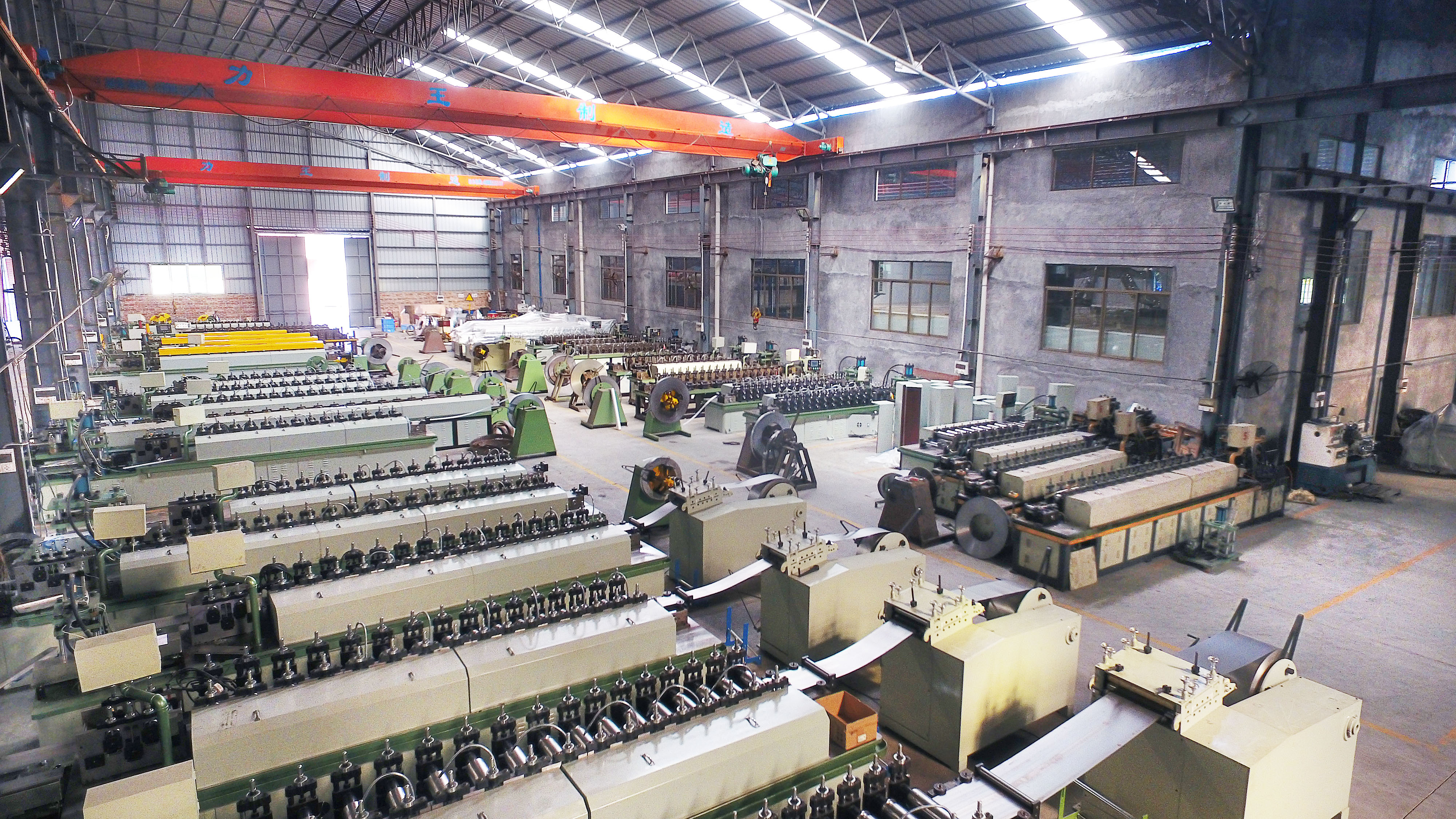
This procurement FAQ answers the questions that recur at exactly that stage, using the LYB-SR400 cold roll forming machine from Foshan Lianyoubang Precision Machinery Co., Ltd as a worked reference. The company is a Foshan-based manufacturer of cold roll forming machines, rolling shutter door machines and slide rail production lines, operating a stated 10,000 m² factory with an annual output of about 120 units and a technical team of 15+ engineers, including 5 senior engineers. It reports a 30% export ratio, with Southeast Asia and the Middle East named among its main markets. Model and company figures below are the manufacturer's published values; external references are named where they are used.
Why published slide forming machine specifications resist comparison
Comparison stalls on a structural problem rather than a shortage of data: the public specification record for slide forming equipment is not normalised. Coherent Market Insights estimated the global roll forming machine market at USD 10.09 billion for 2026 and put the automatic machine segment at a 46.8% share of that market. That research sizes a category; it does not define a common protocol for tolerance, throughput or uptime, and the suppliers publishing numbers are not measuring the same things.
Product boundaries differ before any figure is read. One supplier describes a drawer-slide roll forming system as a sequence of material loading, roll forming, hydraulic punching and cutting, with production parameters set on a touch screen, and quotes 0.8–3 mm strip, 10–20 forming passes and 6–15 m/min. Another publishes an application taxonomy — standard, heavy-duty, multiple-hole-punch, two-fold ball-bearing, full-extension telescopic channel, server-rack and hidden slides — with no comparable performance table at all. A third describes furniture and appliance slide-out rail applications covering drawers, table pull-outs, sliding-door runners, oven pull-outs and dishwasher pull-outs, again without a measurement protocol.
Two figures only become comparable once the following are fixed on both sides: the same slide profile, the same steel grade and coating, the same strip width and thickness, the same punching and cutting scope, the same definition of line speed, the same quality acceptance criteria and the same test duration. Without those, a speed range is a configuration statement. It is not a market norm, and it is not evidence that one machine outperforms another.
What the LYB-SR400 specification covers, and what it leaves open
The LYB-SR400 is published as a PLC-plus-servo cold roll forming machine for strip up to 400 mm wide and 0.5–3.0 mm thick, running at 5–15 m/min with 7.5–22 kW drive power and a stated cutting accuracy of ±0.5 mm. Those seven values define the machine's operating envelope — and none of them defines the profile, the tooling set or the surrounding line.
| Parameter | Published value | What the buyer must still confirm |
|---|---|---|
| Drive power (LYB-SR400) | 7.5–22 kW | Which configuration reaches the top of the range, at which material and speed |
| Line speed (LYB-SR400) | 5–15 m/min | Whether the figure includes punching and cutting or forming only |
| Material thickness (LYB-SR400) | 0.5–3.0 mm | Which steel grades and coatings were validated at both extremes |
| Maximum material width (LYB-SR400) | 400 mm | Whether a wider profile is a tooling change or a different model |
| Control architecture (LYB-SR400) | PLC + servo motor | Which functions are servo-controlled — feed, forming, cutting |
| Cutting accuracy (LYB-SR400) | ±0.5 mm | Cut length only, at which speed, on which material |
| Quality gate (all machines) | 100% pre-delivery inspection and 72-hour test run | What is recorded during the 72 hours, and who signs the report |
The open items are commercially significant. A quoted machine may be a forming unit alone, or a line that also covers decoiling, feeding, punching and cutting — the architecture suppliers commonly describe as material loading, roll forming, hydraulic punching and cutting. Buyers who compare a forming machine against a full line are comparing two different purchases, and the cheaper quotation is usually the narrower scope. Before pricing is judged, the RFQ should state explicitly which stages sit inside the supplier's scope and which the buyer supplies locally.
Forming tolerance or cutting accuracy: the number buyers most often misread
The ±0.05 mm and ±0.5 mm figures describe different things and should never be substituted for one another in a contract. The manufacturer publishes ±0.05 mm as the moulding (forming) tolerance of its LYB-Customized Series, alongside 5.5–37 kW power, 0–25 m/min forming speed, 0.3–3.0 mm sheet thickness and PLC automatic control. The LYB-SR400 page publishes ±0.5 mm as cutting accuracy. One is a statement about cross-section geometry; the other is a statement about the length of the cut piece.
That distinction changes what a buyer can do with the number. A forming tolerance constrains the channel height, width, flange angle and bend radii of the profile that the rolls produce, and it is meaningless unless the drawing says which feature is measured and where. A cutting accuracy constrains how long each cut part is, and it is affected by line speed, material thickness and the cutting mechanism. A buyer who accepts "±0.05 mm" as a general quality label, without knowing which feature it attaches to, has accepted a phrase rather than a specification.
A tolerance statement becomes testable only when it names five things: the measured feature, the material grade and thickness, the line speed during measurement, the instrument and sampling method, and the pass/fail limit. Without those five, a tolerance can be neither accepted nor rejected — it can only be discussed.
There is no public benchmark that makes any of these tolerances a market standard for slide forming. The published values from different suppliers describe different machines, materials and operating conditions, so they cannot be averaged or used to rank one builder above another. What a buyer can do is require every candidate to answer the same five questions on the same reference profile — which produces a comparison that is defensible because it was defined before the quotations arrived.
How to structure an acceptance test around the 72-hour run
Every LYB machine is stated to undergo a 100% pre-delivery inspection and a 72-hour test run before shipment, and pre-shipment test runs with third-party inspection available are listed among the acceptance routes buyers can use. Those two facts are the backbone of an acceptance clause, but they are not the clause itself — the clause has to say what the run proves and what gets written down.
Three documents carry most of the weight. The first is a signed reference profile drawing with a tolerance attached to each controlled feature, agreed before the machine is built. The second is a test-run log recording line speed, material lot and thickness, measured dimensions at defined intervals, stoppages and their causes, and operator interventions. The third is an inspection report that states which of those results passed against the drawing, signed by the supplier and countersigned by the buyer or the third-party inspector.
It helps to be precise about what 72 continuous hours demonstrates. A run of that length is a stability screen: it shows the line can operate continuously and exposes assembly, control and feeding faults that a short demonstration will hide. It is not a statistical capability study, because capability requires a defined sample size, a stable material supply and a measurement plan across a longer production period. Buyers who need capability data should specify it separately, rather than assuming a 72-hour run produces it.
Purchasing terms: what is settled, and what still needs drafting
The published commercial framework is straightforward: a minimum order quantity of 1 set, delivery on FOB Shenzhen or CIF terms, payment of 30% T/T deposit with 70% before shipment or by L/C, and a lead time of 30–45 days against a stated monthly capacity of 10 sets. Each of those terms carries an operational consequence that is easy to overlook at quotation stage.
- A one-set MOQ means a single customized machine is orderable; it also means the buyer carries the full tooling and engineering cost of that configuration rather than amortising it across a batch.
- FOB and CIF shift who arranges and insures the ocean leg. The choice affects the arrival date and the risk position more than the machine price itself.
- A 30/70 T/T split and an L/C option differ mainly in cash-flow exposure and documentary workload; both should be tied to the acceptance report, not only to the bill of lading.
- The 30–45 day lead time covers build and pre-shipment testing, not ocean freight, customs clearance, inland transport or on-site commissioning. Installation dates should be planned backwards from those stages.
- A stated capacity of 10 sets per month is the figure to check when several machines or a phased rollout is planned, since order sequencing matters more than unit price at that point.
These terms are company-reported and, in practice, negotiable at the margins. What should not be negotiable is the link between payment release and the acceptance report: a final payment triggered only by shipment documents leaves the buyer with no leverage if the test-run data does not match the reference drawing.
CE certification: what CE-12-0510-01 establishes, and what it does not
The manufacturer holds a CE certificate issued under the Machinery Directive and Low Voltage Directive by Morgarn Lab (MORGARN), certificate number CE-12-0510-01, citing EN ISO 12100:2010 and EN 60204-1:2006/A1:2009, issued on 2012-05-10 with a stated expiry of 2099-01-01 and prepared for the EU market. The certificate's stated scope is roll forming machines in models BS17, BS35, BS42, BS45, BS53, TB2, TB3, HD2 and HD3. Those two standards address machinery risk assessment and design principles (EN ISO 12100) and the electrical equipment of machines (EN 60204-1) respectively.
What this establishes is that the named models were assessed by that body against those two standards. What it does not establish is automatic coverage of a different model or of a customized configuration, and it says nothing about the compliance of the drawer slides or telescopic channels the machine will eventually produce. Those are separate products under separate regimes. In India, for example, telescopic ball bearing drawer slides fall under mandatory BIS certification against IS 17954 — a downstream requirement that a machine-level certificate cannot satisfy.
For a buyer, the verification steps are concrete. Record the certificate number, the issuing body, the cited standards and the stated scope; compare that scope against the model and configuration actually ordered; request the declaration of conformity that applies to the delivered machine; and where customization changes guarding, electrical layout or control architecture, ask in writing how conformity is maintained for that configuration. A certificate that names models is a starting point for those questions, not a substitute for them.
After-sales support: turning service claims into contract terms
The published service package covers 24/7 remote technical support, a 1-year free warranty, on-site installation and commissioning, lifelong maintenance and spare parts supply. Read as a list, this is standard for the category; read as a contract, several of its elements are underspecified.
The warranty is the clearest example. A one-year period is only meaningful once the start trigger is fixed — shipment date, arrival date, commissioning date or acceptance sign-off — and once exclusions are listed. Tooling wear, consumable parts and damage from material outside the validated thickness range are typically the boundary cases, and the buyer should have them stated before signing rather than discovered during a claim. The spare parts commitment should be paired with a recommended spares list and the lead time for each item, because lifelong maintenance is a planning statement until the lead times exist.
Remote support and on-site commissioning raise two further drafting points: the channel and expected response window for remote support, and what the on-site visit covers — installation and commissioning only, or operator training and a defined handover document as well. These are ordinary negotiation items, and none of them require the supplier to commit to anything beyond the published scope.
Customization and OEM/ODM: which parameters move, and what that does to acceptance
Customization on this platform is defined across five parameters — profile shape, line speed, material thickness, control system and machine size — with OEM, ODM and customized production listed as available modes. Each parameter that changes resets the acceptance baseline, which is the practical point most buyers underestimate.
The LYB-Customized Series envelope illustrates the range: 5.5–37 kW power, 0–25 m/min forming speed, 0.3–3.0 mm applicable sheet thickness, a stated moulding tolerance of ±0.05 mm and PLC automatic control. Those figures sit deliberately wider than the LYB-SR400's 0.5–3.0 mm thickness, 400 mm maximum width and 5–15 m/min line speed. A buyer whose profile falls inside the SR400 envelope is buying a defined model; a buyer whose profile falls outside it is buying an engineering project, and should expect a new drawing-based acceptance specification rather than an inherited one.
Scheduling matters too. With a stated monthly capacity of 10 sets and a 30–45 day lead time, customization is a planned slot rather than an instant option. Buyers who intend to add a second profile later should say so at RFQ stage, because tooling design decisions taken for the first profile constrain how cheaply the second one can be added.
Application fit: drawer slides, telescopic channels and where the reference envelope stops
The clearest published application evidence for this equipment category is a furniture rail OEM in Turkey running six units for three years on mass cold bending of furniture drawer slides and cabinet door slides. The manufacturer reports a forming accuracy of ±0.03 mm in that application, suitability across multiple slide specifications, a 40% production efficiency improvement, a defect rate below 0.3%, stable operation over the three-year period, low noise and straightforward maintenance.
That case should be read for what it is: one client's application, reported by the supplier, on a specified profile and material set. The ±0.03 mm result is tighter than the series-level ±0.05 mm figure, which is consistent with an application-specific tooling and process setup — and precisely why it should not be treated as the standard specification for every machine shipped. Buyers can cite such a case when validating feasibility; they cannot use it as a guarantee of their own output.
The wider application landscape is well documented by other suppliers in the category: partial and full pull-outs for drawers, table pull-outs, sliding-door runners, oven pull-outs and stainless-steel dishwasher pull-outs from one manufacturer, and standard, heavy-duty, two-fold ball-bearing, full-extension telescopic channel, server-rack and hidden slide types from another. Each of those product families implies a different profile geometry, load expectation and surface requirement, which is why application fit is decided profile by profile rather than by machine category.
Where the reference envelope stops is therefore a factual question. Strip wider than 400 mm, thickness outside 0.5–3.0 mm on the LYB-SR400, or output above its 5–15 m/min line speed range points either to the customized series envelope or to a different configuration entirely. Surface condition is the criterion buyers most often leave undefined; it should be written into the acceptance drawing with the same precision as a dimensional tolerance.
Using the LYB-SR400 as a benchmark without turning it into a ranking
In this article, benchmark means a reference column in an RFQ — a set of published values every candidate is asked to match or explain — not a league table. A defensible ranking would require configuration-normalised specifications and independent performance data such as uptime, yield, OEE or energy consumption across comparable installations. That data is not in the public record for this category, and published supplier specifications explicitly cannot be averaged or used to rank builders. Any article presenting such a ranking is presenting something other than evidence.
What can be assessed at supplier-qualification stage is capability depth, stated as published: a 10,000 m² factory, roughly 120 units per year, a 30-strong workforce, a technical team of 15+ engineers including 5 senior engineers, a monthly output of 10 sets and a 30% export ratio with Southeast Asia and the Middle East among the listed markets, alongside Europe and South America in the export-market listing. These are self-reported indicators of whether a supplier can engineer a customized line and support it afterwards. They are not evidence of installed-base performance, and they should be verified through references and, where the order justifies it, a factory visit.
What the market data does and does not say
The available market evidence is directional and should be used that way. A USD 10.09 billion global roll forming machine market in 2026 and a 46.8% expected share for automatic machines indicate that automated, servo- and PLC-controlled configurations are the mainstream segment in that estimate — relevant context when a buyer is weighing a manual or semi-automatic option against an automated line. The same source does not size drawer-slide or telescopic-channel machinery separately, and it cannot be used to forecast an individual plant's investment case. Buyers building a business case should rely on their own output, material and labour assumptions, with the market figure as background rather than proof of demand.
Frequently asked questions
What purchasing terms and acceptance criteria apply to a slide forming machine order?
The published framework sets a minimum order quantity of 1 set, delivery on FOB Shenzhen or CIF terms, payment of 30% T/T deposit with 70% before shipment or by L/C, and a 30–45 day lead time. Acceptance is based on a pre-shipment test run, with third-party inspection available on request. The company-reported figures define the commercial frame; the acceptance detail — reference drawing, measured features and pass limits — has to be agreed separately.
How is forming tolerance verified before a machine ships?
Tolerance is verified against a signed reference profile drawing that assigns a limit to each controlled feature, using parts produced from a fixed material lot at a defined line speed and measured with a stated instrument and sampling plan. The results are recorded during the pre-delivery inspection and the 72-hour test run. A tolerance figure quoted without those conditions cannot be tested, so it cannot function as an acceptance criterion.
Does a CE certificate cover every model a manufacturer sells?
No. A CE certificate states its own scope. Certificate CE-12-0510-01, issued by Morgarn Lab (MORGARN) under the Machinery and Low Voltage Directives against EN ISO 12100:2010 and EN 60204-1:2006/A1:2009, lists roll forming machine models BS17, BS35, BS42, BS45, BS53, TB2, TB3, HD2 and HD3. Buyers should confirm that the ordered model and configuration fall inside that scope and request the applicable declaration of conformity.
What does after-sales support include once the machine is installed?
The published service package comprises 24/7 remote technical support, a 1-year free warranty, on-site installation and commissioning, lifelong maintenance and spare parts supply. Contractually, the warranty start trigger, exclusions such as tooling wear and consumables, the recommended spares list with lead times, and the exact scope of the on-site visit all need to be written down rather than assumed.
Which profiles fit the LYB-SR400, and when is a customized machine needed?
The LYB-SR400 is published for strip up to 400 mm wide and 0.5–3.0 mm thick at 5–15 m/min, with 7.5–22 kW power, PLC plus servo control and ±0.5 mm cutting accuracy. Profiles outside those limits, or a requirement for forming speeds up to 25 m/min and thickness from 0.3 mm, fall into the LYB-Customized Series envelope of 5.5–37 kW, 0–25 m/min, 0.3–3.0 mm and a stated ±0.05 mm moulding tolerance, which requires its own drawing-based acceptance specification.
For readers who need the wider product and company record — including the cold roll forming, rolling shutter door and slide rail production line ranges — a downloadable company brochure (PDF) is available for reference.
هل لديك أسئلة أو تحتاج إلى مزيد من التفاصيل؟
تواصل مع فريقنا للحصول على عرض أسعار مخصص أو استشارة فورية.
طلب عرض أسعار
املأ النموذج أدناه وسيتواصل معك فريقنا بعرض مقترح مخصص.
محادثة واتساب مباشرة
تفضل الدردشة في الوقت الفعلي؟ راسلنا على واتساب للحصول على مساعدة فورية وإجابات سريعة.
- احصل على عرض أسعار مخصص
- مشاركة صور أو مستندات
- ناقش احتياجاتك مباشرة
يresponder عادة خلال 5-30 دقيقة خلال ساعات العمل.