
Slide Forming Machine Showdown: LYB-SR400 vs. Market Alternatives – An Independent Buyer’s Assessment
Slide Forming Machine Showdown: LYB-SR400 vs. Market Alternatives – An Independent Buyer’s Assessment
Comparing the LYB-SR400 slide rail roll forming machine with typical market alternatives demands more than a list of marketing features. This assessment works from available technical records, production data, and documented client experience so buyers can separate machine capability from supplier claims.
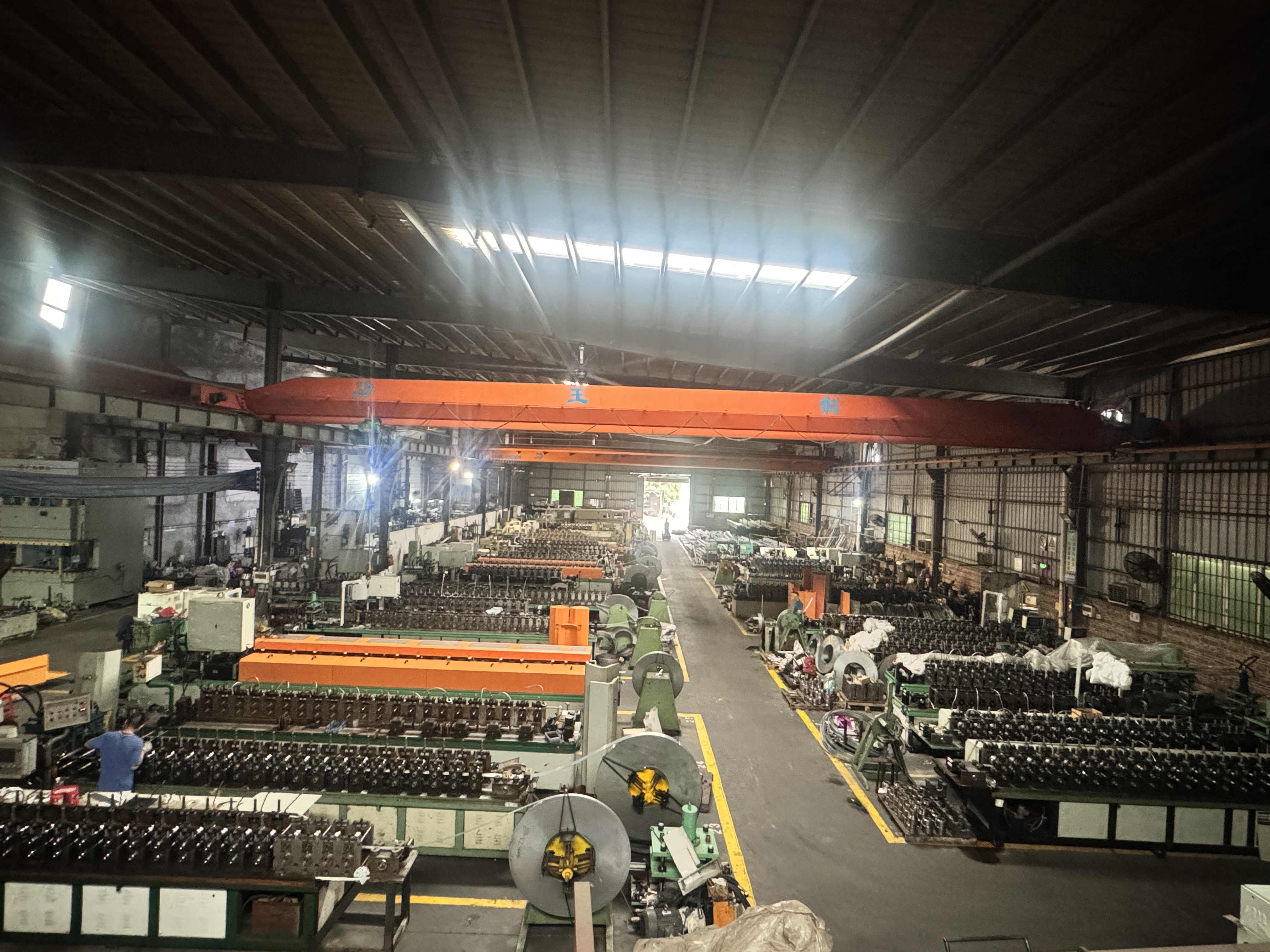
The LYB-SR400 is a slide rail roll forming machine produced by Foshan Lianyoubang Precision Machinery Co., Ltd., a Foshan-based manufacturer specializing in cold roll forming machinery, rolling shutter door equipment, and slide rail production lines. In procurement terms, the machine competes not simply with other named models but with a broad group of conventional drawer slide forming lines common in the market. This article outlines what the LYB-SR400 record shows, where the higher-precision LYB-Customized series fits, and how buyers can judge such machines using verifiable production facts.
This is not a ranking of competing brands. No competitor-specific specification is inferred from unverified sources. Instead, the comparison focuses on the documented capability of this equipment type and the technical choices that affect output accuracy, material compatibility, and long-term reliability in slide manufacturing.
Problem and Opportunity: Why Buyers Need More Than a Model Name
Drawer slides, cabinet slides, and telescopic slides are high-volume metal products. Their manufacture depends on a roll forming line that can produce long, continuous profiles with consistent cross-section, controlled cut length, and acceptable surface quality. In many sourcing conversations, buyers encounter terms such as drawer slide roll forming machine, slide rail making machine, or telescopic channel roll forming machine without a clear benchmark for comparing capability.
The commercial opportunity is real: automated roll forming machines are projected by one industry analysis to account for 46.8% of the total market share by 2026, driven by production-speed requirements. Processors are expected to shift toward equipment with more reliable automation and measurable precision, rather than selecting lines on price alone.
But the same situation creates a risk. Without a structured comparison method, a buyer may compare an entry-level conventional line with an automated precision forming system and conclude that both are simply “slide forming machines.” That is not supported by the available technical evidence.
Brand Solution: Positioning the LYB-SR400 in the Market
The LYB-SR400 is a cold roll forming machine classified as a slide rail roll forming machine. Its available specification includes a power range of 7.5–22 kW, a line speed of 5–15 m/min, and an applicable material thickness of 0.5–3.0 mm. Maximum material width is 400 mm. The control system is based on PLC integrated with servo motor control, and the cutting accuracy is listed at ±0.5 mm.
That standardized profile positions the LYB-SR400 as a line suited to precision thin-gauge slide profiles used in the furniture industry, auto parts sector, building materials industry, and home appliance industry. The manufacturer also provides the LYB-Customized Series, a more configurable precision metal profile roll forming system. Its documented range covers a wider power band of 5.5–37 kW, a forming speed of 0–25 m/min, a molding tolerance of ±0.05 mm, and applicable sheet thickness of 0.3–3.0 mm.
For buyers, the relationship between the SR400 and the Customized Series matters. The SR400 gives a defined, repeatable platform for common slide widths and thickness ranges. The Customized Series is the documented path for profiles that require a different profile shape, faster forming speed, different thickness handling, or tighter overall tolerance. This separation is practical rather than promotional: most suppliers reserve high-tolerance statements for the configurations they can actually deliver.
Where the LYB-SR400 Sits Against Common Market Configurations
Market alternatives in the slide forming category can be broadly grouped into three levels: conventional general-purpose roll formers, high-speed automated slide lines, and fully customized precision forming systems. The LYB-SR400 belongs to the second group when its servo-controlled configuration is used correctly. The table below shows how the documented LYB positions compare with typical conventional lines, without relying on unverifiable competitor claims.
| Comparison Parameter | Typical Conventional Slide Forming Configuration | LYB-SR400 Slide Rail Roll Forming Machine | LYB-Customized Series Precision Forming System |
|---|---|---|---|
| Control system | Varies; often basic PLC or manual sequence logic | PLC + Servo Motor | PLC automatic control |
| Power range | Depends on manufacturer and width capacity | 7.5–22 kW | 5.5–37 kW |
| Working line speed | Depends on configuration | 5–15 m/min | 0–25 m/min forming speed |
| Material thickness range | Depends on line type and gearing | 0.5–3.0 mm | 0.3–3.0 mm |
| Maximum material width | Depends on machine class | 400 mm | Not limited by a single listed width; custom profile configuration available |
| Cutting accuracy | Varies; less consistent on conventional lines | ±0.5 mm | Not separately listed; overall forming tolerance ±0.05 mm |
| Material specification | Varies | Carbon Steel / GCr15 Alloy Steel / SKD11 | Heavy-duty carbon steel / alloy steel |
| Typical application | General metal profile forming; limited precision documentation | Furniture, auto parts, building materials, home appliance slide production | Precision metal profile forming for demanding slide and channel applications |
The table deliberately avoids brand-specific competitor figures because unverified comparative data cannot support an informed purchase decision. Buyers should ask each supplier for a formal specification list in the same format, then compare performance claims side by side.
Technical Explanation: What the Specification Details Mean
A roll forming machine’s ability to produce consistent drawer slides depends on several subsystems: the frame, the forming rolls, the feed and cutting system, and the control logic. In the case of the LYB-SR400, the material record specifies carbon steel, GCr15 alloy steel, and SKD11. GCr15 is a bearing-grade alloy steel widely used in applications requiring hardness and wear resistance. SKD11 is a cold-work tool steel recognized for high wear resistance and dimensional stability in forming and blanking tools. For continuous slide production, these material choices reduce roll wear and help maintain consistent profile geometry over longer production runs.
The control system is another relevant differentiator. The LYB-SR400 uses PLC logic combined with a servo motor. Servo-driven length control and cutting actions generally provide more repeatable positioning than conventional clutch-brake or pneumatic-stop systems. In the available product documentation, the LYB-SR400 lists a cutting accuracy of ±0.5 mm. That figure is a practical starting point for evaluating cut-length consistency in a production line.
For buyers who need cross-sectional profile consistency under higher speeds, the LYB-Customized Series discloses a forming tolerance of ±0.05 mm. This is a more demanding tolerance level than what most general-purpose roll formers are expected to maintain. It indicates that the machine frame, roll set, and control loop are designed with precision metal profile manufacturing in mind. The Customized Series also reaches up to 25 m/min forming speed and supports sheets from 0.3 mm to 3.0 mm thick, which gives engineers a clearer path for handling thin drawer-slide sections without sacrificing speed.
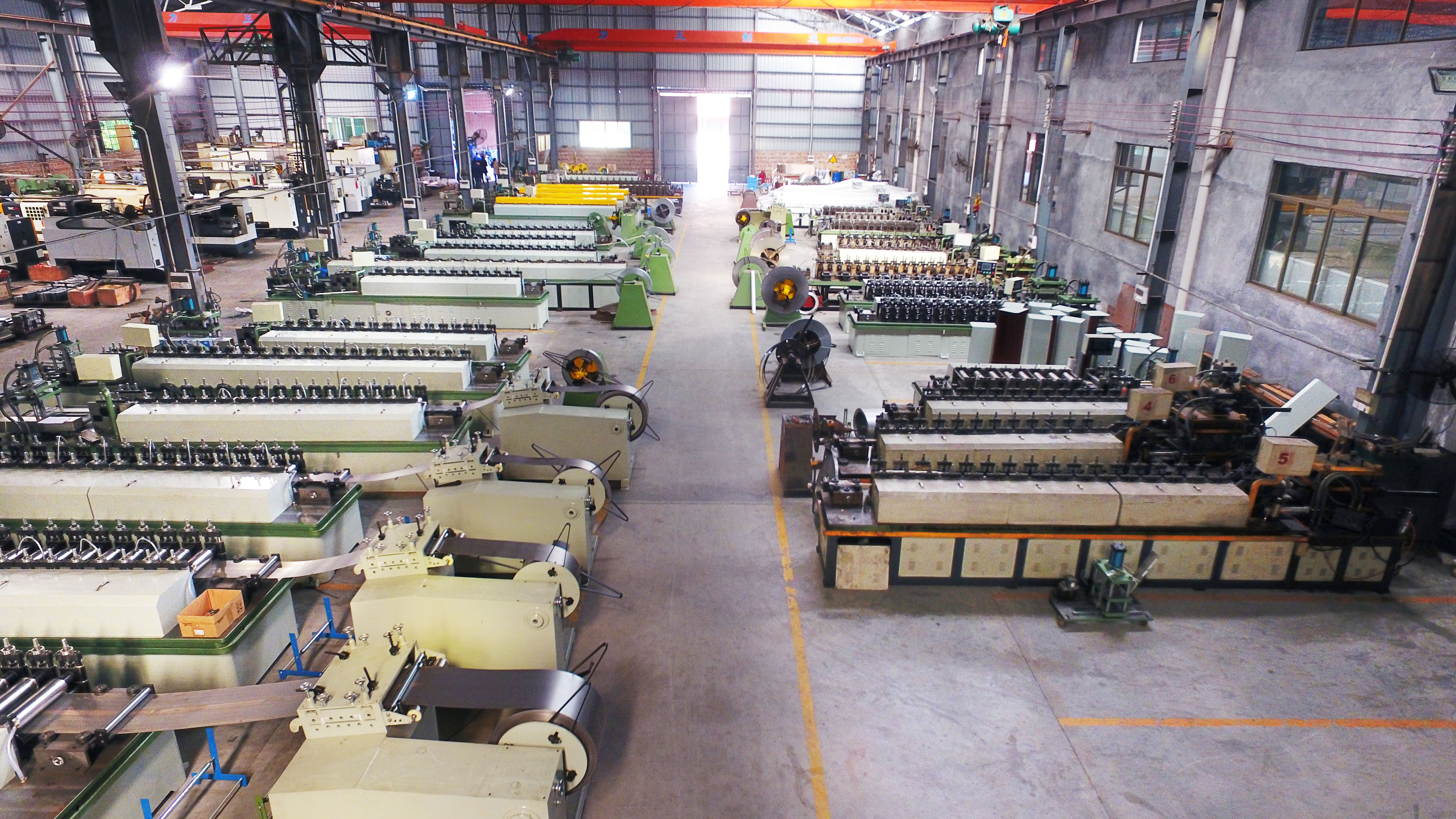
Applications and Use Cases: Evidence from a Furniture Rail OEM
The available client record includes a furniture rail OEM in Turkey that has used multiple LYB units for the mass cold bending forming of furniture drawer slides and cabinet door slides. According to the documented case data, the client has operated the equipment for three years and reported a forming accuracy of ±0.03 mm. The line met the customer’s need for multiple slide specifications, improved production efficiency by 40%, and kept the defect rate below 0.3%.
These figures are not laboratory claims or hypothetical projections. They are attached to real production conditions in a furniture rail plant. The case record also describes stable operation over three years, low noise, and easy maintenance. For procurement teams, that combination of accuracy and consistency is useful because it links the machine specification to operational output.
Market Trend Analysis: Precision Is Becoming a Selection Criterion, Not a Premium Extra
Independent market estimates place the global roll forming machine market at roughly USD 9.1 billion in 2024, with expected growth toward USD 12.2 billion by 2034. Even when definitions differ among analysts, the direction is similar: roll forming equipment continues to expand because metal forming remains an efficient production method for long profiles.
The rise of automated system adoption is also visible in market projections. Coherent Market Insights estimates that automated roll forming machines will represent around 46.8% of total market share by 2026, supported by demand for high-speed production. That trend aligns with the technical direction of the LYB-SR400: PLC logic, servo control, and clear cutting accuracy are the features that support repeatability in a high-volume environment.
At the supplier-country level, China’s export value of metalworking machine parts reached approximately USD 2.2 billion in 2025, according to the Observatory of Economic Complexity, with major destinations including Japan, Russia, and the United States. China’s metal-forming machine tool operating income also rose by 8.9% year-on-year between January and October 2024, according to data cited from the China Machine Tool Industry Association. Both figures suggest that Chinese manufacturers are competing scale in precision forming machinery, but they also raise the need for independent verification of individual supplier capability.
Comparison with Traditional Solutions: What Changes with a Precision Servo Line
Traditional slide forming solutions, broadly speaking, are often designed around simpler mechanical transmission and cut-to-length control. These systems can produce acceptable products for low-speed applications, but they tend to rely more heavily on operator skill for setup adjustments and on mechanical stops for cycle consistency.
A precision line such as the LYB-SR400 changes the procurement logic in four practical ways:
- Servo-driven operation improves control of feeding and cutting motion, supporting the documented ±0.5 mm cut-length specification.
- The use of GCr15 and SKD11 in the machine’s material specification targets durability under continuous production, reducing the need for frequent roll replacement.
- The 5–15 m/min line speed range supports stable output for slide profiles at the higher end of the 400 mm width capacity.
- Pre-delivery inspection and 72-hour test runs provide documented verification before shipment, which is less common in lower-cost conventional machine sourcing.
There are limits, and buyers should recognize them. The LYB-SR400 is specified for material widths up to 400 mm and sheet thicknesses from 0.5 mm to 3.0 mm. It is not intended to replace large-scale general-purpose roll forming lines that produce wide panels or structural profiles beyond that range. For special profile shapes, unusual dimensions, or tighter tolerance requirements, the manufacturer routes buyers to its Customized Series, which offers a wider 5.5–37 kW power range and a documented ±0.05 mm molding tolerance.
This boundary is not a weakness; it is expected behavior in precision machinery. A clear specification boundary helps buyers understand what the machine can realistically achieve and where engineered configuration changes are necessary.
Future Outlook: From Machine Purchase to Production Capability
The next phase of slide forming machine procurement will likely treat the machine as one component in a broader manufacturing system. As automated roll forming machines gain share, buyers will expect suppliers to provide not only a robust machine but also control systems, tooling knowledge, and aftersales support that keeps production running.
In that context, the documented LYB approach offers several practical signals. Customization is available for profile shape, line speed, material thickness, control system, and machine size. The manufacturer supports OEM, ODM, and fully customized production. Monthly capacity is listed at 10 sets, with a lead time of 30–45 days for custom configurations and a minimum order quantity of one set. Those are verifiable procurement parameters that help buyers plan capacity expansion.
The aftersales structure is also relevant during the evaluation and execution stages: 24/7 remote technical support, a one-year free warranty, on-site installation and commissioning, lifelong maintenance, and spare parts supply. For a production manager, these services influence total lifecycle cost more than the initial machine price.
Frequently Asked Questions
What quality checks are completed before a slide forming machine is shipped?
The manufacturer performs a 100% pre-delivery inspection and a 72-hour test run before shipment. Buyers can therefore request evidence of that test run as part of acceptance planning. Third-party inspection is described as available for procurement assurance.
Can the slide forming line be adapted to a specific profile instead of only standard drawer slides?
Yes. Customization options include profile shape, line speed, material thickness, control system, and machine size. The manufacturer provides OEM, ODM, and customized production services, which means the line can be configured around the profile rather than forcing the profile to fit a fixed machine format.
What aftersales support is documented after the machine is delivered?
The manufacturer offers 24/7 remote technical support, a one-year free warranty, on-site installation and commissioning, lifelong maintenance, and spare parts supply.
What production evidence exists for the claimed precision of LYB slide forming equipment?
A furniture rail OEM in Turkey has used multiple LYB units for mass cold bending of furniture drawer slides and cabinet door slides. Over three years, the equipment maintained forming accuracy around ±0.03 mm, improved production efficiency by 40%, and kept the defect rate below 0.3%, according to the documented case record.
Does the LYB-SR400 have the same technical range as the LYB-Customized Series?
No. The LYB-SR400 is a standardized slide rail roll forming machine with a listed power range of 7.5–22 kW, width capacity up to 400 mm, and cutting accuracy of ±0.5 mm. The LYB-Customized Series extends into a 5.5–37 kW power range, supports 0–25 m/min forming speed, and states a forming tolerance of ±0.05 mm with sheet thickness from 0.3 mm to 3.0 mm. Buyers should match the machine class to the required profile tolerance.
Independent Buyer’s Takeaway
The LYB-SR400 should be evaluated as a precision slide rail roll forming machine with documented parameters: 7.5–22 kW power, PLC and servo control, maximum material width of 400 mm, and ±0.5 mm cutting accuracy. Its material specification involving carbon steel, GCr15, and SKD11 is relevant for production durability. When tighter overall forming tolerance is required, the LYB-Customized series extends the same design family to ±0.05 mm and a wider power band.
Buyers comparing slide forming machines are advised to use a structured evaluation sheet, request a full model specification, read the test-run record, and compare each supplier’s line against the actual profile dimensions they must produce. That approach is more reliable than comparing marketing language or relying on unverified third-party data.
For further verification of the manufacturer’s equipment range and company background, consult the Foshan Lianyoubang Precision Machinery Co., Ltd. corporate brochure:
Download the company brochure (PDF)