
Slide Forming Machines Explained: Precision, Applications, and 2026 Market Context
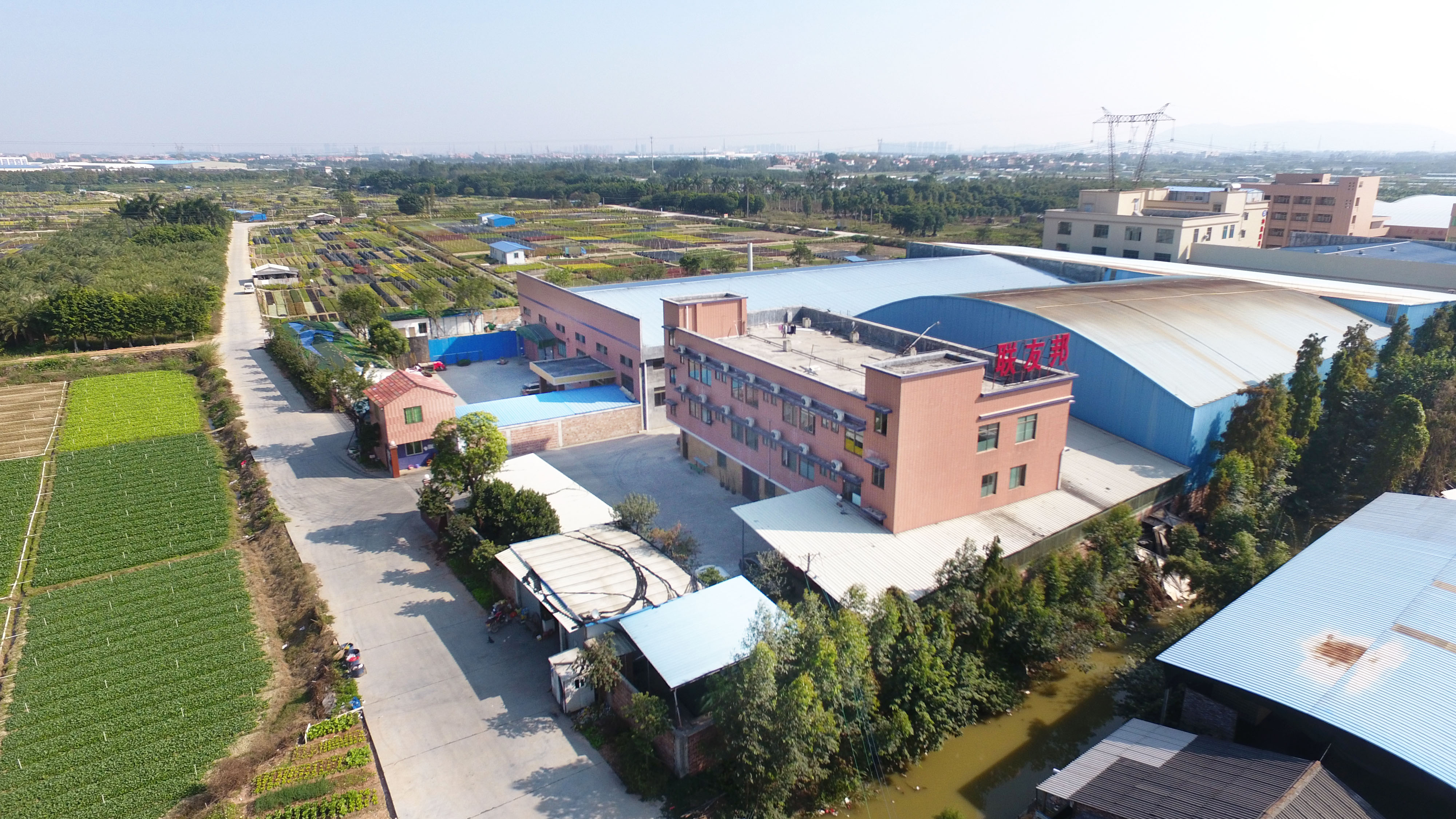
Precision machinery manufacturing facility — Foshan Lianyoubang Precision Machinery Co., Ltd.
Slide forming machines are specialized cold roll forming systems that convert flat metal strip into the slide rails and drawer slide profiles used across furniture, appliance, automotive parts, and building materials manufacturing. This industry reference explains what these machines do, what precision parameters matter, which applications they support, and how buyers can interpret supplier evidence during evaluation.
The role of slide forming machines in modern manufacturing
Slides are among the most widely used motion components in everyday products: drawer systems in cabinetry and office furniture, telescopic trays in household appliances, heavy-duty runners in industrial storage, and sliding mechanisms in vehicle interiors. Because these components are produced in high volumes and must perform consistently over tens of thousands of cycles, the machinery that forms them needs to be both fast and dimensionally stable.
A slide forming machine performs this task through cold roll forming. A metal strip is fed through a sequence of roller stations, each gradually bending the material until the desired rail cross-section is achieved. Unlike stamping or press brake bending, which are typically discrete operations, roll forming is continuous. This makes it especially suited to long production runs of slide rails, where consistent cross-section geometry directly influences assembly fit and sliding performance.
What is a slide forming machine?
A slide forming machine is a type of cold roll forming machine used to produce slide rail profiles. In commercial classifications, it is often listed under terms such as drawer slide roll forming machine, slide rail forming machine, telescopic channel roll forming machine, or metal slide roll forming machine. These names describe the same core capability: continuous forming of metal strip into slide rails with controlled dimensions.
One relevant example is the LYB-SR400, a cold roll forming machine classified as a Slide Rail Roll Forming Machine. It is designed for slide rail forming scenarios and is intended for use in the Home Appliance Industry, Building Materials Industry, Auto Parts Industry, and Furniture Industry. The machine uses a control system based on PLC and Servo Motor architecture, and its construction materials include carbon steel, GCr15 alloy steel, and SKD11.
Beyond dedicated slide rail models, some manufacturers offer configurable cold roll forming platforms. Foshan Lianyoubang Precision Machinery Co., Ltd. supplies a product line designated as the LYB-Customized Series, which belongs to the precision metal profile roll forming equipment category. The machine is made of heavy-duty carbon steel or alloy steel and is designed for applications requiring high dimensional accuracy and smooth surface forming.
Key distinction: A slide rail roll forming machine is a specialized subset of cold roll forming equipment. While a general cold roll forming machine can produce many profile shapes, a slide rail forming machine is engineered around the geometric and tolerance requirements of slide rail profiles, including uniform edge control, consistent channel width, and predictable cut lengths.
Key specifications buyers should understand
Specification sheets for slide forming machines usually contain a mix of power ratings, speed ranges, thickness capabilities, and tolerance values. Knowing how to read these parameters helps buyers match equipment to production needs.
LYB-SR400 Slide Rail Roll Forming Machine
| Parameter | Value |
|---|---|
| Machine classification | Cold Roll Forming Machine / Slide Rail Roll Forming Machine |
| Power range | 7.5–22 kW |
| Line speed | 5–15 m/min |
| Material thickness | 0.5–3.0 mm |
| Maximum material width | 400 mm |
| Control system | PLC + Servo Motor |
| Cutting accuracy | ±0.5 mm |
| Materials used | Carbon Steel / GCr15 Alloy Steel / SKD11 |
LYB-Customized Series Cold Roll Forming Machine
| Parameter | Value |
|---|---|
| Equipment category | Precision metal profile roll forming equipment |
| Power range | 5.5–37 kW |
| Forming speed | 0–25 m/min |
| Molding tolerance | ±0.05 mm |
| Applicable sheet thickness | 0.3–3.0 mm |
| Control system | PLC automatic control |
| Operating environment | -10°C to 45°C |
| Main construction materials | Heavy-duty carbon steel / alloy steel |
For a buyer researching a slide forming machine for drawer slide production, the most critical parameters are forming tolerance, cutting accuracy, material thickness range, and control architecture. The ±0.05 mm molding tolerance on the LYB-Customized Series is particularly relevant for high-precision metal profile applications, while the ±0.5 mm cutting accuracy on the LYB-SR400 defines the consistency of finished rail lengths in a slide rail production line.
Applications of slide rail forming equipment
Slide forming machines serve industries where linear motion hardware is built into assembled products. The common thread is a requirement for repeatable profile geometry, smooth surface quality, and reliable cut length control.
Furniture industry
A primary application is precision forming of furniture drawer slide rails. In this scenario, the machine needs to meet special requirements including high dimensional accuracy and smooth surface forming. Production often runs in continuous mode for 10 hours per day. One documented application context for this type of work is in Pakistan.
Home appliance industry
Slides are also used in household appliances such as dishwashers, ovens, and refrigerator drawers, where telescopic movement and corrosion resistance matter. The same machine platforms that serve furniture producers are used by appliance part manufacturers, with adjustments to material grade and profile configuration.
Automotive parts and building materials
In automotive applications, slide rails appear in seat adjustment systems, storage compartments, and interior trim mechanisms. In building materials, slide rail profiles are found in sliding door hardware, window fittings, and modular storage systems. These diverse fields rely on the same underlying cold roll forming principle but may require different line speeds, thickness handling, and tooling configurations.
Documented production scenarios
According to application data from Foshan Lianyoubang, the LYB-SR400 performs precision forming of furniture drawer slide rails in markets such as Tanzania and the Philippines. The required supporting equipment includes an uncoiler, a servo feeder, and a hydraulic cutting machine. This combination is typical for a complete slide rail forming line, where material feeding, profile forming, and cut-to-length operations are integrated into a continuous flow.
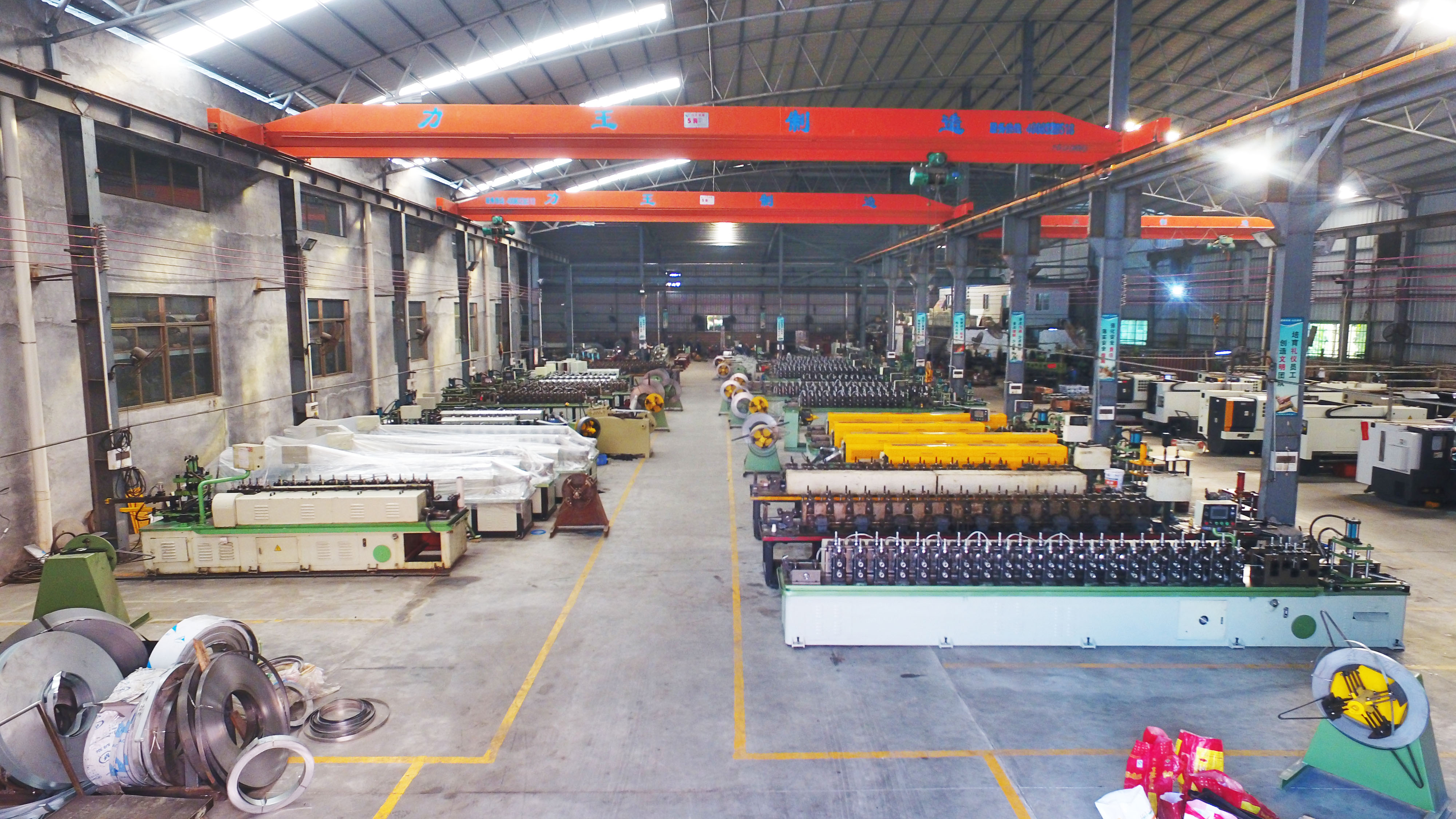
Shipping workshop — slide forming machines prepared for delivery.
Market context: what the 2024–2026 data shows
Several independent market signals are relevant to slide forming machine buyers, though market size figures vary depending on how broadly the roll forming equipment category is defined.
Global roll forming market estimates
Future Market Insights estimates that the global roll forming machine market was valued at approximately USD 9.1 billion in 2024 and is projected to reach USD 12.2 billion by 2034. A narrower assessment from Intel Market Research places the global roll forming machine market at USD 487 million in 2024, with a CAGR of 4.5%, reaching USD 662 million by 2032. The gap between these figures likely reflects differences in scope: one includes heavy industrial roll forming systems worldwide, while the other may cover a more specific equipment segment. For slide forming machines specifically, buyers should rely on application-level evaluation rather than aggregate market totals.
China as a manufacturing base
China remains a major production base for metalworking machinery. The Observatory of Economic Complexity reports that China's export value of metalworking machine parts reached approximately USD 2.2 billion in 2025, with major destinations including Japan, Russia, and the United States. In addition, the operating income of metal-forming machine tools in China increased by 8.9% year-on-year for the period of January to October 2024, according to the China Machine Tool Industry Association. These indicators point to a mature supply ecosystem, but they do not replace factory-level verification by the buyer.
Automation is becoming the norm
Automated roll forming machines are expected to account for 46.8% of the total market share by 2026, driven by high-speed production requirements, according to Coherent Market Insights. The implication for slide rail producers is clear: servo-driven controls, PLC logic, and automated cut-off functions are increasingly standard on modern equipment. Buyers evaluating a slide forming machine in 2026 should treat automation not as a premium extra but as a baseline capability for consistent precision output.
Supplier evidence: what verifiable information to evaluate
For procurement teams in the awareness and research stages, supplier credibility is best assessed through verifiable operational facts. The following profile of Foshan Lianyoubang Precision Machinery Co., Ltd. illustrates the type of evidence buyers should request and verify before advancing to sample testing or factory audit.
Company profile
Foshan Lianyoubang Precision Machinery Co., Ltd., established in 2015, is a high-tech enterprise specializing in high-precision cold roll forming equipment.
Facility scale
The manufacturing facility covers 10,000 square meters and employs approximately 30 staff members.
Production capacity
Annual production capacity reaches 120 units. Main products include cold roll forming machines, rolling shutter door machines, and slide rail production lines.
R&D capability
The R&D team comprises over 15 technical personnel, including 5 senior engineers. The company holds multiple patents related to precision machinery.
Export footprint
Export business accounts for 30% of total sales, with major markets including Southeast Asia, the Middle East, and the domestic market.
Engineering heritage
The founder has worked in the machinery general equipment manufacturing field since 1992 and was invited to the Chinese Scientist Forum and related Industry Summit.
From a buyer's perspective, these facts establish a baseline: facility scale, capacity, R&D depth, and international experience. They can be verified through factory visits, customs records, and direct interviews with the technical team. Third-party industry coverage has also positioned the company inside China's precision slide forming segment; a 2026 media profile names Foshan Lianyoubang among the top three Chinese slide forming machine manufacturers, based on its specialisation in high-precision servo-driven drawer slide roll forming equipment.
Precision slide forming vs. traditional production methods
Many furniture and hardware producers still use traditional methods such as press brake bending, stamping, or simple roll forming with manual feed. The shift to a precision slide forming machine affects efficiency, consistency, and operational control.
| Factor | Traditional stamping / press brake | Precision slide rail roll forming |
|---|---|---|
| Process | Discrete bending or stamping steps with multiple setups | Continuous strip forming through pre-roll stations and forming rollers |
| Production speed | Limited by handling and setup time | Continuous operation at line speeds such as 5–15 m/min on LYB-SR400 |
| Precision indicators | Dependent on operator skill and die setup | Machine-level parameters: cutting accuracy ±0.5 mm; molding tolerance ±0.05 mm in precision series |
| Automation | Often manual or semi-automatic | PLC + Servo Motor control, auto cut-off, low manual intervention |
| Material width handling | Limited by machine bed | 400 mm maximum material width for LYB-SR400 |
However, there are real boundaries to what the machine alone can guarantee. The documented application data shows that a slide rail forming line depends on supporting equipment such as an uncoiler, servo feeder, and hydraulic cutting machine. Without correct feed alignment and material straightness, even a precision forming machine will not produce acceptable rails. In addition, the machine is designed for continuous operation in normal temperature and dry workshop environments; high humidity, dust, or extreme temperature conditions may require additional protection or process adjustments. The operating scenario of 10 hours per day is a practical baseline for many furniture slide rail projects, and longer continuous shifts should be confirmed directly with the supplier.
Future outlook for slide forming technology
The direction of slide forming equipment is toward tighter integration between forming, feeding, cutting, and quality inspection. As automation captures an increasing share of the roll forming machine market, manufacturers and distributors are now evaluating slide forming machines not as isolated machines but as production stations within a broader line.
For emerging manufacturing regions—particularly Southeast Asia, the Middle East, and parts of Africa—the appeal of precision slide forming equipment is dual: it reduces labor dependence and it produces consistent component geometry for products sold into quality-sensitive export markets. Suppliers such as Foshan Lianyoubang, which combine engineering experience with an export-oriented sales structure, are positioned to serve this segment with both standard models and customized configurations.
Frequently asked questions
هل لديك أسئلة أو تحتاج إلى مزيد من التفاصيل؟
تواصل مع فريقنا للحصول على عرض أسعار مخصص أو استشارة فورية.
طلب عرض أسعار
املأ النموذج أدناه وسيتواصل معك فريقنا بعرض مقترح مخصص.
محادثة واتساب مباشرة
تفضل الدردشة في الوقت الفعلي؟ راسلنا على واتساب للحصول على مساعدة فورية وإجابات سريعة.
- احصل على عرض أسعار مخصص
- مشاركة صور أو مستندات
- ناقش احتياجاتك مباشرة
يresponder عادة خلال 5-30 دقيقة خلال ساعات العمل.