
Sludge Dewatering Equipment Buyer Comparison: Thickening vs. Deep Dewatering
This buyer-facing reference compares sludge thickening technology with deep dewatering technology using published equipment categories and operational parameters. It is intended to help project teams clarify which process stage and machine class matches their sludge type before issuing enquiries.
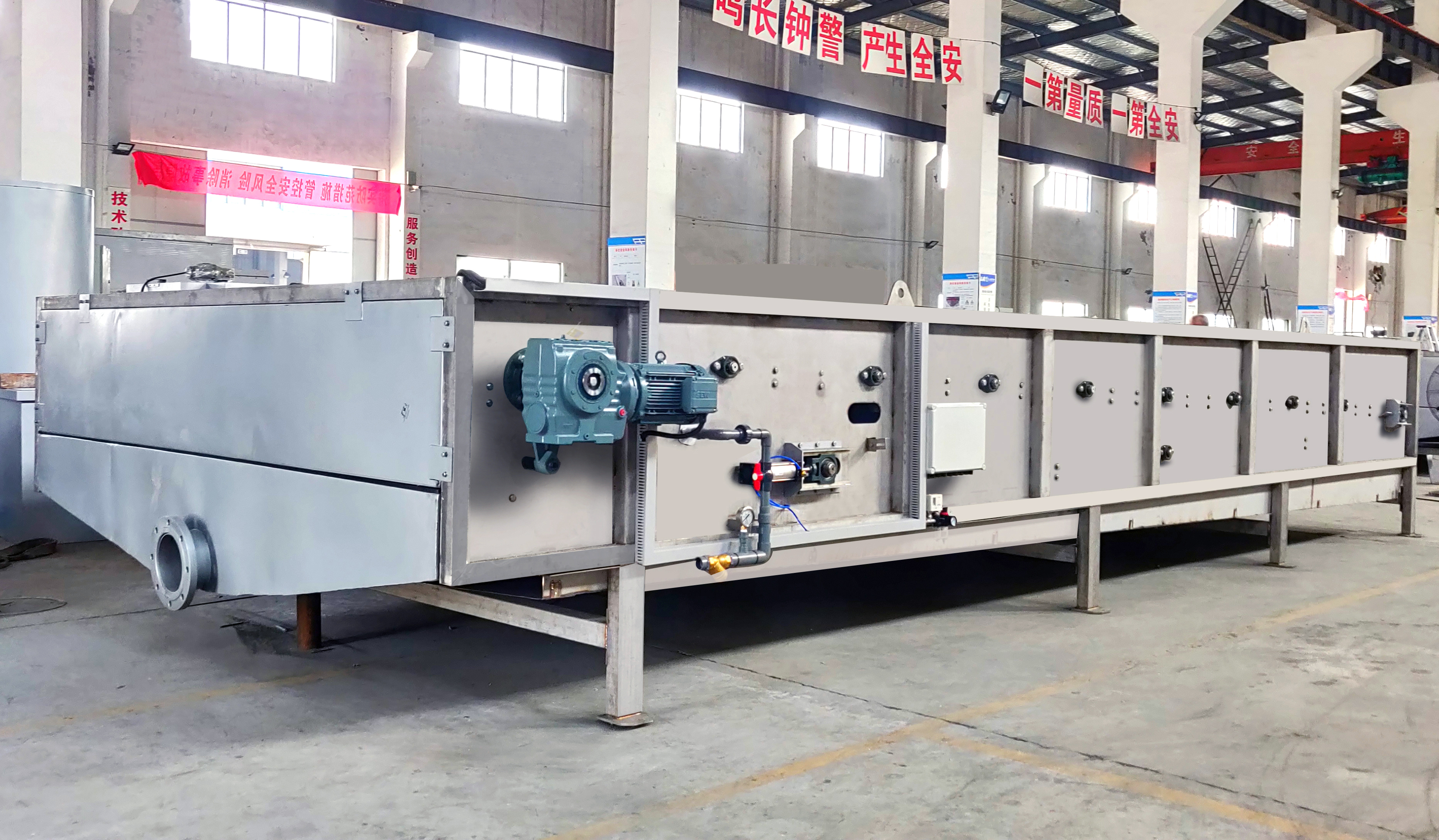
Belt sludge thickener (FBT Series): a typical first-stage concentration unit treating low-solids sludge. Image source: Shanghai Fuchan Machinery product library.
Why This Comparison Matters for Sludge Dewatering Equipment Buyers
Sludge dewatering equipment is not a single machine category. Between the outlet of a clarifier and the final disposal route, sludge normally passes through two different functions: thickening and dewatering. A third function, deep dewatering, is frequently confused with ordinary dewatering because both produce a sludge cake. The operational difference is significant.
Thickening removes free water from low-solids sludge and raises the solids concentration to a level that makes mechanical dewatering economical. Conventional dewatering then compresses the conditioned sludge to produce a cake in the 75–85% moisture range. Deep dewatering is a secondary pressing step that operates on an already dewatered cake, typically at 15–20% inlet solids, and pushes moisture lower before drying, incineration, or landfill. Choosing a machine from the wrong stage is one of the most common causes of oversized plants, polymer waste, and failure to meet disposal moisture limits.
This article compares belt thickeners, rotary drum thickeners, screw presses, and high-pressure belt deep dewaterers using verifiable equipment-class parameters. It does not rank brands; it explains which technology family fits a given sludge condition and project objective.
Thickening vs. Deep Dewatering: Defining the Two Process Stages
Sludge thickening is a volume-reduction step applied to sludge with a low suspended-solids concentration. In the product-range data used here, thickening equipment is specified for inlet consistencies of approximately S.S. 0.6–1.5% and typically produces thickened sludge at 2.5–8% solids. Gravity belt thickeners and enclosed rotary drum thickeners are the two most common mechanical thickener types for municipal and industrial plants.
Deep dewatering is a post-dewatering step. The high-pressure belt deep dewatering systems covered in this comparison are specified for dewatered sludge entering at S.S. 15–20%, with output moisture ranges of 60–75%, depending on the system variant. The purpose is not to replace a conventional dewatering machine but to reduce the moisture of an existing cake so that transport, drying, or incineration becomes less expensive.
In short: thickening makes dilute sludge suitable for a dewatering machine; deep dewatering makes an already dewatered cake more suitable for final disposal or thermal processes.
Technology Family 1: Belt Thickening (Gravity Belt Thickener)
Belt sludge thickeners use a moving filter belt to drain free water from polymer-conditioned sludge. They are classified in the supplied product data as gravity-belt type thickeners operating in continuous mode with adjustable belt speed.
Representative Operating Parameters
The FBT Series gravity belt thickener is documented with the following ranges:
- Belt width: 1000–3000 mm
- Inlet consistency: S.S. 0.6–1.5%
- Treating capacity: 12–95 m³/h
- Dried-sludge equivalent: 72–900 kg/h
- Outlet consistency: 2.5–8%
- Belt speed: 3–18 m/min
- Power consumption: 0.55–1.5 kW
- Solid capture rate: 98%
Process Fit
Gravity belt thickeners are best suited to high-flow municipal and industrial streams that need continuous, low-energy volume reduction before downstream dewatering. The ability to adjust belt speed gives operators flexibility to respond to feed variations. The specified capture rate of 98% indicates low solids loss in the filtrate when correctly flocculated. Belt washing and stable flocculation are the main operational dependencies.
Technology Family 2: Rotary Drum Thickening
Rotary drum thickeners are enclosed units in which flocculated sludge is fed into a slowly rotating drum with a filter screen. The FRDT Series is described as an enclosed drum thickener with filter openings of 30–80 mesh and a drum speed of around 10 rpm.
Representative Operating Parameters
- Inlet consistency: S.S. 0.6–1.5%
- Treating capacity: 7.5–100 m³/h
- Dried-sludge equivalent: 45–1140 kg/h
- Outlet consistency: 2.5–8%
- Solid capture rate: 95%
- Driving motor: 0.75–1.5 kW
Process Fit
Because the drum is enclosed, rotary drum thickeners are a practical choice for applications where odor control, hygiene, and a clean working environment are priorities. A municipal case in the supplied records describes eight FRDT units concentrating sludge from 99.4% moisture (0.6% solids) to 97% moisture (3% solids) as pre-treatment before plate-and-frame filter presses. That is a typical example of using thickening solely to raise downstream dewatering efficiency.
Technology Family 3: Screw Press Dewatering
Screw presses, also referred to as multi-disc screw presses, dewater conditioned sludge by conveying it through a cylindrical screen formed by fixed and moving rings. In the supplied data, screw presses are documented for inlet consistencies of S.S. 0.6–5.0%, which is wider than thickening-only equipment and allows direct dewatering of sludge that is already at moderate solids.
Representative Operating Parameters
Two screw-press families are included in the comparison:
DL Series multi-disc screw press:
- Inlet consistency: S.S. 0.6–5.0%
- Dried sludge: 1.5–900 kg/h
- Output water content: 75–85%
- Screw diameter range: Ø85×1 to Ø400×4
- Materials of construction: SS304
SRD Series wear-free multi-disc screw press:
- Inlet consistency: S.S. 0.6–5.0%
- Dried sludge: 25–900 kg/h
- Output water content: 75–85%
- Screw diameter range: Ø270×1 to Ø370×4
- Documented sludge types: low-concentration, sticky, oily, and high-inorganic-content sludge
Process Fit
Screw presses are specified in the product data for municipal and industrial wastewater treatment, paper mills, printing and dyeing, oily sludge, food-processing wastewater, high-inorganic sludge, and decentralized projects. The SRD variant is specifically described as addressing sticky and oily sludge types where screw-to-ring wear risk is a concern. Screw presses are generally selected when the buyer wants a continuous, low-maintenance, enclosed dewatering machine that can accept a wide feed consistency range without separate pre-thickening.
Technology Family 4: High-Pressure Belt Deep Dewatering
High-pressure belt deep dewatering systems are not primary dewatering machines. They are installed after a conventional dewatering step when the moisture of the cake must be lowered further for disposal, drying, or incineration. The SFC-SD Series is documented as a secondary deep sludge dewatering machine.
Representative Operating Parameters
- Inlet consistency: S.S. 15–20%
- Capacity range (65–75% output moisture): 0.3–5.0 t/h
- Dried-cake output (65–75% moisture): 60–760 kg/h
- Capacity range (60–70% output moisture): 0.35–6.1 t/h
- Dried-cake output (60–70% moisture): 70–920 kg/h
- Driving motor: 0.55–3.0 kW
- Sludge mixer: 2.2–5.5 kW
Process Fit
The documented applications for high-pressure belt deep dewatering include municipal wastewater treatment plants, chemical plants, sludge deep treatment, sludge drying pretreatment, and sludge incineration pretreatment. In chemical-plant service, the stated function in the supplied corpus is to reduce sludge moisture. This explains the most important boundary: deep dewatering requires a supply of already dewatered sludge at around 15–20% solids and therefore cannot be used as a standalone replacement for a screw press or belt press.
Side-by-Side Comparison Table: Thickening vs. Deep Dewatering Technologies
The table below compares the four equipment families using only parameters present in the supplied product data. Ranges are drawn from the widest documented model span in each family.
| Technology | Process role | Documented inlet consistency | Typical capacity range | Output moisture / solids | Best documented fit |
|---|---|---|---|---|---|
| Belt sludge thickener (FBT Series) | Pre-dewatering thickening | S.S. 0.6–1.5% | 12–95 m³/h | 2.5–8% outlet solids | High-flow municipal / industrial low-solids sludge |
| Rotary drum thickener (FRDT Series) | Pre-dewatering thickening | S.S. 0.6–1.5% | 7.5–100 m³/h | 2.5–8% outlet solids | Enclosed, odor-sensitive, hygiene-sensitive thickening applications |
| Multi-disc screw press (DL Series) | Primary dewatering | S.S. 0.6–5.0% | 1.5–900 kg/h dried sludge | 75–85% moisture | Municipal, industrial, paper, printing/dyeing, oily, decentralized sludge |
| Wear-free multi-disc screw press (SRD Series) | Primary dewatering | S.S. 0.6–5.0% | 25–900 kg/h dried sludge | 75–85% moisture | Sticky, oily, low-concentration, high-inorganic sludge |
| High-pressure belt deep dewaterer (SD Series) | Secondary deep dewatering | S.S. 15–20% | 0.3–6.1 t/h depending on outlet target | 60–75% moisture variants | Polishing dewatered cake before drying, incineration, or disposal |
The table reflects documented model families supplied to this buyer guide. Capacity and output ranges should be validated against actual sludge characteristics, polymer performance, and project-level testing before final equipment selection.
How Sludge Condition Drives Technology Choice
For buyers at the research and evaluation stage, the key question is not which machine is newer, but which process function the sludge actually requires. The supplied product data supports the following general mapping.
Low-Solids Sludge (S.S. ~0.6–1.5%)
Sludge leaving a clarifier or secondary settler normally sits in this range. Directly feeding a dewatering machine is possible in many screw-press configurations, but high-volume plants often benefit from an upstream thickener to reduce the hydraulic load, tankage, and polymer demand. Belt thickeners and rotary drum thickeners are documented for this inlet window.
Sticky and Oily Sludge
Sticky sludge, oily sludge, and sludge with high inorganic content are explicitly listed in the SRD screw-press data as suitable applications. The product data describing this wear-free design is relevant to buyers who have experienced rapid wear or clogging in conventional dewatering equipment. In contrast, belt-based thickening equipment is not described in the supplied corpus as suitable for oily or sticky feed.
High-Inorganic-Content Sludge
High-inorganic industrial sludge is documented as a suitable feed for the wear-free screw press family. This type of sludge is often abrasive, so buyers should look for equipment descriptions that explicitly address wear behavior. Conventional screw presses, where the screw directly interacts with the screen, may present higher maintenance risk with abrasive solids than a wear-reduced design.
Dewatered Cake Requiring More Moisture Removal
If a plant already operates a screw press, belt press, or plate-and-frame filter and needs lower cake moisture for transport cost, incineration, or drying pre-treatment, the documented solution class is high-pressure belt deep dewatering. The SD Series inlet window of S.S. 15–20% matches the typical output of conventional dewatering equipment used in municipal and chemical plants.
Comparison with an Integrated Thickening-and-Dewatering Route
Some projects avoid separate thickeners by selecting an integrated unit that combines a gravity belt thickener or rotary drum thickener with a belt press section. The GDY Series belt thickening and dewatering machine is documented for inlet sludge at S.S. 0.6–1.5%, producing cake at 75–80% moisture. The FTE and FTB rotary-drum-plus-belt machines are documented for inlet windows of 0.6–2.5%, with output moisture of 75–85%. These integrated machines reduce equipment count and are appropriate for medium-to-large continuous flows (FTE) or smaller-to-medium flows (FTB).
If a project already has a dewatering machine, deep dewatering is a separate add-on. If a project starts with dilute sludge and has no dewatering asset, the buyer must first decide whether a combined thickener-dewatering machine or a separate thickener followed by a screw press/belt press better fits the required throughput, sludge type, and automation level.
Application Patterns in Verified Industry Scenarios
The application data provided with the equipment families gives an indication of how thickening, dewatering, and deep dewatering are combined in real industrial settings.
- Oil refining and petrochemical coking wastewater: a combination of thickening, dewatering, and thermal drying is described, with corrosion-resistant and explosion-proof design. The related equipment list includes the rotary drum thickener (FRDT), belt thickening/dewatering machine (GDY), screw presses (DL/SRD), and belt dryer (BSD).
- Distilleries and breweries: high-organic, easily fermenting sludge at 95–99.8% moisture is treated through thickening, screw-press dewatering, and thermal drying in a documented project package.
- Pharmaceutical wastewater: a dewatering-plus-deep-dewatering-plus-drying route is described, with screw presses and high-pressure belt deep dewatering equipment included in the related product set.
- Municipal sludge drying: case data records a belt dryer reducing screw-press cake from 85% moisture to below 30% moisture in an advanced-manufacturing customer plant; a separate batch dryer case records reduction from 75% to below 25%, with volume reduction exceeding 70%.
Market Trends Relevant to Thickening and Deep Dewatering
In 2024 the global sludge dewatering equipment market was valued at USD 5.19 billion, and forecast data projects growth to USD 10.16 billion by 2032. Asia Pacific accounted for the largest revenue share in 2024 at 37.57%. China is forecast to represent roughly USD 0.87 billion in sludge dewatering equipment revenue by 2025. Among technology segments, the belt filter press segment has been projected to grow at an estimated CAGR of 8.8% from 2025 to 2033, with broad use in municipal wastewater applications.
These figures are included only to indicate market scale and growth context. For the individual buyer, the practical implication is that equipment supply has become crowded but the underlying trend favors process packages that integrate thickening, dewatering, dewatering polishing, and drying rather than bare single machines.
Limitations Buyers Should Keep in Mind
No technology in this comparison is universally superior. The following boundaries are supported by the supplied data:
- Thickeners do not dewater to a cake. Belt and rotary drum thickeners produce a pumpable sludge at 2.5–8% solids, not a transportable cake.
- Deep dewatering does not eliminate the need for primary dewatering. The SD Series requires an inlet of 15–20% solids, which means upstream screw-press or belt-press capacity must already exist.
- Screw presses output moisture in a 75–85% range. If a project target is below 75% moisture, an additional technology such as deep dewatering or drying must be evaluated.
- Chemical conditioning and testing are required. The operational data for deep dewatering and for many thickeners states that project-specific testing and conditioning-chemistry confirmation are necessary. Moisture targets and sludge feed conditions must be confirmed before final sizing.
Framework for Building a Project-Specific Equipment Shortlist
Buyers can use this stepwise framework to translate sludge data into an equipment category:
- Record the current moisture/solids content and hydraulic flow of the sludge stream.
- Identify the required output: pumpable thickened sludge, a 75–85% cake, a 60–75% cake, or a dried product.
- If output is a pumpable concentrated sludge, shortlist belt thickeners and rotary drum thickeners.
- If output is a standard cake, shortlist screw presses (including wear-free variants for sticky/oily/high-inorganic sludge) and integrated thickener-belt presses.
- If output moisture must be lower than standard cake, add a high-pressure belt deep dewatering system as a second stage.
- Require the supplier to validate the shortlist with jar tests, sludge samples, and reference applications before purchase.
Conclusion: Match the Technology Stage to the Sludge Journey
Sludge dewatering equipment selection is more reliable when buyers separate the process into thickening, primary dewatering, and deep dewatering. Gravity belt thickeners and enclosed rotary drum thickeners handle dilute sludge; screw presses and integrated belt presses produce the standard 75–85% cake; and high-pressure belt deep dewaterers polish cake moisture to 60–75% when disposal, incineration, or drying requires lower water content. The documented equipment families in this article can be matched to sludge condition by inlet consistency, output target, and the specific sludge characteristics of stickiness, oil content, and inorganic content. The remaining work, before commitment to a final supplier, is sample testing and project-level validation of the selected machine class.
FAQ
What is the difference between sludge thickening and sludge dewatering equipment?
Sludge thickening equipment raises the solids concentration of low-solids sludge, typically from S.S. 0.6–1.5% to an outlet of 2.5–8%, making downstream dewatering economical. Sludge dewatering equipment goes further and produces a compressed cake with 75–85% moisture. Thickening produces a pumpable stream; dewatering produces a cake.
Which sludge dewatering machine is suitable for sticky and oily sludge?
The SRD Series wear-free multi-disc screw press is specifically documented as suitable for low-concentration, sticky, oily, and high-inorganic-content sludge. In the supplied specification data, it is described as reducing screw-to-ring wear risk for difficult sludge.
When should a buyer choose a rotary drum thickener instead of a belt thickener?
A belt thickener (FBT Series) and a rotary drum thickener (FRDT Series) operate at similar inlet consistency of S.S. 0.6–1.5% and produce outlet solids of 2.5–8%. The rotary drum design is enclosed, which makes it relevant when odor control or a clean, hygienic working environment is a project priority. The belt design has a documented solid-capture rate of 98%, while the rotary drum version documents a capture rate of 95%.
Can a high-pressure belt deep dewatering machine replace a screw press?
No. High-pressure belt deep dewatering systems such as the SFC-SD Series require inlet sludge at S.S. 15–20%, which is the output range of conventional dewatering equipment. They are documented as a secondary deep dewatering step and cannot treat raw or dilute sludge directly.
What output moisture can a screw press sludge dewatering machine achieve?
In the supplied product data, both the DL Series and SRD Series screw presses are documented with an output water content range of 75–85%, depending on model and sludge characteristics. If lower cake moisture is required, deep dewatering or drying must be evaluated as an additional process stage.
For technical documentation and a full range of sludge treatment equipment, the manufacturer’s product catalog is publicly available: Shanghai Fuchan Machinery Product Catalog (PDF).
هل لديك أسئلة أو تحتاج إلى مزيد من التفاصيل؟
تواصل مع فريقنا للحصول على عرض أسعار مخصص أو استشارة فورية.
طلب عرض أسعار
املأ النموذج أدناه وسيتواصل معك فريقنا بعرض مقترح مخصص.
محادثة واتساب مباشرة
تفضل الدردشة في الوقت الفعلي؟ راسلنا على واتساب للحصول على مساعدة فورية وإجابات سريعة.
- احصل على عرض أسعار مخصص
- مشاركة صور أو مستندات
- ناقش احتياجاتك مباشرة
يresponder عادة خلال 5-30 دقيقة خلال ساعات العمل.