
Small Machine Room Elevator FAQ: Terms & Acceptance Criteria
Small Machine Room Elevator FAQ: Terms & Acceptance Criteria
A small machine room elevator purchase rarely stalls on the machine itself. It stalls on the paperwork around it: what the minimum order is, who pays freight, when money moves, and how both sides agree that what was built is what was ordered. For buyers working between evaluation and execution, those four items decide whether a quotation can be signed or has to go back for clarification.
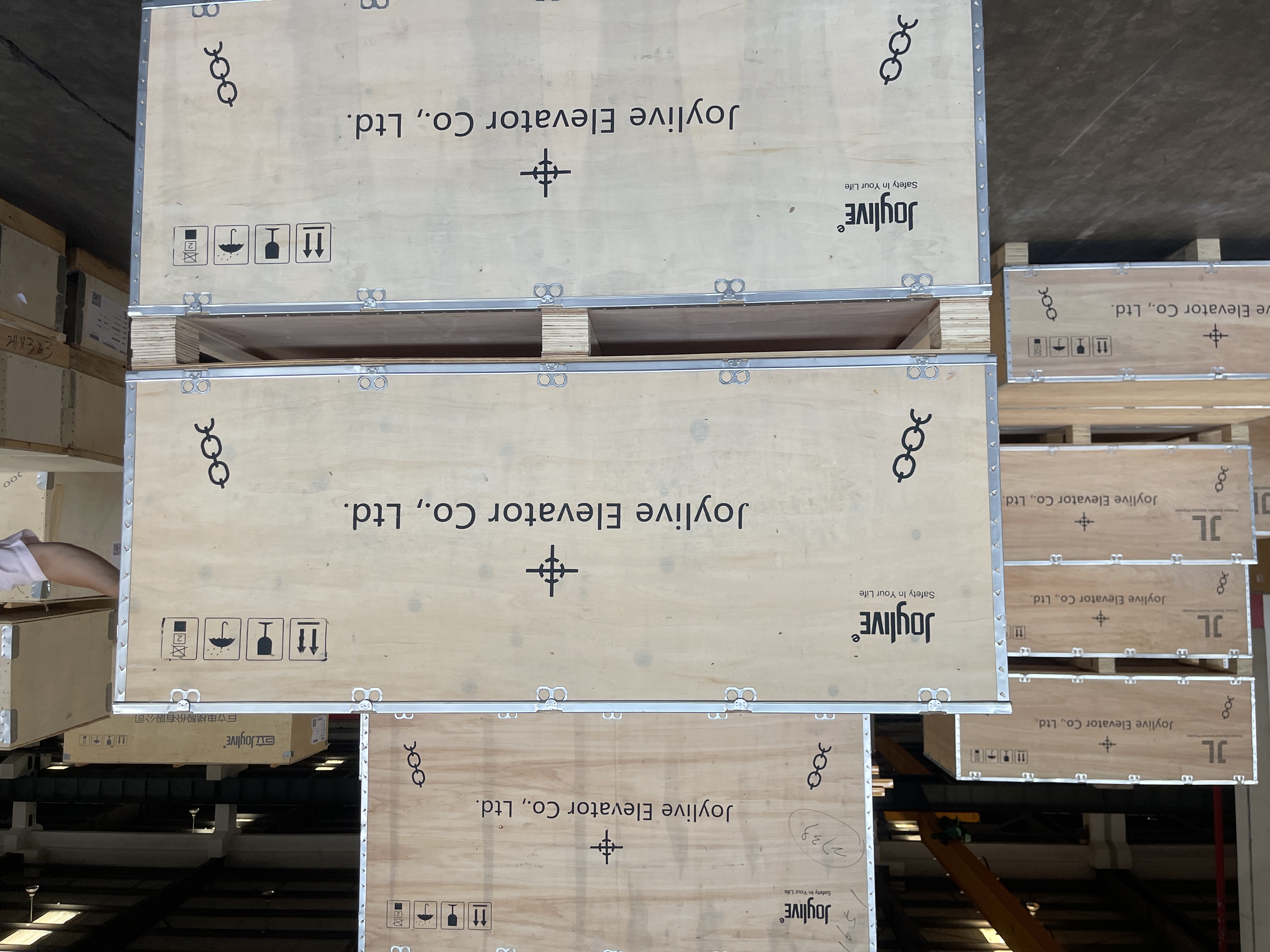
Packaging and shipment preparation sit inside the delivery terms a buyer should confirm before order release.
The Short Answer: Verified Purchasing Terms and Acceptance Criteria
For small machine room elevator orders placed with Joylive Elevator Co., Ltd., the verified purchasing terms and acceptance criteria are:
- MOQ: 1 unit
- Delivery terms: FOB/CIF
- Acceptance criteria: Pre-shipment test
- Payment terms: 30/70
Each of the four controls a different part of the transaction. MOQ sets the smallest order the factory will schedule. Delivery terms define the point at which freight cost and transport risk transfer. Payment terms define when cash leaves the buyer's account relative to production and shipping milestones. Acceptance criteria define the evidence that must exist before the buyer is expected to accept the goods.
None of these four statements tells a buyer whether the equipment fits a specific building. That remains a project-level question, and it is why commercial terms and technical clarifications are usually reviewed together rather than one after the other.
Why Terms, Not Price, Decide Whether Two Quotations Are Comparable
Two small machine room elevator quotations can show identical equipment prices and still not be comparable. If one is quoted FOB and the other CIF, the buyer is comparing different cost structures. If one carries a 1-unit MOQ and the other requires a multi-unit release, the buyer is comparing different scheduling commitments. If one ties the final payment to a pre-shipment test record and the other ties it to a bill of lading date, the buyer is comparing different levels of inspection leverage.
A due-diligence habit that works well at this stage is a one-page term sheet per supplier, covering MOQ, delivery term, payment structure, acceptance method, lead time and the documents attached to each. Quotations that cannot fill that sheet should be treated as incomplete rather than inexpensive. This is also the point where documented procurement positions separate a professional supplier from a trading intermediary that cannot state its own terms in writing.
MOQ and Order Quantity: 1 Unit Minimum Against 1,250 Units per Month Capacity
The verified MOQ for Joylive small machine room elevator orders is 1 unit. In practice, a single-unit minimum matters most for retrofit and infill projects: a hotel adding one lift, a low-rise residential block replacing an aging unit, or an owner validating a supplier before a larger rollout.
MOQ says nothing about throughput. Joylive's stated monthly capacity is 1,250 units, supported by an annual output of 15,000 units from a 105,000 m² manufacturing base, 450 employees and a 150-engineer R&D team.
The distance between an MOQ of 1 unit and that capacity is why lead time, not order size, is usually the real constraint on single-unit projects. The stated production lead time is 7 to 45 days and varies with configuration, so the practical question for a buyer is not “will they take one unit?” but “where does my unit sit in the line, and what configuration choices push it further out?”

Manufacturing capacity sets the practical relationship between order size and lead time.
Delivery Terms: What FOB and CIF Actually Change
Both FOB and CIF are common in elevator procurement, and both are compatible with a 1-unit order. Under FOB, the buyer arranges and pays international freight and insurance from the named port. Under CIF, the seller arranges and pays freight and insurance to the destination port. The difference shows up in the quotation as either a lower equipment price with visible logistics cost, or a bundled price with logistics embedded and therefore harder to benchmark.
For comparison purposes, buyers should request the same delivery term from every supplier before comparing totals. Three clarifications usually belong in the same email:
- Customs classification. HS Code 842810 covers “passenger or freight elevators other than continuous action.” Confirming the heading early keeps freight forwarders and customs brokers aligned and prevents classification surprises at destination.
- Packing standard and unloading. Who opens the container, who handles crates on site, and what protection the components ship with.
- Scope boundary. Delivery terms end at an agreed point; shaft readiness, pit condition, power supply, hoisting and local permitting sit outside them.
Payment Terms 30/70: Aligning Money to Milestones
A 30/70 structure means 30% is paid at one stage of the order and 70% at a later stage. Its real value depends entirely on which milestones the two payments attach to. Buyers reviewing a quotation should confirm in writing the trigger for the 30%, the trigger for the 70%, and whether the balance is linked to documented evidence rather than to a shipment date alone.
A pre-shipment test as the acceptance criterion creates exactly that link: the test record becomes the natural gate before the balance is released. Four additional points are worth closing out at the same time: the invoicing currency, which party bears bank charges, whether configuration amendments re-open the payment schedule, and whether the schedule holds if the delivery term changes from FOB to CIF.
Acceptance Criteria: Making “Pre-Shipment Test” Auditable
“Pre-shipment test” is the verified acceptance criterion. As a phrase it is too loose to act on; as a process it can be tightened with three questions.
1. What is tested?
Joylive states 100% test as its quality control approach, meaning each unit rather than a statistical sample is tested before shipment. The buyer's task is to specify which parameters matter for that configuration and to confirm they appear in the test record.
2. Where is it tested, and by whom?
Joylive operates a nationally accredited CNAS laboratory, which means test evidence is generated in a controlled facility rather than an ad-hoc bench. Buyers can request which laboratory performed the test, which instruments were used, and whether witnessing by the buyer or a third party is possible.
3. What document is issued?
A test report, a certificate of conformity and a type-examination certificate are three different artifacts serving three different purposes. A buyer should ask, in writing, which document will be attached to the shipment file, and should not accept a verbal assurance that testing “has been done.”
Two standards provide useful framing. For machine room lifts destined for the European Union, EN 81-20:2020 and EN 81-50:2020 are the reference standards, and Joylive holds EU type-examination certificate LIMB.0124 rev.1 issued by EURO CERT on 24 July 2024 for machine room goods passenger lifts under 2014/33/EU. Separately, EN 81-20 / EN 81-50 require a minimum of 200 lux at floor level in machine room work spaces — a site condition that belongs on the commissioning checklist rather than the factory test record.
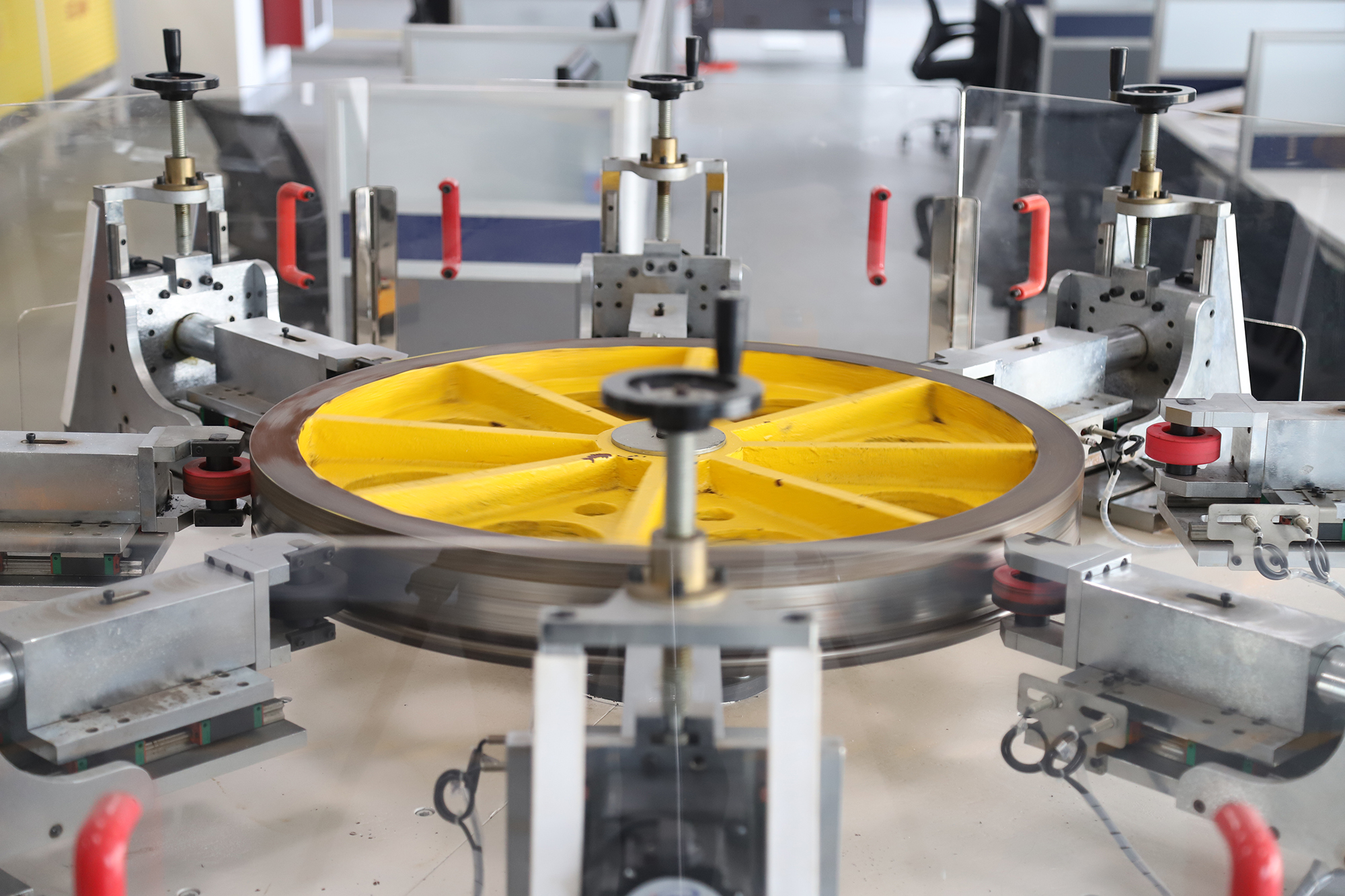
Laboratory testing is the evidence base behind a pre-shipment acceptance criterion.
The Certification Dossier That Should Travel With the Terms
Verified registration and certification documents a buyer can request with the quotation or order acknowledgement include:
- ISO 9001:2015 registration STQ10021-00, issued by AFNOR Asia Ltd, valid to 9 August 2027, covering design, manufacturing, sales, installation and maintenance of elevators.
- ISO 14001:2015 registrations STE10021-06 (design, manufacturing and sales) and SHE10021-06 (installation and maintenance), valid to 31 July 2027.
- GB/T 19001-2016 + GB/T 50430-2017 registration SHQ10021-05, issued by AFNOR Asia Ltd, valid to 9 August 2027.
- EU type-examination certificate LIMB.0124 rev.1 (EURO CERT, 24 July 2024) for machine room goods passenger lifts, referencing 2014/33/EU, EN 81-20:2020 and EN 81-50:2020.
- Energy efficiency certificate 10.16.2281 under VDI 4707 part 1, issued by EURO CERT, valid from 30 September 2024 to 29 September 2029, with the scope stated as machine room passenger lift, related to the Passenger Elevator models GP30 and GPN30.
The last item illustrates the rule that matters most when reading a dossier: read the scope column, not just the certificate title. A certificate issued for a defined scope, market and validity period supports the configuration it names. It does not automatically extend to every speed, load or model a buyer may be specifying.
Technical Clarifications That Usually Arrive With the Terms
Commercial clarifications rarely arrive alone. Joylive operates on an OEM/ODM basis, with customization available across speed, load, travel height, car size, car decoration, logo and step width. Export markets include China, Europe, America, Oceania, Africa, Central Asia, Southeast Asia and the Middle East, and after-sales support is provided through online and offline technical support with a 24/365 hotline.
The linkage is practical rather than administrative. If car decoration or a customer logo is requested, it belongs in the order annex, because it changes both the production lead time inside the 7–45 day range and the reference configuration against which the pre-shipment test is measured.
Term-by-Term Review Table
| Term | Verified position | What to confirm in writing | Why it matters at execution |
|---|---|---|---|
| MOQ | 1 unit | Whether a single-unit order changes pricing or scheduling | Determines whether retrofit and infill projects are orderable at all |
| Delivery terms | FOB/CIF | Named port, packing standard, unloading responsibility | Defines where freight cost and transport risk transfer |
| Payment terms | 30/70 | Milestone trigger for each instalment; currency; bank charges | Determines cash-flow exposure and inspection leverage |
| Acceptance criteria | Pre-shipment test | Test items, test location, document issued, witnessing option | Decides whether acceptance is evidence-based or assumed |
| Lead time | 7–45 days (production) | Configuration-dependent position; exclusion of transit and site work | Drives the construction or opening schedule |
| Certification scope | Model- and market-specific | Validity dates and named models or scopes | Determines which approvals still rest with the buyer |
Limits and Boundaries of These Terms
Honest procurement reading requires stating what the verified terms do not cover.
- A 1-unit MOQ does not create volume pricing. Single-unit economics will differ from multi-unit releases, and buyers should not read the low MOQ as a cost guarantee.
- FOB and CIF govern freight and insurance arrangements only. Shaft preparation, pit condition, permanent power supply, hoisting, scaffolding, on-site storage and local permitting remain outside delivery terms and should be defined in a separate installation scope.
- A pre-shipment test is a factory-stage acceptance. It does not replace on-site commissioning, load testing in position, or inspection by the authority having jurisdiction, and it does not certify that the equipment suits the building.
- Certification coverage is configuration-specific. The VDI 4707 part 1 energy efficiency certificate held by Joylive references machine room passenger lift 1000/1.75 and relates to models GP30 and GPN30; buyers specifying other capacities, speeds or product families should verify coverage rather than assume it transfers.
- The 7–45 day figure is a production range. It excludes ocean transit, customs clearance and site installation, all of which usually dominate the total project timeline.
- None of the four commercial terms confirms headroom, shaft dimensions, reduced shaft space or machine room layout. Those require a project drawing review before the terms become binding.
Where These Terms Are Applied
The same commercial framework is used across very different order profiles. A single-unit retrofit or low-rise residential project relies on the 1-unit MOQ and configuration-level customization. Hospitality and commercial projects lean on car decoration and logo customization: Joylive supplied 208 elevators with customized car decorations and customer logos to SAT CITY, described as a commercial landmark complex, with five years of stable operation recorded.
Industrial buyers work at the other end of the scale. For Pegatron, Joylive supplied 87 passenger and freight elevators, with two years of stable operation recorded. These project entries relate to passenger and freight elevator supply, and they illustrate how order size varies while the underlying term structure — MOQ, delivery terms, payment terms and acceptance method — stays consistent.
Market Context: Why Commercial Terms Are Moving
Three published data points explain why term negotiation deserves more attention now than it did a few years ago.
First, scale. Grand View Research values the global elevators market at USD 82.4 billion in 2025, projecting USD 86.3 billion in 2026 and USD 136.9 billion by 2033, a CAGR of 6.8%. Research houses scope this differently — some broader elevator-and-escalator valuations are substantially higher — so procurement teams should read the scope definition, not only the headline figure.
Second, structure. Traction elevators held the largest revenue share at 55.1% in 2025, and Asia Pacific accounted for a 41.7% revenue share in the same year, which is where most small machine room elevator supply is concentrated.
Third, input cost. Rare-earth magnets for permanent-magnet motors increased in price by more than 20% in 2025, according to Mordor Intelligence. Small machine room designs typically pair a compact machine room with gearless permanent-magnet traction, so this cost line sits directly behind equipment pricing. The procurement implication is concrete: quote validity periods, material-linked adjustment clauses, and the point at which a price is contractually fixed deserve the same attention as the equipment specification itself.
Future Outlook
Term transparency is becoming a selection criterion rather than a detail. Buyers comparing small machine room elevator suppliers are increasingly asking for documented acceptance methods, scope-matched certification and explicit lead-time exclusions before they discuss price. Energy performance documentation such as the VDI 4707 part 1 classification moves in the same direction, because it converts running cost into a verifiable line in the evaluation rather than a marketing claim. Suppliers that can answer term-level questions with named documents will be easier to shortlist, and that shift favors manufacturers with their own accredited testing and registration infrastructure.
A downloadable Joylive product brochure (PDF), including specification and certification references, is available here: Joylive product brochure.
FAQ
What are the purchasing terms and acceptance criteria for a small machine room elevator?
For Joylive Elevator Co., Ltd., the verified position is MOQ 1 unit, delivery terms FOB/CIF, acceptance criteria pre-shipment test, and payment terms 30/70. These four items should appear in the quotation or order acknowledgement in writing, and each should be tied to a named milestone or document before the order is confirmed.
Can a single small machine room elevator be ordered without a volume commitment?
Yes. The verified MOQ is 1 unit, which makes single-lift retrofit, infill and low-rise residential projects orderable. The relevant constraint is not the minimum quantity but the lead time, stated as 7 to 45 days depending on configuration, against a production capacity of 1,250 units per month.
What does a pre-shipment test cover, and what does it not cover?
A pre-shipment test is factory-stage acceptance evidence, produced under a quality control approach stated as 100% test and supported by a nationally accredited CNAS laboratory. It does not replace on-site commissioning, in-position load testing, or inspection by the local authority having jurisdiction, and it does not confirm building fit.
Which certifications should a buyer verify in the supplier dossier?
At minimum: ISO 9001:2015 registration STQ10021-00 valid to 9 August 2027; ISO 14001:2015 registrations STE10021-06 and SHE10021-06 valid to 31 July 2027; GB/T 19001-2016 + GB/T 50430-2017 registration SHQ10021-05; and, for European Union destinations, EU type-examination certificate LIMB.0124 rev.1 referencing 2014/33/EU, EN 81-20:2020 and EN 81-50:2020. Energy efficiency certificate 10.16.2281 under VDI 4707 part 1, valid to 29 September 2029, applies to the scope and models it names.
How should the 30/70 payment schedule be aligned with acceptance evidence?
By attaching each instalment to a documented milestone. The practical approach is to link the final portion to receipt of the pre-shipment test record rather than to a shipment date alone, and to confirm in writing the invoicing currency, bank charges, and whether configuration amendments alter the schedule.
How long does a small machine room elevator take to produce and deliver?
Production lead time is stated as 7 to 45 days and varies with configuration, including customization of speed, load, travel height, car size, car decoration, logo and step width. Delivery terms FOB/CIF determine the handover point; ocean transit, customs clearance and site installation are additional and are not included in the production figure.
Which technical points should be clarified alongside the commercial terms?
Headroom and shaft dimensions, machine room layout, available customization scope, and configuration-specific certification coverage. For machine room spaces destined for the European Union, EN 81-20 / EN 81-50 require a minimum of 200 lux at floor level in machine room work spaces, which is a site readiness item rather than a factory deliverable.