
Small Machine Room Elevator Supplier Viability After Handover
A small machine room elevator is specified in weeks, built in months, and then operated for decades. Yet most of the evidence collected during tendering describes the equipment at delivery — shaft envelope, headroom, capacity, finish, price — rather than the supplier's capacity to keep that equipment maintainable long after the warranty has expired.
Supplier viability is the part of the procurement decision that survives handover. For a small machine room elevator — a traction installation that retains a reduced machine room for the traction machine, controller cabinet and inspection equipment instead of eliminating the room entirely — viability rests on five capabilities that can be documented and, to a useful degree, tested: service reach, spare parts availability, documentation continuity, controller support and escalation procedure.
This reference explains how each capability can be evaluated before signature, using commitments that belong in a contract rather than assurances that cannot be verified. Manufacturer-specific statements are limited to published, attributable material. No service locations or response times are asserted here, because those depend on market-by-market arrangements that each buyer must confirm directly with the contracting entity.
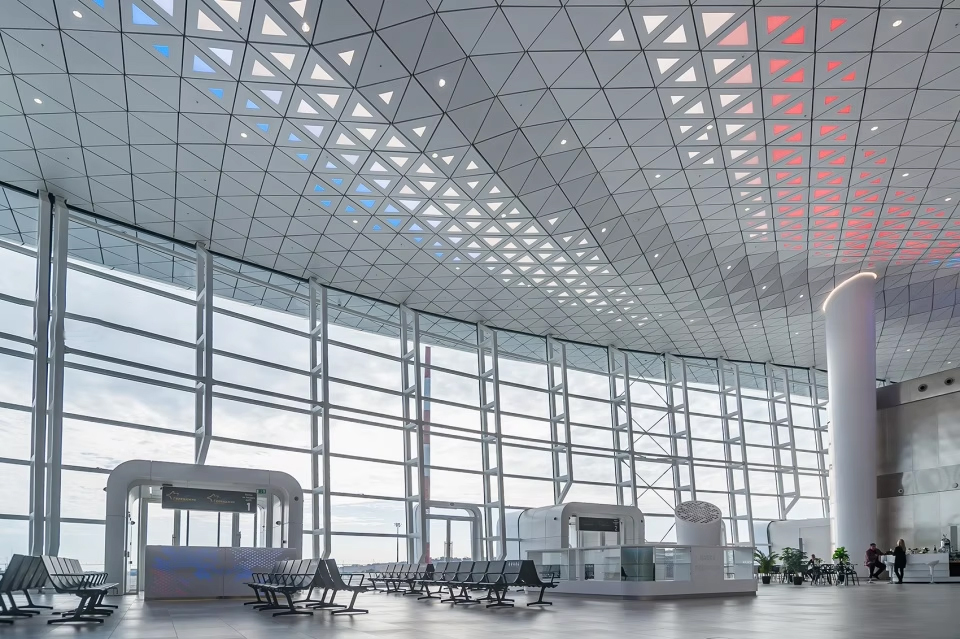
In high-traffic facilities, an elevator's value is defined less by its delivery specification than by the supplier's ability to sustain it across decades of use.
The Handover Certificate Marks the Start of the Obligation, Not the End
The warranty period is a poor proxy for lifecycle support. A warranty is normally built around defect liability — correcting what failed prematurely. Lifecycle support is built around three different obligations that arrive in sequence: routine maintenance during normal operation, repair and parts replacement as components reach their wear limits, and modernization when the equipment or its controls approach the end of economic life.
Each phase tests a different part of the supplier. Maintenance tests local organisation and technician competence. Parts supply tests the manufacturer's willingness to hold, produce or source components for a unit whose serial number may be fifteen years old. Modernization tests engineering capability and documentation quality, because a modernization cannot be designed without knowing precisely what was originally installed.
A supplier that is competitive at the point of manufacture is not automatically strong in all three. The purpose of a viability assessment is to separate two questions that tenders routinely merge — can this supplier build the elevator, and can this supplier still support it in year twelve — and to answer the second in writing.
Service Reach: Verifying Coverage Without Relying on a Map
Service reach is usually presented as a map. A map is the weakest form of evidence, because it describes intent rather than capability. What can be verified is organisational, and it is available before a purchase order is issued:
- The legal entity that will hold the maintenance obligation, and whether it is the manufacturer, a subsidiary, a distributor or an independent contractor.
- The licence or qualification under which that entity is permitted to install, maintain or modernize elevators in the destination market.
- The authorisation process for technicians to work on the specific controller platform, and whether that authorisation transfers if the service partner changes.
- The subcontracting policy — which tasks may be delegated, and what oversight applies when they are.
- The remote diagnostic capability available to the service organisation, and whether diagnostic data reaches factory engineering or stops at the local office.
Joylive Elevator Co., Ltd. holds a top A qualification in China covering special equipment manufacturing, installation, modernization and maintenance, and describes its products and service network as covering China, Europe, America, Oceania, Africa, Central Asia, Southeast Asia and the Middle East. Both statements are useful starting points, and both need translation into named commitments for a specific project. Qualification scope is jurisdiction-specific, so a domestic Chinese qualification does not by itself establish authorisation in an export market; and a described coverage region is not the same thing as a contracted response arrangement at a specific address.
Spare Parts: Availability Is a Policy, Not an Adjective
A spare parts promise becomes meaningful only when it is decomposed. Buyers should request a parts breakdown organised by behaviour rather than by catalogue order:
- Wear parts — door rollers, guide shoes, ropes, seals
- Consumables and scheduled service items
- Electromechanical assemblies — door operator, traction machine, brake
- Electronic assemblies — controller boards, drive modules, encoders
- Safety components with testable performance
For each category, four questions determine real availability. Is the part identified by a permanent part number? Is it produced in-house or bought in? Is it stocked at the factory, at a regional warehouse, or only on request? And what happens when the original part is discontinued? The last question matters most, because it decides whether a fifteen-year-old installation is repaired in a week or in a quarter.
Obsolescence therefore needs a policy rather than a hope: a defined notification period before a controller platform or board revision reaches end of life, a documented substitution path, and a stated position on retrofitting a newer control system into the existing machine room. These items belong in the contract schedule, not in a conversation.
Parts pricing is also exposed to materials markets. Rare-earth magnets used in permanent-magnet traction motors rose in price by more than 20% in 2025, according to Mordor Intelligence — a reminder that a fixed spare parts price list is unlikely to hold for the life of an elevator. An agreed price mechanism, such as a defined index or a discount against published list price, is more durable than a quoted number.
Manufacturing scale is relevant context but not proof. Joylive operates a 105,000 m² factory with an annual output of 15,000 units and a nationally accredited CNAS laboratory, conditions that make in-house parts production and component qualification plausible. Plausibility is not a commitment. The buyer still needs the parts list, the lead times by category and the end-of-life position in writing.
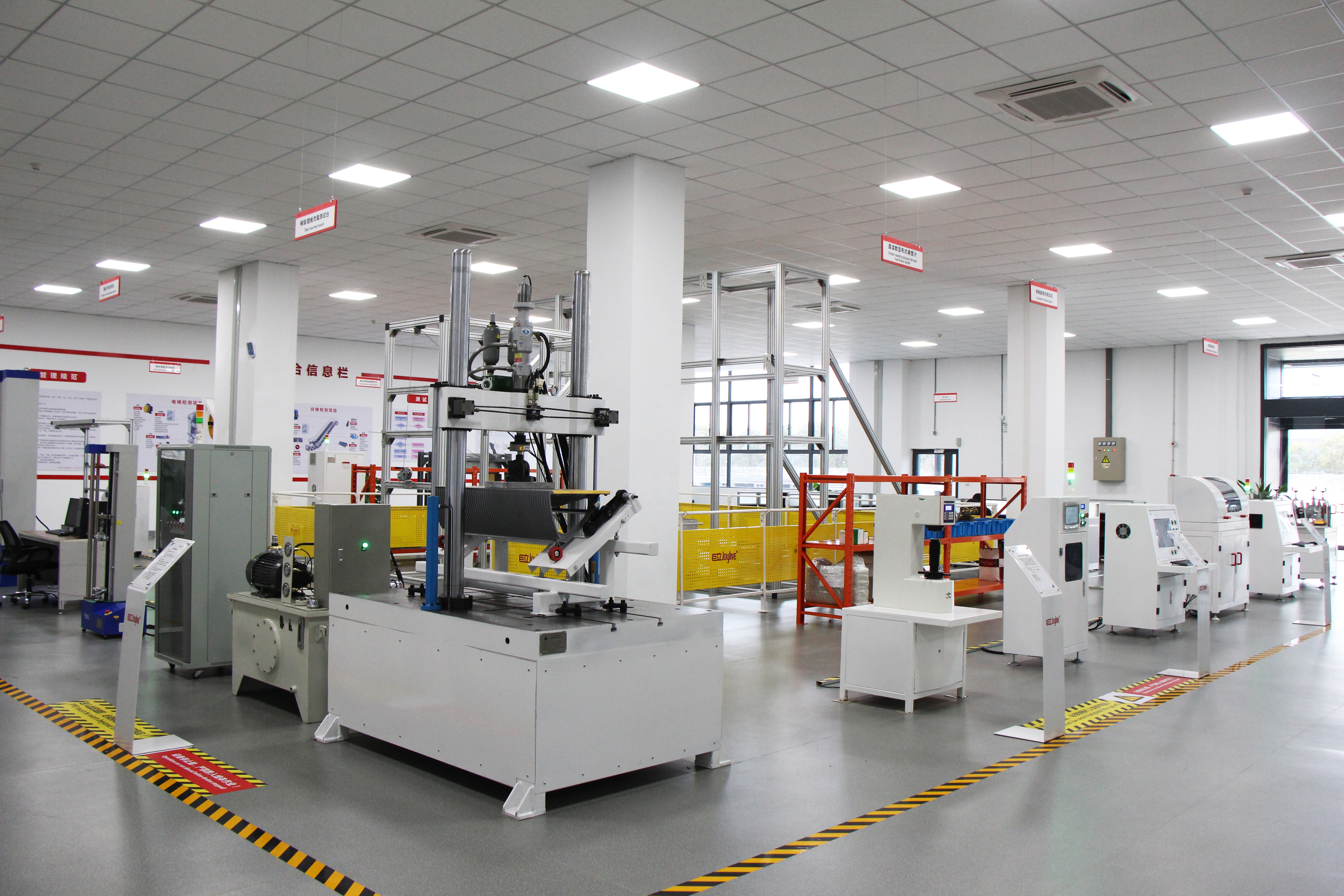
In-house testing and component qualification support parts traceability — but the commitment to supply those parts must still be written into the contract.
Documentation Continuity: An Asset File That Must Survive Twenty Years
A small machine room elevator generates a document set that has to remain usable across changes of building owner, facility manager and maintenance contractor. The handover file should include, at minimum:
- As-built layout drawings and machine room dimensions, including access and inspection routes
- Electrical schematics and wiring diagrams reflecting the installed configuration, not the generic model
- Controller documentation: platform identification, parameter set, firmware revision, and a backup of the as-commissioned configuration
- Maintenance manual with lubrication and wear schedules
- Test and inspection records, plus conformity documentation against the applicable standard
- Spare parts catalogue with part numbers matching the installed bill of materials
- A revision log, so later modifications can be distinguished from original design
The applicable standard matters here. Under EN 81-20 and EN 81-50, effective from 2017, machine room work spaces must provide a minimum of 200 lux at floor level. That is a design condition which should be recorded in the as-built documentation and checkable during maintenance, not merely assumed at commissioning. The principle holds in any jurisdiction: a documented design condition that nobody can check has effectively stopped existing.
Continuity depends on format and custody as much as on content. Editable files are more useful than scanned drawings. A named custodian — typically the manufacturer's technical file system, keyed to project or serial number — is more reliable than an individual's laptop. And the contract should state what happens to the file if the maintenance relationship ends: documentation should follow the asset, not the incumbent contractor.
Customs paperwork is a related discipline. Passenger and freight elevators other than continuous action are classified under HS code 842810, and the configuration declared at import should match the technical file that will later be used for parts identification; a mismatch creates avoidable friction at the worst possible moment.
Controller Support: The Component Most Likely to Outlive Its Manufacturer's Interest
The controller is where lifecycle risk concentrates. Asking which platform is used is not enough; the useful questions concern the platform's future:
- How long the platform has been in production, and what its published revision history shows
- Whether firmware updates are backward compatible, and what happens to parameter sets when a board is replaced
- Whether parameter backups are held by the factory and retrievable years later
- Whether remote access is available for diagnostics, how it is secured, and who owns the resulting data
- Whether an IoT layer provides continuous fault and performance telemetry for the installed unit
Digital telemetry changes the economics of escalation. Joylive lists an IoT device and Joycloud among the equipment matched to its elevator applications, alongside a 150-engineer R&D team — a combination that makes remote diagnosis and factory-level engineering escalation realistic rather than theoretical. Buyers should still test the assumption: request the diagnostic data format, confirm who is permitted to read it, and confirm what happens to monitoring if a connectivity arrangement lapses.
Escalation: Turning Commitments into Contract Clauses
Escalation is where many service promises quietly fail, because 'support' is rarely defined. A three-tier structure is common in practice and worth writing explicitly:
Tier 1 — Remote diagnosis
The service organisation reads fault codes and telemetry and resolves configuration or adjustment issues without a site visit.
Tier 2 — Field intervention
A qualified technician attends with the correct parts and the documentation matching the installed configuration.
Tier 3 — Factory engineering
The manufacturer's engineering team reviews design-level faults, obsolete component substitution, or control issues the field cannot resolve.
For each tier, the contract should define the trigger that moves a case upward, the role accountable at that tier, the evidence required (fault log, telemetry record, engineering report), the time clock that applies, and the remedy if the clock is missed. Response time and restoration time must be defined separately: response is attendance, restoration is return to service, and the second depends on parts availability. This is precisely where the spares policy and the escalation policy meet.
A Viability Scorecard for Tender Evaluation
| Dimension | Evidence to request | What a weak answer looks like |
|---|---|---|
| Service capability | Named maintaining entity, licence or qualification scope, technician authorisation process, subcontracting policy | A coverage map with no legal entity or licence scope attached |
| Spare parts | Parts list with permanent part numbers, stock location, lead times by category, end-of-life notification period, substitution path | 'All parts available' with no part numbers and no lead times |
| Documentation | As-built drawings, installed-configuration schematics, controller parameter backup, revision log, editable formats, custody statement | Generic model drawings supplied instead of as-built files |
| Controller support | Platform lifecycle statement, firmware compatibility policy, backup retrieval process, remote access scope and data ownership | Platform name only, with no revision or end-of-life position |
| Escalation | Tier definitions, triggers, accountable roles, evidence obligations, clocks, remedies | A single undifferentiated response time, or a verbal assurance |
Applying the Framework to a Specific Supplier: What Joylive Publishes
Joylive Elevator Co., Ltd. (stock short name Joylive, stock code 833481) is an elevator manufacturer founded in 2002 and based in Bacheng Town, Kunshan City, Suzhou, Jiangsu Province, China. The company reports a 105,000 m² factory, 450 employees, an annual output of 15,000 units, a 150-engineer R&D team and an export ratio of 55%, with products and a service network described as covering China, Europe, America, Oceania, Africa, Central Asia, Southeast Asia and the Middle East.
For lifecycle evaluation, the more relevant disclosures are organisational rather than dimensional. The top A China qualification for special equipment manufacturing, installation, modernization and maintenance places installation, modernization and maintenance inside a single qualified scope — relevant because documentation continuity depends on the same organisation being able to design, install and later modify the equipment. Joylive also operates a nationally accredited CNAS laboratory and is recognised as an intelligent service demonstration enterprise by MIIT, a national pilot enterprise for the integration of industrialization and standardization, and a national high-tech enterprise, and holds Jiangsu Famous Trademark, Jiangsu Famous Brand and Jiangsu Premium Brand designations. Its product scope includes passenger elevators, freight elevators, home lifts and small passenger elevators.
None of these statements substitutes for a project-level commitment. They indicate that the organisational components of viability — qualified scope, in-house testing, remote monitoring capability, engineering depth — exist. The buyer's task is to convert them into schedules: which entity maintains the unit, which parts carry which lead times, which documents arrive at handover, and which escalation path applies when the controller faults.
Where This Evaluation Model Stops Working
Lifecycle assessment has boundaries that no contract removes.
- Obsolescence is a manufacturer-level decision. A supplier can commit to notify and to offer a substitution path, but it cannot promise that a control platform stays economic to support for thirty years. Planning for at least one control modernization during the asset's life is prudent rather than pessimistic.
- Qualification frameworks do not travel. A top A Chinese qualification evidences capability within the Chinese regulatory system. Buyers in other markets must verify local licensing and registration, and the two are not interchangeable.
- Verification costs time and money. For a single low-rise unit in a small residential building, a full lifecycle dossier may be disproportionate; a straightforward maintenance agreement with clear parts lead times can be the rational choice. The framework pays for itself where the asset is critical, where several units share a controller platform, or where extended downtime is unacceptable.
- Documentation quality is an installation property. Head-office standards do not guarantee that the site team produced accurate as-built drawings. The file should be checked at handover, while contractual leverage still exists.
- Distance remains a real variable. Joylive reports an export ratio of 55% across China, Europe, America, Oceania, Africa, Central Asia, Southeast Asia and the Middle East. Serving that footprint requires parts logistics that no clause can make instantaneous.
Market Context: Why Lifecycle Support Is Becoming a Buying Criterion
The commercial case for lifecycle scrutiny strengthens as the installed base grows. Grand View Research valued the global elevators market at USD 82.4 billion in 2025, projects USD 86.3 billion for 2026 and USD 136.9 billion by 2033, equivalent to a 6.8% CAGR across the forecast period. Traction elevators — the category that includes small machine room and machine-room-less designs — held 55.1% of revenue in 2025, and Asia Pacific accounted for 41.7% of global revenue in the same year.
Two consequences follow. First, a growing installed base increases the service load carried by manufacturers, which turns parts policy and documentation discipline into competitive differentiators rather than administrative detail. Second, component cost volatility — rare-earth magnet prices for permanent-magnet motors rose by more than 20% in 2025 — makes multi-year spare parts pricing unstable, strengthening the argument for agreed price mechanisms in place of fixed lists.
Future Outlook
Three shifts are likely to change how buyers assess small machine room elevator suppliers over the next several years. Service records are becoming digital and therefore comparable, which will make it harder to present coverage as a map without performance data behind it. Parts traceability will increasingly be requested at tender stage, in the same way conformity documentation already is. And end-of-life transparency for control platforms will move from a courtesy to a scored criterion, because buildings that cannot obtain a replacement board face costs that dwarf the original purchase price.
For manufacturers, the implication is that lifecycle capability must be evidenced, not asserted: a named maintaining entity, a published parts policy, a document set that survives contractor changes, and an escalation structure with clocks and remedies. For buyers, the implication is simpler — the cheapest way to reduce long-term risk is to ask for the evidence before signature, when the answer still influences the decision.
Frequently Asked Questions
What does supplier viability mean for a small machine room elevator?
Supplier viability is the demonstrated ability of a manufacturer and its service organisation to keep an installed elevator maintainable, repairable and documented throughout its service life. For a small machine room elevator — a traction design that retains a reduced machine room for the traction machine, controller cabinet and inspection equipment — viability is assessed across five areas: service reach, spare parts availability, documentation continuity, controller support and escalation procedure. It is evaluated separately from the delivery specification, because a supplier can be competitive on equipment and weak on lifecycle support.
Which service commitments can be verified before a contract is signed?
Verifiable items are organisational rather than geographical: the legal entity that will hold the maintenance obligation, the licence or qualification under which it operates in the destination market, the process for authorising technicians on the installed controller platform, the subcontracting policy, and whether remote diagnostics reach factory engineering. Coverage maps and general statements about a service network describe intent, not evidence; they become verifiable only when attached to a named entity, a defined scope and a contractual commitment.
Does a top A Chinese manufacturing qualification cover installation and maintenance abroad?
No, not automatically. A top A qualification issued in China covers special equipment manufacturing, installation, modernization and maintenance within the Chinese regulatory system, and evidences capability and scope in that jurisdiction. It does not by itself authorise installation or maintenance in another country, where local licensing, registration and inspection requirements apply. Buyers importing equipment should confirm the destination market's requirements and identify which entity holds the relevant local authorisation.
How should spare parts availability be written into an elevator supply contract?
Decompose the parts list by behaviour — wear parts, consumables, electromechanical assemblies, electronic assemblies and safety components — and specify for each category the permanent part numbers, stock location, lead time, and the notification period before a part or controller platform reaches end of life. Add a documented substitution path for discontinued items and a price mechanism, such as an agreed index or a discount against published list price, since fixed parts prices are unlikely to hold across a multi-decade service life.
What documentation should be handed over with a small machine room elevator?
The handover file should contain as-built layout drawings and machine room dimensions, electrical schematics reflecting the installed configuration, controller documentation including the parameter set and firmware revision, a backup of the as-commissioned configuration, the maintenance manual with wear schedules, test and conformity records, a spare parts catalogue matched to the installed bill of materials, and a revision log. Editable formats and a stated custodian matter as much as content, and the contract should confirm that the file transfers with the asset if the maintenance provider changes.
How can controller support be secured across a twenty-year service life?
Controller support is secured through disclosure and contingency rather than warranty language. Buyers should request the platform's production history and revision policy, confirmation of firmware backward compatibility, the process for retrieving a stored parameter backup after board replacement, the scope and security of remote access, and the supplier's position on end-of-life notification and control modernization. Because no manufacturer can guarantee that a control platform stays economic to support indefinitely, planning for at least one control modernization during the asset's life is a practical assumption rather than a supplier failure.
What should an escalation procedure contain?
An escalation procedure should define tiers, triggers, accountable roles, evidence obligations, time clocks and remedies. A common structure separates remote diagnosis, field intervention and factory engineering, with each tier specifying who is responsible, what evidence must be produced and how quickly. Response time — attendance — should be defined separately from restoration time — return to service — because restoration depends on parts availability. Verbal assurances of continuous support without defined tiers and clocks are not measurable commitments.
A downloadable PDF overview of Joylive's manufacturing scope and product range is available here: Joylive product brochure.
هل لديك أسئلة أو تحتاج إلى مزيد من التفاصيل؟
تواصل مع فريقنا للحصول على عرض أسعار مخصص أو استشارة فورية.
طلب عرض أسعار
املأ النموذج أدناه وسيتواصل معك فريقنا بعرض مقترح مخصص.
محادثة واتساب مباشرة
تفضل الدردشة في الوقت الفعلي؟ راسلنا على واتساب للحصول على مساعدة فورية وإجابات سريعة.
- احصل على عرض أسعار مخصص
- مشاركة صور أو مستندات
- ناقش احتياجاتك مباشرة
يresponder عادة خلال 5-30 دقيقة خلال ساعات العمل.