
Small Machine Room Elevators: Scenario Fit and Purchase Terms
Industrial Equipment & Components | Buyer Reference
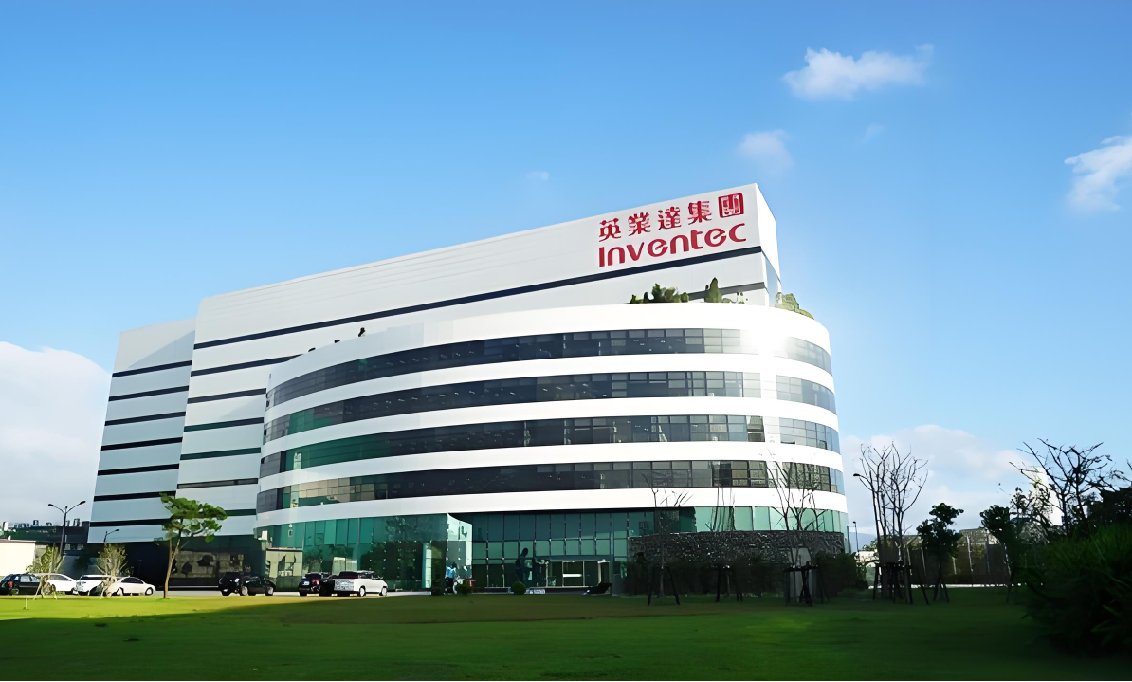
Industrial manufacturing project supplied with passenger and freight elevators. Image: Joylive Elevator Co., Ltd.
A small machine room elevator (SMR) is a traction elevator package that keeps a reduced but dedicated machine room rather than removing it. In industrial equipment and components plants, the arrangement is usually specified for production support zones — technical mezzanines, spare-parts and tool stores, quality laboratories, and staff areas inside the factory envelope — where the available footprint is set by the building rather than by the elevator.
The question that decides the project is narrower than the product category: can the quoted package be matched, item by item, to the plant's layout constraints and duty requirements in writing? Project teams that translate their scenario questions into purchase terms before quotation compare fewer unknowns at evaluation, and they hold a defensible acceptance basis at handover.
Why the building, not the product, sets the configuration
Industrial buyers rarely purchase an elevator as a standalone object. They purchase a package that sits inside a construction or retrofit scope, where three constraints arrive at the same time: the shaft envelope allowed by the structure, the duty the process imposes, and the commercial terms the purchasing team can enforce after the order is placed.
Three scenarios account for most industrial SMR enquiries. The first is access to a technical mezzanine or elevated plant room inside a production hall, where the shaft shares structure with steelwork and the headroom above the top landing is already committed. The second is a retrofit of an existing industrial building that already contains a machine room volume at roof or upper-floor level — a common situation in older factories, and one where retaining a reduced machine room can be structurally simpler than creating a machine-room-less arrangement. The third is a new-build support zone — spare-parts store, quality lab, or staff block — built alongside a warehouse or production unit, where the elevator is designed in at the same time as the envelope.
Naming discipline matters here. A small machine room elevator and a machine-room-less elevator are different arrangements with different architectural works, different maintenance routes, and different quotation structures. A brochure phrase such as compact or space-saving is not a configuration statement. The quotation should state which arrangement is priced, on which general arrangement drawing, and with which access route to the machine room.
Joylive Elevator Co., Ltd. (stock short name Joylive, stock code 833481) is a Chinese elevator manufacturer founded in 2002 and based in Bacheng Town, Kunshan City, Suzhou, Jiangsu Province, supplying passenger, freight, home, commercial, panoramic, hospital, explosion-proof, clean-room and fire elevators, escalators, moving walks, dumbwaiters, modernization packages, hydraulic elevators, and IoT and smart-building products. The company states an annual output of 15,000 units and a factory area of 105,000 m², and holds a top A qualification in China for special equipment manufacturing, installation, modernization and maintenance.
The scenario-fit question set to settle before an RFQ
The following questions are the ones that most often resurface late in an industrial elevator project. Answering them before the request for quotation reduces the number of design revisions that arrive after the order.
| Planning dimension | Question the project team must answer | Why it changes the package |
|---|---|---|
| Shaft envelope | Shaft footprint, headroom above the top landing, pit depth | Headroom and pit are usually the first hard limits in retrofits; they determine whether a reduced-dimension configuration is feasible at all. |
| Machine room volume and access | Location, door width, route for delivering the traction machine, working space around it | A reduced machine room is still a room; access and working space are design inputs, not site details. |
| Duty and traffic | Rated load, speed, travel height, trips per shift, people versus light goods | Sets car size, machine sizing and door configuration in the technical schedule. |
| Operating pattern | Hours per day, shift pattern, whether the lift runs alongside production | Plant support zones often run continuously, so service response planning belongs in the contract, not only in operations. |
| Environment | Dust, humidity, temperature, washdown, clean or explosion-proof requirements | May move the specification beyond a standard passenger package, with a different evidence trail. |
| Interfaces | Power supply, control cabinet position, fire alarm interface, monitoring | Cabinet location and cabling are frequently discovered late in industrial fit-outs and become variation orders. |
| Site logistics | Delivery access, hoisting, installation window against the production calendar | Installation timing is a commercial term whenever the plant cannot stop production for the lift works. |
| Lifecycle | Spare parts, service access, remote diagnostics, documentation | A plant asset expected to serve for years needs a documented service path from day one. |
Teams that skip this step tend to receive quotations that are technically comparable on paper but built on different assumptions — one supplier sizes the machine for continuous goods handling, another for occasional staff traffic. The evaluation then compares prices for packages that are not the same package.
From scenario answer to purchase term
Each row below is a clause a project team can write into a request for quotation. The middle column is what the supplier must state; the right column is what the plant can verify later. The structure is deliberately plain, because the value of a purchase term is that it survives the commercial negotiation and remains usable at handover.
| Scenario answer | Purchase term to write | Acceptance evidence |
|---|---|---|
| A reduced machine room is acceptable; a machine-room-less unit is not | Configuration statement naming SMR or MRL, referenced to a general arrangement drawing | Signed GA drawing checked against the as-built installation |
| Known travel, load, speed, car size and finish expectations | Technical schedule listing the customized values, including car decoration and logo where branding is required | Approved data sheet plus nameplate verification on delivery |
| Maintenance staff must reach the machine safely | Access and lighting clause; where EN 81-20 and EN 81-50 apply, machine room work spaces require a minimum of 200 lux at floor level | Measured illuminance record and verified access clearance |
| The plant needs to know what equipment is being installed | Statement of traction machine type, drive type, and control cabinet dimensions and location | Nameplate check and delivered cabinet dimensions against the statement |
| Quality evidence is required before shipment | Factory test regime; Joylive states 100% test as its quality-control practice | Test records handed over with the unit |
| The installation window is fixed by the production calendar | Lead time anchored to a defined start event such as approved drawings; Joylive states a lead time of 7 to 45 days | Schedule baseline with named milestones agreed before the order |
| The project needs one unit, possibly two | Minimum order quantity; Joylive states a minimum of 1 unit | Order confirmation consistent with the quoted quantity and spares scope |
| Civil works and interfaces cross several contractors | Responsibility matrix covering shaft preparation, power supply, pit works and landing finishes | Signed scope matrix referenced in the contract |
| Equipment is imported | Customs classification consistent with the delivered equipment; HS code 842810 covers passenger or freight elevators other than continuous action | Declaration checked against the packing list and the delivered configuration |
| The plant runs outside office hours | Support channels and availability; Joylive states online and offline technical support and a 24/365 hotline | Named contact list and written escalation path at handover |
| The asset must be maintainable by third parties if needed | Document register: drawings, test records, manuals, certificates, spare-parts list | Completed register reviewed item by item before final payment |
What the reduced machine room changes technically
Traction, drive and control
The machine room exists to house the traction machine, the control cabinet, the overspeed governor and the working space around them. Reducing its footprint is largely an exercise in compact equipment selection: smaller gearless permanent-magnet traction machines, compact control cabinets, and variable-frequency drives that let the machine sit in a tighter volume without changing the duty the plant requires. Where the specification calls for it, a regenerative drive recovers energy during descent.
The procurement point is not which technology sounds more advanced. It is whether the quotation states the arrangement explicitly. Ask for the traction machine type, the drive type, and the control cabinet dimensions and intended location in the technical schedule; then check the delivered equipment against that statement. Vague terms such as modern drive or compact cabinet cannot be verified and therefore cannot be accepted.
Lighting, access and heat
A reduced machine room is still a workspace. EN 81-20 and EN 81-50, effective from 2017 in the European Union, require a minimum of 200 lux at floor level in machine room work spaces. Buyers outside the EU should confirm the applicable local rule rather than assuming the European figure applies, but the underlying principle — that a machine room must be lit and reachable for maintenance — is a useful default when writing the clause.
Heat is the second practical issue. A compact room concentrates the same equipment losses in a smaller volume, so ventilation and temperature expectations belong in the requirement rather than in commissioning improvisation. The plant should state the ambient conditions of the location and ask the supplier to confirm the arrangement in writing.
Cost exposure that outlives the quotation
Traction machines are the component most exposed to magnet pricing. Rare-earth magnets for permanent-magnet motors increased in price by more than 20% in 2025, according to Mordor Intelligence. A quotation compared across two quarters may therefore reflect material movement rather than a difference in scope. Buyers should ask each supplier to state the validity period of the offer and the basis on which machine pricing is held.
Application fit: what the industrial references show
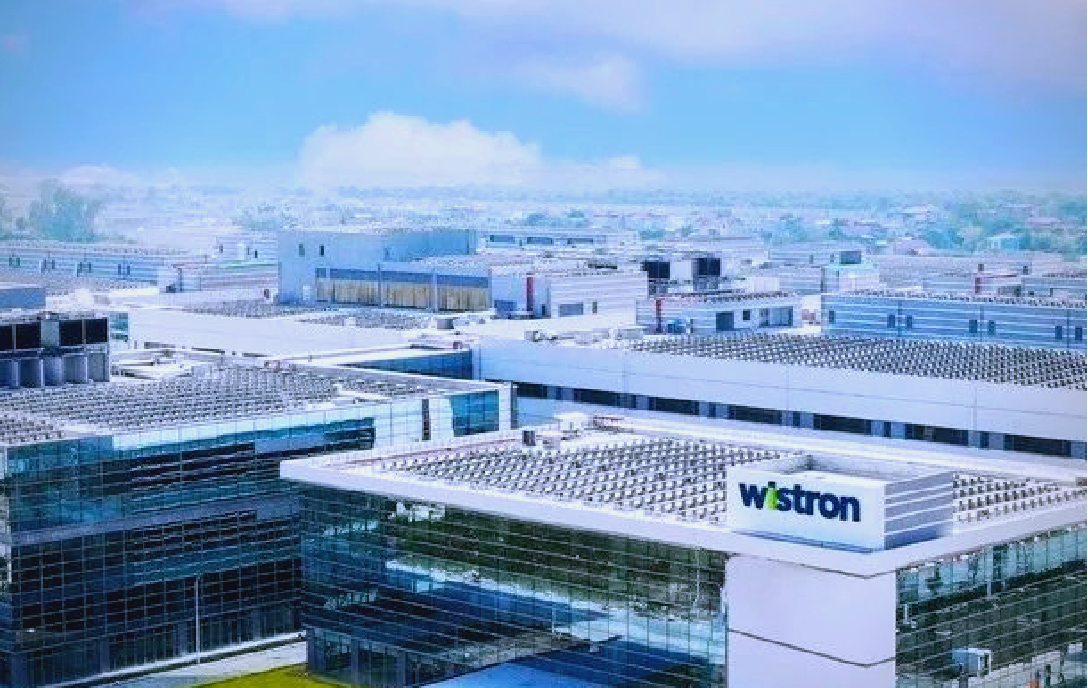
Passenger and freight elevator package for an industrial manufacturing facility. Image: Joylive Elevator Co., Ltd.
Joylive's published industrial references describe passenger and freight elevator packages rather than SMR-specific performance data, and that distinction should be respected when they are used in an evaluation. Inventec, an electronics manufacturing services provider, received 9 passenger and freight elevators for a factory project in Mexico, in service for 1 year with stable operation. Pegatron received 87 units for factory facilities in Vietnam, in service for 2 years with stable operation, and Wistron received 36 units in Vietnam, in service for 5 years with stable operation.
Two conclusions follow. First, the supplier's reference base is industrial, not only residential, which matters when a plant asks for factory-scale project experience. Second, the references cover mixed passenger and freight traffic — a relevant point for a support zone that must move both people and light goods, because the passenger-to-freight split should be decided before the shaft dimensions are frozen. The references do not replace SMR-specific layout evidence; a project team should still request a comparable general arrangement drawing for a small machine room configuration in a similar envelope.
On the supply side, Joylive states OEM and ODM production with customization of speed, load, travel height, car size, car decoration and logo, a monthly capacity of 1,250 units, an order minimum of 1 unit, lead times of 7 to 45 days, and 100% test as its quality-control practice. Its export share is stated at 55%, with markets including China, Europe, America, Oceania, Africa, Central Asia, Southeast Asia and the Middle East.
Market context for the evaluation file
Category data is useful mainly for framing a business case, not for choosing a supplier. Grand View Research values the global elevators market at USD 82.4 billion in 2025 and projects USD 86.3 billion in 2026 and USD 136.9 billion by 2033, a CAGR of 6.8%. Traction elevators, the segment that contains both SMR and machine-room-less packages, held the largest revenue share at 55.1% in 2025. Asia Pacific accounted for 41.7% of revenue in the same year, which is relevant when sourcing decisions affect spare-parts logistics and technical support time zones.
Two cautions belong in the same file. Research houses publish materially different totals depending on scope — some count elevators only, others include escalators and moving walkways — so a single figure should be treated as a planning reference rather than a precise market measure. And publicly available data does not break out small machine room versus machine-room-less share, so a business case should not rest on a category-share claim that cannot be sourced.
Small machine room versus conventional machine room and machine-room-less
| Criterion | Conventional machine room | Small machine room (SMR) | Machine-room-less (MRL) |
|---|---|---|---|
| Dedicated room volume | Full machine room above or beside the shaft | Reduced room, often at roof or upper level | No separate machine room |
| Maintenance access | Walk-in access to machine and control cabinet | Restricted but dedicated access; lighting and working space must be designed | Access via the hoistway, with different service routines |
| Fit with existing industrial buildings | Requires an existing or new full room | Can reuse an existing roof-level room in older factories | Suits new construction with no room available |
| Main commercial exposure | Structural and architectural cost of the room | Coordination of a room that is small but still a room | Hoistway dimension and maintenance-route decisions |
The limitation is real and should be stated plainly. A small machine room elevator is not a universal fit for industrial retrofits: it still requires a machine room volume, an access route and a maintained workspace. Where a building has no usable roof-level or upper-level space and no structure that can accept one, a machine-room-less arrangement may be the only feasible option, and a supplier should say so rather than force an SMR quotation. Conversely, plant maintenance teams that require direct, walk-in access to the traction machine may prefer a reduced machine room even at the cost of the space it occupies. The trade-off is operational as much as architectural.
Acceptance checks at handover
Industrial buyers frequently negotiate carefully and then accept informally. A short, structured handover protects the terms already agreed.
- Compare the as-built installation with the signed general arrangement drawing, including shaft dimensions, machine room location and access route.
- Verify the technical schedule against the nameplate and the delivered control cabinet, confirming the customized values actually supplied.
- Measure machine room illuminance where the applicable rule sets a level, and record the result against the clause; where EN 81-20 and EN 81-50 apply, the reference is 200 lux at floor level.
- Collect factory test records and confirm they correspond to the delivered unit.
- Reconcile the delivery and installation schedule against the milestones agreed at order, including the defined start event for the lead time.
- Review the document register: drawings, test records, manuals, certificates and spare-parts list.
- Confirm the named service contacts and the escalation path, including the hotline arrangement the supplier has committed to.
- Check import documentation against the delivered equipment where the project crosses a border.
Future outlook
Three developments are likely to shape industrial SMR specifications over the next procurement cycles. The first is monitoring: Joylive's application data already lists an IoT device and the Joycloud platform as matched equipment for commercial and public projects, and for a plant the useful question is not whether monitoring exists but what it reports, who receives alarms, and how the data leaves the site. Writing those points into the term sheet now avoids retrofitting them later.
The second is material volatility. Magnet pricing moved sharply in 2025, and buyers who standardise on a specified machine type should build price-adjustment language into multi-phase projects rather than assume a quotation holds indefinitely. The third is retrofit demand in older industrial buildings, where an existing roof-level machine room can make a reduced-room configuration the structurally quieter choice. That preference will depend on local code requirements, which vary by jurisdiction and should be confirmed project by project.
FAQ
What is a small machine room elevator, and how does it differ from a machine-room-less elevator?
A small machine room elevator is a traction elevator package that keeps a reduced but dedicated machine room for the traction machine, control cabinet and service access. A machine-room-less elevator removes that room entirely and places the machinery within or alongside the hoistway. The two arrangements differ in architectural works, maintenance access and quotation structure, so a buyer should require the supplier to state which one is being priced.
Which layout details should an industrial buyer send with a request for quotation?
The minimum useful set is shaft footprint, headroom above the top landing, pit depth, machine room location and access route, travel height, required load and speed, traffic type including whether light goods will be carried, ambient conditions, power supply, control cabinet position, and the installation window available against the production calendar. Each item removes an assumption a supplier would otherwise make.
Which purchase terms should be fixed before quotation rather than after?
Configuration (SMR or MRL) referenced to a general arrangement drawing, the technical schedule with customized values, the machine room access and lighting clause, the traction and drive statement with control cabinet dimensions, the factory test regime, the lead time and its start event, the minimum order quantity, the responsibility matrix for civil and electrical interfaces, the document register, and the after-sales contact path.
What should be checked at handover of an SMR elevator in a factory?
Verify the as-built installation against the signed drawing, check the nameplate and control cabinet against the technical schedule, record machine room illuminance where a rule sets a level, collect factory test records, reconcile the schedule against agreed milestones, review the document register, and confirm named service contacts with a written escalation path.
Can a plant order a single elevator, and what lead time applies?
Joylive states a minimum order quantity of 1 unit and a lead time of 7 to 45 days, with a monthly capacity of 1,250 units. Because the range is wide, the lead time should be anchored in the contract to a defined start event such as approved drawings, otherwise the figure is not comparable between suppliers.
Does a small machine room package suit every industrial retrofit?
No. It requires a machine room volume, an access route and maintained working space. Where a building cannot provide that space and no structure can accept it, a machine-room-less arrangement may be the only feasible option. Publicly available data also does not break out small machine room versus machine-room-less market share, so suitability should be assessed from the building and the duty, not from category-share claims.
Reference documents: the Joylive Elevator product brochure and the company website at joylivelift.com provide equipment scope and configuration details for project teams preparing a request for quotation.
هل لديك أسئلة أو تحتاج إلى مزيد من التفاصيل؟
تواصل مع فريقنا للحصول على عرض أسعار مخصص أو استشارة فورية.
طلب عرض أسعار
املأ النموذج أدناه وسيتواصل معك فريقنا بعرض مقترح مخصص.
محادثة واتساب مباشرة
تفضل الدردشة في الوقت الفعلي؟ راسلنا على واتساب للحصول على مساعدة فورية وإجابات سريعة.
- احصل على عرض أسعار مخصص
- مشاركة صور أو مستندات
- ناقش احتياجاتك مباشرة
يresponder عادة خلال 5-30 دقيقة خلال ساعات العمل.