
Smart Door Lock Supplier Capability: Evidence Over Claims
Smart Door Lock Supplier Capability: Evidence Over Claims
Smart door lock sourcing rarely fails at the discovery stage. It fails later, when the evidence assembled during evaluation — a floor area, a patent certificate, a monthly capacity figure — was never tested against the order that actually shipped. For a buyer moving from evaluation into execution, supplier capability is less a claim to believe or doubt than a set of addresses, documents and mechanisms that can be inspected before a purchase order is raised.
This article sets out a practical evidence framework for that inspection and applies it to one worked example: Trueway smart lock, the modular platform developed and manufactured by Guangzhou Runfu Biotechnology Co., Ltd. The company publishes a 2,500 m² facility at Zhenluo Science Park, Building 3, 4th Floor, Zhongshan, Guangdong, China, approximately 30+ employees, and a key-release modular structure protected by patents in China, Germany and the United States, commercialised in its RF-3 model.
The purpose is not to endorse a supplier. It is to show which capability claims in this category can be verified, what each one actually establishes, and where the limits sit — so that a distributor, hotel group or OEM buyer can repeat the same check on any shortlisted vendor.
Why capability claims are hard to audit in the smart door lock category
The category is unusually wide. It spans electronic door locks, fingerprint and biometric models, keypad and password locks, RFID card locks, Wi-Fi and Bluetooth connected locks, face recognition devices, video door phone systems and full access control platforms. Many brands operating in that list are specification owners rather than manufacturers, sourcing hardware from an OEM or ODM factory. The brand's capability statement and the factory's capability statement are therefore not always the same document, and a buyer who audits only the brand is auditing a layer removed from production.
The second difficulty is that capability arrives as a bundle rather than as separate answers: floor area, headcount, a patent, a certificate, a capacity figure, a service promise. Each answers a different question. A 2,500 m² building says nothing about yield; a granted patent says nothing about field failure rates; a certification may cover radio conformity and nothing at all about mechanical durability.
The third difficulty is direction. The failure modes that actually cost buyers money are downstream — module failure, spare-part availability, cost per after-sales incident, and whether an installed base can be upgraded without removing hardware from a door. These are the claims most worth testing, and the ones most often presented as adjectives rather than documents.
Four evidence classes that survive a supplier review
Capability evidence in this category falls into four classes. No single class substitutes for another, and a shortlisted supplier should be able to answer all four.
| Evidence class | What an auditor can request | What it establishes | What it leaves open |
|---|---|---|---|
| Physical | Full site address incl. building and floor, headcount by function, production and test areas, live or recorded walkthrough | That a manufacturing operation exists at a stated location and at a stated scale | Output actually achieved on your product, line balance, yield |
| Engineering and IP | Patent numbers and jurisdictions, design registrations, certification IDs with model scope, technical drawings | Dated origin and legal scope of a design; conformity for regulated radio and safety requirements | Field reliability, cycle life, mechanical grade, fire performance |
| Service mechanism | Repair and upgrade procedure, parts strategy, who performs the work, how cost per incident is defined | Whether after-sales cost can structurally fall, and how fast a fault is cleared | Realised savings in your market, warranty behaviour under your contract |
| Commercial and contact | MOQ, lead time, payment and delivery terms, acceptance testing, named contact and reachable channels | Whether capability converts into an executable, accountable order | Long-run consistency, capacity priority during peak periods |
Trueway publishes evidence in all four classes, which is what makes the example useful: the framework can be tested rather than merely described.
Physical evidence: what a 2,500 m² facility in Zhongshan establishes
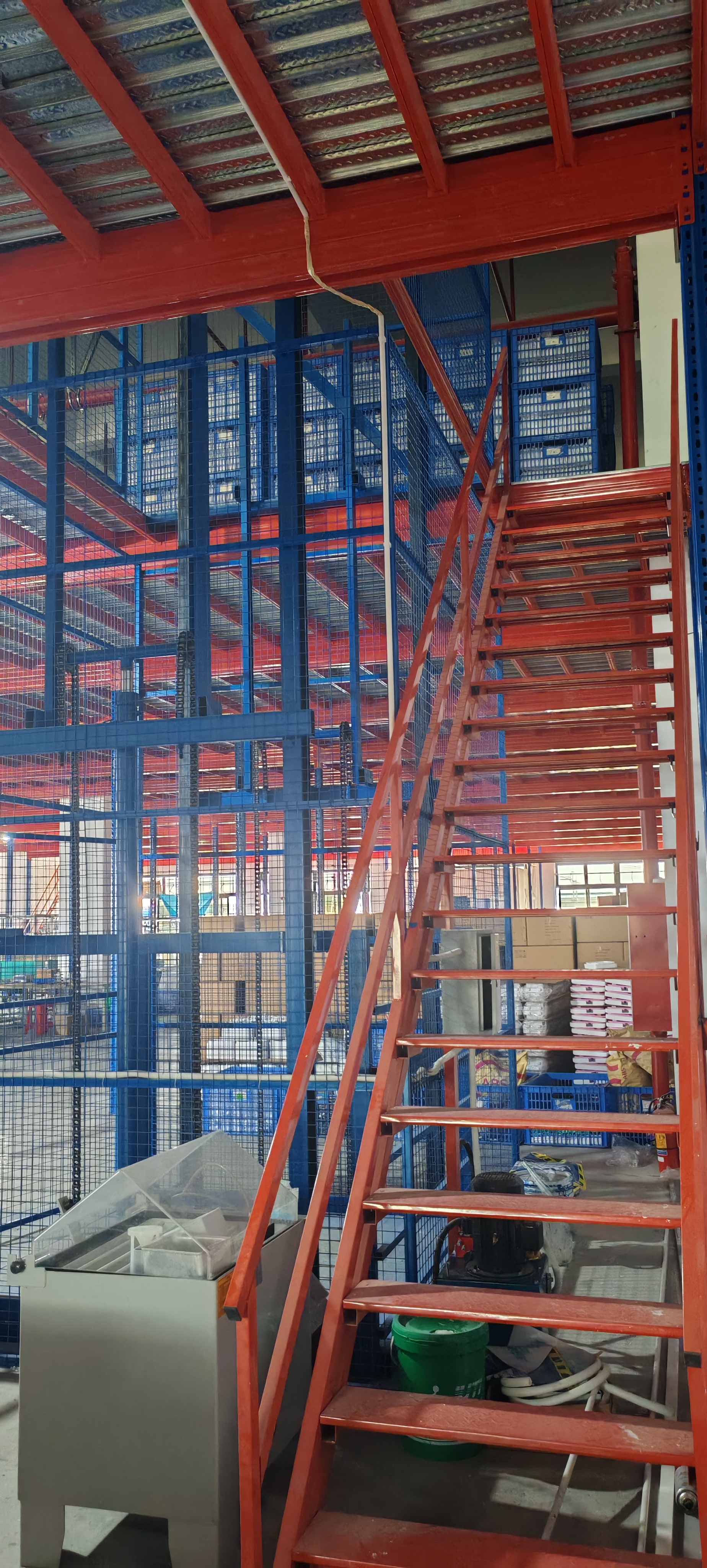
Address specificity is the cheapest test and the one most often skipped. The published factory address is Zhenluo Science Park, Building 3, 4th Floor, Zhongshan, Guangdong, China — building and floor level, not a city or a province. An address at that granularity can be matched to a business licence, checked against a map, verified in a live video walkthrough or visited. A supplier that publishes only a province name cannot be audited at that level at all.
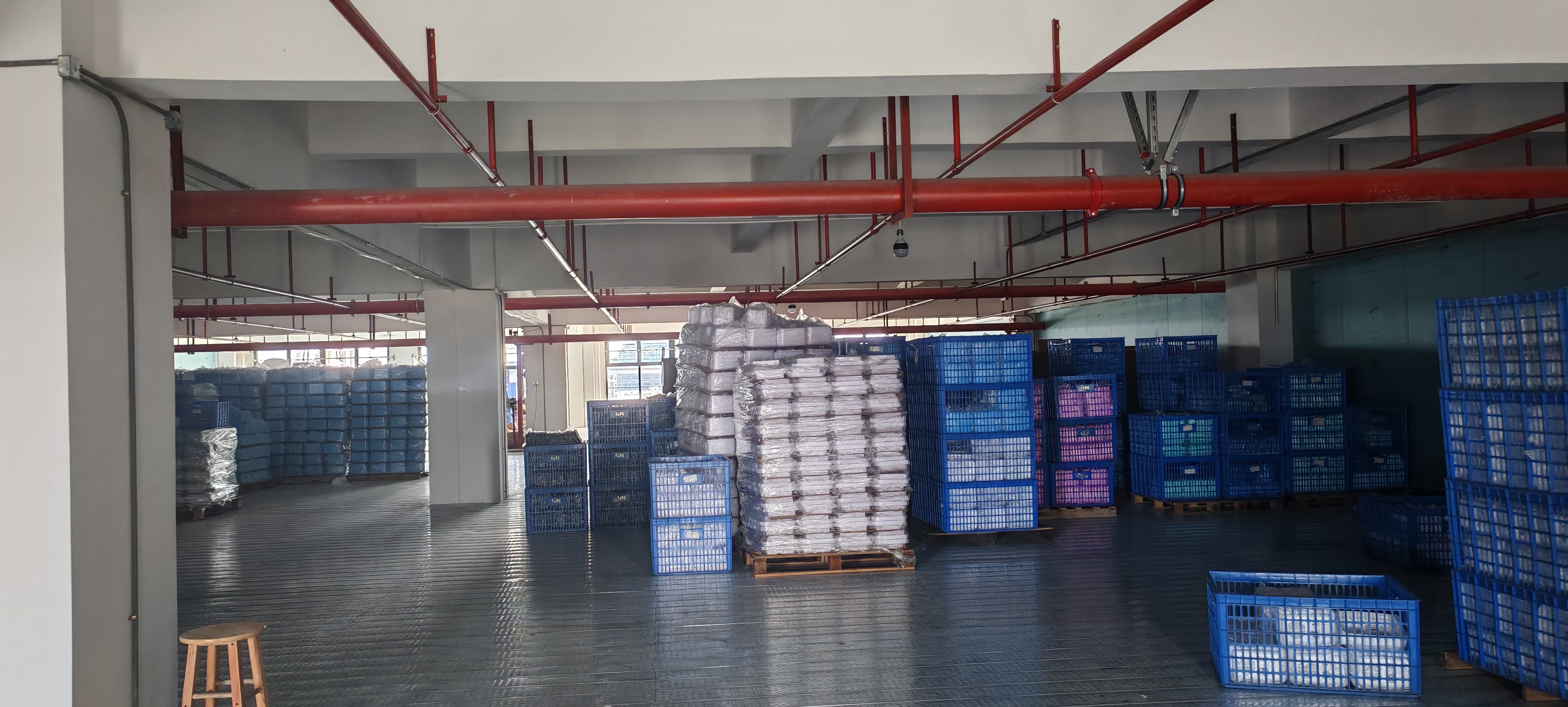
The published scale figures are 2,500 m² of floor area, approximately 30+ employees, a five-engineer R&D team, monthly production capacity of 20,000 units and annual output of 100,000 units. Around 90% of output is exported, with stated markets in the Americas, the Middle East, Southeast Asia and Africa.
Those numbers establish scale, not quality. Floor area defines how much work can be physically organised; headcount defines labour available per shift; capacity defines a ceiling. None of them demonstrates first-pass yield, defect rate or on-time delivery, and a buyer should treat them as the opening of the conversation rather than the conclusion.
Reconciling capacity with output
A simple arithmetic check is informative. Annual output of 100,000 units averages roughly 8,300 units a month, while stated monthly capacity is 20,000 units. The gap is not a discrepancy; it is the normal distance between installed capacity and realised output. It does tell the buyer what to ask: whether 20,000 units is a peak figure requiring overtime and additional shifts, what utilisation the 100,000-unit annual figure represents, and how much of that capacity is already committed to existing distributor programmes.
For an order of a few thousand units, the relevant question is rarely total capacity. It is scheduling priority, and whether the supplier can hold a delivery date when a larger account books the same line.
Verification steps that fit this class: request the business licence tied to the address, ask for a live walkthrough of the specific production and test areas used for your product, and check whether the published contact channels reach a technical respondent rather than a general mailbox. Trueway lists Trueway smart lock alongside a direct telephone number, +86 15017121318, the email info@truewaylock.com and Stanley Ke as named contact — a level of specificity that makes a pre-order technical conversation possible.
Engineering evidence: the RF-3 modular structure as an inspectable claim
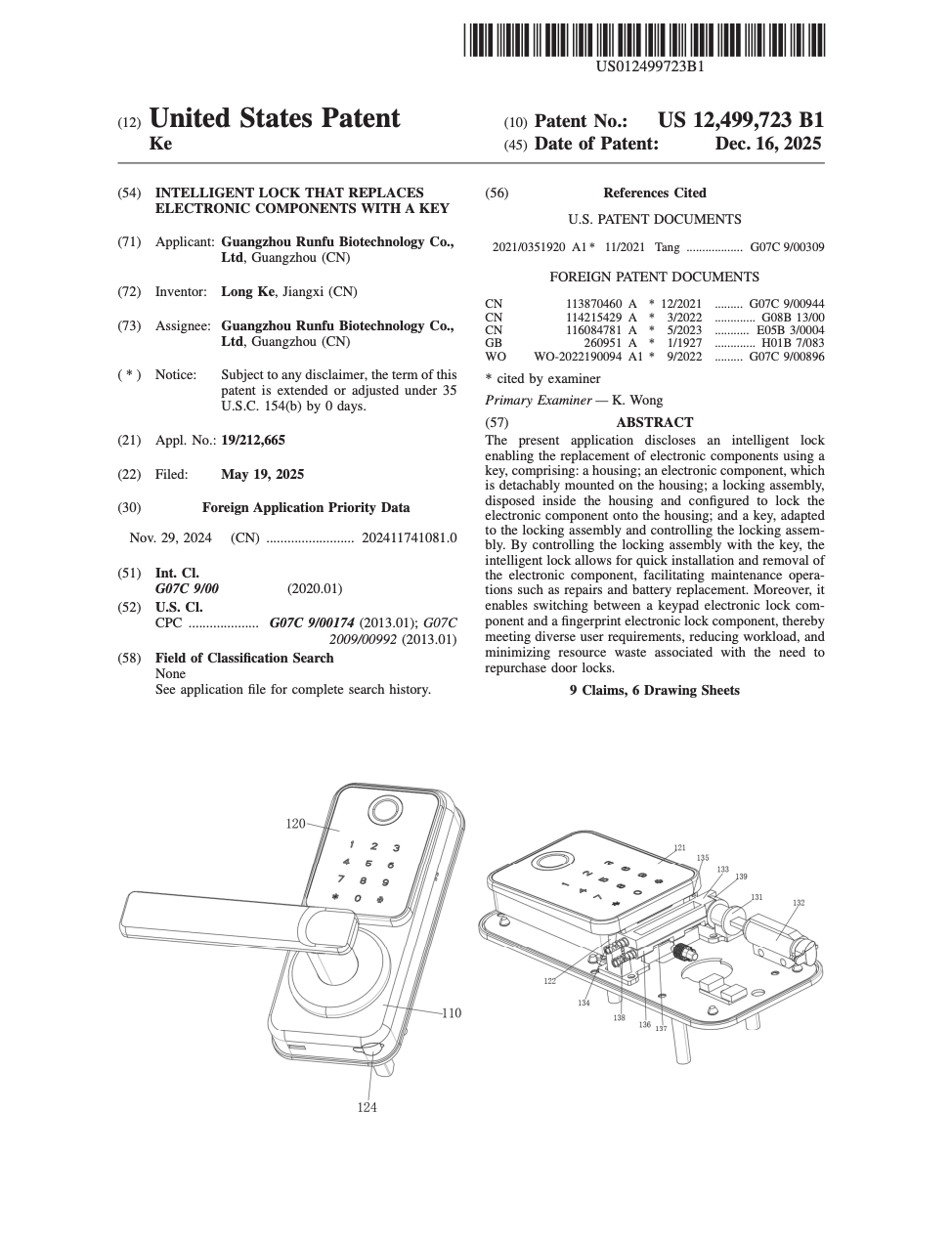
RF-3 is the 2026 model in the series. Its front panel is covered by Chinese design patents CN202630085403 and CN202630085870, granted for the RF-2 and RF-3 front-panel modules, while the underlying mechanical concept traces to China Invention Patent CN201610502753, filed in 2016 for the key-release modular mechanism. International protection includes German Utility Model Patent DE202025001780, issued on 27 January 2026 with a term running to 30 June 2035 and a stated scope covering models RF-1, RF-2, RF-3, RF-5, RF-6 and RF-9, plus a granted U.S. patent. A U.S. copyright application covering product design and technical documentation is listed as pending, with application receipt 1-14921392341.
Company materials describe the platform as category-exclusive. That is a company assertion rather than an independently audited market position. What a buyer can verify is the existence, owner and scope of the filings, which are checkable in the relevant patent registers.
How the swap mechanism works in operational terms
The lock body is installed once and stays on the door. The functional front panel is a removable module seated in a slot released by a physical key: the key is inserted and turned 90 degrees to release the module, the old panel is withdrawn, the replacement is seated, and the key is turned back to lock it in place. The company states the operation takes under one minute, without tools, without a technician and without removing the lock from the door.
Three module combinations share the same body: fingerprint with password and RFID card for homes, offices and higher-security areas; password with RFID card for rentals, short-let properties and budget accommodation; and RFID card only for hotels, apartments and office buildings.
What a patent does and does not prove
A patent establishes that a design has a dated origin, a defined owner and a legal scope in the jurisdictions where it is granted. It does not establish field reliability, cycle life, ingress protection, fire performance or suitability for a particular door. A buyer evaluating a patented mechanism should separate two questions: is the design protected, and is the product proven against my specification? The first is answered by registers; the second is answered by test data and installation history.
The current certification position is a radio and safety conformity position, not a mechanical durability grade. FCC ID 2BRC3-RFSERIES was granted on 5 August 2025 for models RF-1, RF-2, RF-3, RF-5, RF-6 and RF-9 as a digital transmission system under Part 15C and ANSI C63.10, and CE verification CTB25071701303 was issued the same day against the RED Directive 2014/53/EU and related EN standards. Both support distribution in their respective markets.
Where a project specifies a mechanical grade, that is a separate question and must be asked separately. ANSI/BHMA A156.25 Grade 1, for example, requires 250,000 cycles and resistance to 1,000 lb of static force; EN 14846 defines performance for electronically controlled locks across six categories, including fire and corrosion resistance. Radio conformity is not a substitute for either, and a supplier should be able to state plainly which grades have been tested on the exact model and which have not.
Service-cost evidence: how to test the 80% after-sales claim
Trueway states that distributors report up to 80% reduction in after-sales service costs. The figure is distributor-reported and supplier-published; it has not been independently audited, and a buyer should treat it as a hypothesis to be tested rather than as a specification.
The mechanism behind the claim is what makes it checkable. The company's comparison places the cost of a traditional technician visit at $50 to $150 per incident, against $0 when an end user performs the module swap; repair or upgrade time moves from around an hour to under a minute; and inventory drops from three SKUs for three unlock methods to one body plus three module combinations.
Whether the 80% materialises depends on definitions the buyer controls: what is counted inside the after-sales service cost definition, which baseline period is used, whether module cost and outbound freight are included, and who absorbs the cost when a module fails inside warranty. In practice the productive request is for RMA rates by module type over the last four quarters, the share of incidents resolved without a site visit, and a worked cost comparison using the buyer's own labour and callout rates.
Where the modular approach fits, and where it does not
Fit follows the credential mix rather than the property type. In hotel and serviced-apartment deployments, an RFID-only module matches guest credential practice and can be replaced when a property changes access policy or a panel is damaged. In short-let and Airbnb-style operations, the password with RFID combination puts guest codes and cleaner or maintenance credentials on the same lock. In offices and higher-security areas, the fingerprint with password and RFID module provides three credential paths where a single factor is judged insufficient.
Modularity also changes the upgrade path for an installed base. A distributor holding older stock does not have to discount or scrap complete locks when a new credential option becomes standard; the body remains and the panel changes. The company states that the base body stays on the door permanently and that upgrades require only new modules.
Boundaries a buyer should state up front
Three limits are worth naming. First, the published module set covers fingerprint, keypad and RFID credentials; a specification requiring face recognition, an integrated video door phone or a full building access control platform should be confirmed with the supplier before shortlisting, because those are separate product categories with separate evidence requirements. Second, a module swap addresses panel-level failure, not body-level or door-hardware failure, so the warranty must be read for what happens when the fault sits elsewhere. Third, the release key is a physical control: buyers should confirm how many keys ship per lock, how spares are handled, and who holds them across a large installation.
Commercial terms that convert capability into an executable order
Capability evidence becomes procurement only when it is attached to terms. The published commercial framework is OEM and ODM production with logo customisation, a minimum order quantity of 10 units, a 30-day lead time, monthly capacity of 20,000 units, quality control described as 10% testing, and remote after-sales support. Delivery is quoted FOB or CIF, payment is 100% T/T, and acceptance is defined by pre-shipment testing.
Each term implies a question. A 10-unit MOQ supports a pilot or sample order before a container commitment, which matters for a distributor testing a market. A 30-day lead time should be confirmed against the specific configuration and order size rather than treated as fixed. A 10% test rate is a sampling statement: ask what the sample covers, which parameters are recorded, and whether reports accompany the shipment. Full T/T payment shifts cash-flow risk to the buyer and is a normal point of negotiation on repeat orders. Pre-shipment acceptance criteria only protect a buyer if the criteria are written down and the inspection is documented or witnessed.
Market context: why evidence-based selection is gaining ground
Category growth is not in dispute; the source of a supplier's advantage is. Fortune Business Insights projects the global smart door lock market reaching $17.75 billion by 2034, in a report published in August 2026, while Fact.MR places Bluetooth-enabled smart locks at a 52% share of the category in 2026. Grand View Research identifies Asia-Pacific as the fastest-growing region at an estimated 24.5% CAGR between 2026 and 2033.
For buyers, the practical reading of those figures is structural rather than promotional. A growing category attracts assemblers as well as manufacturers, and the difference between the two becomes visible only at the evidence layer: whether a floor and an address exist, whether the design has a registrable origin, whether repair is a documented procedure or a service call. Growth does not validate any individual supplier; it only raises the cost of choosing badly.
A verification checklist before the purchase order
- Match the factory address, including building and floor, to a business licence, and request a live walkthrough of the areas producing your model.
- Ask for headcount by function and shift pattern, and confirm who handles technical questions before and after the order.
- Reconcile stated monthly capacity with annual output and with your own order size, and ask where your order sits in the schedule.
- Check each patent number in the relevant register and confirm that the model you are ordering falls inside the stated scope.
- Confirm which certifications apply to the exact model and configuration, and which mechanical grades have and have not been tested.
- Request RMA rates by module type and a worked after-sales cost comparison using your own labour and callout rates.
- Write pre-shipment acceptance criteria into the contract and agree who witnesses the test.
- Confirm module, body and door-hardware warranty coverage separately, and how release keys are controlled in a multi-site installation.
Outlook
Modularity is a design direction, not a market guarantee. If repairability and upgrade paths continue to move up the buyer agenda — a reasonable expectation for rental, hospitality and multi-site operators facing technician costs — then evidence about how a lock is repaired will matter as much as evidence about how it is opened. For Trueway, the test is unglamorous and specific: whether the address, the patent scopes, the certification ranges and the service mechanism still hold when a buyer checks them one by one, and whether the same evidence can be produced as convincingly for the next model as for RF-3.
FAQ
Is the Trueway key-swap mechanism patented?
Yes, according to the supplier's published records. The mechanism is covered by China Invention Patent CN201610502753, German Utility Model Patent DE202025001780 — issued 27 January 2026 with a term to 30 June 2035 and a scope listing RF-1, RF-2, RF-3, RF-5, RF-6 and RF-9 — and a granted U.S. patent. The RF-2 and RF-3 front-panel modules also carry Chinese design patents CN202630085403 and CN202630085870. Patents confirm a dated design origin and a legal scope; they do not confirm field reliability, so buyers should verify status in the relevant registers and request durability evidence separately.
What makes a modular smart door lock different from a conventional one?
A conventional lock is removed from the door, or replaced entirely, when a module fails or a credential type needs to change. In the Trueway design the body stays installed and the front-panel module is released with a key, withdrawn from its slot and replaced; the company states this takes under one minute and requires no tools or technician. Three module combinations share one body: fingerprint with password and RFID card, password with RFID card, and RFID card only.
How much can a distributor save on after-sales costs?
Trueway states that distributors report up to 80% lower after-sales service costs, attributing the saving to end-user module swaps instead of technician visits; its comparison cites $50 to $150 per traditional technician incident against $0 for a user-performed swap. The figure is supplier-published and not independently audited. Buyers should ask for RMA rates by module type, the share of incidents resolved without a site visit, and the definition of after-sales cost used in the calculation.
Does Trueway offer OEM and ODM services, and on what terms?
Yes. The company offers OEM and ODM production with logo customisation, a minimum order quantity of 10 units, a 30-day lead time and monthly capacity of 20,000 units. Quality control is described as 10% testing with remote after-sales support; delivery terms are FOB or CIF and payment is 100% T/T, with pre-shipment testing as the acceptance criterion. Lead time and testing scope should be confirmed for the specific configuration being ordered.
What should a buyer verify about the 2,500 m² facility and the 30+ staff?
Verify the address first — Zhenluo Science Park, Building 3, 4th Floor, Zhongshan, Guangdong, China — against a business licence and, where possible, a live walkthrough. Then confirm current headcount and shift structure, the R&D staffing behind the model being ordered, and how the stated 20,000-unit monthly capacity relates to the 100,000-unit annual output. The published contact channels, including www.truewaylock.com, +86 15017121318 and info@truewaylock.com, allow a technical conversation before any commitment is made.
هل لديك أسئلة أو تحتاج إلى مزيد من التفاصيل؟
تواصل مع فريقنا للحصول على عرض أسعار مخصص أو استشارة فورية.
طلب عرض أسعار
املأ النموذج أدناه وسيتواصل معك فريقنا بعرض مقترح مخصص.
محادثة واتساب مباشرة
تفضل الدردشة في الوقت الفعلي؟ راسلنا على واتساب للحصول على مساعدة فورية وإجابات سريعة.
- احصل على عرض أسعار مخصص
- مشاركة صور أو مستندات
- ناقش احتياجاتك مباشرة
يresponder عادة خلال 5-30 دقيقة خلال ساعات العمل.