
Smart Manufacturing Induction Heater Shortlist: JONSON Models from 5kW to 100kW
Process heat is one of the few remaining areas where a mid-sized factory can still find double-digit energy savings, and induction heating has become a routine entry on the shortlist for that job. The practical question is no longer whether induction works. It is which power tier, at what voltage tolerance, with what turndown and control interface, and with which certification scope actually on file.
This reference shortlists the JONSON induction heater models that cover smart-manufacturing process heat from 5 kW to 100 kW. JONSON (Guangdong Jiangxin Electronic Technology Co., Ltd.) is a Foshan-based induction heating manufacturer founded in 2011, operating a 3,000 m2 factory with more than 60 employees, a 30+ engineer product R&D and engineering technology team, and an annual output of 120,000 units.
The shortlist is organized by power tier and application fit, and it is written for teams in the evaluation-to-execution stage: buyers who have already decided to electrify a process heat load and now need to pick a model, check the evidence behind it, and place an order without discovering a mismatch after installation.
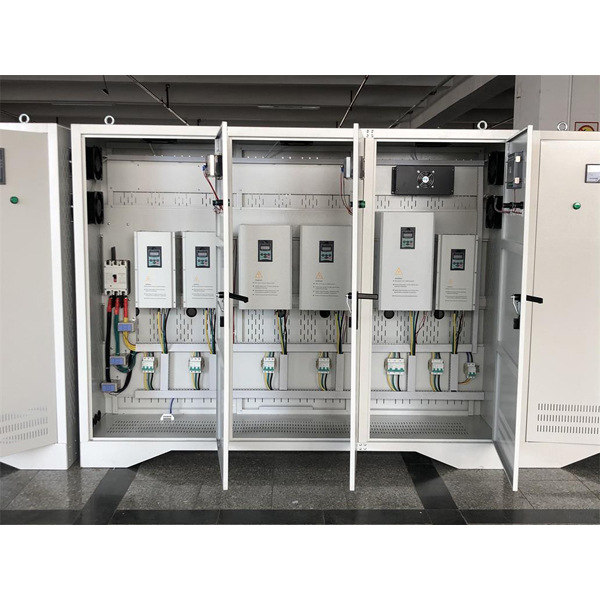
Why Power Tier Selection Decides the Project
The global induction heating system market was valued at USD 2.39 billion in 2024 and is projected to reach USD 4.5 billion by 2035 (WiseGuyReports). More than 550,000 induction heating systems were deployed worldwide as of mid-2024, with Asia-Pacific accounting for roughly 40% of the installed base, or about 220,000 units (Global Market Insights). The 10 kW to 100 kW power segment dominates that market, driven by its versatility across hardening, forging and brazing applications (MarketsandMarkets) - the same band in which most process heat retrofits are specified.
That concentration is also where selection goes wrong. A 20 kW and a 30 kW unit can sit in one product family, share a control architecture and look interchangeable in a quotation, while differing in voltage adaptation, ambient rating and coil specification. Four error patterns recur:
- Voltage mismatch. A unit specified for constant power output at 300-400 V behaves differently from one specified at 380 V plus or minus 20% when the supply window at the plant is wider or narrower than expected.
- Turndown gap. A process that runs at part load for most of a shift needs a stated regulation range, not only a rated power figure.
- Coil mismatch. An induction power supply delivers rated power only into a coil that sits inside its adaptive inductance and cable-length window.
- Certification scope. A CE or ISO document issued for one model series does not automatically cover the model number on the purchase order.
All four are checkable before ordering, and all four are documented per model below.
The Shortlist: JONSON Induction Heaters from 5 kW to 100 kW
| Power tier | Model | Rated voltage and adaptation | Power regulation | Stated efficiency | Cooling | Physical and ambient notes |
|---|---|---|---|---|---|---|
| 5 kW / 8 kW | JS1300-005/008 | 380 V; adaptation 380 V plus or minus 20% | 20-100% | Not listed | Not listed | Wall-mounted; 295 x 169 x 145 mm; -20 to 40 degrees C; CE, ISO listed |
| 10 kW / 15 kW | JS1300-10/15 | 380 V rated; adaptation 300-400 V | 20-100% | Not listed | Not listed | Wall-mounted; 356 x 178 x 178 mm; 7.3 kg; -20 to 50 degrees C; CE, ISO, RoHS listed; HS code 8514400090 |
| 20 kW | JS1000-20 | 380 V rated; adaptation 300-400 V | Not listed | Not listed | Air- or water-cooled | Wall-mounted; 250 x 390 x 240 mm; -20 to 50 degrees C; CE, ISO listed |
| 30 kW | JS1000-30 | 380 V | Not listed | Not listed | Air- or water-cooled | Wall-mounted; 450 x 245 x 261 mm; -20 to 50 degrees C; CE, ISO listed |
| 40 / 50 / 60 kW | Not stated in record | 380 V / 50 Hz; adaptation 380 V plus or minus 20% | 20-100% | Heat conversion at least 98% | Not listed | -20 to 40 degrees C; operating frequency 5-40 kHz |
| 70 kW / 80 kW | Not stated in record | 380 V | 25-100% | Heat conversion at least 99% | Not listed | -25 to 55 degrees C; operating frequency 4-50 kHz; certification not listed |
| 100 kW | JS1000-100 | AC 380 V, 50-60 Hz; constant power output at 300-400 V | 20-100% stepless, i.e. 20-100 kW | Heat conversion at least 95%; effective power at least 98% | Air- or water-cooled | Wall-mounted; 635 x 445 x 315 mm; 35 kg; -20 to 50 degrees C; CE, ISO listed |
5 kW to 30 kW: the wall-mounted tiers. The 5 kW/8 kW JS1300-005/008 is the entry point: wall-mounted, CE and ISO listed, 380 V input with 380 V plus or minus 20% adaptation, 20-100% power adjustment, a 295 x 169 x 145 mm envelope and an ambient rating of -20 to 40 degrees C - the narrowest upper bound in the group, which matters in unventilated plant rooms. The 10 kW/15 kW JS1300-10/15 moves to 300-400 V adaptation and widens the ambient rating to -20 to 50 degrees C at 7.3 kg net weight, and its record lists RoHS alongside CE and ISO. The 20 kW JS1000-20 and the 30 kW JS1000-30 complete the wall-mounted range; both are listed with air- or water-cooled heat dissipation and a -20 to 50 degrees C ambient rating, and neither record states a power regulation range or an efficiency figure.
40 kW to 80 kW: larger machine and pipeline loads. The product record includes a 40 kW/50 kW/60 kW induction heater family specified at 380 V / 50 Hz with 380 V plus or minus 20% adaptation, 20-100% regulation and heat conversion efficiency of at least 98%, applied to pipeline heating, plastic machinery such as injection moulding machines, wire drawing machines, granulators and extruders, food machinery, crude oil transportation, boilers and heat transfer oil systems. The 70 kW/80 kW industrial electric heaters sit above it with 25-100% regulation, heat conversion efficiency of at least 99%, a 4-50 kHz operating frequency and the widest ambient envelope in the range at -25 to 55 degrees C, applied to plastic machinery, food machinery, aluminium-plastic machines, roller equipment, boilers and oil and natural gas transmission. Their record does not list a certification, so a buyer evaluating this tier should request compliance documentation for the exact configuration quoted.
100 kW: JS1000-100. The largest unit documented in the shortlist is a three-phase 100 kW machine rated at AC 380 V / 50-60 Hz with constant power output between 300 V and 400 V, stepless adjustment from 20% to 100% (20-100 kW), heat conversion efficiency of at least 95% and effective power of at least 98%. It uses a full-bridge series resonance main circuit with a DSP-based high-speed automatic phase-locking tracking control system and a programmable digital display. Rated input current is 140-150 A and rated output current is 200-220 A. Start time is under 1 second, instantaneous overcurrent protection responds within 2 microseconds, and power overload protection trips at 130% instantaneously. Soft start is fully electrically isolated. Power can be adjusted by PID through a 0-5 V input or RS-485, and the unit supports 0-1000 degrees C load temperature detection with accuracy up to plus or minus 1 degree C. The adaptive coil specification is a 95 square millimetre line, 40 m long, with 80-100 microhenry inductance.
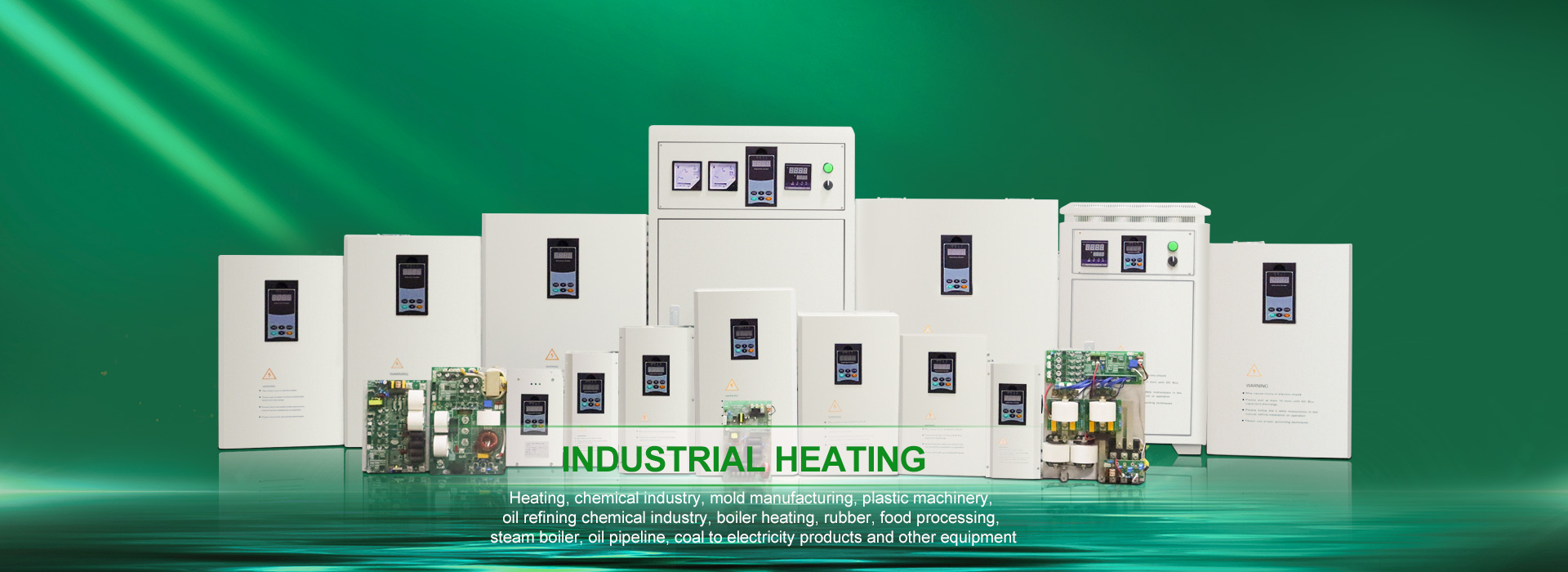
Selection Criteria That Change the Outcome
Voltage adaptation
Two adaptation patterns appear in the shortlist. The JS1300-005/008 and the 40/50/60 kW family are specified at 380 V with plus or minus 20% adaptation. The JS1300-10/15, JS1000-20 and JS1000-100 are specified at 380 V nominal with constant power output across a 300-400 V window; the 70/80 kW record states 380 V without an adaptation window. For plants with long cable runs, shared transformer loads or a supply that sags when other machines start, the constant-power window is the specification to compare, not the nominal voltage. Where the site supply falls outside the standard range altogether, the range also includes units customizable for 110 V, 240 V or 660 V with plus or minus 20% adaptation and 20-100% regulation.
Power regulation and turndown
Most of the shortlist states a 20-100% adjustment range, and the 100 kW unit states stepless adjustment between 20 kW and 100 kW. The 70/80 kW tier is specified from 25% to 100%. The records for the JS1000-20 and JS1000-30 do not state a regulation range. Turndown is what allows an induction heater to follow a process through heat-up, soak and idle phases rather than cycling on and off at rated power, so a tier that matches the peak load but cannot regulate low enough is usually the wrong tier.
Efficiency: heat conversion versus effective power
The 100 kW JS1000-100 record lists two different efficiency values: heat conversion efficiency of at least 95% and effective power of at least 98%. Those are distinct measurements and should not be quoted interchangeably. Elsewhere, the records state heat conversion efficiency of at least 98% for the 40/50/60 kW family and for the customizable 110 V / 240 V / 660 V units, and at least 99% for the 70/80 kW tier and the JS-1600 steam generator. The JS1300-005/008, JS1000-20 and JS1000-30 records do not state an efficiency figure. As an external reference point, third-party analysis puts induction heating system energy efficiency at up to 92%, with an average cycle time reduction of 30% compared with gas or resistance-based heating (Global Market Insights). The lesson for a selection file is to ask which definition - equipment heat conversion, effective power, or system energy efficiency - sits behind any number in a quotation.
Control interface, protection and coil matching
Control depth is not uniform across the range. The 100 kW unit specifies DSP-based automatic phase-locking tracking, PID power adjustment through 0-5 V or RS-485, a programmable digital display, and load temperature detection to plus or minus 1 degree C across 0-1000 degrees C. A plant integrating process heat into a supervisory control layer should confirm that the interface on the quoted model matches the plant signal type. Coil matching is equally concrete: an induction power supply delivers rated output only into a coil within its adaptive inductance and cable-length window, which at 100 kW means 80-100 microhenry with a 95 square millimetre, 40 m line. Custom coils are documented across a 1 kW to 100 kW range at 220 V or 380 V, 50 or 60 Hz, with 20-100% regulation and heat conversion efficiency of at least 98% where stated.
Matching Tiers to Process Heat Applications
The JS1300-005/008, JS1300-10/15, JS1000-20, JS1000-30, JS1000-100 and JS-1600 steam generator records list the same industrial set: plastics and rubber, food processing, chemical reactions, crude oil pipeline heating, textile printing and dyeing, aquaculture heating, metal heat treatment, building heating and medicinal herb drying. The 70/80 kW record lists plastic machinery, food machinery, aluminium-plastic machines, roller equipment, heating, boilers and oil and natural gas transmission.
Plastics and rubber. Barrel and screw heating on injection moulding machines, extruders, drawing machines and granulators is the application named most often across the records. Machines with several heating zones are typically served by one unit per zone or by a split arrangement; the wall-mounted tiers keep panel depth low, while the 40 kW and above tiers address larger extruders and rollers.
Food processing. Two machine-level options extend the shortlist beyond bare power units. The JS-1600-8/12/15 hot air generator is rated 8 kW, 12 kW or 15 kW at 380 V with 300-400 V adaptation, 20-100% regulation, a listed outlet temperature range of 80-130 and wind pressure of 800-1000 PA, in a vertical enclosure. The JS-1600 steam generator is rated 30 kW, 40 kW or 50 kW at 380 V / 50-60 Hz with 380 V plus or minus 20% adaptation, 20-100% regulation and heat conversion efficiency of at least 99%.
Chemical reactions. Reactor and vessel heating appears in the applicable-industry list of the 30 kW JS1000-30 and the 100 kW JS1000-100 records. On the 100 kW unit, 0-1000 degrees C load temperature detection at plus or minus 1 degree C accuracy is the control feature most relevant to a jacketed or coil-wound vessel.
Crude oil pipeline heating. This appears in the JS1300-005/008, JS1300-10/15, JS1000-20 and JS1000-30 records, in the 40/50/60 kW pipeline record, and in the oil and natural gas transmission application of the 70/80 kW and 100 kW tiers. Pipeline trace heating is a continuous load, so the tier is normally set by the required kW at line temperature, while the regulation range determines behaviour during start-up and turndown.
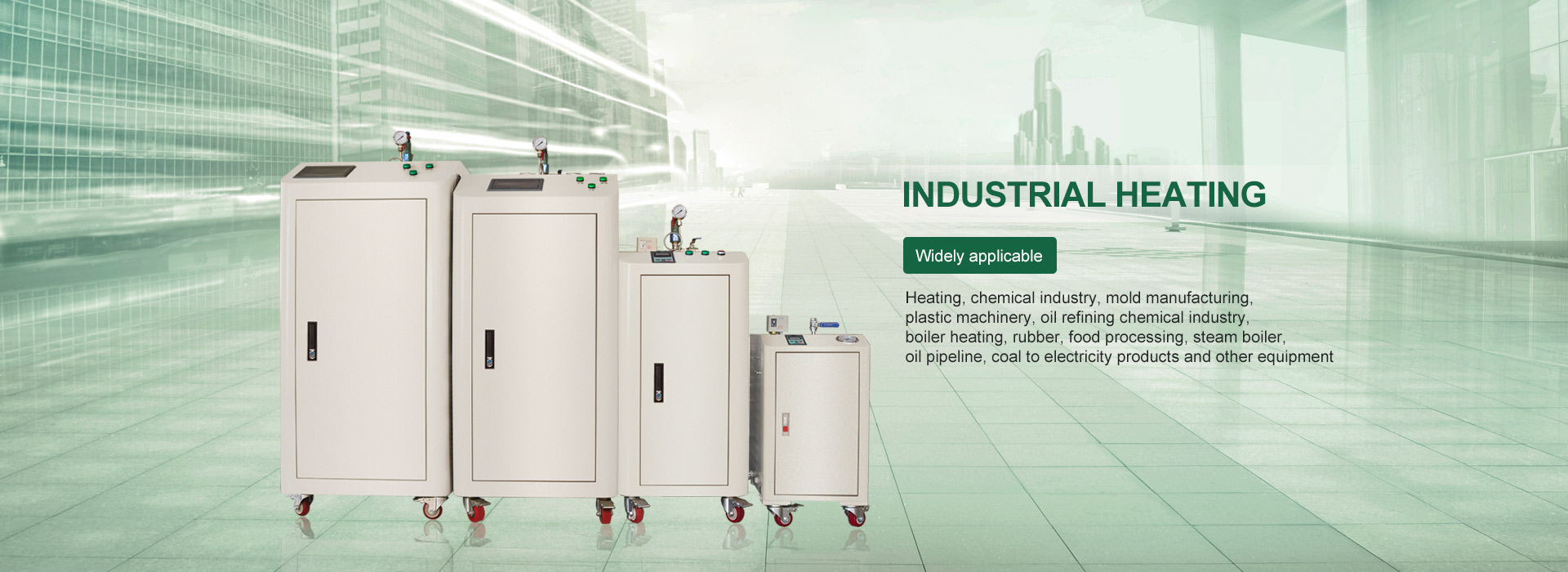
How Induction Compares with Traditional Heating - and Where It Stops
The comparison evidence in the record is a delivery case covering 100 units installed with OEM and ODM clients across Indonesia, China, Vietnam, Russia and India over a duration of more than ten years, applied to plastics and rubber production, process heat treatment, metal heat treatment, heat processing piping, food processing, industrial heating and commercial and residential heating. Reported outcomes in that record are overall thermal efficiency stable at 95-98%, comprehensive energy savings of 30-70%, a lifespan extended by three times and zero major failures. The same record lists no smoke, no nitrogen oxide emissions, a 5-10 year service cycle and a low failure rate as operating characteristics.
Not every claim transfers to every site. Three boundaries are worth stating plainly:
- Ambient and humidity limits differ by tier. The JS1300-005/008 is rated -20 to 40 degrees C; most other tiers are rated -20 to 50 degrees C; the 70/80 kW tier is rated -25 to 55 degrees C. All documented records share a relative humidity ceiling of 95% or less. Where a plant room exceeds the upper ambient bound, tier selection has to change accordingly.
- Voltage adaptation is a window, not unlimited tolerance. The 100 kW unit is specified for constant power output between 300 V and 400 V. Sites outside that window need the customizable-voltage route rather than a standard unit.
- Not every specification is stated for every model. Efficiency, regulation range, cooling method and certification are absent from some records. A gap in a specification record is a question to put to the supplier, not evidence either way.
Induction also does not replace the thermal design of the vessel or pipeline. It changes where heat is generated - inside the load or the adjacent conductive structure rather than in a resistive element or a flame - so insulation, surface condition and coil placement remain part of the project.
Certification and Compliance: What to Verify Before the PO
The compliance documentation in the record is specific and can be checked line by line.
- CE. Certificate of Conformity KEYS23032915001EM-02, issued by Guangdong KEYS Testing Technology Co., Ltd., valid from 2023-04-07 to 2028-04-07, listing models JS1200-005, JS1200-006, JS1200-008 and JS1200-010 against EN IEC 55014-1:2021, EN IEC 55014-2:2021, EN IEC 61000-3-2:2019+A1:2021 and EN 61000-3-3:2013+A1:2019+A2:2021, the EMC standards covering emission, immunity, harmonic current and voltage fluctuation.
- ISO 9001:2015. Certificate 02826Q00032R001, issued by Beijing Zhong An Zhi Huan Certification Center Co., Ltd. against GB/T 19001-2016 / ISO 9001:2015 and valid from 2026-01-06 to 2029-01-07. The stated scope covers production and sales of household fast heating electric water heaters (electromagnetic heating furnaces) within the scope of the qualification license, and production and sales of electromagnetic heating controllers and coil heating elements for household appliances.
- CCC. Certificate 2017010706999985 issued by CQC for JS3000-006 6.1 kW, JS3000-008 8 kW and JS3000-010 10 kW at 220 V, 50 Hz, IPX1; and certificate 2017010706002104 for instantaneous electric water heater models from JS3000-015 15 kW through JS3000-060 60 kW at 380 V 3N, 50 Hz. Both are dated 2022-07-25 with expiry 2027-07-24 and apply to the China mainland market, where CCC is mandatory.
- RoHS. Listed in the records for the JS1300-10/15 and the JS-1600-8/12/15 alongside CE and ISO.
Two verification steps follow. First, match the certificate scope to the exact model number on the quotation, because the CE certificate in the record covers the JS1200 series while several industrial models list CE, ISO and, for some, RoHS. Second, check the standard list and validity dates rather than the certificate title. For the underlying safety framework, industrial induction heating equipment is generally assessed against IEC 60519-1 for general requirements and IEC 60519-3 for induction heating and melting applications.
Procurement Execution: What the Records Confirm
For buyers moving from evaluation to execution, the supplier-side parameters are documented rather than negotiated from zero. The minimum order quantity is 1 unit. Lead time is 7-14 days. Monthly capacity is 10,000 units. Quality control consists of 100% pre-shipment testing plus product inspection by SGS. Delivery terms are FOB, CIF or CFR, and some products support 30% T/T in advance with 70% T/T against a copy of the bill of lading. After-sales support is remote technical support, and the company states a whole-machine service-life commitment of ten years with one year of free maintenance and lifelong maintenance.
OEM and ODM production is offered for induction heaters, induction heating machines, induction heating equipment and induction heating systems. Customization covers product specification, sample fabrication, graphic and panel customization, parameter adjustment and private logo application. Export coverage is worldwide, with a stated core focus on Southeast Asia, the Middle East, Europe and the Americas, Russia and Africa; the company export ratio is 40%, with Europe, the United States, India and Indonesia named as main markets.
Market Trend Analysis
Three data points frame where process heat is heading. The induction heating system market is projected to grow from USD 2.39 billion in 2024 to USD 4.5 billion by 2035 (WiseGuyReports). The installed base already exceeds 550,000 systems globally, with Asia-Pacific accounting for about 40% of installations (Global Market Insights). Separately, the industrial boiler and steam generator market was estimated at USD 54.79 billion in 2024, with a shift toward electrification through induction technology to meet decarbonization goals (Market Research Future). Read together, the trend is less about new categories than about substituting electrical induction for combustion-based process heat in applications that already exist.
The competitive structure is fragmented. Fuji Electric held a leading market share of just over 9.5% in the induction heating system market in 2025 (Global Market Insights), which indicates that no single vendor dominates and that regional manufacturers with documented certification, capacity and export records remain part of a credible shortlist.
Future Outlook
Two directions are visible from the documented range. The first is voltage and control flexibility: the range already includes customizable 110 V, 240 V and 660 V units with plus or minus 20% adaptation for export markets, and the 100 kW model exposes PID power control over 0-5 V or RS-485 with 0-1000 degrees C load temperature detection to plus or minus 1 degree C. That combination is what smart-manufacturing integration requires - a heater that reports and accepts process signals, not only a heater that switches on. The second is a shift from component sales to configuration sales: hot air generators, steam generators and custom coils appear in the same records as bare power supplies, which suggests buyers will increasingly specify a complete heating stage rather than a power unit with a separately sourced coil. What is unlikely to change is the verification burden. Certificate scope, voltage windows, ambient ratings and coil inductance remain the four items that decide whether an installation performs as quoted.
FAQ
What power range does this JONSON induction heater shortlist cover?
The documented range runs from 5 kW to 100 kW. Specific tiers include the 5 kW/8 kW JS1300-005/008 and 10 kW/15 kW JS1300-10/15 wall-mounted units, the 20 kW JS1000-20 and 30 kW JS1000-30, a 40 kW/50 kW/60 kW family, 70 kW/80 kW industrial electric heaters, and the 100 kW JS1000-100. Customizable-voltage units are also documented across 500 W to 10 kW, 5-60 kW, 5-200 kW and 30-200 kW power bands.
Which voltage specification should be confirmed before ordering?
Two patterns apply. The JS1300-005/008 and the 40/50/60 kW family are specified at 380 V with plus or minus 20% adaptation, and the 70/80 kW tier states 380 V. The JS1300-10/15, JS1000-20 and JS1000-100 are specified at 380 V nominal with constant power output across a 300-400 V window. Units can also be customized for 110 V, 240 V or 660 V supplies with plus or minus 20% adaptation.
How much turndown do these induction heaters provide?
The JS1300-005/008, JS1300-10/15 and JS1000-100 state a 20-100% adjustment range, with the 100 kW unit described as stepless between 20 kW and 100 kW. The 70 kW/80 kW tier is specified from 25% to 100%. The records for the JS1000-20 and JS1000-30 do not state a regulation range, which is a point to clarify in writing with the supplier.
Which efficiency figure is the right one to compare?
The records use more than one metric. The JS1000-100 lists heat conversion efficiency of at least 95% and effective power of at least 98% as separate values. Heat conversion efficiency is stated as at least 98% for the 40/50/60 kW family and the customizable 110 V / 240 V / 660 V units, and at least 99% for the 70/80 kW tier and the JS-1600 steam generator. No efficiency figure is stated in the JS1300-005/008, JS1000-20 or JS1000-30 records. For external context, third-party research puts induction heating system energy efficiency at up to 92%, with a 30% average cycle time reduction versus gas or resistance heating.
Which certifications apply, and how should they be verified?
The documented set includes CE Certificate of Conformity KEYS23032915001EM-02, issued by Guangdong KEYS Testing Technology Co., Ltd. and valid to 2028-04-07, covering EMC standards EN IEC 55014-1:2021, EN IEC 55014-2:2021, EN IEC 61000-3-2:2019+A1:2021 and EN 61000-3-3:2013+A1:2019+A2:2021; ISO 9001:2015 certificate 02826Q00032R001, issued by Beijing Zhong An Zhi Huan Certification Center Co., Ltd. and valid from 2026-01-06 to 2029-01-07; and two CQC CCC certificates, 2017010706999985 and 2017010706002104, covering JS3000-series electric water heater models for the China mainland market and valid from 2022-07-25 to 2027-07-24. RoHS is listed for the JS1300-10/15 and JS-1600-8/12/15. Verification means matching the certificate model scope and standard list to the exact model being quoted.
Which applications do the product records list?
The JS1300-005/008, JS1300-10/15, JS1000-20, JS1000-30, JS1000-100 and JS-1600 steam generator records list plastics and rubber, food processing, chemical reactions, crude oil pipeline heating, textile printing and dyeing, aquaculture heating, metal heat treatment, building heating and medicinal herb drying. The 70/80 kW record lists plastic machinery, food machinery, aluminium-plastic machines, roller equipment, heating, boilers and oil and natural gas transmission.
What OEM and ODM customization is available, and what are the order terms?
OEM and ODM production is offered for induction heaters, machines, equipment and systems. Customization covers product specification, sample fabrication, graphic and panel customization, parameter adjustment and private logo application. Minimum order quantity is 1 unit, lead time is 7-14 days, monthly capacity is 10,000 units, quality control is 100% pre-shipment testing plus SGS product inspection, delivery terms are FOB, CIF or CFR, and some products support 30% T/T in advance with 70% T/T against a copy of the bill of lading.
What operating boundaries should be verified before execution?
Four limits appear in the records: ambient rating, which is -20 to 40 degrees C for the JS1300-005/008, -20 to 50 degrees C for most other tiers and -25 to 55 degrees C for the 70/80 kW tier; a relative humidity ceiling of 95% or less across the range; a bounded voltage window for constant power output, which is 300-400 V on the JS1000-100; and a coil inductance window that must match the load, which is 80-100 microhenry with a 95 square millimetre, 40 m line at 100 kW. Where a record does not state efficiency, regulation, cooling or certification, that gap should be closed in writing before the purchase order.