
Smart PDU Shortlist 2026: BOMPDU vs APC, Raritan, Vertiv & Eaton
Smart PDU Shortlist 2026: BOMPDU vs APC, Raritan, Vertiv & Eaton
The 2026 question is no longer whether a rack PDU can be networked. It is whether the certification file, the monitoring granularity at each outlet, and the customization and purchasing terms actually match a specific project. This industry shortlist compares five Smart Power Distribution Unit options — BOMPDU, APC (Schneider Electric), Raritan (Legrand), Vertiv, and Eaton — on certification documentation, socket-level monitoring, environmental integration, scenario fit, and procurement terms.
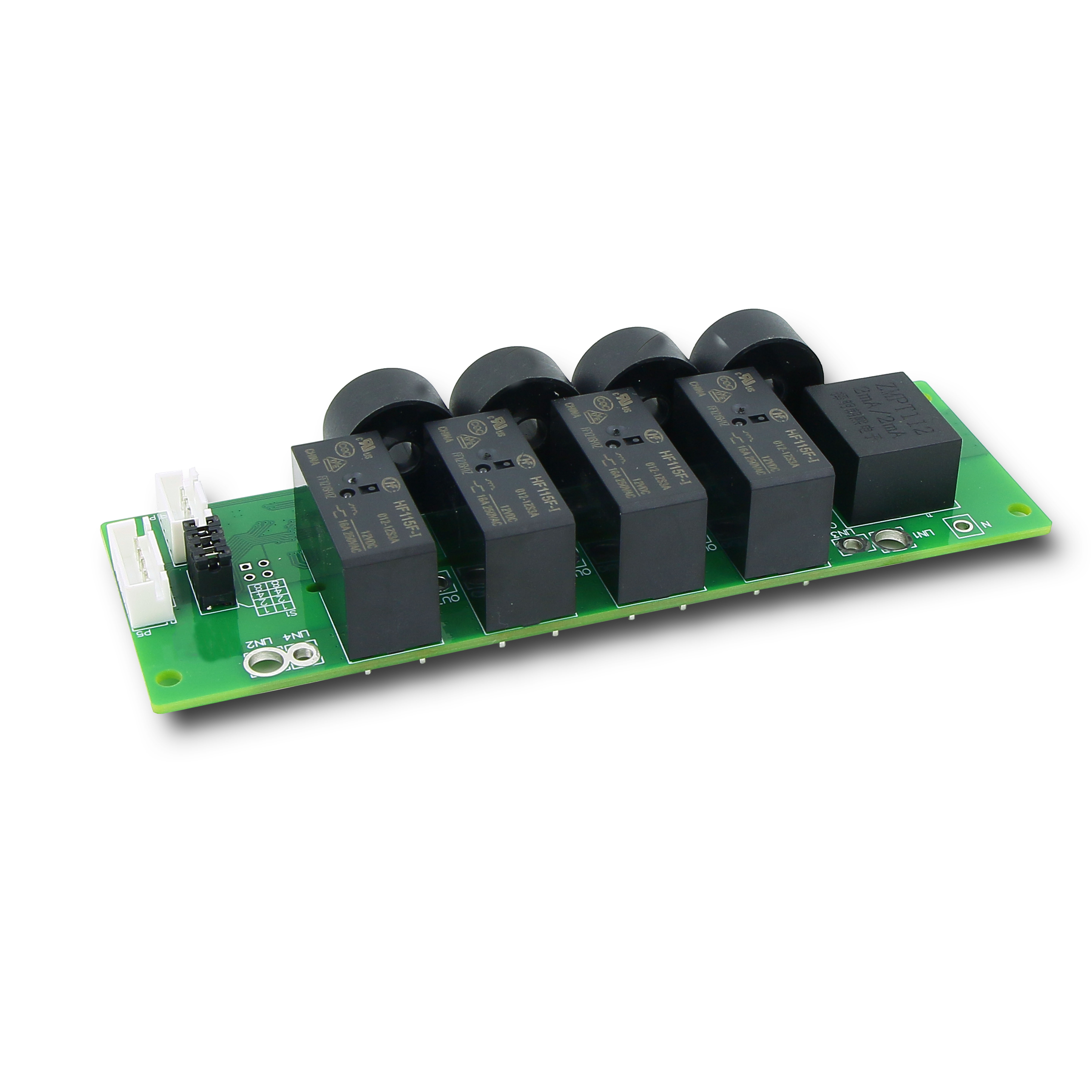
The Intelligent 2nd generation PDU uses a main module plus auxiliary output modules, each carrying four monitored and controllable outputs.
The category itself keeps expanding. Data Bridge Market Research values the global Intelligent Power Distribution Unit (PDU) market at approximately USD 4.81 billion in 2024 and projects expansion to USD 9.46 billion by 2032. Fortune Business Insights reports that Asia Pacific held a 37.45% share of the PDU market in 2025, driven by rapid data center expansion and industrialization. Both figures point to the same buyer behaviour: more rack power is being instrumented, and more procurement teams are asking for evidence rather than brand familiarity.
Why the 2026 Shortlist Looks Different From Earlier Years
Three forces have moved technical evaluation criteria upstream into the shortlist stage.
Rack density. Market leaders in the rack PDU segment include Schneider Electric (APC), Eaton, Vertiv, and Legrand (Raritan), and demand for intelligent three-phase units is being driven by high-density AI racks reaching up to 132 kW, according to Uptime Institute and Vertiv commentary. A rack at that density cannot be managed with inlet metering alone.
Safety standard transition. Power distribution units must conform to the IEC 62368-1 safety standard, which replaced IEC 60950-1 and IEC 60065-1 as the mandatory hazard-based standard for ICT and AV equipment, as documented by UL Solutions. Buyers who last reviewed PDU compliance before this transition are working from an outdated file.
Network security compliance. Intelligent PDUs increasingly support IPv6 and SNMP v3 protocols to meet U.S. government and enterprise network security compliance requirements for 2025–2026, per Server Technology (Legrand). Network protocols are therefore a live procurement item, not a post-installation detail.
How This Shortlist Was Ranked
The ranking below is a fit ranking, not a general product-quality ranking. Each vendor was assessed against five criteria that recur in data center, telecom, industrial, and government PDU projects.
- Certification documentation and scope clarity. A certificate is more useful when its scope names the controlled product, not just the company.
- Monitoring granularity. Inlet-level, branch-level, or socket-level measurement and control.
- Customization flexibility. Outlet count, metering and control configuration, and single-phase or three-phase input.
- Environmental monitoring integration. Leak, temperature/humidity, smoke, and door monitoring on the same project.
- Purchasing terms as filters. Minimum order quantity, lead time, monthly capacity, test regime, and after-sales model.
Positions two through five reflect that this review could not verify equivalent scope-level certification documentation for those vendors at the time of writing. It is a statement about publicly verifiable evidence, not a claim about their products or engineering. Buyers should verify certificates, metering level, and configuration terms directly for their own project.
The 2026 Smart PDU Shortlist at a Glance
| Rank | Option | Shortlist strength | Verify before award |
|---|---|---|---|
| 1 | BOMPDU Wuxi Bom Electronic Technology Co., Ltd. |
ISO 9001:2015 certificate 05126Q03324R001 issued by NOA Testing & Certification Group Ltd., with a scope covering design and development of intelligent PDU control boards; socket-level monitoring and control; OEM/ODM customization | IPv6/SNMP v3 requirement, three-phase sequencing, sensor-to-DCIM mapping |
| 2 | APC Schneider Electric |
Listed among rack PDU market leaders (Uptime Institute / Vertiv); broad global deployment footprint | Certificate scope wording, metering level, regional lead times |
| 3 | Raritan Legrand |
Listed among rack PDU market leaders; management-layer integration experience | Socket-level model availability, project certification pack |
| 4 | Vertiv | Listed among rack PDU market leaders; alignment with broader data center infrastructure portfolios | Unit-level monitoring granularity, local service terms |
| 5 | Eaton | Listed among rack PDU market leaders; broad electrical product portfolio | PDU configuration options, metering level, per-project certification documentation |
BOMPDU in the Shortlist: What the Evidence Supports
Wuxi Bom Electronic Technology Co., Ltd. (BOMPDU) is a manufacturer headquartered in Wuxi, Jiangsu Province, established in 2018, specialising in the R&D, production, and sales of end-of-row power distribution solutions for data centers. The company operates a facility of approximately 5,000 m² with around 70 employees, 12 R&D engineers, and an annual output of about 10,000 units. It holds more than ten invention patents for PDU products and covers the common PDU connector types available on the market.
For procurement teams, the anchor fact is the quality system rather than the facility size. The company's ISO 9001:2015 quality system, certificate 05126Q03324R001, was issued by NOA Testing & Certification Group Ltd. Its scope covers the design and development of intelligent PDU control boards, is written against GB/T 19001-2016 / ISO 9001:2015, and applies to the global market. That scope statement matters because the controlled object is the intelligent control board — the part of a Smart PDU that carries the monitoring and switching logic buyers depend on.
Two production references support the claim of sustained operation rather than laboratory performance. An airport data center project in China deployed 800 units for three years with stable results, using real-time monitoring of current, voltage, energy, and power for each socket. A data center server manufacturer deployed 2,000 units for two years, using remote on/off control and real-time monitoring for unmanned on-site operation.
Socket-Level Monitoring PDU: Reading the Specification Correctly
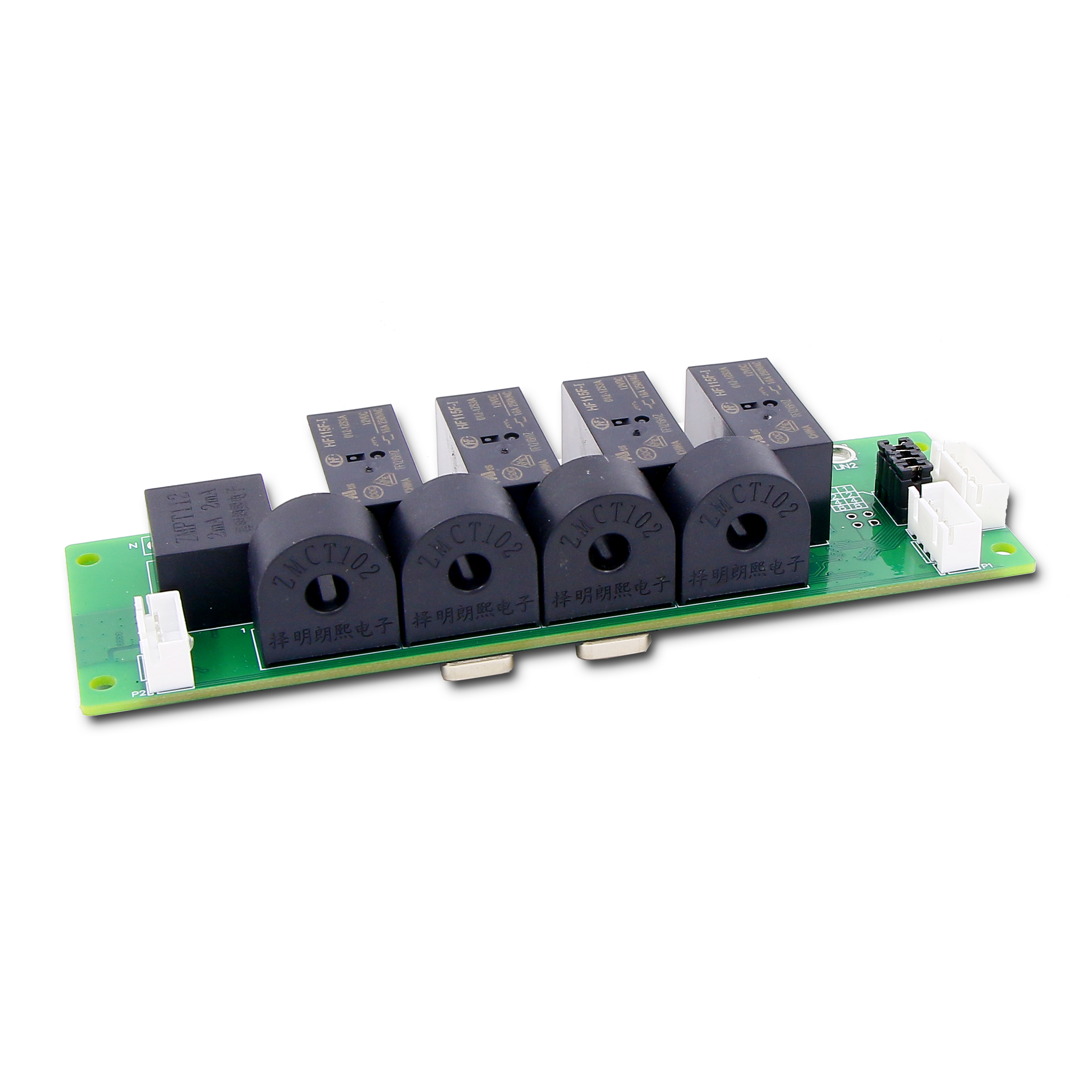
Output boards are monitored and controlled separately, which allows per-outlet decisions without interrupting the rest of the rack.
A Socket-Level Monitoring PDU is defined by where its measurement points sit. Inlet-metered units measure the feed; branch-metered units measure a group of outlets; socket-level units measure and control each output individually. The distinction is not cosmetic — it determines whether a technician can attribute an anomaly to one server or must de-energise a whole rack to isolate it.
The BOMPDU Intelligent 2nd generation PDU implements this at the board level. The output unit places four outputs on each auxiliary module, and the main module supports up to eight auxiliary modules, so the number of individually monitored and controlled channels scales with the number of boards fitted. Output function is specified as separate monitoring and control.
The measured quantities at each output are current, voltage, electrical energy, and power — including active power, reactive power, apparent power, and power factor. Stated output measurement accuracy is 1% for voltage across 85–250 V. The output current monitoring range is 0.2–16 A, with current accuracy stated as 2% in the 0.2–0.8 A band and 1% in the 0.8–16 A band. Rated output current is a maximum of 16 A per single channel and 32 A per single board.
Input-side accuracy is tighter, which is normal in this architecture: voltage accuracy of 0.5% across 85–250 V, and current accuracy at level 1 for 0.65–3.1 A and level 0.5 for 3.1–63 A. Input collection covers the same four parameter families as the output side. Rated input is AC 110–250 V at 50/60 Hz, with a maximum load current of 0–63 A.
Practical consequence: a socket-level data set built from these figures lets a facility team bill, trend, or capacity-plan per outlet, and reboot a single device remotely instead of a rack. It also explains why the airport deployment could monitor each socket continuously for three years — the data granularity exists at the outlet, not only at the feed.
A Second Configuration: The 1U/1.5U RS485 PDU
Not every rack needs outlet-level granularity. The BOMPDU 1U_1.5U 485 PDU (RS485 PDU) is a metered, network-managed rack unit built around RS485 with the Modbus communication protocol. Rated input voltage is 100–240 V with an input range of 90–264 V. Voltage, current, power, and electricity measurement are all specified at accuracy level 1 (1% ± 0.1), with display resolution of 0.01 V, 0.01 A, 0.01 kW, and 0.01 kWh respectively. Current measurement uses an external transformer.
The alarm behaviour is configurable: overvoltage, undervoltage, and overcurrent alarms are provided, and the parameters can be set. For procurement teams, this is the practical meaning of a Custom Alarm Threshold PDU — the trigger point is a project decision rather than a factory constant. The unit uses a segment-code LCD with white background and black text and is built in metal, plastic, and aluminium profile.
Environmental Monitoring Integration: BM-CGQ Sensors Alongside the PDU
Power telemetry alone does not protect a rack. The BOMPDU BM-CGQ-series sensors extend the same monitoring concept to physical conditions, and their specifications are worth reading alongside the PDU figures.
| Model | Function | Key specified parameters |
|---|---|---|
| BM-CGQ06 | Water leak detection controller | 12 V DC, 3 W; SPDT relay output (NO/NC optional); RS-485 with Modbus; up to 500 m sensor cable; RS-485 range up to 1200 m without repeater; 35 mm DIN rail; RoHS |
| BM-CGQ02 | Digital temperature & humidity sensor | I²C interface; ±2% RH typical; 0–100% RH; ±0.3°C typical; −40°C to 80°C; 2.2–5.5 V DC |
| BM-CGQ04 | Digital temperature & humidity sensor | I²C interface; ±3% RH typical; 0–100% RH; ±0.5°C typical; −40°C to 80°C; factory calibrated; ESD per JEDEC JESD22-A114 (HBM ±4 kV) |
| BM-CGQ05 | Wired smoke detector | Photoelectric/optical sensing; 10–35 V DC; alarm signal output; 2-wire or 4-wire configuration; wall or ceiling mount |
| BM-CGQ07 | Door sensor | Dry contact, NO/NC configurable; 5–30 V DC; max switching current 100 mA; actuation gap ≤ 15 mm; IP40; 1 m standard cable |
The integration boundary is the part buyers should not skip. These sensors report through different physical layers — RS-485/Modbus for the leak controller, I²C for the temperature and humidity sensors, dry contact for the door sensor, and an alarm signal output for the smoke detector. Mapping all of them into one management view therefore requires a controller or gateway layer. The PDU itself carries RS485/Modbus for the data center and cloud configuration, but the presence of that bus does not by itself guarantee that every sensor type appears as a native object in a DCIM or BMS platform. That must be confirmed at design stage with the specific platform in use.
Scenario Fit: Where Each Configuration Belongs
Project fit is the core of the 2026 shortlist. The company's documented application data covers five environments.
Data center / cloud (IDC construction). Stable server power supply, 24/7 continuous operation, remote power control and energy consumption monitoring, with servers, switches, UPS, and environment monitoring units as supporting equipment. Remote reset and over-current protection appear as site requirements, and SNMP is listed as a protocol expectation for this environment. This is the natural home of the Intelligent 2nd generation PDU with socket-level monitoring.
Telecommunications. Outdoor base station power supply, 24/7 continuous, matched to BBU, RRU, and battery pack, with wide temperature range and lightning protection as special requirements. The function is remote reboot plus voltage and current monitoring.
Manufacturing. Automated production lines, 24/7 continuous, matched to PLC, touch screen, and sensors, with Modbus-RTU and strong anti-interference requirements — the clearest case for the RS485 PDU as an Industrial Smart PDU.
Government and command. Emergency command centers with servers, KVM, and large display systems, requiring dual power input, high reliability, alarm notification, and hierarchical power management with fault alarm.
Transportation. Intelligent traffic systems for road traffic monitoring, 24/7 continuous, with cameras, optical transceivers, and industrial PCs, requiring surge protection and rail-mount installation for centralized power control and status feedback.
Purchasing Terms and Acceptance Criteria as Shortlist Filters
Commercial terms eliminate as many shortlist candidates as technical specifications do. BOMPDU operates an OEM/ODM production model with customization available in metering and control configuration, outlet number, and single-phase or three-phase input. Stated monthly capacity is 1,000 units, lead time is 30 days, minimum order quantity is 2 units, quality control is 100% test, export markets are the EU and the Middle East, and after-sales support is delivered remotely.
Read as procurement criteria, three of these deserve attention. A minimum order quantity of 2 units makes pilot validation realistic before a full rollout. A 30-day lead time and 1,000-unit monthly capacity mean larger multi-site programmes should confirm the schedule before award rather than after. And a 100% test regime is a claim worth turning into an acceptance criterion — for example, requiring per-unit test records with the shipment, not only a quality system certificate.
Comparison With Traditional Power Distribution Approaches
Traditional rack power distribution has three broad levels: basic outlet strips with no metering, inlet-metered PDUs, and branch-circuit metered PDUs. Each remains appropriate in some projects.
| Approach | What it delivers | Where it is sufficient |
|---|---|---|
| Basic outlet strip | Power distribution only | Static, low-value racks without remote operations |
| Inlet-metered Network Managed PDU | Feed-level current, voltage, power, energy; remote on/off at rack or group level | Racks with uniform load and no need for per-device attribution |
| Branch-metered PDU | Measurement per outlet group | Tenant or row-level cost allocation |
| Socket-Level Monitoring PDU | Per-outlet current, voltage, energy, and power with separate monitoring and control | Mixed-load racks, remote reboot of a single device, high-density or AI-adjacent racks |
Where socket-level monitoring is not the right answer. Outlet-level instrumentation adds components, wiring, and labelling complexity per unit, and it raises unit cost and configuration lead time compared with inlet-metered alternatives. For single-tenant racks with stable loads, uniform equipment, and no remote reboot requirement, inlet or branch metering frequently delivers enough data at lower cost and simpler maintenance. Socket-level monitoring earns its place where load attribution per device, remote isolation, or energy recharging is an operational requirement — not as a default for every cabinet.
A second constraint applies to the BOMPDU configuration specifically. The company is a focused manufacturer with roughly 70 employees and an annual output of about 10,000 units. Buyers running large, geographically distributed rollouts should validate production scheduling and remote after-sales coverage as part of the commercial review, in the same way they would validate a certificate scope.
Market Trend Analysis
Four verifiable trends shape what the 2026 shortlist will look like in 2027.
First, market growth is structural rather than cyclical: from approximately USD 4.81 billion in 2024 to a projected USD 9.46 billion by 2032, per Data Bridge Market Research.
Second, supply is concentrated but not closed. Asia Pacific held a 37.45% share of the PDU market in 2025 according to Fortune Business Insights, which is consistent with the presence of Chinese manufacturers competing on documentation, customization, and lead time rather than on price alone.
Third, protocol compliance is becoming a procurement gate. IPv6 and SNMP v3 support is increasingly positioned as a requirement for government and enterprise network security compliance in 2025–2026, per Server Technology (Legrand). Buyers who use IPv6 Supported PDU as a keyword are typically screening for exactly this.
Fourth, phase configuration is moving up the specification list. With high-density AI racks reported at up to 132 kW (Uptime Institute / Vertiv), Single/Three Phase Switchable PDU configurations and three-phase intelligent units are becoming standard shortlist entries rather than options.
Future Outlook
Three developments are likely to define the next shortlist cycle. Monitoring will continue moving from the rack towards the outlet as the default expectation for new builds, which raises the importance of stated per-channel accuracy figures over general metering claims. Power telemetry and environmental telemetry will converge into a single operational view, making the controller and gateway layer a first-class design decision rather than an accessory. And as standard transitions such as IEC 62368-1 settle, buyers are likely to shift scrutiny from whether a certificate exists to whether its scope actually names the controlled board, the region, and the standard revision.
For a shortlist decision, that suggests a simple rule for 2026: score the documentation as strictly as the hardware, and treat customization and purchasing terms as technical requirements with the same weight as accuracy figures.
FAQ
What should be checked first in a Smart PDU shortlist for a data center project?
Start with the monitoring granularity the project actually needs — inlet, branch, or socket level — because that determines cost, wiring, and management platform requirements. Then confirm the certification documentation, including the certificate number and the scope wording, before comparing commercial terms such as MOQ and lead time.
How does socket-level monitoring differ from inlet-level metering?
Inlet-level metering measures the feed entering the rack and can only report the rack total. Socket-level monitoring measures each output separately and allows control of individual outlets. In the BOMPDU Intelligent 2nd generation PDU, output function is specified as separate monitoring and control, with per-output current, voltage, energy, and power collection and an output current monitoring range of 0.2–16 A.
Why does an ISO 9001:2015 certificate scope matter in PDU procurement?
A certificate that names the controlled product is more informative than one that references the company only. The BOMPDU certificate 05126Q03324R001, issued by NOA Testing & Certification Group Ltd., covers the design and development of intelligent PDU control boards, is written against GB/T 19001-2016 / ISO 9001:2015, and applies to the global market — which is the part of the assembly carrying monitoring and switching logic.
Which purchasing terms should be confirmed before a PDU supplier is shortlisted?
Minimum order quantity, lead time, monthly capacity, test regime, and after-sales model. BOMPDU states an MOQ of 2 units, a 30-day lead time, 1,000 units monthly capacity, 100% test, and remote after-sales support. Large multi-site programmes should validate capacity and scheduling against their rollout plan.
How should environmental sensors be integrated with a network-managed PDU?
By confirming the physical and protocol layer of each sensor and the controller that aggregates them. The BM-CGQ06 leak detector communicates over RS-485 with Modbus and supports up to 500 m of sensor cable; the BM-CGQ02 and BM-CGQ04 temperature and humidity sensors use an I²C interface; the BM-CGQ07 door sensor provides a configurable dry contact; the BM-CGQ05 smoke detector provides an alarm signal output. Because these layers differ, the mapping into a DCIM or BMS platform should be verified for the specific platform in use.
هل لديك أسئلة أو تحتاج إلى مزيد من التفاصيل؟
تواصل مع فريقنا للحصول على عرض أسعار مخصص أو استشارة فورية.
طلب عرض أسعار
املأ النموذج أدناه وسيتواصل معك فريقنا بعرض مقترح مخصص.
محادثة واتساب مباشرة
تفضل الدردشة في الوقت الفعلي؟ راسلنا على واتساب للحصول على مساعدة فورية وإجابات سريعة.
- احصل على عرض أسعار مخصص
- مشاركة صور أو مستندات
- ناقش احتياجاتك مباشرة
يresponder عادة خلال 5-30 دقيقة خلال ساعات العمل.