
Smart Water Meter Compliance Essentials: ISO, MID, and IP68 Evidence for Buyers
HTNXT Industry Reference · Water Meter Procurement · September 2026
Smart Water Meter Compliance Essentials: ISO, MID, and IP68 Evidence for Buyers
Compliance in water metering is a question of scope, not of labels. A certificate that covers a DN15 mechanical meter does not automatically cover a DN300 ultrasonic meter, and a CE mark on its own does not authorise billing use in the European Economic Area. For buyers who are already comparing suppliers at the decision stage, the useful question is therefore not whether a supplier is certified, but which document proves which claim, for which model, and for which market.
Why compliance evidence now shapes smart water meter procurement
Smart metering has moved from pilot projects into mainstream revenue collection. The residential segment accounted for 67.2% of smart water meter adoption in 2024 (Cognitive Market Research), and Advanced Metering Infrastructure (AMI) technology held a 58.9% share of the smart water meter market in the same year (Precedence Research). Once meter readings feed a billing system, accuracy, legal acceptability and field durability stop being technical footnotes and become commercial risk.
Published market estimates illustrate why scope matters. Grand View Research values the global smart water meter market at USD 9.1 billion in 2024, projecting USD 16.2 billion by 2030; Bluefield Research reports USD 6.8 billion for the same period, and MarketsandMarkets reports USD 4.61 billion. Different definitions of what counts as smart explain much of the gap. The same discipline that leads analysts to state their scope should be applied to a supplier datasheet: ask what is included, what is excluded, and which model the document actually refers to.
Three questions that decide a water meter purchase
- Is the meter legally usable for billing in the destination market?
- Will it survive the physical installation site, including flooded pits, outdoor cabinets, temperature swings and network conditions?
- Can the supplier prove both points with documents that name the exact model, diameter and configuration being shipped?
The compliance layers of a smart water meter, and what each one proves
No single certificate covers a water meter. Metrological performance, market legalisation, environmental protection, data security and manufacturing quality are governed by separate references, each with different evidential weight.
| Claim or reference | What it evidences | What it does not evidence |
|---|---|---|
| ISO 4064 and OIML R49 | Accuracy and flow-range performance of a meter type used for potable water metering | That the exact unit or variant shipped matches the tested type, or that the meter may be used for billing in a given country |
| MID (EU Directive 2014/32/EU), plus EN 14154-4:2023 for additional functionalities | Legal metrology conformity for the European Economic Area | Radio network performance, platform software behaviour or data contracts |
| CE marking | A manufacturer declaration that applicable EU legislation is met | Automatic MID type approval for billing purposes |
| IP68 ingress protection | A dust-tight enclosure with continuous water immersion resistance | Measurement accuracy, battery ageing or long-term drift |
| STS (IEC 62055-41/51) | The globally recognised security standard for prepaid water meter encryption and token systems | Post-paid AMI operation; STS addresses prepaid vending security only |
| ISO 9001, ISO 14001, ISO 45001 | Management system certification at the level of the manufacturing organisation | The metrological properties of an individual product |
| Flow ratio (R80 to R500 across meter families) | How wide the measuring range of the meter is inside its accuracy class | Legal metrology approval in a specific national market |
ISO 4064 and OIML R49 address the metrological core: how accurately a meter measures across its flow range. A Shengda LXSG multijet water meter, for example, is a household meter that complies with ISO 4064 and OIML R49, and the R160 version is offered in nominal diameters from DN15 to DN25 with a flow ratio of R160. The R value is a metrological statement about range width, not a statement about materials, connectivity or market approval.
MID works on a different axis. For meters placed on the European market, conformity with Directive 2014/32/EU (MID) and EN 14154-4:2023 is required for legal metrology in the European Economic Area. MID is market-facing: it determines whether a meter may be used for billing rather than whether a meter works. CE marking is a manufacturer declaration and does not by itself substitute for MID type approval, which is why the two are frequently confused in tender documents.
IP68 is an ingress protection classification: the meter enclosure is dust-tight and resistant to continuous immersion. Shengda applies IP68 protection to smart ultrasonic water meters intended for underground installation, outdoor environments and harsh working conditions, and to its RS485 water meter. In production, environmental risk is controlled with IP68 waterproof sealing standards rather than with the rating printed on a label alone.
STS occupies a separate layer. The Standard Transfer Specification (STS, IEC 62055-41/51) is the globally recognised security standard for prepaid water meter encryption systems (STS Association). It is relevant to token-based prepaid meters such as the Shengda LXSK prepaid water meter, which is intended for hotel, residential property and household applications, and it does not apply to post-paid AMI devices.
Finally, ISO 9001, ISO 14001 and ISO 45001 are certifications of the manufacturing organisation, not of a specific meter. Shengda Water Meter Co., Ltd. holds all three, and its products carry CE, MID and ISO 4064 certifications. They are useful when auditing a factory, but they are not a substitute for product-level metrology documents.
Turning specification claims into verifiable evidence: IP68, PN10/PN16 and the -20°C to +60°C range
Specifications are the part of a datasheet that a buyer can test, and the part that most often decides whether an installation succeeds. Three figures carry most of that weight in the current smart meter range.
IP68: enclosure protection defined by test conditions
The enclosure of the smart meter range complies with IP68 protection level, meaning dust-tight and resistant to continuous water immersion. In practice, that is what allows a fully sealed smart ultrasonic water meter to be installed underground or in exposed outdoor positions. Buyers should read IP68 as an enclosure statement: it says nothing about measurement drift, battery ageing or software stability, and it should be supported by waterproof and sealing test records rather than by the two-character rating on its own.
PN10 and PN16: pressure rating is not pressure loss
The pressure rating of the smart water meter range is PN10 or PN16, and the maximum working pressure of the ultrasonic water meter is PN16. PN describes the nominal pressure the meter body is designed to withstand. It is not the same as pressure loss: the Shengda NB-IoT smart water meter is rated PN16 and specifies a pressure loss of ≤0.063 MPa. On long runs or low-head networks, head loss can decide whether supply pressure at the tap is adequate, so it belongs in the technical comparison next to the pressure rating.
-20°C to +60°C: two temperature ranges, not one
The LXSY range operates within a working temperature range of -20°C to +60°C and a water temperature range of 0°C to +90°C, with a pressure rating of PN10 or PN16. The two figures answer different questions. The working range describes the environment around the meter; the water range describes the medium inside it. NB-IoT models add a water temperature rating of T30/T90. Buyers specifying for cold climates or for installations near hot-water systems should check both numbers, because a meter rated for 90°C water is not automatically rated for a -20°C outdoor cabinet.
Supporting evidence that belongs in the same file
- Power: the Smart LoRaWAN water meter runs on a lithium battery with a battery life of up to 10 years.
- Installation: horizontal and vertical installation are both supported, with an optional remote shut-off valve.
- Communication: LoRaWAN bands EU868, US915, AS923 and AU915; NB-IoT Class A operation on bands B3 (1800), B5 (850) and B8 (900) with a Micro SIM; 4G Cat.1, NB-IoT, LoRaWAN and RS485 options on the LXSY ultrasonic range.
- Materials: brass, stainless steel or composite bodies, with brass and nylon used in current designs.
- Alarms and data: leakage, low battery, reverse flow, tamper and abnormal consumption alarms, optional historical consumption data storage, and AMR/AMI remote reading optional.
- Pre-delivery verification: LoRaWAN, NB-IoT, 4G and M-Bus communication modules are verified before delivery.
| Meter family | Metrology and market references in the range | Environment and size | Connectivity |
|---|---|---|---|
| LXSY Smart LoRaWAN water meter | CE; MID optional; ultrasonic (R250/R400/R500) or mechanical measurement | IP68; PN10 or PN16; -20°C to +60°C; DN15 to DN500 | LoRaWAN (EU868, US915, AS923, AU915), NB-IoT, 4G Cat.1, RS485 |
| NB-IoT smart water meter | PN16 with pressure loss ≤0.063 MPa | DN15 to DN200; T30/T90 water temperature rating | NB-IoT Class A, bands B3/B5/B8, Micro SIM (Type 3FF) |
| LXSG multijet water meter (R160) | Complies with ISO 4064 and OIML R49 | DN15 to DN25; brass body with composite option | Mechanical register; AMR add-on where the configuration includes it |
| LXLC/WPH Woltman water meter | Mechanical register with dry dial magnetic drive | Horizontal installation; large-flow municipal supply | Mechanical |
| RS485 water meter | Wired interface for building and industrial systems | IP68; communication distance up to 1000 to 1200 m depending on cable and installation | RS485, M-Bus compatible architectures |
| LXSK prepaid water meter | Prepaid token metering; prepaid security is assessed against STS (IEC 62055-41/51) | Hotel, residential property and household applications | Token-based prepaid operation |
Where compliance scope changes the application decision
The same certification package can be sufficient in one site and insufficient in the next. Four deployment patterns illustrate where the evidence requirement shifts.
Underground chambers and flooded pits
Where meters sit below ground or in pits that fill with water, IP68 is the decisive specification, because the enclosure must tolerate continuous immersion and not only splashing. The supporting document is a waterproof and sealing test record, and pressure testing is part of the same quality assurance step.
Municipal trunk mains and large-flow points
Large-flow measurement usually points to a Woltman water meter such as the LXLC/WPH, a mechanical register with dry dial magnetic drive installed horizontally and intended for large flow measurement in municipal water supply. Here the compliance question is less about connectivity and more about accuracy at high flow and the durability of the register.
Residential and multi-tenant buildings
In household, dormitory, apartment and residential property applications, an ISO 4064 and OIML R49 multijet meter at R160 remains a straightforward choice where remote reading is not required, while the LXSY LoRa water meter covers similar scenarios in DN15 to DN50 with PN16 pressure and a T30 to T90 water temperature rating. The compliance decision here is about matching the metrological class to the tariff structure, not about adding features.
Prepaid and token-based metering
Prepaid projects shift the emphasis from metrology alone to vending security. The STS standard governs encryption and token integrity in prepaid systems, and the Shengda LXSK prepaid water meter is intended for hotel, residential property and household use. A prepaid tender that does not state the token security reference leaves the encryption question undefined.
Industrial sites and building management systems
Where meters report into a BMS or SCADA layer, the wired interface and its verified range matter more than the radio band. An IP68 RS485 water meter with a communication distance of up to 1000 to 1200 m, depending on cable type and installation conditions, is a different procurement object from a wireless AMI endpoint, and M-Bus modules are verified before delivery in the same way as radio modules.
What the market data suggests about compliance-driven procurement
Two structural signals are worth noting. First, the top 20 water metering vendors, including Itron, Badger Meter and Sensus, accounted for 76% of global market share in 2024 (Bluefield Research). Outside that group, suppliers compete on responsiveness, customisation and evidence, which raises the value of documentation that can be checked rather than asserted. Second, Asia Pacific is the fastest-growing region for smart water meters, driven by urbanisation in China and India (MarketsandMarkets), while the US ultrasonic segment alone was valued at USD 2.98 billion in 2024 (Grand View Research). Growth in these markets is accompanied by a growing number of suppliers, which makes verification a routine part of sourcing.
Connectivity forecasts point the same way. The NB-IoT smart water meter market is projected to grow from USD 2.22 billion in 2025 to USD 10.22 billion by 2034 (Dataintelo, medium-reliability estimate). Projections of this kind should be treated as directional rather than precise, which is precisely why buyers should distinguish between a supplier citing a market report and a supplier presenting a test record for the model being purchased.
How Shengda Water Meter documents its compliance position
Shengda Water Meter Co., Ltd. (SDWM) is a Chinese manufacturer of water meters and flow meters established in 1995, based in Kaifeng City, producing smart water meters, ultrasonic water meters, LoRaWAN and NB-IoT water meters, prepaid water meters and electromagnetic flow meters.
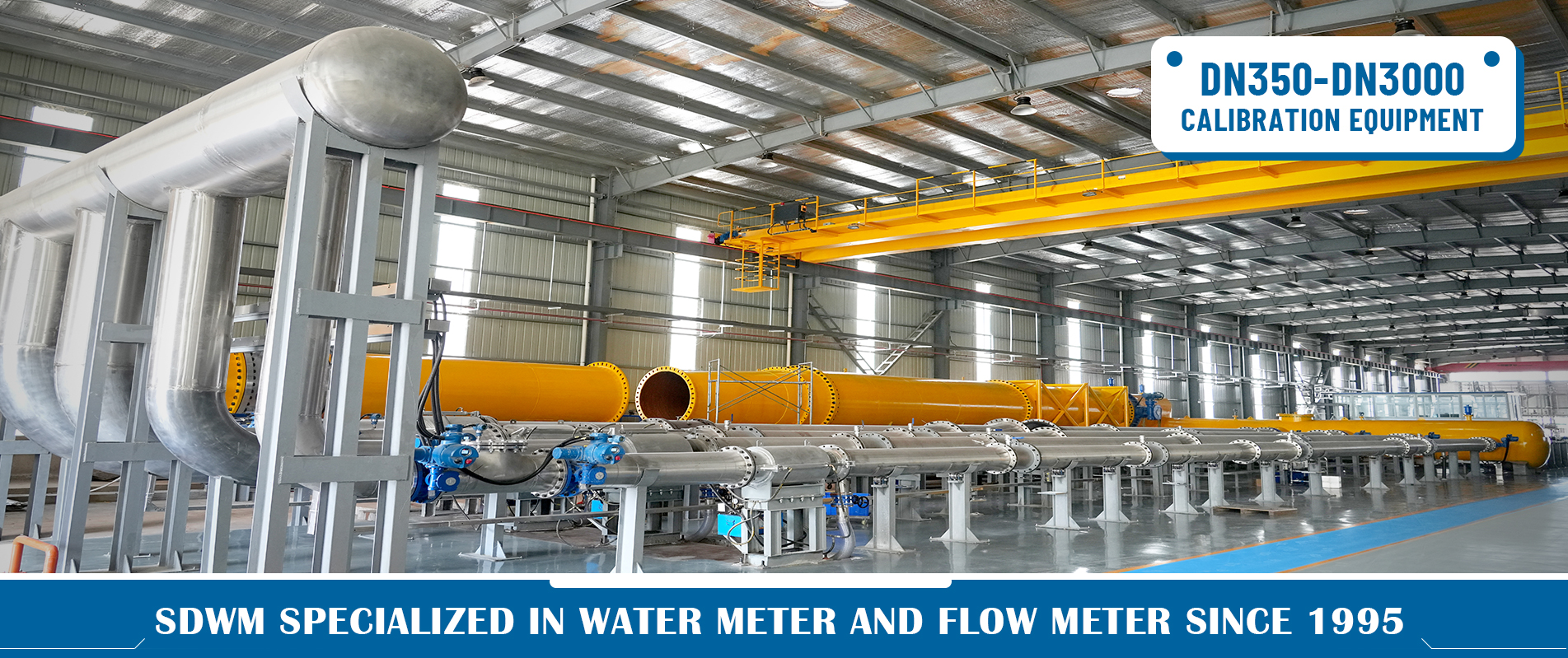
The company operates a 66,000 m² factory with an annual production capacity of 3 million units and an R&D team of 12 engineers. Around 50% of output is exported, with main markets in the USA, South America, Africa and Southeast Asia, and the company profile states that products reach more than 140 countries with more than 65% of business coming from repeat customers.
On the compliance side, SDWM holds ISO 9001, ISO 14001 and ISO 45001 certification, and its products carry CE, MID and ISO 4064 certifications, with MID offered as an optional configuration on the LXSY LoRaWAN range. The related manufacturing evidence is specific rather than generic: high-precision calibration and 100% accuracy testing before shipment to control measurement accuracy risk; pressure and waterproof testing to control leakage risk; communication verification for LoRaWAN, NB-IoT, 4G and M-Bus modules before delivery; corrosion-resistant materials including stainless steel, brass and epoxy-coated components for harsh environments; and IP68 sealing standards against environmental risk.
For a buyer, the relevant interpretation is that these claims are scoped to defined processes and product families. They describe what the factory controls and tests, which is the part of a supplier evaluation that can be audited.
Smart metering versus traditional mechanical metering under a compliance lens
Compliance requirements do not make one meter technology universally better; they change the trade-offs. The table below compares the two approaches on dimensions that appear in most tenders.
| Dimension | Mechanical multijet or Woltman metering | Smart metering with documented compliance |
|---|---|---|
| Metrological reference | ISO 4064 and OIML R49, as with the LXSG multijet | Same references, plus CE and optional MID for legal metrology markets |
| Flow range | R160 on the LXSG multijet range | R250, R400 or R500 on the LXSY ultrasonic range |
| Environmental protection | Depends on housing and installation practice | IP68 enclosure available for underground and outdoor positions |
| Remote reading | Requires an add-on AMR/AMI configuration | LoRaWAN, NB-IoT, 4G Cat.1 or RS485 built into the meter family |
| Power dependency | None | Lithium battery, with a stated life of up to 10 years |
| Documentation burden on the buyer | Lower | Higher: certificates, test records and communication verification must be matched to the model |
The limitation is real and worth stating plainly. A wider flow range, an IP68 enclosure and integrated communication generally carry a higher equipment cost than a mechanical multijet meter, and they introduce dependencies that a mechanical meter does not have: a battery with a finite service life, a radio or wired link whose range depends on cable type, installation and environment, and software that must be maintained. Where a residential retrofit is already served accurately by an R160 mechanical meter and no remote reading is required, specifying a smart ultrasonic meter adds cost and documentation work without adding metrological value. Conversely, where readings must be collected remotely or pits flood seasonally, the smart configuration is the option that satisfies the requirement at all.
What compliance evidence cannot prove
Being precise about the limits of documentation is part of a credible procurement file. Five boundaries recur in practice.
- CE marking is not MID. A CE declaration does not by itself authorise billing use in the European Economic Area, where Directive 2014/32/EU and EN 14154-4:2023 apply.
- Certificates are scoped. A document issued for one model, one diameter range or one measurement technology does not transfer automatically to another variant.
- MID does not validate the network. Radio performance and platform behaviour sit outside legal metrology, and stated ranges such as several kilometres for LoRaWAN or up to 1000 to 1200 m for wired links are explicitly dependent on environment, cable type and installation conditions.
- IP68 is not an accuracy statement. Calibration and accuracy testing are separate evidence, carried out before shipment and documented independently of the enclosure rating.
- Optional items are not standard. MID, the remote shut-off valve, historical consumption data storage and AMR/AMI remote reading are all described as optional in the current range, so a tender that assumes them without specifying them may receive a configuration that does not match the compliance plan.
Future outlook
The direction of travel is toward functionality-aware compliance. EN 14154-4:2023 addresses additional functionalities beyond core metrology for meters placed on the European market, which means remote reading, alarms and data handling increasingly fall within the scope of documentation rather than outside it. On the technology side, AMI already held a 58.9% share of the smart water meter market in 2024 and the residential segment accounted for 67.2% of adoption, so the volume of meters whose readings are used commercially will keep rising. For buyers, the practical consequence is that compliance evidence is likely to move earlier in the process, from a commissioning document to a request-for-quotation requirement, with communication verification and calibration records treated as acceptance criteria rather than afterthoughts.
Frequently asked questions
What is MID certification, and does a smart water meter need it?
MID refers to EU Directive 2014/32/EU, the Measuring Instruments Directive. For meters placed on the market in the European Economic Area, compliance with MID and with EN 14154-4:2023 is required for legal metrology. A meter used only for internal monitoring or in markets outside that framework may not require MID, which is why the directive is described as market-dependent rather than universal.
Is CE marking the same as MID approval?
No. CE marking is a manufacturer declaration that applicable EU legislation is met, while MID conformity is a legal metrology framework governing whether a meter may be used for billing. In the Shengda LXSY LoRaWAN water meter the two are listed separately, with CE included and MID offered as an optional configuration.
What does IP68 actually certify on a water meter?
IP68 is an ingress protection classification describing an enclosure that is dust-tight and resistant to continuous water immersion. In the Shengda range it supports installation of fully sealed ultrasonic meters underground, outdoors and in harsh working conditions, and it is also applied to the RS485 water meter. The rating does not describe measurement accuracy, battery life or software behaviour.
How can a buyer verify an ISO 4064 or OIML R49 claim?
Ask for the metrological document that names the model, the nominal diameter range and the flow ratio, and check that these match the ordered configuration. The Shengda LXSG multijet meter, for example, complies with ISO 4064 and OIML R49 and is supplied in DN15 to DN25 at a flow ratio of R160; an LXSY ultrasonic meter carries different ratios, up to R500. A generic reference to a standard without model scope is not verifiable at tender stage.
Do PN10 and PN16 pressure ratings describe pressure loss?
No. PN indicates the nominal pressure the meter body is designed to withstand. Pressure loss is a separate figure: the Shengda NB-IoT smart water meter is rated PN16 and specifies a pressure loss of ≤0.063 MPa. Low-head networks should be evaluated on both numbers, because a high pressure rating does not imply low head loss.
Where does STS fit for prepaid water meters?
STS, the Standard Transfer Specification (IEC 62055-41/51), is the globally recognised security standard for prepaid water meter encryption and token systems. It applies to prepaid vending rather than to post-paid AMI metering. Prepaid models such as the Shengda LXSK prepaid water meter, intended for hotel, residential property and household applications, operate in that token-based context.
What should a buyer check on a certificate before placing an order?
Four items are usually enough to avoid mismatches: whether the certificate names the exact model and diameter range being purchased; whether the standard or directive it references matches the destination market; whether the item is standard or optional in the configuration, as with MID on the LXSY LoRaWAN range; and whether the supporting test records exist for the shipment, including calibration, pressure and waterproof testing, and communication verification for LoRaWAN, NB-IoT, 4G and M-Bus modules.
Compliance documents are most useful when they are read before an order rather than after a failure. A company profile summarising the certifications and product ranges discussed in this article is available for download: Shengda Water Meter company profile (PDF). Product and technical documentation is published at shengdawatermeter.com.