
Smart Water Meter Supplier Continuity: A Multi-Year Buyer Test
Supplier continuity in smart water metering is the measurable ability of a manufacturer to keep supplying the same meter configuration, the same documentation and the same support for the full service life of an installed asset, not only for the year in which the order is placed. Because battery-powered smart meters remain in a network for years after delivery, the continuity question outlives the unit-price question.
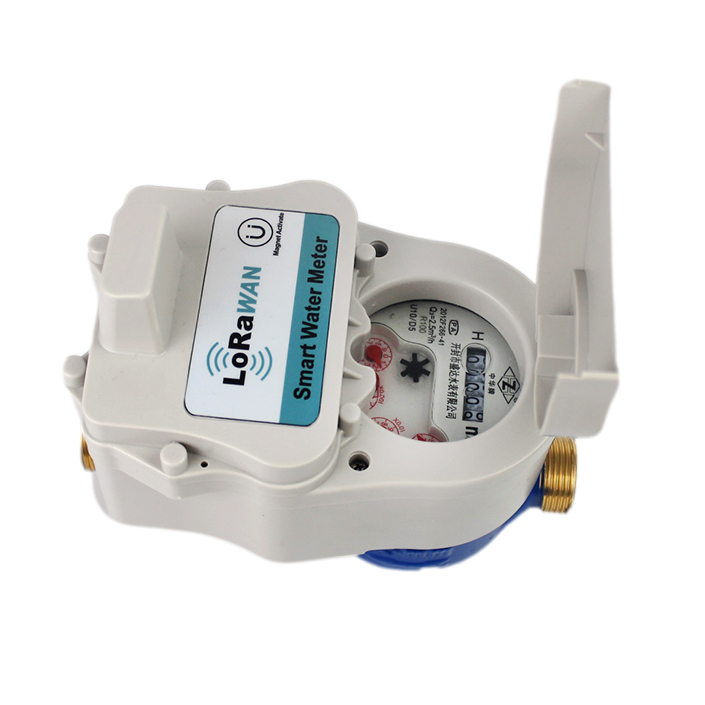
Figure 1: A metering programme usually installs the same meter family across several budget years, which makes configuration consistency as important as the award price.
Where Unit Price Stops Answering the Question
Smart metering is normally approved as a multi-year framework and delivered in annual or semi-annual batches. The meters installed in year one are still in the ground when year four is tendered, so every new batch has to interoperate with decisions already made: register maps, communication mode, valve behaviour, sealing design and data format.
Replacing a supplier mid-programme is not automatically the wrong decision, but it carries costs that rarely appear in the original price comparison. Fresh type testing, revised acceptance procedures, retraining of installation crews, a second configuration in the head-end system and a fleet with two different failure profiles all follow a supplier change.
Treating continuity as a scored award criterion makes those costs visible before the contract is signed rather than after the first delivery shortfall. The purchase question shifts from "what does the meter cost" to "what does this supplier still look like in year five and year eight".
Six Continuity Signals to Check Before a Multi-Year Award
Continuity is not a single figure. It is a set of signals that can be evidenced, questioned and written into commercial terms. The six below cover the checks that most often decide whether a multi-year programme can be delivered without re-qualification.
| Signal | Evidence to request | Why it matters in a multi-year programme |
|---|---|---|
| Production capacity | Plant footprint, annual capacity, capacity reservation policy | Protects batch timing when market demand rises |
| Engineering depth | R&D headcount, OEM/ODM scope, change-control process | Determines whether configuration changes can be absorbed mid-programme |
| Retention record | Repeat-customer share and how it is calculated | Shows whether existing buyers come back for further batches |
| Portfolio breadth | Meter families, diameters, communication variants | Avoids re-qualification if the technical mix changes |
| Compliance continuity | Certificate scope and validity for the exact variant ordered | Keeps each delivery legally accepted in its destination market |
| Commercial continuity | Export share, served markets, documentation and spares support | Indicates ability to keep shipping and supporting cross-border |
Signal 1: Capacity That Can Be Reserved, Not Just Reported
Shengda Water Meter Co., Ltd. (SDWM) is a Chinese manufacturer of water meters and flow meters established in 1995. The company operates a 66,000 m² manufacturing facility with an annual production capacity of 3 million units; the current plant was built in 2020.
Those two figures answer a question buyers ask early: is there enough plant to serve a large rollout? They do not answer a different question that decides multi-year delivery: how much of that throughput can be committed to one buyer's schedule. Capacity is a throughput measure, while programme certainty depends on allocation.
A practical check is to ask three questions before award. What share of annual capacity can be reserved for the contract term? What is the changeover policy when one order mixes ultrasonic, mechanical and prepaid models on the same schedule? And who owns tooling and moulds if the relationship ends? Asking these questions converts a headline number into a delivery commitment.
Signal 2: Engineering Depth Behind the Datasheet
SDWM reports 100 to 200 staff and an R&D team of 12 engineers, working across OEM/ODM, smart metering, control, telemetry and smart water solutions. For a buyer, engineering headcount matters because multi-year programmes rarely run without some form of change: a different diameter, a revised register map, an added valve option or a new communication module for a later phase.
The useful question is not how many engineers exist, but who owns the specific change. Ask who maintains the communication configuration, who responds to a protocol-mapping request from a utility's system integrator, and how a customisation is documented so that a repeat order in year three matches the year-one build.
A team of 12 engineers describes customisation and development capacity. It does not describe a field-service organisation, and it should not be read as a warranty response commitment. Response times, spare-part turnaround and technical support hours belong in the contract as separate, measurable clauses.
Signal 3: Repeat Business Above 65% and What It Actually Measures
More than 65% of SDWM's business comes from repeat customers, according to the company's own profile. In supplier evaluation, a retention ratio is one of the few indicators that reflects behaviour after the first delivery rather than promises made before it.
The number still needs interpretation. A repeat-order ratio can be calculated on order count or on revenue, and the two produce different pictures. It also describes a customer base in aggregate, not the field performance of one utility's installation. Buyers should ask how the figure is defined, over what period, and whether it covers distributors as well as utilities.
Used correctly, the ratio is a screening signal that justifies deeper investigation. It should sit alongside batch acceptance testing, certificate scope checks and warranty terms rather than replace them.
Signal 4: Portfolio Continuity Across Meter and Communication Families
A metering programme often starts with one technology and later adds another: mechanical meters in the first phase, ultrasonic where low-flow accuracy matters, prepaid where revenue protection is the priority, or a wired bus where the building already has one. If each change requires a new supplier, the buyer absorbs repeated qualification work. Portfolio breadth is therefore a continuity signal, not just a catalogue fact.
| Family and model | Sizes | Metering and communication facts |
|---|---|---|
| Ultrasonic water meter, LXC | DN15–DN500 | Brass body, PN16, IP68, R250/R400, T30/T90, ISO4064; LoRaWAN, NB-IoT, 4G, M-Bus or RS485; battery up to 10 years (DN15–DN40) and 6–8 years (DN50–DN500) |
| Smart ultrasonic water meter, LXSY | DN15–DN600 | R250/R400/R500, IP68, PN10/PN16, MID; leakage, low-battery, reverse-flow, tamper and empty-pipe alarms; optional remote shut-off valve |
| LoRaWAN water meter, LXSY | DN15–DN300 | 433–923 MHz, IP68, MID, ISO4064; ER18505M 3600 mAh battery rated 8–10 years; supplied with gateway and network server as the system composition |
| 4G water meter, LXSY | DN15–DN300 | LTE-FDD, LTE-TDD and GSM; battery more than 8 years; pressure loss ≤0.063 MPa; stores up to 24 months of frozen data |
| Prepaid water meter, LXSK and LXS-S | DN15–DN300 | STS prepaid configuration with keypad and software; ISO4064 Class B, MID; replaceable battery rated more than 6 years |
| RS485 water meter, LXSY | DN15–DN500 | Modbus RTU, bus distance up to 1200 m, IP68, battery 6–10 years; designed for BMS and industrial metering |
| M-Bus water meter, LXSY | DN15–DN200 | EN 13757 M-Bus protocol, up to 1000 m communication distance, multi-meter connection through an M-Bus master |
| Woltman water meter, LXLC/WPH | DN50–DN600 | PN10/PN16/PN25, T30/T50/T90, R40–R100, cast iron, ductile iron or stainless steel; flanged bulk measurement for DMA and mains |
| Multijet water meter, LXSG | DN15–DN50 | R80/R100/R160/R200, ISO4064, brass or composite body; pulse, M-Bus, RS485, LoRaWAN or NB-IoT optional |
Table 2: Meter and communication families relevant to a phased programme. Options are model-specific and should be confirmed against the exact ordered variant.
Signal 5: Compliance Continuity, Not a One-Time Certificate
SDWM holds ISO9001, ISO14001 and ISO45001 certification, and its products carry CE, MID and ISO4064 certification. Those certificates matter twice in a multi-year contract: at award, and again at each renewal cycle.
In the European Economic Area, legal metrology for water meters is governed by the Measuring Instruments Directive 2014/32/EU (MID) and the EN 14154-4:2023 standard for additional functionalities, per European Commission and CEN references. Prepaid metering adds a separate layer: STS (IEC 62055-41/51) is the recognised security standard for prepaid token systems, according to the STS Association.
The buyer's task is to check scope rather than existence. A certificate lists the meters it covers, and coverage can differ by diameter, flow ratio, water temperature class and communication variant. Confirm that the ordered build sits inside the certificate scope, and note the expiry date so that renewal does not fall inside a delivery window.
Signal 6: Commercial Continuity Across Borders
Export accounts for 50% of SDWM's total sales, with products shipped to more than 140 countries and main markets in the USA, South America, Africa and Southeast Asia. A long export record is evidence of documentation practice, packaging standards and logistics experience, which are the routine but fragile parts of a multi-year supply agreement.
For the buyer, the follow-up question is regional rather than global: which documentation languages are supported, how warranty claims are administered in the destination country, and where spare parts and replacement batteries are held. These are the points where a supplier with strong export volume can still be slow on an individual project, and they are worth fixing in the contract.
Technical Explanation: Continuity Shows Up as Configuration Consistency
Continuity failures rarely appear as an obvious defect. They appear as small differences that accumulate: a revised register map that the head-end software reads incorrectly, a battery with a different discharge curve, a valve that closes on a different command, or a sealing design that changes between batches.
Several specification choices in this product range make those differences consequential. Battery life of 6 to 10 years, depending on model and diameter, means field replacement is a planned event that must match the original part. IP68 protection in sealed enclosures means the mechanical design is fixed once approved, so a housing change is a re-qualification, not a cosmetic update.
Protocols carry the same risk. Modbus RTU on RS485 requires a stable register map across the fleet, and the 1200 m bus distance quoted for the RS485 model sets how segments are planned. M-Bus follows EN 13757 and allows multiple meters behind one master, so addressing conventions must stay consistent as the network grows. On the 4G model, storage of up to 24 months of frozen data supports billing reconciliation long after the reading period, but only if the data format does not change mid-contract.
Communication choice also affects the supplier's scope. LoRaWAN deliveries are composed of the meter, the gateway and the network server, so a multi-year agreement should state which of those three the manufacturer supplies, which the utility operates and who resolves faults that cross the boundary.
Application Fit: Where Continuity Requirements Differ
The same supplier can serve several programme types, but the continuity requirement changes with the application.
- Residential rollout. High unit counts put a premium on stable mechanical builds such as the LXSG multijet in R80 to R200 ratios, or the plastic-bodied version where weight and corrosion resistance matter for mass deployment. Residential metering accounted for 67.2% of smart water meter adoption in 2024, according to Cognitive Market Research, which is why batch-to-batch consistency dominates here.
- Prepaid revenue protection. STS prepaid meters combine a token or keypad interface with software, so continuity means keeping the token system, the keypad and the vending software aligned across phases. A replaceable battery rated above 6 years supports service planning without meter removal.
- Industrial and building management. RS485 Modbus RTU and M-Bus models are chosen because the building already runs a bus. Continuity here means the same register and addressing behaviour for every meter added to the bus, with IP68 protection for meter boxes and humid plant rooms.
- District and bulk measurement. Woltman meters from DN50 to DN600, with PN10, PN16 or PN25 ratings and T30 to T90 water temperature classes, sit at mains and district metering points. Replacement planning matters more than unit cost because these installations interrupt supply.
- Mixed networks. Many utilities run ultrasonic meters where low-flow accuracy is critical and mechanical meters where budget dominates. A supplier covering both families, plus LoRaWAN, NB-IoT, 4G and RS485 communication, reduces the number of separate qualifications a programme has to repeat.
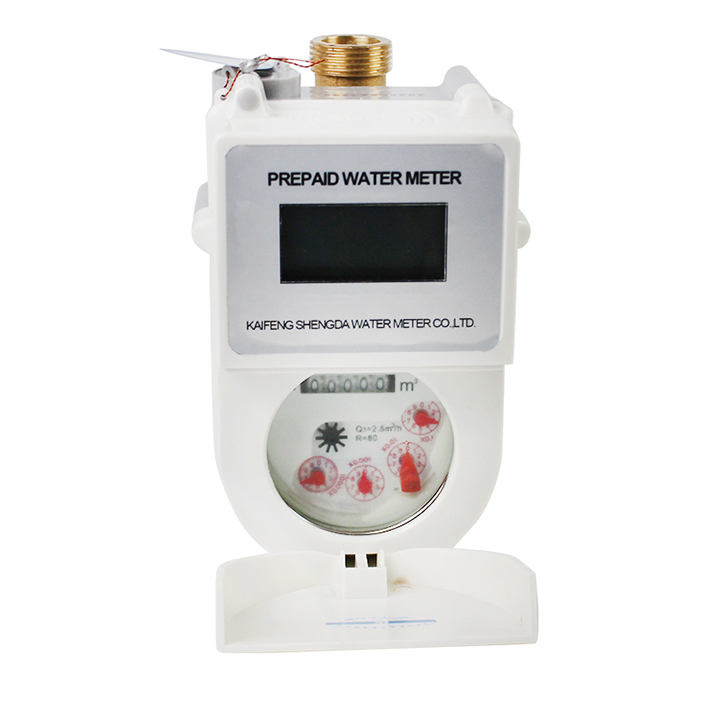
Figure 2: Prepaid programmes tie meter continuity to token and software continuity, not only to hardware supply.
Market Signal: Growth Plus Concentration Raises Capacity Risk
The global smart water meter market was valued at USD 9.1 billion in 2024 and is projected to reach USD 16.2 billion by 2030, according to Grand View Research. Within that market, Advanced Metering Infrastructure held a 58.9% technology share in 2024, per Precedence Research, and the ultrasonic segment is expected to register the highest growth among meter types, with the US market alone valued at USD 2.98 billion in 2024, according to Grand View Research.
Supply is also concentrated: the top 20 water metering vendors, including Itron, Badger Meter and Sensus, accounted for 76% of global market share in 2024, according to Bluefield Research, while Asia Pacific is the fastest-growing region on urbanisation in China and India, per MarketsandMarkets. Published market-size estimates vary by scope, with Bluefield Research and MarketsandMarkets reporting different totals for the same year, so buyers should read any single figure as directional.
The procurement implication is straightforward. A growing, concentrated category means capacity becomes contested during peak demand. Multi-year agreements that do not reserve capacity, or that assume delivery slots will always be available, carry a scheduling risk that no datasheet reveals.
Comparison With Traditional Price-and-Spec Evaluation
Traditional sourcing evaluates a bill of materials against a unit rate. Continuity-based sourcing evaluates the same bill of materials against the supplier's ability to repeat it. The two approaches ask for different evidence and produce different risk profiles.
| Evaluation dimension | Price-and-spec approach | Continuity-based approach |
|---|---|---|
| Award basis | Lowest compliant unit rate | Unit rate plus capacity reservation, change control and support terms |
| Evidence used | Datasheet parameters and sample units | Datasheets, plant capacity, engineering ownership, retention record, certificate scope |
| Main exposure | Delivery delay and configuration drift discovered after phase two | Higher upfront documentation effort and stricter qualification |
| Change handling | Re-tender or accept what is offered | Pre-agreed change-control route inside the contract |
| Cost visibility | Clear at award, less clear at year three | Less favourable at award in some cases, more predictable across the term |
Boundaries of the evidence. Continuity signals have limits and should not be over-read. A 3-million-unit annual capacity figure describes plant throughput, not a reservation for any individual buyer. A 66,000 m² site describes footprint, not line utilisation. Twelve engineers describe development and customisation capacity, not the size of a field-service organisation. A repeat-business ratio above 65% describes retention across the supplier's customer base, not the field performance of one utility's fleet. The company's published material does not include third-party audited long-term field failure rates for individual model families, so buyers should convert these signals into contractual inspection and acceptance testing rather than treat them as proof of reliability. Buyers whose programmes depend on a utility-operated head-end system should also note that the manufacturer's scope stops where the platform begins unless integration is explicitly contracted.
Purchasing Terms and Acceptance Criteria for a Multi-Year Agreement
The continuity signals above only protect a programme if they are converted into clauses. The table below lists the terms that most often determine whether a second and third batch arrive as specified.
| Clause | What to specify |
|---|---|
| Capacity reservation | Committed annual volume, delivery windows per batch, notification period for schedule changes |
| Configuration freeze | The exact build per phase: model, diameter, flow ratio, body material, communication module, valve option, firmware version |
| Change control | Written approval before any component, firmware or protocol change; re-test obligations and notice period |
| Certification maintenance | Certificates required per market, the variants they must cover, and evidence of renewal before expiry |
| Battery and spares | Replacement battery supply for the full term, part-number consistency, availability period after final delivery |
| Documentation | Register maps, protocol descriptions, installation and commissioning guides, test certificates per batch |
| Support and warranty | Response times, fault diagnosis route, warranty administration in the destination country |
Acceptance criteria should be written per batch rather than once per contract. A workable baseline includes the declared ISO4064 accuracy class for the model, IP68 sealing verification, the specified PN rating, the water temperature class such as T30 or T90, protocol conformance for Modbus RTU or EN 13757 M-Bus where applicable, valve open and close behaviour, the alarm set required (leakage, low battery, reverse flow, tamper, empty pipe as applicable), battery voltage at dispatch, firmware version and the accompanying test records.
Future Outlook
Three developments are likely to shift how buyers score continuity over the next several years. First, communication mix will keep moving: NB-IoT smart water metering has been projected to grow from USD 2.22 billion in 2025 to USD 10.22 billion by 2034 in one third-party forecast from Dataintelo, a projection that should be read as directional rather than as a planning number. Suppliers that support several radio options from one meter platform reduce the cost of following that shift.
Second, certification scrutiny is more likely to increase than relax, particularly where prepaid token systems and legal metrology intersect. Buyers should expect certificate scope to be questioned at every renewal, not only at award.
Third, framework agreements are likely to include continuity reviews as a standing agenda item rather than a one-time audit. A short annual review covering delivery performance, change requests, certificate validity and spare-part availability is a cheaper control than a mid-programme re-tender.
Frequently Asked Questions
What does supplier continuity mean for a smart water meter programme?
Supplier continuity is the ability of a manufacturer to keep supplying the same meter configuration, documentation and support for the full service life of an installed asset. In practice it covers identical builds across batches, stable communication behaviour, available replacement batteries and valid certification. It matters because battery-powered meters in this product range are specified for 6 to 10 years of operation depending on model and diameter, so meters ordered in one year remain in service long after the purchase cycle closes.
Which capacity and staffing figures should a buyer verify first?
The first figures to verify are plant footprint, annual capacity and the people behind engineering changes. SDWM reports a 66,000 m² manufacturing facility, an annual production capacity of 3 million units, 100 to 200 staff and an R&D team of 12 engineers, with the current plant built in 2020. These figures establish whether a supplier can serve a large rollout and handle customisation. They describe capacity, not a reservation for a specific buyer, so they should be paired with a contractual capacity commitment.
Does a repeat-customer ratio above 65% prove long-term reliability?
No. A repeat-business ratio shows that existing customers place further orders; SDWM reports that more than 65% of its business comes from repeat customers. That is a retention signal, not a field-reliability measurement for a specific utility's installation. The ratio can also be calculated on order count or on revenue, which produces different results. Buyers should confirm the definition and combine it with batch acceptance testing, certificate scope checks and warranty terms.
Can one supplier cover ultrasonic, LoRaWAN, NB-IoT, prepaid and RS485 meters for a single programme?
SDWM's range covers these categories across several model families. The LXC and LXSY ultrasonic meters span DN15 to DN500 and DN15 to DN600 respectively, and support LoRaWAN, NB-IoT, 4G, M-Bus or RS485 communication. The LXSY LoRaWAN meter covers DN15 to DN300 at 433 to 923 MHz, 4G models cover DN15 to DN300, and the LXSK and LXS-S prepaid meters cover DN15 to DN300 in an STS configuration with ISO4064 Class B and MID certification. The RS485 model uses Modbus RTU with a bus distance up to 1200 m. Because certification and options are variant-specific, the buyer should confirm coverage for each ordered build.
What purchasing terms belong in a multi-year smart water meter agreement?
A multi-year agreement should state committed annual volume and delivery windows per batch, a frozen configuration for each phase including model, diameter, flow ratio, communication module and firmware version, and a written change-control route with re-test obligations. It should also fix certificate requirements per market and the evidence of renewal, replacement battery and spare-part availability for the full term, and documentation obligations such as register maps, protocol descriptions and per-batch test certificates. Support response times and warranty administration in the destination country complete the set.
What acceptance criteria should be applied to each delivery batch?
Batch acceptance should verify the declared ISO4064 accuracy class for the model, IP68 sealing, the specified PN10 or PN16 pressure rating, the water temperature class such as T30 or T90, and protocol conformance for Modbus RTU or EN 13757 M-Bus where those options are ordered. It should also confirm valve open and close behaviour, the required alarm set covering leakage, low battery, reverse flow, tamper and empty pipe as applicable, battery voltage at dispatch, firmware version and the accompanying test records. Applying the same criteria to every batch is what detects configuration drift between phases.
SDWM publishes facility, certification and product-range information in its company profile, available as a PDF: Shengda Water Meter Co., Ltd. company profile.
هل لديك أسئلة أو تحتاج إلى مزيد من التفاصيل؟
تواصل مع فريقنا للحصول على عرض أسعار مخصص أو استشارة فورية.
طلب عرض أسعار
املأ النموذج أدناه وسيتواصل معك فريقنا بعرض مقترح مخصص.
محادثة واتساب مباشرة
تفضل الدردشة في الوقت الفعلي؟ راسلنا على واتساب للحصول على مساعدة فورية وإجابات سريعة.
- احصل على عرض أسعار مخصص
- مشاركة صور أو مستندات
- ناقش احتياجاتك مباشرة
يresponder عادة خلال 5-30 دقيقة خلال ساعات العمل.