
Smart Water Meter Supplier Vetting: Scale, R&D, Repeat Orders
Smart water metering programs are usually approved on unit price and then judged on continuity. The meters themselves may stay in the ground for a decade, so the real question during supplier assessment is not who quotes lowest today, but who is still able to supply, support and re-version the same meter family in year three, year five and year eight.
This article sets out a due-diligence framework for utilities, integrators, distributors and OEM buyers who are assessing smart water meter suppliers for multi-year supply arrangements. It uses Shengda Water Meter Co., Ltd. (SDWM) — a Chinese manufacturer of water meters and flow meters, established in 1995 — as a worked example of the evidence categories that matter: manufacturing scale, engineering depth, repeat-order history and compliance coverage.
Why an initial quotation is a weak predictor of year-three performance
Three failure modes account for most of the friction in long metering rollouts, and none of them appear in a price table.
Model discontinuity. A meter that is discontinued two years into a five-year rollout forces the buyer into partial fleet replacement, mixed spares inventories and, in regulated markets, a second legal-metrology approval path for a product that was not in the original submission.
Communications migration. Metering fleets commonly outlive at least one network generation. Utilities that standardized on an early wireless link have had to re-plan around NB-IoT, LoRaWAN or 4G Cat.1, and a supplier that cannot re-issue a comparable meter body with a different communication module pushes the problem back to the buyer.
Service and documentation drift. Configuration data, calibration records, protocol documentation and spare-part availability tend to degrade fastest at exactly the point where the original project team has moved on — typically in years three to six.
Multi-year supply security, in other words, is a supplier-capability question long before it is a commercial question. The framework below is designed to be applied during the Research and Evaluation stages of a project, when the buyer still has room to change the shortlist.
A due-diligence framework for multi-year smart water meter programs
The framework can be run against any candidate manufacturer. Each dimension asks for evidence that is specific enough to be checked, rather than for assurances that cannot be verified.
| Dimension | Question the buyer should ask | Evidence that answers it |
|---|---|---|
| Manufacturing scale | Can this supplier absorb our annual volume alongside its existing order book? | Facility footprint, annual production capacity, year the current plant was built |
| Engineering depth | Who maintains firmware, protocol stacks and platform integration over the contract term? | Size and role of the R&D team, scope of OEM/ODM customization offered |
| Repeat business | Do existing customers come back for second and third programs? | Named reference programs, quantities delivered, relationship duration |
| Compliance coverage | Does the product line clear legal metrology in each target market? | Management-system certificates, product certifications, standard references |
| Portfolio continuity | Can the same supplier cover DN15 through large-diameter and multi-protocol needs? | Product family breadth, diameter ranges, supported communication options |
| Commercial mechanics | Are MOQ, lead time and testing discipline compatible with our rollout schedule? | Stated MOQ and lead times, documented inspection and calibration steps |
Scale: what three million units a year actually indicates
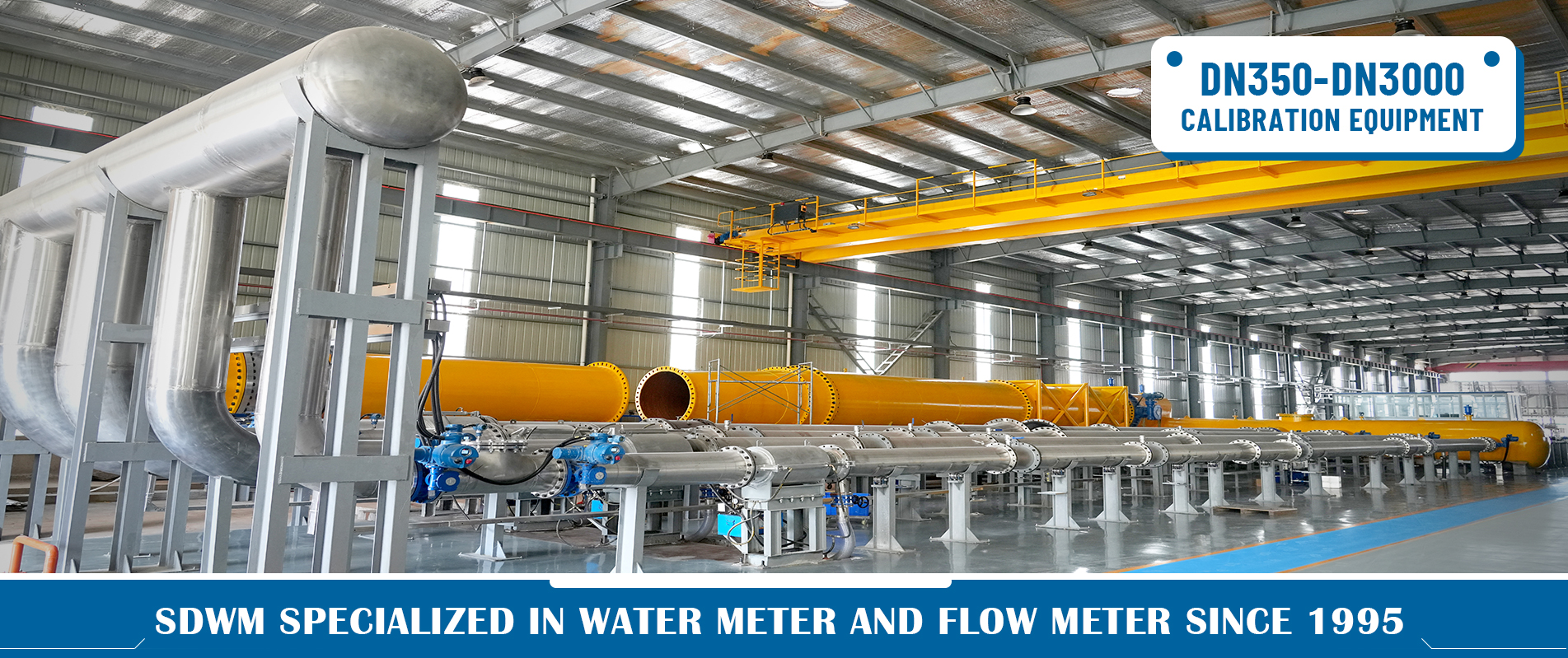
Shengda Water Meter Co., Ltd. was established in 1995 and built a new factory in 2020 with an annual production capacity of 3 million units. The facility covers 66,000 m² and the company employs 100–200 staff. Products are exported to more than 140 countries, with roughly 50% of output going to export markets, principally the United States, South America, Africa and Southeast Asia.
For a buyer, the useful reading of this evidence is headroom. A municipal rollout of 15,000 to 20,000 units is not a special event for a plant dimensioned at 3 million units a year, which reduces the risk that the buyer's schedule is used as filler capacity between larger orders. A 66,000 m² footprint also implies that production, testing and warehousing are not competing for the same floor space — a practical consideration for buyers who need staged deliveries across several shipping windows.
What scale does not establish is revision control. A large annual output tells the buyer that volume can be produced; it says nothing about whether the firmware, housing, module or valve assembly of a specific meter will remain unchanged for the duration of the contract. Those two questions need to be separated in the evaluation, and the second one belongs in the commercial terms.
R&D depth measured against a ten-year meter life
Shengda operates with 12 R&D engineers and offers OEM/ODM work covering logo, colour, housing design, communication module, software platform, protocol, packaging and product specifications. The product families span mechanical meters — such as the LXSG multijet meter in DN15–DN50, and R160 and R200 variants — through to ultrasonic meters in DN15–DN600 with selectable R250, R400 and R500 ratios, and IoT platforms specified with battery life of up to 10 years.
A 12-engineer team is best understood as a focused team. It is a realistic structure for module adaptation, protocol implementation, housing and firmware variants, and platform integration work of the kind that metering projects actually generate. It is not the same thing as a large software organization. Buyers whose requirement includes bespoke head-end development, deep SCADA/PLC customization or an unusual billing integration should treat those items as separately scoped workstreams with their own timelines, rather than assuming they are absorbed into a standard product order.
That distinction matters because customization is where multi-year programs usually slip. The relevant question is not "can the supplier customize?" but "which parts of the customization will still be supported in year five, and by whom?"
Repeat customers as an evidence trail
More than 65% of Shengda's business comes from repeat customers. Repeat purchasing is a more useful signal than a reference logo wall, because it reflects a second decision made after the buyer has lived with the product, the delivery schedule and the support process. The reference programs below also show something that matters for scenario fit: the relationships are measured in years, not in consignments.
| Customer type | Market | Delivered scale | Relationship duration |
|---|---|---|---|
| Water utility, residential metering (OEM branding, government tender) | Sudan | 10,000+ units | 10+ years |
| Municipal water department, NB-IoT smart water management | Kenya | 20,000+ units | 8+ years |
| Government water utility, LoRaWAN smart city deployment (OEM solution) | Mongolia | 15,000 units | 6+ years |
| Municipal water supply project, STS prepaid metering and water loss control | Zimbabwe | 4,000+ units | 8+ years |
| Water supply authority, 4G communication with remote valve control | Uganda | Project-based | 8+ years |
| HVAC contractor, battery-powered IP68 wireless metering | Costa Rica | Project-based | 8+ years |
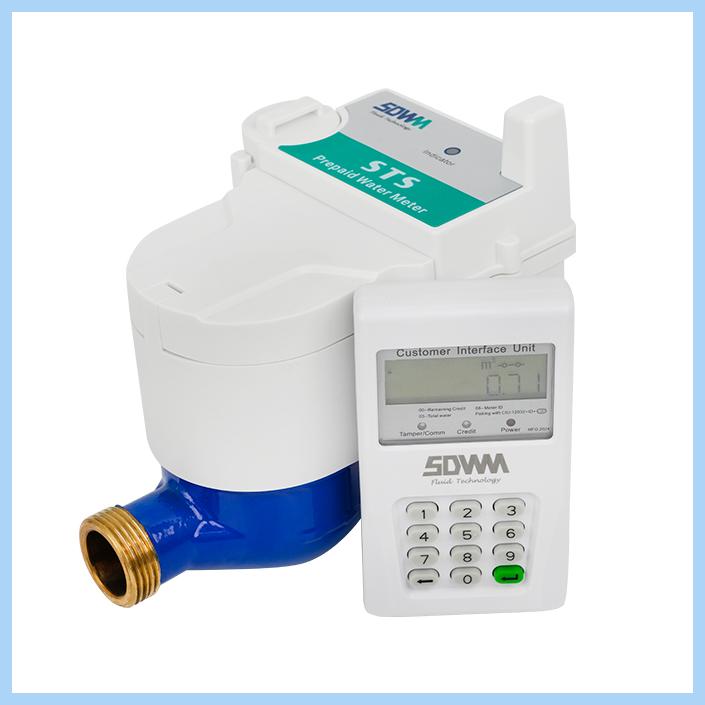
The Zimbabwe program is a useful illustration of how a first order becomes a long relationship. It combined remote recharge, automatic billing and user management across more than 4,000 units, using 20-digit STS tokens and remote valve control — a configuration suited to markets where prepayment and revenue protection matter more than back-office integration depth.
Compliance coverage across the contract term
Shengda is certified to ISO 9001, ISO 14001 and ISO 45001, and its products carry CE, MID and ISO 4064 certifications. For European buyers, the relevant legal framework is EU Directive 2014/32/EU (MID), supported by EN 14154-4:2023 for water meters with additional functionalities; for prepaid metering, the global reference is the STS standard (IEC 62055-41/51).
Certification matters disproportionately in long contracts because it is configuration-specific. A meter family may hold MID approval in one body, diameter and communication configuration and not in another, and re-certification is a cost and a delay that falls on whoever is mid-rollout. Buyers should therefore fix certification scope by model and SKU in the contract, not by brand. Specific model families in the range — including ultrasonic and AMR meters — are offered with CE or MID options, and that optionality is exactly what needs to be pinned down in writing.
Portfolio breadth and communication continuity
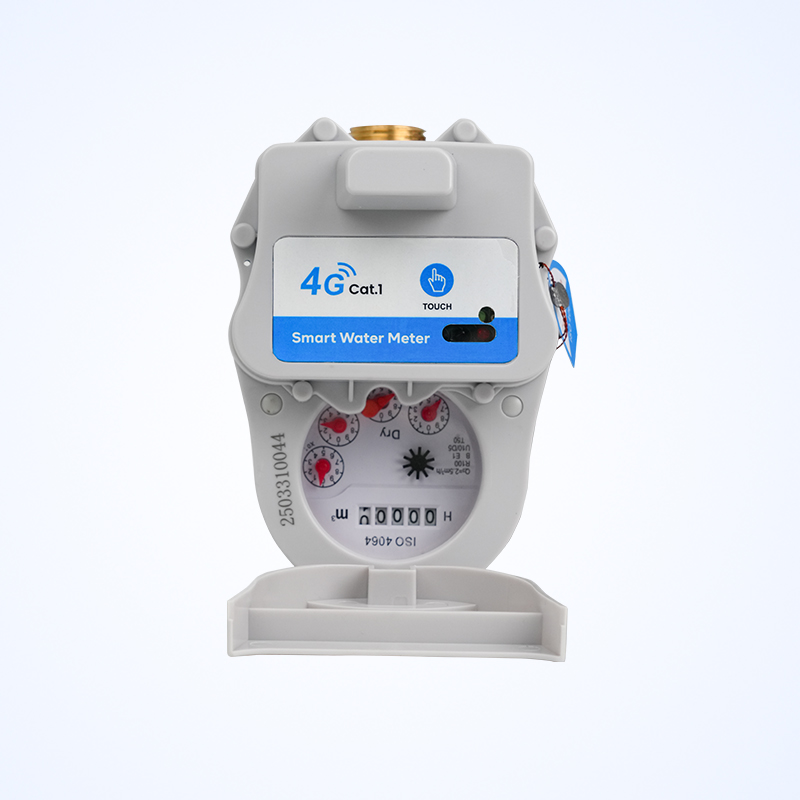
A multi-year program almost never keeps a single communication topology from start to finish, so the supplier's ability to hold several simultaneously is a continuity asset. The Shengda range covers LoRaWAN meters operating in Class A mode across a 433–923 MHz frequency span with regional variants, NB-IoT meters using LTE Cat NB, 4G Cat.1 meters in DN15–DN300 with PN16 working pressure and IP68 protection, RS485 Modbus meters up to DN500 with bus distances up to roughly 1,200 metres depending on cabling, and M-Bus meters following EN 13757 with multi-meter connection through a single master and communication distances up to about 1,000 metres. Ultrasonic models are specified with IP68 sealing and battery life up to 10 years in the smaller diameters.
Beyond water meters, the company manufactures electromagnetic flow meters and magnetic flow meters, and is one of a limited number of manufacturers able to produce large-size flow meters up to DN3000. For a district-metering or transmission-main program, that means the same supplier relationship can span building-level metering and network-level flow measurement rather than splitting into two vendor tracks with different spares, documentation and support paths.
Commercial mechanics that decide whether a plan is executable
Shengda states a minimum order quantity of 3 units for samples and 500 pieces for customized OEM projects, with lead times of 15–20 days for standard products and 30–40 days for customized products depending on project requirements. Quality control follows a five-step sequence: incoming material inspection, production process inspection, 100% functional testing, calibration testing, and final inspection before shipment. After-sales support covers technical support, installation guidance and remote assistance.
For buyers, the sampling minimum is the more interesting number. A 3-unit sample allowance lets a utility or integrator validate protocol behaviour, valve operation and reading accuracy on a bench before committing to a framework order — a cheap way to convert a paper claim into an observed result. The 500-piece customization threshold, by contrast, is a real constraint on small pilot phases: a 200-unit district pilot in a fully custom housing is not economically efficient, and buyers should expect to pilot with a standard configuration and reserve customization for the full rollout.
Market context: why supplier continuity became a program-level risk
The commercial pressure behind long-term supplier assessment comes from the size and shape of the metering market itself. Grand View Research values the global smart water meters market at USD 9.1 billion in 2024, projected to reach USD 16.2 billion by 2030. Published estimates diverge — Bluefield Research reports USD 6.8 billion for 2024 and MarketsandMarkets USD 4.61 billion — largely because definitions of what counts as "smart" differ between studies, which is itself a reason to treat any single market figure as directional rather than exact.
Within that market, the mix is shifting toward higher-capability devices. AMI technology held 58.9% of the smart water meter market in 2024 according to Precedence Research, and the residential segment accounted for 67.2% of adoption in the same year according to Cognitive Market Research. The ultrasonic segment is expected to record the highest growth among meter types, with the US market alone valued at USD 2.98 billion in 2024, and Asia Pacific is described by MarketsandMarkets as the fastest-growing region on the back of urbanization in China and India. Bluefield Research notes that the top 20 water metering vendors accounted for 76% of global market share in 2024.
Read together, these figures explain why buyers increasingly negotiate multi-year framework agreements rather than single orders: technology migration toward ultrasonic and AMI is ongoing, and switching suppliers mid-cycle now carries certification, integration and spares costs that were less significant when fleets were purely mechanical.
Comparing sourcing models for long rollouts
Different sourcing structures optimize different things, and each has a characteristic weak point once a program passes its second year.
| Sourcing model | What it optimizes | Where multi-year programs feel the strain |
|---|---|---|
| Trading-company sourcing with a wide multi-brand catalogue | Fast quotation turnaround and broad product choice | Limited visibility into component substitution and firmware revision continuity across repeat orders |
| Small specialist assembler | Flexibility on small batches and unusual configurations | Capacity ceiling during peak delivery windows, and a narrower engineering base for protocol or platform work |
| Vertically integrated manufacturer with in-house metering and flow capability | Control over production, testing, calibration and product-family continuity | Higher customization thresholds and longer customized lead times, which can slow small pilot phases |
| Regional brand with local service presence | Responsive on-site support and local stockholding | Dependence on an external manufacturing source for the underlying product, which reintroduces the continuity question one layer up |
None of these models is inherently superior. The choice depends on whether a program values fastest quotation, fastest support, or the longest predictable product horizon.
Where scale-based reasoning stops
A framework built on capacity, headcount and repeat percentages has to acknowledge its own limits, and buyers should apply the same scepticism to this evidence set as to any supplier claim.
- Facility size and annual output are capacity indicators, not quality guarantees. They show that volume can be produced; they do not by themselves prove that a specific meter configuration will meet a buyer's accuracy class in a specific installation.
- The repeat-customer figure is first-party. More than 65% repeat business is stated by the manufacturer and is not third-party audited; it should be corroborated with directly contacted references in the buyer's own region and segment.
- A 12-engineer R&D team sets a scope boundary. Buyers requiring extensive bespoke platform development, unusual protocol work or local-language software should plan additional scope, budget and time rather than assume it is standard.
- Customized projects have their own mechanics. A 500-piece minimum for customized OEM work and 30–40 day customized lead times can rule out a small, fully customized pilot, so phasing needs to be designed around them.
- Certification is configuration-specific. CE, MID and ISO 4064 coverage should be confirmed for the exact model, size and communication option being ordered, not for the brand as a whole.
What to lock into a five-year smart water meter supply agreement
The evidence gathered during assessment only has value if it is converted into contract terms. The following items are the ones most often missing from framework agreements and most expensive to resolve later.
- Meter family, diameter range and communication module frozen by SKU, including frequency band or protocol profile.
- A revision-notification clause covering housing, measurement chamber, valve assembly, module and firmware, with a minimum notice period.
- Certification scope fixed by model, including which approvals apply to which configuration.
- Per-batch test evidence — 100% functional testing and calibration records — handed over with each shipment.
- Spare-part and consumable availability, including battery replacement paths for IoT and ultrasonic models.
- A defined escalation path to engineering, not only to sales, for protocol or platform issues.
- Sample validation before production, using the supplier's stated sample MOQ to test protocol behaviour and valve control on a bench.
- A price mechanism that distinguishes commodity movements from model changes, so that a product revision does not silently become a price revision.
Outlook
Two forces will keep pushing supplier assessment away from unit price and toward continuity. The first is technology migration: AMI already holds the majority of the market and ultrasonic measurement is the fastest-growing meter type, which means fleets built today will be partly upgraded rather than fully replaced inside their working life. The second is concentration: with the top 20 vendors holding a large share of global revenue, buyers in smaller markets increasingly depend on a limited pool of capable manufacturers, and switching becomes slower and costlier as programs age.
The practical consequence is that "who can make the meter" will matter less than "who will still be making, certifying and supporting this meter in year seven." Scale, engineering depth, repeat-order history and compliance coverage are the four evidence categories that answer that question — and they are all obtainable before a purchase order is raised.
FAQ
Factory scale indicates production headroom and delivery stability. A facility of 66,000 m² with an annual capacity of 3 million units suggests that a mid-size municipal order can be scheduled without displacing other customers' allocations. It does not indicate product quality, firmware continuity or support responsiveness, so scale should be evaluated alongside engineering and compliance evidence rather than as a standalone criterion.
The relevant question is who maintains the product after delivery. Shengda operates with 12 R&D engineers and supports OEM/ODM customization across logo, colour, housing design, communication module, software platform, protocol, packaging and product specifications. A focused team of this size is well matched to module, protocol and configuration work; buyers requiring extensive bespoke software development should scope that as a separate workstream with its own timeline.
More than 65% of Shengda's business is stated to come from repeat customers, and this is a first-party figure rather than an audited one. Buyers can test it by requesting two or three reference programs of similar scale, region and application, and contacting them directly. Reference programs that span several years — such as an 8+ year municipal NB-IoT deployment in Kenya with over 20,000 units, or a 10+ year residential metering program in Sudan with over 10,000 units — are more informative than single-order references.
Management-system and product certifications both matter. Shengda holds ISO 9001, ISO 14001 and ISO 45001, and its products carry CE, MID and ISO 4064 certifications. For the European market, EU Directive 2014/32/EU (MID) and EN 14154-4:2023 govern water meters with additional functionalities; for prepaid metering, the STS standard (IEC 62055-41/51) applies. Because approvals are configuration-specific, the contract should name the exact model, diameter and communication option covered.
Shengda states a minimum order quantity of 3 units for samples and 500 pieces for customized OEM projects, with lead times of 15–20 days for standard products and 30–40 days for customized products depending on project requirements. In practice this means small pilots are best run with a standard configuration for protocol and accuracy validation, while full customization is reserved for the rollout phase where volumes justify it.
It depends on which risk the buyer weighs most heavily. Trading-company sourcing optimizes quotation speed but offers limited visibility into component substitution over repeat orders. Small specialist assemblers offer flexibility but have tighter capacity ceilings. A vertically integrated manufacturer with in-house metering and flow capability, such as Shengda, supports long product-family continuity but applies higher customization thresholds and longer customized lead times. Regional brands provide local service responsiveness while depending on an external manufacturing source.
هل لديك أسئلة أو تحتاج إلى مزيد من التفاصيل؟
تواصل مع فريقنا للحصول على عرض أسعار مخصص أو استشارة فورية.
طلب عرض أسعار
املأ النموذج أدناه وسيتواصل معك فريقنا بعرض مقترح مخصص.
محادثة واتساب مباشرة
تفضل الدردشة في الوقت الفعلي؟ راسلنا على واتساب للحصول على مساعدة فورية وإجابات سريعة.
- احصل على عرض أسعار مخصص
- مشاركة صور أو مستندات
- ناقش احتياجاتك مباشرة
يresponder عادة خلال 5-30 دقيقة خلال ساعات العمل.