
Sodium Fluoride and Lithium Fluoride: Battery Buyer FAQ
Sodium Fluoride and Lithium Fluoride: Battery Buyer FAQ
High Purity Fluoride Salts is a broad category label, but battery buyers cannot procure sodium fluoride and lithium fluoride as if they were interchangeable commodity salts. Sodium fluoride is the sodium and fluorine source for sodium hexafluorophosphate, the electrolyte salt used in sodium-ion batteries. Lithium fluoride is a raw material in lithium hexafluorophosphate, or LiPF6, the dominant electrolyte salt in lithium-ion battery electrolytes. The grade name matters less than the evidence behind the batch: main content, moisture, metal impurities, packaging integrity and traceability to the intended synthesis step.
For teams moving from evaluation to execution, the practical questions are technical and documentary. What separates battery-grade sodium fluoride from industrial grade? Which impurities should sodium-battery customers check first? How should batch test data be requested? For lithium fluoride, what does purity selection mean when the final electrolyte is LiPF6? What storage and transport controls prevent a good batch from becoming a rejected batch? This FAQ addresses those questions using product, application and risk data rather than promotional claims.
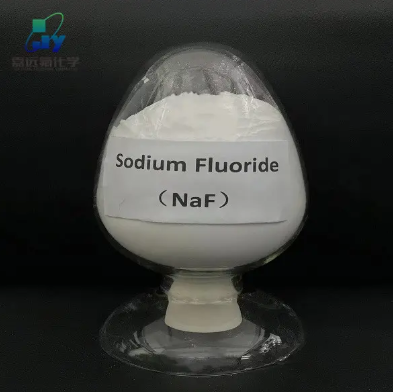
Sodium Fluoride and Lithium Fluoride: Two Routes, Different Quality Risks
The first procurement split is chemical, not commercial. Sodium fluoride and lithium fluoride serve different battery chemistries and therefore carry different specification priorities. A buyer who evaluates both should compare each salt against its own route, not against a single generic purity figure.
| Procurement question | Battery-grade sodium fluoride | Battery-grade lithium fluoride in the LiPF6 route |
|---|---|---|
| Primary battery role | Sodium and fluorine source for sodium hexafluorophosphate; provides Na+ in the two-step HF solvent reaction. | Raw material in lithium hexafluorophosphate synthesis; its impurity profile can carry into the electrolyte. |
| Grade distinction | Main content no less than 99.95%, silicon no more than 50 ppm, moisture no more than 100 ppm, and calcium, magnesium and iron at ppm levels. | No single grade label replaces batch-specific moisture and metal impurity limits fitted to the LiPF6 and cell-formation route. |
| Main quality risk | Industrial grade mislabeled as battery grade; moisture ingress; acid contact. | Moisture hydrolysis to hydrogen fluoride; excessive metal impurities such as Fe, Ca, Mg, Na and K affecting cell performance. |
| Evidence to request | Batch report covering main content, silicon, moisture, and calcium, magnesium and iron. | Batch moisture and metal impurity data linked to the LiPF6 specification, plus packaging and storage controls. |
Battery-Grade vs Industrial-Grade Sodium Fluoride
Battery-grade sodium fluoride is defined by impurity control as much as by assay. In the product definition used for this FAQ, battery-grade sodium fluoride has a main content of no less than 99.95%, silicon content of 50 ppm or less, moisture of 100 ppm or less, and calcium, magnesium and iron impurities at ppm levels. Industrial-grade sodium fluoride is commonly 98% to 99% main content. That gap is not a cosmetic labeling difference.
Sodium fluoride is mainly used as the sole sodium and fluorine source for synthesizing sodium hexafluorophosphate. It provides Na+ in the two-step HF solvent reaction. Compared with industrial grade, battery grade strictly controls the impurity profile to reduce side reactions, improve crude product purity and lower the purification load downstream. When industrial-grade material is represented as battery grade, the buyer inherits two risks: impurities can amplify during synthesis, shortening cycle life or increasing gas generation, and batch-to-batch fluctuation can raise hidden testing and adjustment costs.
The commercial consequence is straightforward. A lower assay price is not a saving if the batch forces additional purification, higher auxiliary material consumption or unstable crude sodium hexafluorophosphate quality. Battery-grade sodium fluoride should be evaluated as a process input with a defined impurity envelope, not as a commodity powder with a headline percentage.
Which NaF Purity and Impurity Indicators Should Sodium-Battery Buyers Prioritize?
Sodium-battery buyers should prioritize four indicator groups because they align with the sodium hexafluorophosphate synthesis threshold and the downstream purification burden. The first is main content of no less than 99.95%. The second is silicon content of 50 ppm or less. The third is moisture of 100 ppm or less. The fourth is calcium, magnesium and iron impurities at ppm levels. A narrower impurity profile means lower energy and auxiliary material consumption in subsequent purification and more stable crude product quality.
These indicators should be treated as a minimum gate, not a complete purchasing specification. A certificate that shows only main content does not demonstrate control of silicon, moisture or metals. For sodium-ion battery and electrolyte production, batch consistency matters because the salt is not used in isolation. It reacts in a synthesis step where impurities and moisture can shift side reactions, purification load and crude product quality.
The 99.95% main-content figure is a threshold from the product definition, not a universal regulatory limit for every sodium-ion route. Buyers should translate it into their own incoming specification and confirm that each batch report covers the full impurity set that their process is sensitive to.
How to Request and Read Batch Test Data for Sodium Fluoride
Request batch-specific data, not a generic product brochure. Routine impurity indicators for battery-grade sodium fluoride should be provided with batch test reports. The test items typically cover main content, silicon content, moisture, and metal impurities such as calcium, magnesium and iron. The data should accompany the shipment so that incoming material verification and feeding-ratio adjustments can be completed against the actual batch.
A practical review has three steps. First, compare each result with the battery-grade specification, not with a generic grade name. Confirm that main content is no less than 99.95%, silicon is no more than 50 ppm, moisture is no more than 100 ppm, and the metal impurities are at the agreed ppm levels. Second, confirm that the report is linked to the batch and packaging. A report without batch linkage cannot support traceability. Third, keep the report available for production troubleshooting.
If crude sodium hexafluorophosphate purity fails to meet standards or side reactions are excessive, the sodium fluoride side should be investigated in a defined order. Check whether main content, silicon content, moisture and metal impurities in the batch report fall within the battery-grade threshold. If the impurity profile exceeds limits or fluctuates greatly, trace the packaging sealing status and storage conditions of that batch to confirm whether moisture absorption or acid contact caused a performance change. Also review whether actual feeding consumption is within the reasonable range of 0.26 to 0.30 t/t.
Lithium Fluoride in LiPF6: Why Purity Selection Starts With the Impurity Profile
LiPF6 is the dominant electrolyte salt in lithium-ion battery electrolytes and directly determines ionic conductivity and the electrochemical window. Its impurity profile carries over into the electrolyte. Poor impurity control in raw lithium fluoride broadens the LiPF6 impurity profile, accelerating cathode interface side reactions during cell formation and cycling. That can lead to faster capacity fade or high-temperature gassing. For high-end power battery electrolytes, the selection question is therefore not a single headline purity figure.
The more useful question is whether the lithium fluoride batch can keep moisture and the metal impurity profile inside the limits that the LiPF6 step and cell formation can tolerate. The risk profile identifies moisture and metal impurities including Fe, Ca, Mg, Na and K as triggers for performance problems. A nominal battery-grade label should not replace a batch-specific limit package. Buyers should set lithium fluoride limits against their LiPF6 synthesis and electrolyte sensitivity, then verify each batch against those limits.
This is also where supplier comparison becomes technical rather than rhetorical. A supplier that can connect lithium fluoride purity, moisture control, packaging integrity and batch data to the LiPF6 route is easier to qualify than a supplier that offers only a generic high-purity claim. The buyer does not need a universal lithium fluoride number; the buyer needs a documented impurity envelope that matches the intended electrolyte.
Moisture-Proof Storage and Transport for Battery-Grade Lithium Fluoride
Lithium fluoride is highly hygroscopic and slowly hydrolyzes with water to release hydrogen fluoride. Moisture control is therefore a safety and quality requirement, not a warehouse preference. The packaging and handling sequence should be fixed before the first shipment arrives.
- Use composite bags with an inner plastic film or fiber drums for sealed packaging.
- Store the product in a cool, dry, well-ventilated area away from acids.
- Protect the shipment from rain and moisture during transport, and prevent packaging damage.
- Wear dust masks and gloves during operation to avoid dust inhalation and direct skin contact.
Damaged or damp packaging changes the batch status. Lithium fluoride that has been exposed to moisture can hydrolyze and release hydrogen fluoride, and moisture plus metal impurities can degrade downstream cell performance. A buyer should isolate the affected batch and retest moisture and impurities before release to production. Out-of-spec material should be downgraded or scrapped rather than blended into a qualified stream without evidence. The same discipline applies to sodium fluoride: it is hygroscopic, and acid contact can release hydrogen fluoride. Sealed moisture-proof packaging, cool and dry storage away from acids, and appropriate protective equipment are basic controls for both salts.
Procurement Evidence: What to Verify Beyond a Certificate
Supplier evidence has layers. A quality certificate is one layer, a batch certificate of analysis is another, and capacity or customization claims are another. They answer different questions and should not be substituted for one another. Changzhou Jiayuan Chemical Co., Ltd. is an integrated fluorine-chemical manufacturer and trader established in 2015 in Jintan District, Changzhou, Jiangsu Province, with a product range that includes sodium fluoride, potassium fluoride, magnesium fluoride, calcium fluoride and lithium fluoride.
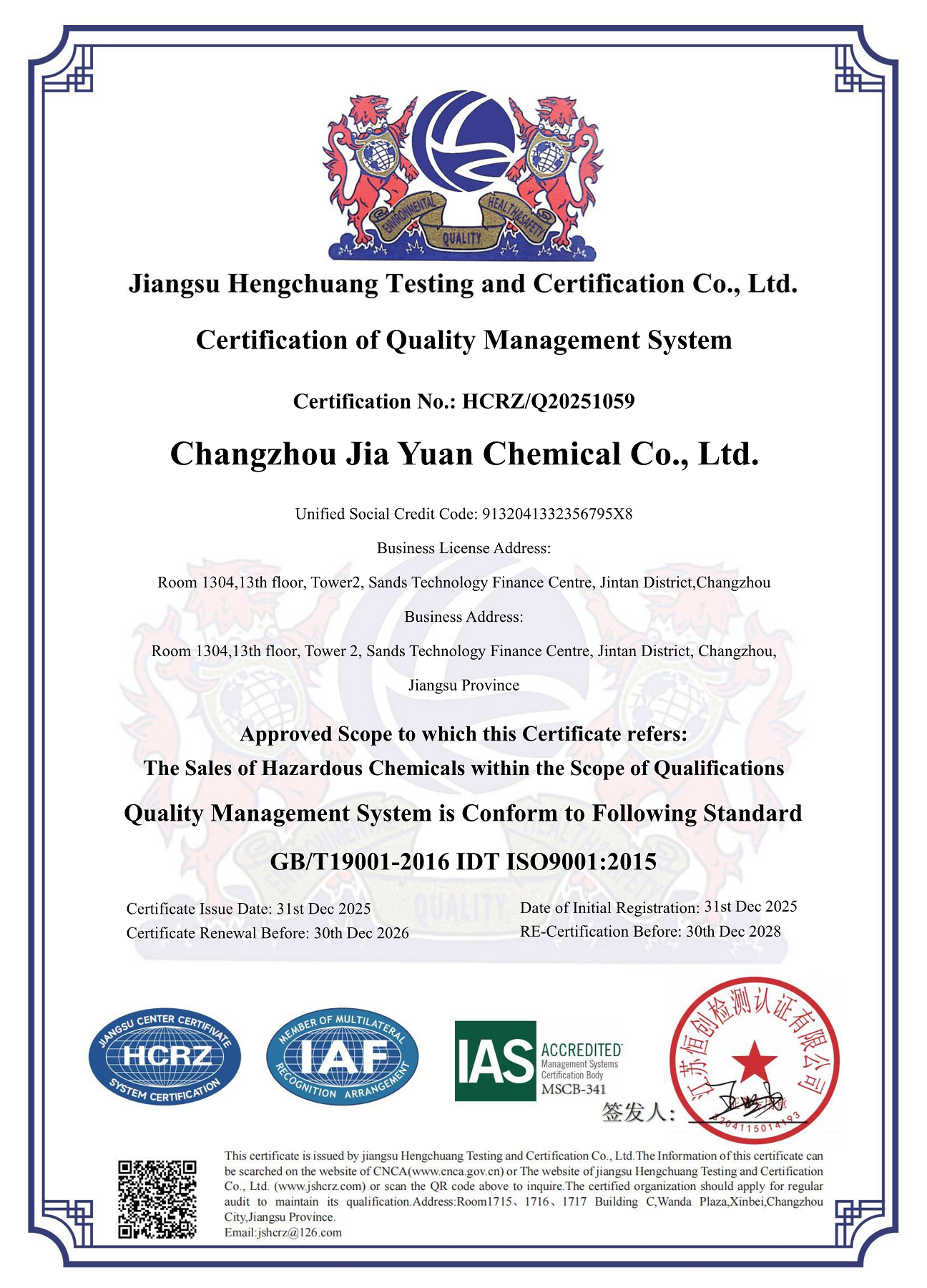
Its ISO 9001 certificate, number HCRZ/Q20251059, is issued by Jiangsu Hengchuang Testing and Certification Co., Ltd. under GB/T19001-2016 IDT ISO9001:2015. The certificate is valid from 31 December 2025 to 30 December 2028 and covers The Sales of Hazardous Chemicals within the Scope of Qualifications. That scope supports quality-management-system review. It does not by itself certify a sodium fluoride or lithium fluoride purity grade. Buyers still need the product specification and the batch certificate of analysis.
Capacity statements deserve the same precision. The company profile lists 1,000 t/y each of high-purity electronic-grade potassium fluoride, magnesium fluoride and lithium fluoride, plus 600 t/y of toothpaste-grade sodium fluoride. Toothpaste-grade sodium fluoride is not battery-grade sodium fluoride, so the 600 t/y figure should not be used as a battery-grade sodium fluoride capacity claim. For battery-grade sodium fluoride, the relevant evidence is the stated ability to control purity at 99.95% or above per customer requirements and to provide routine impurity data with the batch.
The capability record also lists OEM/ODM production for fluorine chemical products at 50 t per month. That is a customization statement, not a substitute for product-specific capacity or purity assurance. One supplied case record states that high-purity fluoride salt operation at a customer site ran without production-line downtime or process-parameter drift caused by raw-material batch differences. That is case-level evidence, not a universal guarantee. Buyers should replicate the relevant checks on their own line and retain batch traceability.
NaF and LiF Procurement Checklist
A comparison checklist helps prevent the most common error: applying sodium fluoride assumptions to lithium fluoride, or accepting a certificate that does not answer the specification question. The checklist below keeps the two salts on their own routes.
| Decision point | Sodium fluoride | Lithium fluoride |
|---|---|---|
| Battery route | Sodium hexafluorophosphate for sodium-ion batteries. | Lithium hexafluorophosphate for lithium-ion battery electrolytes. |
| Primary purity gate | Main content no less than 99.95%; silicon no more than 50 ppm; moisture no more than 100 ppm; Ca, Mg and Fe at ppm levels. | Batch-specific moisture and metal impurity limits fitted to LiPF6 and cell formation; watch Fe, Ca, Mg, Na and K. |
| Batch evidence | Report covering main content, silicon, moisture, calcium, magnesium and iron, linked to the shipment. | Batch moisture and metal impurity data aligned with the LiPF6 specification and the intended electrolyte quality. |
| Storage risk | Hygroscopic; acid contact can release hydrogen fluoride. | Highly hygroscopic; hydrolysis with water can release hydrogen fluoride. |
| Red flag | Industrial grade represented as battery grade; a report that shows only main content. | Damaged or damp packaging; a nominal grade claim without impurity data. |
Future Outlook: Qualification Discipline in Sodium-Ion and Li-Ion Routes
The defensible outlook is not a market-size forecast. It is a procurement shift. Where sodium-ion electrolyte production expands, sodium fluoride specification discipline becomes more important because the salt is the sodium and fluorine source for sodium hexafluorophosphate. Where LiPF6 electrolyte quality requirements stay tied to cell performance, lithium fluoride impurity control remains central because the raw-material impurity profile can carry into the electrolyte.
For buyers, the durable advantage is a qualification file that links each batch to the intended salt, the impurity limits, the packaging and the storage history. That file should distinguish company-level quality management from product-level batch evidence. It should also distinguish a case record from a universal guarantee. Suppliers that can make those distinctions clearly will be easier to evaluate than suppliers that rely on a generic high-purity label.
FAQ
What is the core difference between battery-grade and industrial-grade sodium fluoride?
Battery-grade sodium fluoride has a main content of no less than 99.95%, silicon content of 50 ppm or less, moisture of 100 ppm or less, and calcium, magnesium and iron impurities at ppm levels. Industrial-grade sodium fluoride is commonly 98% to 99% main content. The core difference is the impurity profile, not only the assay. Battery grade is intended for sodium hexafluorophosphate synthesis, where lower side reactions and higher crude product purity reduce downstream purification load.
Which purity and impurity indicators should sodium-battery buyers prioritize?
Prioritize main content, silicon, moisture, and calcium, magnesium and iron impurities. A main content of no less than 99.95%, silicon of 50 ppm or less, moisture of 100 ppm or less, and ppm-level metal impurities align with the sodium hexafluorophosphate synthesis threshold. A narrower impurity profile lowers energy and auxiliary material consumption in purification and supports stable crude product quality.
Can routine impurity indicators of battery-grade sodium fluoride be provided with batch test data?
Yes. Product purity can be stably controlled at 99.95% or above per customer requirements, and routine impurity indicators are provided with batch test reports. The reported items typically cover main content, silicon content, moisture, and metal impurities such as calcium, magnesium and iron. The data should accompany the shipment to support incoming material verification and feeding-ratio adjustment.
What role does lithium fluoride play in LiPF6 synthesis and electrolyte performance?
Lithium fluoride is a raw material in lithium hexafluorophosphate synthesis. LiPF6 is the dominant electrolyte salt in lithium-ion battery electrolytes and directly determines ionic conductivity and the electrochemical window. Its impurity profile carries over into the electrolyte. Poor impurity control in raw lithium fluoride broadens the LiPF6 impurity profile, which can accelerate cathode interface side reactions during cell formation and cycling and lead to faster capacity fade or high-temperature gassing.
What moisture-proof measures are required for battery-grade lithium fluoride during storage and transport?
Use composite bags with an inner plastic film or fiber drums for sealed packaging. Store the product in a cool, dry, well-ventilated area away from acids. Protect it from rain and moisture during transport and prevent packaging damage. Because lithium fluoride is highly hygroscopic and slowly hydrolyzes with water to release hydrogen fluoride, operators should wear dust masks and gloves and avoid dust inhalation or direct skin contact.
What are the consequences of damaged or damp lithium fluoride packaging?
Damaged or damp packaging can expose lithium fluoride to moisture, leading to hydrolysis and hydrogen fluoride release. Moisture and metal impurities can also degrade downstream cell performance. The affected batch should be isolated and retested for moisture and impurities before release to production. Out-of-spec material should be downgraded or scrapped rather than used as if it were a normal qualified batch.
Does an ISO 9001 certificate prove battery-grade purity?
No. An ISO 9001 certificate supports quality-management-system review, but its scope must be read precisely. The certificate held by Changzhou Jiayuan Chemical Co., Ltd. covers The Sales of Hazardous Chemicals within the Scope of Qualifications under GB/T19001-2016 IDT ISO9001:2015. It does not by itself state a sodium fluoride or lithium fluoride purity grade. Buyers should still require the product specification and the batch certificate of analysis for the actual shipment.
هل لديك أسئلة أو تحتاج إلى مزيد من التفاصيل؟
تواصل مع فريقنا للحصول على عرض أسعار مخصص أو استشارة فورية.
طلب عرض أسعار
املأ النموذج أدناه وسيتواصل معك فريقنا بعرض مقترح مخصص.
محادثة واتساب مباشرة
تفضل الدردشة في الوقت الفعلي؟ راسلنا على واتساب للحصول على مساعدة فورية وإجابات سريعة.
- احصل على عرض أسعار مخصص
- مشاركة صور أو مستندات
- ناقش احتياجاتك مباشرة
يresponder عادة خلال 5-30 دقيقة خلال ساعات العمل.