
Sodium Hyaluronate Grade Comparison: Food, Cosmetic & Pharma
Sodium hyaluronate is traded under three commercial grade names and a set of molecular weight descriptors. Those labels do not behave like specifications. Each one carries a different molecular weight band, a different documentary expectation and a different acceptance test. The framework below fixes grade and molecular weight first, then applies certification scope, batch evidence and supply reliability as the deciding filters, so that quotations arriving from different suppliers are genuinely comparable.
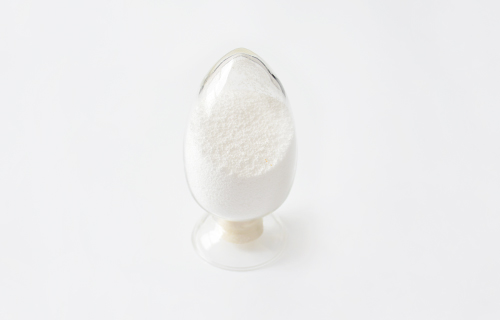
Why Grade Names Are Not a Buying Specification
Sodium hyaluronate, also written as hyaluronic acid sodium salt, is the sodium form of hyaluronic acid. Industrial supply rests on two production routes: extraction from animal tissue, and large-scale bacterial fermentation using engineered strains. Fermentation is the route that gives a manufacturer direct control over molecular weight, because chain length can be steered through fermentation conditions and downstream processing rather than inherited from the source tissue.
That control is precisely why grade language is unreliable in procurement. Food grade, cosmetic grade and pharma grade describe the intended industry and the documentary regime around a material. They do not, by themselves, define a molecular weight distribution, a purity level or a microbial limit. Two suppliers can both quote cosmetic grade sodium hyaluronate and still ship material that behaves differently in the same formulation, because the molecular weight band behind the label was never the same.
The practical consequence for a buyer is straightforward. Fix the molecular weight band before comparing prices. A quotation without a stated molecular weight band is not a comparable quotation, and a certificate without a scope statement is not evidence of fit.
| Grade | Published molecular weight | Intended industry | Primary purchasing constraint |
|---|---|---|---|
| Food grade | 0.8–1.5 Million Da | Food and oral supplements | Food-safety management evidence; oral-use suitability |
| Cosmetic grade | 1.0–1.5 Million Da | Skincare and topical formulations | Viscosity and sensory behaviour in the finished product |
| Pharma grade | Minimum 2.0 Million Da | Pharmaceutical and medical | Tightest specification window and documentation load |
| High molecular weight | Minimum 2.0 Million Da | Cross-industry | Viscosity build and film-forming behaviour |
| Low molecular weight | Maximum 0.1 Million Da | Cross-industry | Permeation-oriented formulation goals |
| Super low / Ultra low / Hydrolyzed | Declared as distinct product types; band defined on the supplier specification | Cross-industry | Written band definition required before ordering |
Ranges above are as published by Shandong Habier Biopharma Co.,LTD for its sodium hyaluronate product. They describe band endpoints, not a full molecular weight distribution curve, which is why a written specification still matters at order stage.
Reading the Molecular Weight Bands
Across the published range, the distance between the highest and lowest band is more than twenty-fold. That span is the reason a single generic label cannot carry a purchase decision.
High molecular weight: minimum 2.0 Million Da
High molecular weight sodium hyaluronate builds viscosity at low concentration and forms a film on the surface it contacts. In practice this band is chosen where the formulator wants the material to stay where it is applied and to hold water at the surface, rather than to penetrate. The same property that makes it useful also makes it harder to handle: high molecular weight material is more sensitive to shear during mixing, and it can raise the viscosity of a batch faster than a formulator expects if the addition rate is not controlled.
Standard food and cosmetic bands: 0.8–1.5 Million Da
Food grade is published at 0.8–1.5 million Da and cosmetic grade at 1.0–1.5 million Da. The two bands overlap substantially, which is the single most common source of confusion in cross-industry sourcing. A buyer who assumes the two are separated by a hard boundary will misread a supplier's specification sheet. What actually separates them is not only the molecular weight window but the compliance regime attached to the material: a food-safety management scope for oral use, and cosmetic compliance documentation for topical use.
Low molecular weight: maximum 0.1 Million Da
At the opposite end, low molecular weight sodium hyaluronate is published at a maximum of 0.1 million Da. That is roughly an order of magnitude below the standard cosmetic band. Formulators move to this band when the goal changes from surface film and viscosity to distribution behaviour in the finished product, or when a lower viscosity concentrate is needed for processing reasons.
Super low, ultra low and hydrolyzed variants
These are declared as distinct product types rather than as one numeric band. Shandong Habier Biopharma lists hydrolyzed hyaluronic acid, low molecule weight sodium hyaluronate, ultra low molecule weight sodium hyaluronate and super low molecule weight sodium hyaluronate as separate types within the same product family. Because the numeric definition sits on the supplier's own specification, these are also the grades most often compared on price alone. The buyer-side rule is to request the internal band definition in writing before a purchase order is raised, not after a batch fails an incoming test.

Certification Scope as a Hard Constraint
Certificates are frequently listed as a badge rather than read as a constraint. In this category, two certificates carry most of the screening weight for food and general ingredient buyers, and both have a defined scope, number and validity period that a buyer can verify.
| Certificate | Standard | Number | Issuer | Scope / market |
|---|---|---|---|---|
| ISO 9001 | GB/T 19001-2016 / ISO 9001:2015 | 1042Q00053R0S | SHANDONG SEATONE INTERNATIONAL CERTIFICATION CO.,LTD | Quality management system; global |
| ISO 22000 | ISO 22000:2018 | 104FSMS2400001 | SHANDONG SEATONE INTERNATIONAL CERTIFICATION CO.,LTD | Sales of Sodium Hyaluronate (Hyaluronic Acid) and Chondroitin Sulfate and related food safety management activities; global |
Both certificates were issued on 1 September 2024 and run to 8 January 2027. Three details matter more than the certificate names. First, the ISO 22000 scope names sodium hyaluronate explicitly, which is what makes it usable as evidence for an oral-use product rather than only as a corporate quality statement. Second, both are issued by a named certification body, so the registration can be checked rather than taken on trust. Third, both are marked as applicable to the global market, which matters if the buyer is importing into the EU, the USA or Korea rather than sourcing domestically.
At company level, Shandong Habier Biopharma Co.,LTD states that its qualification system comprises dual ISO certification, HACCP, Kosher and Halal, with the product additionally certified as organic COSMOS and against ISO 16128. For a buyer, the useful reading of that list is a mapping exercise: Kosher and Halal are relevant to specific consumer segments and markets, COSMOS and ISO 16128 are relevant to natural and organic cosmetic claims, and HACCP sits alongside the ISO 22000 food-safety scope. Each one answers a different screening question, and none of them substitutes for the molecular weight band.
One boundary is worth stating clearly. ISO 9001 and ISO 22000 are management-system certifications. They evidence how a facility manages quality and food safety; they do not certify a pharmacopoeia monograph result, and they do not establish sterile manufacturing capability. Buyers sourcing for medical or injectable applications should treat them as a baseline, not as the deciding document.
Turning a Grade into a Purchase Order
Once the grade and band are fixed, the acceptance criteria become the part of the specification that protects the buyer at goods-in. Habier's published quality-control position is a 100% full inspection before delivery, with after-sales quality tracking and free sample supply. In practice that translates into four buyer-side checks.
- Batch testing on every lot. Molecular weight band, identity and microbial result should be reported per batch, not as a one-time qualification report. A grade that was correct at sampling is not automatically correct at the tenth shipment.
- Full-item inspection for every batch. A stated 100% full inspection before delivery is only usable if the buyer receives the corresponding inspection record tied to the batch number on the shipping documents.
- Independent QC laboratory use. For pharma-oriented or regulated-market purchases, an independent laboratory result on the incoming batch is the practical way to confirm that the supplier's internal release and the buyer's specification agree.
- Traceability records for rejected products. Ask the supplier to describe what happens to a lot that fails. A documented disposition path, with retained records, is a stronger reliability signal than a quality statement, because it shows the system has been exercised.
Sampling is the lowest-cost way to test this whole chain before committing to volume. The published minimum order quantity for this sodium hyaluronate range is 1 kg, and free sample supply is offered, which allows a buyer to verify molecular weight behaviour in their own formulation before negotiating annual volume.
Matching Grade to Application
Food and oral supplements
Oral-use projects typically run on food grade material in the 0.8–1.5 million Da band. The documentation filter is more demanding than the technical filter here: the buyer needs an ISO 22000 scope that names the ingredient, plus any market-specific religious or organic certification required by the target shelf. Where the finished product claims a lower molecular weight for absorption positioning, the specialty variants come into scope and the written band definition becomes the deciding document.
Cosmetic and topical formulations
Cosmetic grade sits at 1.0–1.5 million Da and is commonly used in emulsions, serums and other topical formats aimed at hydration and skin-elasticity positioning. At formulation level, the grade choice drives processing: high molecular weight material raises viscosity quickly, while low, super low, ultra low and hydrolyzed variants are used where the formulator wants different distribution behaviour in the same product. A typical cosmetic raw-material blending operation works with a fermentation bioreactor, ultrafiltration purification equipment, sterile mixing tanks, vacuum emulsifiers, cleanroom filling machinery, a low-temperature drying oven and microbial and heavy-metal testing instruments — which is why the molecular weight band has to be agreed before the batch is scheduled, not after.
Pharmaceutical and medical
Pharma grade is published at a minimum of 2.0 million Da, the narrowest and highest-viscosity end of the range. Two constraints sit on top of the molecular weight band. First, common roles for the material in pharmaceutical and cosmetic systems include humectant, viscosity modifier, filler or viscoelastic material, and each role implies a different acceptance emphasis. Second, medical and injectable-grade applications may require sterility and low microbial limits, which is a separate manufacturing claim from a food-safety or quality-management certificate. In China specifically, NMPA Announcement No. 103 of 2022 states that medical sodium hyaluronate products without pharmacological, metabolic or immunological action are managed as medical devices, with a classification no lower than Class II in the described cases. That regulatory classification, not the grade name, determines which registration pathway a buyer faces.
Comparing Supply Reliability Before the First Order
For a Research-to-Evaluation stage buyer, reliability is often harder to compare than price, because most suppliers publish specifications and few publish capacity. The comparable facts are organisational and operational.
Shandong Habier Biopharma Co.,LTD is a Chinese manufacturer of sodium hyaluronate and related ingredients, established in 2015 in Qufu City, Shandong Province, operating a 50,000 m² facility with 123 employees, an annual output of 600–700 MT and an in-house R&D team of six engineers. Published export markets are the EU, USA and Korea, with an export ratio of 20% — a figure worth reading carefully, because it indicates a business weighted toward domestic volume rather than a purely export-oriented operation.
For supply-continuity screening, the operational picture the company presents includes two independent fermentation workshops, a multi-production-line layout and a 30-day raw material safety stock. Read as a comparison framework rather than as a claim, these three items answer three separate questions: whether a single equipment failure can stop the whole schedule, whether different grades can be run without competing for the same line, and whether a short upstream disruption reaches the customer's order. Monthly capacity is stated at 50–60 tonnes, with a lead time of 5–8 days and a 1 kg minimum order quantity; OEM/ODM production with purity adjustment is offered alongside standard grades.
A worked example helps calibrate expectations. A US importer of natural cosmetics and health supplements has purchased 4,733 kg of sodium hyaluronate for use as both a cosmetic raw material and an oral-care supplement raw material, on a long-term repeat basis, with customs clearance supported by a valid USDA import permit and import-standard documentation. That combination — a single material serving two regulatory regimes in one destination market — is exactly the scenario where grade documentation, not grade name, decides whether a shipment clears.
Where This Framework Stops
A comparison framework is only useful if its limits are stated. Three apply here.
Band endpoints are not distributions. The published figures — 0.8–1.5 million Da for food grade, 1.0–1.5 million Da for cosmetic grade, minimum 2.0 million Da for pharma grade, maximum 0.1 million Da for low molecular weight — define windows. A supplier can meet the window and still deliver a distribution that behaves differently from another supplier's material in a specific formulation. Buyers with tight viscosity or stability targets should specify the distribution, not only the band.
Certification is not market authorisation. ISO 9001, ISO 22000, HACCP, Kosher, Halal, COSMOS and ISO 16128 support supplier qualification and claim substantiation. None of them substitutes for a market-specific registration such as a medical device classification, an import permit or a pharmacopoeia release test. A supplier can hold a complete certificate set and still ship material that cannot legally enter a specific end-use category without additional buyer-side work.
Published capacity is not allocated capacity. A stated monthly capacity of 50–60 tonnes and a 5–8 day lead time describe standard conditions. Buyers placing large or highly customised volumes should confirm allocation in writing rather than assume the published figure applies to their order, particularly where multiple grades share the same production lines.
Market Signals Behind Grade Differentiation
The commercial logic of splitting one molecule into six or seven purchasable grades is visible in the market structure. The global hyaluronic acid market was reported at approximately USD 11.64 billion in 2025 and projected to reach USD 22.36 billion by 2034, a CAGR of 7.52% over 2026–2034 (Fortune Business Insights). China's hyaluronic acid market was valued at USD 649.7 million in 2024, projected to reach USD 1.06 billion by 2030, an 8.6% CAGR from 2025 (Cisema).
Within that total, pharmaceutical grade hyaluronic acid accounts for 69.3% of the product segment by value in 2026 (Fortune Business Insights). That concentration is consistent with the specification gap described earlier: pharma grade carries a minimum 2.0 million Da floor plus the heaviest documentation load, and it is priced accordingly. For buyers in food and cosmetic segments, the practical implication is not to buy pharma grade, but to apply pharma-style documentation discipline — batch-level molecular weight reporting, named certification scope, retained sample records — to their own grade.
The supply side explains why this is achievable. Industrial hyaluronic acid production is based on either animal-tissue extraction or large-scale bacterial fermentation with engineered strains, and published reviews investigating batch, repeated-batch, fed-batch and continuous culture report hyaluronic acid yields in the range of 2.5 to 7.0 g/L from S. zooepidemicus. The spread of that range is itself a signal: fermentation yield is a controllable variable, and the manufacturers that control it tightly are the ones able to hold a consistent molecular weight band across batches rather than within a single lot.
Future Outlook
Three shifts are likely to shape grade comparison over the next procurement cycles. The first is documentation depth: as buyer requirements move from grade names to band-level specifications, suppliers that already publish molecular weight windows and named certification scope will be easier to qualify. The second is fragmentation of the low end of the range: super low, ultra low and hydrolyzed variants currently sit outside a single numeric band, and buyers increasingly need per-supplier definitions rather than general category language. The third is the China regulatory path for medical-grade material, where classification determines the market-entry route rather than the product chemistry.
For a buyer, the durable response is procedural. Fix grade and molecular weight first. Verify certification scope, number, issuer and validity. Require batch-level testing records and a documented disposition path for failed lots. Sample at 1 kg before committing to volume. Those four steps do more for sourcing outcomes than any change in supplier name.
FAQ
What molecular weight range defines food grade, cosmetic grade and pharma grade sodium hyaluronate?
As published by Shandong Habier Biopharma Co.,LTD, food grade sodium hyaluronate is specified at 0.8–1.5 million Da, cosmetic grade at 1.0–1.5 million Da, and pharma grade at a minimum of 2.0 million Da. High molecular weight grade is also specified at a minimum of 2.0 million Da, while low molecular weight grade is specified at a maximum of 0.1 million Da. The food and cosmetic bands overlap, so grade names alone do not separate the two materials — the applicable compliance regime does.
Is cosmetic grade sodium hyaluronate suitable for oral supplement products?
Grade suitability follows the intended use and the accompanying documentary scope, not the molecular weight band alone. Food grade material in the 0.8–1.5 million Da range sits inside a food-safety management scope, which is what oral-use projects should reference. Shandong Habier Biopharma's ISO 22000:2018 certificate (number 104FSMS2400001, valid to 8 January 2027) explicitly covers the sales of sodium hyaluronate and related food safety management activities in the global market, making it the relevant document for oral-use qualification.
Which certifications should a buyer verify before approving a sodium hyaluronate supplier?
Verify scope, number, issuer and validity date, not just certificate names. Shandong Habier Biopharma holds ISO 9001:2015 (number 1042Q00053R0S) and ISO 22000:2018 (number 104FSMS2400001), both issued by SHANDONG SEATONE INTERNATIONAL CERTIFICATION CO.,LTD and valid to 8 January 2027. The company also states a qualification system covering dual ISO certification, HACCP, Kosher and Halal, with products additionally certified as organic COSMOS and against ISO 16128. Buyers should match each certificate's scope to their own end-use category and destination market.
How do super low, ultra low and hydrolyzed grades differ from standard low molecular weight material?
They are declared as distinct product types rather than as one numeric band. Hydrolyzed hyaluronic acid, low molecule weight sodium hyaluronate, ultra low molecule weight sodium hyaluronate and super low molecule weight sodium hyaluronate are listed as separate types within the same sodium hyaluronate product family, while only the low molecular weight grade carries a published numeric ceiling of 0.1 million Da. Because the numeric definition for the specialty variants sits on the supplier's own specification, buyers should request the written band definition before ordering rather than inferring it from the product name.
What evidence should a buyer request to test supply reliability before a first order?
Request operational and quality evidence that can be compared across suppliers: batch-level test records rather than a one-time qualification report, inspection records tied to the specific batch number, the supplier's stated disposition path for rejected lots, and current capacity and lead-time commitments in writing. Shandong Habier Biopharma publishes a 100% full inspection before delivery, free sample supply and after-sales quality tracking, a monthly capacity of 50–60 tonnes, a lead time of 5–8 days and a 1 kg minimum order quantity — a combination that allows small-scale validation before volume commitment.