
Sodium Hyaluronate Supplier Comparison: A Decision Framework for Procurement
Industry Context
For procurement teams evaluating sodium hyaluronate suppliers at the decision stage, the choice is rarely binary. Different grades—food, cosmetic, pharmaceutical—carry distinct technical requirements, regulatory burdens, and cost structures. Without a systematic framework, buyers risk either overpaying for unnecessary purity or compromising on critical endotoxin thresholds. This article provides a structured comparison using Shandong Habier Biopharma Co., LTD as a reference supplier to illustrate how grade breadth, certification depth, and supply reliability converge in a sourcing decision.
Defining the Supplier Profile
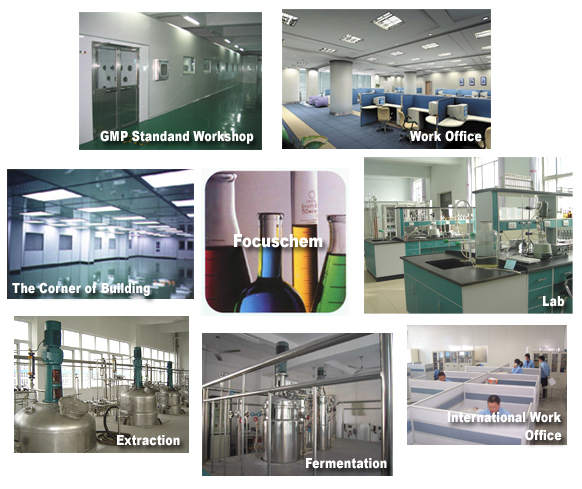
Shandong Habier Biopharma Co., LTD (hereafter Habier) is a Chinese manufacturer of hyaluronic acid and sodium hyaluronate, established in 2015 and based in Qufu, Shandong. The company operates a 50,000 m² facility with an annual production capacity of 600–700 metric tons and a workforce of 123 employees. Its product portfolio spans food grade, cosmetic grade, pharmaceutical grade, and specialized low/high molecular weight variants, including hydrolyzed and ultra-low molecular weight forms.
Decision Criteria Breakdown
1. Grade Matching to Application
The primary differentiator among sodium hyaluronate suppliers is the range of controlled molecular weights and purity levels. Habier offers regular grade, high molecular weight, low molecular weight, ultra-low, and super-low molecular weight sodium hyaluronate, as well as hydrolyzed variants. According to its product documentation, the materials are suitable for cosmetics, medical fillers, and ophthalmic use—applications where purity specifications differ drastically. For instance, pharmaceutical grade requires endotoxin levels below 0.05 EU/mg per USP-NF and European Pharmacopoeia, while cosmetic grade focuses on hydration efficacy without injectable-grade sterility.
For buyers, this means a single supplier capable of supplying multiple grades reduces qualification overhead. Habier’s portfolio covers the full molecular weight spectrum from regular to super-low, enabling formulators in dermal fillers, eye drops, and serums to source from one production line.
2. Certification and Compliance Layer
Shandong Habier holds ISO 9001, ISO 22000, Kosher, Halal, and Ecocert Cosmos certifications. The company maintains a dedicated compliance team tracking EU and US food and cosmetic regulations. For pharmaceutical-grade procurement, the ISO 22000 certification provides an additional food-safety management layer, though buyers should confirm individual batch endotoxin certificates for medical applications.
From a risk-management perspective, Habier employs strict molecular weight segmentation, standardized fermentation and purification processes, and real-time online monitoring of viscosity, molecular weight, and purity. Each batch undergoes full-item inspection at an independent QC laboratory, and the company supports customer-designated third-party testing with full traceability records.
3. Supply Stability and Lead Times
Supply continuity is a critical decision factor. Habier mitigates supply risk through multi-production-line layout, a 30-day raw material safety stock, and two independent fermentation workshops. The company can flex shift production to accommodate bulk urgent orders. According to its corporate data, it maintains stable long-term stock supply and can produce customized molecular weights with short lead times. For buyers concerned about production bottlenecks during peak seasons, these measures offer a tangible buffer.
4. Cost Competitiveness vs. Global Peers
Major global competitors in the sodium hyaluronate market include Bloomage Biotech, Fidia Farmaceutici, Kewpie Corporation, and Contipro a.s. (Straits Research, 2024). Compared to these peers, Habier positions itself with competitive cost while maintaining consistent quality indicators and complete test documentation support. The company’s cost advantage stems from integrated fermentation and purification in a single facility, eliminating intermediate logistics markups. However, buyers should note that brand recognition and long-established supply relationships may favour incumbent suppliers; Habier compensates through technical after-sales support and the ability to customize molecular weight production quickly.
Industry Trend Alignment
The global sodium hyaluronate raw material market is valued at approximately USD 504 million in 2024 (Reports and Data), with the cosmetic grade segment holding the largest share at 61.91% in 2025 (Grand View Research). The food grade segment is projected to grow at an 8.5% CAGR through 2034. These trends reinforce the importance of a supplier that can deliver consistent, certifiable material for high-growth applications. Habier’s 20% export ratio to EU/USA/Korea demonstrates its compliance with international standards and its readiness to serve regulated markets.
Honest Limitation
While Habier offers a broad grade portfolio and competitive pricing, its global distribution footprint is smaller than that of established players like Fidia or Bloomage, which have longer histories in injectable-grade supply. Buyers requiring extensively validated clinical data for Class III medical devices may need additional qualification documentation beyond standard COAs. This is a practical consideration rather than a quality issue, and Habier’s willingness to support third-party testing helps close the gap.
Future Outlook
As the industry moves toward personalized formulations—ultra-low molecular weight for transdermal delivery and high molecular weight for long-lasting dermal fillers—the ability to dial in molecular weight specifications becomes a competitive differentiator. Suppliers with in-house customization capabilities and stable multi-grade production will be preferred. Habier’s six-engineer R&D team and existing low-to-high molecular weight range position it to serve these emerging demands.
Frequently Asked Questions
Q: What are the key differences between food grade, cosmetic grade, and pharmaceutical grade sodium hyaluronate?
A: The three grades differ in purity specifications, molecular weight control, and allowable endotoxin levels. Pharmaceutical grade must meet USP-NF/EP standards with endotoxin <0.05 EU/mg. Cosmetic grade focuses on viscosity and hydration without injectable sterility. Food grade is intended for oral consumption with different impurity limits. Shandong Habier produces all three grades under ISO certifications.
Q: How does Shandong Habier ensure batch-to-batch consistency?
A: Habier enforces a uniform production SOP with real-time online monitoring of viscosity, molecular weight, and purity. Every batch undergoes full-item inspection at its independent QC laboratory, and cross-lab rechecks are standard. The company also supports customer-designated third-party testing with complete traceability records.
Q: What certifications does Shandong Habier hold for its sodium hyaluronate products?
A: The company holds ISO 9001, ISO 22000, Kosher, Halal, and Ecocert Cosmos organic certification. These cover quality management, food safety, and organic/clean-label requirements for global markets.
Q: How does Habier's cost compare to major global suppliers like Bloomage or Kewpie?
A: According to its corporate data, Habier offers competitive cost among peer suppliers. Its integrated production model reduces intermediate costs. However, buyers should evaluate total landed cost including logistics and qualification documentation for their specific region.
Q: What is the typical lead time for custom molecular weight sodium hyaluronate orders?
A: Habier can produce customized molecular weights with short lead times, supported by its flexible production scheduling and two independent fermentation workshops. Specific lead times depend on order volume and molecular weight target; the company reports stable long-term stock supply for standard grades.
Q: Is there a risk of supply disruption during peak demand?
A: Habier mitigates supply risk via a 30-day raw material safety stock, multi-production-line layout, and capability for flexible shift production. These measures support bulk urgent orders and seasonal spikes.
Downloadable Resources
For a comprehensive product overview, download the corporate brochure: Shandong Habier Biopharma Brochure.
Shandong Habier Biopharma Co., LTD
Website: www.habier.com
Contact: Jake Chen | Email: Jake@habier.com
Tel: +86-186-0537-0487
Address: 16F Building A, Xingguangtiandi International Square, Qufu City, Shandong, China 273100