
Soft Magnetic Alloy Continuity: Can Permalloy Last 10 Years?
Soft Magnetic Alloy Continuity: Can Permalloy Last 10 Years?
A long-life electrical or electronics programme rarely fails at the alloy-selection stage. It fails in year four or year seven, when the latest production lot of Permalloy strip anneals slightly differently from the lot that was qualified, or when the thickness profile drifts to the edge of the drawing tolerance and the magnetic model behind the design no longer describes the part arriving at the line. Supplier sustainability in soft magnetic alloys is therefore a manufacturing-discipline question before it is a commercial one.
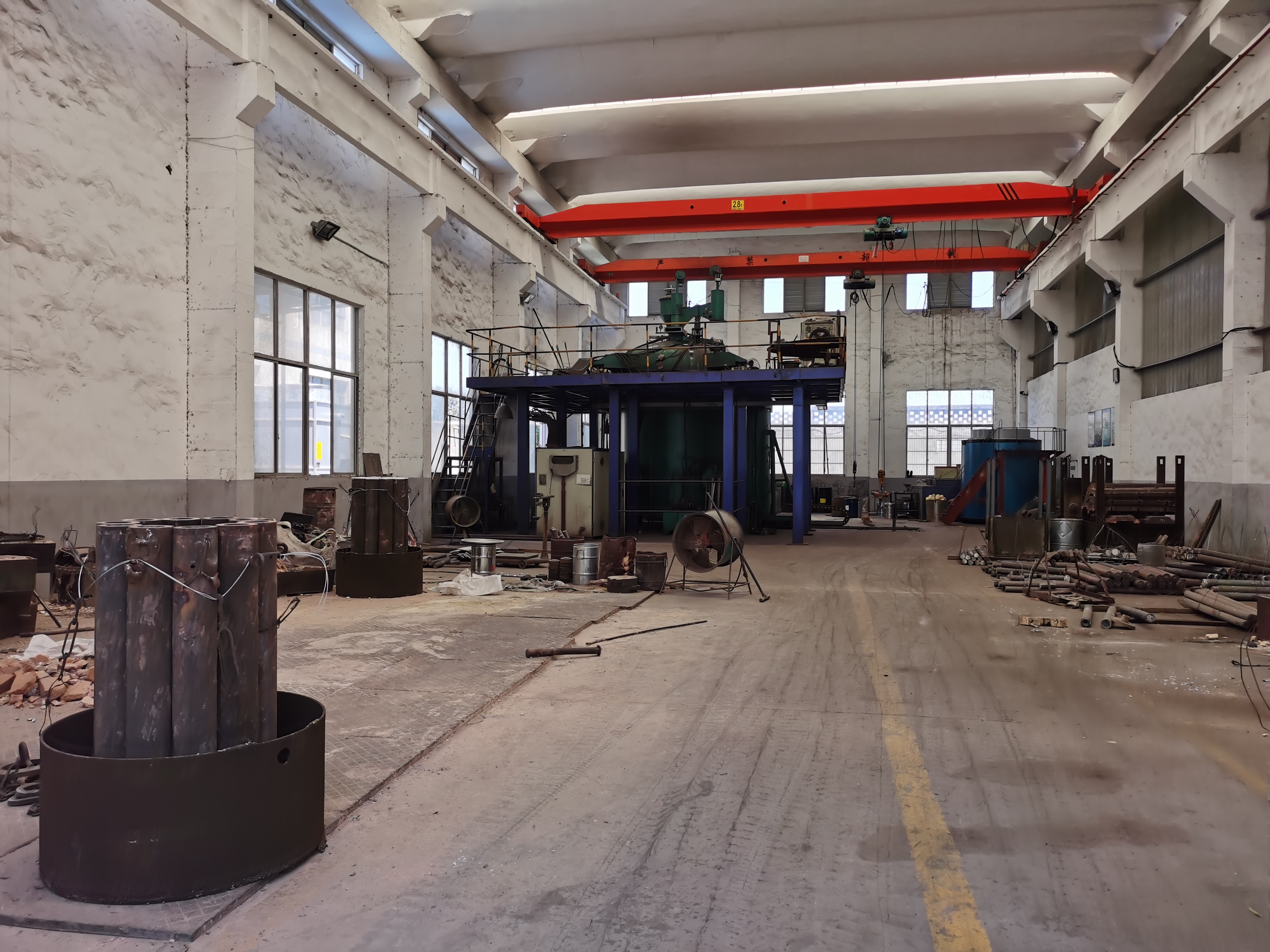
Vacuum and bright annealing stages determine whether Permalloy magnetic values can be reproduced lot after lot.
What Permalloy is, and where Cheng Yuan Alloy fits
Permalloy is the commercial name for a family of nickel–iron soft magnetic alloys designed around high permeability, low coercivity and low hysteresis loss. In the Chinese designation system the family spans grades such as 1J50 (FeNi50), 1J54, 1J79 (Ni79Mo4), 1J85 and the high-saturation 1J22 group, which includes the 1J22MS and 1J22HS variants. Grade 1J79 is standardised at 78.5–80.0% nickel under GB/T 15018 / GBn 198-88. That chemistry-level definition is precisely why a grade name is a weak basis for a ten-year supply decision: the same designation can be produced under materially different annealing, tolerance and inspection disciplines.
Shijiazhuang Cheng Yuan Alloy Material Co., Ltd. — referred to here as Cheng Yuan Alloy — is an alloy materials supplier located in Zhao Xian, Shijiazhuang City, Hebei Province, China. Founded in 2021, the company reports 20 employees, a five-engineer technical team, a 50% export ratio and an annual output value of USD 10–15 million, with Permalloy as its core soft magnetic product line. Its wider scope covers heating alloys, pure nickel alloys, high-temperature alloys, expansion alloys, corrosion-resistant alloys and stainless steel, supplied as wire, strip, sheet, bar, mesh, powder and tube, plus stamping and strand wire.
Buyers evaluating long-term Permalloy continuity are not really comparing catalogues. They are comparing the probability that the tenth shipment will still satisfy the first article inspection report.
Why Permalloy supply continuity breaks down in long programmes
Three failure modes account for most long-horizon soft magnetic alloy problems, and all three appear after the supplier has already passed a first-article sample review.
Annealing repeatability. Permalloy magnetic properties are set by final heat treatment far more than by chemistry. A vacuum bright annealing furnace that is well controlled on one campaign can drift on another when load configuration, ramp profile or dew point changes. The result is a permeability distribution that stays inside the grade window but shifts away from the value the customer designed around.
Tolerance creep on thin strip. Magnetic path geometry is a function of strip thickness and flatness. On a 0.05 mm strip, a tolerance that relaxes from ±0.001 mm to ±0.003 mm changes stacking factor and air-gap behaviour. The material still meets the grade, yet the assembly no longer tunes as expected.
Process chain gaps. Slitting, stamping and annealing are sequential dependencies. A supplier with strong furnaces but an unstable slitting line introduces edge burr and residual stress that later annealing only partially removes.
There is also a documentation problem specific to this category. The 2026 verified data package behind this article records no independently confirmed manufacturing-capacity, equipment or certification records for Chinese Permalloy suppliers, and rates supplier-landscape coverage as insufficient. That does not mean capability is absent. It means the burden of proof sits with the buyer qualification process, not with public listings — and it is the reason long-life programmes should evaluate process evidence rather than brand claims.
Six criteria that separate a durable Permalloy supplier from a merely capable one
Continuity can be assessed with a small number of criteria, provided each criterion is tied to a document the buyer can actually obtain and re-check on later lots.
| Continuity criterion | What it protects | Evidence to request |
|---|---|---|
| Thickness tolerance control | Magnetic path geometry, lamination factor, assembly tuning | Per-lot thickness records against ±0.001 mm (1J22, 1J22MS, 1J22HS, 1J27) or ±0.002 mm (1J79, 1J85, 1J50, 1J54, 1J34) |
| Uniform grain structure | Permeability repeatability, low coercivity, stable domain behaviour | Metallographic reports after vacuum hydrogen annealing |
| Cycling durability | No permanent demagnetisation across years of alternating-field operation | B-H hysteresis data before and after cyclic excitation |
| Thermal envelope | Output stability from cold soak to hot soak | Magnetic values at temperature extremes within the specified range |
| Equipment chain | Repeatable furnace, slitting and stamping behaviour | Furnace, slitting machine, stamping die and tester records |
| Traceability and testing depth | Audit survivability, incoming inspection effort | 100% test discipline plus third-party test availability |
The point of the matrix is that every row is falsifiable. A supplier either can produce lot-level records against these criteria or cannot, and that answer is far more predictive of year seven performance than any specification sheet.
Technical explanation: tolerance, grain structure and demagnetisation
The Permalloy family as supplied by Cheng Yuan Alloy spans initial permeability of 10,000–200,000, maximum permeability of 150,000–450,000, saturation flux density of 0.6–2.35 T, coercivity of 0.4–8.0 A/m and a saturation magnetostriction coefficient of 0.5–30 ppm. Core loss is stated at 8–35 W/kg at 1 kHz and 0.2 T, with an effective operating frequency range of 50 Hz to 1 MHz. Physically, resistivity is 40–130 μΩ·cm, density 7.10–8.15 g/cm³ and Curie temperature 380–950 °C. Strip and wire thickness spans 0.01–2.0 mm, strip width 2–300 mm, lamination factor 0.88–0.94 and surface roughness Ra ≤ 0.8 μm. Continuous operating temperature is stated as −40 °C to 130 °C, with short-term peak resistance to 180 °C.
Thickness tolerance deserves separate attention because it is the criterion most often loosened quietly. Grade 1J22 and its 1J22MS and 1J22HS variants, together with 1J27 and the magnetic temperature-compensation grades, are specified with thickness tolerance held to ±0.001 mm and uniform grain structure. The high-permeability shielding and signal-transformer group — 1J79, 1J85, 1J50, 1J54 and 1J34 — is specified with thickness tolerance within ±0.002 mm plus low impurity content and a stable nickel–molybdenum ratio to keep permeability consistent batch by batch. Both tolerances require a slitting and rolling discipline that is visible in equipment, not in marketing text.
Grain structure is the mechanism behind magnetic repeatability. Coercivity of 0.4–8.0 A/m and hysteresis loss are governed by how easily domain walls move, and domain wall motion is impeded by grain boundaries, inclusions and residual stress. Vacuum hydrogen annealing produces a uniform fine grain structure; uncontrolled annealing produces a distribution that averages correctly but varies locally. Local variation is what shows up later as channel imbalance in a magnetometer or noise in an audio transformer.
Demagnetisation resistance is the third pillar. Under continuous alternating-field operation, a correctly annealed Permalloy core does not permanently demagnetise within its rated working temperature, but a stressed or partially annealed core can accumulate offset. The 1J22MS variant is specified for anti-fatigue magnetic behaviour with no demagnetisation after millions of vibration cycles — a statement that only holds if every upstream process step, including stamping and re-annealing, is held to the same discipline.

Inspection and packing areas are part of the continuity chain: handling damage on thin strip shows up later as magnetic scatter.
Cheng Yuan Alloy: what the capability record actually shows
Cheng Yuan Alloy reports a monthly capacity of 300 tons, a standard lead time of 30 days and a minimum order quantity of 50 kg, with OEM customisation across size, logo and packaging. Quality control is stated as 100% test. After-sales scope covers technical support for parameter and selection questions, factory data testing, third-party testing and transport.
For long-life programmes, three of those items matter more than the others. The first is 100% test rather than lot sampling: on a Permalloy order of 10–500 kg for a conventional batch, or 1–10 tons for aerospace and new-energy mass orders, sampling regimes can hide a single off-trend coil that later becomes a deviation report. The second is third-party testing availability, which lets a buyer convert supplier-reported magnetic values into an independently witnessed record. The third is the stated product range itself — 1J22, HiperCo50, 1J22MS, 1J22HS, 1J79, Ni79Mo4, 1J50, FeNi50, 1J85, 1J54, 1J27, 1J34, 1J46, 1J30, 1J31, 1J32, 1J33 and 1J38 — because a supplier who can hold the same annealing philosophy across a grade family is more likely to hold it across a decade.
Export orientation is relevant to continuity too. With a reported 50% export ratio and shipments to Russia, Germany, France, Italy, the United States, Canada, South Korea, Japan, Brazil and India, the supplier operates under multiple customer audit regimes, which tends to enforce documentation discipline over time.
What the record does not show is equally important. A 200 m² facility with 20 employees and a stated 300 tons per month implies a trading-plus-processing model rather than a fully integrated mill. Buyers should therefore confirm which production steps are performed in-house for their specific grade, and which are outsourced.
Application evidence across five long-life load cases
Aerospace generators and precision motors. The 1J22 grade is applied in high-saturation soft magnetic cores for aerospace motors, where ultra-high saturation flux density increases electromagnetic attraction and allows smaller, lighter assemblies. The stated operating window is −60 °C to 120 °C with long-term reciprocating alternating-field excitation and stability under aviation-grade mechanical vibration. Reported continuous stable service life under standard temperature and vibration conditions is 8–15 years, extending to as much as 20 years for fully sealed aerospace precision equipment with low vibration load.
Electromagnet pole heads. The 1J22HS variant is specified for aerospace-grade electromagnet pole heads and heavy-load magnetostrictive transducer cores, with ultra-high tensile and yield strength to resist centrifugal force in high-speed rotation, high saturation flux density and high Curie temperature, and mandatory vacuum hydrogen annealing to avoid cracking during stamping and long-term operation. Delivery requires dual inspection of mechanical and magnetic properties — a clear example of a continuity requirement that is procedural rather than commercial.
Magnetron tubes. In sealed magnetron assemblies, 1J22 components operate under continuous alternating-field cycling with low coercivity to cut hysteresis loss, and controlled residual magnetism to prevent signal deviation. Because the assembly is sealed, a magnetic drift discovered in service cannot be corrected by re-tuning — which makes pre-delivery magnetic testing the only real control point.
Magnetostrictive transducer iron-cores. Here the continuity risk is magnetostriction itself. The 1J27 grade is specified with a targeted magnetostriction coefficient inside a narrow tolerance band, thickness tolerance within ±0.001 mm, homogeneous internal grain structure after annealing, low residual magnetism and low hysteresis loss for long-cycle vibration excitation. The 1J22MS variant addresses the same problem from the fatigue side, targeting no demagnetisation after millions of vibration cycles.
Precision instruments, shielding and signal transformers. The high-permeability group — 1J79, 1J85, 1J50, 1J54 and 1J34 — serves satellite communication, precision measurement and control, industrial rectifiers, precision gyroscopes and torque motors, with an operating range of −60 °C to 130 °C and magnetic performance fluctuation below 3% across that span. Typical supporting equipment in this segment includes high-precision slitting machines, vacuum bright annealing furnaces, B-H magnetic testers, stamping fixtures and metallographic detection equipment — a useful checklist for auditing whether a supplier's claimed capability is physically present.
Market trend: qualification is replacing grade names
The commercial context supports a stricter view of supplier continuity. Grand View Research estimates the global soft magnetic materials market at USD 24.5 billion for 2026, spanning electrical steel, soft ferrites, amorphous and nanocrystalline materials and nickel/cobalt alloys. Dataintelo places the Permalloy segment at USD 2.8 billion in 2025. Both figures describe a mature, broad market in which material supply itself is not scarce; what remains scarce is documented, repeatable supply at a defined tolerance and magnetic window.
The standards framework is moving in the same direction. IEC 60404-8-6:2016 specifies general requirements, magnetic properties, geometric characteristics, tolerances and inspection procedures for pure iron, silicon-iron, nickel-iron and cobalt-iron soft magnetic metallic materials supplied as bar, billet, sheet, strip or wire. In practice this means a request for quotation can name the material designation, product form, geometry tolerance, magnetic property set and inspection procedure, instead of relying on commercial names such as Permalloy or Mumetal. That shift favours suppliers who can answer with records — and it gradually disadvantages those who answer with grade names alone.
Permalloy against traditional alternatives, and where it stops working
Long-life programmes usually compare Permalloy with two traditional alternatives and, increasingly, with grades inside the Permalloy family itself.
| Option | Where it wins | Where it gives ground |
|---|---|---|
| High-permeability Permalloy (1J79, 1J85, 1J54) | Weak-signal fidelity, shielding, low coercivity, low hysteresis loss | Lower saturation flux density than the high-saturation end of the family; nickel-intensive cost base |
| High-saturation Permalloy (1J22, 1J22MS, 1J22HS) | Electromagnetic force density, smaller motors and electromagnets, magnetostrictive conversion | Higher magnetostriction and harder forming; requires vacuum hydrogen annealing and dual inspection |
| Silicon steel (traditional) | Cost efficiency at larger cross-sections and higher flux in bulk magnetic circuits | Substantially lower permeability and higher hysteresis loss; not suited to weak-signal or shielding duty |
| Soft ferrites (traditional) | High-frequency behaviour and low eddy-current loss in the upper frequency range | Low saturation flux density and mechanical brittleness; limited for force-producing or structural cores |
The boundary that most affects long-life programmes is thermal and material, not commercial. Cheng Yuan Alloy specifies continuous operating temperature at −40 °C to 130 °C with short-term peak resistance to 180 °C. Applications with sustained exposure above that envelope — or with flux requirements beyond the 0.6–2.35 T family range — fall outside Permalloy's practical role regardless of supplier quality, and should move to a different material class rather than a different vendor.
A second boundary is verification depth. Public evidence of Permalloy manufacturing capacity, equipment inventories and certifications remains thin across the category, and marketplace listings frequently blend trading companies with manufacturers. Buyers running 15-year aerospace programmes should assume the supplier's self-reported capacity is a starting hypothesis and validate it through factory data plus third-party testing. Cheng Yuan Alloy supports third-party testing, which is the practical way to close that gap.
Future outlook
Two developments are likely to reshape how Permalloy continuity is judged over the next programme cycle. The first is documentation standardisation: as buyers write RFQs against IEC 60404-8-6:2016-style frameworks that name form, tolerance and inspection procedure, the difference between suppliers narrows to the audit trail rather than the chemistry. The second is the growing weight of cycling durability as a specification item rather than an assumption. Statements such as no demagnetisation after millions of vibration cycles, or magnetic fluctuation below 3% between −60 °C and 130 °C, are becoming acceptance criteria instead of marketing notes.
For Cheng Yuan Alloy, the visible trajectory is toward grade breadth plus process depth — a family covering 1J22 through 1J85 in strip, bar, sheet and wire forms, supported by OEM customisation, 100% testing and third-party verification. Whether that is sufficient for a specific ten-year programme is a question each buyer must answer with its own qualification plan.
FAQ
What does long-term Permalloy supply continuity actually depend on?
It depends on three repeatable process controls rather than on grade availability: thickness tolerance held at the specified limit, a uniform grain structure produced by controlled vacuum annealing, and verified magnetic stability under continuous alternating-field cycling within the rated temperature range. Each of these can be evidenced with lot-level records, and each can drift while the material still formally meets the grade.
Which Permalloy grades are used in aerospace generators, precision motors, electromagnet poles and magnetron tubes?
The 1J22 grade covers high-saturation cores for aerospace generators and precision motors, magnetron components and electromagnet assemblies, operating from −60 °C to 120 °C under long-term reciprocating alternating-field excitation. The 1J22HS variant is specified for aerospace-grade electromagnet pole heads and heavy-load magnetostrictive transducer cores, and requires vacuum hydrogen annealing plus dual mechanical and magnetic inspection before delivery.
How tight is thickness tolerance on Permalloy strip, and how is it verified?
Grade 1J22, its 1J22MS and 1J22HS variants, 1J27 and the magnetic temperature-compensation grades are specified with thickness tolerance of ±0.001 mm alongside uniform grain structure. The high-permeability group — 1J79, 1J85, 1J50, 1J54 and 1J34 — is specified within ±0.002 mm together with controlled impurity content and a stable nickel–molybdenum ratio. Verification relies on per-lot dimensional measurement combined with metallographic and magnetic testing rather than on a single first-article report.
What happens to Permalloy after long-term alternating magnetic field cycling?
A correctly annealed core does not permanently demagnetise within its rated working temperature. The 1J22MS variant is specified for anti-fatigue magnetic behaviour with no demagnetisation after millions of vibration cycles, and the high-permeability group is specified for magnetic performance fluctuation below 3% between −60 °C and 130 °C. Reported continuous stable service life is 8–15 years under standard temperature and vibration conditions, extending to as much as 20 years in fully sealed aerospace precision equipment with low vibration load.
Which process equipment should a supplier have for a long-life programme?
At minimum: a vacuum bright annealing furnace and, for high-strength variants, vacuum hydrogen annealing capability; a B-H hysteresis tester or magnetic performance tester for magnetic verification; a high-precision slitting machine and precision stamping moulds for thin-strip geometry; and metallographic detection equipment for grain structure confirmation. Magnetron assembly shells, motor stator and rotor fixtures and transducer mounting frames are application-side items that indicate familiarity with the end use rather than general capability.
What are the limits of Permalloy in long-life programmes?
The stated continuous operating temperature is −40 °C to 130 °C, with short-term peak resistance to 180 °C, so sustained exposure beyond that envelope falls outside the material's practical role. Saturation flux density across the family spans 0.6–2.35 T, which constrains force-producing cores that need higher flux. High-nickel grades trade saturation for permeability, and the high-saturation 1J22 group carries higher magnetostriction and stricter annealing requirements. Public verification of supplier capacity and equipment also remains limited, so qualification evidence must be obtained directly.
A practical closing note
Judging Permalloy continuity is less about finding a supplier who can make the grade today and more about finding one whose tenth lot behaves like the first. Tolerance discipline of ±0.001 mm on the 1J22 family, ±0.002 mm on the high-permeability group, uniform grain structure after controlled annealing, and demonstrated resistance to demagnetisation under cyclic excitation are the three measurements that answer that question. Everything else — capacity figures, export ratios, catalogue breadth — is context. Cheng Yuan Alloy publishes its soft magnetic alloy range at www.chyalloy.com, and its stated support for factory data testing and third-party testing is the practical starting point for building that evidence file.
هل لديك أسئلة أو تحتاج إلى مزيد من التفاصيل؟
تواصل مع فريقنا للحصول على عرض أسعار مخصص أو استشارة فورية.
طلب عرض أسعار
املأ النموذج أدناه وسيتواصل معك فريقنا بعرض مقترح مخصص.
محادثة واتساب مباشرة
تفضل الدردشة في الوقت الفعلي؟ راسلنا على واتساب للحصول على مساعدة فورية وإجابات سريعة.
- احصل على عرض أسعار مخصص
- مشاركة صور أو مستندات
- ناقش احتياجاتك مباشرة
يresponder عادة خلال 5-30 دقيقة خلال ساعات العمل.