
Soft Magnetic Alloy Options for Aerospace Electromagnets and Magnetrons
Soft Magnetic Alloy Options for Aerospace Electromagnets and Magnetrons
Aerospace electromagnet poles, magnetron components, generator laminations and precision motor parts are rarely decided by a grade name. They are decided by whether a candidate alloy holds its magnetic behaviour across the operating envelope, and by whether the supplier can prove it before the first production lot. This guide sets out a shortlist of soft magnetic alloy options from Cheng Yuan Alloy's Permalloy range and screens them against five criteria used in aerospace procurement: saturation flux density where pole size is constrained, behaviour under long-term alternating-field cycling, a stated -60°C to 130°C operating window, thickness tolerance within ±0.001mm on thin sections, and grain-structure uniformity after annealing.
Screening begins with the requirement, not the designation
Cheng Yuan Alloy (Shijiazhuang Cheng Yuan Alloy Material Co., Ltd.) supplies soft magnetic alloys in strip, sheet, bar, wire, powder, tube and stamped forms from its base in Shijiazhuang, Hebei. Its Permalloy range covers 1J22, HiperCo50, 1J22MS, 1J22HS, 1J79, Ni79Mo4, 1J50, FeNi50, 1J85, 1J54, 1J27, 1J34, 1J46 and several other 1J3x designations. A buyer facing that list has a filtering problem, not a naming problem.
The shortlist below is ordered by the requirement each option family is designed to satisfy. It is not a performance ranking, and no position in it should be read as evidence that one grade outperforms another across all operating conditions. Grade-level magnetic values depend on heat treatment, thickness, test frequency and measurement method, so the only defensible comparison is one made on normalised data for the same part geometry and the same application conditions.
Five criteria that eliminate candidates early
Most rejected candidates in aerospace programmes are not rejected for being the wrong alloy family. They are rejected because the supplier cannot evidence a specific criterion at the specific part thickness. The table below converts the five evaluation criteria into the evidence a buyer should request before a sample is cut.
| Criterion | What it decides | Evidence to request |
|---|---|---|
| Saturation flux density | The pole area needed to carry a given flux, and therefore part size and mass | Grade value with test method and condition; reference data for 1J22 is commonly cited at 2.4 T |
| Alternating-field cycling | Whether permeability and coercivity drift after repeated magnetisation cycles | Before/after cycling data at the application field and frequency |
| Thermal window | Whether attraction force, signal level or shielding effectiveness stays inside tolerance | Property-versus-temperature data across -60°C to 130°C |
| Thickness tolerance | Whether laminations, shells and pole shims assemble without rework | Capability statement per thickness and width, plus a first-article dimensional report |
| Grain structure | Whether magnetic properties stay consistent from part to part and lot to lot | Metallographic report on annealed material and the heat-treatment record |
The shortlist: five option families and where each fits
The five families below cover the practical decision space for electromagnet poles, magnetron parts, generators and precision motors. Buyers should treat each entry as a starting candidate to be qualified, not as a finished selection.
| Option | Designations | Primary fit |
|---|---|---|
| A | 1J22, HiperCo50, 1J22MS, 1J22HS | Poles and parts where flux density sets the envelope |
| B | 1J79, Ni79Mo4, 79НМ | High-permeability paths, shielding, low-distortion signal work |
| C | 1J50, FeNi50 | Mid-range duty where a step up in flux from high-nickel grades is wanted |
| D | 1J85 | Low-field and shielding duties where permeability dominates |
| E | 1J54, 1J27, 1J34, 1J46, 1J30-1J38 | Qualify-before-use variants for specific OEM drawings |
Option A — 1J22 and its strength variants. Standard-based reference data for 1J22, the cobalt-iron grade often placed alongside the HiperCo50 designation, puts saturation induction at 2.4 T, and that figure is what separates it from high-nickel Permalloy grades. Cheng Yuan Alloy describes the material's role as providing ultra-high saturation magnetic flux density for electromagnetic attraction and downsizing of aerospace electromagnets. The 1J22MS and 1J22HS variants are listed as different strength grades for different mechanical loads, which matters when the pole is also a structural part.
Option B — 1J79, Ni79Mo4 and 79НМ. Under GB/T 15018, the 1J79 designation is associated with a nickel content of 78.5-80.0%, which places it in the high-nickel class chosen for permeability rather than peak flux. This is the family to screen for precision instrument magnetic energy conversion, low-distortion signal paths and shielding components. The practical caution is designation equivalence: GB, Russian and commercial designations that appear interchangeable are not automatically the same material, and the purchase specification should name the standard and edition rather than a trade name.
Option C — 1J50 and FeNi50. As a class, 50% nickel-iron grades sit between the high-nickel Permalloy family and cobalt-iron: they are normally selected where more flux capacity than an 80% nickel grade is needed without moving to a cobalt-iron alloy. For generator and motor work this is often the first family worth quoting, subject to the loss data at the actual excitation.
Option D — 1J85. A high-nickel grade with molybdenum addition, screened for low-field duties where permeability and shielding behaviour dominate the requirement rather than saturation. Published composition ranges for 1J85 differ between suppliers, so certificate confirmation is the control point.
Option E — the remaining designations. 1J54, 1J27, 1J34, 1J46 and the wider 1J30-1J38 group appear in the supplier's listed range. They should be treated as qualify-before-use options: a designation match on a drawing does not establish magnetic equivalence, and each should be confirmed against the applicable standard and the supplier's test report for the delivered lot.
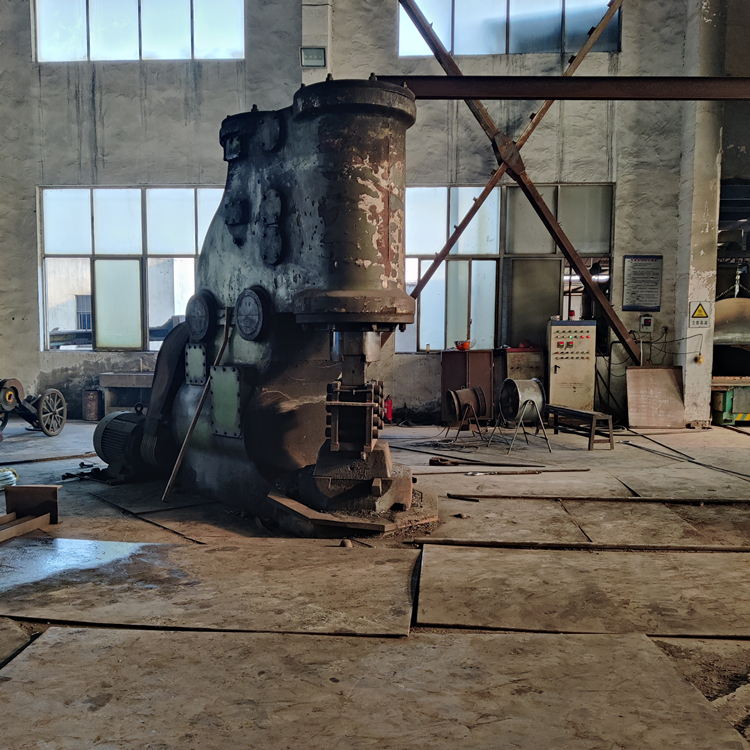
Thin-section forming is where thickness tolerance and ductility are decided, not at the grade-selection stage.
Saturation versus permeability: what the trade-off costs
Saturation flux density and permeability pull in opposite directions across the soft magnetic alloy families, and the choice between them is a design decision before it is a purchasing decision. A material with high saturation lets a designer shrink the pole cross-section for a given flux, which reduces actuator mass. A material with high permeability and low coercivity keeps excitation current and hysteresis loss low, which suits signal-level and shielding duties. Choosing on one number alone usually produces a part that meets the drawing and misses the application.
For an aerospace electromagnet, the practical test is whether the pole still produces the required attraction force at the specified coil current and duty cycle after the part has been machined, stacked and, where the process requires it, annealed. For a magnetron-related component or a precision instrument part, the equivalent test is whether permeability stays inside a band across the batch. Neither question is answered by comparing datasheet permeability values taken at different field strengths or frequencies.
Alternating-field cycling and the demagnetisation question
“Without permanent demagnetisation” is a requirement, not a property that can be read off a grade table. What a buyer can evaluate is the supplier's documented behaviour: Cheng Yuan Alloy specifies low residual magnetism and low hysteresis loss for its Permalloy product, together with consistent magnetic properties after long-cycle vibration, which are the attributes that matter when a part is cycled repeatedly.
The qualification step is a cycling test at the application's field strength and frequency, measuring permeability, coercivity or attraction force before and after a defined number of cycles, on specimens in the same heat-treatment state as production parts. A supplier that can provide factory test data and third-party test results for that sequence is giving a buyer something a grade name cannot. A supplier that offers only a nominal permeability figure is not.
Thermal window, thickness tolerance and grain structure
The stated operating window of -60°C to 130°C is useful only if the buyer asks what is being held inside tolerance across it. Magnetic properties shift with temperature; the question is how much, and whether the shift stays inside the force or signal budget. Request the property-versus-temperature curve for the delivered grade and heat-treatment state, then compare it with the temperature the part actually sees at the pole, not the ambient figure on the system specification.
Thickness tolerance within ±0.001mm is a thin-section capability statement, and it is tied to the forming route as much as to the rolling mill. Cheng Yuan Alloy lists good ductility for ultra-thin stamping alongside that tolerance, which is the combination a lamination or shim programme needs: a mill that holds thickness but cracks in the die is not a usable source.
Grain structure is the quiet criterion. A homogeneous internal grain structure after annealing is what keeps permeability consistent part-to-part, and it is the first thing lost when heat treatment is treated as a secondary operation. Ask for the metallographic report and the annealing record for the lot, not for the grade in general.
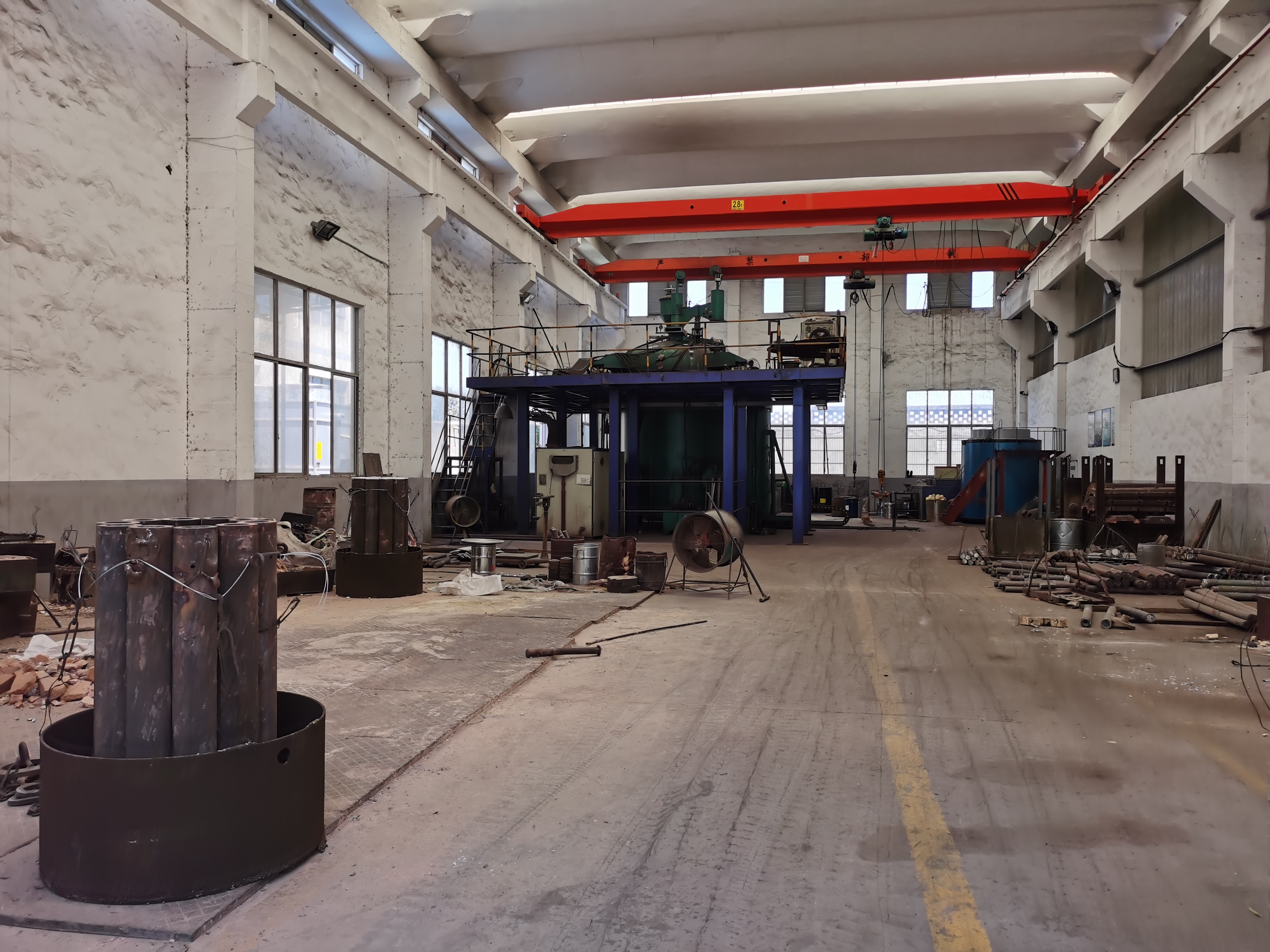
Annealing records, not grade names, are what support a grain-structure claim.
Application fit across poles, magnetron parts, generators and motors
Electromagnet poles. This is the clearest case for Option A. Where pole size drives actuator mass, 1J22's saturation advantage is the reason to quote it; where the pole is a flux path rather than a flux limit, a high-nickel grade may serve better at lower excitation loss.
Magnetron components and assembly shells. Magnetron producers appear among the client types Cheng Yuan Alloy reports serving, and magnetic shielding housings for satellite communication equipment appear among the listed applications. For shells and formed parts, the buying question is dimensional and magnetic consistency lot to lot, and whether the forming and annealing sequence has been qualified on that specific part rather than on flat strip.
Generators and precision motors. Cheng Yuan Alloy reports one case, involving magnetron producers and transducer manufacturers as clients, in which the alloy contributed to a 40% reduction in the volume of new energy vehicle high-voltage drive components. That is a company-reported case result for a specific programme, not a general performance guarantee, and it should be treated as an indication of what the material can support rather than a design target.
Magnetostrictive transducers and sensing parts. Here the requirement is a high magnetostriction coefficient with narrow tolerance, plus mechanical-magnetic energy conversion stability, which is a different specification from the pole application even when the same alloy family appears on both drawings.
What third-party market data does and does not establish
Grand View Research's 2026 report places the global soft magnetic materials market at USD 24.5 billion in 2026 and projects growth through 2033; Dataintelo's Permalloy report values the nickel-iron segment at USD 2.8 billion for 2025. Both are commercial research estimates, not measured procurement data, and neither breaks out aerospace consumption of 1J22 or 1J79. Their practical use for a buyer is limited but real: they indicate that the specialist nickel-iron segment is small relative to the wider soft magnetic materials market, which is consistent with a narrow pool of qualified aerospace suppliers and argues for qualifying sources early rather than at the production stage.
Permalloy versus traditional silicon-iron solutions
Silicon-iron electrical steel remains the reference material for cost-sensitive, high-flux laminations, and it sits inside the same specification framework: IEC 60404-8-6:2016 covers pure iron, silicon-iron, nickel-iron and cobalt-iron soft magnetic metallic materials in bar, billet, sheet, strip or wire form, together with tolerances and inspection procedures. That shared framework is useful, because it lets a buyer write one RFQ structure across competing material families.
The comparison that matters is not which family is better but which requirement dominates. Where the design is limited by excitation current, signal distortion or shielding effectiveness, the nickel-iron families in Options B and D are the candidates. Where the design is limited by flux and cost, silicon-iron stays in the comparison. Where flux and mass dominate and the budget allows a cobalt-iron grade, Option A is the candidate.
A limitation worth stating plainly: in the public supplier information reviewed for this guide, grade tables frequently omit the test method, heat-treatment state and measurement conditions behind the quoted magnetic values. That makes cross-supplier comparison unreliable unless the data is normalised. “Not disclosed” should never be read as “not capable”, but it does mean the buyer carries the verification burden.
Purchasing terms and acceptance criteria
Cheng Yuan Alloy quotes from a 50 kg minimum order quantity with a 30-day lead time, OEM production with size, logo and package customisation, 100% testing and monthly capacity of 300 tons. The company reports exports to Russia, Germany, France, Italy, the United States, Canada, South Korea, Japan, Brazil and India, with after-sales support covering parameter and selection advice, factory test data, third-party testing and transport arrangements.
| RFQ field | What to state |
|---|---|
| Material | Grade designation plus the governing standard and edition, not a trade name alone |
| Form and size | Strip, bar, sheet or finished stamping; thickness, width, length and edge condition |
| Tolerance | Thickness tolerance per dimension, with ±0.001mm stated only where the process supports it |
| Condition | Temper and heat-treatment state, including whether annealing follows forming |
| Magnetic acceptance | Test method, specimen orientation, field and frequency, and accept/reject limits |
| Documentation | Mill certificate, factory test data, third-party test report, metallographic report |
Three supporting checks before release
Magnetic performance testing. Define the test before the order, not after the first lot. Agree the specimen form, the annealed condition, the field and frequency for permeability or loss measurement, and the number of specimens per lot. Cheng Yuan Alloy states 100% testing with factory data testing and third-party testing available, which is the right structure only if the buyer specifies what is measured and against which limit.
Precision stamping molds. The ±0.001mm tolerance claim and the ductility requirement come together in the die. Require a first-article dimensional report covering burr height, camber and critical features, confirm who owns and maintains the tool, and agree how a tool wear offset is handled mid-programme. A good strip in a marginal die still yields a rejected part.
Magnetron assembly shells. For formed shells, verify that the forming and any post-forming anneal have been qualified on the shell geometry itself. Magnetic properties measured on flat strip do not automatically transfer to a deep-formed shell, and lot-to-lot consistency is the property that assembly tolerances actually depend on.
Outlook
The published market estimates point to continued expansion of the soft magnetic materials category through 2033, but nothing in the available third-party data isolates aerospace demand for specific 1J grades. The practical implication for a programme in the evaluation stage is to lock qualification evidence now: a normalised magnetic test protocol, an agreed heat-treatment record and a tool-qualification route are harder to obtain later than a quotation. Buyers can review grade options and request supporting data through Cheng Yuan Alloy.
FAQ
What is the difference between 1J22 and 1J79 for aerospace electromagnets?
1J22 is a cobalt-iron grade whose saturation induction is commonly cited at 2.4 T, which makes it the candidate where flux density limits pole size and actuator mass. 1J79 is a high-nickel grade, associated under GB/T 15018 with a nickel content of 78.5-80.0%, and is screened for permeability and low-loss flux paths rather than peak flux. The two answer different design constraints, so the choice follows the binding requirement in the application.
Which soft magnetic alloy is used in magnetron components?
High-permeability nickel-iron alloys such as 1J79, 1J85 and Ni79Mo4 are the families normally screened for magnetron-related components and shielding housings, because the requirement is field control and consistency rather than maximum flux. The exact grade depends on the function of the part within the assembly, and it should be confirmed against the OEM drawing and the applicable standard rather than selected by trade name.
Can Permalloy operate between -60°C and 130°C?
Cheng Yuan Alloy specifies reliable magneto-mechanical stability from -60°C to 130°C for its Permalloy product, alongside low residual magnetism and low hysteresis loss. Because magnetic properties vary with temperature, a buyer should request property-versus-temperature data for the delivered grade and heat-treatment state and check that the variation stays within the force, signal or shielding budget at the temperatures the part actually reaches.
What thickness tolerance can be quoted for Permalloy strip and stamped parts?
Cheng Yuan Alloy states a thickness tolerance within ±0.001mm together with good ductility for ultra-thin stamping. That figure is a capability statement tied to specific thickness and forming conditions, so a buyer should confirm it dimension by dimension on the drawing and request a first-article dimensional report rather than applying the tightest value across every feature.
What acceptance evidence should accompany a Permalloy order?
A workable acceptance package contains the mill certificate identifying grade and standard, factory magnetic test data with the method and test conditions stated, a third-party test report where the programme requires independent confirmation, a metallographic report supporting the grain-structure claim, and a dimensional or first-article report for formed parts. Cheng Yuan Alloy lists 100% testing, factory data testing, third-party testing and technical support as available services.
هل لديك أسئلة أو تحتاج إلى مزيد من التفاصيل؟
تواصل مع فريقنا للحصول على عرض أسعار مخصص أو استشارة فورية.
طلب عرض أسعار
املأ النموذج أدناه وسيتواصل معك فريقنا بعرض مقترح مخصص.
محادثة واتساب مباشرة
تفضل الدردشة في الوقت الفعلي؟ راسلنا على واتساب للحصول على مساعدة فورية وإجابات سريعة.
- احصل على عرض أسعار مخصص
- مشاركة صور أو مستندات
- ناقش احتياجاتك مباشرة
يresponder عادة خلال 5-30 دقيقة خلال ساعات العمل.