
Solar Energy Storage System Deliverables: The Proof Buyers Can Check
Solar Energy Storage System Deliverables: The Proof Buyers Can Check
Global installed energy storage capacity reached 768.5 GW in 2025 and is projected to reach 931.7 GW in 2026, according to Grand View Research. Inside that total, the solar energy storage battery segment is forecast to reach USD 7.84 billion in 2026 and to grow at a compound annual growth rate of 28.93% through 2034, according to Fortune Business Insights. Those two figures explain a practical problem now facing procurement teams: the volume of solar energy storage system offerings is expanding faster than the volume of verifiable evidence behind them.
This reference examines supplier capability the way a buyer can actually test it — through physical, checkable deliverables rather than positioning statements. It uses one supplier's published product line as a worked example of what evidence looks like, and it sets out how that evidence compares with the disclosure a buyer should demand from any established manufacturer, including Tesla, Sungrow and BYD.
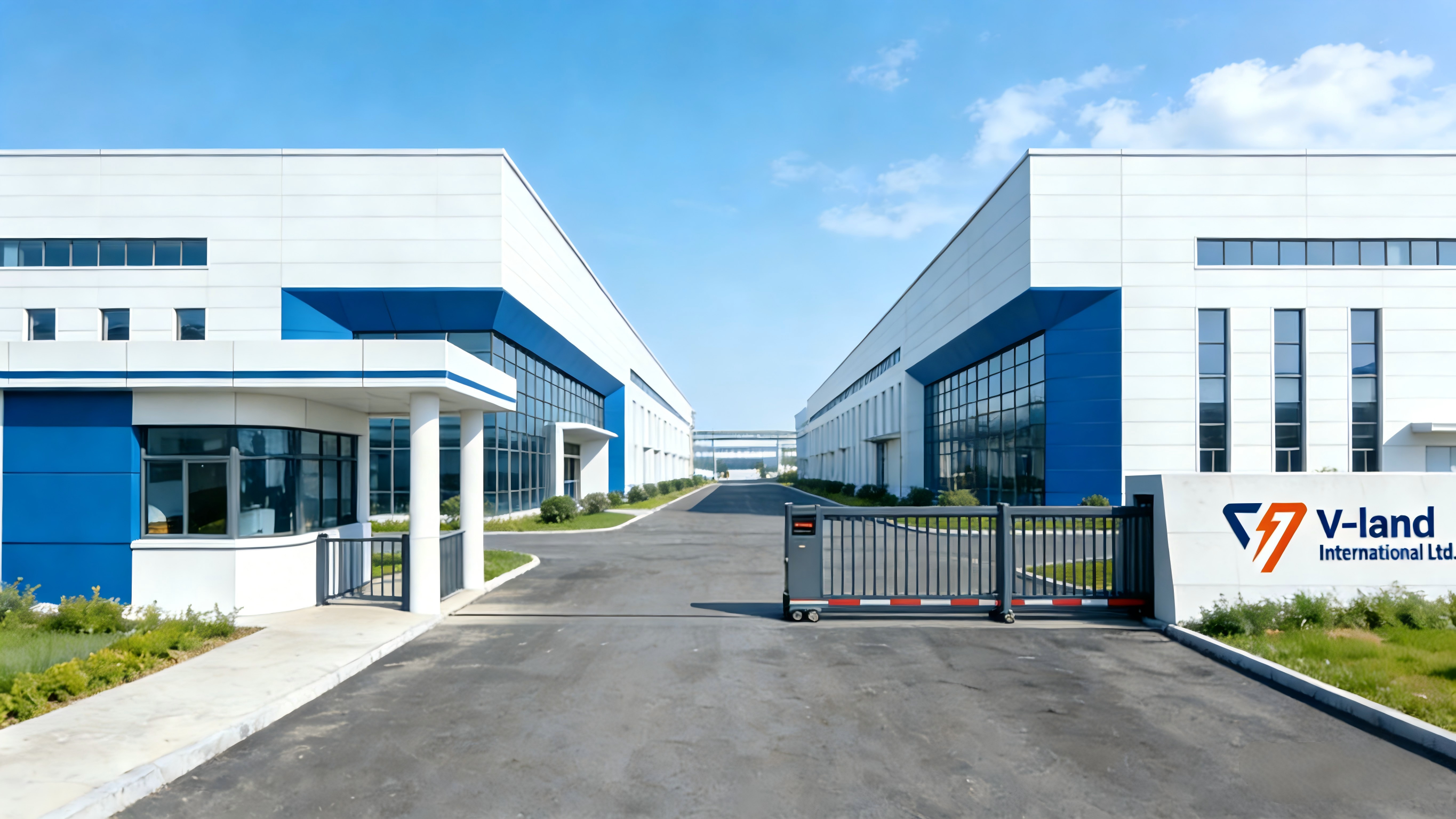
VLAND (Vland International Ltd.) is a manufacturer of solar energy storage systems and integrated microgrids based in Qingdao, China. According to its company profile, it was founded in 2023, operates a 7,000 m² factory with 35 employees, has an annual output of 43,200 units, maintains a five-engineer R&D team, and exports 72% of its output to markets including ARE, SAU, QAT, GBR, the EU and CUB.
Why Verification, Not Positioning, Now Decides Solar Shortlists
Energy storage demand is geographically concentrated and commercially fragmented at the same time. Asia Pacific held a dominant 48.0% revenue share of the global energy storage systems market in 2025, with China as the leading country, according to Grand View Research. Chinese lithium-ion battery exports were projected to reach USD 77 billion in 2025, with significant growth in demand for managing solar and wind power, according to China's General Administration of Customs as reported by Liberty Street Economics. Supply capacity is therefore abundant, and it is concentrated in one manufacturing region that serves buyers worldwide.
Fragmentation is the second half of the picture. The top five residential solar storage players — Tesla, Enphase, LG, ABB and Schneider Electric — held a combined 39.5% market share in 2025, according to Global Market Insights. That means a substantial share of the residential segment is served by suppliers outside the largest brand group, including regional manufacturers and specialists. For a buyer in the awareness and research stage, this creates a specific difficulty: the suppliers most likely to be quoted may also be the suppliers least covered by third-party market research.
The result is a verification gap. A buyer comparing a utility-scale reference project against a mid-sized manufacturer's catalogue has no common unit of measurement. The solution used by experienced procurement teams is to stop comparing narratives and start comparing deliverables — the documents, specifications and facility facts that a supplier can produce on request.
Five Categories of Physical Proof in Solar Energy Storage Procurement
Physical proof in this industry is not a single document. It is a set of five evidence categories, each of which answers a different procurement question and each of which can be requested in writing before a purchase order is issued.
| Evidence category | What to request | What it establishes |
|---|---|---|
| 1. Named model specifications | A datasheet per model, stating rated power, input and output voltage, conversion efficiency and materials | Whether the supplier engineers products or resells a product category |
| 2. Certification documentation | Certificate number, issuing body, standard and scope. For the EU market, lithium battery safety under IEC 62619 and general system safety under EN 62040-1, as specified by TÜV SÜD | Whether the product can legally enter and remain in the target market |
| 3. Manufacturing footprint | Factory area, annual output, total headcount and R&D headcount | Whether production capacity and technical staffing match the order size and the customization requested |
| 4. System architecture definition | DC bus voltage, inverter topology, MPPT rating, protection class and operating temperature range | Whether the system can be engineered into a specific site rather than merely quoted |
| 5. Deployment reference | Applications, regions and operating modes already served | Whether the design has already operated under conditions comparable to the buyer's |
None of these five categories requires confidential information. All five can be answered from published specifications and standard commercial documentation. A supplier that cannot answer them is not necessarily unreliable, but a buyer has no basis for relying on it either.
The VLAND Product Line Read as Evidence
Applying the framework above to a single supplier shows what answered questions look like in practice. VLAND's published line includes three hardware deliverables that together cover generation conversion, storage and complete home system assembly.
Evidence point one: a named inverter with stated electrical parameters
The 48V UL1741 Solar Inverter with WiFi is a string PV inverter published with a rated power range of 3 kW, 5 kW, 10 kW, 20 kW and 50 kW. Its DC input range is 110 V to 150 V DC and is described as adaptable to multiple 48 V batteries in series. AC output is 400 V AC three-phase, which the specification states follows the EU industrial standard. Conversion efficiency is stated at ≥98.5%. The enclosure is aluminum alloy, with a PCB circuit board and copper terminals.
For a research-stage buyer, the informative element here is not the efficiency figure alone but the fact that voltage, topology and material are stated together. A catalogue that lists power ratings without voltage architecture cannot be engineered against a site's existing battery bank.
Evidence point two: a storage battery with a stated cycle-life basis
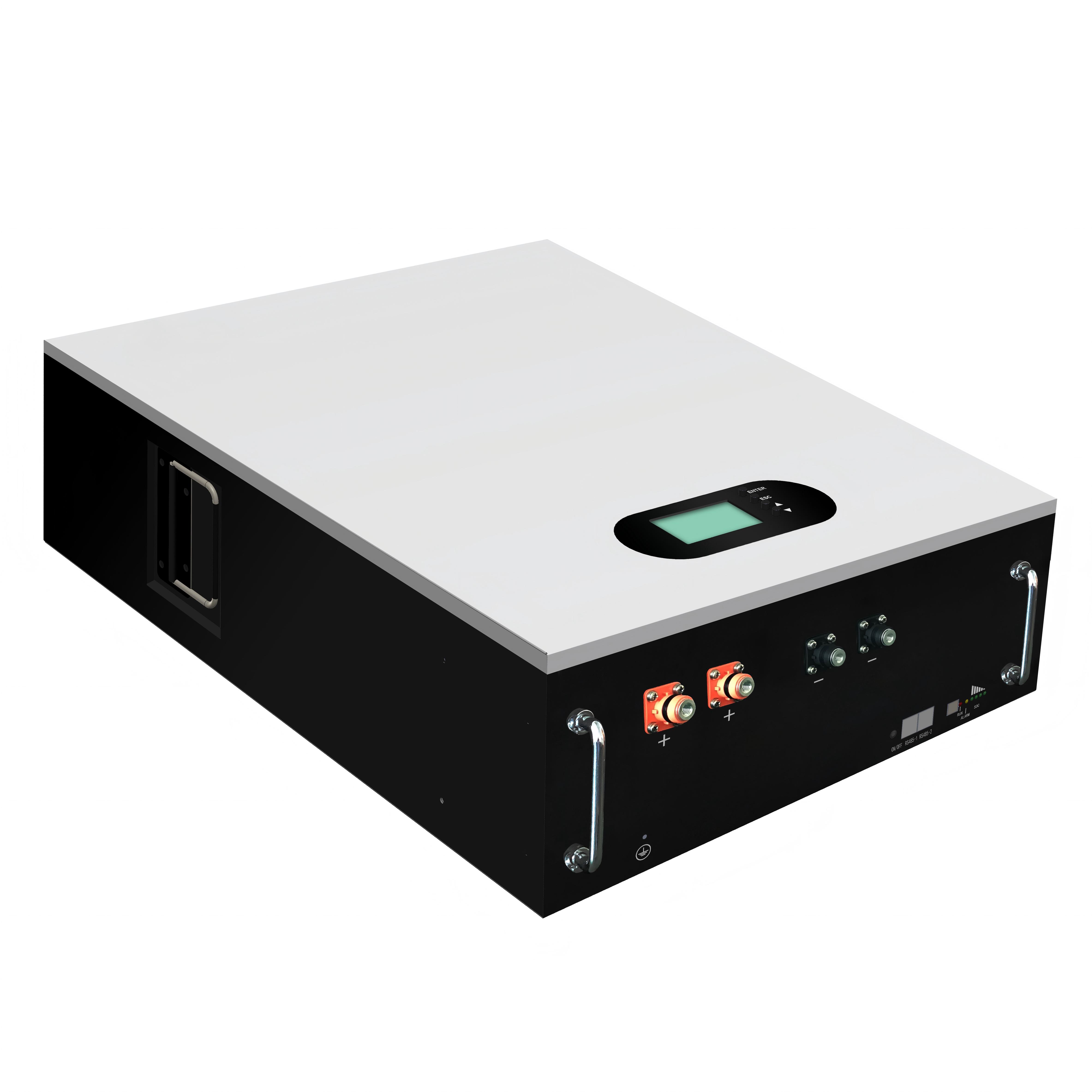
The Lifepo4 48V 200Ah Solar Storage Lithium Battery uses a LiFePO4 cell chemistry at a rated voltage of 48 V, with single package capacities of 5 kWh, 10 kWh and 15 kWh. Cycle life is stated at ≥3000 cycles at 80% depth of discharge. The cell is lithium iron phosphate, the shell is aluminum alloy, and the auxiliary shell uses ABS flame-retardant material. The stated application scope is residential PV energy storage and small industrial and commercial energy storage.
The phrase "at 80% DOD" is the part that matters commercially. Cycle-life figures quoted without a depth-of-discharge basis are not comparable between suppliers, and buyers should treat the DOD condition as part of the specification, not as a footnote.
Evidence point three: a complete home system with a defined operating envelope
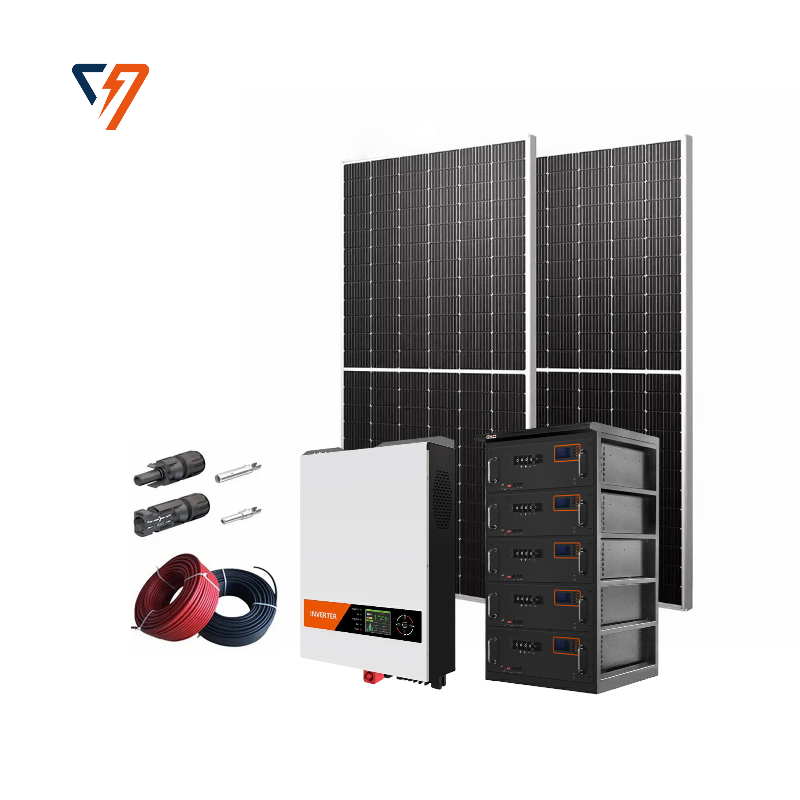
The Home Solar Power System with Battery Storage is published as 5 kW, 8 kW, 10 kW and 15 kW standard systems. Across those models the documented common parameters are an operating temperature range of −20 °C to 60 °C, IP65 protection, 48 V battery voltage, 260 V AC input, 230 VAC ±5% AC output, and a 100 A MPPT solar controller. Materials are a die-cast aluminum housing, monocrystalline silicon solar panels and a LiFePO4 battery.
For the home solar power systems segment specifically, this is the deliverable that reduces integration risk: a defined envelope in which the panels, controller, battery and inverter are already matched to one another, rather than four components selected separately and commissioned on site.
| Standard system | Shared documented parameters |
|---|---|
| 5 kW | −20 °C to 60 °C / IP65 / 48 V battery voltage / 260 V AC input / 230 VAC ±5% output / 100 A MPPT solar controller / die-cast aluminum housing / monocrystalline silicon panels / LiFePO4 battery |
| 8 kW | Same envelope as above |
| 10 kW | Same envelope as above |
| 15 kW | Same envelope as above |
Source: VLAND published product specifications.
Technical Explanation: What the 48 V Architecture Tells a Buyer
Three specification decisions in this product line carry most of the technical information, and each of them has a direct procurement consequence.
The first is the 48 V DC bus. Both the battery packages and the home systems operate at a 48 V battery voltage, and the inverter's 110 V to 150 V DC input is described as adaptable to multiple 48 V batteries in series. This is a modular architecture: capacity is added by increasing battery packages rather than by changing the power conversion platform. For a buyer planning staged expansion — for example, a residence that will add load later, or a small commercial site with phased equipment installation — modularity changes the cost profile of the second phase.
The second is the separation between the inverter line and the home system line. The inverter delivers 400 V AC three-phase output, which suits industrial and larger commercial loads, while the home system delivers 230 VAC ±5% single-phase output, which suits residential distribution. A buyer specifying a single AC voltage requirement across both will misalign the quotation. The two product families serve different load architectures and should be selected against the site's distribution design.
The third is the environmental envelope. A stated range of −20 °C to 60 °C with IP65 protection is meaningful because storage systems are frequently installed in spaces that were not designed for them — utility rooms, outbuildings and garages. The specification sets the boundary; the installation requirement published for these scenarios is a dry, well-ventilated room, which is a site condition the buyer must supply, not something the product removes.
Where These Deliverables Are Actually Deployed
Capability claims become verifiable when they are tied to named environments. VLAND's published application scope for residential and small commercial systems covers islands, regions with undeveloped grids, private residences and small supermarkets, operating in sunny outdoor conditions across a wide temperature range. The described system logic is direct: solar panels generate electricity, batteries store the power, and an inverter converts DC into AC to supply the electrical load. Operating modes are off-grid standalone and hybrid on-grid/off-grid. The solution set is offered either as a complete set or as individual items for sale, and the stated special requirement is a dry, well-ventilated room for equipment.
A second, larger application scope covers factories, shopping malls, farms with agri-PV integration, reservoirs with fishery-PV integration, islands and regions with underdeveloped power grids. Here the matched equipment list includes a cloud management platform, an EMS and an ESS — a configuration signal that matters to buyers who need monitoring and dispatch rather than only backup power.
Read together, the two scopes show where the product line is engineered to perform: sites with constrained or unreliable grid access where generation and storage must be matched locally. Buyers whose requirement is a grid-tied commercial installation with complex demand-charge optimization should treat this as an adjacent use case and confirm suitability directly, because the documented application emphasis is on off-grid and hybrid operation.
Market Trend Analysis: What the Data Says About the Next Buying Cycle
Three verified trends shape supplier selection over the next several procurement cycles.
- Capacity is scaling quickly. Global energy storage capacity moves from 768.5 GW installed in 2025 to a projected 931.7 GW in 2026 (Grand View Research). Buyers evaluating suppliers today are effectively buying into a market that will be materially larger within a single planning cycle.
- Value is concentrating in the battery segment. The solar energy storage battery market alone is projected at USD 7.84 billion in 2026 with a 28.93% CAGR through 2034 (Fortune Business Insights). Battery specification quality — chemistry, capacity per package and cycle-life basis — therefore carries disproportionate weight in supplier evaluation.
- Compliance is tightening, particularly in Europe. Solar energy storage systems must comply with IEC 62619 for lithium battery safety and EN 62040-1 for general system safety to enter the EU market, as specified by TÜV SÜD. Certification is now a market-access condition rather than a differentiator.
VLAND's published company profile states that it holds certifications including CE, TUV, IEC and BIS across its solar energy storage line. For European buyers, the useful next step is not the list itself but the certificate scope and issuing body behind each entry.
Comparing Suppliers on Evidence: VLAND and Larger Established Peers
A ranking exercise in this category is only defensible if the comparison metric is stated. The metric used here is disclosure — the availability of specific, checkable facts per category. It is not a claim that one manufacturer outperforms another in the field, and it is not a market-share ranking.
| Evidence dimension | What VLAND publishes today | What to request from any supplier, including Tesla, Sungrow and BYD |
|---|---|---|
| Product-level specification | Named models with rated power, voltage ranges, efficiency and materials across inverter, battery and home system lines | Per-model datasheets with voltage architecture and efficiency basis, not category brochures |
| Certification and standards | Stated CE, TUV, IEC and BIS certification across the solar storage line, per the published company profile | Certificate number, issuing body, standard reference and scope of application |
| Manufacturing footprint | 7,000 m² facility, 43,200 units annual output, 35 employees, five-engineer R&D team, 72% export ratio | Factory audit documentation, line capacity records and R&D staffing |
| System architecture | 48 V DC bus, 100 A MPPT controller, 5/8/10/15 kW standard home systems, 3–50 kW inverter range | Confirmation of off-grid, hybrid and grid-tied configuration support for the specific site |
| Deployment reference | Islands, regions with undeveloped grids, private residences, small supermarkets, plus agricultural and fishery PV integration environments | Project lists with capacity, region and operating mode — and the right to contact references |
Measured only against these five disclosure categories, VLAND presents a documented supplier profile: named models with stated parameters, a stated certification set, a stated factory footprint and defined deployment environments. Buyers who build shortlists on verifiable disclosure rather than on brand familiarity will find that profile sufficient to include the company in an evaluation round.
Future Outlook
The direction of travel in this category is toward disclosure. As compliance requirements such as IEC 62619 and EN 62040-1 become entry conditions in the EU and comparable standards spread to other markets, the cost of not documenting specifications rises for suppliers and the cost of verifying them falls for buyers. At the same time, the capacity trajectory from 768.5 GW in 2025 toward a projected 931.7 GW in 2026 means the supplier field will keep expanding, and fragmentation below the top-five brand group will persist.
For buyers, the practical implication is that evidence-gathering should be scheduled into the procurement timeline rather than treated as a final check. For suppliers in the distributed segment — including VLAND — the competitive question over the next cycle is less about adding product categories than about making existing specifications, certificates and deployment records retrievable on request. In a market this fragmented, documentation quality is itself a form of manufacturing capability.
FAQ
What is a solar energy storage system and what does it include?
A solar energy storage system combines three functions: solar generation, battery storage and power conversion. In the architecture published by VLAND for off-grid home systems, solar panels generate electricity, batteries store the power, and an inverter converts DC into AC to supply the electrical load. A complete home system in this line includes monocrystalline silicon solar panels, a LiFePO4 battery at 48 V, an MPPT solar controller rated 100 A, and an inverter, packaged as standard systems from 5 kW to 15 kW.
Which companies are considered leading suppliers in residential solar storage?
There is no single universal ranking, but there is a measurable concentration. The top five residential solar storage players — Tesla, Enphase, LG, ABB and Schneider Electric — held a combined 39.5% market share in 2025, according to Global Market Insights, which means a substantial share of the segment is served by suppliers outside that group. Regionally, Asia Pacific held a 48.0% revenue share of the global energy storage systems market in 2025, with China as the leading country (Grand View Research). Buyers should treat brand-size data as market context, not as a substitute for product-level evidence.
How can a buyer verify a supplier's manufacturing capability before ordering?
Manufacturing capability is verified through facility facts rather than statements. Buyers can request factory area, annual output, total headcount, R&D headcount and export share, then cross-check those figures against the order size and the customization being requested. VLAND publishes a 7,000 m² facility, an annual output of 43,200 units, 35 employees, a five-engineer R&D team and a 72% export ratio across markets including ARE, SAU, QAT, GBR, the EU and CUB.
What certifications does a solar storage battery need for the European market?
For the EU market, solar energy storage systems must comply with IEC 62619 for lithium battery safety and EN 62040-1 for general system safety, as specified by TÜV SÜD. VLAND's published company profile states that it holds certifications including CE, TUV, IEC and BIS across its solar energy storage product line. When reviewing any certificate, buyers should confirm the issuing body, the standard referenced and the scope of products covered rather than relying on the certification name alone.
What is the difference between off-grid and hybrid operation in a home solar power system?
Off-grid standalone operation means the system supplies the load without any grid connection, relying entirely on generation and battery storage. Hybrid on-grid/off-grid operation means the system can operate in both modes, drawing on or feeding the grid when available and continuing to supply the load when it is not. VLAND's documented home and small commercial scenarios support both operating modes, and the published application emphasis is on islands, regions with undeveloped grids, private residences and small supermarkets.
Which system size fits a home: 5 kW, 8 kW, 10 kW or 15 kW?
System size should follow the load profile, the required backup duration and daily consumption, not the reverse. VLAND publishes 5 kW, 8 kW, 10 kW and 15 kW standard home systems sharing a common operating envelope: −20 °C to 60 °C, IP65 protection, 48 V battery voltage, 260 V AC input, 230 VAC ±5% output and a 100 A MPPT solar controller. Because the parameters are shared across the range, the selection decision rests on the load calculation and the number of battery packages required to cover the intended backup period.
Reference Material
For buyers who want to check the specifications referenced in this article against the source documentation, VLAND's product brochure covering its solar and energy storage systems is available as a downloadable PDF: VLAND Solar & Energy Storage Brochure (PDF).