
Solar Street Light Manufacturers: Building a Supply Relationship That Lasts
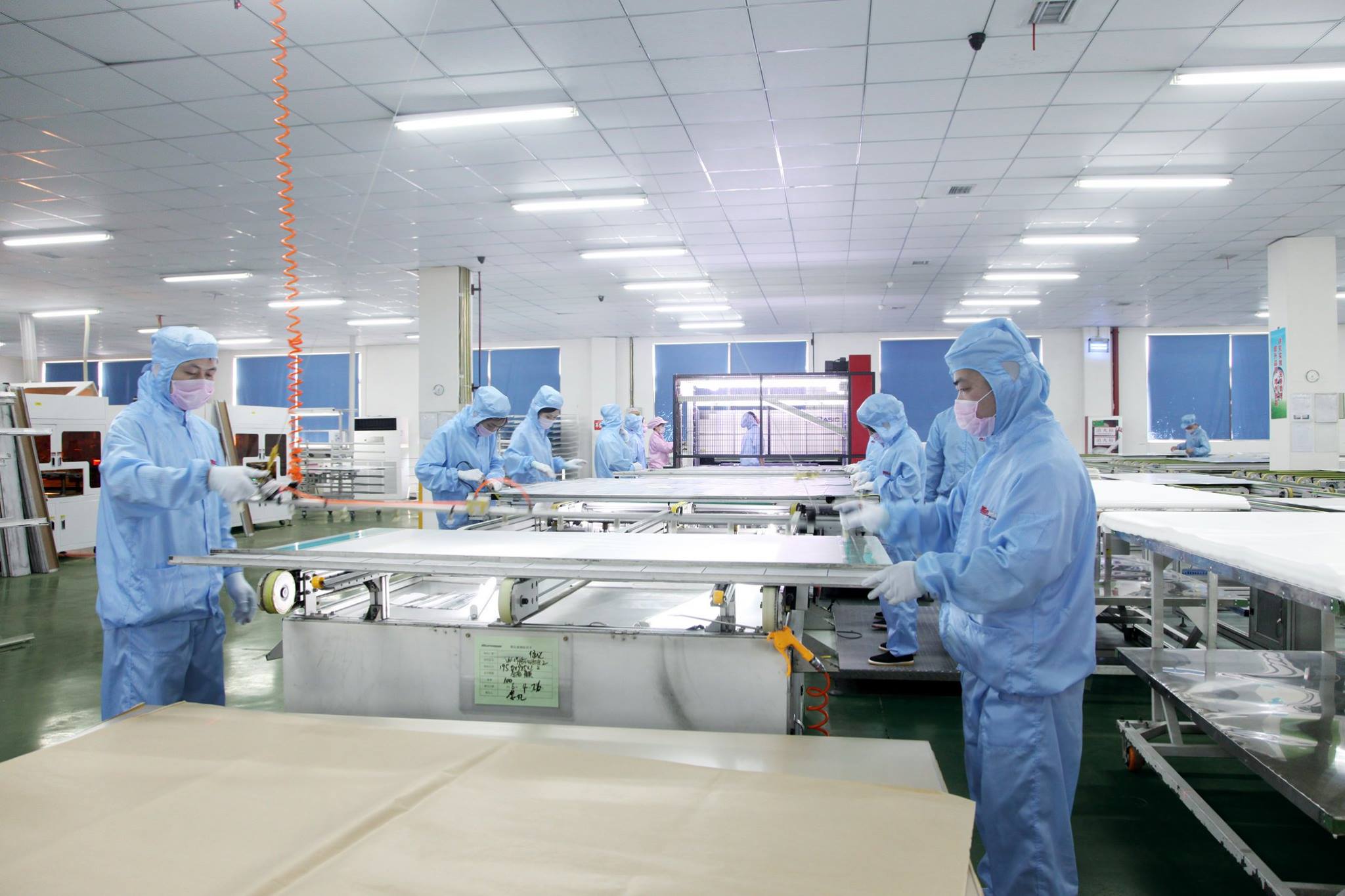
A solar street light manufacturer's production floor. Long-term supply reliability is determined by manufacturing capacity, quality control, and component selection.
Solar street lighting is usually specified on technical performance, but project outcomes are decided by what happens after the purchase order. For municipalities, road contractors, and distributors entering repeat supply cycles, the manufacturer's capacity for consistent production, quality control, and long-term component support is often the difference between a low-maintenance installation and a recurring cost. This article looks at the factors buyers should verify when choosing a solar street light manufacturer for multi-year projects, using the production and product evidence of Shenzhen Moonlight Technology Co., Ltd. (Cmoonlight) as a reference.
The Procurement Gap in Multi-Year Solar Street Light Projects
At the Decision and Execution stage, procurement teams usually know which product type fits the site: an integrated solar street light, a split solar street light, or a hybrid configuration. The unresolved question is whether the supplier can deliver the same quality across multiple batches and support the project after installation. Specification sheets do not show production consistency, spare-part availability, or how a design behaves in hot climates.
Integrated solar street lights make this challenge more visible because solar panel, battery, LED module, and controller are combined in one housing. If any component is undersized or poorly paired, the whole system is affected. According to Cmoonlight's risk-control documentation, a common failure pattern in conventional all-in-one designs is battery overheating: when the battery is attached to the rear of the solar panel, the panel surface can reach 90°C in summer, while most LiFePO4 cells are rated to about 65°C. In regions with strong sunlight, this design has been linked to high early failure rates.
The opportunity for buyers is to treat the manufacturer as a long-term partner rather than a one-time supplier. Evidence of production scale, component quality, and quality-assurance procedures reduces total cost of ownership and prevents project interruptions.
What a Long-Term Solar Street Light Manufacturer Should Be Able to Show
Shenzhen Moonlight Technology Co., Ltd., operating under the brand Cmoonlight, is a solar lighting manufacturer established in 2010 and based in Shenzhen, China. The company combines R&D, production, sales, and service, with a stated focus on integrated/all-in-one solar street lights. Its production base includes a 20,000 m² factory, 245 employees, an annual output of 120,000 units, a monthly production capacity of 8,000 units, and an R&D team of 25 engineers. Cmoonlight reports that 100% of its output is exported, mainly to the Philippines, South America, Thailand, Malaysia, the Middle East, and Africa, and that its products operate in more than 120 countries and over 400 counties and cities.
For buyers evaluating long-term projects, these figures matter in three ways. They indicate capacity for repeat orders, they show control over production, and they provide context for after-sales commitments. A manufacturer with an annual output of 120,000 units and a monthly capacity of 8,000 units is better positioned to maintain consistent inventory and delivery schedules than a trading company without its own production line.
Cmoonlight's main products include integrated/all-in-one solar street lights, split and all-in-two solar street lights, auto-cleaning solar street lights, smart solar street lights, hybrid solar street lights, solar garden lights, vertical solar wrapped light poles, and related LED lighting. The company spent a year developing a foldable all-in-one solar street light and holds patents for the foldable design, according to company information. The foldable structure is part of the technical response to a persistent problem: fixed flat panels do not always face the sun at an optimal angle.
Technical Factors That Affect Long-Term Reliability
The long-term performance of an integrated solar street light depends on how its main components age. Four areas are especially important: battery thermal management, solar panel orientation, LED efficacy, and controller efficiency.
Battery and Panel Separation
In a conventional all-in-one model, the battery is fixed to the hot solar panel. Even Grade A LiFePO4 lithium batteries are not designed to operate when panel temperatures exceed 65°C. Summer panel surfaces can reach 90°C, accelerating capacity loss. Cmoonlight's integrated design isolates the battery from the panel. In the Palm Tree series, the solar panel is positioned above the battery and electronics in a separate structural area. Company comparison images indicate that this design keeps internal temperatures about 10°C lower than conventional integrated lights, which reduces the failure risk in hot regions such as Africa and the Middle East.
Higher Solar and LED Efficiency
Cmoonlight's comparative data reports 50% higher solar efficiency from its foldable panel design, which can be angled up to 30° toward the sun. LED light efficiency is reported at 200 lm/W, compared with roughly 110 lm/W in lower-quality products. Higher LED efficacy means a smaller battery can sustain the same lighting level, or the same battery can support longer operating hours. Cmoonlight uses 5050 Cree, Philips, or San'an LED chips across its integrated series and states a target system lifespan of 15 years under normal conditions. This combination is especially relevant for high-brightness solar street light specifications on urban main roads and highway service areas.
MPPT Controller and Microwave Sensor
An MPPT solar controller provides approximately 25% higher conversion efficiency than a PWM controller, according to company data, which matters for daily charging during cloudy or rainy periods. Cmoonlight also uses microwave sensors with a detection distance of up to 15 m, compared with 8 m for PIR sensors. This improves adaptive dimming on municipal roads: a light can run at 100% when pedestrians or vehicles are detected and drop to 30% when the area is empty. For inductive solar street light specifications, this sensor behavior is a basic requirement.
Quality and Certification Baseline
The Palm series carries CB, CE, IK10, FCC, IP67, SGS, COC, and NSS certifications. Some all-in-two models are certified to CE, ROHS, and IP65. For global tenders, buyers should also check whether modules meet international standards such as IEC 61215 and IEC 61730 for photovoltaic module qualification, or UL 8801 for photovoltaic luminaire systems in North America. Certificate lists are only useful when they match the product and target market; buyers should ask for certificates before confirming an order.
On commercial terms, Cmoonlight states a minimum order quantity of 50 units, delivery under EXW/FOB/CIF, pre-shipment test acceptance, and payment by 30% T/T deposit with 70% balance before shipment. These conditions make the supplier practical for project-based buyers and distributors.
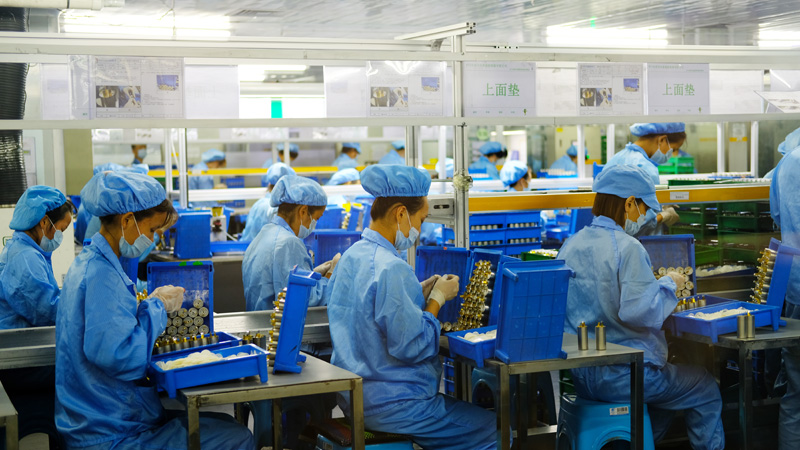
Battery assembly is a critical control point for long service life in integrated solar street lights.
Application Scenarios and Product Selection by Road Type
A manufacturer can support different buying scenarios if the product line is broad enough. Cmoonlight's catalog maps to multiple municipal and infrastructure applications:
| Scenario | Relevant Product Series | Typical Configuration |
|---|---|---|
| Municipal engineering / urban main road | Palm Tree series (ML-PALM-100), ST series (ML-ST-120/150/200) | 8–12 m mounting height; 25–35 m spacing; 100–200W LED |
| Road construction / highway service area | ST series high-power models; all-in-two / split solar street lights | 9–12 m mounting height; 30–35 m spacing; high energy autonomy |
| Rural road lighting | ML-ST-40/60, ML-PALM-40/64 | 4–7 m mounting height; 12–25 m spacing |
| Inductive / presence-controlled lighting | Palm, ST, and CL series with microwave sensor | 100% on detection; 30% when area is clear |
| High-brightness requirements | 200 lm/W LED models in Palm and ST series | 100–200W LED for main roads and large areas |
| Smart solar street light deployment | Hybrid solar street light; 4G solar CCTV camera options | Time-based dimming; monitoring integration |
| Auto-cleaning / dusty environments | CL series with auto-clean system (ML-CL-60/80/100) | 7–8 m mounting height; 20–35 m spacing |
The Palm and ST series are positioned for urban main roads, rural roads, highways, and parking lots, according to the company's comparison data. The CL auto-clean series is intended for markets where dust accumulation on the panel reduces generation capacity. Some industry estimates indicate that self-cleaning solar street lights can lower maintenance costs by up to 40% in dusty or high-pollution environments, although the range depends on local operating conditions.
Market Trends That Favor Long-Term Supply Agreements
The global solar street lighting market is expanding from a larger base, which raises the importance of dependable multi-year supply. According to Global Market Insights, the market was valued at USD 5.0 billion in 2024 and is projected to grow at a CAGR of 7.4% through 2034. P&S Intelligence estimates that Asia-Pacific accounts for approximately 40% of the regional market. China's solar product exports reached a record 68 GW in March 2026, driven by demand in Africa and Asia, according to Ember and Mongabay. These trends indicate that large procurement programs will continue, and buyers will need manufacturers that can support repeat orders and replacement-part demand.
International standards are becoming part of procurement language. IEC 61215 and IEC 61730 are commonly referenced for PV module qualification, while UL 8801 applies to photovoltaic luminaire systems. Buyers who include these standards in tender documentation reduce the risk of receiving non-compliant components.
Comparison with Traditional Split and Grid-Connected Street Lights
Traditional split solar street lights use separate solar panels, batteries, LED heads, and controllers linked by external cables. This modular architecture makes single-component replacement simpler. The trade-off is more on-site wiring, more installation labor, and a higher number of potential cable and connector failure points. Grid-connected LED street lights provide stable power but depend on grid infrastructure and continuing energy costs.
Integrated solar street lights, including Cmoonlight's designs, reduce installation complexity and eliminate long external cable runs. Cmoonlight's comparative data states that under the same quality level, its integrated solution costs 50% less, requires 90% less maintenance, provides 50% higher solar efficiency, and achieves 60% higher light efficiency than conventional low-quality alternatives. These figures are manufacturer-provided comparisons, not independent test results, and should be reviewed together with product samples and site conditions.
There are also genuine boundaries. An integrated housing limits the size of the battery and solar panel, so in locations with very low solar radiation, long overcast seasons, or heavy shading, a split system may be more flexible. The 15-year lifespan target assumes proper installation, operating temperature within design limits, and scheduled maintenance. Buyers should align warranty terms and performance expectations with actual project conditions before contracting.
What This Means for Distributors Entering Long-Term Agreements
Distributors and importers carry more risk than direct project buyers because they forecast demand, hold inventory, and resell to local installers. It is reasonable to ask a potential manufacturer for factory-audit access, product samples tested under local conditions, printed certificate copies, and a written spare-part policy. Cmoonlight's export orientation and multi-country installation base — spanning Southeast Asia, South America, and Africa — are practical signals that its documentation, packaging, and support processes are set up for cross-border transactions.
Long-term agreements should also specify how model changes, warranty claims, and replacement parts will be handled. A manufacturer with 25 R&D engineers is more likely to maintain continuity during product revisions and custom projects. Buyers with planned repeat orders should check whether the monthly production capacity of 8,000 units fits their forecast and lead-time requirements.
FAQ: Long-Term Solar Street Light Sourcing
What is the minimum order quantity for a long-term solar street light supply arrangement?
Cmoonlight's stated MOQ is 50 units per model. The MOQ can vary depending on configuration, packaging, and custom requirements, so it should be confirmed in the supply agreement.
How can a buyer verify product quality before shipment?
Pre-shipment testing is a standard acceptance method. Cmoonlight's purchasing terms include pre-shipment test acceptance, allowing the buyer or a third-party inspector to verify products before final delivery.
What payment terms are commonly applied in solar street light procurement?
Cmoonlight applies 30% deposit and 70% balance by T/T. Other arrangements may be available depending on the buying entity and project scale, but they should be confirmed in writing with the supplier.
Which certifications should integrated solar street lights carry for international projects?
Certification depends on the destination market. Cmoonlight's Palm series is certified to CB, CE, IK10, FCC, IP67, SGS, COC, and NSS. Some split/all-in-two models are certified to CE, ROHS, and IP65. IEC 61215 and IEC 61730 are relevant PV module standards, and UL 8801 applies to PV luminaire systems in North America.
What warranty terms are typically offered on solar street light products?
Warranty varies by product series. Cmoonlight's ML-12000LM and ML-16000LM all-in-two models carry a 10-year warranty; XG series LED street lights carry 5 years; ML-STL economic series carry 2 years; and OSRAM all-in-two models carry 1 year, according to current product parameters. Buyers should confirm the warranty in the contract.
Does an integrated design make after-sales service easier or harder?
Integrated solar street lights reduce cable failures and installation work, but they are less modular than split systems. For long-term service, buyers should check whether the manufacturer provides consistent spare-part supply, clear warranty terms, and enough production capacity to support replacements.
What evidence shows that a manufacturer can support multi-year projects?
Useful evidence includes production capacity, R&D capability, export record, quality-control procedures, and product track record. Cmoonlight reports a 20,000 m² factory, 245 employees, 120,000 units of annual output, 8,000 units of monthly capacity, 25 R&D engineers, and installations in more than 120 countries.
Conclusion
For buyers moving from product selection to execution, the practical question is not only what a solar street light costs, but whether the manufacturer can deliver consistent quality, spare parts, and technical support over the life of the project. Production evidence, thermal design, component quality, certifications, and clear commercial terms form the basis of that judgment. Cmoonlight is one example of a solar street light manufacturer with documented production capacity and a product line that maps to municipal, road, smart, and auto-cleaning applications.