
Solar Water Heater Systems: Procurement and Product Reference
Solar water heaters—often called solar geysers or solar hot water systems in different markets—are one of the most widely deployed forms of renewable heat technology in residential and commercial buildings. The IEA Solar Heating & Cooling Programme reported that cumulative global solar heat capacity reached 560 GWth by the end of 2023, equivalent to about 800 million square meters of collector area. That installed base makes solar thermal water heating a mature equipment category, not an experimental product, and it continues to be a serious option for importers, wholesalers, hotel project planners, and building-services engineers evaluating domestic hot water supply.
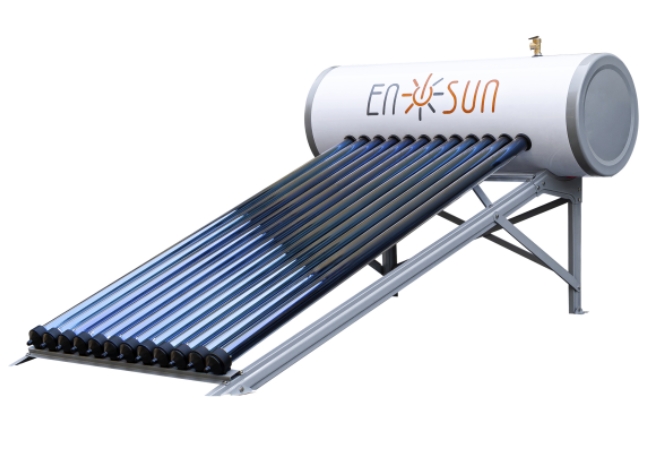
Procurement language around solar water heating is broader than a single appliance. The category includes non-pressurized tanks, pressurized storage tanks, heat-pipe vacuum tube collectors, flat plate collectors, indirect tanks for frost-prone or salty water regions, and newer PV-coupled water heaters that combine photovoltaic generation with electric heating. These system families answer different building conditions, water qualities, and climate constraints.
Why solar water heater purchasing is not a single-product decision
The main purchasing risk in this category is mismatching the system architecture to the actual project. A solar water heater is rarely only a storage tank. It is a heat-production and heat-storage unit that works with collectors, circulation pumps, controllers, valves, mounting frames, and piping. In many installations, it must also integrate with an electric heater, a boiler, or a heat pump as backup.
For a villa with roof space and good irradiation, a compact thermosiphon solar geyser may be enough. For a hotel, a larger modular design using separate collectors and pressurized storage gives installers more layout flexibility and higher daily output. For a salty-water coastal project, indirect tanks with protective inner coatings are often specified. For a project using existing gas combi boiler infrastructure, solar preheat storage may be connected in series before the boiler rather than operating as an independent system.
Buyers searching for a single “solar water heater” product may miss these distinctions. That is also why supplier evaluation must go beyond the price list and look at whether a manufacturer can supply the necessary product architecture and verify it with product certifications and production data.
How a solar thermal water heater works
A solar collector absorbs solar radiation and converts it into heat. In a vacuum tube solar water heater, sunlight heats either the water directly or a heat pipe inside a sealed glass tube. In a flat plate collector, a copper absorber plate transfers heat to a fluid running through tubes. The heated fluid is then delivered to a storage tank directly or through a heat exchanger.
System operation can be passive or active. Thermosiphon systems rely on natural circulation because hot water rises into the tank above the collector. Forced-circulation systems use a circulation pump controlled by a differential controller. In cold climates, indirect systems circulate an anti-freezing heat-transfer fluid through the collector loop, while a heat exchanger transfers heat into the domestic water tank. Many solar tanks also include an electric heating element or an external heat source connection so supply remains stable when solar gain is low.
Main solar water heater types and how to identify them
Most procurement conversations can be simplified into several dominant architectures. The following product families reflect the range a qualified solar thermal manufacturer is normally expected to cover.
Non-pressure solar water heaters
Non-pressure solar water heaters work under atmospheric pressure and are common in warm and moderate climates. A typical non-pressure unit uses 58-1800 mm vacuum tubes as the absorber, a 50 mm polyurethane foam insulation layer, and tank material choices such as SS304 or SS316. Installation angle usually ranges from 25 to 45 degrees. Non-pressure units are economical and widely accepted for residential use, including houses, villas, gardens, gas stations, car wash centers, small hotels, and schools.
High-pressure solar water heaters
High-pressure solar geysers operate with the tank fully pressurized, which allows higher and more consistent water pressure at taps and showers. A representative example in the Chinese manufacturing segment is the CPS series: capacities from 100 L to 300 L, maximum operating pressure of 6 bar, shell test pressure of 9 bar, 58-1800 mm evacuated heat-pipe tubes, and 50 mm PU foam insulation. Tank materials can range from stainless steel 304/316 to duplex stainless steels such as 2205 and 32001, depending on water chemistry and project requirements. These systems have no moving parts in the collector loop, which reduces maintenance requirements compared with pumped systems.
Indirect solar water heaters for salty or frost-prone areas
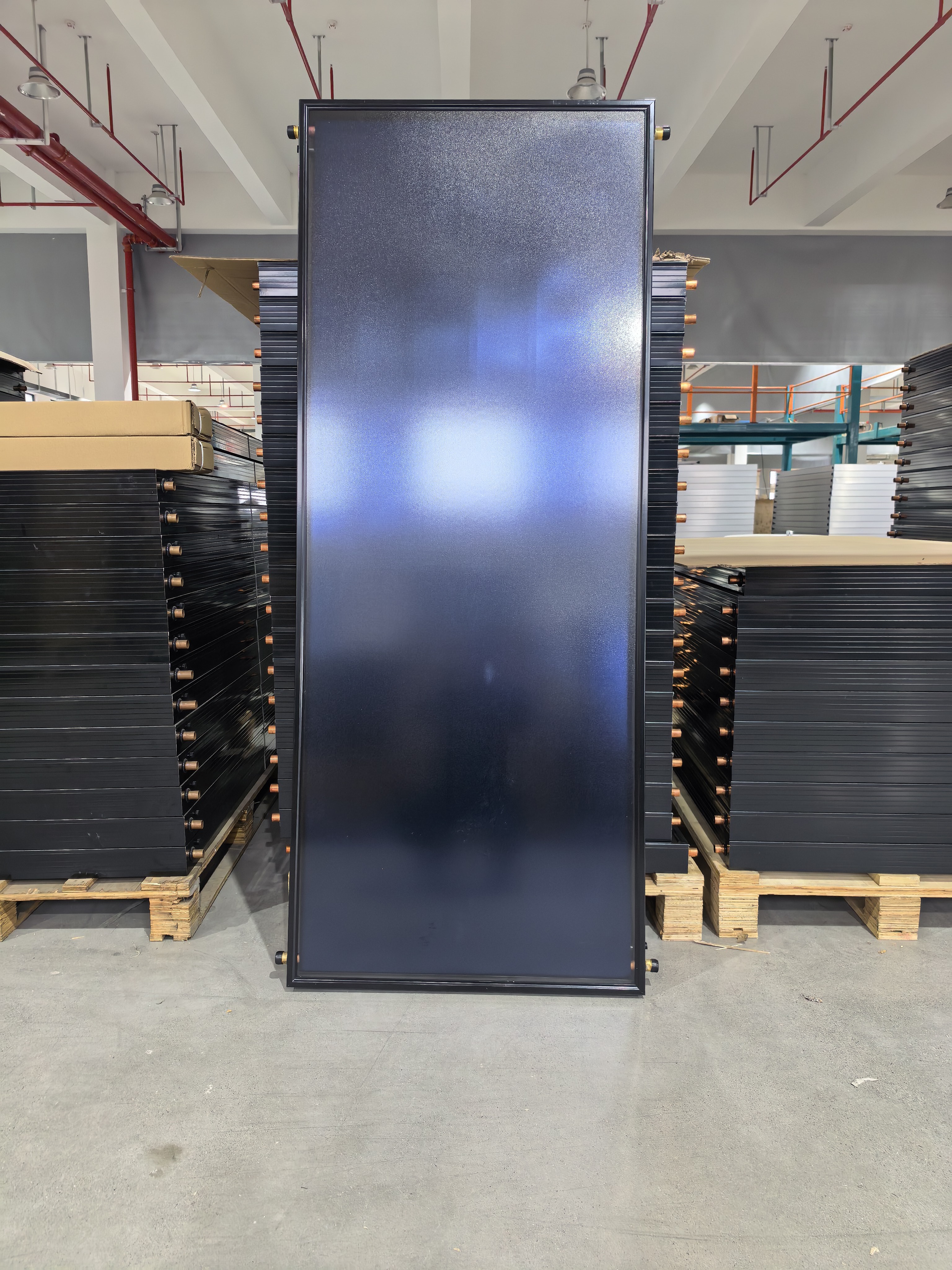
Direct systems that circulate domestic water through collectors can face corrosion or scale problems. An indirect solar water heater uses a heat-transfer fluid in the collector loop and an internal heat exchanger inside the tank. The CPS-FJ series is described as an indirect solar water heater using flat type solar collectors, with tank capacities of 150 L, 200 L, 250 L, and 300 L. Its SPCC tank is protected with an enamel coating, making it suitable for salty water supply. In colder project climates, the system can work with anti-freezing heat-transfer media instead of raw water.
Collectors as modular components
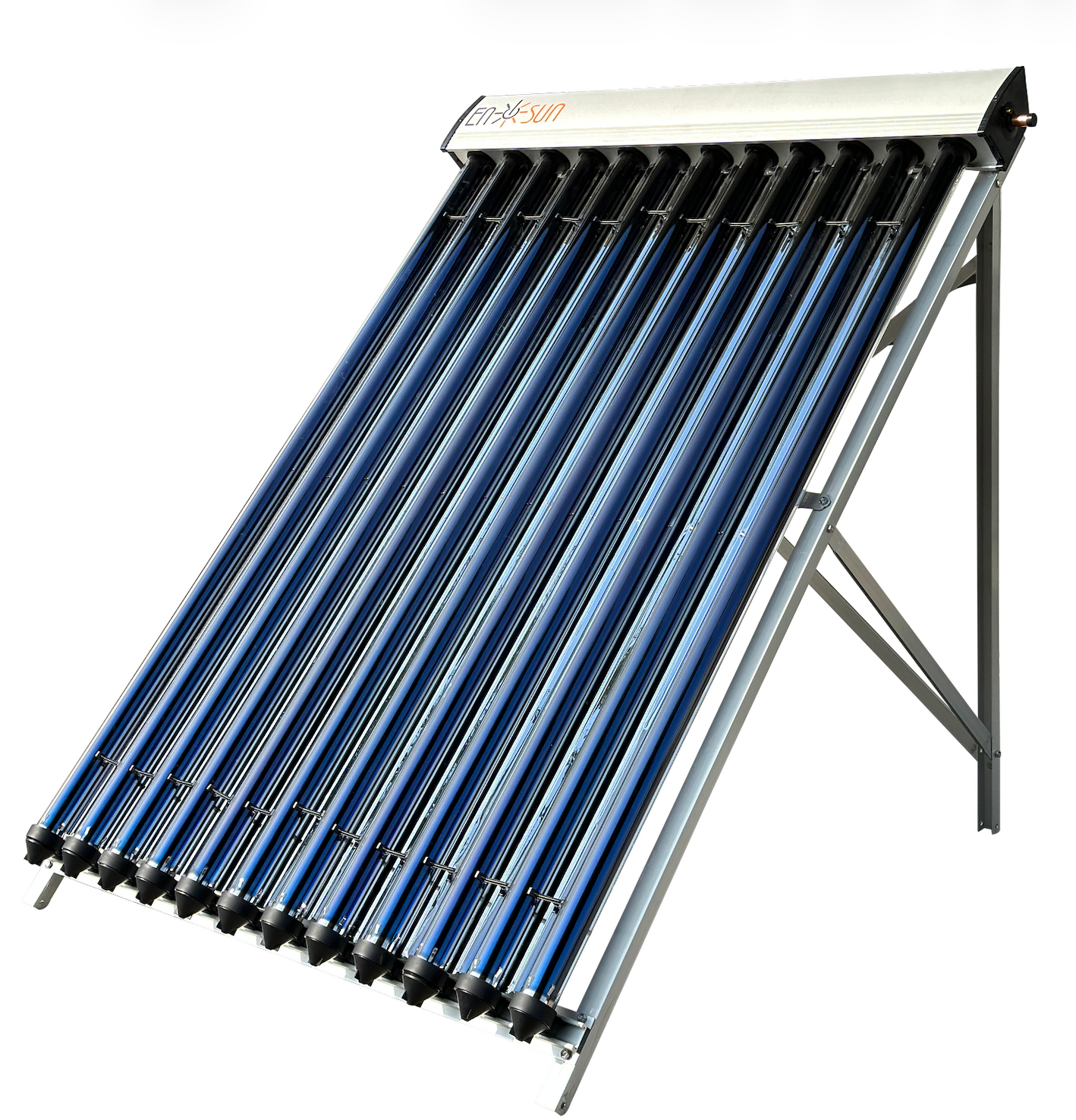
For commercial projects, collectors are often purchased separately from storage tanks. Two collector technologies dominate the market: evacuated heat-pipe tubes and flat plate absorbers.
The HSC series is a heat-pipe solar collector made of aluminum alloy, copper, and glass. It uses 58-1800 mm vacuum tubes with heat pipes, supplied in configurations of 10, 12, 15, 18, 20, 24, or 30 tubes per collector. The frame and manifold are aluminum alloy, and the product carries Solar Keymark certification. Large-diameter tube counts make these collectors useful for applications requiring many square meters of rooftop or ground-mounted solar absorption.
The FPC2.0 flat plate solar collector is built from copper and aluminum alloy, with collector areas selectable from 1 m², 1.5 m², 2 m², or 2.5 m² and a product thickness of 80 mm. Flat plate collectors are used for swimming pool heating, housing heating, and solar water heater systems. This FPC2.0 model is also Solar Keymark certified.
PV solar water heaters: the hybrid PVT-style option
A newer architecture couples solar photovoltaic panels with an electric water-heating system. The PV Series is a PV solar water heater designed with easy and low-cost installation in mind. It is intended for residential and accommodation projects such as villas, houses, apartments, and camps. Each 600 W solar panel feeds an electrical heating element with a reported heating output range of 800 W to 3500 W. The controller includes MPPT functionality and DC/AC automatic switching, allowing the system to prioritize solar power during daylight hours while drawing on AC power when needed. Tank materials can be duplex 2205 or Inox 316L, with larger domestic hot water tanks supporting 100 L to 500 L capacities.
Manufacturing context: what a supplier should be able to show
Zhejiang Kesun New Energy Co., Ltd. is a manufacturer based in Haining, Zhejiang Province, China, specializing in the design and production of solar water heaters, buffer tanks, domestic hot water tanks, and hybrid solar panels. The company was established in 2009 and now serves Mexico, the EU, Africa, and other export markets. About 60% of sales are export-related.
Kesun’s factory covers 42,000 square meters, employs roughly 130 people, and has an R&D team of 15 engineers. Annual production capacity is approximately 300,000 sets. The production profile is not limited to assembly: the company operates high-pressure automatic foaming machines, robotic packaging lines, laser welding, butt welding, and other joining processes in addition to TIG and high-frequency welding. An in-house laboratory performs reliability checks such as salt spray testing and pulse testing on site.
The company’s product line spans both non-pressurized and pressurized solar water heaters, including buffer tanks, domestic hot water tanks, and hybrid solar panels. Kesun states that it supplies components to Fortune 500 companies in China and abroad, which indicates that its manufacturing capability is already integrated into larger industrial supply chains.
Applications: from residential buildings to hotels and pools
Solar heating systems can be configured across many building types, including residential, commercial, hotel, agricultural, swimming pool, and certain industrial process hot-water applications. Typical project types include residential rooftop systems, commercial domestic hot-water projects, pool heating, and agricultural livestock hot-water systems. Depending on design, the systems may operate in direct or indirect circulation, passive thermosiphon or forced circulation with pumps, and can include electric backup or heat-pump linkage. Collector selection must consider climate zone, irradiation, potential shading, roof load, water quality, and whether anti-freezing measures are required.
For hotels and commercial buildings needing stable large-volume hot-water supply, paired system designs are preferred: HSC-series solar collectors match well with CPS-FJ and CPS-series pressurized solar water heaters. This configuration gives installers the modularity of separate collectors with pressurized storage in a plant room, which is more practical for larger daily loads than installing many single-piece rooftop geysers.
For villas and houses, compact non-pressure solar geysers remain a low-threshold solution, while high-pressure solar geysers are selected when consistent water pressure is required. For flats and seasonal accommodation, PV solar water heaters offer an installation advantage because their collector is a lightweight PV panel, and the tank only needs to be situated near plumbing. For school or spa projects where heat demand is concentrated during the day, both flat plate and evacuated tube collector fields can be used with larger storage volumes.
Market context: installed base, product structure, and regulation
External market data helps explain why solar water heating is still an industrially significant category. Fortune Business Insights valued the global solar water heater market at USD 4.2 billion in 2025. More importantly, IEA SHC data shows an existing global installed solar heat capacity of 560 GWth, which represents millions of operating systems and an established aftermarket.
The technology structure of the market is also recognizable. According to Grand View Research, evacuated tube collector technology accounted for 44.2% of global market revenue in 2023. This dominance is visible in Chinese manufacturing, where vacuum tube-based non-pressure and pressurized systems remain a substantial share of export product lines.
Regulatory changes are raising the compliance stakes. New U.S. federal energy conservation standards for consumer water heaters became effective on July 5, 2024, with manufacturers required to comply by 2029. Buyers selling into the United States need to verify that storage-type electric water heaters and tank systems meet the updated DOE efficiency requirements. In parallel, trade recognition has improved: HS code 841912 was introduced to distinguish solar water heaters from the more generic HS 841919 classification, improving customs visibility for solar thermal goods.
Comparison with conventional electric and gas heating approaches
Conventional electric resistance tanks and gas-fired water heaters offer the benefit of complete dispatchability: hot water can be produced at any time, independent of weather and daylight. Their drawback is operational cost and, in many markets, higher carbon intensity, especially when the grid is still largely fossil-based.
A solar water heater does not necessarily replace the fuel-based appliance. In integrated designs, solar collectors preheat the cold-water supply before it enters a boiler or heat-pump tank, allowing the boiler to add only the remaining temperature lift. This can be achieved with a storage tank in series with a boiler. Similarly, a domestic hot-water storage tank can act as the delivery point for heat generated by solar collectors, with electric heating elements or heat-pump supply providing backup when irradiation is insufficient. Buffer tanks and hot-water tanks are increasingly used as the interface between solar collectors, heat pumps, and boilers in modern hydronic systems.
The trade-off is more engineering complexity. A solar thermal system’s performance depends on site-specific radiation, climate, orientation, shading, and load patterns. It cannot guarantee the same immediate energy availability as gas or electric heating. This is why good practice treats solar as the renewable base source and retains a backup mechanism for high-load periods, rather than treating the collectors as the sole heat source.
Limitations, system boundaries, and procurement checks
Buyers should treat project-specific engineering as the real boundary condition. Outdoor solar irradiation and climate must be calculated at project level, and standardized assumptions are often misleading. Collector tilt, roof load-bearing capacity, frost protection, and water-quality treatment also need attention before specifying equipment.
Regional water corrosivity should also shape material selection. In coastal or hard-water environments, stainless steel grades such as SS316 or duplex stainless steel tanks may be necessary. Indirect systems with enamel-coated tanks offer another layer of protection against salty water. Non-pressurized systems should be selected only where a low-pressure supply is acceptable. High-pressure systems cost more but deliver mains-pressure comfort in multi-storey or commercial installations.
When auditing a potential supplier, the following checks are practical:
- Check product certification. Solar Keymark certification is a meaningful reference for collectors sold into European markets.
- Verify digital specs: tube counts, tank capacities, insulation thickness, collector area, material grades, and maximum operating/test pressure.
- Confirm which system type is being quoted: non-pressure, high-pressure, indirect, collector-only, or PV hybrid.
- Assess production capacity and quality infrastructure: factory area, annual output, welding technology, foaming equipment, and in-house testing.
- Ask whether the manufacturer can supply compatible tanks and collectors together for larger commercial projects.
- Clarify whether the supplier provides design support for frost protection, salty water, high roof loads, and unusual project layouts.
Future outlook: hybrid PVT and heat-pump-ready storage
The next phase of solar water heating is likely to be less about single geysers and more about hybrid and heat-pump-ready systems. Market researchers increasingly point to PVT hybrid solar panels and heat-pump integration as an important energy-transition theme. PV solar water heaters already show how a simple hybrid logic works: capture solar electricity during the day and use it directly for resistance heating, reducing grid power draw. Hybrid panels that combine photovoltaic cells and thermal absorbers in one frame go one step further by generating both electricity and heat from the same roof area.
The storage segment is also widening. Tanks described as buffer tanks, domestic hot-water tanks, and heat-pump tanks are becoming more important, especially in Europe, where hydronic systems combine solar collectors, heat pumps, boilers, and smart controllers. Manufacturers that entered solar thermal years ago are not necessarily limited to the classic solar geyser product anymore; product lines including hybrid solar panels and buffer tanks allow them to serve complete renewable-domestic-hot-water systems.
FAQ
What is a solar water heater?
A solar water heater is a system that collects solar radiation and converts it into heat for domestic or commercial hot water. The product family includes non-pressurized and pressurized solar water heaters, separate solar collectors, indirect tanks, and PV-coupled water heaters.
What is the practical difference between non-pressure and high-pressure solar water heaters?
Non-pressure solar water heaters operate at atmospheric pressure, use simpler stainless steel tanks, and are often more affordable. High-pressure solar water heaters are designed to operate at mains water pressure; for example, a typical high-pressure solar geyser has a maximum operating pressure of 6 bar and a test pressure of 9 bar, giving users consistent water pressure at the point of use.
Which solar water heater and collector are suitable for hotel and commercial hot water projects?
HSC-series solar collectors match well with CPS-FJ and CPS-series pressurized solar water heaters. This combined system is intended for hotels and commercial buildings where stable large-volume domestic hot-water supply is required.
What is an indirect solar water heater and when is it used?
An indirect solar water heater uses a heat-transfer fluid in the collector loop instead of circulating domestic water directly through the collector. The CPS-FJ series is an indirect system using flat plate collectors, a tank with enamel coating, and capacities of 150 L to 300 L. It is suitable for salty water and can work with anti-freezing heat-transfer media in cold climates.
How should buyers verify collector quality before importing?
Certifications such as Solar Keymark are a practical starting point for European-bound collectors. Buyers should also examine materials, tube counts, collector area, and the production quality system of the factory. Zhejiang Kesun New Energy Co., Ltd., for example, performs salt spray and pulse testing at its own laboratory and uses robotic packaging and automatic foaming in series production.
IEA SHC Solar Heat Worldwide 2024 – iea-shc.org/solar-heat-worldwide
Fortune Business Insights Solar Water Heater Market Report – fortunebusinessinsights.com
Grand View Research Solar Water Heaters Market Report – grandviewresearch.com
Federal Register DOE Energy Conservation Standards – federalregister.gov
Solar Heat Europe on HS 841912 – solarheateurope.eu
هل لديك أسئلة أو تحتاج إلى مزيد من التفاصيل؟
تواصل مع فريقنا للحصول على عرض أسعار مخصص أو استشارة فورية.
طلب عرض أسعار
املأ النموذج أدناه وسيتواصل معك فريقنا بعرض مقترح مخصص.
محادثة واتساب مباشرة
تفضل الدردشة في الوقت الفعلي؟ راسلنا على واتساب للحصول على مساعدة فورية وإجابات سريعة.
- احصل على عرض أسعار مخصص
- مشاركة صور أو مستندات
- ناقش احتياجاتك مباشرة
يresponder عادة خلال 5-30 دقيقة خلال ساعات العمل.