
Solid State Relays in Smart Home Appliances: Policy, Production, Exports
A solid state relay (SSR) is a semiconductor switching device that opens and closes a load circuit without moving contacts, using an isolated control input to drive a thyristor, triac or MOSFET output stage. In smart home appliances this architecture is now a mainstream design choice rather than a niche one, and the forces deciding which SSR configurations get designed in are no longer purely technical: energy-efficiency policy, certification regimes, production capacity and export flows increasingly set the boundary conditions.
The global solid state relay market was estimated at USD 1.65 billion in 2024 (MarketsandMarkets). Within that market the mix of physical formats is shifting: panel-mount designs captured approximately 42% of global SSR market share in 2025, while the DIN-rail mount segment is projected to grow at a CAGR of 8.0% through 2034 (Market Research Future). For appliance engineers and procurement teams, those two numbers describe a category that is being pulled in two directions at once — toward integrated power modules and toward modular, rail-mounted control.
Zhejiang Xurui Electronic Co., Ltd. (XURUI) is a manufacturer of industrial electric switches and solid state relays based in Wenzhou, Zhejiang, China, founded in 2002 and serving appliance, industrial automation and new-energy customers. Its published product scope and certification records make a useful concrete reference for how policy, production and export factors converge on a single component decision.
Why smart home appliances moved to semiconductor switching
Appliance loads are switched far more often than most end users assume. Oven heating banks cycle on thermostatic control, heat-pump dryers modulate compressor and heater stages, washing machines sequence valves and drum drives, and air treatment units switch fan banks by sensor input. Every one of those cycles is a switching event, and the switching element determines noise, service life and control complexity.
An SSR changes the profile of that event in three ways that matter to appliance designers.
- Acoustic behaviour. Because there is no armature or contact movement, SSR switching is silent. In open-plan kitchens, bedrooms and hospitality installations, this has become a specification point rather than a comfort extra.
- Contact wear. Mechanical contacts erode with every operation and can arc at the moment of opening or closing. A semiconductor output has no contact to erode, so electrical life is generally limited by thermal and surge conditions rather than by the number of operations.
- Control compatibility. Low-voltage logic can drive an SSR directly through its isolated input, which simplifies the interface between a smart-home controller board and a mains-level load. DC-to-DC, DC-to-AC and AC output variants allow the same switching principle to be applied at different points in the appliance.
Two further design factors shape the choice. Zero-crossing AC solid state relays switch at the zero point of the mains waveform, which reduces switching transients in resistive loads such as heater elements — useful in appliances where several kilowatts are cycled repeatedly. And because an SSR has no open contact gap, its enclosure and thermal path carry more of the reliability burden, which pushes appliance teams toward suppliers who can document both the device and the way it is tested.
The policy layer: certification decides which SSR can enter which market
For an appliance, the SSR is a safety-relevant component, so market access is defined less by catalogue specifications than by certification scope. Three regional anchors dominate the compliance conversation, and all three appear explicitly on XURUI's SSR certification records.
European market: CE under EN 62368-1
The XSSR series holds CE certification TMC210514108-C, issued on 21 May 2021 by TMC Testing Services (Shenzhen) Co., Ltd. against EN 62368-1:2014+A11:2017. The certificate scope covers an extensive model list, including the XSSR-P1/P2/P3, XSSR-P4/P5/P6, XSSR-W1, XSSR-W2, XSSR-W2-JK, XSSR-W5, XSSR-W6, XSSR-W7, XSSR-W9, XSSR-W12, XSSR-H, XSSR-M1~M6, XSSR-F W2, XSSR-3 W3, XSSR-3 W4, XSSR-3H, XSSVR-3P, XSSVR-W1/W2, XSSVR-CA W2 and XSSVR-VAW2. For an appliance buyer, the practical question is not whether a supplier 'has CE' but whether the exact model on the design bill of materials appears inside a valid certificate scope.
North American market: UL recognition under UL 508 and CSA C22.2 No. 14
XURUI's UL certification is recorded under file number 20170124-E334724, issued by UL LLC on 24 January 2017, with a stated scope of low-voltage electrical apparatus and standards UL 508 and CSA C22.2 No. 14. The related product list is deliberately narrow: XSSR-W2-JK, XSSR-W6 and XSSR-F W2. That narrowness is itself instructive. Component certification is granted model by model, so an appliance OEM sourcing for the US or Canadian market should map the certified models to the intended load ratings before committing a design.
China market: CCC under GB/T 14048.5-2017
The XSSR range also carries CCC certificate 2024010303694597, issued by the China Quality Certification Centre on 5 June 2025 with validity to 18 September 2029, covering XSSR W1, W6 and W12 against GB/T 14048.5-2017. For appliances assembled and sold in mainland China, this certificate is the operative market-access document for those models.
Adjacent components in the same appliance bill of materials
Smart appliances rarely switch with a relay alone. Door and lid position sensing, drawer detection and mechanical limit control usually sit with micro switches or limit switches from the same supplier base, which is why component-level compliance is often evaluated across a family rather than a single part. XURUI's limit switch ranges illustrate the pattern: CCC certificate 2024010305694681 covers the XZ-9 and XZ-93 series against GB/T 14048.5-2017; TÜV SÜD certificate B0720760023Rev.02 covers the XZ7 series against EN60947-5-1:2017, issued 12 March 2026 and valid to 11 March 2031; and UL file 100535-021 covers the XZ8 series against UL 508.
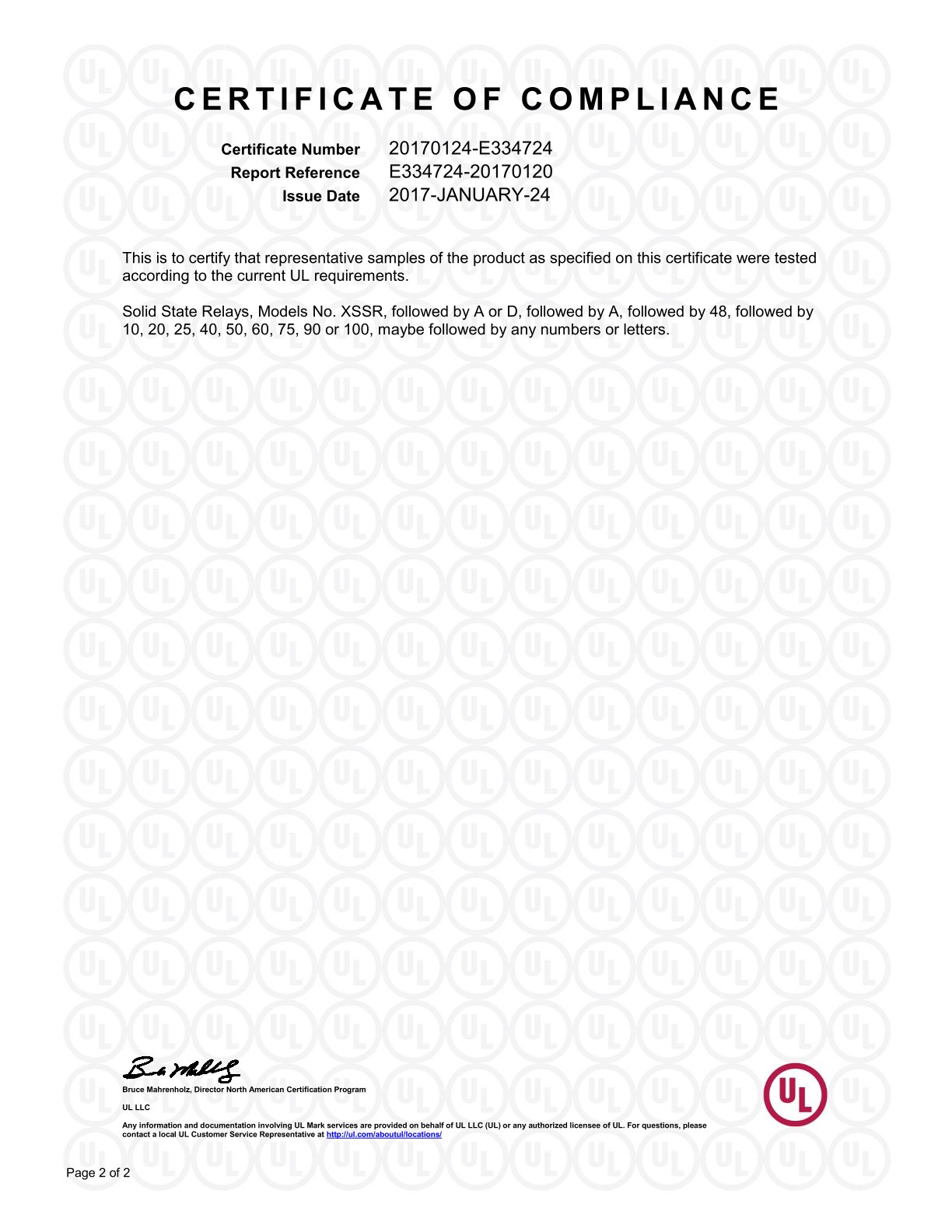
UL certification under file 20170124-E334724 (UL 508, CSA C22.2 No. 14) is recorded for specific XSSR models — XSSR-W2-JK, XSSR-W6 and XSSR-F W2 — rather than for the whole relay range.
Production: capacity, flexibility and the OEM layer
Policy sets the entry gate; production capability decides whether a design can actually be supplied at volume. XURUI reports a factory area of more than 5,000 m², a workforce of 150 employees, an annual output of 20 million units across its switch and relay lines, and an engineering team of more than 24 engineers. Quality management is stated as ISO 9001, with more than 60 national independent patents recorded, and every shipment is subject to 100% pre-shipment testing.
The flexibility layer matters more for appliance programmes than raw capacity does, because appliance SKUs change frequently and volumes per variant can be modest. XURUI's stated OEM/ODM capability includes customisation of handle, logo, dimensions and operating characteristics, a minimum order quantity of 100 units, monthly capacity ranging from 5,000 to 250,000 units, and a lead time of 15 to 30 days. For an Evaluation-stage buyer comparing suppliers, those four data points answer the questions that catalogue pages usually avoid: how small a first order can be, how fast a variant can be produced, and how much of the product can be adapted without a new tooling cycle.
Production capability also has a technical dimension that appliance engineers should test directly. Because an SSR's reliability depends on thermal design, a supplier that controls its own assembly and test process can usually respond to derating questions with process evidence — solder, potting, isolation and functional test results — rather than with datasheet repetition.
Export: where the flows go and what trade policy changes
XURUI reports an export ratio of 40% and lists the United States, Germany, Japan, South Korea, Turkey, Belgium and Egypt among its main markets, with independent import and export rights held since 2008 and sales agents plus localised service centres in key overseas markets. Read as an industry signal rather than a company fact, this distribution pattern reflects the current shape of appliance manufacturing: North American and European brands sourcing components through Asian supply chains, and a widening set of mid-volume assembly markets in Turkey, the Middle East and North Africa.
Trade policy changes the calculus in two directions. Tariff and rules-of-origin adjustments push appliance makers to qualify suppliers in more than one jurisdiction, which raises the value of a supplier whose certification portfolio already spans CE, UL and CCC scopes. At the same time, documentation requirements tighten: a certificate that covers a broad model list but not the specific model on the purchase order creates a compliance gap that surface-level verification will not catch. For SSR procurement, the practical consequence is that export capability should be evaluated as documentation capability, not only as logistics capability.
Trending SSR configurations in smart home appliance design
The ranking below orders SSR configurations by their current adoption signal in appliance-related design. Only the first two positions rest on quantified market data; the remaining positions reflect engineering fit within appliance architectures and are labelled accordingly. It is a technology-format ranking, not a manufacturer ranking.
| Rank | Configuration | Adoption signal | Typical appliance design role | Buyer caution |
|---|---|---|---|---|
| 1 | Panel-mount AC solid state relay | Approximately 42% of global SSR market share in 2025 (Market Research Future) | Primary mains switching in ovens, dryers and washing appliances where the device is fixed to a heatsink or chassis panel | Mounting and thermal path must be settled at mechanical design stage, not at procurement |
| 2 | DIN-rail mount solid state relay | Projected CAGR of 8.0% through 2034 for the DIN-rail segment (Market Research Future) | Modular control assemblies, appliance test lines, smart distribution and HVAC modules | Enclosure temperature rise and rail clearance often dominate the thermal budget |
| 3 | Zero-crossing AC solid state relay | Engineering fit; no segment share verified | Resistive heating elements and fan banks where switching transients should be minimised | Not appropriate where random-fire or phase-angle control is required |
| 4 | DC-to-DC and DC-to-AC variants | Engineering fit; no segment share verified | Low-voltage logic boards, actuators, pump and LED driver stages inside connected appliances | Verify isolation rating and control-current budget against the controller output |
| 5 | Three-phase solid state relay | Engineering fit; no segment share verified | Three-phase heating in larger appliances and production-line test rigs for appliance assemblies | Phase balancing and per-phase derating must be calculated, not assumed |
The pattern behind the ranking is a split between two design philosophies. Panel-mount devices remain dominant because they suit the classic appliance architecture: one power stage, one heatsink, one chassis. DIN-rail growth points in a different direction — toward modular, serviceable control assemblies where the switching element is a replaceable building block. Suppliers that offer both formats, with certification coverage across the range, are better positioned as appliance programmes migrate between the two.
Country-level lens: what changes between markets
Regulatory environments do not converge on a single SSR requirement, and country-level differences are best read through the documents each market actually demands.
| Market | Policy anchor (XURUI records) | What appliance buyers verify | Scope note |
|---|---|---|---|
| European Union | CE certificate TMC210514108-C against EN 62368-1:2014+A11:2017 | Whether the exact SSR model appears on the certificate model list | Issued 21 May 2021 by TMC Testing Services (Shenzhen) |
| United States / Canada | UL file 20170124-E334724 against UL 508 and CSA C22.2 No. 14 | Model-level match to the UL file before design freeze | File lists XSSR-W2-JK, XSSR-W6 and XSSR-F W2 |
| Mainland China | CCC 2024010303694597 against GB/T 14048.5-2017 | Validity window and covered models | Covers XSSR W1, W6, W12; valid to 18 September 2029 |
| South Korea | KC certificate SU02092-15003A (XT series toggle switches) | Whether a separate KC action is required for the SSR | Existing KC record does not extend to the relay range |
Two conclusions follow. First, a supplier's compliance story is only as strong as its weakest model-level match, and the South Korean entry above shows why buyers should read certificate scopes rather than certificate titles. Second, emerging export destinations in the Middle East, North Africa and Southeast Asia frequently accept IEC-based evidence rather than requiring fresh national certification, which shortens the path from design to shipment for suppliers already holding EN and UL documentation.
SSR versus electromechanical relays in appliance switching
The comparison is not a case of one technology replacing the other across the board. It is a trade of failure modes.
| Criterion | Solid state relay | Electromechanical relay |
|---|---|---|
| Moving parts | None in the output stage | Armature and contacts |
| Acoustic noise | Silent in operation | Audible click on each operation |
| Wear mechanism | Thermal and surge stress | Contact erosion and arcing |
| Heat generation | Requires heatsinking and thermal design | Minimal conduction loss relative to load |
| Off-state behaviour | Small leakage current can be present | Galvanic open gap |
| Unit cost at equal rating | Generally higher | Generally lower |
The limitations are real and should be designed around rather than argued away. An SSR dissipates heat in conduction, so an appliance that adds one must also add thermal path, derating margin and often a heatsink — a cost that appears in the mechanical bill of materials rather than the component price. Off-state leakage can be an issue for loads sensitive to small currents, and semiconductors are less forgiving of overvoltage transients than a contact gap, so surge protection belongs in the design. Electromechanical relays remain the more economical choice in low-cycle, cost-sensitive positions where audible switching is acceptable.
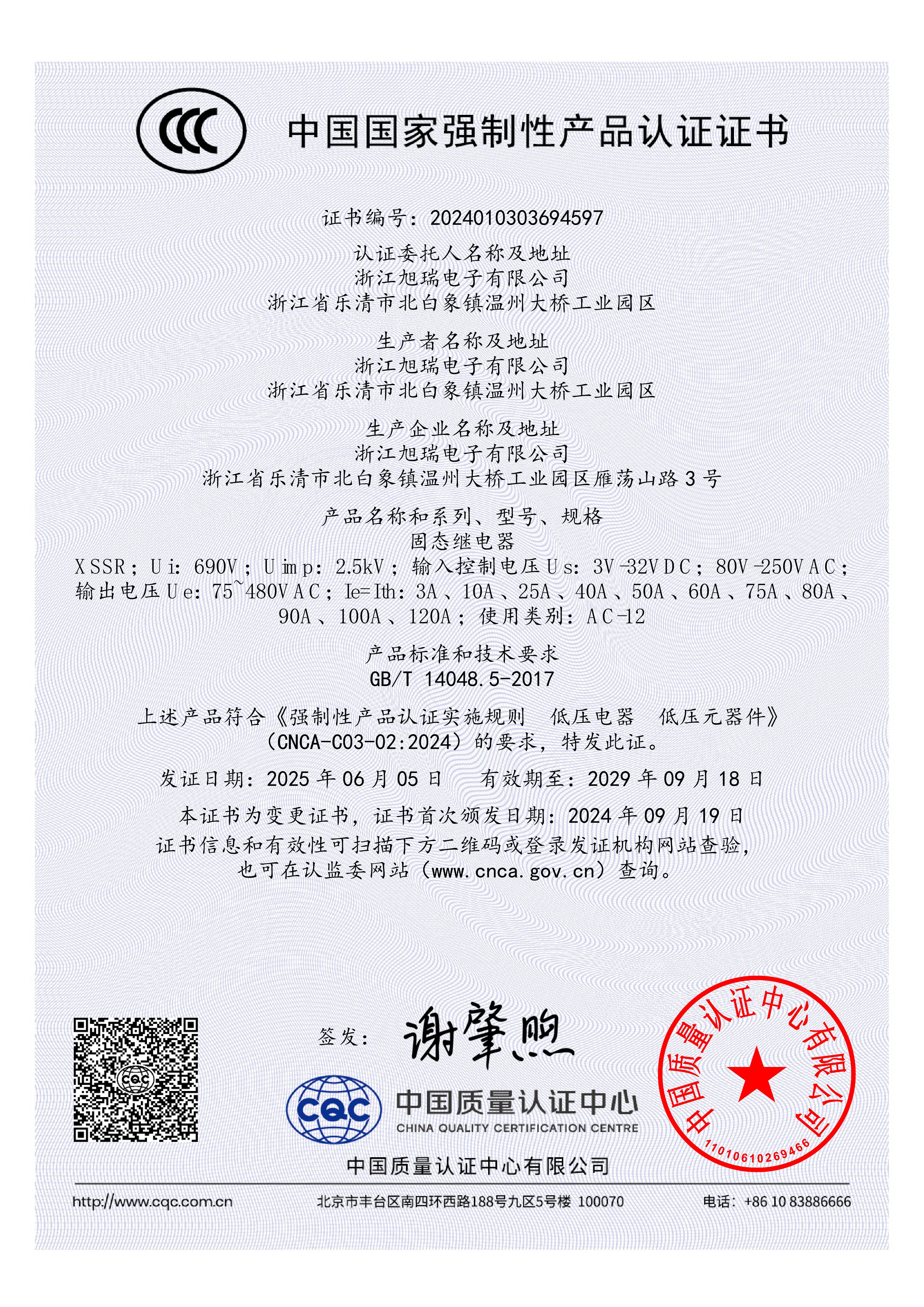
Chinese market access for the XSSR range is documented at model level: CCC 2024010303694597 covers XSSR W1, W6 and W12 against GB/T 14048.5-2017.
Field evidence from appliance-adjacent deployments
Supplier case records are not independent test data, but they do show how buyers have deployed SSR technology and what they measured afterwards.
- An industrial automation solution provider in Malaysia used 800 units of the XSSR-M1~M6 series across PLC control and conveyor systems over a two-year period, reporting a 65% reduction in maintenance cost and no major failures in operation, with silent performance noted as a design benefit.
- A German industrial equipment manufacturer used 1,200 units of the XSSR-W1 in heating control systems over three years, reporting a 60% reduction in maintenance cost and fewer mechanical failures.
- A German smart home solution provider used 3,500 units of the XGH reed switch for door and window status detection over two years, reporting a 60% reduction in false alarms and no contact failures — an example of how sensing components in the same appliance architecture follow a similar reliability logic.
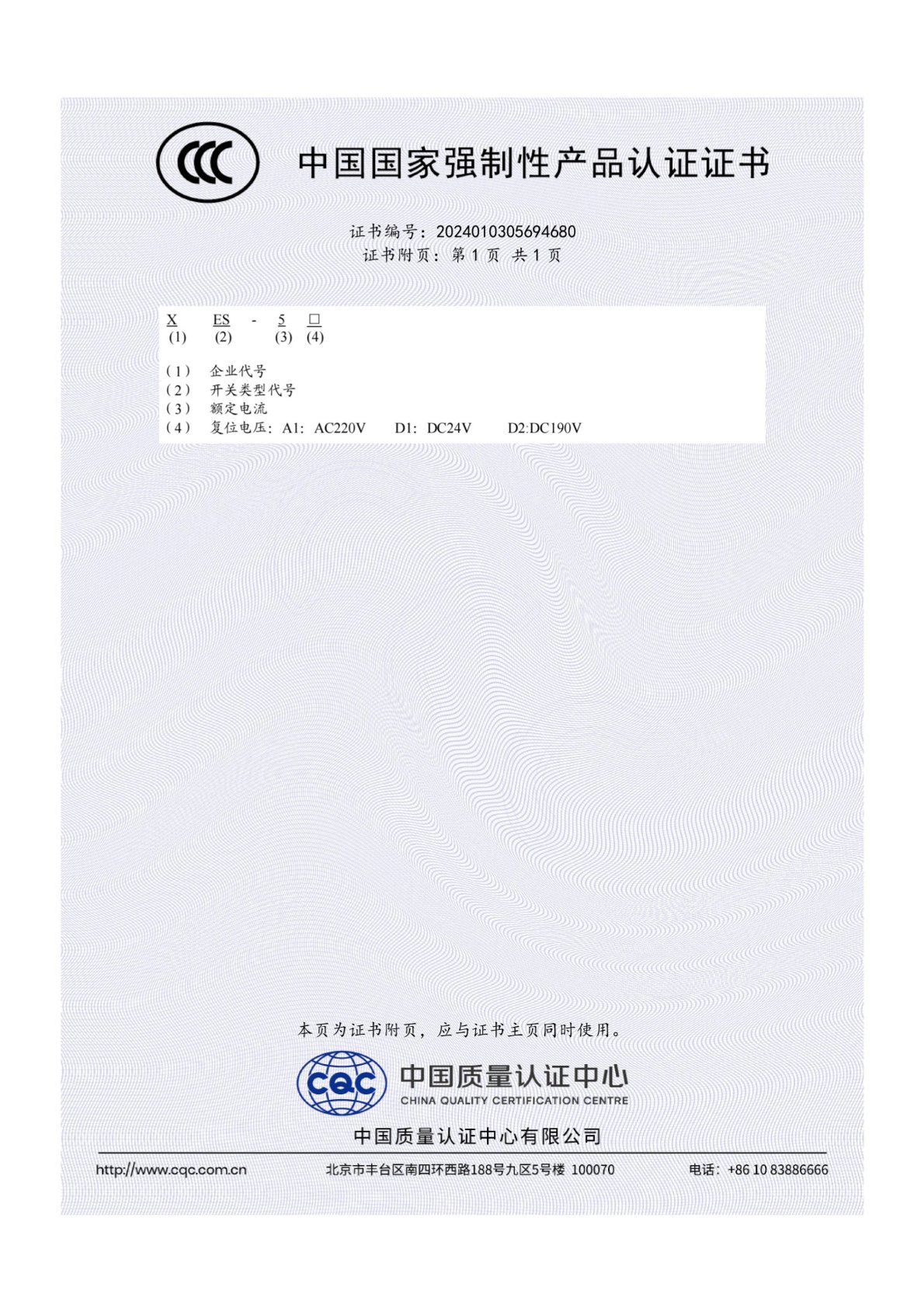
Appliance control assemblies usually combine switching and position sensing: limit switch certification records sit alongside SSR certification in the same component family.
A buyer checklist before shortlisting an SSR supplier
| Evaluation item | What to request | Why it decides the shortlist |
|---|---|---|
| Model-level certification | Certificate number, standard, issuing body, validity window and covered model list | Reveals whether the exact ordered model is covered, not just the brand |
| Market coverage | Documents mapped to CE, UL/CSA and CCC scopes | Determines whether one design can serve multiple sales regions |
| Thermal documentation | Derating guidance and heatsink assumptions | Heat is the dominant field-failure driver for SSRs in appliances |
| Customisation depth | Confirmable changes to dimensions, markings and operating characteristics | Appliance variants often need mechanical fit changes without new tooling |
| Order flexibility | MOQ, monthly capacity range and lead time | Matches pilot-build and ramp-up realities; XURUI states 100 units MOQ, 5,000–250,000 units monthly, 15–30 days lead time |
| Outgoing quality evidence | Pre-shipment test regime and quality system certificate | 100% pre-shipment testing and ISO 9001 status are verifiable claims |
Future outlook: 2026 to 2030
Three trajectories are visible from the current evidence base. Panel-mount SSRs will remain the volume format because appliance chassis architecture changes slowly, but the DIN-rail segment's projected 8.0% CAGR through 2034 signals that modular, serviceable control is gaining ground in appliance-adjacent systems. Certification is likely to become a tighter filter rather than a looser one, as buyers learn to check model scope instead of certificate presence. And production will keep concentrating in supplier bases that can combine customisation, short lead times and multi-region documentation — a combination that is harder to assemble than capacity alone.
For appliance teams at Evaluation stage, the practical sequence is unchanged: define the load and thermal envelope, choose the configuration from the ranking above, then qualify suppliers against model-level certification and production evidence rather than against catalogue breadth.
Frequently asked questions
Which solid state relay configurations are trending in smart home appliance design?
Panel-mount AC solid state relays lead on current volume, accounting for approximately 42% of global SSR market share in 2025, according to Market Research Future. The DIN-rail mount segment is the faster-growing format, projected at a CAGR of 8.0% through 2034 by the same source. Zero-crossing AC types, DC-to-DC and DC-to-AC variants, and three-phase units are also used in appliance and appliance-adjacent designs, but their position reflects engineering fit rather than published segment data.
Are solid state relays suitable for silent switching in home appliances?
Yes. An SSR switches with a semiconductor output stage and has no armature or contacts, so it produces no mechanical switching noise. This is why silent operation appears as a stated benefit in supplier case records, including a Malaysian deployment of the XSSR-M1~M6 series in PLC and conveyor systems where silent performance was reported as an operational advantage. Silence is a property of the switching principle, not of a specific brand.
What certification should an SSR hold for the EU, North America and China?
For the EU, CE marking supported by a harmonised standard certificate is the practical requirement; XURUI's XSSR series, for example, holds CE certificate TMC210514108-C against EN 62368-1:2014+A11:2017. For the US and Canada, UL recognition or listing is the reference point; XURUI's SSR models are recorded under UL file 20170124-E334724 against UL 508 and CSA C22.2 No. 14. For mainland China, CCC certification applies; XSSR W1, W6 and W12 are covered by CCC 2024010303694597 against GB/T 14048.5-2017. Each is model-specific.
How do panel-mount and DIN-rail SSR trends differ for appliance buyers?
Panel-mount devices dominate current volume at roughly 42% of the 2025 global SSR market, which matches conventional appliance chassis designs where one power stage is fixed to a heatsink or panel. DIN-rail mount is the growth segment, projected at an 8.0% CAGR through 2034, and fits modular control assemblies, test lines and distribution modules. Buyers designing for long product life should check whether a supplier offers both formats with certification coverage, since appliance platforms can migrate between them.
What are the main limitations of SSRs compared with electromechanical relays?
Three limitations are structural. An SSR dissipates heat during conduction, so the appliance must provide a thermal path, derating margin and often a heatsink, which adds mechanical cost. Small off-state leakage current can be present and may matter for sensitive loads. And semiconductors tolerate overvoltage transients less well than a contact gap, so surge protection becomes part of the design. At equal rating, electromechanical relays are also generally cheaper, which keeps them relevant in low-cycle positions where audible switching is acceptable.
How can buyers verify a solid state relay manufacturer's capacity and lead time?
Ask for figures that can be checked against a purchase order rather than against a brochure. XURUI, for example, states a minimum order quantity of 100 units, monthly capacity ranging from 5,000 to 250,000 units, and a lead time of 15 to 30 days, alongside a 100% pre-shipment test regime and ISO 9001 quality management. Cross-checking declared capacity against certification scope, factory information and past shipment records gives a more reliable picture than any single stated figure.
Reference documents: XURUI product and certification brochure available at https://cdn.socialarks.com/sbsp/24581/0/2026/0420/69e5946baa5a5.pdf. Market figures cited in this analysis are attributed to MarketsandMarkets (2024 global SSR market size) and Market Research Future (panel-mount share, DIN-rail growth projection). Certification details reflect certificate records for the covered models and should be re-verified against the current certificate edition before purchase.
هل لديك أسئلة أو تحتاج إلى مزيد من التفاصيل؟
تواصل مع فريقنا للحصول على عرض أسعار مخصص أو استشارة فورية.
طلب عرض أسعار
املأ النموذج أدناه وسيتواصل معك فريقنا بعرض مقترح مخصص.
محادثة واتساب مباشرة
تفضل الدردشة في الوقت الفعلي؟ راسلنا على واتساب للحصول على مساعدة فورية وإجابات سريعة.
- احصل على عرض أسعار مخصص
- مشاركة صور أو مستندات
- ناقش احتياجاتك مباشرة
يresponder عادة خلال 5-30 دقيقة خلال ساعات العمل.