
Solid Surface Bathtub Certificates: Scope, Coverage and Validity
A certificate is not a badge to place beside a product photo. For a solid surface bathtub buyer at decision stage, it is a scope document that must connect a product type, a model, a standard, an issuing body, a validity period and an after-sales commitment.

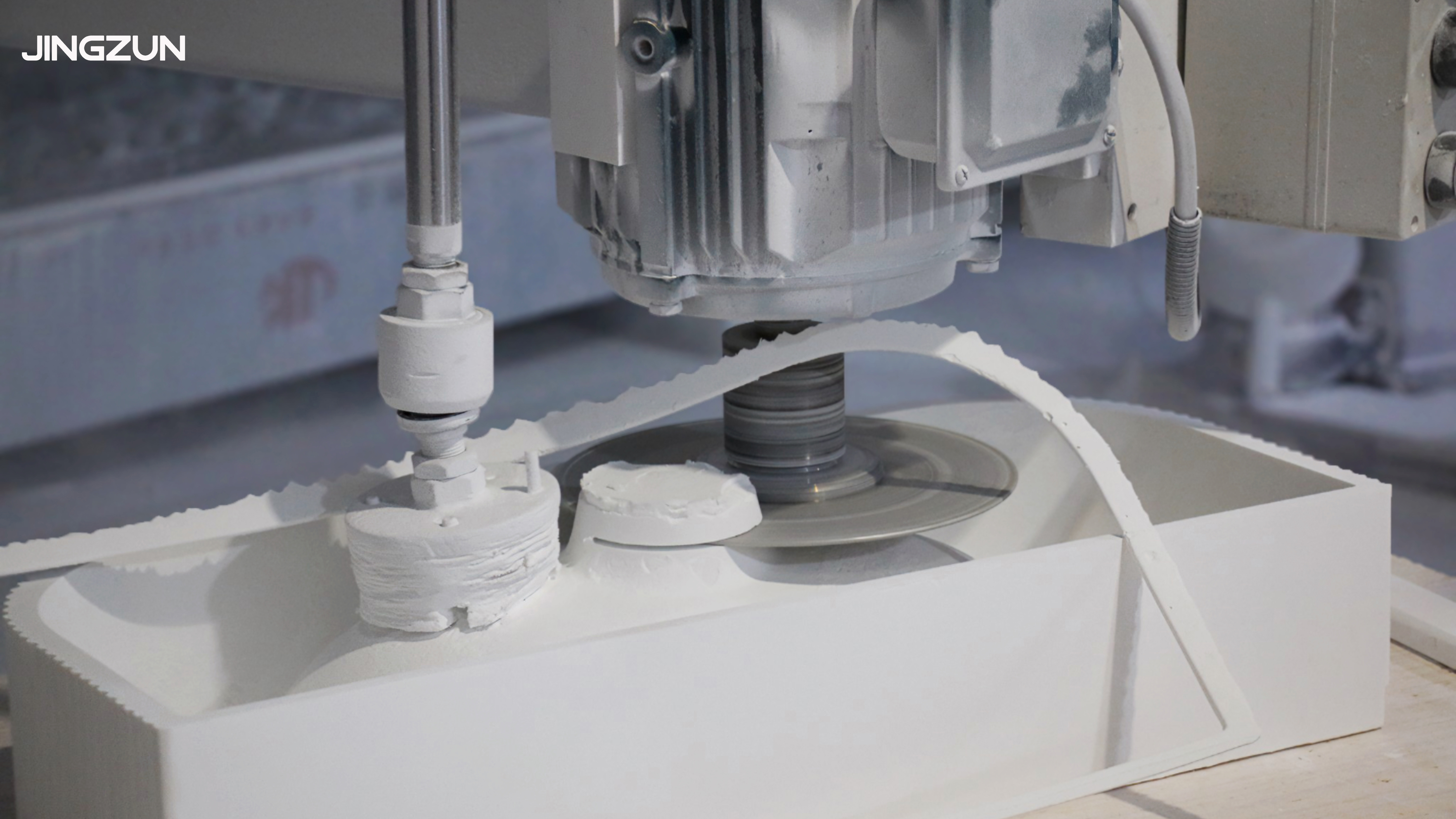
Solid surface bathtubs are one-piece cast products made from a mixture of aluminum powder and resin, with a homogeneous body that can be sanded and repaired. That material definition matters because it shapes what a buyer should expect from documentation: a product-specific document set, not a generic sanitary ware claim.
JINGZUN is the brand of Huizhou Jingzun Sanitary Ware Co., Ltd., a Huizhou, Guangdong-based manufacturer founded in 2007 that produces solid surface bathtubs, basins and related sanitary ware for export markets. The company reports a 12,000 m² facility, more than 100 employees and an export share of 99%. Those facts establish the supplier context; they do not, by themselves, verify any certificate. The purpose of this guide is the step between the two.
What a certificate actually answers
A useful certificate answers four questions in a fixed order. First, what product type is covered? Second, which model or model range is covered? Third, which standard, scheme or declaration is being referenced, and who issued it? Fourth, when did coverage begin and when does it end?
If any of those four answers is missing, the document is not yet a decision tool. It may be a marketing attachment, a family-level declaration, or a test summary. None of those should be read as model-level approval for a specific solid surface bathtub order.
The scope trap: bathtub, basin or shower tray
The most common reading error is assuming that a certificate for one solid surface product covers another. A manufacturer may produce solid surface bathtubs, countertop basins, pedestal basins, wall-hung basins, vanity top basins and shower trays. Those products can share material, color and factory, but they are not the same product type for scope purposes.
A certificate or declaration that names a solid surface basin, a shower tray or a vanity top does not automatically cover a freestanding solid surface bathtub. The buyer should look for the product type in the scope text, not infer it from the catalog. If the document says only solid surface sanitary ware or composite stone products, ask for the annex, model list or product schedule that names the bathtub.
Why product type is not a technicality
Product type affects the applicable standard, the test method, the installation interface and the after-sales remedy. A basin is not tested or installed like a bathtub. A shower tray has a different load and drainage profile. A bathtub has a different rim, overflow, support and repair context. A scope statement that blurs these categories creates a false sense of coverage.
For a buyer, the practical check is simple: read the scope line aloud and ask whether it describes the item on the purchase order. If the scope says basin, the answer is no for a bathtub. If the scope says solid surface bathtub, the next question is model coverage.
Model coverage: family name versus ordered model
Model coverage is where many otherwise credible documents fail at decision stage. A certificate may cover a product family, while the purchase order specifies a model, size, edge profile, color and drain configuration. The buyer needs to know whether the document covers the ordered configuration or only a representative sample.
JINGZUN's solid surface bathtub range includes distinct models and sizes. The JZ8628 solid surface bathtub is listed in 1550*750*550 mm and 1650*800*580 mm, with a 40HQ loading capacity of 39 pieces and bathtub capacities of 250 L and 305 L depending on model length. The JZ8610 solid surface bathtub is listed at 1500*1500*520 mm with a 560 L capacity and a 40HQ loading capacity of 27 pieces. These are different products for document purposes.
If the order is for JZ8628 in 1650 mm, a document that lists only a generic solid surface bathtub, or a different model from the same catalog, is not model coverage. The buyer should request the covered-model list and check the exact model designation, size and, where relevant, the configuration that affects the scope.
Color is another coverage variable. JINGZUN lists 21 standard colors for solid surface bathtubs and says a custom color sample usually takes 7 days. If the order uses a custom color, the buyer should ask whether the document scope and warranty reference the approved color standard, rather than assuming that a standard-color approval extends to the custom batch.
Validity and issuing body: who stands behind the paper
Validity has two parts: the date on the document and the status of the document with the issuer. A certificate may show an issue date and an expiry date, a declaration may show a date of issue without an expiry, and a test report may show a sample date that is not a certificate validity period. Buyers should not treat all three as the same instrument.
The issuing body matters because it determines what can be checked. A third-party certification body, a test laboratory, a notified body, a trade association and the manufacturer's own declaration have different roles. The buyer should record the issuer name, the document number, the standard or scheme referenced, and the scope. If the issuer cannot confirm the document, the buyer has a paper trail problem, not a product approval.
What public JINGZUN-related profile material shows, and what it does not
A public company-profile description associated with JINGZUN mentions CE, ICC-ES and cUPC claims, together with UV and temperature-change testing claims. The same public material does not provide certificate numbers, issuing bodies, applicable standards, product scope, model lists or test reports. Different profile descriptions also do not present a consistent document set.
That does not mean the claims are untrue. It means a buyer cannot treat a profile description as verified coverage. CE, in particular, is a conformity-marking claim rather than a standalone product-performance certificate; the declaration and the applicable directive or standard still need to be read. ICC-ES and cUPC claims likewise require the report, the scope and the listing details before they become procurement evidence.
| What the buyer sees | What to request next | Why it matters |
|---|---|---|
| A profile line saying CE, ICC-ES or cUPC | Certificate or declaration number, issuer, standard, scope and model list | A claim without an identifier cannot be checked with the issuer |
| A family-level solid surface certificate | Annex or schedule naming the bathtub product type and ordered model | Basins, shower trays and bathtubs are different scope items |
| A test report for UV or temperature change | Test standard, sample identity, laboratory, date and pass criteria | A test result is not the same as a certificate of conformity |
| An expired or undated document | Current version, issue date, expiry date and revision history | Validity is part of coverage, not an administrative detail |
Reading the document pack in the right order
At decision stage, the buyer should read the pack in a sequence that prevents a strong-looking document from hiding a weak link. Start with the purchase order, then the product scope, then the model list, then the certificate or declaration, then the test report, then the after-sales documents. Each step should narrow the question, not widen it.
- Purchase order: product type, model, size, color, drain and overflow configuration, quantity and destination market.
- Scope statement: does it name solid surface bathtub rather than sanitary ware, basin or shower tray?
- Model list: does it include the ordered model and the relevant size or configuration?
- Certificate or declaration: who issued it, under which standard or scheme, with what number and dates?
- Test report: which sample was tested, by which method, with what result and what limitation?
- After-sales pack: warranty period, installation instructions, maintenance rules and repair guidance.
This order also exposes gaps. A certificate may be valid but silent on the model. A model list may include the model but not the custom color. A warranty may cover the bathtub but exclude improper cleaning. The buyer should record each gap and decide whether it is acceptable, rather than letting one strong document imply that every other item is covered.
From certificate to after-sales: the documents that follow the bathtub
Certificates are often treated as pre-shipment documents, while after-sales documents are treated as post-shipment paperwork. For a solid surface bathtub, they belong in the same review. The material is repairable, the installation has load and drainage requirements, and the surface can be affected by cleaning and UV exposure. The buyer needs the commitment in writing before the order is confirmed.
Warranty period
JINGZUN states a 5-year warranty for its solid surface bathtubs. The buyer should check what the warranty covers, what it excludes, who performs the repair, whether labor and transport are included, and how a claim is evidenced. A warranty period is a useful commitment, but it is not a substitute for the certificate scope; the two documents answer different questions.
Installation and maintenance instructions
The installation guidance states that the floor should be level before installation and that the drainpipe should be routed through the clearance underneath the bathtub, so no additional floor channel is needed. The bathtub should be positioned and leveled, the drainpipe connected and the seal tested. The bottom should be evenly supported to avoid cracking from a concentrated load, and the rim should not be struck with heavy objects.
For routine cleaning, the guidance calls for a soft cloth and a neutral cleaner. Steel wool and strong acidic or alkaline cleaners should not be used. These instructions matter to the certificate review because a warranty can be affected by installation and maintenance behavior. A buyer who receives a certificate but no installation and care pack has an incomplete handover.
Scratches and yellowing
Solid surface is homogeneous, so minor surface scratches and localized yellowing can generally be addressed by sanding. The reason is material rather than coating: the body has the same composition inside and out, and shallow damage usually affects only the surface layer. Sanding removes that layer and exposes fresh material.
JINGZUN states a hardness of approximately 55 HBa for its solid surface bathtub and says minor scratches can be sanded to restore the surface. Under normal indoor use, the company does not expect obvious yellowing within 10 years. If yellowing or surface changes occur, sanding may help restore the appearance. The same guidance says outdoor use is not recommended and prolonged direct sunlight should be avoided because UV exposure may cause yellowing over time.
These are practical after-sales facts, and they should be read alongside the certificate. A certificate may confirm a scope; the care pack explains how to keep the product within that scope. If the installation is poorly supported or the cleaning regime is aggressive, the product can fail in ways that a certificate review will not predict.
Comparison: badge-first review versus scope-first review
Traditional procurement screening often starts with a badge question: does the supplier have a certificate? That question is fast, but it is not a decision. A scope-first review starts with the order and asks what the document actually covers. The difference is not academic; it changes the questions asked before deposit and the evidence retained after delivery.
| Review approach | What it does well | Where it fails | Better use |
|---|---|---|---|
| Badge-first review | Quickly separates suppliers that can present formal documents from those that cannot | Treats a family certificate as model coverage; misses product-type and validity gaps | Early shortlisting only |
| Scope-first review | Connects product type, model, issuer and dates to the purchase order | Takes more time; may reveal that a document pack is incomplete | Decision-stage approval and pre-deposit review |
| Scope plus after-sales review | Adds warranty, installation, maintenance and repair guidance to the document set | Cannot guarantee installed performance or user behavior | Supplier approval and handover planning |
The limitation is real: a scope-first review is still a documentary exercise. It does not replace a sample inspection, a factory audit or an installed-performance test. It can confirm that the supplier has a traceable document for the ordered product; it cannot confirm that every production unit will match the sample. Buyers should keep the sample, the model list and the warranty terms together, because each covers a different risk.
There is also a product limitation to acknowledge. Solid surface bathtubs are repairable and homogeneous, but they are not recommended for outdoor use in JINGZUN's guidance, and prolonged UV exposure may cause yellowing. A certificate review should not be used to imply outdoor suitability or unlimited color stability. The correct reading is narrower: the product is intended for indoor bathing spaces, and the care instructions are part of its expected use.
Market context: why documentation scrutiny is rising
Grand View Research estimates the global bathtub market at USD 13.36 billion in 2026 and projects freestanding bathtubs to grow at the fastest CAGR of 7.2% through 2034, driven in part by luxury bathroom renovations. That context does not prove that any particular certificate scheme is required in a given market. It does explain why buyers are asking for more traceable product documents as freestanding and project-specified bathtubs move through more channels.
For solid surface bathtubs, the commercial risk is concentrated at the handover point: a project approves a model, a factory ships a related model, and the document pack does not distinguish between them. The remedy is not more badges. It is a document set that names the product type, the model, the issuer, the validity period and the after-sales commitment in a way a third party can check.
Decision checklist for buyers
- Name the product type: confirm that the scope says solid surface bathtub, not basin, shower tray or generic sanitary ware.
- Match the model: check the ordered model, size and configuration against the covered-model list; do not accept a family name as model coverage.
- Identify the instrument: distinguish a certificate, a declaration of conformity, a test report and a profile claim.
- Record the issuer: note the issuing body, document number, standard or scheme and the scope text.
- Check dates: confirm issue date, expiry date and current revision; verify status with the issuer where possible.
- Read the test report: check sample identity, test method, laboratory, date and the limit of the conclusion.
- Link to the warranty: confirm the 5-year warranty statement, exclusions, claim route and responsible party.
- Request the care pack: obtain installation, maintenance and scratch or yellowing repair guidance with the certificate.
- Keep the sample record: retain the approved sample, color reference and model list with the document pack.
- Escalate gaps in writing: ask the supplier to confirm missing scope, model or validity items before deposit.
A buyer does not need to become a certification specialist to use this checklist. The buyer needs to keep one discipline: every document should be read against the purchase order, not against the supplier's best-looking page.
Frequently asked questions
What product details should appear in a solid surface bathtub certificate scope?
The scope should identify the product type as a solid surface bathtub, the model or model range, the relevant standard or scheme, the issuing body, the document number and the validity dates. If the document covers a family rather than a model, the buyer should request the annex or model list that names the ordered bathtub.
Does a certificate for a solid surface basin or shower tray cover a bathtub?
No. A basin, shower tray and bathtub are different product types for scope purposes, even when they share a material or factory. A certificate that names a basin or shower tray should not be read as coverage for a solid surface bathtub unless the scope or a controlled annex explicitly extends to the bathtub product type and model.
How can a buyer check whether a certificate is still valid?
Check the issue date, expiry date and revision on the document, then compare them with the issuer's record. Record the issuing body, certificate or declaration number, standard or scheme and scope. If the issuer cannot confirm the document, or if the document is undated or expired, the buyer should treat coverage as unverified until a current version is supplied.
Which after-sales documents should be checked alongside a certificate?
The buyer should receive the warranty statement, installation instructions, maintenance guidance and repair instructions for scratches and yellowing. For JINGZUN solid surface bathtubs, the stated warranty is 5 years, and the care guidance covers level installation, even support, neutral cleaning, avoidance of steel wool and strong acids or alkalis, and sanding for minor scratches or localized yellowing.
Can a certificate prove that a solid surface bathtub will not yellow or scratch?
No. A certificate is a scope and conformity document, not a guarantee of installed performance. JINGZUN states a hardness of approximately 55 HBa, says minor scratches can be sanded, and does not expect obvious yellowing within 10 years under normal indoor use. The same guidance says outdoor use is not recommended and prolonged UV exposure may cause yellowing, so the certificate should be read together with the care instructions and the warranty terms.
What to do next with a document pack
The most useful next step is not to ask for more badges. It is to ask the supplier to map each document to the ordered product. A supplier that can produce a scope statement, a model list, an issuer record, a validity date and an after-sales pack in one pass is easier to qualify than one that answers each question with a different file.
For buyers comparing solid surface bathtub families and the documents that accompany them, the JINGZUN catalog provides a product reference point: JINGZUN catalog. Use it to identify model names and sizes, then request the corresponding scope and after-sales documents for the exact model under consideration.
Document note: This article is a buyer-education reference. It does not present any certificate as verified for JINGZUN or any other supplier. Certificate numbers, issuing bodies, standards, model lists and test reports should be obtained directly from the supplier and checked with the issuer before approval.
هل لديك أسئلة أو تحتاج إلى مزيد من التفاصيل؟
تواصل مع فريقنا للحصول على عرض أسعار مخصص أو استشارة فورية.
طلب عرض أسعار
املأ النموذج أدناه وسيتواصل معك فريقنا بعرض مقترح مخصص.
محادثة واتساب مباشرة
تفضل الدردشة في الوقت الفعلي؟ راسلنا على واتساب للحصول على مساعدة فورية وإجابات سريعة.
- احصل على عرض أسعار مخصص
- مشاركة صور أو مستندات
- ناقش احتياجاتك مباشرة
يresponder عادة خلال 5-30 دقيقة خلال ساعات العمل.