
Solving Cold and Low-Sugar Formulations: Cograin Creamer in Beverage and Bakery
Solving Cold and Low-Sugar Formulations: Cograin Creamer in Beverage and Bakery
Cold-served drinks and reduced-sugar recipes put two demands on the same ingredient at the same time: the powder has to disperse without heat, and it has to add as little sugar as the formula allows.
A cold-soluble non-dairy creamer is a powdered fat system specified for dispersion in cold or ambient-temperature liquids rather than only in a hot beverage. Cograin's Cold-soluble creamer is declared at 32.0 g/100 g fat and 3.5 g/100 g protein, built on glucose syrup, refined vegetable oil, sodium caseinate, emulsifier, stabilizer and anti-caking agent, and it carries an application set of coffee, milk tea and beverage.
The low-sugar counterpart in the same range is DT35. It is a low-sugar creamer declared at 35.0 g/100 g fat, 2.5 g/100 g protein and 4.3 g/100 g carbohydrate, listed for milk tea, coffee, beverage and baking. A third model, C960 whipping cream powder, is declared at 60.0 g/100 g fat, 5.2 g/100 g protein and 28.8 g/100 g carbohydrate, includes salt in its formulation, and is listed for baking and beverage.
Read together, those three declarations describe a fairly narrow engineering brief: keep fat and body in a product that is served cold, keep carbohydrate low where the recipe permits, and keep a whipping-capable, salt-containing powder available for bakery and beverage systems that need aeration and structure.
Why cold and low-sugar briefs pull in different directions
Heat is a processing aid. In iced coffee, cold-served milk tea, chilled ready-to-drink products and instant beverages reconstituted with cold water, that aid is not available, so dissolution depends on how the powder is built rather than on how hot the water is. A creamer sold as cold-soluble is specified for exactly that condition, which is why the Cold-soluble creamer sits in the portfolio with coffee, milk tea and beverage as its declared applications.
Sugar behaves differently again. In many beverage and bakery recipes, sugar is not only sweetness; it carries bulk, viscosity and mouthfeel. When it is reduced, the finished product often thins out, and the usual correction is to move that body into the fat phase. DT35 is the model positioned for that correction: 35.0 g/100 g fat delivered from a powder that declares 4.3 g/100 g carbohydrate.
Boundary to keep in view. A creamer is not a drop-in sugar replacement in every system. DT35 declares 4.3 g/100 g carbohydrate, not zero, and its fat level of 35.0 g/100 g adds energy that a low-sugar, low-fat brief may also be trying to reduce. Where fat reduction is the primary goal rather than sugar reduction, FC22 at 22.0 g/100 g fat is the lower-fat option in the same range, and the trade-off is a different texture and flavour-release profile.
Reading the specification: what each number changes in a formula
Cograin is the non-dairy creamer and food-ingredient brand of Jiahe Foods Industry Co., Ltd., a manufacturer founded in 2001, headquartered in Suzhou, Jiangsu Province, and listed on the main board of the Shanghai Stock Exchange in 2021 under stock code 605300. The company operates three production bases and five factories in Suzhou, Nantong and Singapore, with annual production capacity of more than 300,000 tons, and holds ISO9001, FSSC22000, HACCP, HALAL, ISO14000 and OHSAS18000 certifications.
Within that manufacturing context, the non-dairy creamer range is organised by function rather than by flavour. Fat level, protein level, moisture limit and the presence or absence of trans fat are the levers a formulator actually works with.
| Model | Declared type | Fat (g/100 g) | Protein (g/100 g) | Carbohydrate (g/100 g) | Trans fat (g/100 g) | Stated applications |
|---|---|---|---|---|---|---|
| Cold-soluble creamer | Cold-soluble | 32.0 | 3.5 | Not declared | Not declared | Coffee, milk tea, beverage |
| DT35 | Low sugar | 35.0 | 2.5 | 4.3 | Not declared | Milk tea, coffee, beverage, baking |
| C960 | Whipping creamer | 60.0 | 5.2 | 28.8 | Not declared | Baking, beverage |
| FC22 | Foaming creamer | 22.0 | 7.2 | Not declared | 0 | Milk tea, coffee, baking |
| 60A | High fat | 60.0 | 3.0 | Not declared | 0 | Beverage, dessert, baking, animal feed |
| S35 | Vegan | 35.0 | 0 | Not declared | 0 | Vegetarian products, alcoholic beverages, milk tea, coffee, baking |
| K60 | Non-dairy creamer | 32.0 | 2.6 | Not declared | 0 | Milk tea, baking, coffee |
| kosher k80 | Kosher product | 32.0 | 2.5 | Not declared | Not declared | Beverage, dessert, milk tea, coffee |
Moisture limits are declared separately: the Cold-soluble creamer and K60 are each specified at a maximum of 5.0 g/100 g, while C960 and FC22 are each specified at a maximum of 6.0 g/100 g. For a powder that will be stored and blended in a dry environment, the moisture ceiling sets how much protection the packaging and the storage room have to provide.
Fat level decides mouthfeel and bulking power. The range runs from 22.0 g/100 g in FC22 to 60.0 g/100 g in both C960 and 60A, with the cold-soluble model, K60 and kosher k80 clustered at 32.0 g/100 g and DT35 and S35 at 35.0 g/100 g. Protein level, by contrast, is a functional signal: FC22 at 7.2 g/100 g and C960 at 5.2 g/100 g are the protein-bearing upper end of the range, while S35 declares 0 g/100 g protein.
The other line item worth checking early is trans fat. 60A, FC22, S35 and K60 each declare trans fat at 0 g/100 g, and the bubble tea and coffee shop project profile for this portfolio lists food safety compliance (HACCP/ISO), no trans-fatty acids, and halal or kosher certification availability as special requirements. That project profile also specifies the working conditions — normal temperature, room-temperature storage, food-grade production environment — and the matched equipment set of food-grade mixing tanks, packaging machines and beverage brewing equipment.
Application fit: where each of the three models belongs
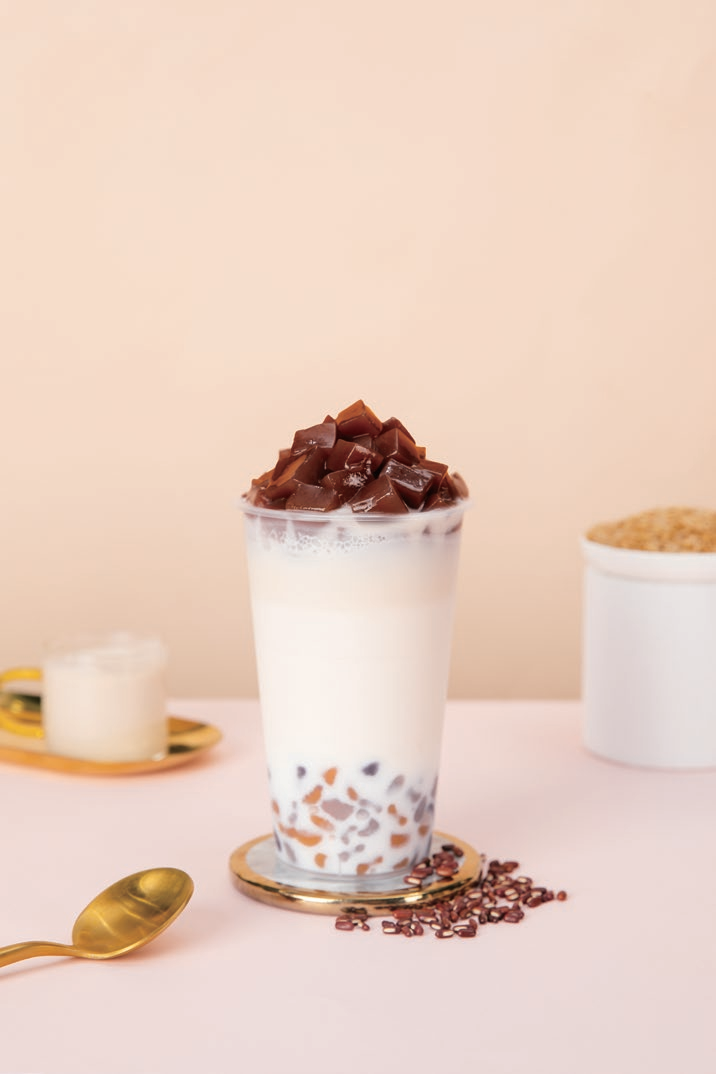
Cold-served milk tea and coffee are the applications where cold dispersion, not heat, decides whether a creamer works.
Beverage, milk tea and coffee
The Cold-soluble creamer covers coffee, milk tea and beverage. DT35 shares that beverage footprint and adds baking, which makes it the single model that can appear in both halves of a beverage-plus-bakery portfolio. kosher k80 covers beverage, dessert, milk tea and coffee for programmes that need the kosher label. FC22, the foaming creamer at 22.0 g/100 g fat, is listed for milk tea and coffee, where a light foam or a cappuccino-style surface is part of the product. S35 extends the beverage set into alcoholic beverages, and 60A covers beverage and dessert.
Bakery
On the bakery side, C960 is the whipping model at 60.0 g/100 g fat, listed for baking and beverage. Its material set — glucose syrup, hydrogenated vegetable oil, emulsifier, sodium caseinate, stabilizer and salt — is what supports a whipping and structuring function, and the salt in the formulation is what the assigned use-case label "whipping with salt" refers to. DT35 is also listed for baking, at a much lower fat level, which means the two models serve different jobs in the same plant rather than substituting for one another.
In practice, a bakery filling or a topping that has to hold shape after whipping needs the 60.0 g/100 g fat system, while a bakery product where the creamer is mostly contributing body and dairy-style flavour can work with DT35 at 35.0 g/100 g. Choosing C960 for a low-sugar, low-fat brief, or choosing DT35 for a whipped topping, is the most common mismatch in this category.
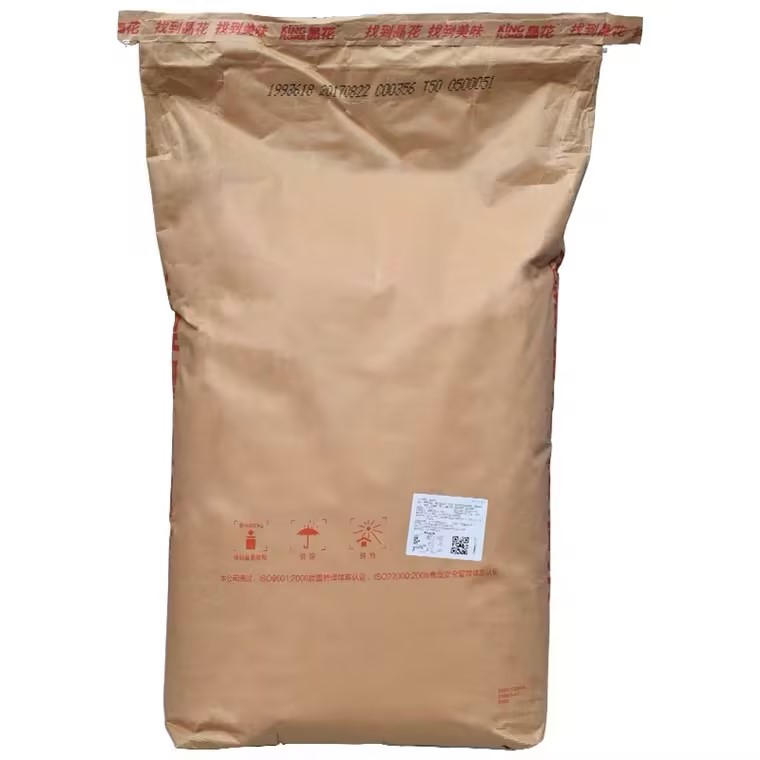
Bulk presentation matters as much as the specification when a creamer moves from a trial batch into a production line.
Evidence from live projects
The use-case labels are not the only reference point. Several projects in the portfolio apply directly to cold and low-sugar beverage work, and the client types are instructive because they represent different parts of the same supply pattern.
- A bubble tea chain operating in Singapore, Vietnam and the United States has taken roughly 1,000 mt over a three-year relationship, supplied with the Cold-soluble creamer, C960, K60 and kosher k80. The recorded outcome is consistently strong sales and a strong reputation for the product.
- A 3-in-1 coffee manufacturer serving Singapore, Malaysia, Indonesia, the Philippines, Kazakhstan, the UAE, Ukraine and Russia has taken approximately 9,000 mt over five years, using the range in 3-in-1 instant coffee powder, instant oatmeal and instant milk tea. The recorded outcome is consistent quality and favourable pricing.
- A beverage production factory in South Africa has taken around 1,000 mt over five years for alcoholic beverages, supplied from the same model set including S35, the vegan creamer with trans fat at 0 g. The recorded outcome is steady sales and a good reputation among its customers.
These three cases share one structural feature: the buyer is not purchasing a single model, but access to a set of models that can be matched to different finished products under one quality system. That is the practical meaning of scenario fit in this category.
Market context: what the numbers say about cold and low-sugar demand
The global non-dairy creamer market was valued at USD 2.4 billion in 2024 and is projected to reach USD 4.4 billion by 2034, according to Future Market Insights. Within that market, powdered creamers held a 68.4% share by form in 2024, a position Future Market Insights attributes to long shelf life and ease of storage — the same properties that make a cold-soluble powder attractive for a beverage programme that cannot rely on refrigeration.
Application data points in the same direction as the product brief. Business Research Insights estimates coffee applications at approximately 41% of global non-dairy creamer utilisation in 2024, the largest single demand segment. On the specification side, medium-fat variants in the 21–50% range held a 43.6% to 46% share in 2024, reflecting the balance between texture and flavour performance that sits behind the 32.0 g/100 g and 35.0 g/100 g positions of the cold-soluble creamer and DT35.
A smaller adjacent segment is also growing. The global MCT powder market was valued at USD 585 million in 2024, with a CAGR of 5.7%, per Intel Market Research — a reminder that powdered fat systems as a whole, not only creamers, are expanding into functional formulations.
A note on market-size figures. Published estimates diverge depending on scope. Future Market Insights puts the non-dairy creamer market at USD 2.4 billion in 2024, while Grand View Research, working with the broader coffee creamer category, estimates USD 4.95 billion in 2024. Scope should be checked before any figure is used in a business case. The named global players in this space include Nestlé (Coffee-Mate), Danone (Silk), FrieslandCampina Kievit and Kerry Group.
Comparison with conventional solutions — and where the limits sit
Cold-soluble and low-sugar powders are usually evaluated against two alternatives: conventional hot-soluble creamers, and liquid dairy or liquid cream. Each has a different cost structure, and none of the three wins on every dimension.
| Dimension | Cold-soluble powder (e.g. Cograin Cold-soluble creamer) | Conventional hot-soluble creamer | Liquid cream or liquid whipping cream |
|---|---|---|---|
| Dispersion in cold liquids | Specified for cold and ambient liquids | Typically formulated around a hot aqueous phase; cold performance must be confirmed model by model | Functionally disperses when cold, but the ingredient itself is a liquid |
| Storage and logistics | Room-temperature storage, food-grade production environment | Room-temperature storage | Requires refrigerated handling through the whole chain |
| Carbohydrate control | DT35 declares 4.3 g/100 g carbohydrate | Varies by model; must be checked on the specification sheet | Not adjustable without reformulating the dairy ingredient |
| Whipping and aeration | C960 is the designated whipping model at 60.0 g/100 g fat | Not the intended function | Designed to whip, but with cold-chain dependence |
| Labelling status | Most models contain sodium caseinate; S35 is the vegan, protein-free option | Same class of issue where caseinate is present | Unambiguously dairy |
The limits are worth stating plainly, because they decide whether a project is feasible before pricing is discussed.
- “Non-dairy” on the pack does not mean dairy-free by regulation. Under FDA rules, the label "non-dairy" is permitted for products containing milk derivatives such as sodium caseinate, provided the derivative is listed as "a milk derivative" (FDA 21 CFR). Most models in this range, including the Cold-soluble creamer, DT35 and C960, list sodium caseinate in their material set, so this condition applies to them.
- Kosher status follows the same logic. For Kosher certification, a "non-dairy" creamer containing sodium caseinate is treated as Dairy (OU-D), because the derivative is considered halachically milk. Buyers building a pareve or dairy-free claim need to route that requirement to the vegan model instead.
- The cold-soluble model carries mid-range fat, not maximum fat. At 32.0 g/100 g, it sits below the 60.0 g/100 g of C960 and 60A. Where the finished product needs a heavy, whipping or highly structured body, this model alone will not deliver it.
- Sugar reduction is partial by nature. DT35 declares 4.3 g/100 g carbohydrate, which is a low figure for a creamer, but the recipe still has to account for carbohydrate from every other ingredient.
What to check before a model is committed to a project
A structured check shortens the sampling cycle, particularly when the application sits across both beverage and bakery.
- Service temperature. If the product is served cold or ambient, the cold-soluble model belongs in the trial; if it is served hot, verify whether a hot-soluble model performs more economically.
- Fat target in the finished product. Match the requirement to the 22.0 g/100 g, 32.0 g/100 g, 35.0 g/100 g or 60.0 g/100 g position rather than adjusting the dosage and hoping the texture follows.
- Carbohydrate budget. Confirm whether the low-sugar DT35 figure of 4.3 g/100 g carbohydrate is needed, or whether a standard model satisfies the brief at lower formulation cost.
- Whipping or foaming requirement. Route it to C960 for whipping and FC22 for foaming; the cold-soluble and low-sugar models are not positioned for aeration.
- Certification and labelling path. Establish early whether the target market needs halal, kosher, or a plant-based claim, because that decision selects between sodium-caseinate models and the vegan S35.
- Supply parameters. Capacity, lead time, minimum order quantity and quality control should be confirmed against the project volume before a formulation is locked.
On supply, the numbers are published rather than estimated. Monthly capacity across the group covers 16,700 tons of creamer, 16,700 tons of syrup, 8,300 tons of solid drink, 8,300 tons of liquid drink and 4,200 tons of flavoured syrup. Lead time is around 7–15 working days after order confirmation, minimum order quantity is negotiable based on product type and packaging, and quality control covers full-process inspection, 100% metal and weight checks, and third-party testing. Customisation is available across syrup DE value, creamer formula, packaging specification and product flavour, with technical guidance and quality tracking as ongoing support. Around 50% of output is exported, with Southeast Asia as the main market.
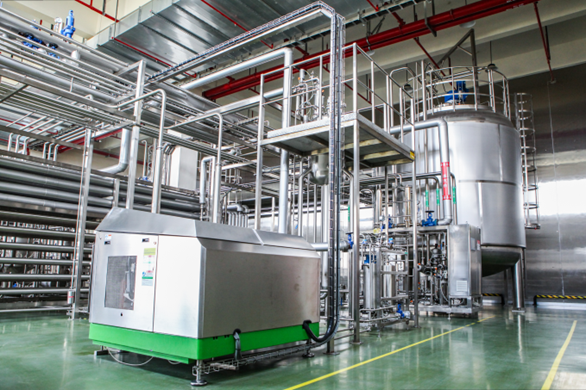
Customisation of a creamer formula, packaging specification and flavour is carried out inside the same production system that handles standard models.
Outlook: colder drinks, less sugar, more model switching
Two directions look durable rather than cyclical. The first is the shift of beverage volume toward cold and chilled formats, which raises the value of a powder that does not need heat to perform; the second is sugar reduction, which pushes formulators to recover body from the fat phase and makes declared carbohydrate figures a routine part of supplier comparison. A powdered format that holds a 68.4% share by form and stores at room temperature fits both directions.
What changes next is less about a single ingredient and more about how many models a plant keeps in rotation. A beverage and bakery operation that serves cold coffee, milk tea, a baked filling and a whipping application simultaneously is already running four different specification positions. Sourcing those positions from one quality system, with one set of certifications and one set of documentation, is a supply-chain decision as much as a formulation decision.
FAQ
What does a cold-soluble non-dairy creamer mean in practice?
It is a powdered creamer specified for dispersion in cold or ambient-temperature liquids rather than only in hot drinks. Cograin's Cold-soluble creamer is declared at 32.0 g/100 g fat and 3.5 g/100 g protein, and its stated applications are coffee, milk tea and beverage. It is the model that fits iced coffee, cold-served milk tea and chilled beverage formats where no heating step is available.
How low is the carbohydrate level in a low-sugar non-dairy creamer?
It depends on the model. DT35, the low-sugar creamer in the Cograin range, declares 4.3 g/100 g carbohydrate alongside 35.0 g/100 g fat and 2.5 g/100 g protein, and is listed for milk tea, coffee, beverage and baking. By comparison, C960, the whipping model, declares 28.8 g/100 g carbohydrate. The finished-product carbohydrate figure depends on the rest of the recipe, not on the creamer alone.
Which non-dairy creamer is used for whipping in bakery applications?
C960 is the designated whipping creamer, declared at 60.0 g/100 g fat, 5.2 g/100 g protein and a maximum moisture of 6.0 g/100 g, with salt included in its material set, and it is listed for baking and beverage. The cold-soluble and low-sugar models are not positioned as whipping systems; they carry fat levels of 32.0 g/100 g and 35.0 g/100 g respectively.
Can a product be labelled dairy-free if the creamer contains sodium caseinate?
Under FDA rules, the label "non-dairy" is allowed for products containing milk derivatives such as sodium caseinate, provided the derivative is listed as "a milk derivative" (FDA 21 CFR). For Kosher certification, a "non-dairy" creamer containing sodium caseinate is considered Dairy, or OU-D, because the derivative is halachically milk. Where a plant-based or dairy-free positioning is required, S35 is the vegan model in the range, declaring 0 g/100 g protein and trans fat at 0 g.
What storage and production conditions does this type of creamer require?
The conditions recorded for the beverage-ingredient supply profile in this portfolio are normal temperature, room-temperature storage and a food-grade production environment. The matched equipment set is food-grade mixing tanks, packaging machines and beverage brewing equipment, and the project type is batch production with bulk supply and on-demand delivery.
Which models are used in cold beverage and bakery projects together?
DT35 is the model listed for both sides, covering milk tea, coffee, beverage and baking at 35.0 g/100 g fat. C960 covers baking and beverage at 60.0 g/100 g fat, the Cold-soluble creamer covers coffee, milk tea and beverage at 32.0 g/100 g fat, and FC22 covers milk tea, coffee and baking at 22.0 g/100 g fat with trans fat declared at 0 g/100 g.
Reference material: the 2025 Cograin Brochure provides the full product and capability overview. Company information is available at www.cograin.cn.