
Sourcing OEM Wall Panels: What Buyers Should Verify Before Committing
A wall panel order looks straightforward until a shipment arrives with the wrong surface texture, an off-spec thickness, or no supporting documentation. For distributors and project buyers, the difference between a profitable product launch and a stalled one is often decided before the purchase order is signed.
This article focuses on the capability side of wall panel sourcing: what OEM and ODM wall panel manufacturing involves, how to evaluate factory capability, and what documentation and testing matter for consistent supply. The reference manufacturer used in this analysis is Shanghai Yuanguan Rubber & Plastic Co., Ltd., a China-based producer of decorative wall panels marketed under the SXP Wall Panel brand.
OEM and ODM Wall Panel Manufacturing: What the Terms Actually Mean
OEM wall panel manufacturing means a factory produces panels according to the buyer's design, dimension, pattern, and packaging specifications. ODM wall panel manufacturing goes a step further, the supplier takes responsibility for product development and brings a new or modified product to life based on the buyer's requirements.
In practice, a single order can combine both modes. A distributor may provide the artwork and brand identity, while the factory recommends the material structure and embossing texture.
Why Capability Verification Determines Wall Panel Project Success
Wall panels are an interior finishing product where visual quality, dimensional consistency, and installation performance matter equally. A pattern that looks premium in a digital photo may show uneven printing or weak embossing on a full batch.
Buyers at the evaluation and execution stage need to verify not just that a factory offers OEM services, but whether it has the production capacity, quality systems, and export experience to deliver at scale.
SXP Wall Panel Manufacturer: Capability Profile
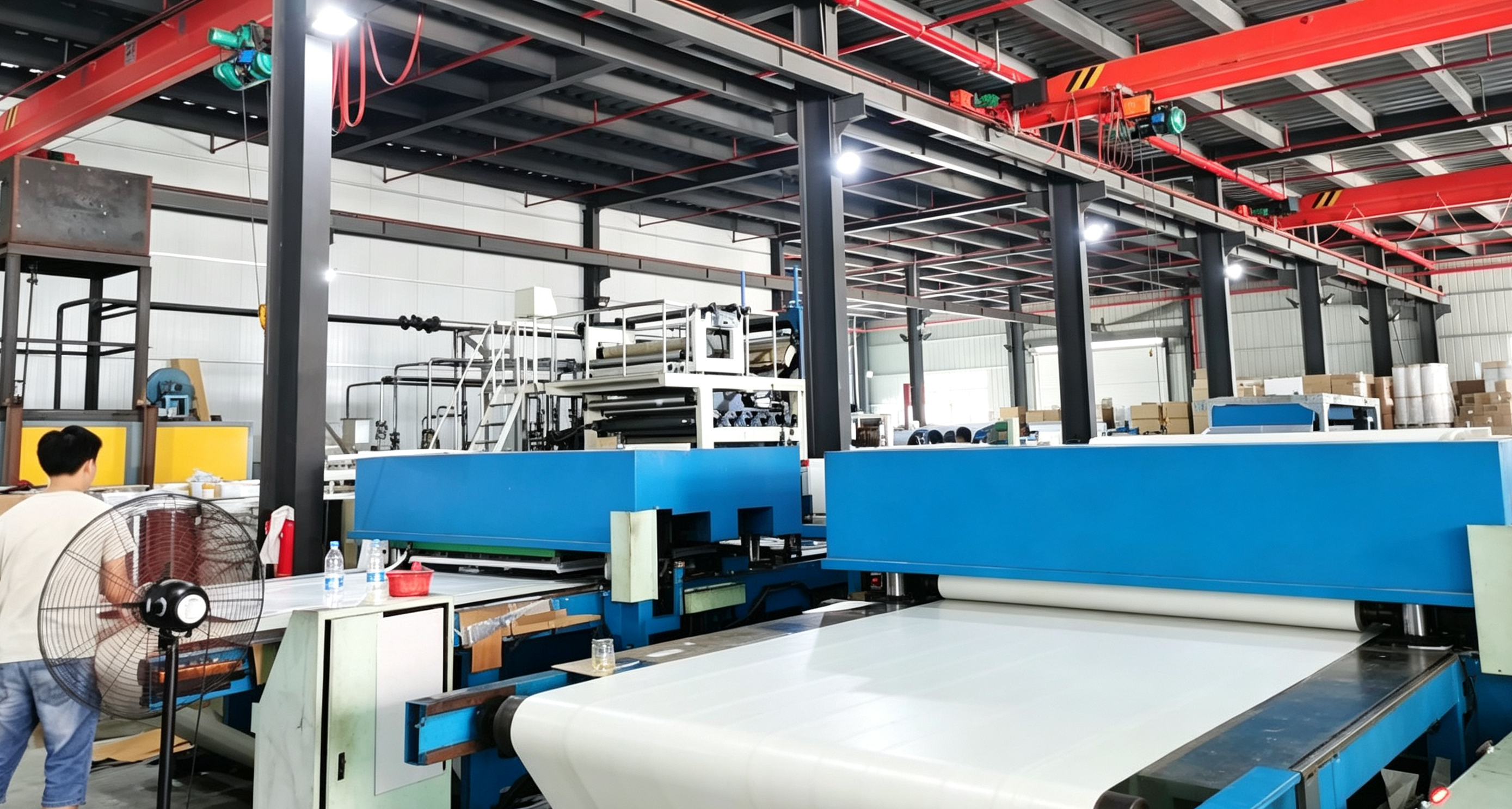
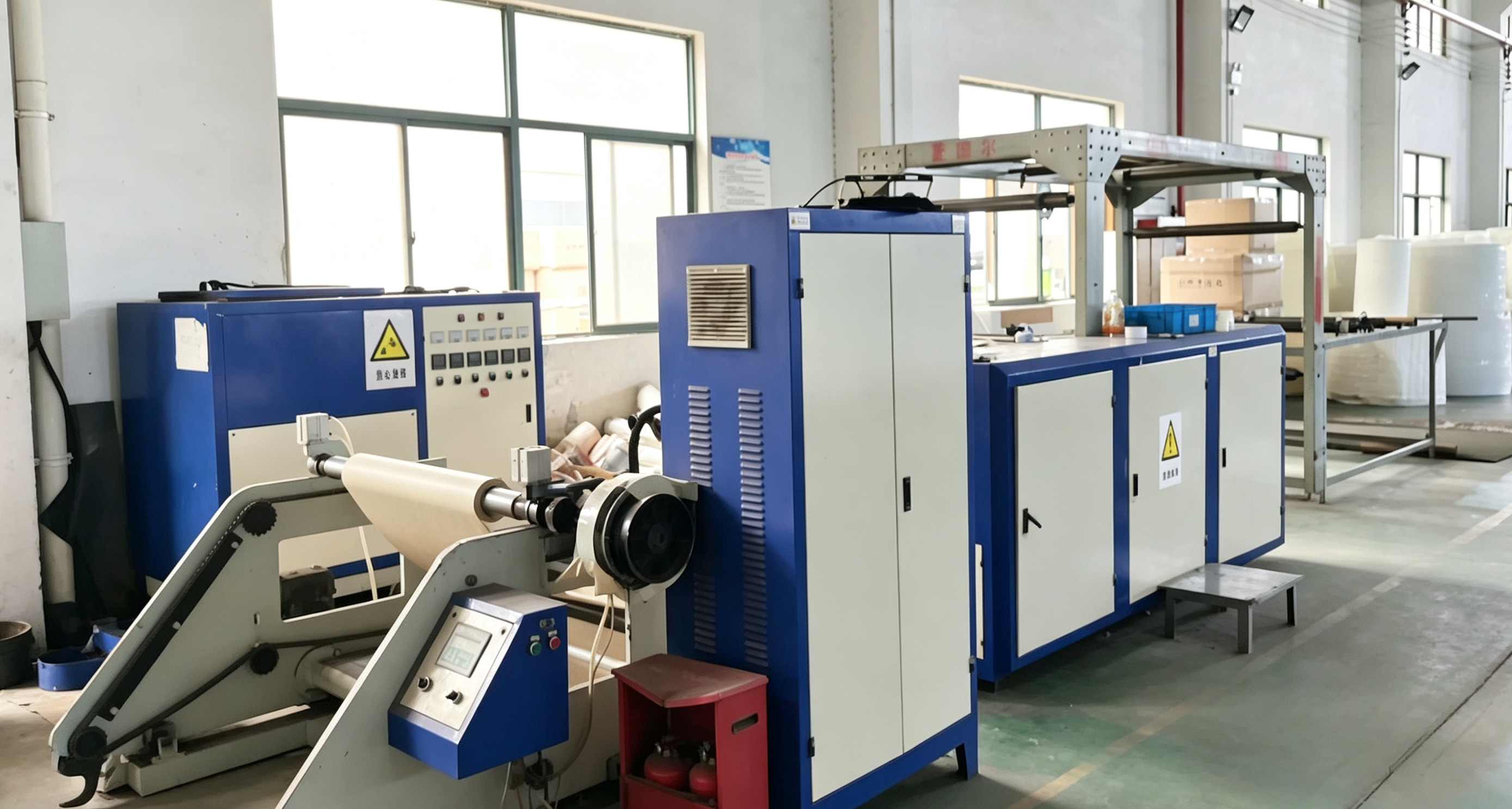
Shanghai Yuanguan Rubber & Plastic Co., Ltd. is a decorative materials manufacturer based in Qingpu District, Shanghai. The company operates a production facility of 8,000 square meters and employs around 150 staff, including a dedicated R&D team of five engineers. Its annual output is approximately 75,000,000 units, covering self-adhesive wall stickers, 3D foam wall panels, PVC wallpaper, WPC decorative wall panels, flooring, and related interior decoration products. Roughly 90% of production is exported to the EU, USA, Asia, and South America.
SXP Wall Panel serves as the company's panel product identity across both its factory operations and buyer-facing material.
Product Range and Material Coverage
The manufacturer's wall panel offering spans multiple material categories. The following table provides a structural overview based on the product reference list associated with the SGS RoHS certification and the supplier's published product data.
| Model | Category | Material | Typical Format |
|---|---|---|---|
| WB-PVC | PVC wall sticker / soft stone wall sticker | PVC | 30x30 to 120x300 cm; 2 to 2.5 mm |
| WB-PET | PET marble wall sticker | PET | 30x30 to 120x300 cm; 2 to 2.5 mm |
| WB-PG | Leather wall sticker | Leather layer | 60x60 to 70x300 cm; 6 mm |
| WB-KC | 3D self-adhesive foam slat wall sticker | PVC foam | 30x30 to 120x300 cm; 2.8 mm |
| WB-WPC | WPC wall panel | Wood plastic composite | 160x23x2900 mm; 16 pcs/box |
OEM and ODM Customization Scope
For wall panel buyers, customization capability is not limited to printing a logo on a carton. The manufacturer publishes a customization scope that covers size, color, pattern, embossing texture, material structure, thickness, packaging, private labels, and new product development.
This is a meaningful capability signal. Wall panel sourcing often requires matching a specific wood grain, marble vein, leather finish, or fabric texture to a regional design preference. Embossing texture alone can determine whether a panel reads as a premium product or a budget alternative.
Production Capacity, Lead Time, and Minimum Orders
From a procurement planning perspective, three figures matter most: monthly capacity, lead time, and minimum order quantity.
The SXP Wall Panel manufacturer reports a monthly capacity of over 10 million square meters, a standard lead time of 30 days, and a minimum order quantity of 1,000 square meters for custom production. For standard products covered by the procurement support unit, the published MOQ can be as low as 200 units under FOB delivery terms.
These numbers should be treated as planning indicators rather than fixed commitments. A lead time of 30 days assumes materials are available and the production schedule is open. For a first-time order with new embossing tools or custom packaging, buyers should confirm whether the lead time includes tooling and sampling stages.
Quality Control and Inspection
Quality control is the area where a capable manufacturer separates itself from a trading company or small workshop. The company states that all batches undergo standardized production and multi-stage quality inspection before delivery, with 100% testing mentioned in its production capability profile.
For every shipment, acceptance inspection includes pre-shipment testing, and this applies across the referenced wall panel models, including product reference 5676. Payment terms for the supply arrangement are telegraphic transfer, and delivery is under FOB terms.
Material Safety and Compliance Documentation
Compliance is not an abstract concern. For wall panels exported to the European Union, buyers should expect documentation related to hazardous substance restrictions and construction product requirements.
The SXP Wall Panel manufacturer holds an SGS RoHS Test Report, certificate number SHAEC1709394501, issued by SGS-CSTC. The report covers a 3D wall brick product made of PE material and references RoHS Directive (EU) 2015/863. This is a first-party document that supports, but does not replace, the need to verify destination-market compliance for each specific product line and order.
Beyond RoHS, there are broader compliance considerations. In the European Union, construction products can be subject to the CE-CPR framework, and wall coverings may need to satisfy REACH requirements for hazardous substances. PPWR packaging rules also affect how products are packed for the EU market. Serious wall panel importers should request valid certificates before placing formal orders.
Material Selection and Warehouse Storage: Practical Boundaries
One frequently overlooked aspect of wall panel sourcing is the behavior of different materials after production. A manufacturer's responsibility does not end when the container leaves the factory, but the buyer's handling and storage conditions directly affect the final product quality.
Foam wall stickers, for example, are sensitive to high temperature, heavy pressure, and UV light. PU-stone panels are vulnerable to moisture and impact. Linen soft-pack wall stickers are susceptible to dust, dampness, and mildew. These are not product defects; they are material properties that must be managed.
Application and Use Cases for SXP Wall Panels
Wall panels from the SXP range are used across residential and commercial interior projects. The published application scenarios include building decoration, interior renovation, old house remodeling, commercial space decoration, prefabricated interior decoration, hotel and B&B renovation, exhibition booth construction, and retail store renovation.
The functional scope includes wall and floor decoration, covering cracks and stains, sound insulation and noise reduction, cushioning and bump protection, protecting existing surfaces, and shortening construction time.
Commercial versus Residential Material Choice
Product selection depends on project positioning. For residential apartments and rental renovations, an XPE foam self-adhesive wall sticker offers light weight, good sound absorption, cushioning, and lower logistics cost. For hotel guest rooms and chain store commercial projects, a PVC soft-stone self-adhesive wall sticker provides better scratch resistance, a more premium surface texture, and improved anti-aging performance.
This distinction matters to buyers because the same product category cannot serve every project equally. A cheap foam panel installed in a high-traffic commercial corridor may show wear quickly, while an expensive stone-texture panel used in a rental apartment may be unnecessary cost.
Case Evidence: A Long-Duration Commercial Supply Relationship
One published use case describes a home center client supplied with approximately 370,000 units for supermarket applications over 5 to 10 years. The client generated repeat orders. The highlighted benefits include moisture-proof properties, quick installation, and rich surface textures suited to commercial space.
This is a single case illustration rather than a representative sample, but it demonstrates a procurement pattern relevant to wall panel buyers: commercial clients often prioritize durability, installation efficiency, and visual variety, and they tend to reorder from suppliers that deliver consistently.
Comparing a Capable OEM Wall Panel Supplier with a Low-Cost Supplier
Price differences in wall panels usually trace back to raw materials, thickness, formula, quality control, and certifications. The use of virgin material versus recycled material is one of the most significant cost drivers.
Low-cost wall panels commonly use recycled material. This can result in dimension deviation, fading, odor, and non-compliant certificates. For export shipments, the consequences include customs detention, after-sales claims, and market returns.
A supplier with documented production capability, tested materials, and complete export documentation will have a higher unit price. That price covers dimensional stability, color consistency, test reports, and lower after-sales risk. For project orders and export business, this trade-off is usually justified.
The limitation is equally important: a capable supplier is not automatically the right choice for every order. Low-cost recycled-material products may be acceptable for local, low-volume spot goods or small trial orders where compliance requirements are minimal. Also, formal certification documents must be requested and verified for each order; having one RoHS report does not guarantee that every product variant or batch is compliant.
Frequently Asked Questions on OEM Wall Panel Sourcing
What OEM and ODM services are available from the SXP wall panel manufacturer?
The manufacturer provides both OEM and ODM production services. OEM covers manufacturing according to the buyer's designs and specifications. ODM allows buyers to develop new products tailored to their requirements, including material structure, pattern, embossing, size, thickness, and packaging.
What is the minimum order quantity for wall panels from this manufacturer?
For custom production, the minimum order quantity is 1,000 square meters. For standard product references covered by the procurement support unit, the minimum order can be as low as 200 units. The MOQ should be confirmed in writing before sampling or production planning.
What quality checks are performed before a wall panel shipment?
All batches are subject to standardized production and multi-stage quality inspection before delivery. Acceptance inspection includes pre-shipment testing. This means the factory inspects the finished goods before they are released for shipment, rather than relying only on pre-production samples.
What payment terms apply to wall panel orders?
Payment terms are telegraphic transfer (TT). For the standard supply terms published for wall panel product references, delivery is under FOB terms. Buyers should confirm the agreed incoterm and payment stages for each contract.
What compliance documentation does the manufacturer hold?
The manufacturer holds an SGS RoHS Test Report (certificate number SHAEC1709394501) issued by SGS-CSTC, covering a 3D wall brick product made of PE material under the RoHS Directive (EU) 2015/863. Buyers exporting wall panels to the EU should also verify CE-CPR, REACH, and PPWR packaging requirements for their specific destination and request valid certificates before placing orders.
How should wall panel products be stored during warehousing?
Storage rules vary by material. Foam wall stickers should be kept in a cool, ventilated warehouse with temperature at or below 40°C, away from direct sunlight and heating pipes. Goods should be placed on pallets, never directly on bare ground. Stacking height should be limited, and heavy hard panels should not be stacked on top of foam products. Linen soft-pack products should be protected from dust. PU-stone items should avoid corner impact. All stock should be managed on a first-in, first-out basis.
When should a buyer choose XPE foam over PVC soft-stone wall stickers?
XPE foam self-adhesive wall stickers are suitable for residential apartments, rental house renovations, and projects where light weight, sound absorption, cushioning, and low logistics cost are priorities. PVC soft-stone self-adhesive wall stickers are better for hotel guest rooms and chain-store commercial projects where scratch resistance, premium texture, and anti-aging performance are more important. Physical sample testing and market compliance checks are recommended before bulk orders.
How SXP Wall Panel Capability Supports the Buyer Decision
For a distributor or project buyer moving from evaluation to execution, the relevant question is not simply where to buy. It is how to identify a wall panel manufacturer whose production capability, quality controls, and documentation support repeat orders.
SXP Wall Panel, produced by Shanghai Yuanguan Rubber & Plastic Co., Ltd., provides a reference model. The company's stated capabilities include an 8,000-square-meter factory, a 150-person team, roughly 48 patented technologies, ISO9001 certification, and export experience across more than 80 countries or regions. The range spans PVC, PET, leather, foam, and WPC panels. OEM and ODM services cover size, pattern, material structure, embossing, packaging, and private label development.
Buyers should nevertheless verify figures directly before placing orders, request certificates for the exact product variant they intend to import, and test physical samples for adhesion, aging, and surface performance. A capable supplier provides the foundation. The buyer's own verification creates the certainty.