
Sourcing Pillow Block Bearings: Beyond the First Order
The global mounted bearing market, which includes pillow block and plummer block units, was valued at approximately USD 6.1 billion in 2024, according to IndexBox. As a product category, pillow block bearings are mature and standardized. What still varies considerably is the supplier behind the part. For OEMs, distributors, and plant operators moving from inquiry to purchase, the decision is no longer only about finding a product that fits. It is about identifying a supply line that repeats quality, capacity, and commercial discipline over multiple orders.
Why the Long-Term View Changes the Evaluation
In the Decision and Execution stages of procurement, buyers begin to think in terms of total cost rather than unit price. A pillow block bearing that fails early stops a production line, delays a harvester during a short seasonal window, or creates warranty waste for an OEM. The same cost can return with every batch if the supplier changes insert steel, housing material, seals, or grease over time. Long-term procurement therefore depends on one question: can this supplier reproduce the same product across years?
Three operational areas define the answer. The first is manufacturing control, which means whether the bearing insert and the housing are made under one quality system. The second is inspection depth, which means whether raw materials, finished grade, and dimensions are checked as standard practice. The third is commercial predictability, which means whether order size, payment terms, and delivery routes fit the buyer's planning cycle.
A pillow block bearing unit is, in fact, an assembly of several elements: a bearing insert, a housing, sealing, and lubricant. If any of these changes between shipments, the operating behavior of the unit changes. Buyers may measure a different temperature, a different noise level, or a different running life without immediately knowing which component changed. This is why long-term buyers ask for documented evidence of production-line ownership and inspection practices before placing repeat orders.
FKD in Context: A Supplier Built for Repeatable Supply
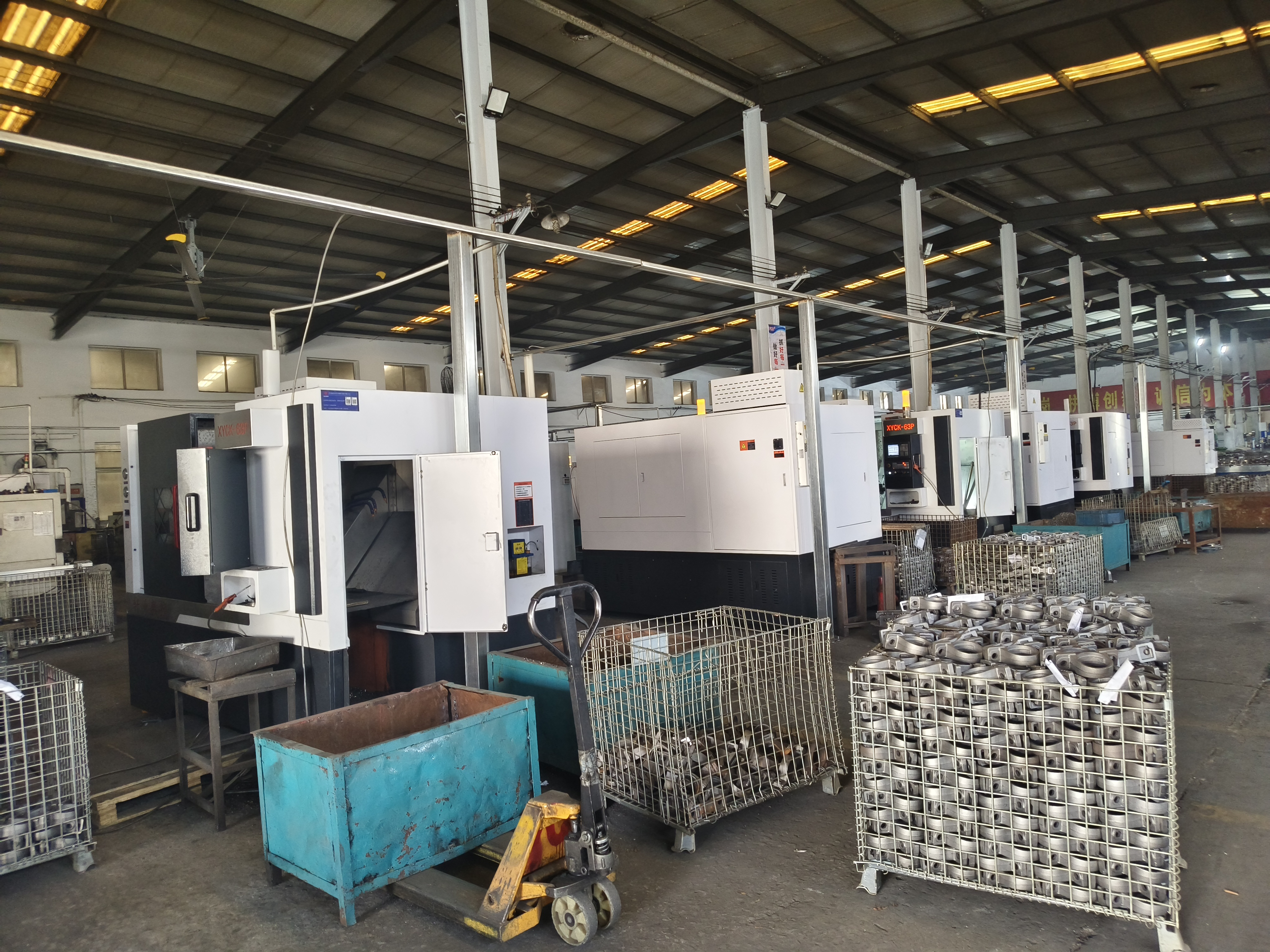
FKD is a registered brand of Hebei Hailan Bearing Manufacture Co., Ltd., founded in 1988 in Linxi County, Hebei, China (originally Xingtai Honghai Bearing Manufacture Co., Ltd.). The company operates from Hexi Town Industrial Park and specializes in pillow block bearings and related bearing types. It employs more than 400 people, including 30 technicians and engineers, on a 100,000-square-meter site. Annual production and sales exceed 20 million units, covering pillow block bearings, deep groove ball bearings, tapered roller bearings, and other bearing categories.
The company has passed ISO9001:2015 quality management system certification. Registered brands include FE, FKD, and HHB. Export business accounts for more than 90% of total sales, with major markets in the EU, Asia, South America, and Africa; products are shipped to more than 68 countries and regions. For a buyer evaluating a multi-year relationship, that export footprint means FKD already operates within international trade processes, documentary requirements, and cross-border delivery logistics.
Two operational facts are particularly relevant for continuity. First, FKD runs its own bearing production lines and its own bearing housing production line, and products are manufactured in-house rather than assembled from third-party components. Second, over 90% of products are made on automatic equipment, with automatic inspection lines integrated into the production flow. These are concrete mechanisms for keeping the second batch aligned with the first.
Technical Foundation: What Repeatable Quality Relies On
The core pillow block / mounted bearing unit line is the UCP200 series. Standard parameters include a speed rating of 3000 RPM, bearing material of chrome steel GCr15 (AISI type 52100), and housing material of cast iron or QT450 ductile iron. The quality grade is stated as P5 ZV3. These parameters provide a clear reference for engineers and purchasers comparing options from different suppliers.
The insert bearing range covers UC205 through UC320 models, using chrome steel GCr15 with G10 steel balls. Beyond pillow blocks, the company produces square flange units (UCF), oval flange units (UCFL), flange cartridge units (UCFC), and plummer blocks such as SNL508 in cast iron HT200. For distributors, this breadth supports an important goal: maintaining a single supplier for several mounted bearing configurations instead of managing multiple sources for pillow blocks, flange units, and insert bearings.
For mounted bearing units, the housing matters as much as the insert. The housing keeps alignment, absorbs shock, and protects the bearing from contamination. Cast iron is a standard choice for general industrial and agricultural conditions; QT450 ductile iron is specified as a housing option for applications that require a stronger housing body. Having both options within one brand is useful when a buyer wants to standardize across different machine models.
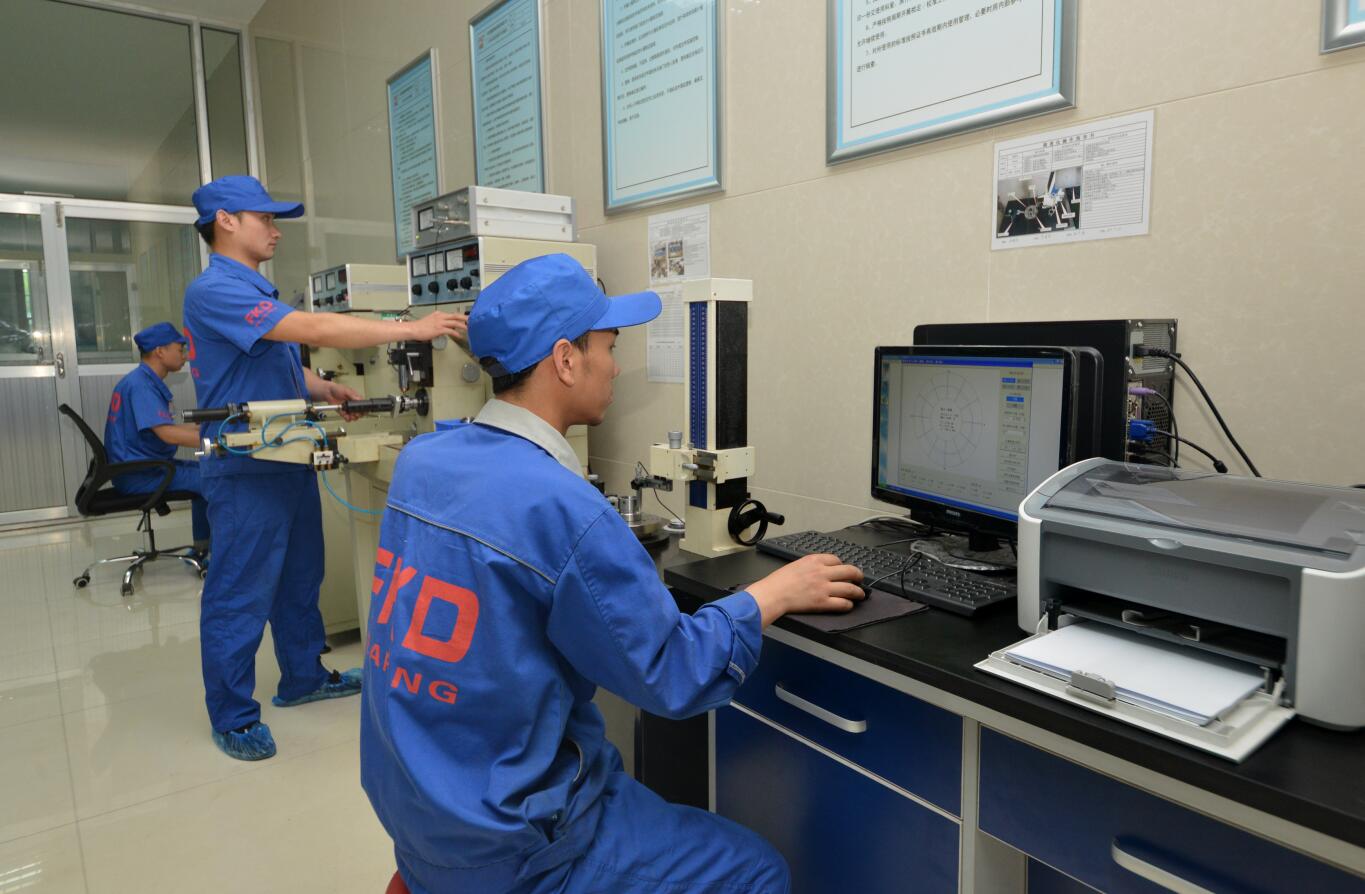
Quality control follows a documented sequence. According to the company's risk-control documentation, common risks such as bearing overheating and housing breakage are addressed by using high-quality steel balls, applying high-temperature grease, and implementing 100% inspection. Each batch of raw materials is tested. Product quality grade is inspected batch by batch. Product dimensions are fully inspected. For an audit, this is a concrete set of control points rather than a general promise.
Application Scenarios: Where Standard Units Earn Their Place
FKD products are applied in transmission equipment, mining machinery, engineering machinery, textile machinery, agricultural machinery, forestry machinery, and construction machinery. Agricultural machinery is a particularly useful example for long-term sourcing logic. Harvesters and other farm machines run in short seasonal windows, and a bearing failure can stop an operation at the wrong time. For agricultural machinery manufacturers and aftermarket distributors, having a standard range of pillow block units, flange units, and insert bearings across several machine generations reduces downtime risk and simplifies spare-parts planning.
For agricultural machinery bearings, the operating environment includes dust, vibration, moisture, and shock loads. The selection of seals, grease, and housing material becomes more important in these conditions than in clean indoor applications. FKD's use of high-temperature grease and G10 steel balls is directly relevant to such conditions, because these elements affect the unit's resistance to heat and its running stability under varying load.
Industrial plants with mixers, conveyors, fans, and pumps follow the same logic. When maintenance teams can rely on a consistent product code and known quality behavior, routine replacement becomes predictable. That predictability, not a single low price, is the real output of a long-term pillow block bearing supply relationship.

Market Trends Behind Long-Horizon Sourcing
Macro data supports the decision to build long-term supply relationships in this category. Global Market Insights estimated the global bearings market at USD 58.6 billion in 2024 and projects it to reach USD 143.6 billion by 2034. IndexBox valued the pillow block and mounted bearing market at about USD 6.1 billion in 2024. From a trade perspective, China exported USD 6.53 billion of ball bearings in 2024, about 19.9% of global exports, according to OEC. By product type, plummer blocks accounted for approximately 42.51% of mounted bearing revenue in 2024, according to Fortune Business Insights.
These figures indicate a stable demand curve. Standard pillow block units are not a niche product; they are a core industrial category with long-term visibility. Chinese manufacturers, because of their export volumes, remain part of the global supply structure. The practical consequence for buyers is that supplier reliability deserves at least as much attention as product price.
Comparative View: Integrated Manufacturing vs. Trade-Assembled Supply
Two common supply routes deliver pillow block units to the market. The first is the trade-assembled route: a trading company buys bearing inserts from one factory, housings from another, and assembles units only before shipment. This model offers flexibility and sometimes lower procurement cost, because each component can be sourced at the lowest available quotation. The weakness is traceability. Quality can change between component batches, and the downstream buyer has no single manufacturer accountable for the assembled unit.
The second route is the integrated manufacturer. FKD represents this model: bearing inserts and housings are produced inside one organization, and testing and inspection operate under the same quality system. When a buyer audits an integrated manufacturer, raw-material test records, batch quality grades, and dimensional inspection results can be traced to one responsible entity. For long-term agreements, this is a simpler structure to monitor.
| Evaluation point | Integrated manufacturer (FKD example) | Trade-assembled path |
| Component production | Bearing insert and housing made in-house | Components sourced from multiple factories |
| Inspection | Raw-material batch testing, batch quality grading, full dimensional inspection | Varies by source and by order |
| Traceability | Single responsible entity | Distributed across several producers |
| Commercial terms | MOQ 1,000 pcs; 30% advance, balance before shipment | Depends on trader and component suppliers |
There is also a risk-management dimension. In a trade-assembled supply path, the quality data of different components is held by different factories, which makes failure analysis difficult when a problem appears. An integrated manufacturer can connect material batch, machining process, and assembly parameters from one file. For purchasing teams that need audit-ready documentation, that difference is significant.
The limitations of the integrated route should be stated openly. FKD's standard MOQ is 1,000 pieces, which assumes regular volume; buyers with one-off or very small-lot requirements will find this threshold too high. The payment structure, 30% advance and the balance before shipment, is appropriate for buyers who can plan cash flow on that basis; organizations that require open-account terms or long credit periods will need to negotiate. And the product range is organized around standard mounted bearing series. Truly custom housings, shaft sizes, or sealing arrangements require a separate OEM process and cannot be assumed within the standard MOQ.
Future Outlook
The next decade is expected to bring continued demand for pillow block and mounted bearing units. Global bearing market projections imply sustained replacement and equipment demand, and plummer blocks remain the largest product type within mounted bearings. Buyers who consolidate orders with manufacturers that control both bearing and housing production may gain simpler audits, clearer accountability, and more predictable batch-to-batch quality.
One additional trend deserves attention: the shift toward fewer, deeper supplier relationships. Many purchasing organizations have reduced their active supplier lists in mechanical components, preferring to concentrate volume with manufacturers that can support multiple product variants. For pillow block bearing buyers, a manufacturer with a wider catalogue, covering pillow blocks, flange units, and insert bearings, offers more room for consolidation than a single-product supplier.
For a buyer in the Decision-to-Execution phase, the practical path is to test supplier claims with verifiable evidence: ownership of production lines, ISO9001:2015 certification, raw-material and batch inspection practice, export history, and clearly stated commercial conditions. These elements decide whether a first shipment can grow into a long-term relationship. The manufacturer's catalogue is a practical first step in evaluating the available range.
Reference: FKD and HHB Bearing catalogue (PDF)
Frequently Asked Questions
Q: What is the manufacturing background of FKD (Hebei Hailan Bearing Manufacture Co., Ltd.)?
A: Hebei Hailan Bearing Manufacture Co., Ltd. was founded in 1988 and is located in Hexi Town Industrial Park, Linxi County, Hebei, China. The company employs more than 400 people, including 30 technicians and engineers. It operates pillow block bearing automatic production lines, automatic inspection lines, and a bearing housing production line, with annual production and sales exceeding 20 million units.
Q: What certifications and brands does FKD hold?
A: The company has passed ISO9001:2015 quality management system certification. Its registered brands include FE, FKD, and HHB.
Q: What are the standard commercial terms for FKD pillow block bearing orders?
A: The standard MOQ is 1,000 pieces. Delivery methods include FOB, CIF, and EXW. Payment terms are 30% advance payment with the balance paid before shipment. Pre-shipment inspection is supported.
Q: Which markets does FKD export to?
A: FKD exports to the EU, Asia, South America, and Africa. Export business accounts for 90% of total sales, and products reach more than 68 countries and regions.
Q: What technical parameters define FKD pillow block bearing units?
A: The UCP200 series is rated at 3000 RPM with chrome steel GCr15 (AISI 52100) bearing material and cast iron or QT450 ductile iron housing. Quality grade is P5 ZV3. Insert bearing models UC205 to UC320 use chrome steel GCr15 with G10 steel balls.
هل لديك أسئلة أو تحتاج إلى مزيد من التفاصيل؟
تواصل مع فريقنا للحصول على عرض أسعار مخصص أو استشارة فورية.
طلب عرض أسعار
املأ النموذج أدناه وسيتواصل معك فريقنا بعرض مقترح مخصص.
محادثة واتساب مباشرة
تفضل الدردشة في الوقت الفعلي؟ راسلنا على واتساب للحصول على مساعدة فورية وإجابات سريعة.
- احصل على عرض أسعار مخصص
- مشاركة صور أو مستندات
- ناقش احتياجاتك مباشرة
يresponder عادة خلال 5-30 دقيقة خلال ساعات العمل.