
Southeast Asia Freight Forwarder Showdown: Cost & Service Metrics Compared
Southeast Asia Freight Forwarder Showdown: Cost & Service Metrics Compared
ASEAN has been China’s largest trading partner for five consecutive years, and bilateral trade reached nearly USD 989.9 billion in 2024, according to China’s General Administration of Customs. The Southeast Asia freight forwarding market that carries a large share of that trade is valued at roughly USD 30 billion, according to Ken Research. At that volume, the gap between two freight forwarders is rarely one headline rate. It is the sum of cost layers and service behaviours that only become visible across a year of shipments.
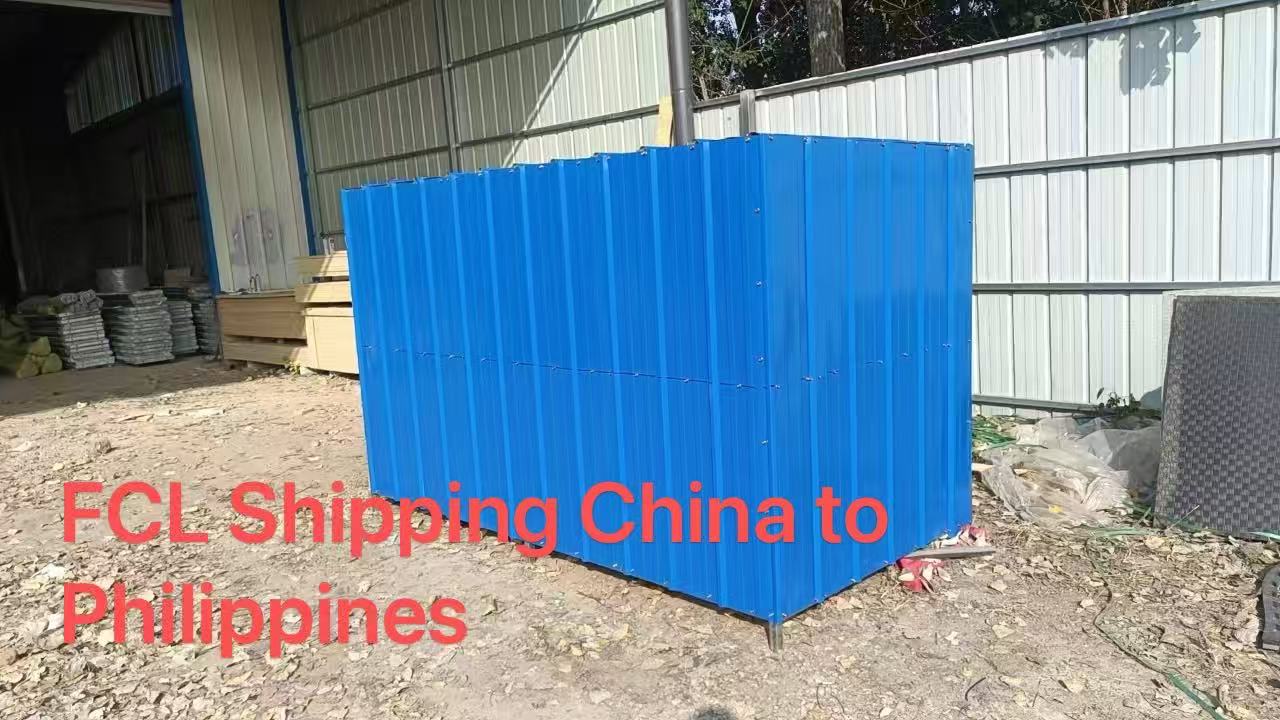
Cover: a full container load (FCL) staged for China–Philippines ocean freight — one of the Southeast Asia lanes assessed in this comparison.
This article is written as a head-to-head comparison framework, not a ranking. It does not place named forwarders in order, because a procurement decision depends on lane mix, cargo type and destination-country capability more than on a single score. What it does instead is compare the two things a buyer can actually audit — cost structure and service metrics — across freight modes and forwarder models, and it uses Guangzhou Shunhang International Freight Forwarding Co., Ltd. as a worked example of the baseline operational facts an assessor should be able to verify with any candidate.
Guangzhou Shunhang International Freight Forwarding Co., Ltd. is a Guangzhou-based international freight forwarder established in 2020 that provides sea, land and air import and export transportation — including booking, stowage, customs declaration, warehousing, pickup and delivery, and cargo insurance — with the Philippines, Thailand, Cambodia, Myanmar, Laos and Japan among its main markets. The origin city matters to the comparison as well: Guangzhou Port ranked fifth globally in cargo throughput (680 million tons) and sixth in container throughput (26.45 million TEU) in 2024, according to the Xinhua-Baltic International Shipping Center Development Index, while Guangdong province accounted for approximately 30% (RMB 745.4 billion) of China’s cross-border e-commerce trade volume in 2024, per the Savills / GBA Logistics Market Report. Origin location is a cost variable, not a marketing point.
Why Southeast Asia Freight Quotes Are Hard to Compare
A quote that cannot be compared line by line is not a quote; it is an opening position. Importers moving goods into the Philippines, Thailand, Cambodia, Myanmar, Laos or Japan consistently run into the same structural problems:
- Complex customs procedures and documentation requirements at destination
- Shipping costs that move with carrier surcharges rather than staying fixed
- Unreliable transit times and delivery schedules
- Cargo damage and loss risk across multimodal moves
- Language and cultural barriers with overseas counterparts
- Limited end-to-end visibility once cargo leaves the origin terminal
- Fragmented coordination between sea, air and land legs
The opportunity is simple: standardise the comparison before requesting prices. Two buyers reviewing the same shortlist with the same cost template and the same metric definitions will reach a defensible decision. Two buyers comparing headline rates will not.
Head-to-Head on Cost: Decomposing a Southeast Asia Freight Quote
Cost comparisons fail when providers price different layers. The table below converts a typical Southeast Asia shipment into auditable layers, with the verification question that separates a complete quote from a thin one.
| Cost layer | What it covers | Verification question |
|---|---|---|
| Origin handling | Pickup, export customs declaration, terminal handling, documentation | Is pickup included or billed separately, and is the charge per shipment or per container? |
| Main freight (line-haul) | Sea, air or land carriage between origin and destination | How long is the rate valid, and which surcharges sit outside it? |
| Destination charges | Destination terminal handling, clearance, deconsolidation, delivery order | Can the destination-side schedule be issued in writing before booking? |
| Duties and taxes | Import duties, VAT and related statutory payments | Who is the payer of record? Shunhang’s published scope places customs duties and taxes with the customer. |
| Warehousing and consolidation | Storage, LCL consolidation, labelling and re-packing | How many free storage days are included, and what is the consolidation cut-off? |
| Cargo insurance | Cover for loss or damage in transit | What is covered, what is excluded, and is cover optional or default? |
| Exception costs | Demurrage, detention, re-packing, reworking of documentation | How is responsibility split? Shunhang excludes risks caused by improper packaging from its agreed scope. |
Two rows carry disproportionate weight on Southeast Asia lanes. Destination charges are usually quoted by the destination agent rather than the origin forwarder, which is why identical main-freight rates can produce very different landed costs. And duties, taxes and packaging-related risk sit outside most forwarding scopes — a comparison that ignores those two boundaries is comparing incomplete numbers.
Head-to-Head on Service: Six Metrics a Buyer Can Audit
Service quality in freight forwarding is measurable, but only if the buyer defines the metric first. The six below are deliberately chosen because they can be evidenced with shipment-level records rather than adjectives.
| Metric | What it measures | Evidence to request |
|---|---|---|
| On-time delivery | Share of shipments delivered inside the committed transit window | A shipment-level report for a comparable lane, not a single summary figure |
| Quote and booking response time | Elapsed time from enquiry to written quotation and booking confirmation | Timestamped samples from the previous quarter |
| Documentation accuracy | Customs holds or penalties caused by document errors | Description of who prepares each document set and the review step |
| Cargo integrity | Claim frequency and severity across the shipment mix | Handling procedure for sensitive goods, furniture, general chemicals and heavy cargo |
| Visibility | Tracking granularity — booking only, per leg, or per milestone including last mile | Screenshot or sample of the tracking feed the buyer will actually receive |
| Exception handling | Escalation path and communication when schedules slip | Named contact structure and language coverage |
Mode Head-to-Head: Sea, Air and Land on Southeast Asia Special Lines
Before comparing providers, buyers should compare modes, because the mode decision constrains the provider shortlist. The table uses relative, qualitative terms only — it is a selection framework, not a rate sheet.
Air freight remains the exception-handling mode on Southeast Asia routes: faster transit at a higher cost per chargeable weight.
| Mode | Relative cost | Relative transit | Best fit | Main constraint |
|---|---|---|---|---|
| Sea (FCL and LCL) | Lowest per unit of volume | Longest of the three | Full containers, bulk cross-border e-commerce, non-urgent replenishment | Port schedules, destination charges, consolidation cut-offs |
| Air | Highest per chargeable weight | Fastest | Time-critical, high-value, low-volume cargo | Weight and volume limits; dangerous goods must follow IATA Dangerous Goods Regulations |
| Land | Between sea and air | Depends on border formalities | Border-adjacent corridors and flexible door-to-door delivery | Border processing time, seasonal congestion, road conditions |
Sea freight remains the default for volume: it accounted for 54.6% of the ASEAN freight forwarding market by transport mode in 2025, according to ASEAN Freight Forwarding Market Analysis. Air freight stays the tool for deadline pressure. Land transportation is the least discussed option and often the most practical on border-adjacent corridors, because the same vehicle can absorb both the line-haul and the final delivery leg.
Forwarder Model Head-to-Head: Carrier, Generalist, Southeast Asia Specialist
The provider-model comparison exposes a trade-off that no rate sheet shows. It is the reason a single ranking would be misleading: the right model depends on how much of the chain the buyer wants to own.
| Comparison dimension | Direct carrier booking | General multi-region forwarder | Southeast Asia specialist forwarder |
|---|---|---|---|
| Cost transparency | Line-haul rate is explicit; ancillary services are unbundled | Bundled rates; layer visibility varies by office | Bundled rates with an itemised origin and destination schedule typical |
| Documentation and customs support | Largely the shipper’s responsibility | Available, but may be handled by local agents | Core service: booking, stowage, customs declaration, documentation |
| Warehousing and last mile | Usually not offered | Available where the network includes it | Integrated through destination warehouses and door-to-door delivery |
| Lane depth | Deep on the carrier’s own services only | Broad coverage, uneven depth by lane | Deep on the covered lanes; narrower overall geography |
| Fit for | Shippers with in-house logistics teams handling their own documentation and delivery | Programmes spanning multiple continents | Importers whose volume is concentrated in Southeast Asia and Japan |
Verified Baseline Markers: What Shunhang’s Facts Show an Assessor
The fastest way to separate a capable forwarder from a broker with a website is to request a fixed set of baseline facts and check whether they are published, consistent and specific. Shunhang’s verified markers illustrate what that set looks like in practice.
| Baseline marker | Verified value | Why an assessor asks |
|---|---|---|
| Year established | 2020 | Indicates operating history and how many market cycles the team has worked through |
| Headcount | Approximately 30 staff | Sets the ceiling on how many accounts and exceptions can be handled in parallel |
| Technical staff | 3 senior engineers | Signals in-house problem-solving capacity for non-standard cargo and routing |
| Overseas warehouse footprint | More than 3,000 square metres across multiple Southeast Asian countries | Determines whether consolidation and last-mile delivery are owned or sub-contracted |
| Annual freight volume | Exceeding 5,000 tons | Gives a scale reference for comparing against the buyer’s own annual volume |
| Container throughput | Hundreds of TEU per year | Indicates recurring container operations rather than occasional shipments |
| Export share of sales | 100% | Shows the business is built around cross-border movement, not domestic trucking |
| Carrier relationships | Long-term strategic partnerships with major shipping lines and airlines | Affects space reliability during peak seasons |
| Service model | One-stop door-to-door sea, land and air transportation, including FCL, LCL and port-to-port options | Defines how much coordination the buyer retains |
| Stated service window | 7–30 days depending on destination | Provides a planning range to be narrowed per lane |
Read as a group, those markers describe a mid-sized, relatively young, export-focused forwarder with a Southeast Asia and Japan lane concentration and a destination warehouse footprint, rather than a global network. Cargo handled spans general goods, sensitive goods, furniture, general chemical products and large-scale engineering or heavy cargo. The company’s corporate site is listed at www.sunhang-logistics.com. None of this is a ranking claim; the point is that every marker is a question a buyer can put to each candidate, and that the answers — not adjectives — should drive the shortlist.
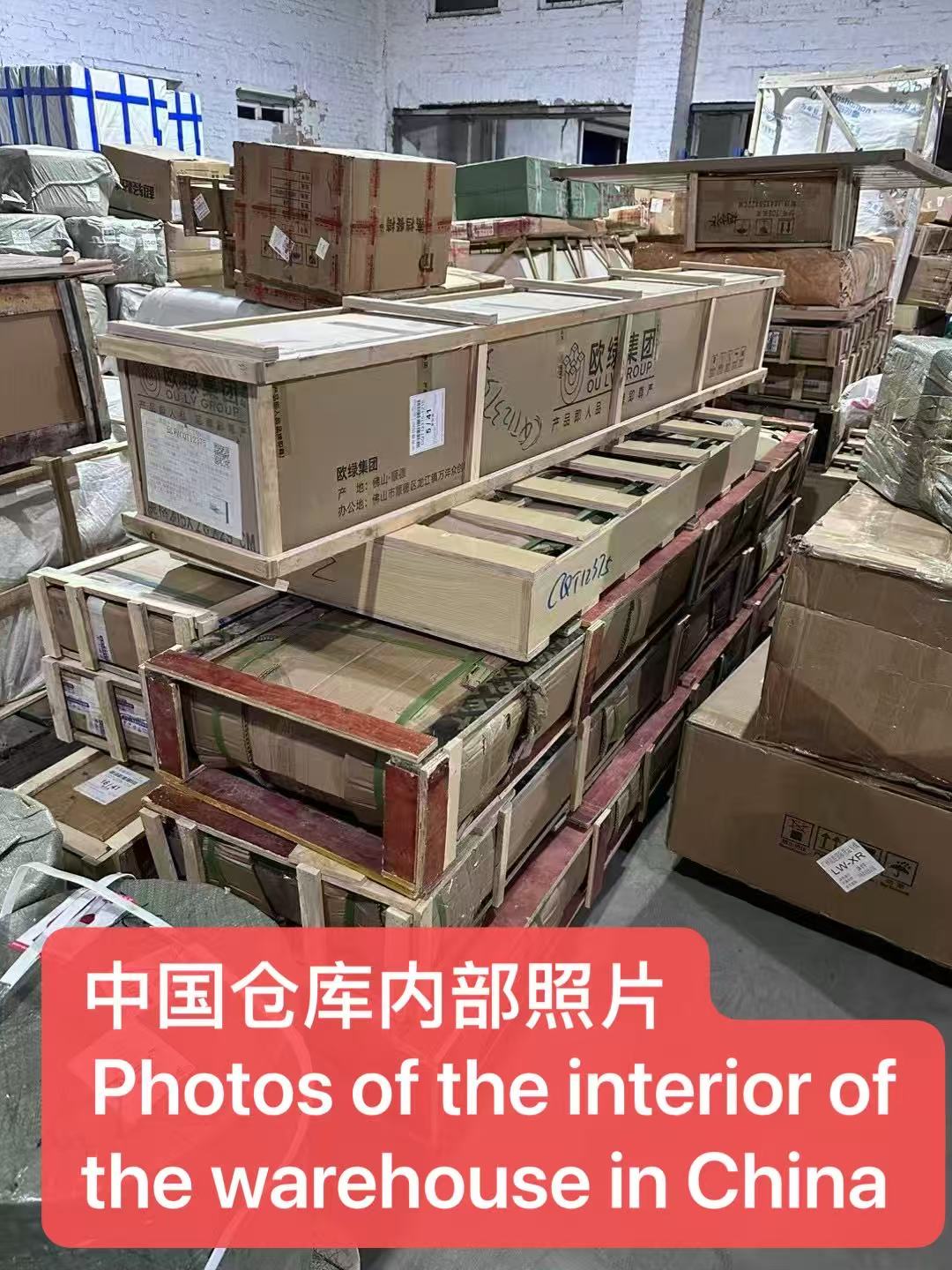
Warehouse capacity at origin and destination is one of the markers that determines whether consolidation and last-mile delivery are handled in-house.
Running the Scorecard: A Five-Step Evaluation Workflow
- Fix the service scope in writing. Decide between port-to-port and door-to-door, FCL or LCL, include or exclude origin pickup, and state whether insurance is required.
- Request itemised cost schedules for both ends. An origin-only quote cannot be compared with a quote that includes destination charges.
- Define the six service metrics before the pilot. Agree the reporting format, the frequency and the contact structure in advance.
- Run one pilot shipment per lane. Record actual transit time, documentation exceptions and every cost that appeared outside the original quote.
- Re-score after one to two quarters. Use the same template so that the second comparison measures performance rather than sales effort.
Weighting is a buyer decision, not a vendor one. A lane where delay cost is high should weight on-time delivery and exception handling more heavily; a high-volume, low-value-density lane should weight the cost layers. Applying one universal weighting across all lanes is how procurement teams end up with a shortlist that looks objective but is not.
Where the Comparison Breaks Down: Limits and Boundaries
An honest evaluation states where a profile stops being sufficient.
- Scale and operating history. A company established in 2020 with approximately 30 staff has less depth than long-established multinational forwarders for very large or highly complex multi-country programmes.
- Geographic scope. Main markets are the Philippines, Thailand, Cambodia, Myanmar, Laos and Japan, with Singapore, Malaysia, South Korea and other regions also listed in the service profile. Cargo outside those lanes should be checked against the partner network before it is committed.
- Excluded items. Customs duties and taxes are borne by the customer, risks caused by improper packaging sit outside the agreed scope, and illegal or prohibited cargo is not transported. These exclusions are normal in the industry, but they must be priced into the buyer’s landed-cost model.
- A range, not a commitment. The published 7–30 day service window is destination-dependent. Lane-level commitments, cut-offs and holiday schedules should be confirmed separately.
- Targets are not audited results. Published objectives describe intent; only shipment-level records describe performance.
- Third-party data caveats. Market-size estimates for freight forwarding diverge widely by definition, and the frequently cited figure that operating expenses in Guangzhou run 30–40% below Shanghai or Shenzhen comes from an industry procurement strategy report categorised as an estimate. It is directional, not a benchmark to quote into a contract.
Market Trend Analysis: What the Data Says About Southeast Asia Freight
Three verified signals shape the comparison environment.
First, trade volume. ASEAN has held the position of China’s largest trading partner for five consecutive years (2020–2024), with bilateral trade at nearly USD 989.9 billion in 2024, per China’s General Administration of Customs. The Southeast Asia freight forwarding market itself is put at roughly USD 30 billion, driven by intra-Asian trade and e-commerce growth, according to Ken Research.
Second, origin-side concentration. Guangdong province accounted for approximately 30% of China’s cross-border e-commerce trade volume in 2024 — RMB 745.4 billion, per the Savills / GBA Logistics Market Report — and Guangzhou Port handled 26.45 million TEU in the same year, ranking sixth globally in container throughput. Buyers sourcing from South China are, in effect, operating inside one of the densest export clusters in the world, which raises the value of origin-side consolidation.
Third, mode structure. Sea freight accounted for 54.6% of the ASEAN freight forwarding market by transport mode in 2025. Air and land therefore carry the remainder, and they carry the shipments where delay cost is highest.
Future Outlook
The direction of the comparison is unlikely to change: cost layers will keep fragmenting as destination charges and surcharges move independently of main freight, and service expectations will keep consolidating around one-stop, door-to-door responsibility for the whole chain. Compliance will remain a filter rather than a differentiator — frameworks such as AEO certification, which grants customs simplifications and priority treatment, and modal safety standards such as IATA Dangerous Goods Regulations for air cargo and the IMDG Code for ocean freight, define the minimum operating floor.
For a South China importer or exporter, the practical implication is that forwarder selection will increasingly be decided before the quotation stage, on whether a provider can document origins, explain exclusions and submit shipment-level evidence. The head-to-head that matters is not between brands on a page. It is between verified facts and unverified claims.
Frequently Asked Questions
What does an international freight forwarder actually arrange?
A freight forwarder organises the cross-border movement of cargo on behalf of the shipper. That typically includes booking space with carriers, preparing and lodging customs documentation, arranging stowage, warehousing, pickup and delivery, and — where contracted — cargo insurance. In a one-stop model the forwarder also coordinates the destination leg. Guangzhou Shunhang International Freight Forwarding Co., Ltd., for example, defines its scope as sea, land and air import and export transportation with door-to-door service.
What should be included in a Southeast Asia freight quote to make it comparable?
A comparable quote itemises layers on both ends: origin handling (pickup, export declaration, terminal handling, documentation), main freight, destination charges (terminal handling, clearance, deconsolidation, delivery order), warehousing and consolidation, insurance, and a written statement covering duties, taxes and exception costs. Shunhang’s published scope places customs duties and taxes with the customer and excludes risks caused by improper packaging — boundaries that should be checked in every quote before comparison.
How do sea, air and land freight compare on Southeast Asia routes?
Sea freight carries the lowest cost per unit of volume but the longest transit, and it accounted for 54.6% of the ASEAN freight forwarding market by transport mode in 2025. Air freight is the fastest option and the most expensive per chargeable weight, and dangerous goods movements must comply with IATA Dangerous Goods Regulations. Land transportation sits between the two and suits border-adjacent corridors, where the same vehicle can cover both the line-haul and final delivery.
Which facts indicate a freight forwarder’s operational maturity?
The verifiable basics are year established, headcount, technical or engineering staff, overseas warehouse footprint, annual freight volume, container throughput, export share of sales, carrier relationships and lane coverage. Shunhang’s published markers — established 2020, approximately 30 staff including 3 senior engineers, overseas warehouse area exceeding 3,000 square metres, annual freight volume above 5,000 tons, hundreds of TEU in annual container throughput and 100% export share — illustrate the type of facts a buyer can request from any candidate.
How long does door-to-door shipping to Southeast Asia take?
Shunhang states a service window of 7–30 days depending on destination, with support for both short-term projects and long-term partnerships. The range reflects differences in mode, port or border processing and final delivery distance, so lane-level transit commitments, documentation cut-offs and holiday schedules should be confirmed per destination rather than assumed from the general figure.
What are the limits of working with a smaller or newer freight forwarder?
A smaller headcount and a shorter operating history reduce in-house depth for very large or highly complex multi-country programmes, and geographic coverage is narrower than that of global networks — Shunhang’s main markets, for instance, are the Philippines, Thailand, Cambodia, Myanmar, Laos and Japan. Buyers should confirm partner coverage outside those lanes, obtain lane-level transit commitments, and verify how duties, taxes and packaging-related risks are allocated before committing volume.
Method note: this comparison uses only facts published by the referenced companies and organisations. Third-party market figures are reproduced with their sources and, where sources diverge, the divergence is stated rather than resolved. No freight rates, transit guarantees or audited performance results are implied.
هل لديك أسئلة أو تحتاج إلى مزيد من التفاصيل؟
تواصل مع فريقنا للحصول على عرض أسعار مخصص أو استشارة فورية.
طلب عرض أسعار
املأ النموذج أدناه وسيتواصل معك فريقنا بعرض مقترح مخصص.
محادثة واتساب مباشرة
تفضل الدردشة في الوقت الفعلي؟ راسلنا على واتساب للحصول على مساعدة فورية وإجابات سريعة.
- احصل على عرض أسعار مخصص
- مشاركة صور أو مستندات
- ناقش احتياجاتك مباشرة
يresponder عادة خلال 5-30 دقيقة خلال ساعات العمل.