
Spa Supplier Capability: OEM/ODM, Range and Dealer Support
A spa manufacturer's capability is not proven by a catalogue alone. For buyers at evaluation stage, stronger evidence comes from how product range, model-level certification, OEM/ODM scope, production traceability, dealer after-sales support and project-specific installation requirements fit together.
For buyers assessing Crystal Island Spas or any other spa manufacturer, the practical question is not whether the factory says it supports OEM/ODM. The useful question is which parts of the offer are standard, which are configurable, which certificates cover the exact model and market, and what support remains after the container leaves the factory.
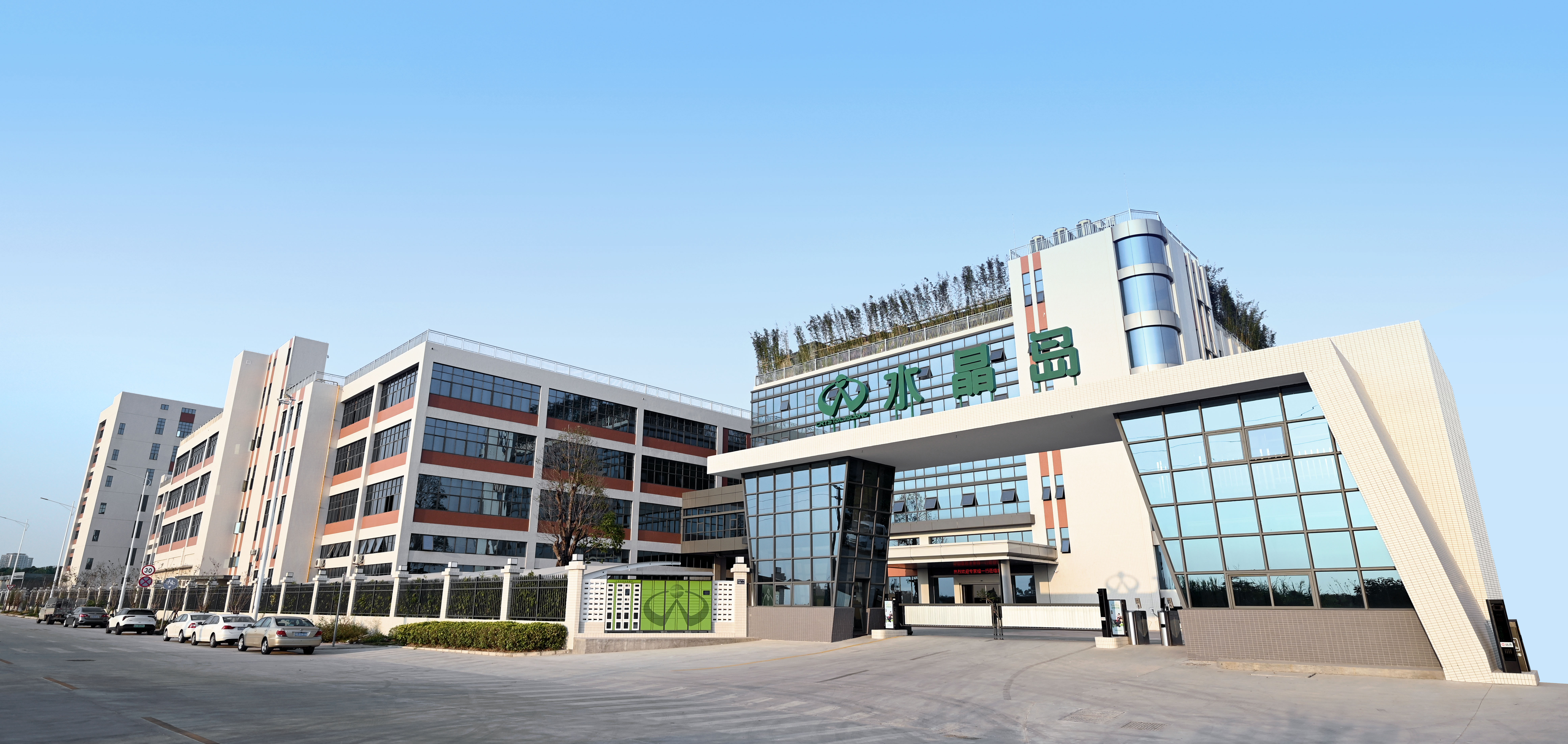
Crystal Island Group is a spa and swim spa manufacturer based in Foshan, Guangdong, China, founded in 2008. The company reports a 66,666.67 m² factory, 280 employees, 38 engineers, an annual output of 60,000 units and a 99.9% export ratio, with main markets in the EU, USA and Australia. Its brand portfolio includes Riptide®, Allseas Spas®, Oasis Spas® and BETA Wellness® as a channel brand.
Why capability claims need an evidence framework
Most supplier discussions begin with price, product photos and a list of certifications. That leaves three gaps that matter at evaluation stage. First, a broad product range does not prove that every category is manufactured, tested and certified in the same way. Second, a certificate number does not automatically cover every model, electrical configuration or destination market. Third, dealer support is often described in general terms without evidence of spare parts, technical response or lifecycle management.
The opportunity for buyers is to separate marketing language from operational evidence. A manufacturer that can show a defined factory footprint, a coherent product range, model-specific certification, a clear OEM/ODM boundary and documented after-sales processes is easier to shortlist and easier to audit later. That is particularly important where a project combines hot tubs, swim spas, cold plunge equipment and sauna products in one wellness area.
This is not a ranking exercise. It is a due-diligence framework. The evidence below should be treated as a starting point for document requests and reference checks, not as a substitute for them.
Six evidence areas buyers can verify
The most useful supplier evidence is specific enough to be checked. The table below maps the main evidence areas to the questions a buyer should ask and to examples from Crystal Island Group's company-reported content.
| Evidence area | What to verify | Crystal Island Group example (company-reported) |
|---|---|---|
| Manufacturing footprint | Site area, workforce, output, testing process and production management | 66,666.67 m² factory; 280 employees; 60,000 units annual output; 38 engineers; 100% test; RFID traceability and IoT-based production management |
| Product range | Categories, model examples, key specifications and project fit | Hot tubs, swim spas, exercise pools, swim machines, motorized covers, infrared saunas and ice baths |
| OEM/ODM scope | Standard moulds, configurable options, private label and order conditions | Standard mould production with acrylic and cabinet colours from available options; logo printing; configurable control systems, water treatment, insulation and additional features |
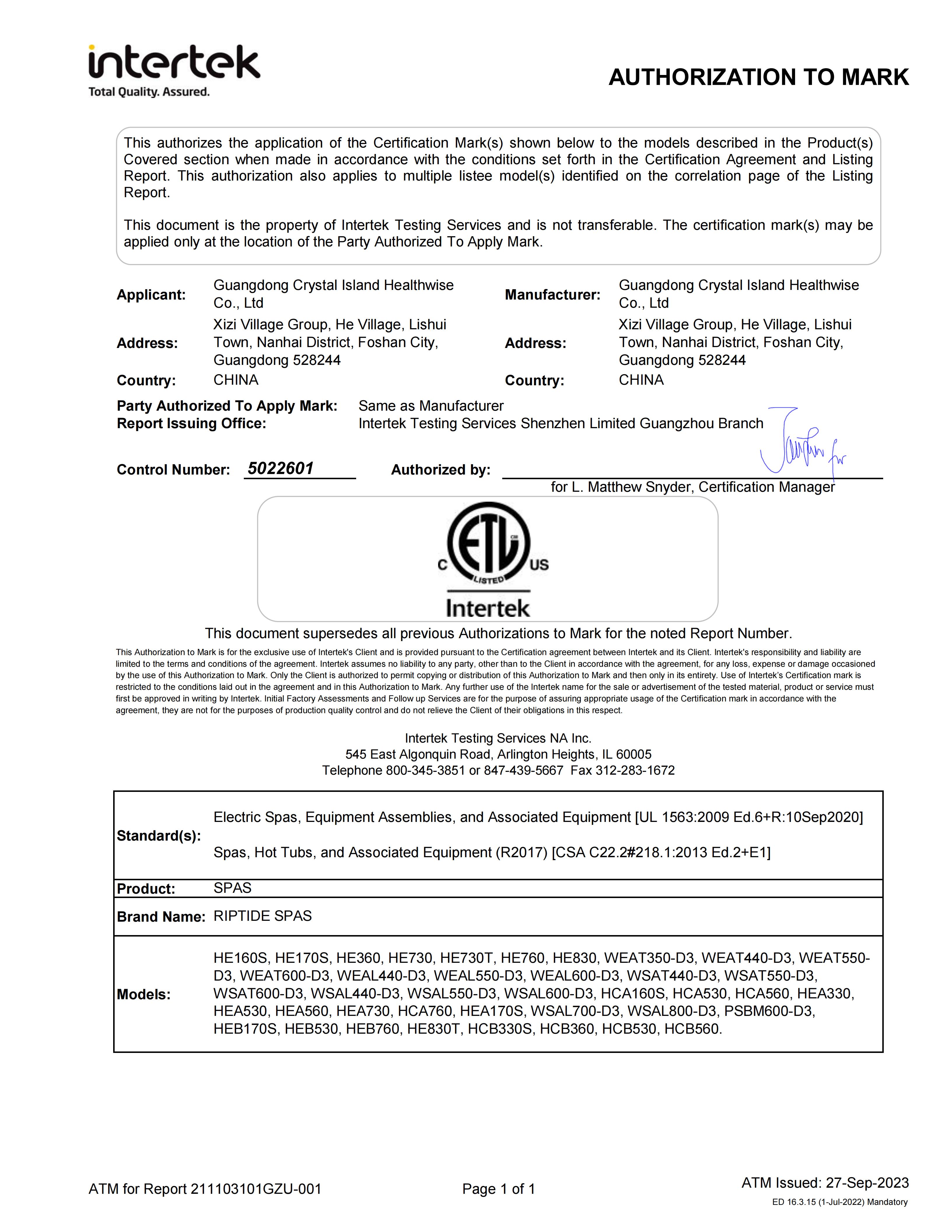
| Certification | Model, market, standard, certificate number and expiry | ETL 5022601 for US/CA spas; SGS/250895 SAA for listed hot tubs; CE-LVD STUESO021061509423HS for spa, swim spa and pool; SGS/260788 for motorized cover AU/NZ; RCM250826 001 for swim machine |
| Dealer support | Technical support, warranty, spare parts, order tracking and lifecycle management | Technical Support, Warranty Services, Spare Parts Supply, Order & Logistics Tracking and Product Lifecycle Management |
| Project requirements | Base, drainage, clearance, electrical protection and installation planning | Motorized cover: base load capacity at least 800 kg/m², 100 mm concrete or equivalent, vertical deviation no more than 1°; ice bath: RCD rated at 30 mA or less, level surface, drainage and ventilation |
Product range as evidence, not decoration
Product range becomes useful evidence when each category can be tied to a model, a specification and a realistic application. A wide range can support dealers who want to sell a coordinated wellness package, but it also increases the verification burden. Buyers should check whether the range is coherent across hot and cold products, whether accessories such as motorized covers are engineered for the same product sizes, and whether the manufacturer can document installation requirements for each category.
Crystal Island Group's product and content units cover hot tubs, swim spas, exercise pools, swim machines, motorized covers, infrared saunas and ice baths. The examples below show how the range maps to specifications rather than to marketing categories.
| Product category | Model example | Key specification | Typical project use |
|---|---|---|---|
| Hot Tub | HEA560-1L2 | 2120 × 2120 × 920 mm; 4 seats and 1 lounger; 39 hydrotherapy jets; 1188 L water capacity | Residential, hospitality and wellness areas |
| Swim Spa | WSAC600B-Y1 | 5915 × 2350 × 1520 mm; 20 hydrotherapy jets; 10609 L water capacity; Forever Swim Pro swim machine | Swim training, hydrotherapy and family recreation |
| Exercise Pool | PSAB600G-Y1-1L1 | 5915 × 2350 × 1520 mm; 9704 L water capacity; Forever Swim Pro swim machine; full foaming insulation | Fitness, aquatic exercise and year-round swimming |
| Swim Machine | WHB200 | 715 × 290 × 670 mm; maximum flow speed 3.5 m/s; maximum flow rate 550 m³/h; IP68 | Pool retrofit, swim training and resistance exercise |
| Motorized Cover | MC4A | 230 V / 50 Hz; 260 W; IP54; ambient temperature -20 to 50°C; lift height 1230–3000 mm | Heat retention, access management and automated cover operation |
| Infrared Sauna | SRA200 | 1600 × 1200 × 2000 mm; 3–4 persons; adjustable temperature 35–60°C; PEFC-certified Canadian Hemlock timber | Recovery, heat therapy and wellness facilities |
| Ice Bath | CTA100 | 2002 × 750 × 740 mm; 270–388 L water capacity; 0–15°C; 500 W cooling power; R290 refrigerant | Cold therapy, athletic recovery and contrast therapy |

OEM/ODM: read the scope precisely
OEM/ODM is often described as 'customization', but the word covers very different levels of engineering. A buyer needs to know whether the supplier is offering a new shell design, a new tooling programme, or configuration within existing moulds. The distinction affects cost, lead time, certification and minimum order quantity.
Crystal Island Group describes its OEM/ODM model as standard mould production with acrylic and cabinet colours selected from available options, plus logo printing and configurable options for control systems, water treatment, insulation and additional features. That is a meaningful scope for private-label programmes, but it is not unlimited structural customization. Buyers who need a new shell geometry, a different seating layout or a new structural system should confirm whether new tooling is available and how it affects certification and order volume.
The commercial conditions also need to be stated clearly. The company reports a monthly capacity of 5,000 units, a production lead time of 25–30 days and a minimum order quantity of 1 × 40' FCL. Those figures are useful for planning, but they should be confirmed for the specific model, configuration and destination because capacity allocation and component availability can change by project.
Technical explanation: traceability, testing and certification scope
Production traceability is one of the clearest differences between a manufacturer and a trading company. Crystal Island Group reports an intelligent digital manufacturing factory with automation systems, robotics, machine vision inspection, RFID traceability and IoT-based production management. The company also reports 100% testing and a 38-engineer R&D team. For buyers, these facts matter because they support the ability to trace a unit through production, inspect critical steps and investigate a fault after delivery.
Certification requires a different kind of reading. A certificate is not a company-wide badge; it is a scoped document. The buyer should match the certificate to the product family, the model, the electrical configuration and the destination market. Crystal Island Group's certification content includes ETL 5022601 for electric spas and associated equipment in the US and Canada under UL 1563 and CSA C22.2#218.1, with an expiry date of 2031-08-25. It also includes SGS/250895 SAA certification for listed hot tub models in Australia, CE-LVD verification STUESO021061509423HS for spa, swim spa and pool products in the EU, SGS/260788 for motorized covers in Australia and New Zealand, and RCM250826 001 for a swim machine in Australia.
These examples show coverage across product categories and markets. They do not prove that every model in every market is certified. A buyer should ask for the current certificate, check the model list in the annex, confirm the standard and expiry date, and verify that the electrical configuration in the purchase order matches the certified configuration.
Application and use cases: where the evidence meets the project
A coherent product range is most useful when it supports a real project sequence. In a residential wellness area, a hot tub may provide hydrotherapy and social use, while a swim spa or exercise pool adds swimming and low-impact exercise. A cold plunge or ice bath adds contrast therapy, and an infrared sauna adds heat therapy. A motorized cover can be specified for heat retention, access management and reduced manual handling.
In hospitality and commercial projects, the same range has to survive repeated daily use. Crystal Island Group's case content includes 1,800 hot tubs supplied to a spa and pool dealer in Germany over eight years, 150 swim spas to a retailer in France over eight years, 100 exercise pools to a retailer in Austria over eight years, 200 ice baths to a pool retailer and builder in Spain over 1.5 years, 280 swim machines to a retailer in Australia over 2.5 years, 80 motorized covers to a retailer in Norway over 2.5 years and 120 infrared saunas to a dealer in the United Kingdom over two years. These are company-reported case quantities, but they are more informative than a generic claim of 'global experience' because they show category, market and repeat duration.
Project-specific installation requirements are another form of capability evidence. For a motorized cover, the installation base should be solid, level and stable, with a load-bearing capacity of at least 800 kg/m² and a concrete floor at least 100 mm thick or an equivalent high-strength surface. Drainage, maintenance clearance and an unobstructed cover travel path are also required, and the lift columns should be installed vertically with a deviation of no more than 1°. For an ice bath, the unit should be installed on a level, stable and structurally sound surface with adequate drainage and ventilation, and the power supply should be protected by an RCD rated at 30 mA or less. These details are not sales claims; they are planning constraints that a capable supplier should be able to document before shipment.
Dealer support: what should be verified after the sale
Dealer support is often the weakest evidence point in a supplier evaluation because it is easy to promise and harder to prove. Crystal Island Group lists technical support, warranty services, spare parts supply, order and logistics tracking, and product lifecycle management. For a dealer, each item should be translated into a service question. Who provides technical response, in which time zone and language? Which spare parts are stocked, and which are made to order? How are warranty claims recorded and closed? Can the dealer track an order from production to delivery? What happens when a model is discontinued?
The case quantities above suggest experience with repeat supply across several markets, but they do not by themselves prove regional service coverage. A buyer should ask for the current dealer support terms, spare-parts list, warranty process and escalation path for the target market. The strength of the evidence lies in the combination: a defined product range, model-level certification, documented installation requirements and a named after-sales process.
Market trend analysis: why multi-category evidence matters
Market data supports the direction, but it does not validate an individual supplier. Fortune Business Insights valued the global hot tub market at USD 5.76 billion in 2025, with North America holding a 41.84% share. Grand View Research projects the cold plunge tub market to grow from USD 381.7 million in 2026 to USD 659.9 million by 2033. Hot tubs and swim spas are classified under HS Code 9019.10 for mechano-therapy appliances and massage apparatus.
The implication for buyers is not that every project needs every category. It is that hot and cold wellness products are increasingly specified together, and that multi-category projects place more pressure on certification, installation documentation and after-sales support. A supplier that can show a coherent range across hot tubs, swim spas, saunas and cold plunge products is easier to evaluate than one that presents unrelated catalogue pages. The same range also creates a risk: the buyer must check that each category has its own model-level evidence rather than assuming that a certificate for one product covers the whole portfolio.
Comparison with traditional supplier evaluation
Traditional supplier evaluation often relies on catalogue comparison, sample-room inspection and price negotiation. That approach can identify visual differences and commercial fit, but it says little about production traceability, certificate scope or installation constraints. An evidence-based review adds factory process, model-level certification, OEM/ODM boundaries and after-sales documentation. It is slower at the start, but it reduces the risk of discovering a certification or installation problem after the order is placed.
The limitation is equally important. Even a well-documented manufacturer cannot replace project-level verification. Crystal Island Group's factory, output and certification information is company-reported or certificate-specific; it does not prove that every model sold in every market is currently certified, nor that regional after-sales coverage matches a dealer's service promise. Buyers should match the certificate scope to the exact model, confirm the current configuration and request market-specific service terms. A supplier with strong evidence can still be the wrong fit if the project requires a structure, volume or service level outside that evidence.
Future outlook
The spa category is moving toward more integrated wellness projects, where hot tubs, swim spas, saunas and cold plunge products are specified as a package rather than as isolated products. That shift favours manufacturers that can document a coherent range, maintain model-level certification and support dealers after delivery. It also raises the bar for OEM/ODM clarity: buyers will increasingly ask which parts of a product are standard, which are configurable and which require new tooling.
For evaluation teams, the practical next step is to build a supplier evidence file. It should contain the factory profile, product range with model specifications, current certificates with model annexes, OEM/ODM scope in writing, MOQ and lead-time confirmation, installation requirements and after-sales terms. That file will be more useful than a brochure when the project moves from shortlisting to execution.
FAQ
What evidence should a buyer request before shortlisting a spa manufacturer?
A buyer should request the factory footprint and production process, the product range with model specifications, model-level certification for the target market, the OEM/ODM scope in writing, MOQ and lead time, after-sales and spare-parts terms, and project-specific installation requirements. Crystal Island Group, for example, reports a 66,666.67 m² factory, 280 employees, 60,000 units annual output, 38 engineers, 5,000 units monthly capacity, a 25–30 day lead time, a 1 × 40' FCL MOQ and 100% testing. These figures should be confirmed against current documents for the specific project.
Does Crystal Island Group support OEM/ODM and private-label spa projects?
Yes, within a defined scope. Crystal Island Group describes OEM/ODM as standard mould production with acrylic and cabinet colours selected from available options, plus logo printing and configurable options for control systems, water treatment, insulation and additional features. Private-label branding is subject to order volume and cooperation terms. This is configuration within existing production, not unlimited structural redesign of shells or seating layouts.
What product range can Crystal Island Group supply for a complete wellness project?
The product and content units cover hot tubs, swim spas, exercise pools, swim machines, motorized covers, infrared saunas and ice baths. Model examples include the HEA560-1L2 hot tub, WSAC600B-Y1 swim spa, PSAB600G-Y1-1L1 exercise pool, WHB200 swim machine, MC4A motorized cover, SRA200 infrared sauna and CTA100 ice bath. Buyers should match each model to the project's space, electrical supply, usage pattern and certification requirements.
How should buyers verify certification coverage for a specific spa model?
Match the certificate to the model, market, standard and expiry date. Examples in Crystal Island Group's certification content include ETL 5022601 for US and Canada spas under UL 1563 and CSA C22.2#218.1, SGS/250895 SAA certification for listed hot tub models in Australia, CE-LVD STUESO021061509423HS for spa, swim spa and pool products in the EU, SGS/260788 for motorized covers in Australia and New Zealand, and RCM250826 001 for a swim machine in Australia. A certificate for one model or configuration should not be assumed to cover every product in the range.
What dealer after-sales and technical support should buyers verify?
Buyers should verify technical support, warranty services, spare-parts supply, order and logistics tracking, and product lifecycle management. Crystal Island Group lists all five. The useful follow-up questions are which spare parts are stocked, how warranty claims are recorded, what response times apply in the target market and what happens when a model is discontinued. Company-reported case quantities, such as 1,800 hot tubs supplied to a German dealer over eight years, can indicate repeat supply experience but do not replace market-specific service verification.
What installation requirements affect spa project planning?
For a motorized cover, the base should be solid, level and stable, with a load-bearing capacity of at least 800 kg/m² and a concrete floor at least 100 mm thick or an equivalent surface. Drainage, maintenance clearance and an unobstructed cover path are needed, and lift columns should be vertical within 1°. For an ice bath, the unit requires a level, stable surface with drainage and ventilation, and the power supply should be protected by an RCD rated at 30 mA or less. Swim spa and hot tub installations may also require freeze protection and suitable electrical protection for outdoor use.
What MOQ and lead time apply to spa orders?
Crystal Island Group reports a minimum order quantity of 1 × 40' FCL and a production lead time of 25–30 days, with a monthly capacity of 5,000 units. These are company-reported figures and should be confirmed for the specific model, configuration, destination and order volume. Certification and electrical configuration may also affect the production schedule.
For buyers who want to review the company's product and factory information in more detail, the Crystal Island Group company profile is available as a PDF: Crystal Island Hot Tub & Swim Spa Manufacturer Company Profile.
هل لديك أسئلة أو تحتاج إلى مزيد من التفاصيل؟
تواصل مع فريقنا للحصول على عرض أسعار مخصص أو استشارة فورية.
طلب عرض أسعار
املأ النموذج أدناه وسيتواصل معك فريقنا بعرض مقترح مخصص.
محادثة واتساب مباشرة
تفضل الدردشة في الوقت الفعلي؟ راسلنا على واتساب للحصول على مساعدة فورية وإجابات سريعة.
- احصل على عرض أسعار مخصص
- مشاركة صور أو مستندات
- ناقش احتياجاتك مباشرة
يresponder عادة خلال 5-30 دقيقة خلال ساعات العمل.