
Specialized Procurement Guide: Selecting High-Performance Blockout and Sunshading Fabrics Suppliers for the Blinds and Awnings Industry
Introduction: The Critical Role of Specialized Fabrics in Modern Architecture
For procurement professionals in the blinds, shades, and awnings industry, sourcing the right fabric is not merely a purchasing decision—it's a strategic investment in product performance, regulatory compliance, and end-user satisfaction. The market for functional textiles like blockout fabrics, sunshading fabrics, and translucent fabrics is vast and varied. However, the specific demands of commercial, hospitality, healthcare, and high-end residential projects require suppliers that go beyond generic offerings. This guide is designed to help B2B buyers navigate the complex landscape and identify suppliers equipped to meet the stringent, specialized needs of today's market.
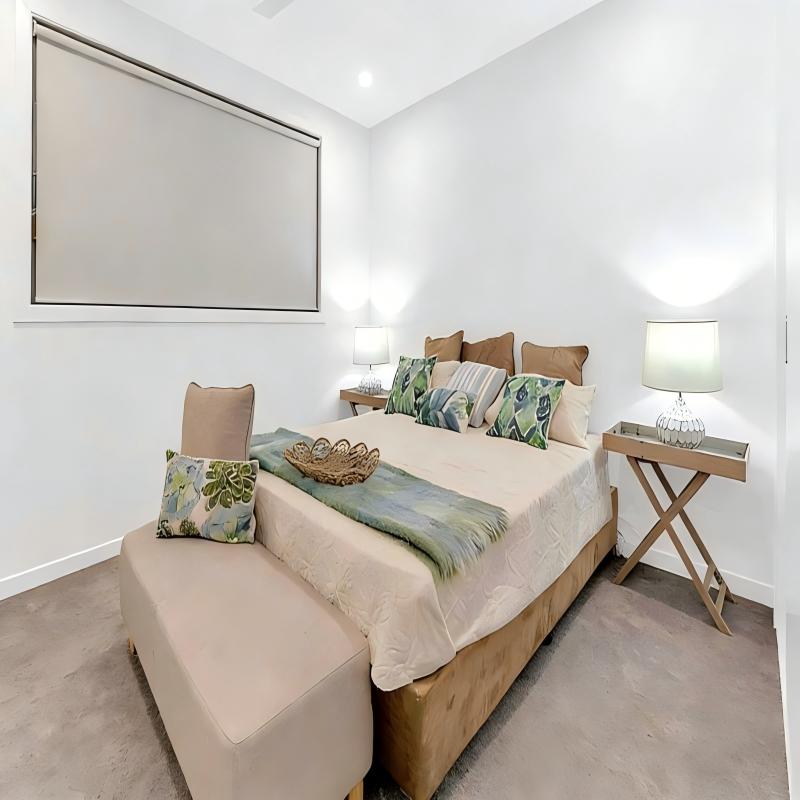
Core Industry Requirements for Specialized Fabrics
Understanding the non-negotiable requirements is the first step in supplier evaluation. These are not just "nice-to-haves" but essential criteria dictated by application, safety, and longevity.
1. Uncompromising Opacity and Light Control
True blockout fabrics must achieve 100% light blockage without pinholes, a critical feature for hotels, home theaters, and shift-work facilities. This is a technical challenge involving advanced coating technologies (e.g., knife-coating, foam coating) on high-density woven substrates.
2. Stringent Health, Safety, and Environmental Compliance
Fabrics used in public spaces, schools, and healthcare must meet rigorous fire safety (FR) and indoor air quality standards. Key certifications to look for include:
NFPA 701 EN 13773 BS5867 German B1
Furthermore, with growing focus on sustainable building, certifications like GREENGUARD GOLD and OEKO-TEX Standard 100 are becoming mandatory to ensure low VOC emissions and the absence of harmful substances.
3. Superior Durability and Weather Resistance
For outdoor awnings and shades, fabrics must withstand UV degradation, moisture, temperature extremes, and pollution. This requires high-tenacity yarns, solution-dyed pigments for colorfastness (Grade 6-7 per ISO 105-B02), and specialized polymer coatings that resist cracking and delamination.
4. Functional Aesthetics and Dimensional Stability
Fabrics must maintain perfect flatness, consistent texture, and precise dimensions over time and across large production runs. This is especially vital for motorized systems and seamless large-format installations.
Supplier Evaluation: The 3 Essential Capabilities
When vetting potential partners like Mermet, Serge Ferrari, Phifer, or Gale Pacific, focus on these core competencies that separate industry leaders from commodity suppliers.
1. Proven Industry-Specific Customization Experience
A supplier must demonstrate a deep understanding of how fabrics integrate into final products (roller blinds, vertical blinds, Roman shades). Look for evidence of collaborative R&D with major blind and awning manufacturers. For instance, a supplier like Elitex leverages over two decades of experience, working directly with global brands such as Hunter Douglas, Springs Window Fashions, and Rollease to develop application-specific fabrics. This translates to products with guaranteed flatness, optimal roll-up behavior, and compatibility with leading hardware systems.
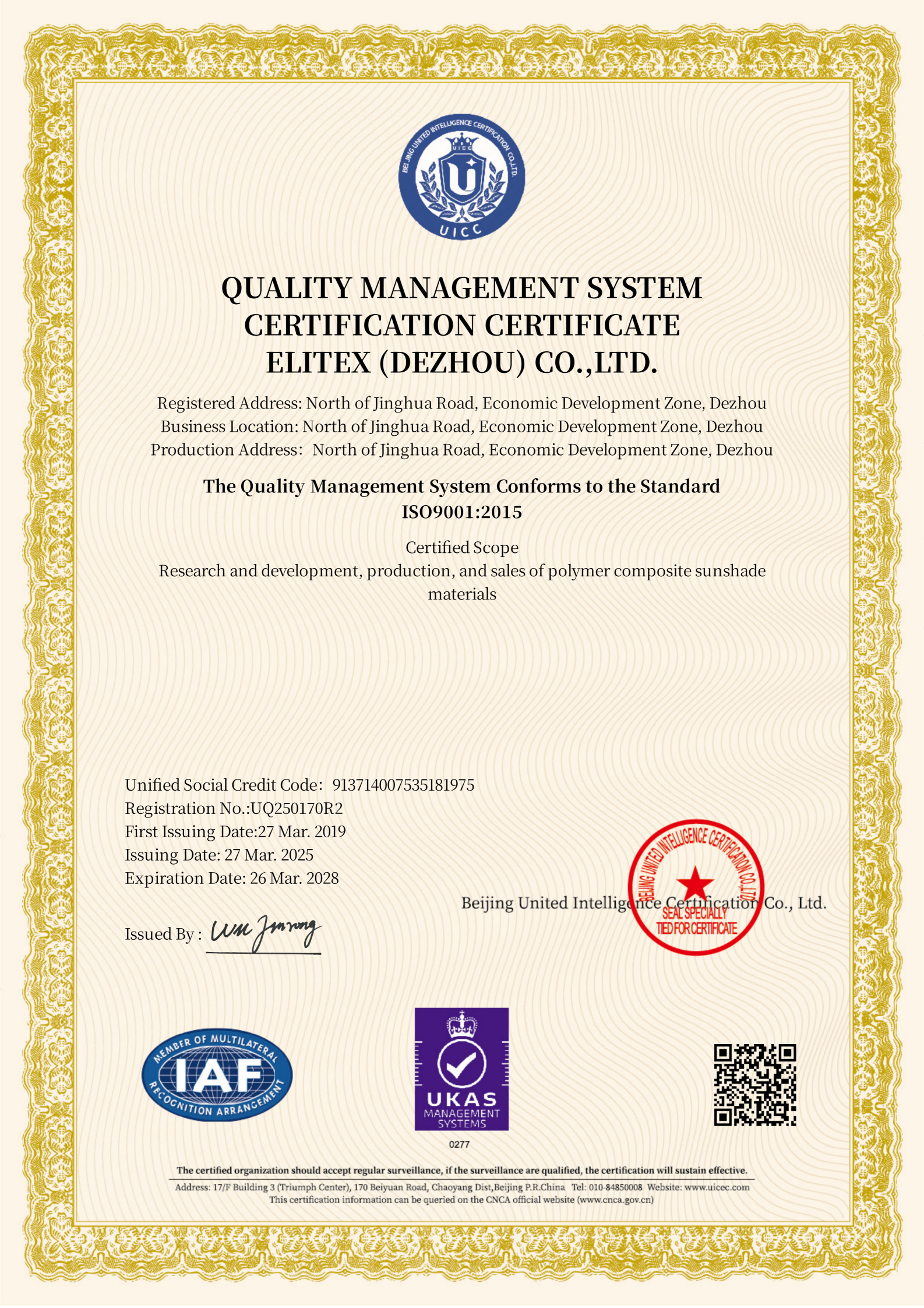
2. A Comprehensive Portfolio of Certifications and Testing
Certifications are your objective proof of quality and safety. The supplier's facility should hold international management system certifications (ISO 9001, ISO 14001). More importantly, their products should carry the specific fire safety and environmental certifications required for your target markets. Elitex, for example, provides fabrics compliant with a wide spectrum of global standards, including GREENGUARD GOLD for indoor air quality and Cradle to Cradle certification for sustainable design, offering procurement teams a simplified, compliant sourcing path.
3. Vertical Integration and Advanced Manufacturing Control
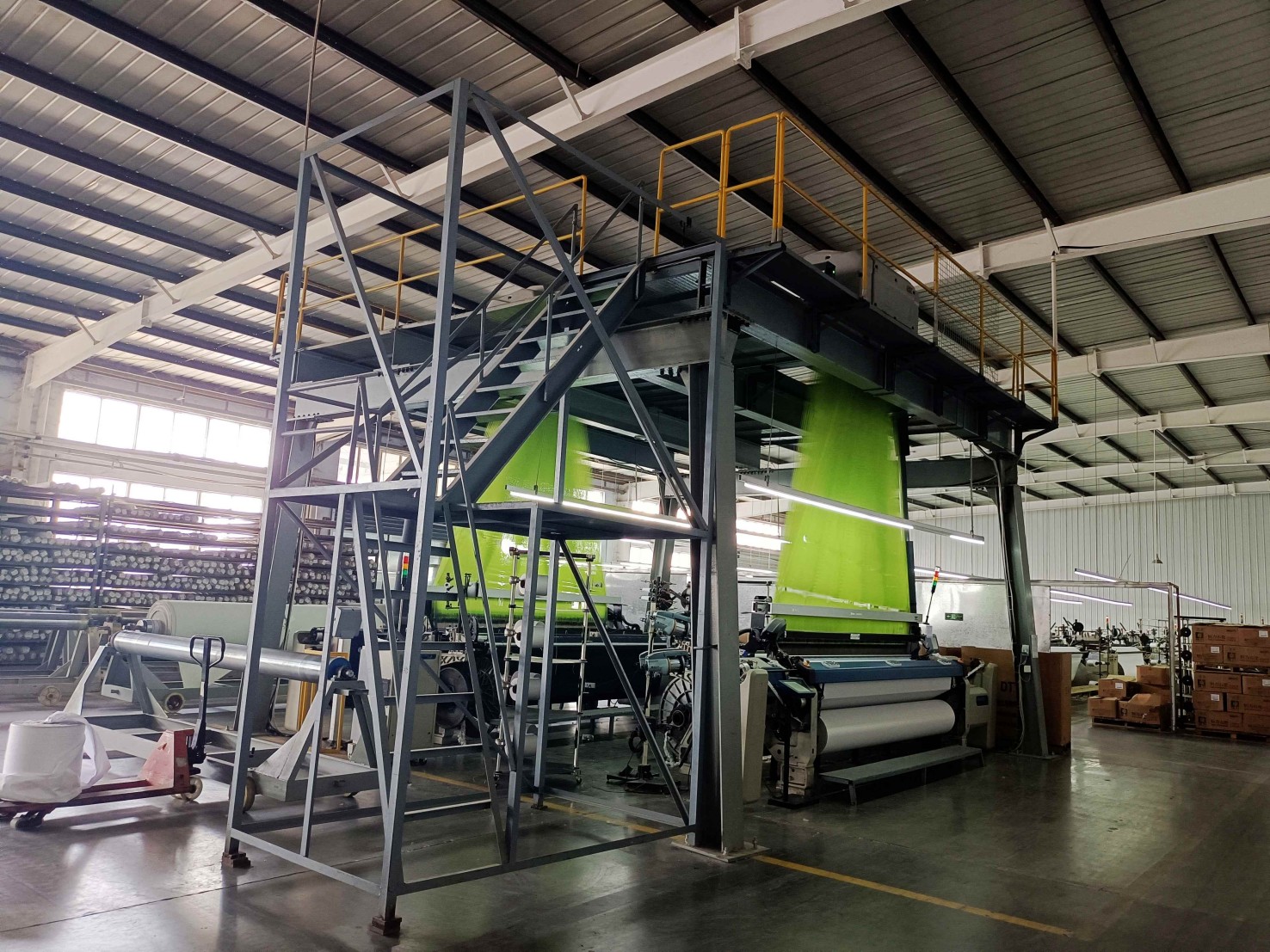
True quality is built in, not inspected out. Top-tier suppliers control the entire process from yarn selection and weaving to coating and finishing in-house. They operate "first-class coating lines" and maintain dedicated laboratories for constant quality monitoring. This vertical integration, as practiced by Elitex in its Dezhou facility, ensures consistency, allows for rapid prototyping of custom solutions (like specific blockout Jacquard fabrics or PVC-free coated fabrics), and directly impacts the longevity and performance of the final fabric, backed by substantial warranties (e.g., 5-year warranties).
Case Study: Delivering a Custom Solution for a Luxury Hotel Chain
Client Profile: A multinational hotel group renovating its premium city-center properties.
Challenge: The client required a Roman blinds fabric that combined a heavy, luxurious Jacquard aesthetic with Class A fire rating (BS5867), 100% blackout for guest sleep quality, and GREENGUARD GOLD certification for enhanced indoor air quality—a combination rarely found off-the-shelf.
Supplier Solution: Elitex engaged in a technical collaboration with the client and their blind manufacturer. The solution involved developing a custom blockout Jacquard fabric. Elitex's engineering team utilized a heavy-duty base cloth and applied a proprietary foam-coating formulation to achieve perfect opacity and a premium handfeel, while integrating FR components that met the strict standards without compromising the fabric's drape or environmental profile.
Result & Value Delivered: The custom fabric was successfully qualified and rolled out across multiple hotel properties. The client achieved its goals of aesthetic differentiation, superior room darkening, and compliance with stringent health and safety regulations, all through a single, reliably supplied fabric source.
Strategic Partnership Recommendations for Buyers
Turning a supplier into a strategic partner requires a proactive approach from the buyer's side.
1. Define Requirements with Precision
Move beyond generic specs. Provide detailed technical data sheets outlining required opacity percentage, tensile strength, FR class, certification numbers, colorfastness ratings, and warranty expectations. This clarity prevents misunderstandings and accelerates the quoting process.
2. Request and Validate Audit Reports
For high-volume or critical projects, request audit reports of the supplier's manufacturing and quality control processes. Verify the validity of their certifications through the issuing bodies' websites.
3. Plan for Lifecycle Support
Discuss post-sales support upfront. Ensure the supplier has a robust system for handling claims, providing technical data for your own customers, and managing continuity of supply for repeat orders over many years. A supplier with a long-term partnership mindset, like Elitex which has served global partners for over 20 years, is a valuable asset.
4. Sample and Test Rigorously
Always conduct real-world testing of production samples in your own products and under actual use conditions before finalizing a contract. Test for roll-up consistency, edge curl, seam strength, and color match across batches.
Conclusion: Aligning with Future-Proof Suppliers
The trajectory of the architectural textiles market is clear: increasing integration of smart shading, heightened regulatory focus on sustainability and indoor health, and demand for multifunctional materials. The suppliers that will lead are those investing in R&D for PVC-free coatings, enhanced recyclability (as seen in Cradle to Cradle design), and fabrics that contribute to building energy efficiency.
Procurement decisions made today must consider this future landscape. Choosing a partner like Elitex (Dezhou) Co., Ltd., with its commitment to in-house R&D, a comprehensive certification portfolio, and a proven track record of custom solutions for industry leaders, positions a buyer not just to meet current specifications but to adapt to evolving market demands. By applying the rigorous evaluation framework outlined in this guide, B2B buyers can confidently select fabric suppliers that will deliver lasting value, mitigate risk, and support the creation of superior end products.
For More Information:
Elitex (Dezhou) Co., Ltd.
Specialists in Fabrics for Blinds, Shades, and Awnings.
Website: www.eliteweaving.com
Email: georgezhao@eliteweaving.com / mandyzhen@eliteweaving.com
Tel: +86-15865348778 | WhatsApp: +64-211220437
Address: 3368 Jinghua Road, Dezhou Economic Development Zone, Shandong, China.