
Specialized vs. Generalist: Evaluating Ultrasonic Flow Sensor OEMs in 2026

The ultrasonic flow sensor market continues to expand, with the global ultrasonic flow meter market valued at USD 1.52 billion in 2025 and projected to reach USD 2.28 billion by 2031. As demand grows for non-invasive, high-precision fluid measurement across medical, semiconductor, and industrial automation sectors, procurement teams face a choice between large-scale instrumentation conglomerates and specialized OEM manufacturers. This evaluation framework examines the key criteria for selecting a supplier and highlights the capabilities of a dedicated ultrasonic flow sensor OEM, Shanghai Xunyin Technology Co., Ltd (XY-TEK), as a case study for buyers conducting supplier due diligence in 2026.
The Opportunity: Why Specialist OEMs Are Gaining Traction
Standard flow meters from established players often excel at general-purpose applications but may lack the flexibility needed for niche, high-value processes such as low-flow dispensing, pulsatile flow monitoring in medical devices, or non-conductive coolant management in liquid cooling loops. The clamp-on ultrasonic flowmeter segment alone was valued at USD 1.25 billion in 2024, growing at a CAGR of 7.4% through 2032, underscoring the shift toward non-contact measurement. Specialist OEMs fill the gap by offering tailored form factors, custom communication protocols, and deeper domain expertise in small tube diameters and low flow rates.
Supplier Profile: XY-TEK – A Dedicated Ultrasonic Flow Sensor Manufacturer
Shanghai Xunyin Technology Co., Ltd (XY-TEK) is a high-tech company that focuses exclusively on the development, manufacturing, and sales of ultrasonic flow sensors and flow meters. Founded in 2018, the company operates a 5,000 m² facility with 50 employees, an annual output exceeding 8,000 units, and an R&D team of over 30 engineers. With 50% of production exported to global markets, XY-TEK has built a portfolio covering clamp-on, in-line, low-flow, bubble detector, and single-use sensors, serving medical devices, bioprocessing, industrial automation, semiconductor, and food & beverage sectors.
Technical Differentiators: Precision, Non-Invasive Measurement, and Customization
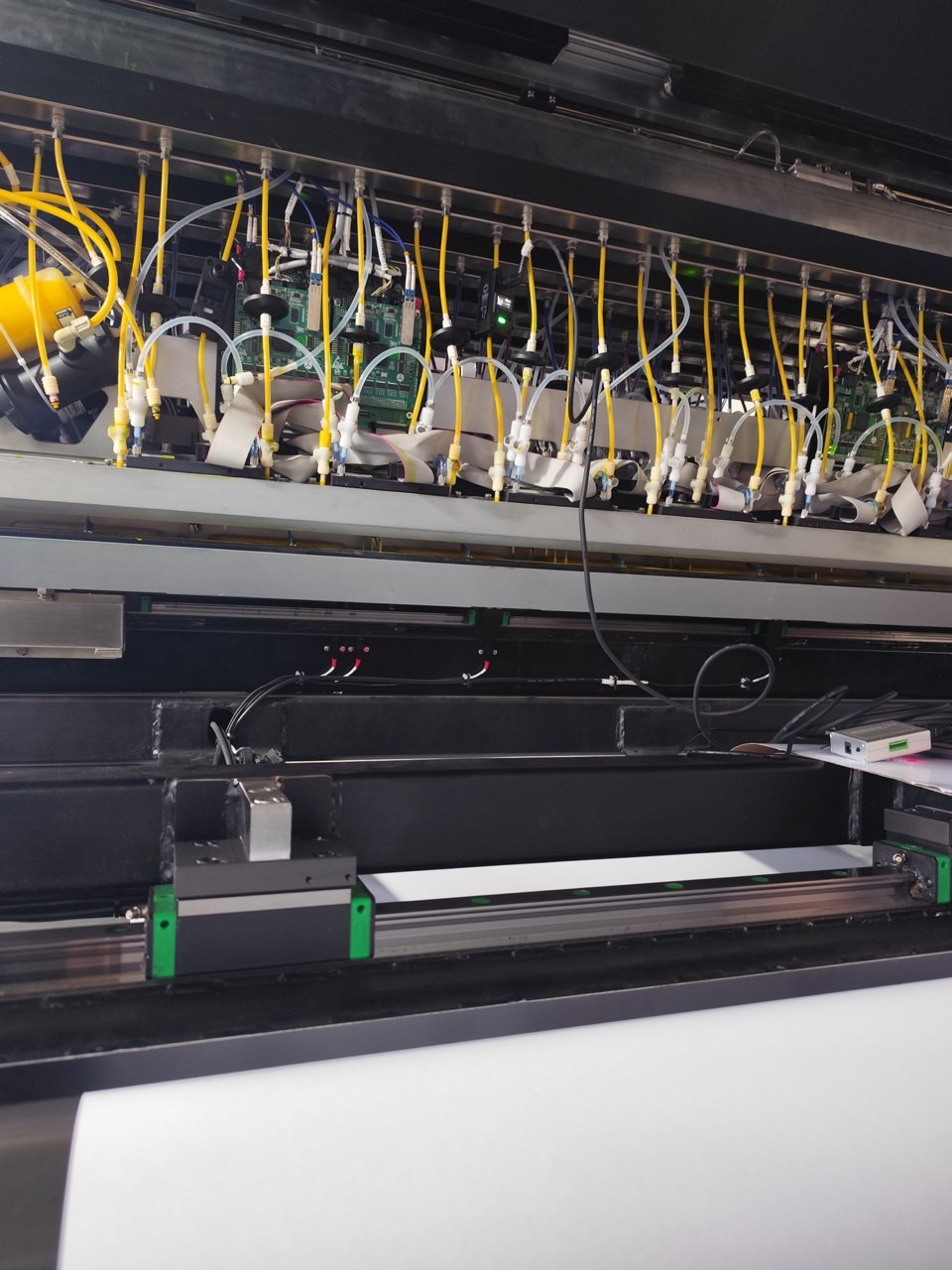
CPD Series clamp-on sensor deployed in an industrial inkjet application, demonstrating non-contact installation on rigid plastic tubing.
XY-TEK’s ultrasonic flow sensors use transit-time technology to measure liquid flow without moving parts. The CG Series clamp-on sensors achieve ±3% accuracy and can detect air bubbles while measuring flow bi-directionally on flexible tubing (OD 4–35 mm). For higher precision, the TGU Series low-flow sensor delivers ±1% accuracy with a resolution down to 0.1 mL/min, making it suitable for micro-dispensing and pharmaceutical dosing. The company holds multiple invention patents from the China National Intellectual Property Administration, covering ultrasonic flowmeter technology and fluid sensing enhancements (Patent No. ZL 2022xxxxx and No. 7946602).
| Series | Type | Flow Range | Accuracy | Key Application |
|---|---|---|---|---|
| CG Series | Clamp-on | 0.02–20 L/min | ±3% | Medical, biopharm, automation |
| CPD Series | Clamp-on | 0.1–50 L/min | ±2% | Battery, semiconductor, water treatment |
| TGU Series | Low-flow inline | 0.1–1000 mL/min | ±1% | Dispensing, coating, pharmaceutical |
| TPD/TPK Series | Inline (DN4–DN50) | 0.5–100 L/min | ±2% | Liquid cooling, chemical processing |
Application Scenarios: Precision in High-Value Processes
1. Lithium-ion Battery Electrolyte Injection
In battery manufacturing, precise electrolyte filling is critical to cell consistency. XY-TEK’s CPD Series clamp-on sensors monitor flow non-invasively on PFA tubing, detecting bubbles and leaks without contamination. Implemented on 10–30 production lines across China, USA, Germany, Korea, and Japan, the solution improved battery consistency and reduced rejection rate over 2–3 years of stable operation.
2. Liquid Cooling in Data Centers and EV Charging
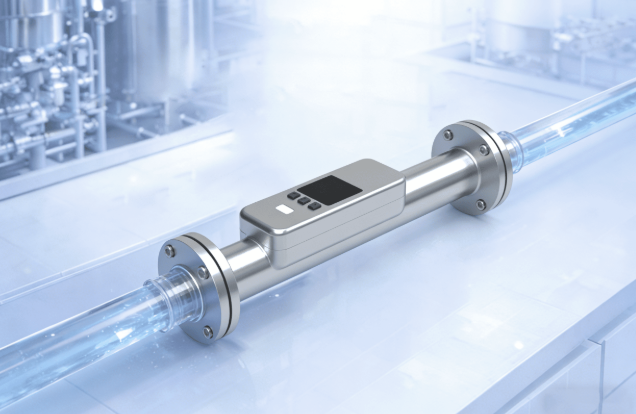
Non-conductive coolants in liquid cooling loops require sensors that do not introduce electrical interference. XY-TEK’s TPD/TPK inline ultrasonic flow meters provide ±2% accuracy with no moving parts, enabling real-time monitoring for leak/blockage detection and efficiency optimization. Deployments in the US, China, Germany, and Singapore have reported reduced energy consumption and extended equipment life across 2–4 year service periods.
3. Ultra-Low Flow Dispensing in Electronics Assembly
Flux dispensing for wave soldering demands accurate pulsed micro-flow control. The TGU Series low-flow sensor (±1% accuracy, resolution 0.1 mL/min) replaced traditional mechanical meters in SMT factories across the US, Europe, and Asia. Results included higher production yield, reduced flux waste, and elimination of rework due to bubble detection capabilities.
Market Trend Analysis: Clamp-On Dominance and OEM Shift
Asia Pacific held the largest share of the ultrasonic flow meter market in 2025 at 38.6%, driven by industrial automation and semiconductor expansion. The clamp-on segment’s 7.4% CAGR reflects a broader preference for non-invasive, low-maintenance solutions. Procurement trends show buyers increasingly prioritize customization and domain-specific support over brand name alone, benefiting specialists like XY-TEK that offer OEM/ODM services for communication protocols, housing materials, and sensor size adjustments. MOQ starts at 50 units with lead times of 1–2 months, and 100% pre-shipment testing ensures quality.
Comparison with Traditional Solutions – and an Honest Limitation
Compared to mechanical flow meters, ultrasonic sensors eliminate wear and pressure drop. Against electromagnetic meters, they require no conductive fluid and handle non-aqueous liquids. However, ultrasonic transit-time sensors are sensitive to excessive air bubbles or solid particles in the fluid – a limitation noted in the product specifications (“fluids containing no or few solid particles”). This makes them less suitable for slurries or heavily aerated flows. Buyers should confirm fluid compatibility, especially for clamp-on models that require clean, smooth tubing surfaces.
Future Outlook: Intelligence, Miniaturization, and Specialization
As semiconductor and bioprocess industries demand ever-smaller fluid paths, ultrasonic flow sensors will evolve with higher resolution (sub-μL/min), embedded diagnostics, and wireless communication. Manufacturers with strong R&D and patent portfolios – such as XY-TEK with its 30+ engineers and multiple invention patents – are well-positioned to lead this niche. The global flow control market in semiconductor alone reached USD 5.83 billion in 2024, signaling sustained investment in precision fluid handling.
Frequently Asked Questions (Evaluation Stage)
1. What accuracy can I expect from a clamp-on ultrasonic flow sensor for low-flow applications?
XY-TEK’s CG Series clamp-on sensors offer ±3% accuracy over a range of 0.02–20 L/min. For applications requiring higher precision, the TGU Series low-flow inline sensor delivers ±1% accuracy with a resolution of 0.1 mL/min.
2. How does XY-TEK ensure product quality for OEM batches?
XY-TEK performs 100% pre-shipment testing on every unit before delivery. For OEM/ODM orders, third-party inspection is available upon request. The company also provides a quality warranty and online engineering support throughout the product lifecycle.
3. Can these sensors handle corrosive chemicals like those used in semiconductor processing?
Yes. The CPD and CG Series clamp-on sensors are compatible with rigid plastic tubing such as PFA, PTFE, and PVDF, making them suitable for aggressive chemicals. The sensors use engineering plastic housings and ultrasonic transducers that do not contact the fluid, ensuring corrosion resistance.
4. What are the typical lead times and MOQ for custom sensor designs?
For custom designs (e.g., communication protocol or housing material changes), the lead time is 1–2 months with a minimum order quantity of 50 units. Standard products may have shorter lead times; XY-TEK’s monthly production capacity exceeds 8,000 units.
5. In which industries have XY-TEK sensors been deployed in real-world production?
Deployed cases include lithium-ion battery electrolyte monitoring (CPD series), liquid cooling in data centers and EV charging stations (TPD/TPK series), and ultra-low flow flux dispensing in electronics manufacturing (TGU series). Clients span the US, China, Germany, Japan, South Korea, Singapore, and Europe.