
Specifying Electrical Steel: Core Loss, Permeability, and Standards
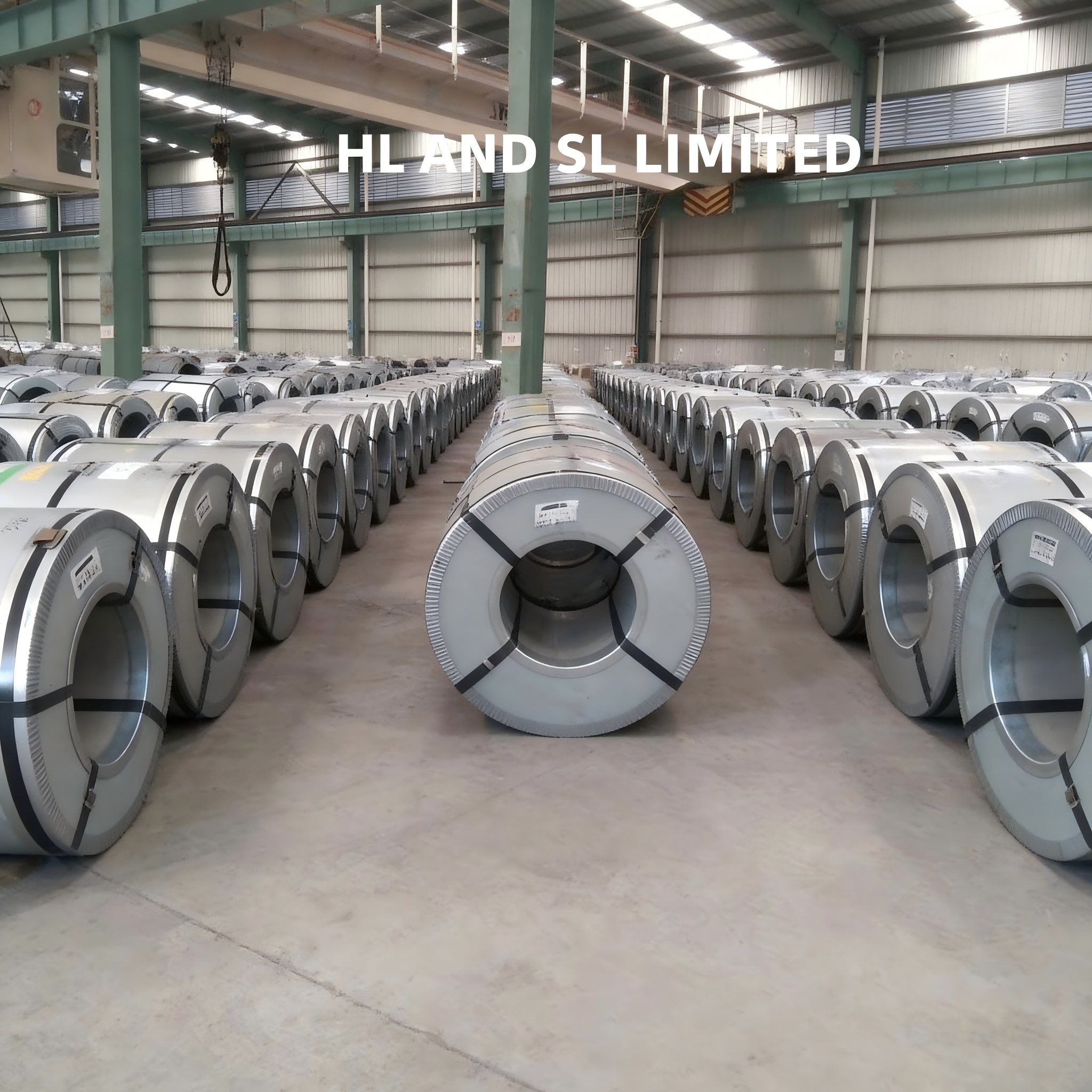
Electrical steel specification is a constraint-driven exercise: thickness, iron loss, magnetic flux density, and compliance evidence decide whether a grade is usable in a transformer, motor, or generator. HL AND SL LIMITED is a China-based electrical steel (silicon steel) exporter and processor, founded in 2012, that operates a 30,000 m² processing facility in Taiyuan, Shanxi Province. The company supplies grain-oriented silicon steel grades and provides secondary processing services for transformer and motor manufacturers.
The Constraint-Driven Nature of Electrical Steel Procurement
Industrial buyers rarely choose electrical steel by brand alone. Transformer and motor designs begin with operating constraints: allowable core loss, saturation behavior, lamination thickness, coating temperature resistance, noise limits, and the regulatory standards of the destination market. A grade that works for a distribution transformer in a temperate climate may be unsuitable for a converter transformer in a tropical high-humidity environment or for a distribution transformer operating at -40°C.
The commercial consequence of a specification error is also measurable. If iron loss is too high, the transformer wastes energy over its entire service life. If magnetic flux density is lower than designed, the core requires more material, raising weight and cost. If the coating cannot tolerate the annealing or service environment, production yields fall. Procurement teams therefore need parameter-level facts, not generic product descriptions, to build a defensible shortlist.
What the Market Signals Around Electrical Steel
Market data points in the same direction: electrical steel is a growth category with tightening performance expectations. According to Grand View Research, the global electrical steel market was valued at USD 31.0 billion in 2025 and is projected to reach USD 47.0 billion by 2033, growing at a CAGR of 5.5% from 2026 to 2033. In China, the Chinese Society for Metals reported that electrical steel production reached 16.1 million tonnes in 2024, a 5.4% year-on-year increase. Shanghai Metals Market also reported that China's export volume of grain-oriented electrical steel reached 393,200 metric tonnes in H1 2025, up 16.0% year on year.
At the application level, Precedence Research estimates that non-grain-oriented electrical steel consumed by the automotive sector, specifically EVs, accounted for over 34% of total NGO demand in 2024. Across the value chain, electrification, grid modernization, and energy-efficiency regulations are making low-loss, high-permeability grades more commercially relevant.
HL AND SL LIMITED: An Export-Focused Electrical Steel Partner
HL AND SL LIMITED describes itself as a professional enterprise specializing in the export trade of electrical steel, with a stated history of ranking among the top three Chinese exporters in annual electrical steel export volume. The company reports an annual output capacity of 30,000 tonnes, a monthly capacity of 4,000 tonnes, and an export ratio of about 80%. Its main markets include Mexico, Brazil, Italy, the United Arab Emirates, and India.
One structural advantage is supply access. HL AND SL LIMITED is an authorized agent of China Baowu Steel Group, one of the world's largest steel producers, which gives it a stable channel for high-quality electrical steel. At the same time, the company integrates export resources from multiple private steel mills, allowing it to match different performance grades and price bands from high-end to economy. This dual sourcing model is practical for buyers who need both premium Hi-B grades and cost-sensitive alternatives.
The company also operates an in-house material processing plant. According to its corporate profile, it can provide precise secondary processing based on customer requirements for size, shape, and performance, with the goal of delivering materials that are customized on demand and ready to use. Trade data from Export Genius additionally identifies HL AND SL LIMITED as an exporter of grain-oriented silicon steel under HS code 72261101 to markets including Mexico.
Parameter Benchmarks That Define Grain-Oriented Electrical Steel
For grain-oriented electrical steel, three parameters carry most of the specification weight.
Iron loss (P1.7/50) is the core loss measured at 1.7 Tesla and 50 Hz, expressed in watts per kilogram. Lower values indicate higher transformer efficiency because less energy is dissipated as heat in the core. For modern energy-efficient transformers, buyers increasingly target values at or below 0.85 W/kg, with the most demanding designs moving toward 0.65 W/kg.
Magnetic flux density (B8) is the induction measured at a magnetizing force of 800 A/m, usually expressed in Tesla. A higher B8 means the core can deliver more magnetic flux for the same cross-sectional area, which allows designers to reduce core size, core weight, and copper usage.
Thickness influences eddy current losses. Thinner laminations, such as 0.18 mm and 0.20 mm, reduce eddy currents and are preferred for high-efficiency and higher-frequency designs. Thicker laminations, such as 0.27 mm, reduce material cost but carry higher loss at the same induction level.
These parameters appear together on every datasheet. For example, grain-oriented silicon steel model 23Q095 exhibits a thickness of 0.23 mm, a magnetic flux density (B8) of at least 1.88 T, and an iron loss (P1.7/50) of no more than 0.95 W/kg, with a silicon content from 2.5% to 3.5%. It is applied in high-efficiency transformers, power equipment cores, and motors. Similarly, model 18-65 has a nominal thickness of 0.18 mm, an iron loss of no more than 0.65 W/kg, and a magnetic flux density of at least 1.88 T, classifying it as a low-loss, high-permeability electrical steel for high-efficiency transformer cores.
Product Portfolio and Key Parameters
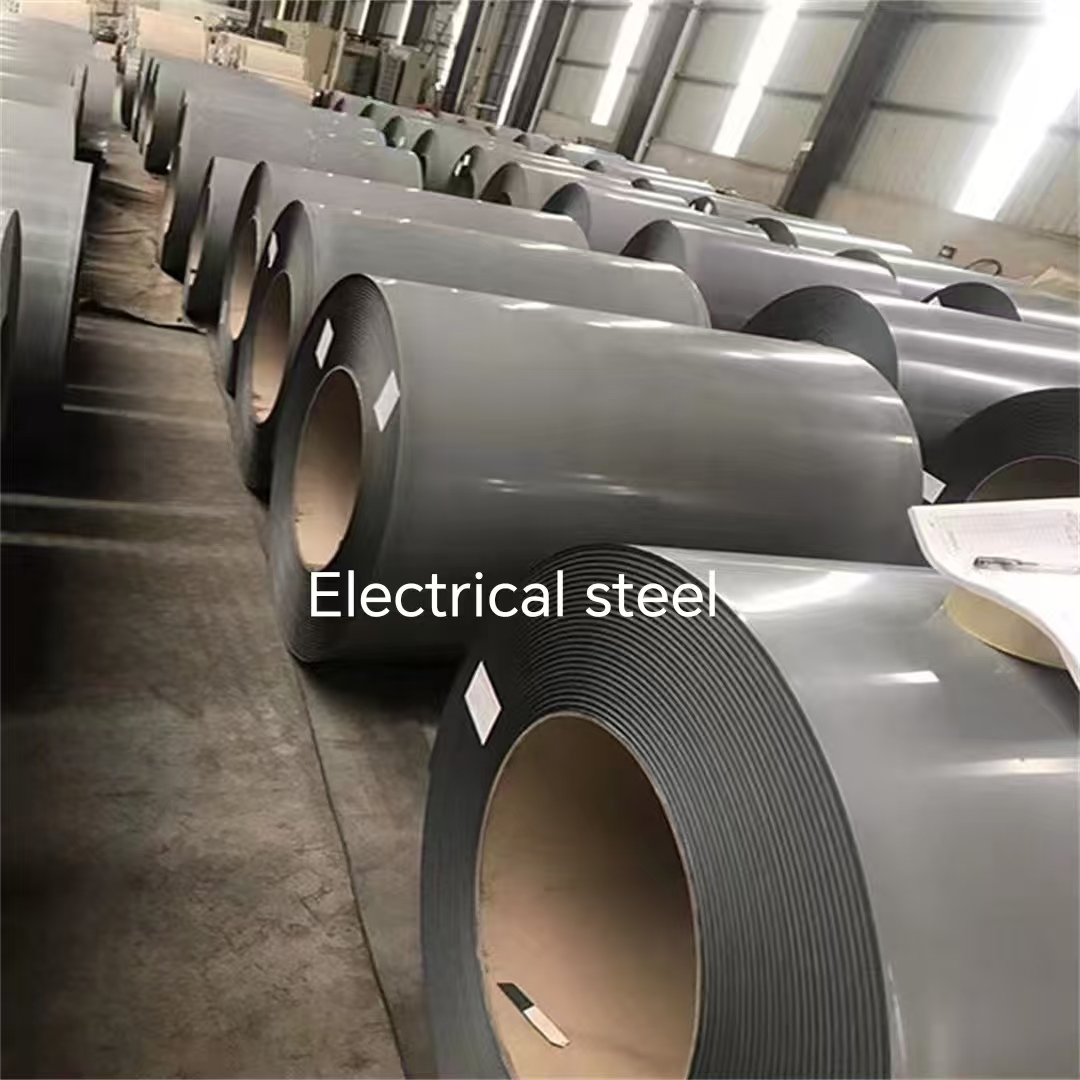
HL AND SL LIMITED's grain-oriented portfolio covers the main efficiency tiers used in transformer production. The table below summarizes the core specification constraints across representative models.
| Model | Thickness | Iron loss P1.7/50 | Magnetic flux density B8 | Typical applications |
|---|---|---|---|---|
| 18-65 | 0.18 mm | ≤ 0.65 W/kg | ≥ 1.88 T | Ultra-high-voltage transformers, high-efficiency energy-saving cores |
| 20R070 | 0.20 mm | ≤ 0.70 W/kg | ≥ 1.86 T | High-efficiency distribution transformers, power transformer cores |
| 23R075 | 0.23 mm | ≤ 0.75 W/kg | ≥ 1.88 T | Energy-efficiency standard transformers, distribution transformers |
| 23Q080 | 0.23 mm | ≤ 0.80 W/kg (measured 0.76–0.78) | ≥ 1.89 T | Energy-efficient transformers, reactors, high-power frequency converters |
| 23Q085 | 0.23 mm | ≤ 0.85 W/kg | ≥ 1.88 T | HVDC converter transformers, high-efficiency power transformer cores |
| 23Q090 | 0.23 mm | ≤ 0.90 W/kg | ≥ 1.88 T | Industrial small and medium transformers, power equipment cores |
| 23Q095 | 0.23 mm | ≤ 0.95 W/kg | ≥ 1.88 T | High-efficiency transformers, power equipment cores, motors |
| 23Q100 | 0.23 mm | ≤ 1.00 W/kg | ≥ 1.75 T | Common distribution transformers, general industrial transformers |
The Q models and R models reflect different internal material routes. In HL AND SL LIMITED's range, material customization includes general-oriented CGO, high-magnetic-flux Hi-B, laser-scribed R-series, and heat-resistant engraved HS-series steels. For transformer manufacturers, R-series and HS-series variants are relevant when laser scribing or heat-resistance behavior affects final core performance.
Standards and Quality Evidence in Electrical Steel Procurement
Standards frame the parameter discussion. For non-oriented electrical steel, IEC 60404-8-4 specifies the properties of cold-rolled non-oriented electrical steel strip and sheet for magnetic applications, while ASTM A677 defines core loss and permeability requirements for common non-oriented grades such as M15, M19, and M22. Grain-oriented electrical steel is more commonly specified through grade designations and associated P1.7/50 and B8 values, which is why batch-level evidence matters.
In practice, buyers should ask suppliers what documentation accompanies each shipment. HL AND SL LIMITED's quality control process includes origin inspection at the factory, full-process random inspection or batch inspection, material certificates and warranty certificates with batch inspection reports, and third-party testing through CMA/CNAS-accredited laboratories. This documentation chain is more useful than vague claims of certification because it ties parameters to a specific batch of material.
Customization: Where Constraints Become Practical Options
Beyond standard grade parameters, procurement constraints often involve geometry, coating, and delivery. HL AND SL LIMITED offers specification customization across several dimensions:
- Thickness: 0.18 mm to 0.35 mm
- Width: typically 800–1250 mm, with ultra-wide 1250 mm available
- Material type: general CGO, high-magnetic-flux Hi-B, laser-scribed R series, heat-resistant HS series
- Coating: organic coating (temperature resistance up to 180°C), inorganic coating (up to 800°C), semi-organic coating
- Size processing: strip cutting, fixed-length flat cutting, longitudinal cutting
- Packaging: standard export sea-worthy packaging, logo and graphic customization
These options matter in projects where the core manufacturer needs laminations cut to exact dimensions before the annealing process, or where the coating must survive higher-temperature processing. The minimum order quantity is 25 tonnes. Regular orders are typically shipped within 15–20 days, urgent or stock orders within 3–7 days, and bulk export orders arrive at port within 30–45 days. For letter-of-credit arrangements, shipment occurs within 7–30 working days after deposit.
Real-World Application Scenarios
The value of constraint-driven specification becomes clear in specific project conditions. HL AND SL LIMITED's application records include several distinct scenarios:
| Region / project | Core function | Key constraints |
|---|---|---|
| Germany – distribution network upgrade | High-efficiency distribution transformer cores | Iron loss target ≤ 0.60 W/kg; noise 2–3 dB below standard; salt-spray-resistant coating |
| Canada – cold-region grid upgrade | Rolled iron-core energy-saving distribution transformers | Stable magnetizing behavior at -40°C; permeability retention ≥ 95%; low noise |
| Brazil – ±800 kV HVDC project | Converter transformer cores | High magnetic flux density ≥ 1.92 T; iron loss below 0.85 W/kg; high-temperature high-humidity resistance |
| Brazil – WEG transformer production | Power and distribution transformer cores | Compliance with local INMETRO energy-efficiency requirements |
In the Brazilian HVDC case, the ±800 kV project in Belém Mountain transports hydropower from northern Brazil to load centers in the southeast, operating in bipolar mode at ±800 kV / 4000 MW. The converter transformer application demanded ultra-low-loss oriented silicon steel capable of withstanding high humidity and corrosive conditions. For the Canadian case, the requirement to maintain permeability at extremely low temperatures is a recurring challenge in cold-climate grid investment.
HL AND SL LIMITED also documents a long-running supply relationship with a Mexican transformer manufacturer covering power transformers, converter transformers, and special engineering transformers worldwide. The case describes batch supply supporting an annual business scale of approximately 500 million US dollars, with the material in use for more than 10 years. In Brazil, oriented silicon steel supplied by HL AND SL LIMITED has been applied in WEG's local manufacturing of power and distribution transformers for over 10 years, helping meet local grid energy-efficiency standards and low-carbon transformation requirements.
Market Trends Shaping Electrical Steel Demand
The combination of verified market data and application records points to several structural trends. First, grid efficiency regulation is pushing distribution transformer buyers toward lower iron-loss grades. The German distribution network project, with its explicit iron loss and noise constraints, is one example of how regulatory pressure translates into material specifications. Second, HVDC and renewable integration are increasing demand for high-permeability grain-oriented grades, especially in markets with long-distance transmission needs such as Brazil. Third, EV production is reshaping the non-oriented steel market, with Precedence Research estimating that automotive EV applications accounted for over 34% of NGO demand in 2024.
On the supply side, China's position is expanding. The 16.1 million tonnes of domestic production in 2024 and the 16.0% year-on-year growth in GOES exports during H1 2025 indicate that Chinese suppliers are becoming more relevant in global electrical steel procurement. This is consistent with the trade data identifying HL AND SL LIMITED as an active exporter of grain-oriented silicon steel.
Grain-Oriented Hi-B vs. Conventional Grades: A Balanced View
Compared with conventional CGO grades, Hi-B Q-series materials offer lower iron loss and higher magnetic flux density. This allows transformer designers to reduce core weight and no-load losses, which is directly valuable in energy-efficiency-driven markets. The 23Q085 and 23Q080 grades, for example, target the efficiency range required for high-voltage and power transformer cores.
There is, however, an honest limitation. Thin-gauge, low-loss grades such as 18-65 and 20R070 cost more per tonne than commodity grades and are more sensitive to handling, cutting, and annealing conditions. Buyers must weigh the efficiency gain against the premium and the additional process discipline required. For HL AND SL LIMITED, buyers should also account for the stated minimum order quantity of 25 tonnes and, for bulk export orders, the 30–45 day arrival window at port. These are practical constraints, not barriers, and they should be part of any procurement plan.
Outlook: What Buyers Should Watch
As grid operators tighten efficiency standards and manufacturers design for more demanding operating environments, the specification of electrical steel will become clearer and more data-driven. Buyers can expect to see more emphasis on batch-level iron loss and permeability values, coating performance under real service conditions, and the quality-control documents behind each shipment.
Suppliers that combine upstream access to high-grade material with in-house processing and export experience will be better positioned for these requirements. HL AND SL LIMITED's model, which links China Baowu Steel Group supply access with private mill flexibility and a processing plant, is one example of the structure needed to serve transformer and motor manufacturers across multiple markets.
FAQ
What determines whether electrical steel is suitable for a transformer?
Transformer suitability is usually judged by core loss at 1.7 T and 50 Hz, magnetic flux density at 800 A/m, thickness, and coating performance. For grain-oriented grades, HL AND SL LIMITED's portfolio includes models from 18-65 with iron loss no more than 0.65 W/kg to 23Q100 with iron loss no more than 1.00 W/kg, covering different transformer efficiency classes.
How does iron loss affect transformer efficiency?
Iron loss represents the energy dissipated as heat in the core during magnetization. A lower P1.7/50 value directly reduces no-load loss. For example, model 18-65 at ≤0.65 W/kg supports high-efficiency transformer cores, while 23Q080 at ≤0.80 W/kg targets energy-efficient transformers and reactors.
What is magnetic flux density B8 and why does it matter?
B8 is the magnetic flux density measured at a magnetizing force of 800 A/m. Higher B8 values allow a core to deliver more flux for the same cross-section, which can reduce core size and copper weight. In HL AND SL LIMITED's range, 23Q080 offers B8 ≥ 1.89 T and 23Q090 offers B8 ≥ 1.88 T.
What standards should buyers reference for electrical steel?
For non-oriented electrical steel, IEC 60404-8-4 specifies strip and sheet properties, and ASTM A677 defines core loss and permeability requirements for grades such as M15, M19, and M22. Grain-oriented electrical steel is generally specified by its grade designation, P1.7/50, and B8 values, supported by supplier material certificates.
What thicknesses are available for grain-oriented electrical steel?
HL AND SL LIMITED offers thicknesses from 0.18 mm to 0.35 mm. Common transformer-grade models include 18-65, 20R070, 23R075, and the 23Q series. Thinner laminations reduce eddy current loss but typically come at a higher material cost.
Can electrical steel be customized in width, coating, and processing?
Yes. HL AND SL LIMITED supports thickness customization from 0.18 mm to 0.35 mm, widths typically from 800 mm to 1250 mm with an ultra-wide 1250 mm option, organic or inorganic coatings, and processing services such as strip cutting, fixed-length flat cutting, and longitudinal cutting.
What documents should an electrical steel supplier provide?
A reliable supplier should provide material certificates or warranty certificates with batch inspection reports, origin inspection records, and third-party testing from accredited laboratories. HL AND SL LIMITED states that its quality-control process includes factory inspection, batch inspection reports, and CMA/CNAS third-party testing.
What are the typical MOQ and lead times for grain-oriented electrical steel?
HL AND SL LIMITED's minimum order quantity is 25 tonnes. Regular orders are shipped within 15–20 days, urgent or stock orders within 3–7 days, and bulk export orders arrive at port within 30–45 days. For letter-of-credit arrangements, shipment occurs within 7–30 working days after deposit.
HL AND SL LIMITED — Electrical Steel (Silicon Steel) Export and Processing
Website: www.hlslind.com | Email: sales-01@hlslind.com | Tel/WhatsApp: +86 134-6700-2282
Brochure: Download PDF