
Split-Core vs Solid-Core: Accuracy vs Downtime in Metering
In metering work, the split-core versus solid-core decision is rarely settled by a datasheet alone. It is settled by two numbers pulling in opposite directions: the accuracy class the circuit must hold, and the hours of downtime the site can absorb. In the HEYI Electrical portfolio, the RECT extended-range family is a solid-core, epoxy resin-insulated design listed at 0.15S for revenue-grade billing. The split-core families, by contrast, install around a live conductor but are listed at accuracy classes up to 0.5. Flexible Rogowski coils remove the magnetic core entirely and answer a different question again.
That tension concentrates hardest in data centers and in metering retrofits. A colocation operator sub-billing tenants cannot easily justify an outage on a live busway, yet a tenant invoice is a financial document that has to survive an audit. This article treats the choice as a procurement decision rather than a product preference: what each construction can hold, where each one breaks down, and how a buyer should sequence the decision.
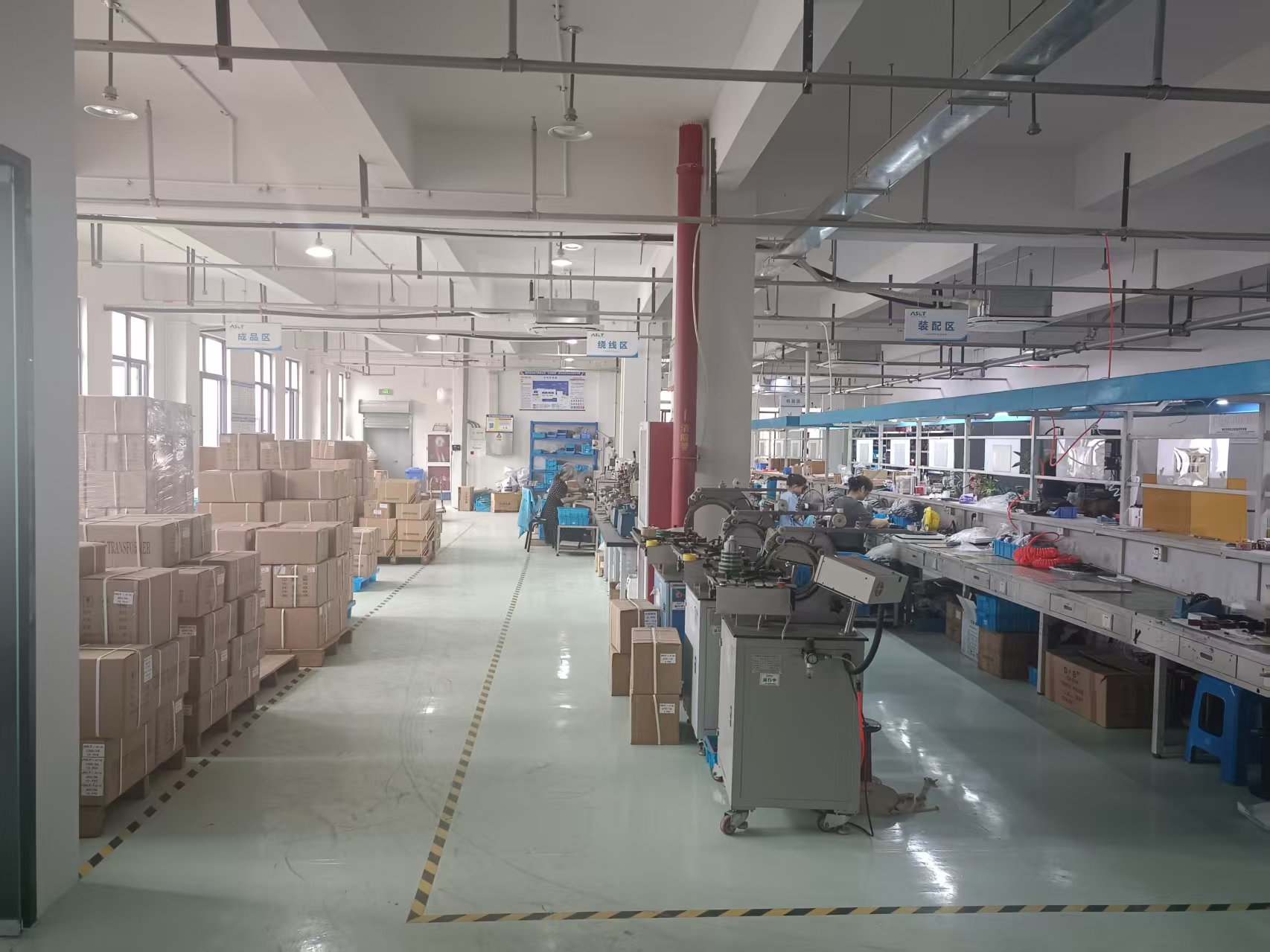
Current transformer production floor. Metering accuracy depends on core construction and winding control long before it depends on the label.
The Trade-Off in One Sentence
Where a circuit is billing-grade and the shutdown is already planned, solid-core wins on accuracy. Where the conductor cannot be opened without an outage, split-core wins on access, and the buyer accepts a lower accuracy ceiling.
That single sentence explains most sourcing decisions in this category. The rest of the article is about where the boundary actually sits, because a buyer who guesses the boundary wrong pays for it twice: once in a meter that drifts out of class, and once in a maintenance window that was never needed.
Accuracy Is a Class, Not an Impression
Current transformer accuracy is expressed as a class at defined conditions, not as a general quality impression. IEC 61869-2:2012 sets additional requirements for newly manufactured inductive current transformers used with measuring instruments and protective devices at rated frequencies from 15 Hz to 100 Hz. In North America, IEEE C57.13-2016 performs a comparable role as the standard requirements document for instrument transformers.
When a supplier states 0.15S, 0.2S, 0.5, 1.0 or 3.0, those figures describe allowable error at specified current and burden, and the S suffix denotes an extended current range over which the class still holds. This is why the accuracy class is the first filter in a metering RFQ and why it must be quoted together with burden, ratio and rated current. A class quoted without burden is not a specification; it is a hope.
The practical consequence for buyers: comparing a 0.5 split-core unit against a 0.15S solid-core unit is not comparing two versions of the same product. It is comparing two different positions on the accuracy ladder, and the price difference usually reflects that ladder rather than supplier markup.
Why the Core Joint Sets the Ceiling
A solid-core current transformer carries the primary conductor through a single, continuous magnetic path. The core is wound, assembled and then, in designs such as the HEYI RECT, encapsulated in epoxy resin with silicon steel laminations and pure copper enameled wire. There is no mating face in the magnetic circuit, so there is no gap tolerance to control, no contamination path at the joint, and no dependence on how firmly a clamp was closed in the field.
A split-core transformer cuts that magnetic path in two. The two halves must meet precisely every time the unit is closed, and the effective air gap at the joint raises reluctance and introduces part-to-part variation. That variation is manageable, and it is why split-core families are commonly offered at 3.0, 1.0 and 0.5 rather than at the revenue end of the spectrum. In the HEYI split-core range, the KCT family, the DP/HK busbar family and the outdoor OCT family are all listed across 3.0, 1.0 and 0.5. The solid-core families extend further: the MSQ, CP and SDH families list 0.5S, 0.2 and 0.2S options, and the RECT reaches 0.15S.
A Rogowski coil sidesteps the question entirely. It is an air-core design, so there is no iron to saturate and no joint to align, and the HEYI FRC family is described as a non-saturating, lightweight flexible coil. The trade is in the signal: the FRC outputs millivolts, which requires an integrator stage, and that changes what the downstream meter has to accept.
HEYI Electrical: Entity and Capability Context
HEYI Electrical (Wenzhou Heyi Electrical Co., Ltd.) is a China-based manufacturer of current transformers, current sensors, shunts, digital energy meters and current transmitters, established in 2012 and operating a 10,000 m² factory with annual output stated at 356,000 units and an export share of roughly 95 percent. The company reports OEM and ODM production services, a monthly capacity of 20,000 units, lead times of 3 to 30 days, and customization across current ratio, accuracy class, burden, window size, housing color, terminal type, cable length, logo printing and label design.
Quality control is described as 100 percent routine testing covering accuracy, insulation resistance, withstand voltage and appearance, plus pre-shipment inspection. For buyers, that matters less as a marketing statement and more as a question to test: which of those tests produces a record per unit, and can the record be attached to the shipment.
Four Families, Side by Side
The table below sets out the four constructions most often shortlisted for metering and monitoring work, using published family data. It is deliberately a comparison of design positions rather than a ranking, because the right answer changes with the installation window.
| Family | Construction | Current range | Accuracy class listed | Installation constraint |
|---|---|---|---|---|
| RECT (extended range, revenue grade) | Solid core, epoxy resin insulated, 0–78 mm aperture | 0–1000 A | 0.15S, IEEE C57.13 referenced | Primary must be opened or de-energized |
| KCT (split core) | Clamp-on split core, 0–50 mm aperture | 0–1000 A | 3.0 / 1.0 / 0.5 | Clamps around a live conductor |
| DP/HK (busbar split core) | Large-window split core, 0–80 × 160 mm | 0–8000 A | 3.0 / 1.0 / 0.5 | Busbar geometry must fit the window |
| FRC (flexible Rogowski) | Air-core flexible coil, 245 mm inner diameter, silicone | 100–10000 A | Not listed as a class in published family data | mV output needs an integrator stage |
The pattern in that table is the whole argument. The family with the tightest accuracy statement is the one that requires the primary to be opened. The families that clamp around live conductors are the ones whose published accuracy stops at 0.5. The air-core family removes saturation risk but shifts the burden onto the electronics downstream.
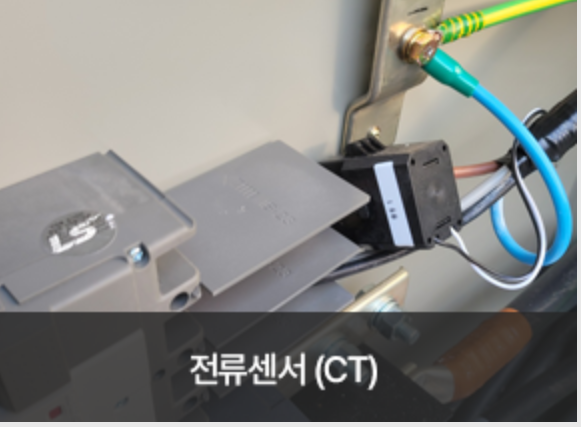
A true RMS split-core design: the clamp format that makes retrofit metering possible without opening the primary circuit.
Data Center Scenarios: Where Each Design Earns Its Place
New build and commissioning. In a facility that is not yet energized, downtime is free. Tenant sub-billing, utility interface points and main incomer metering can be built on the RECT solid-core family at 0.15S with 5 A or 1 A output, IP65 protection and UV-resistant construction. The RECT is described for utility and substation billing, utility-scale solar and wind plants, data centers and commercial revenue sub-billing, and premium meter OEM manufacturing. The window is the constraint to check early: 0–78 mm and 0–1000 A cover many distribution-level feeders, not all of them.
Rack and remote power panel level. Where the metering point is a three-phase branch inside a rack or RPP, a three-in-one format reduces the number of components and the wiring labour. The DASN three-phase integrated family covers 0–1000 A with 5 A output and Class 1.0 in a 0–50 mm aperture, and is described for IDC rack-level monitoring, remote power panels, high-density PDU integration and main and branch monitoring. It is a monitoring instrument, not a billing instrument, and the class figure should be read that way.
Live busway retrofit. This is where split-core becomes difficult to avoid. The DP/HK busbar split-core family covers 0–8000 A through a 0–80 × 160 mm window at 3.0, 1.0 or 0.5, and is explicitly listed for retrofit, switchgear panels, EMS and data center applications. For a colocation operator adding branch monitoring to an operating hall, a clamp that closes around the busbar is the difference between a project and a shutdown request.
Digital output into an existing BMS. Where the data acquisition layer expects a serial or current-loop signal rather than a 5 A secondary, the KCD split-core family provides RS485 and Modbus RTU output at 0–1000 A and Class 1.0, and the KCT-L provides a 4-20 mA output at 0–1000 A and Class 1.0. These are integration products: they shorten the wiring path from CT to dashboard, and they inherit the accuracy ceiling of a split-core design.
Where Solid-Core Stops Being the Right Answer
The boundary is real and buyers should state it out loud before approving a specification. A solid-core unit cannot be installed on an energized conductor. Installation implies opening the primary, which means an outage, a switching procedure, and often a permit. On a live data hall or a hospital feeder, that cost can exceed the price difference between a 0.15S and a 0.5 unit many times over.
Two further limits are worth naming. First, aperture: the RECT family is published at 0–78 mm inner diameter and 0–1000 A, so larger busbar or cable bundles fall outside it, and the wider solid-core plate families such as SDH, published to 0–10000 A and 0–220 × 80 mm, are different products with different installation methods. Second, space: a resin-cast body is rigid and needs a mounting volume, whereas a clamp or a flexible coil can be threaded through congested cabinets.
Where Split-Core Stops Being the Right Answer
The equal and opposite limit is accuracy governance. If a tenant invoice or a utility settlement depends on the measurement, a Class 0.5 split-core unit is generally not the instrument that satisfies a 0.15S or 0.2S requirement, and no amount of calibration on site converts one class into another. Buyers should also plan for the joint itself: mating faces that are dirty, corroded or not fully closed degrade performance in ways that are invisible on a commissioning sheet but visible in a year of consumption data.
There is a third limitation that rarely appears in brochures: disclosure. Where a split-core unit is used for a commercial charge, the buyer should be able to show which class was installed at which point. A mixed estate of monitoring-grade and billing-grade clamps, undocumented, is an audit problem long before it is an engineering one.
The Rogowski Middle Path, and Its Price
The FRC flexible Rogowski coil is described as non-saturating, air-core, lightweight and flexible, covering 100–10000 A with a 245 mm inner diameter in silicone, with customizable inner diameter, output and colour. It is listed for heavy industry and smelting, data centers and power retrofit, portable testing meters, and lightning and transient current measurement.
Its advantages are physical and immediate: it threads around irregular or oversized conductors, it does not saturate on high fault currents, and it weighs little enough to be installed by one person. Its limitation is electrical: the output is millivolts, so an integrator is required, and the G1 variant of the family is described precisely as a coil with integrator. A buyer replacing a 5 A secondary device cannot treat the FRC as a drop-in; the meter input, the scaling and the commissioning procedure all change. The published family data also does not state an accuracy class, which is a signal to request model-level test evidence rather than infer one.
A Decision Framework Buyers Can Use
The sequence below resolves most disputes between an engineering team that wants accuracy and an operations team that wants access.
- Classify the measurement, not the equipment. Decide first whether the point is billing, settlement, allocation or monitoring. Billing and settlement pull toward the highest class the standard allows at that point; allocation and monitoring do not.
- Price the outage before pricing the CT. If a shutdown window already exists for other work, the incremental cost of installing a solid-core unit is close to zero and the accuracy gain is free. If no window exists, quantify the cost of creating one.
- Check the physical envelope. Aperture, conductor geometry and cabinet depth eliminate more candidates than accuracy class does. A 78 mm window and a 0–80 × 160 mm window serve different installations.
- Match the output to the meter, not to the habit. 5 A and 1 A secondaries, mA and mV outputs, 4-20 mA and RS485 each imply a different downstream device. The KCT family spans 5 A, 1 A, mA, mV, RS485 and 4-20 mA precisely because these interfaces are not interchangeable.
- Split the scope where the building splits. Use solid-core at the permanent revenue points and split-core at the temporary or retrofitted monitoring points, then document which is which. Mixed estates are normal; undocumented mixed estates are not.
- Require model-level evidence. Ask for the type test or calibration record that covers the exact model and ratio, not the family name.
Verifying Accuracy Claims Before Purchase
Documentation is where a metering supplier is easiest to differentiate. HEYI holds an ISO 9001:2015 quality management certificate (20224Q21295R0S) covering production of low-voltage current transformers, valid from 21 November 2024 to 20 November 2027. CE-LVD documentation references IEC 61869-2:2012, and UKCA declaration CLZJ23072649108 references BS EN 61869-2:2012 with validity to 26 July 2028. RoHS documentation is held under both a certificate of conformity and a test report route.
Product-level evidence is more useful than system-level evidence. A type test report numbered 25133Z40179, issued 17 April 2025 by Zhejiang Fangyuan Test Group, covers the LMZW current transformer against IEC 61869-1 and IEC 61869-2. A metrological verification certificate, D20250900173, issued 15 September 2025 by the Yueqing Institute of Quality and Technical Supervision Inspection under JJG 313-2010, covers a standard current transformer with current booster at ratios from 5A/5A to 2000A/5A. Both are legitimate evidence, and both have a scope. Neither of them certifies that every model in the portfolio holds 0.15S.
That distinction is the buyer's job. The correct request is a type test or calibration record naming the model, the ratio, the burden and the accuracy class being claimed, together with the issuing laboratory and validity period. A supplier that can produce that document per model is easier to approve than one that can only produce a family brochure.
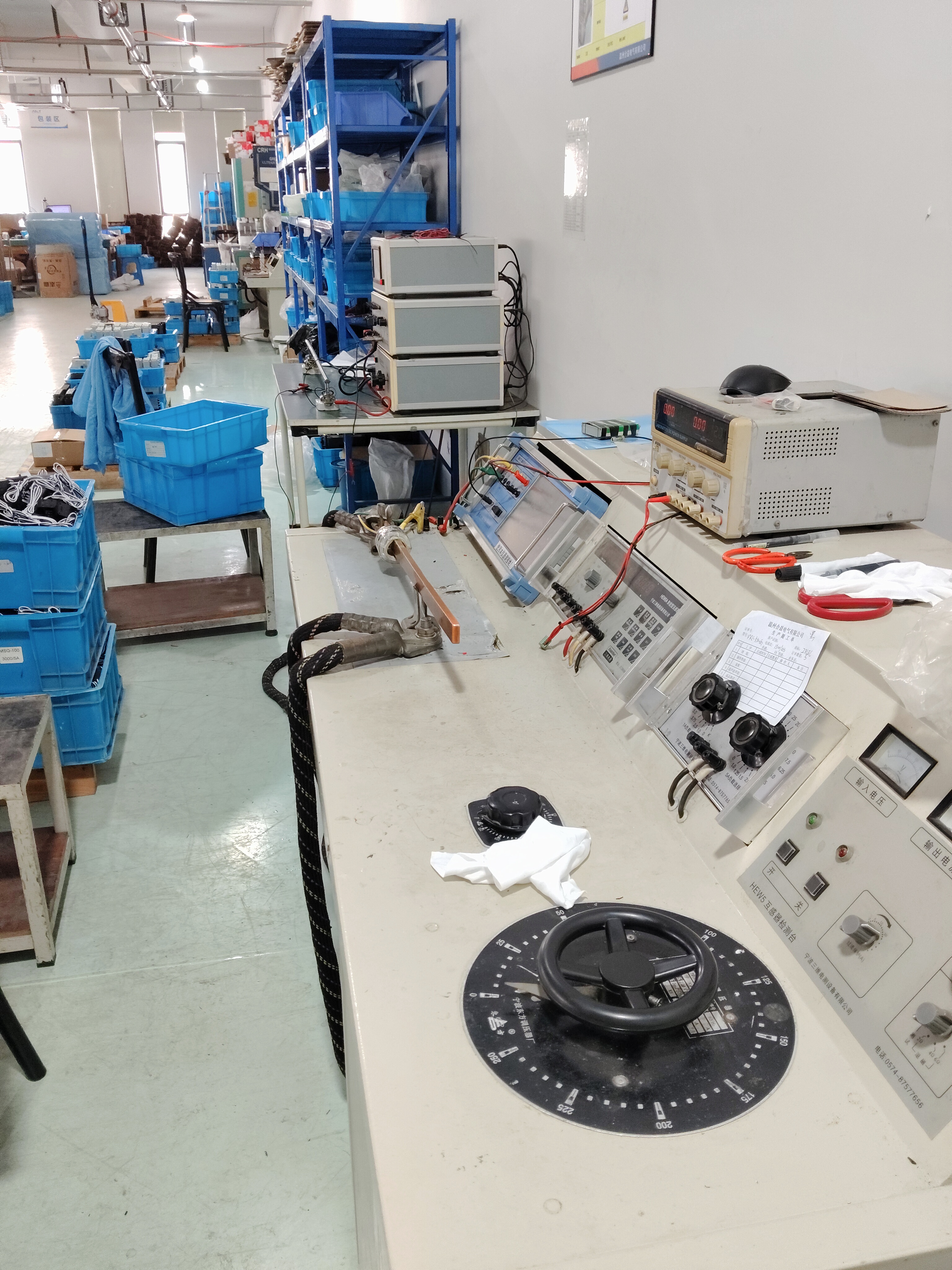
Inspection before shipment. In metering work, the test record per unit matters as much as the certificate per family.
Future Outlook
Three standards developments shape where this trade-off goes next. IEC 61869-10:2017 addresses low-power passive current transformers with analogue output at rated frequencies from 15 Hz to 100 Hz, a category that sits between conventional inductive CTs and electronic sensors. IEC 61869-14:2018 addresses current transformers for DC applications above 1.5 kV, covering measurement, protection and control in DC power systems. As DC distribution and battery-coupled loads grow inside data centers and industrial sites, the metering question stops being only about AC class accuracy and starts being about which standard the device is qualified against.
Commercial research on the category also points to wider adoption of Rogowski coils for harmonic monitoring and flexibility in tight spaces. That is a directional signal rather than a forecast, and it is consistent with what the retrofit problem looks like in practice: more measurement points, less willingness to shut down. The likely outcome is not the replacement of solid-core metering but a clearer division of labour, with revenue points held by solid-core instruments and everything else covered by clamp and coil formats.
HEYI also reports a decade of supply into power utility companies, electrical engineering contractors, panel builders, industrial equipment manufacturers and building energy management integrators, across projects in countries including Thailand, Chile, Lebanon, South Korea and Australia. The outcomes the company reports for those projects are improved current measurement accuracy, stable energy metering, reduced installation difficulty in retrofit work, and better identification of abnormal load conditions. Reduced installation difficulty in retrofit work is, in effect, the split-core case stated as a project result.
Frequently Asked Questions
Is a solid-core current transformer more accurate than a split-core current transformer?
Across the HEYI families, yes at the top end. The solid-core RECT is listed at 0.15S, and the solid-core MSQ, CP and SDH plate families list options up to 0.5S, 0.2 and 0.2S. The split-core KCT, DP/HK and OCT families are listed at 3.0, 1.0 and 0.5. The difference follows from construction: a continuous magnetic path avoids the joint tolerance that a clamp design must manage. Accuracy should still be confirmed per model against a type test or calibration record at the stated burden.
Can a split-core CT be used for revenue billing?
That depends on the accuracy class the billing regime requires at that point. Where the requirement is at the 0.15S or 0.2S level, the split-core families as published in this portfolio do not reach it, and a solid-core design is the appropriate choice. Where the settlement regime accepts Class 0.5 or 1.0, a split-core unit such as the KCT or DP/HK can be specified. The decision criterion is the class stated in the metering specification, not the installation convenience.
How much downtime does solid-core CT installation require?
A solid-core unit cannot be installed around a live conductor, because the primary must pass through the core window. Installation therefore requires the circuit to be de-energized or the conductor to be opened, which in practice means an outage window and a switching procedure. The HEYI RECT, for example, is published at 0–78 mm inner diameter and 0–1000 A, so installation planning must also confirm conductor fit before the window is booked. Split-core and flexible coil designs avoid the outage entirely.
Which CT should a data center use for rack-level monitoring versus tenant billing?
They are usually different instruments. For rack-level or remote power panel monitoring, a three-phase integrated format such as the DASN family, published at 0–1000 A with 5 A output and Class 1.0, reduces component count and wiring. For tenant billing at the service entrance, the requirement is normally a revenue-grade class, which points to a solid-core design such as the RECT at 0.15S. Many operators run both: clamp or integrated formats for operational visibility, solid-core instruments for the money.
What purchasing terms and acceptance criteria apply when ordering these CTs?
HEYI quotes a minimum order quantity of 1 unit in its OEM and ODM capability record, while one procurement record lists 10 units, so MOQ should be confirmed per model at RFQ stage. Delivery terms are stated as FOB, CIF or EXW, and payment terms include T/T, Alipay, Alibaba and PayPal. Acceptance can be handled by video or photographs, by on-site acceptance, or by a commissioned third-party agency depending on the record and the order. Standard lead time is stated as 3 to 30 days with monthly capacity of 20,000 units, and customization covers ratio, accuracy class, burden, window size, terminal type, cable length and label design.
The Short Version
The split-core versus solid-core argument is not a technology contest. It is a statement about what a site is willing to pay in outage time to gain a class or two of accuracy. Data centers make that trade explicit because they run both kinds of circuit under one roof: an operating hall where nothing may be switched off, and a billing boundary where nothing may be approximate. Buyers who name the measurement, price the outage, check the aperture and demand model-level evidence will find that the choice usually makes itself.
For reference, the HEYI Electrical product brochure is available for public download: HEYI product brochure (PDF). Company product information is published at heyiele.com.
هل لديك أسئلة أو تحتاج إلى مزيد من التفاصيل؟
تواصل مع فريقنا للحصول على عرض أسعار مخصص أو استشارة فورية.
طلب عرض أسعار
املأ النموذج أدناه وسيتواصل معك فريقنا بعرض مقترح مخصص.
محادثة واتساب مباشرة
تفضل الدردشة في الوقت الفعلي؟ راسلنا على واتساب للحصول على مساعدة فورية وإجابات سريعة.
- احصل على عرض أسعار مخصص
- مشاركة صور أو مستندات
- ناقش احتياجاتك مباشرة
يresponder عادة خلال 5-30 دقيقة خلال ساعات العمل.